Category: Church (Page 21 of 61)

Life in a Theocracy

I got sidetracked the past two weeks by what we’re preaching at Central from the first chapter of Philippians that I just had to write about. Allow me now to return for the rest of this week to a couple of more personal observations and thoughts from “Approaching the End: Eschatological Reflections on Church, Politics, and Life” by Stanley Hauerwas.

“Jesus is Lord” is more than just someone’s opinion. It’s more than a claim or a belief. It’s even more than the Christian confession. “Jesus is Lord” is actually a strong political statement that demands allegiance. It is a pledge to another reality, the ultimate reality that not everyone can see.  To say “Jesus is Lord” is to say “Caesar is not.” To claim that “Jesus is Lord” is to claim that he alone rules the world right now today. And to live like it.

The reality of Christ’s lordship, of his rule and authority, is experienced and expressed by the Church. This rule is hidden from most of the world right now. But the Church knows. We know. We submit to the rule of Christ Jesus. We follow in his prescribed “way.” We seek to love and to serve in the name and manner of our King, completely counter to the way the kings of the earth rule and lead. We are convinced beyond any doubt that Christ Jesus has already conquered the world and that he alone will determine the end of history. So we do things the way Jesus does things. He reveals himself and his rule through us.

In contemplating the practical implications of this Christian view of reality, Hauerwas draws on John Howard Yoder. To be a Christian is to subscribe to a particular political view and adhere to specific political behaviors. It’s all politics. The Church is the existence of a people who refuse to acknowledge the claims of worldly rulers to be kings. Therefore, because the Lord triumphed on the cross, his followers refuse to use the violence and force of earthly rulers to achieve what are allegedly good ends.

We are Theocrats. We live in a Theocracy. And it determines what we believe and how we act.

Christian politics are

“based on the confidence that God uses the power structures of this world in spite of themselves for God’s purposes. Christ carries out the purposes of the One who is sovereign by ruling over the rebellious structures of the universe. That rule is hidden but made visible through the servant church. The place of the church in the history of the universe is the place where Christ’s lordship is operative. This is where it is clear that he rules, as well as the kind of rule he exercises. He is the suffering servant whose rule is decisively revealed on a cross. The church makes history not through domination but through being the servant of the crucified Lord.”

Now quoting Yoder from his “The Politics of Jesus”:

“The cross and not the sword, suffering and not brute power determine the meaning of history. The key to the obedience of God’s people is not their effectiveness, but their patience (John 13:10). The triumph of the right is assured not by the might that comes to the aid of the right, which is of course the justification of the use of violence and other kinds of power in every human conflict. The relationship between the obedience of God’s people and the triumph of God’s cause is not a relationship of cause and effect but cross and resurrection.”

How do we recapture this way of political thinking today?

We Christians in the West are so “Constantinianized” (I think I just made that word up) that we don’t see God’s Kingdom anymore as opposed to the kingdoms of the world. We no longer understand that Christ’s rule works just the opposite of the rule of earthly presidents and kings. The Church is so domesticated that instead of seeing Christ’s rule working to overthrow and ultimately conquer the rule of every monarchy, democracy, and dictatorship on the planet, and praying for it, we see the Church and the nation’s government working together. We’ve gone so far as to equate their methods and their goals, the ways and means of both the state and Jesus, and to hold both rulers and manner of ruling in equal regard. Living as a Christian doesn’t mean exploring what makes us faithful followers of Jesus as much as it means developing an ethic that might work for everybody.

Yikes.

How do we live in and under the rule of Christ? Well, we’ve got to decide once and for all that obligations to a particular state or nation, devotion to a specific society or economic system, cannot compromise or supersede our commitments to the Lord. Paul and Jason and the disciples in Thessalonica were arrested for “defying Caesar’s decrees,” claiming that “there is another king, one called Jesus” (Acts 17:7).

Yes, there is another king. His name is Jesus. And he is Lord.

Peace,

Allan

Christ is Preached and I Rejoice

While Paul is in jail in Rome, there are other Christian preachers there in the city piling on. They’re preaching Christ out of “envy and rivalry.” Their motivations are all wrong. They’re involved in power plays and intentionally trying to hurt Paul and discredit him in the eyes of the church and in the city. It’s selfish. It’s insincere. But Paul writes to the concerned brothers and sisters in Philippi that it doesn’t really matter.

“What does it matter? The important thing is that in every way, whether from false motives or true, Christ is preached. And because of this I rejoice.” ~Philippians 1:18

What a wonderful perspective! At the end of the day, after all their efforts to oppose Paul, they’ve only succeeded in doing the one thing that to Paul matters the most: they’re preaching Christ!

Paul’s not concerned about identifying this group. In fact, it’s impossible to know who he’s talking about because, to Paul, it’s not important. These other preachers are mean and selfish and they’re using Paul’s chains to promote themselves. But they’re doctrinally orthodox. They’re preaching Christ and him crucified for the forgiveness of sins. So Paul’s attitude is that it doesn’t matter. Christ is preached. Period. And I rejoice.

If we’re all going to grow more into the image of Jesus, if we’re really going to partner with our God in Christ’s mission for the world, we’re going to have to come to grips with the fact that God’s salvation work is bigger than us and what we’re doing. His work to redeem the world is bigger than the Churches of Christ. He’s using us, no question, praise God. He’s using Churches of Christ to some wonderful things for the Kingdom, no doubt, amen. But he’s using all kinds of people in all kinds of ways in all kinds of churches in all kinds of places to reconcile all of creation back to himself!

This is the part of Paul’s perspective that we both admire and, honestly, have a very difficult time practicing. And, I suppose, we’re in good company. When John and the apostles came running to Jesus in Luke 9, they were very exclusive and sectarian in their understandings about who God was using to do his will and who he wasn’t.

“‘Master,’ said John, ‘we saw a man driving out demons in your name and we tried to stop him because he is not one of us!'” ~Luke 9:49

Jesus’ reply to his disciples was something like, “Don’t! Don’t stop him! Just because he’s not with you doesn’t mean he’s not with me!”

When our identity is in Christ, and not in our own particular brands or preferred practices, we won’t complain or argue or bicker about Christians who don’t do things the way we do things. We don’t talk bad about them. We don’t question their motives or their sincerity. We don’t look down on them in any way.

We rejoice. We rejoice because, hey, look, here’s another group boldly proclaiming the life, death, and resurrection of our Lord!

Christ is preached. And I rejoice.

Somebody ought to put that on a T-shirt.

Peace,

Allan

A More Faithful Church

“I have little use for purity, but I do pray for a more faithful church. A more faithful church would, I suspect, make being a Christian more difficult but also more interesting.” ~Stanley Hauerwas, Approaching the End

One of the many reasons I read Stanley Hauerwas is that he is widely recognized as the greatest theologian in America. Another reason is that he’s from Pleasant Grove, my old neighborhood in the southeast corner of Dallas. The main reason I read Hauerwas is that he writes so eloquently and inspirationally about the role of Christ’s Church in the world. He consistently points to the holy mission of God’s people and paints with bold color and lofty strokes a picture of what Christians worshiping and working and living together should look like today. I’ve just finished reading Hauerwas’ latest book, Approaching the End: Eschatological Reflections on Church, Politics, and Life.” And I’m anxious to share some of it with you.

The church in the U. S. today, according to Hauerwas and just about anybody paying attention, is in a “buyer’s market.” It’s in survival mode. It’s approaching the end. And so a whole lot of them are more concerned with staying alive and viable, by their own definitions, than with pursuing the mission of God. Some of these churches are already dead. They’ve been dead for a long time. But we don’t recognize them as dead because they still appear to be in business. The problem, though, is that their business may only be accidentally related to Christianity.

“The general societal approval and support the church has enjoyed particularly in America is coming to an end. Of course one of the costs Christians have paid for the social and political status they have enjoyed is not to take their Christian identity so seriously that they might destabilize the social order by, for example, challenging the presumption that war is a necessity if democracies are to survive. Thus I am long on record as thinking the loss of Christendom to be a ‘good thing.'”

I, too, have believed for a while now that the loss of Christendom — the culture actually propping up the church and supporting its values, Christianity seen as routine and normal by society, the church depending on the Empire to help it with its mission — to be a good thing. All this coddling by the culture has made us soft. (Now this is me, not Hauerwas.) At some point, whether it’s over ordaining homosexual ministers, protesting against federally funded violence and murder, or protecting the poor, the church is going to discover that we are not friends with the culture. And the church will be shocked. What we’ll learn is that we were never intended to be friends with the culture; we’re intended by God in Christ to convert the culture, not conform to it.

Now, when that day comes, I don’t think we’ll be arrested or jailed or beaten or shot. No, the government will first threaten our tax-exempt status.

And then we’ll all have decisions to make.

Some of our churches will bow to the dollar and pay homage to the Empire to protect the tax-exempt status. After all, they have never known a church to pay taxes to Caesar, they’ve never known a church not in cahoots with the nation, and their imagination to be a church free from the government’s control has been terminally damaged. But some of our churches will be more faithful. Some of our churches will proclaim the Christian confession that “Jesus is Lord,” not Caesar, and actually become the alternative society that our Lord established at the empty garden tomb.

It’ll be difficult. Less money for our programs. Less status for our platforms. Less community support for our evangelism. It’ll be difficult. But a whole lot more interesting. Being the political movement we were always meant to be, the more faithful counter-society, will be very interesting.

“Jesus was not successful. Jesus did not promise his followers that if they did things right, they would conquer with time. The non-coerciveness of agape includes renouncing the promise of power; it includes renouncing the mechanical model of how to move history. Yet that acknowledgement does not mean simple despair or unconcern. It rather means a promise of victory, the paradigm of which is the Resurrection.”

Hauerwas gets in trouble for saying that the first order of business for the church is not to make the world just, but to make the world the world. But he’s right. How will the world ever know it needs saving, that it needs forgiveness and healing and reconciliation, how will the world ever know that it desperately needs Christ Jesus unless the Church shows it something totally different and new? And faithful? And interesting?

Peace,

Allan

Y’all’s Armor

“Put on the full armor of God so that y’all can take your stand against the devil’s schemes… Put on the full armor of God, so that when the day of evil comes, y’all may be able to stand your ground.” ~Ephesians 6:11-13

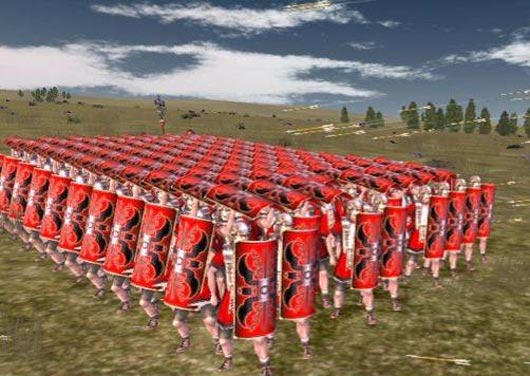
Every person listening to these words of Paul was familiar with the Roman soldier. They knew what he looked like, how he was dressed, and how trained for battle he was. Every one also understood very clearly that Roman soldiers did not exist as individuals. The story of the victory of Rome over the armies of the world is not about a Roman soldier. It’s the story of the Roman legions.

They knew how to march together into victory after victory. Arms locked, shields overlapping, protecting themselves and one another on all sides — they were an unstoppable force. Together. Their power was in their movement together. What made them impenetrable and kept them undefeated was their step by step movements as a single unit. Together.

I imagine that before each battle every soldier would not only put on his own armor, he would also help other soldiers with theirs. He would help another guy strap on his helmet and tighten it up, he would assist a fellow soldier or two in cinching up their belts and sharpening their swords, he would oil his own shield and the shields of others, he would check the breastplates and re-tie the boots of every soldier who marched near him. He wanted the soldiers next to him and all around him to be well dressed and ready for battle. His own life depended on it!

As with us. If your breastplate of righteousness isn’t buckled on straight, I’m going to suffer. If your belt of truth is sagging a bit, I could wind up in trouble. If my feet aren’t laced up with readiness, it could impact you. If just one of us is going into battle with a big chunk missing in their shield of faith or with no helmet of salvation or sword of the Word of God, we’re all going to be in danger.

Most of us are very aware that it’s difficult to practice our Christianity. Some days are harder than others. But following Jesus in this world is certainly not easy. We may not be aware, though, that our individual struggles are all part of a much larger Kingdom battle. Every personal victory of yours is a victory for all of us who call Jesus our Lord. In the same way, every defeat you suffer is a defeat for the Kingdom.

We need to be in the business of checking armor. Yes, check yours first; but don’t ignore the neglected or missing pieces from your buddy’s set. Check each other. Tighten up your walk and that of your Christian brother and sister. When we’re doing discipleship together, my armor helps give you cover and your armor plays a role in protecting me, too.

The devil is scheming. He’s clever. He’s methodical. He uses cunning and strategy. He plots and plans. He knows all our individual and communal weaknesses. And he’s serious about hitting us hard.

So we commit to helping each other get ready. Then we walk into the battle together.

Peace,

Allan

Only in Community

“After Christ’s work on this earth was completed, God continued to work through the Holy Spirit to create and empower a new community characterized by mutual servanthood, radical equality, and an unprecedented sharing of power and resources. Their experience demonstrates that spiritual life and power are to be found only in community… Biblical community is a commitment to take the spiritual journey together, to be present (in face-to-face relationship) with each other as we are transformed by an increasing connection with God and with each other.”

~Ruth Haley Barton, Equal to the Task

Barton claims that “spiritual life and power are to be found only in community.” She doesn’t say spiritual life and power are enhanced in community. She doesn’t say community will make us better Christians or that community is the preferred way of walking with Christ. She says rather emphatically that it’s the only way. Does that resonate with you? Or do you resist it?

In Ephesians 4, near the end of a discussion about the unity of the Body of Christ, the apostle Paul writes that if God’s people will live and worship and serve together we will grow. It’s in this community of mutual service and love, within the context of this devotion to one another in the name and manner of our Lord Jesus, where we grow up and “become mature, attaining to the whole measure of the fullness of Christ.”

As a result of life together, we are “built up,” we are unified in both faith and knowledge, we grow up in Christ. Together we are stabilized against any false teachings. Strong. Confident. Sure of our salvation and our purpose in the Kingdom of God.  Well supported and coordinated as we stretch and grow.

God is at work to form community, to create a people. We are not a bunch of conglomerated individuals. We are members of the Body of Christ and we all belong to each other. The call is to hold firmly to our Lord and walk with him as we live with and for one another. Together.

Peace,

Allan


Bold Community

“Just as Christ was raised from the dead through the glory of the Father, we too may live a new life!” ~Romans 6:4

If we understand that resurrection and eternal life with the Father is what awaits us when we die and that, until then, Christ’s resurrection Spirit is what gives us power, that will radically impact the way we live. We have no problem risking our reputations, our popularity, our well being, even our very lives. A resurrection community is bold. Risky. No fear. We know that the salvation of the world and the salvation of our community is in the loving and powerful hands of the same God who brought our Lord out of the grave. So we can do crazy things, outrageous things, in practicing and living the resurrection every day.

Resurrection boldness is what compels us to give $353,000 in one day to help spread the good news around the globe. Resurrection boldness is what pushes us to work and worship with the Baptists and Methodists and Presbyterians for the sake of our city. Resurrection boldness is what prompts us to buy an apartment complex across the street that we don’t know what to do with yet except that the truth and the experience of the Resurrection assures us that God is not going to let it go to waste.

Resurrection boldness causes us to cancel Bible classes so we can bake cookies and build birdhouses for the children of our neighborhood, to bring Franklin Graham to Amarillo, and to build a beautiful chapel during the Depression.

Resurrection boldness motivates us to build when others might tear down, to stand up when others might sit, and to go when everybody else may want to stay. It’s why Elaine goes to Kenya, why Tim goes to Martha’s Home, why Brett goes to India, why Patrick is leading  Bible class, why Daniel and Alisha keep fighting and why Cadence and Erin and Doug got baptized today!

Don’t tell me we can’t or we shouldn’t, because they killed Jesus, they killed him dead, and they put his dead body in a grave, and on the third day our God brought him back to life to reign with all power and authority at his right hand forever. Don’t tell me we can’t; the Resurrection says we have to! And our resurrection community at Central will not stop being bold, we will not stop taking risks, because our Savior lives and his resurrection spirit is in us!

Peace,

Allan

« Older posts Newer posts »