Category: Love (Page 1 of 10)

Knit Together in Love

“…that they may be encouraged in heart and knit together in love.” ~Colossians 2:2

We spent a good chunk of our sermon time one Sunday last month throwing yarn all over the Golf Course Road Church worship center. There were ten different colors of yarn, representing ten things that eternally connect us together in our church: the grace of God, the blood of Jesus, the love of the Spirit, the mission of the Church, forgiveness of sin, the promises of God, and others. We held onto all that yarn together so we could both experience and express our inseparable bonds with each other, our undeniable connections.

A couple of weeks later we read together from Colossians 2:2 at the end of a completely different sermon, how we are united in love or, as the older translations put it, knit together in love. I mentioned, almost off-handedly, how cool it would be if someone could take all that yarn and knit a blanket to further illustrate our connections. I didn’t know it at the time, but somebody had already done it!

Melinda Henderson had taken a ton of the yarn home with her that day and had set immediately to work. She untangled all the yarn, which took over four hours. Somehow she managed to get Rex involved–I’m not sure if that added to the time it took or shortened it. They sorted the yarn and organized it into a bunch of brightly colored balls, and Melinda made the blanket!




It’s not knitting, she told me; it’s crochet. I told the church this past Sunday, when I showed them the blanket, that it’s not playing fast and loose with the Scriptures to say the Greek word in Colossians 2:2 can be translated “crocheted.” We are crocheted together in love!

This blanket is us. This blanket represents every man, woman, and child in our church and all the ways we are connected by the gracious gifts of our God. All the eternal things, the things that truly matter, the things we call salvation things, the things all of us say are the most important things–we have all of them in common.

We need to be reminded of this. We can’t talk about this enough. This is the truth of who we are at GCR that needs to inform our thinking and shape the ways we talk to and treat one another.

Thank you so much to Melinda for her beautiful gift to our congregation! We’ve already figured out how to frame and display the blanket so that everyone in our church sees it all the time. I hope it’s up before school starts. May it continue to be a blessing and a divine reminder that at GCR we are all crocheted together in love.

Peace,
Allan

For All the Saints

“We have heard of your faith in Christ Jesus and of the love you have for all the saints…” ~Colossians 1:4

A “love in the Spirit” (Colossians 1:8) loves all the saints, all the saved. No exceptions. No loopholes. You don’t love some people in your church, you don’t show love to most of the people in your church–your “love in the Spirit” is a love for all the saints. And the writer of Colossians mentions those saints specifically in chapter 3, just in case you’re wondering, just in case you thought you had an out:

Greeks and Jews
Circumcised and uncircumcised
Barbarian and Scythian
Slave and free
Rangers fans and Astros fans.

A Christ-like love is a love for all the saints. No background checks, no application forms, no boxes to check, or requirements to meet. Our Lord Jesus has taken the burden off us of having to decide who to love and who not to love. He says our God causes the rain to fall on the just and the unjust. God blesses everyone. God loves everyone. So, whoever is around me is going to get rained on! I’m going to love whoever is by me or in front of me. If you’re near me, you’re going to get loved.

Jesus says “Love one another as I have loved you.”

It’s like you’re a FedEx driver. All the love is from God; you’re just the delivery guy! God fills your truck and you deliver the package. I heard Rick Atchley say this at Pepperdine a couple of months ago: “God’s love is not poured to be stored; we are filled to be spilled for the sake of others.”

And God will test you on it. He’ll give you pop quizzes to see if you’re loving all the saints. God will put difficult people in your life to stretch you to love them. And he usually does that at church. He’ll put a very difficult person right next to you in your Bible class. God will place a couple of impossible people right behind you in the Worship Center. He’ll put a difficult person in your small group. He does it all the time! The call is to love that hard person with your love in the Spirit.

If you are a baptized follower of Christ, you have received the gift of God’s Holy Spirit. And part of that gift is love. Divine love. Holy Spirit love. A love for all the saints.

Peace,

Allan

Who Do You Love?

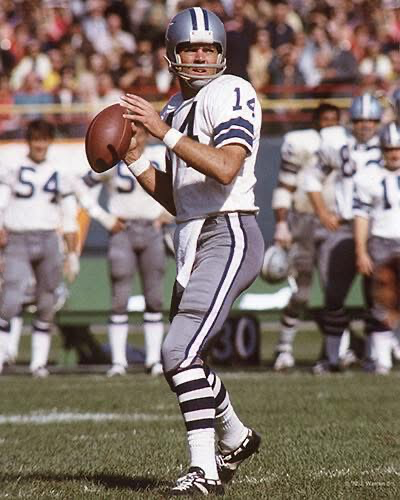
Rest in Peace to Craig Morton who died yesterday at 83 years of age. A terrific passer, but one of the slowest human beings to ever play quarterback in the NFL. Morton lost a Super Bowl while starting for the Cowboys and won the Cowboys a Super Bowl by starting for the other team. He was pulled in SB XII for Norris Weese. If you remember that, you’ve been around for a while. Man, I love those old gray pants. Remember when the Cowboys pants matched their helmets? That’s a long time ago, dude.

~~~~~~~~~~~~~~~~~~~~

I’m still processing so much of what I heard and soaked up while at the Pepperdine Lectures last week in California. Just reflecting on a sentence here and a phrase there about the primary position of love in our churches has me strangely encouraged and deeply convicted. You know, this stuff will preach.

Fate Hagood asked a really simple question in one of his sessions on Wednesday: “Who do you love?”

The question was not, “Who do you say you love?” or “Who are you supposed to love?” or “Who do you think you love?” The question is simply “Who do you love?” And Fate said you know exactly who you love and who you don’t love by the metrics of 1 Corinthians 13.

Who are you patient with? That’s who you love.
Who are you not patient with?

Who are you kind to? That’s who you love.
Who are you not kind to?

Who do you protect? Who do you defend? That’s who you love.
Who do you accuse? Who do you insult?

If you are rude to someone, you do not love him or her. If someone angers you easily, you do not love that person. If you’re keeping a mental list of the wrongs of a particular person, you do not love him or her.

I’m wondering what these people I’m thinking about have in common. The people I’m nice to, the people I defend, the people I’m patient with–is there anything they have in common I need to pay attention to? What about the people 1 Corinthians 13 suggests I don’t love? What do they have in common? Is that something I need to reflect on and pray about?

What do the people I love and the people I don’t love say about me? Anything?

Yeah, something.

Who do you love?

Peace,
Allan

Nothing

“If I speak in the tongues of men and of angels, but have not love, I am only a resounding gong or a clanging cymbal. If I have the gift of prophesy and can fathom all mysteries and all knowledge, and if I have a faith that can move mountains, but have not love, I am nothing. If I give all I possess to the poor and surrender my body to the flames, but have not love, I gain nothing.” ~1 Corinthians 13:1-3

Think about the last time you defined yourself. You made a statement, you drew a line, you chose a side. I am this! I sure ain’t that! I believe this! I do that! You declared who you are and what you’re all about. The last time you proclaimed your values.

Was it about love?

Because if it’s not about love, it’s nothing. If it’s not about love, you are declaring that you are nothing. Your position is nothing. Your beliefs and your values are nothing. Without love, your identity is wrapped up in nothing.

The Bible makes this clear. Scripture tells us in 1 Corinthians 13 that any action or belief or value or deed done or proclaimed without love is nothing.

That means if your core values, your religious convictions, your political positions, your career priorities, or your personal beliefs are not founded on and motivated by love, they are nothing. You are nothing.

Love is patient, love is kind (13:4). Is the group with which you identify known for patience and kindness?

Love is not rude, it is not self-seeking, it is not easily angered, it keeps no record of wrongs (13:5). Do your core values line up with this or not? Is the side you’ve chosen causing you to be more loving or less loving?

Love does not delight in evil, but rejoices with the truth (13:6). Do your convictions or priorities contribute to more truth in the world or less? Do the people with whom you identify speak truth. Do they delight in evil?

Whether you’re in a heated argument or in an echo chamber, when you dig in and define yourself, is it about love?

Because if it’s not about love, you are nothing.

Peace,

Allan

Strange Bedfellows

I’m in Malibu this week with our two amazing GCR Youth Ministers, Jadyn and J.E.,  for the annual Pepperdine Bible Lectures. Oh, and Shiloh. Jadyn’s precious daughter, Shiloh, has made the trip with us, too. Of course, as is my tradition, we flew into town a day early so we could take in a baseball game. Last night we watched Mike Trout strike out looking–twice!–as the White Sox crushed the Halos at the Big A in Anaheim. 6-0. Not much of a game. But we had awesome seats, sat by some really super nice Angels fans, and almost ate for the cycle.


We drove up to Hollywood Boulevard this morning to check out all the weird stuff there: the creepy Spiderman, the sad Mickey Mouse, all the people pushing their CDs while they bark for Hollywood bus tours, mixed in with the more historical sites like the Hollywood Walk of Fame, Grauman’s Chinese Theater, and the Hollywood Bowl. We also ate a hearty lunch at the Hollywood Hard Rock Cafe, right there on the strip, and spent almost two hours on the windy and freezing beach in Malibu off the Pacific Coast Highway.

We took a little rest at our rooms on campus before eating our traditional opening night dinner at Malibu Seafood, again, right on the PCH, with a wonderful view of the ocean. And then we gathered with a couple of thousand Christians from all over the country to worship God with our great friends in United Voice Worship and to listen to God’s Word proclaimed by one of the best ever, my good friend Rick Atchley. It was as good–no, way better!–as what you would think.

The theme of this year’s lectures, “The Most Excellent Way,” comes from 1 Corinthians 13. The line of the night from Rick’s keynote sermon came while he was addressing the recent tendency in our churches to be seduced by worldly power and control, which distracts us and turns us away from our mandate to love. Rick told us the Church is pursuing a love of power instead of the power of love. But here’s the line:

“When the Church gets in bed with worldly power, the baby doesn’t look like Jesus.”

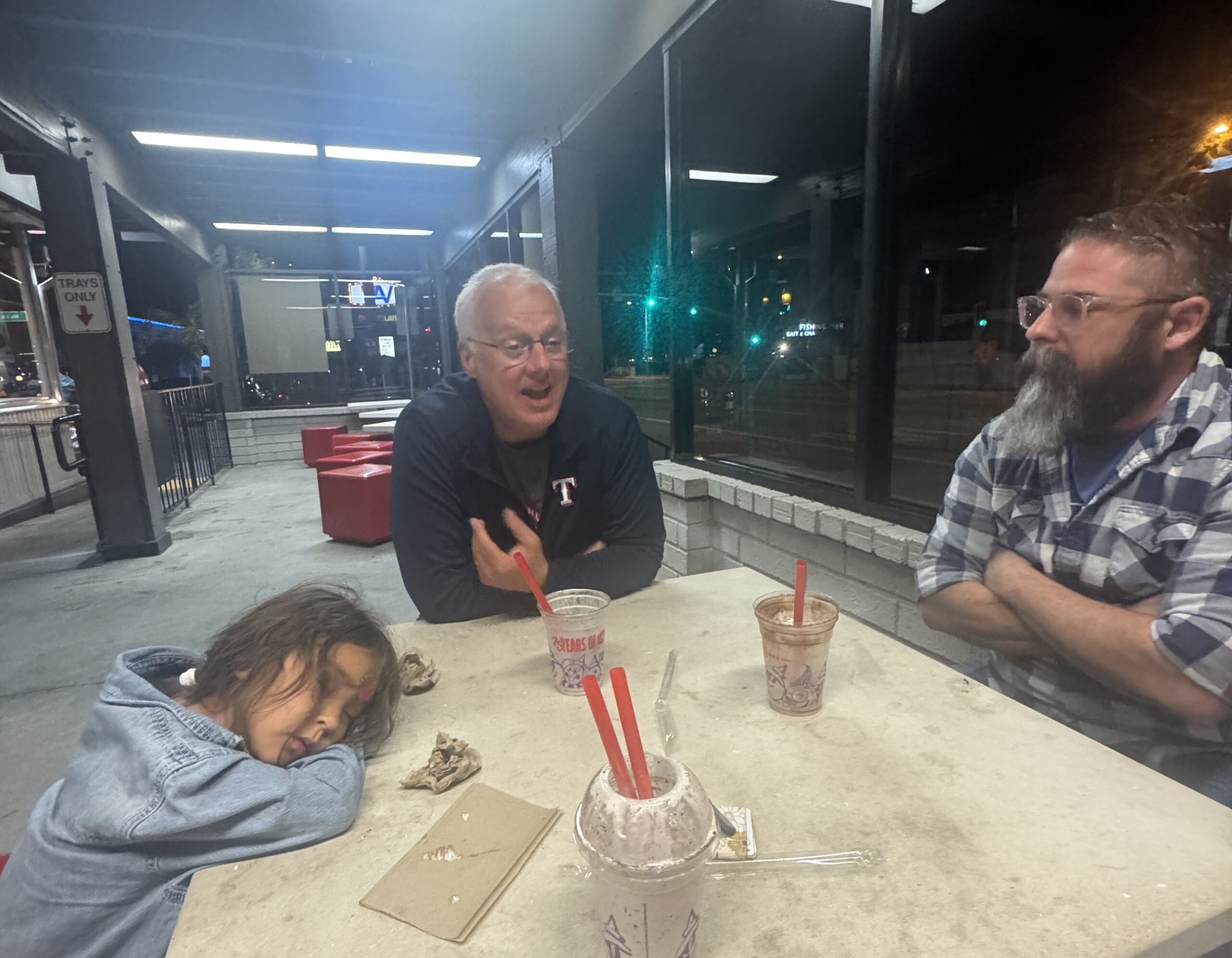
We hung around to talk with some of our favorite people and then shut down the Jack-in-the-Box up the road with some late night Oreo shakes. You can tell from this picture that I was still going strong at 10:00pm while J.E. was fading and Shiloh was already gone pecan. Lightweights.

This week at Pepperdine is one of my all-time favorite things every year. My soul needs this. My Lord always meets me here. He nourishes me and encourages me. I am being strengthened and refreshed. And I am not alone.

I cannot wait for tomorrow.

Peace,
Allan

Are You Being a Neighbor?

Tony Romo played ten years as quarterback for the Dallas Cowboys. Dak Prescott is in his tenth season. Romo’s record as a starter was 78-49. Today, Dak’s record is 78-49-1. Dak’s career passer rating is 98.3, while Romo’s is 97.1. They each have two Wild Card playoff victories and nothing more. The past ten years have been exactly like the ten years before that. Exactly. And it’s not either one of those quarterbacks’ fault.

~~~~~~~~~~~~~~~~~~~~~~~~~~~

Jesus and the Jewish lawyer are debating God’s great command. The expert in the Scriptures tells Jesus the greatest command is “Love the Lord your God with all your heart and with all your soul and with all your strength and with all your mind and love your neighbor as yourself” (Luke 10:27). Jesus tells him he has answered correctly. The Greek word is orthos, as in orthodox. You have not only given the correct answer, Jesus is saying, you have given the only answer! Do this and you will live.

“And who is my neighbor?”

See, obeying this commandment is either going to be easy or hard depending on who my neighbor is. I’m either going to do this or not, depending on who we’re talking about. So, let’s define the terms. Who is my neighbor?

Luke tells us he’s wanting to justify himself. This biblical scholar wants to limit the scope of neighbor so he can say in front of this crowd following Jesus, “I’m doing it. I’m obeying that command.”

This religious leader is trying to create a distinction. The very question he asks suggests that some people are neighbors and some are not, so we’re required by God to love some people, but not all people. The question implies that God’s people are only called to love God’s people, and that we get to decide who God’s people are. The guy is saying some people are neighbors and some people are not neighbors based on geography or race or language or culture or skin color or citizenship status or socio-economic factors or something–some people are non-neighbors and God’s great command to love does not apply to them.

That’s what the expert in the Scriptures is saying. That’s what Jesus is responding to when he tells his story.

A man has been robbed. He has been attacked, stripped, beaten, and left for dead. A priest walks up and “saw” this victim, but he “passed” on the other side of the road and did nothing. A Levite happens up and also “saw” this man and also “passed” on the other side. He did nothing. Two religious leaders who’ve known and taught the command to love God and love neighbor for as long as they can remember–they “saw” and “passed.”

Then a Samaritan walks up and “saw” and “went” to the man. These verbs are important. Jesus says the Samaritan “saw” the man and he “went” to the man. He took care of the man’s wounds, he took the man to an inn, he paid for the man’s medical care, and promised to return and repay whatever was necessary.

Then, Jesus says, “Now, you define neighbor for me. Who’s the neighbor?”

Well, obviously, the one who showed mercy and acted in compassion and love.

And our Lord looks this expert right in the eye and gives him two more verbs: “Go and do likewise.”

Jesus is making his point crystal clear: Instead of worrying if someone’s my neighbor or not, Jesus says make sure you’re a neighbor!

Our job is never to evaluate the worthiness of others or to judge people as to whether they deserve compassion and love. Our job as children of God and followers of Christ is to demonstrate compassion and love It’s too make sure I’m being a neighbor and you’re being a neighbor to every person you see every day.

No more conversations or debates. No more questions and answers. No more religious loopholes, religious line-drawing, or religious double-talk. No more using God or the Word of God as a way to avoid or dismiss the very real hurting men and women we see all around us.

When we understand the story, we understand that something big is going on and I’m told I can get in on it. Actually, I’m told, “Go! Get in on it!”

Peace,
Allan

« Older posts