Anticipating Tulsa

Lectureships, MLB, NFL 1 Comment »

“When I prayed to make the Broncos better, I didn’t mean Peyton Manning!”

~Tim Tebow

~~~~~~~~~~~~

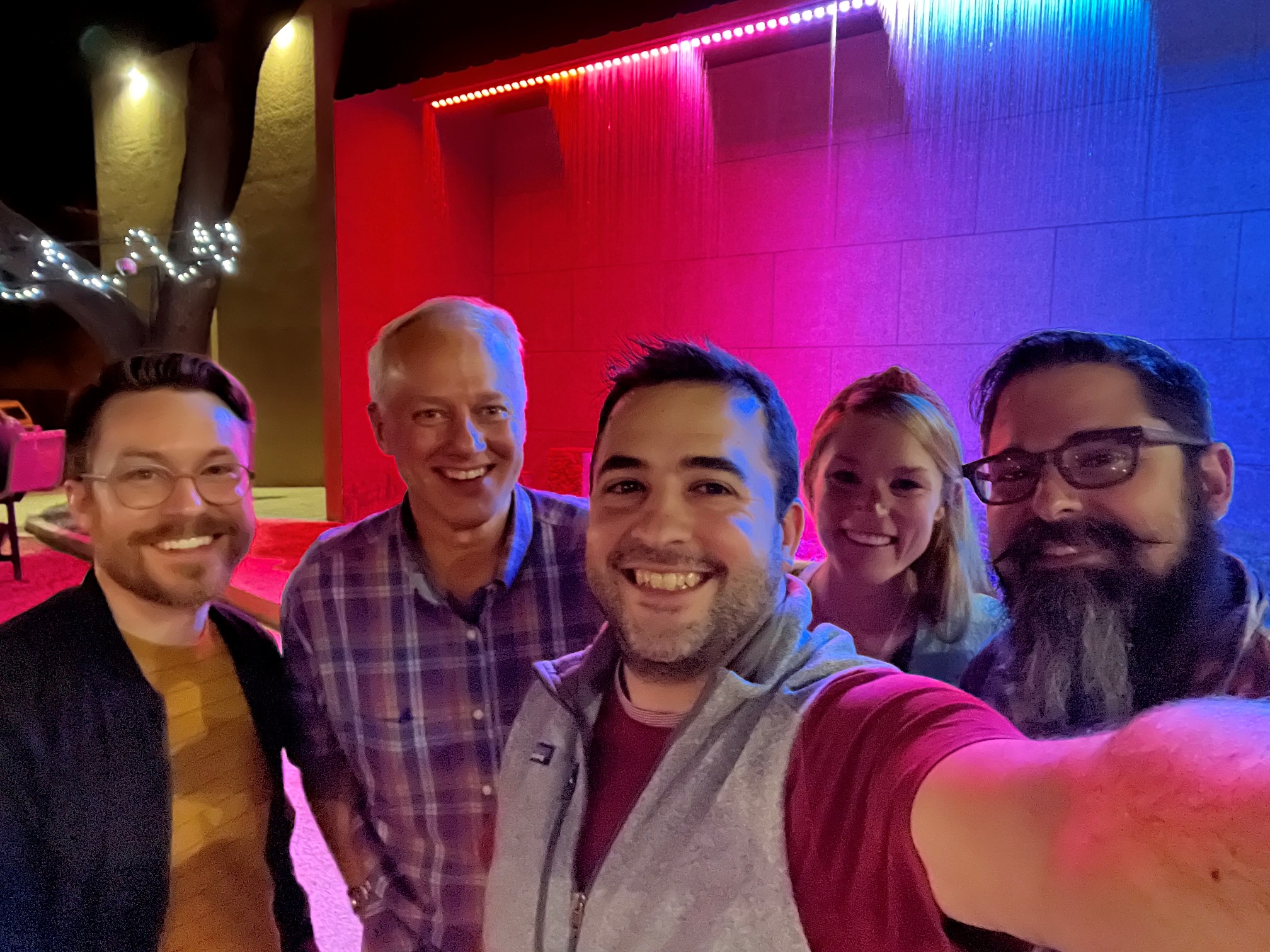
Carrie-Anne and I are headed up to Tulsa for our annual time of spiritual renewal and ministry rejuvenation. The Tulsa Workshop has long been a favorite destination for us. Every year we are encouraged, uplifted, inspired, equipped, empowered, enlightened, and educated. It’s in Tulsa where we sing our lungs out, we “amen” some of the best preachers in the faith, and we’re transformed. We grow in Tulsa. We change in Tulsa.

I’m approaching this year’s three day event with the same anticipation. I’m so privileged to sit with Terry Rush in his office at 6:30 Thursday morning; what encouraging thing will he say to me this time? I’m so blessed to call Rick Atchley a good friend; what valuable advice will he give me when I see him? My life is more meaningful for knowing Rick and Beverly Ross and their whole family; how will Josh challenge me this year?; how much of their broken hearts and enduring faith will Rick and Beverly reveal to inspire me?

How much of Jeff Walling’s sermons will I steal? Who am I going to run into that I haven’t seen in ten years? How hard will Randy Harris make me laugh? How long will Chris Moore’s beard be, and how many rubber bands will be holding it in place? How many tears will roll down my cheeks as Keith Lancaster leads us in “It Is Well With My Soul” while I realize that my sin — not in part, but the whole! — has been nailed to the cross?

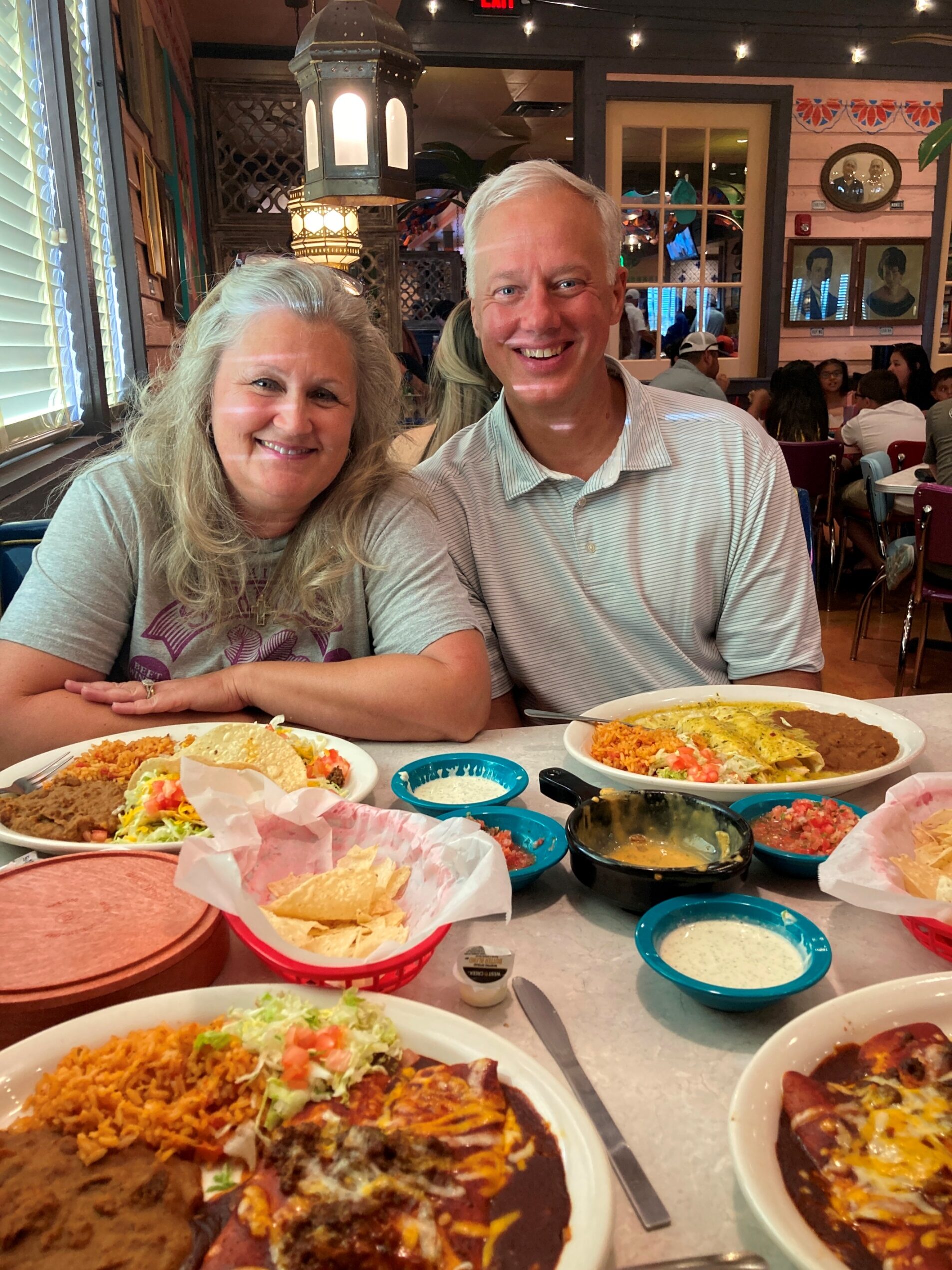
I’ll get to see Dan Bouchelle for the first time since I took his old job at this wonderful church in Amarillo (hopefully, nobody’s told him yet that I referred to him in a sermon two weeks ago as Central’s interim preacher). I’ll get to sing praises to our God with my wife and with our old friends from Mesquite and with new friends we haven’t even met yet and with hundreds and hundreds of Christ’s redeemed. Is Marvin Phillips still alive?!? I’ll listen to Jay Guin and Don McLaughlin and Patrick Mead. I’ll come back with books and CDs and a refreshed understanding of my own salvation and a renewed enthusiasm for the mission to which our Father has called me. And we might run into Garth Brooks again at the Mexican food restaurant.

I love the Tulsa Workshop. I highly recommend it.

~~~~~~~~~~~~~~

My friend Jerry Schemmel, the play-by-play voice of the Colorado Rockies, has just released a brand new clothing line with a Bible-based theme. This is his baby: 1925 Sports — workout gear with logos inspired by 1 Corinthians 9:25. “…to get a crown that will last forever.”

Here’s the link. Check it out. Way to go, Jerry. Very cool. I know your schedule’s about to get really hectic. Enjoy the relative calm of the final two weeks of spring training. Someday, when you get out of baseball broadcasting to enter the full-time preaching ministry, we’ll talk about hectic. Have a great season.

~~~~~~~~~~~

The above Tim Tebow joke was submitted earlier today by Josh Penn. Thanks, Josh. See you at the Warrior Dash next month.

Peace,

Allan

The Slogan

Church, Fellowship, Grace, Lectureships, Love 1 Comment »

“In essentials, unity; in opinions, liberty; in all things, love.”

Barton Stone didn’t come up with that old Restoration slogan. Neither did Alexander Campbell. Nor Thomas. It’s certainly a Restoration Movement marker. It identifies us. We’ve used it out front and center, rallied around it, preached it in our pulpits and published it in our papers for more than 20 decades. But it’s not exclusively ours.

“In essentials, unity; in opinions, liberty; in all things, love.”

I’ve always believed it was Stone or Campbell who came up with this inspirational motto. I think I’ve always been told we’re the ones who started it. As a unity movement, a restoration revolution that sought to destroy all denominational barriers and bind all believers together in our common Lord, it makes sense that we’re the ones who made this up. But we didn’t.

“In essentials, unity; in opinions, liberty; in all things, love.”

I’ve always loved this slogan. I adopted this slogan from almost the moment I first heard it as a teenager reading a paperback history of our Stone-Campbell heritage. It’s a powerful little statement, full of energy and potential and life. Just look at what it says: 1) We in the Churches of Christ believe that there are only a very few things that are absolutely essential to the faith and those are things we must all hold to and protect; 2) we in the Churches of Christ believe there are countless numbers of things about discipleship to Jesus that don’t really matter that much, there are myriad opinions that go with each of those issues, and we should all be confident to express those thoughts and views with great freedom; and 3) we in the Churches of Christ believe that in all these things with which we certainly agree and might possibly disagree, we love one another with an unconditional acceptance and grace.

That’s what the slogan says. And I’ve always cherished it. I think the slogan has meant so much to me because in most of my Church of Christ upbringing and life, my experiences have been just the opposite of what our slogan stands for. The slogan always represented a Scriptural ideal that my Restoration forefathers aspired to and one that should still compel our religious endeavors. Despite our obvious and intentional obliteration of the slogan’s mandates, I always saw the slogan as something to which we ought to turn back, toward which we ought to strive.

“In essentials, unity; in opinions, liberty; in all things, love.”

This was our slogan and I’ve always been proud of it. I’ve always thought this was something we could point to as a great contribution to the wider Church conversation. We came up with that. We’re not very good at following it. But at one time, we thought these things were really important and, someday, we might again think they are really important. And, if by God’s grace that day ever comes, we might really make a difference in this broken world for Christ!

But it’s not ours.

I was somewhat disappointed to learn at the Arminius conference last week that the slogan has been used by church reformers and restorers, by religious rebels and remonstrants, for more than 400 years. It was first coined by Lutheran theologian Peter Meiderlin in the early 17th century, in a different place, but at the same time as the Arminius-Calvin controversies in the Dutch Church.

It’s Lutheran.

Hans Rollmann has published his own extensive research into the origins and evolutions of the slogan, including its use in the dedication of a Roman Catholic Church in Neuweid, among Bohemian Brethren, Quakers, Puritans, and in our own Restoration history. The most disturbing part of Rollmann’s study is his conclusion that Barton Stone never once personally endorsed the slogan. He didn’t believe in it. He thought it was too reductionist. In fact, Rollmann contends that the slogan was only first used in our Restoration churches during the post-Civil War disputes regarding slavery, instrumental music in worship, and premillinialism. (You can access Rollmann’s report in its entirety by clicking here.)

“In essentials, unity; in opinions, liberty; in all things, love.”

I still like the slogan. I still like the ideals it affirms of one common salvation because of our one common faith in our one common Lord and of an unconditional and godly love for one another that transcends all other things. I still like the slogan and still believe it’s something we can and should strive toward.

It’s just not exclusively ours. It’s much older and it’s much more universally held. And I think today that makes the slogan even better.

Peace,

Allan

Another Word on Arminius

Creation, Grace, Lectureships, Salvation 1 Comment »

With Calvinism and Calvinistic theology popping up here and there more often in conversations I’m having with people inside and outside Christ’s Church, it’s good for me to be able to clearly articulate the differences between Calvin and Arminius doctrine. We’re certainly not going to solve any five hundred year old debates in this space, but writing helps me speak. So…

…another word.

What Jacob Arminius believed and taught about God’s love and grace all goes back to Creation. The creation of the world was God’s very first act of divine love and grace. Creation was for the good of mankind; it was for the benefit of people. The ultimate benefit of people is to live in righteous relationship with the Father, to have eternal communion with him. And that’s why we were created. God’s covenant with man, “I will dwell among you; you will be my people and I will be your God,” reflects his holy purposes in making us in the first place.

According to John Calvin and other Reformed theologists, a big chunk of humanity was (is) created for the purposes of destruction. Others contend that large numbers of men and women were (are) created by God and then passed over without hope or any divine intention of salvation. Arminius says, no, God’s will is for all men to be saved.

As my brother Keith put it Friday in his opening presentation on Arminian theology:

“God’s love for fallen humanity is not simply a love for justice or a vague sense of affection toward reprobate humans; it is a desire to communicate the eternal benefits of Christ to the entire race. In addition, in giving freedom to creation, God limits himself. The Reformed would stress radical divine omnipotence. Arminius would stress the divine self-limitation.”

It was risky for God to create me. He put himself on the line by making me and giving me the free will to obey or rebel, to accept or to reject, to love or to hate, to give life or to kill. In his great love for us that allows us to choose, he came to this earth to suffer with us, to die for us, to defeat sin and death in us, so we could enjoy that eternal communion with him that was intended from the beginning. He did (does) all that; and the majority of us still spit in his face. He certainly has the power to force us to accept his gifts of grace. He has the almighty power to do it. But to elect someone who is unwilling would be as unjust as damning someone who had never sinned. So we can accept his salvation or not. By his great grace, we can say “yes.” Because of his eternal love for us and the high regard he has for us as human beings made in his perfect image, we can also say “no.”

Arminius believed God’s grace does everything for us that Calvin believed it does. Everything. God’s grace is absolutely necessary for us to do any good, to make any right decision, to save us. It’s just that Arminius says the grace from God is resistible. Eternal salvation is ultimately the refusal to resist.

And that frees me to love my fellow man just as unconditionally and in just as many risky ways as my Father. It’s risky to love other people. It’s risky to give and give and give and give to people who may spit in your face. When we love and give in the manner of God and in the name his Christ, we’re going to get rejected. People are going to break our hearts. They’re going to resist our mercy and grace. But we keep giving and keep loving. We don’t stop. When we keep giving and loving at risk of great personal or corporate peril, we reflect the glory of our Father who saves you and me by the same gracious methods. We’re not allowed to pick and choose the ones we love. We’re not allowed to pre-determine who’s going to accept the good news of salvation and who’s not. Like our Lord, our will and our work is that all men will be saved.

Peace,

Allan

On Arminius

Grace, Lectureships, Love, Salvation 1 Comment »

(It was very strange to leave Love Field in Dallas following my layover last night to head “home” to Amarillo. Amarillo is my home. Strange. I found myself in the Love Field terminal defending the merits of living in Amarillo to a guy who just moved here from Denver four months ago. I was defending Amarillo. Strange. And when I got off the plane at Rick Husband and smelled the little bit of “cow” in the air, it felt… comfortable. Familiar. No cowboy boots or ten gallon hat. No belt buckle yet the size of a cookie platter. But Amarillo is home. Strange.)

Following four days with the world’s foremost scholars on Arminian theology, I have a new appreciation for Jacob Arminius and, surprisingly, the way he has shaped us. Most of us don’t even know his name. But we are deeply connected to his ways of viewing God and thinking about salvation. The longer the conference went on at Point Loma, the more I came to realize that I’m preaching this stuff. I’m already teaching this stuff. These are the things I’ve believed most of my life.

Keith summarized Arminian thought by laying out the five articles of the Remonstrance of 1610 — basically a defense of Arminius’ teachings by his students and followers just a few weeks after his death:

1) God chose to save through Jesus Christ all those who through grace would believe in him and persevere to the end.

2) Jesus Christ obtained forgiveness of sins sufficient for all.

3) Fallen humanity can think or do nothing that is truly good by free will.

4) God’s grace, which is not irresistible, is necessary for thinking or doing any good.

5) True believers are enabled by grace to persevere to the end, and it may be possible to lose this grace.

These five articles became the focus of almost a full decade of disputes and debates and conferences aimed at refuting them point by point, resulting finally in the canons of the Synod of Dort in 1619 that became for all of the Netherlands and much of Europe part of the confessional creeds. In the 400 years since, today, and for the next 400 years, I suppose, the discussions between Calvinists and Arminians will be along these same five lines.

Why does this matter? How is any of it really important? Well, how do you think about God? How do you respond to your salvation from God in Christ? The ways you view Christ’s salvation and God’s love and grace will, in large part, determine your Christian response.

These points of Arminian theology have everything to do with the questions we wrestle with all the time. For example, we know that our God is active and involved in our lives; we also know we are not just programmable robots. How do you reconcile that? We’ve all known wonderfully sacrificial servants of Christ, true disciples of our Lord, who, at death’s door, are not certain they are really saved; and others who are so certain of their eternal salvation that they believe their continued lives of sin and refusal to repent will result in no ill consequences. Where’s the correct ground between this hopelessness and carelessness?

The way we think informs the way we live.

God loves all mankind. He created us out of love and he desires that all men and women be saved to live with him in eternity, face to face. God provides the atonement for our transgressions in the sacrifice and resurrection of his Son, the atonement for all mankind. Every sin that’s ever been committed or thought and every sin that will ever be committed or thought has been paid for. Forgiven. Completely. And God’s grace to believe the Gospel story, God’s grace to put faith in Christ Jesus, God’s grace to live a life worthy of that salvation is available to all. To everybody. In equal measure. But God loves us too much to force us to do anything. He’s not going to make you. He’ll push you and compel you, his grace will cause you to know you must put your trust in him, his grace has opened your eyes to him. But he won’t force you. He won’t possess you to make you do something against your will. He loves you too much.

God loves and desires and works to save all; not just some. That’s the Christian confession. From day one.

And it motivates me to live for my Lord. It moves me to live a life of eternal gratitude to my Father. It pushes me to be serious about forgetting what is behind and straining toward what is ahead; pressing on; attaining to the whole measure of the fullness of Christ; adding to my faith in increasing measure. It means I, too, love and desire and work to save all; not just some. It challenges me to live in God’s grace every moment of every day, to accept his grace every hour, to give glory to God for this grace that saves me. To me, it puts all the focus and glory on a gracious Father who moves heaven and earth, who breaks through the barriers of time and space, to deliver me in all my sin. I live for that God.

Thanks, Jake!

Peace,

Allan

From San Diego

Lectureships No Comments »

The tops of my cheeks are red and my forehead feels crinkly. A little too much California sun, maybe. The Rethinking Arminius conference begins early tomorrow morning at Point Loma Nazarene University. But today was spent with Keith sight seeing and touring this beautiful city of San Diego.

The day began with a four hour whale watching tour that took us out about 15 miles into the Pacific Ocean. We did manage to spot one whale, a Fin Whale, about three hours into the trip.  “There she blows!” Very exciting. The rest of the time was spent watching all the dolphins. Dozens and dozens of dolphins. We saw them everywhere. Huge pods of dolphins, swimming right toward our ship and then jumping right in front of the bow and gliding with us for four to five minutes at a time. Really amazing. And beautiful. And strange.

After lunch, we played with all the crabs and sea anemones in the tide pools along the coast. We hiked up to the old light house at the end of Point Loma and the Cabrillo National Monument. We climbed around on old U.S. machine gun dugouts that were hastily built and manned around the clock in the months following the attack on Pearl Harbor. And then we watched about 150 sunbathing seals (sorry; California Sea Lions) on the beach at what is called Children’s Pool. Really fascinating. To be up that close to all those sea lions. Watching momma seals swimming and playing with their baby seals. All those seals snorting and scratching and rubbing their backs along the rocks. Really amazing. And beautiful. And strange.

And then dinner at Miguel’s with Keith and four other renowned theologians from here at Point Loma, Calvin, Trinity, and Princeton. Once I recovered from the initial shock of being mistaken by one of the gentlemen for Keith’s dad (yeah, I’m seriously doubting this guy’s expertise and judgment on anything), it was a really nice time. Of course, they could have been talking calculus or quantum physics over their fajitas and enchiladas and I wouldn’t have understood the conversation any less. Great guys. A few laughs. But their language and topics and even their manner of dialogue was completely foreign to me. I kept waiting for somebody to say, “So what are the Rangers going to do this year?” or “I feel really strongly about a college football playoff system.” But they never did. It was about foreknowledge and Tillich and concurrency and Barth and certainty and Augustine and compossibles. I guess the conference started early for me tonight.

Peace,

Allan

To San Diego

Lectureships, Stanglin Family 4 Comments »

I’m leaving today for sunny San Diego (expected high temperature today: 73-degrees) and Point Loma Nazarene University for a conference. I’ll be among the listeners, in the audience, for Rethinking Arminius: Wesleyan and Reformed Theology for the Church Today. I’ll be interested to learn more about Arminius thought, to hear the history of the Arminius debates, to understand better the development of Arminian theology. With Calvinism and Calvinist thought on a bit of an upswing in God’s Church in America — I hear tons of this stuff even in our Churches of Christ! — I believe a clearer knowledge of practical Arminianism will be good for me and good for our congregation at Central.

So, that’s one reason I’m going.

I’m also going because I’m getting to spend almost five full days with the world’s foremost leading scholar on Arminian Theology: my little brother, Dr. Keith Stanglin.

As the planner and producer of this conference on the coast, and one of its featured speakers, Keith is sharing the stage this weekend with some of the brightest minds in theology from Yale and Duke and Princeton and the University of Leiden in the Netherlands. But they all defer to Keith when it comes to the subject and thinking of Jacob Arminius. He’s the big shot at this thing. He’s the guy. And his work is benefitting God’s Church and the Kingdom of Heaven in critical ways. I’ve written many times before in this space about how proud I am of Keith. So proud. He’s brilliant. And he uses every ounce of his genius and every bit of his energy on serving the Christ to our Father’s eternal glory and praise.

Keith and I will share the plane ride from Love Field to San Diego today. And we’ll laugh. That’s mainly what we do when we get together. We laugh. We talk theology and church work, we share opinions and insights about books and speakers, we reflect on God’s work in redeeming the world and our share in that ministry of reconciliation. We also talk a lot about family, we remember together our childhoods, we reflect on where we’ve been and where we’re going. We poke fun at each other; we point out the other’s receding hairlines and middle-aged bellies; we quote from Airplane and Naked Gun. And we laugh.

Keith’s already planned a boat ride out into the ocean to go whale-watching. We’re riding bikes along some shoreline trails. And we’re going to make it to In-N-Out at least once. And that’s just tomorrow. Friday and Saturday we’ll be at the conference from morning to night. I’m looking forward to seeing Keith in yet another setting and context with which I’m not that familiar. Then we’ll worship together Sunday morning and board separate planes to go home.

In the middle of all this, I’m going to learn a lot. From Keith. He teaches me something every time we’re together. He teaches me something valuable, something I can use, something that makes my preaching and my ministry better, something that makes my congregation better. He sees it, he gets it, better than most anybody I know. And he knows how to talk about it so regular people can get it, too. He inspires. He’s good. Man, he’s good.

And he’s my brother.

The blogging will be sporadic for the rest of the week. No promises.

Peace,

Allan