Category: Colossians (Page 6 of 11)

Forgiveness is the Only Way

SinfulWomanForgiven3There are more than 50 words in the Bible for sin: debt, evil, wickedness, trespass, unrighteousness, guilt, transgression, disobedience, rebellion, etc., But exposing the sin and naming the sin is not what matters. Keeping score is not the Gospel. Witch-hunting is not the Gospel. Shaming people is not the Gospel. Forgiving sin — that’s the Gospel. Because it’s the only thing that works.

Our Lord teaches us to pray: “Forgive us our sins as we forgive those who sin against us.”

We are faced with lots of sin, sin everywhere — personal sin, family sin, institutional sin. But Jesus doesn’t tell us to get a mop and a bucket and a brush so he can show us how to scrub the sin from our lives and the lives of our children and spouses and neighbors. He doesn’t tell us how to hook up a power hose so we can blast away all the corruption in government, all the sacrilege in our churches, and all the unbelief in our schools. Jesus tells us to pray: “Forgive us as we forgive.”

Our God deals with sin. He deals with sin decisively. Head-on. Effectively. It’s not like getting rid of a germ: “Here’s a shot, take these two pills, and call me in the morning.” It’s not like getting rid of mice in the attic: “Set out these traps, put out this poison, then Whack! Whack! Whack! All the sin is gone!” And God doesn’t deal with sin by amputation, like it’s gangrene on a diseased leg: “We’re going to chop it off. It’s really going to hurt. You’re going to have a severe limp the rest of your life. But, hey, there’s no sin!”

God deals with sin by forgiving us.

If something’s going to be done about sin, it’s not going to be with laws and commands and rules. Do we think what’s wrong with this world is something we can fix on our own? We can’t. Do we think there are judicial or governmental or educational or psychological ways to deal with sin? There aren’t.

Forgiveness is the only way.

“As God’s chosen people, holy and dearly loved, clothe yourselves with compassion, kindness, humility, gentleness, and patience. Bear with each other and forgive whatever grievances you may have against one another. Forgive as the Lord forgave you.” ~Colossians 3:12-13

Forgiveness is the only way to deal with sin. It does not settle all the questions of blame and fairness. In fact, it purposefully avoids those questions. What forgiveness does is allow a relationship to start over. Forgiveness brings people back together. It begins a good thing anew.

But a lot of us live in a logjam between forgiveness and justice. When somebody does me wrong, I can think of a million reasons not to forgive. He needs to learn a lesson. I don’t want to encourage her irresponsible behavior. She needs to learn that actions have consequences. I was the one wronged – he needs to make the first move. How can I forgive if she’s not even sorry?

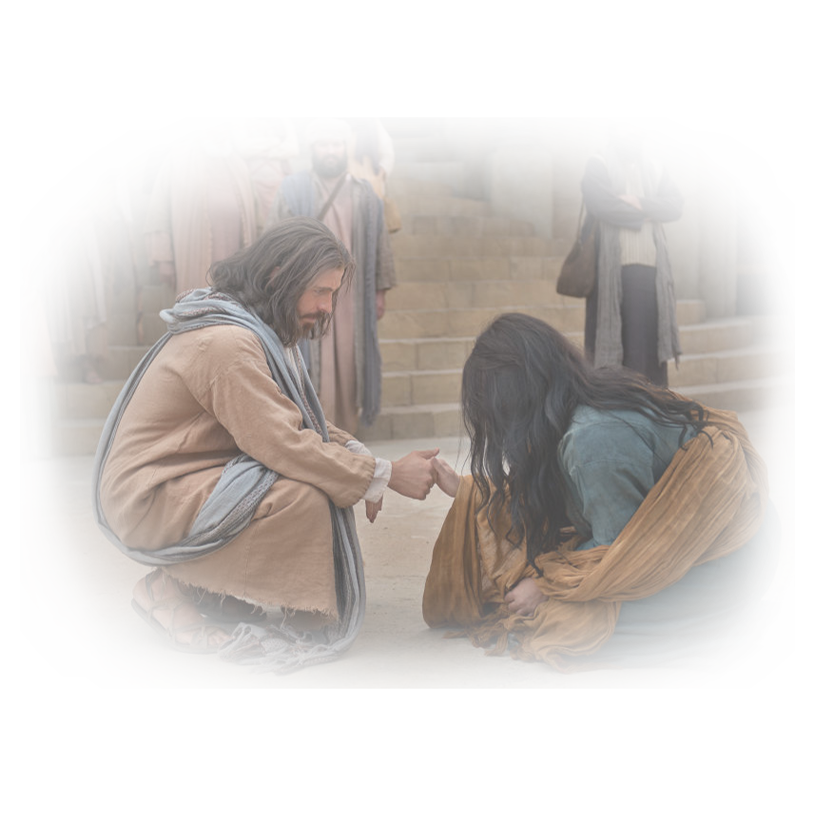
Remember the woman in John 8 who was caught in the act of adultery? They bring her to Jesus and throw her down at his feet. The Law says she should be stoned. But Jesus says, “Hey, whoever has never sinned can throw the first rock at her.” The young look to the old. The old look to their hearts. And they drop their rocks and walk away.

Jesus and the woman are left alone. The Lord stands up and looks around.

“Where is everybody? Has no one judged you guilty?”

“No one, sir,” she answers.

“I also don’t judge you guilty.”

If you ever wonder how God reacts when you fail, take those words and frame them. Hang them on your wall. Read those words of the Christ. Drink from them. Take them into your soul. “I don’t judge you guilty.”

When we sin against God, that creates a barrier. But forgives us and removes that barrier. God gives up his holy right to get even. Instead, he bears the cost of our sin in his own body. The sin is gone, the price is paid, and the relationship is restored. God made him who had no sin to be sin for us. You can’t get any more plain than that.

Justice is not the best or last word. In all matters of wrongdoing, in all matters of sin, in all that is wrong with the world and with us, in all that is wrong with our enemies and our friends, forgiveness is the best and last word. And forgiveness must be our first response to every person who hurts us or sins against us. We’ve got plenty of police officers and judges and juries and prosecuting attorneys to say, “You’re guilty!” Who’s going to say, “Father, forgive them?” If it’s not Christians, who’s going to say, “I don’t judge you guilty?” If not us, who’s going to say, “Your sins are forgiven?”

However important justice is — and it is very important — forgiveness is more important. Not soft sentimentality, but hard-edged Gospel. Not an apathetic shrug of the shoulders, but the white-hot flame of resurrection love forged in the furnace of the cross. Assuming that the criminal crucified next to Jesus was receiving a just sentence — he admitted it himself — forgiveness trumped justice that day. It always does.

Peace,

Allan
Celebrating our Partnership

4Amarillo Logo NEW

“Here there is no Greek or Jew, circumcised or uncircumcised, barbarian, Scythian, slave or free, but Christ is all, and is in all.” ~Colossians 3:11

Religious barriers, cultural barriers, generational barriers, ethnic barriers — God’s Spirit eradicates all barriers between people in the body of Christ. The Kingdom of God does not clarify people by race or tribe or nationality or class. There’s no “us” and “them” in God’s Church.

By God’s grace, we do a pretty good job with this at Central. Pretty good. We know that all baptized confessors of Jesus as Lord are our brothers and sisters in Christ. We are actively tearing down the walls that divide the Christian denominations in Amarillo. We believe that, in Christ, there is no Greek or Jew, circumcised or uncircumcised, barbarian, Scythian, slave or free, or Baptist or Presbyterian or Church of Christ or Methodist, but Christ is all, and is in all.

Tonight at First Baptist, all four of our downtown churches are coming together to preach and practice Holy Spirit reconciliation in our third annual Thanksgiving Service. Our theme this year is “Celebrating our Partnership in the Gospel.” All four worship ministers are combining our respective praise teams and choirs to lead us in thanksgiving to our God. We’ll sing together, pray together, and read the Scriptures together. And all of Amarillo will be reminded again that Jesus is Lord, he’s fixing everything that’s broken, and we’ve got to get in on it!

In the spirit of Thanksgiving, around which this event is planned, I am so grateful for the godly leaders of our four churches who recognize the powerful testimony to Christ our partnership offers. I’m thankful for the enthusiastic response of the men and women of our churches who so quickly have entered into the partnership with Gospel vision and energy. I’m thankful for the deep friendships that have been developed between Howard, Howie, Burt, and me. And I praise God for the limitless potential our partnership holds for further reconciliation among the fractured members of our Lord’s Body.

May the walls continue to come down. May the name of our Savior continue to be lifted tonight and forever more by our commitments to him and to one another. And may he continue to work in us and through us, together, to his eternal glory and praise.

“Let the peace of Christ rule in your hearts, since as members of one body you were called to peace.” ~Colossians 3:15

Peace,

Allan

Watchful & Thankful

PrayerCorporate

“Devote yourselves to prayer, being watchful and thankful.” ~Colossians 4:2

The earliest Christians made it a habit to pray regularly at specific hours every day. Some appear to have prayed twice a day, morning and evening; others three times a day, morning, afternoon, and evening. It was a continuation of the Jewish custom that had been practiced for centuries, and subsequently passed on to succeeding Christian generations.

But regular daily prayer was not just the result of tradition.

The first Christians confidently expected the return of Christ and the consummation of the Kingdom of God in the immediate future, within their lifetimes. And they believed they were called to be alert and watchful at all times for that final event. Just like servants were supposed to stay awake and watch for the return of their master, they were expected to remain vigilant for the return of their Lord.

Mark 13:32-37 quotes Jesus as telling us to “be on guard! Be alert!” and “Keep watch!” Christ tells us in Luke 12:35-40 to “keep your lamps burning like men waiting for their master to return.”

Several New Testament passages further reveal that prayer is the proper mode of this constant state of readiness. Prayer is the way that watchful attitude is best expressed. Jesus tells his apostles to watch and pray that they may not enter into temptation. Paul’s letter to the Colossians links the idea of watchfulness and prayer (4:2). And he tells the Ephesians to “be alert and always keep on praying for all the saints” (6:18).

The discipline of prayer at regular, fixed times was an expression of the Church’s constant readiness for the imminent return of Christ.

Shall we pray?

Allan

Knowledge of the Lord

“…asking God to fill you with the knowledge of his will through all spiritual wisdom and understanding.” ~Colossians 1:9

The Holy Scriptures are certainly a primary way we receive the gift of the knowledge of the Lord. We are shown through the Bible exactly what our God has done and is doing through our Lord Jesus Christ. It’s a beautiful story, a compelling drama that draws us into the action. It involves us, it inspires us, it moves us to join in. But some of us still view the Bible as something else. We see the Scriptures as a book of rules and laws that must be kept before an all-seeing and all-judging God. No, the Bible is something different. The Bible is the grand sweeping story of God and his faithful presence and activity with his people and his people’s faithful and sometimes not so faithful response. God created something beautiful and he is right now re-creating something beautiful. He’s restoring everything back to its original pre-sin condition. His will — what God is doing — this knowledge of the Lord, includes redemption for all of creation, including us.

What God is doing is a story. It’s a narrative. And this is how we’re going to explore it and experience it together at Central:

ACT 1
Genesis 1-2      Creation – Pattern of the
Kingdom

ACT 2
 Genesis 3-11      The Fall – Perished Kingdom

ACT 3
Gen. 12 – Malachi 4      Covenant – Promised Kingdom

ACT 4
Matt. 1 – John 21      Jesus – Present Kingdom

ACT 5
Acts – Rev. 20      Church – Proclaimed Kingdom

ACT 6
Revelation 21-22      New Creation – Perfected Kingdom

This more narrative view of Scripture helps us make more sense of things and brings more order to our own lives and experiences. We live today in the 5th ACT of the drama. So, more than restoring New Testament Christianity or going backwards to the times of Jesus or the days of the apostles, we’re called to move forward in the drama. We’re called to live it out, to play our roles and say our lines in ways that move the story forward toward its glorious conclusion.

Sometimes our biggest problems come when we place our lives and experiences in the wrong acts of the play. Leukemia belongs in ACT 2 of the play, not ACT 1. God did not create cancer; cancer is a result of living in a fallen world, broken by sin. Don’t let anybody tell you God gave you leukemia. The affair you’re having with that other man is not something God wants for you because your husband is a punk and God wants you to be happy. The adultery belongs in ACT 2 with sin, not in ACT 1 with the perfect things God created for us. Muslims are living today as if ACT 4 never happened; they’re still fighting the battles of ACT 3. A guy who is sleeping with his girlfriend before they are married because he’s a red-blooded American male and doesn’t really have a choice because nobody waits for marriage anymore needs to be reminded that we are living in ACT 5 of God’s story where our lives are a proclamation of the truth of Christ Jesus and his eternal Kingdom. Our lives are a testimony to the great change that was inaugurated when Jesus rose from the grave.

We need to know where we are. And we need to know what’s coming. We need to know that God is the author of the story and he has the last say. He writes the final word. And we need to see ourselves in the story and join it, live it, with everything we’ve got.

Isaiah says when the Kingdom is finally perfected, when God’s holy will has all been finally fulfilled, there will be righteousness and justice and peace because “the whole earth will be full of the knowledge of the Lord.”

Knowledge changes the whole world. And it changes us.

~~~~~~~~~~~~~~~~~~~~

After 22 years of serving the Central family as a member of the church staff, Connie Green is retiring at the end of this month. Connie started out here as a teacher with Kid University in 1993, moved on to work with our singles and membership ministries, and for the past fifteen years has served as a valuable administrative assistant and faithful ministry partner to the preacher. Since we moved here three-and-a-half years ago, Connie has kept me out of trouble and one step ahead. She makes me look good. And that’s a tough assignment: I can be impulsive and last-second.

Connie, we all feel great appreciation and admiration for your selfless service to Central. I’m so glad that you and Jay are remaining here in Amarillo and at Central. We all wish you the very best of God’s richest blessings in this next phase of your lives together.

Peace,

Allan

Understanding What God is Doing

“…asking God to fill you with the knowledge of his will.” ~Colossians 1:9

In Scripture, knowledge has nothing to do with some special understanding that’s reserved for the spiritually elite. And it’s not about unlocking the eternal secrets of the universe. In Scripture, knowledge is understanding what God is doing. It’s recognizing how Christ Jesus is the fulfillment of all of God’s redemptive promises for all time.

“God has chosen to make known… the glorious riches of this mystery, which is Christ in you, the hope of glory.” ~Colossians 1:27

“…so that they may have the full riches of complete understanding, in order that they may know the mystery of God, namely Christ.” ~Colossians 2:2

Knowledge is understanding that all of God’s salvation purposes are fulfilled in Jesus. It’s knowing that salvation is available to all through Jesus. And it keeps us from being sucked in to the world’s opposite forms of knowledge and understanding. The values and practices of our culture are powerful forces. And without God’s knowledge, we can wind up following a mushy sentimentality or a pathway of power or success reinforced by a herd mentality. Christians may not know more than others, but we ought to know better.

Peace,

Allan

Vision Statement: Part One

Remember the Russian comedian Yakov Smirnoff? Born and raised in Russia, Smirnoff lives in the U. S. now — Branson, I think. A lot of his comedy was based on comparing life in Russia to life in the United States. One of his funniest bits is about the first time he ever walked into an American grocery store. He says, “I walked in and one of the first things I saw was powdered milk. You just add water and, boom, you’ve got milk! A couple of aisles over I saw cans of powdered orange juice. You just add water and, boom, you’ve got orange juice. Then I saw a whole shelf of baby powder!”

“What a country!”

Wouldn’t it be great if we just added water to ourselves and became instantly just like Jesus? What if the waters of baptism didn’t only wash away our sins, fill us with God’s Holy Spirit, and connect us to the body of Christ? What if the moment we came up out of the water we were automatically perfect? We know it doesn’t work that way. Whatever you call it — sanctification, salvation, spiritual formation, transformation — it doesn’t happen overnight.

Becoming like Christ is a gradual thing. It’s a process. Scripture calls it “being saved.” The course of being made perfect, being changed into the image of Jesus is difficult and lengthy. But this is exactly what God is doing with those he’s calling and saving. He is forming us into the image of his Son.

“We all reflect the Lord’s glory and are being transformed into his likeness with ever-increasing glory, which comes from the Lord, who is the Spirit.” ~2 Corinthians 3:18

Being saved means being changed: changed into the image of Jesus, shaped into his character, formed into his nature. It’s conducting ourselves every day in a manner worthy of the life, death, and resurrection of our Lord. Paul tells the Galatians he’s agonizing until Christ is formed in them. He writes in Romans that we’re predestined by God to be conformed to the image of his Son. He writes to the Colossians and says the goal of everything God is doing with Jews and Gentiles alike is “Christ in you, the hope of glory.”

But it’s slow. It takes time.

That’s why the very first word in our vision statement is “Becoming.” We want to constantly remind ourselves and proclaim as loud as we can to anyone who’s listening that nobody at Central Church of Christ has arrived. Nobody here is perfect. Nobody here has it all figured out. We are becoming like Christ. It’s a process. You know, some people won’t give life in Christ a chance because there are so many church people out there who think they’ve got all the answers. We want it to be known up front that we’re still pretty much a mess. Yes, we’re on our way. But nobody’s there yet. It’s a journey of ups and downs, of thrilling victories and devastating setbacks. We still have a lot to learn, we still make terrible mistakes. There’s a place in our church for anybody who has questions or doubts, for anybody who still says or does the wrong thing from time to time, for anybody who doesn’t feel perfect. Because we’re all in that little boat, fighting the storm, straining at the oars. But in the middle of all that, God is making us more like Jesus. It’s slow, but he’s doing it.


Happy Texas Independence Day!

Allan

« Older posts Newer posts »