Category: Church (Page 26 of 61)

Sticking Around

I’ve been told that a preacher doesn’t really start ministering to his church until he’s been there for five years. He can’t really do much until he’s reached that point. The wisdom goes that for the first two years at a church the preacher can do nothing wrong; for the next two years the preacher can do nothing right; and it takes the whole fifth year for him to realize what God’s called him to that particular congregation to do.

I want to be a guy who sticks around a long time.

In  a beautiful ceremony marked by both laughter and tears, prayers and pledges, we ordained our three additional shepherds here at Central yesterday. Scott and Larry and John Todd were charged and blessed appropriately and encouraged vigorously as they accepted the calling and the responsibilities that go with it.

And John Todd Cornett painted an exquisite portrait of the benefits of sticking around. He’s been here a while.

Thirty-three years and one day earlier, as a young boy of 12, John Todd was baptized by his dad in the Central chapel. His parents’ good friends, Leon and Marilyn Wood, were there. Of course, they were always there; always had been. Leon brought his toolbox over to the Cornetts’ house all the time to fix things and make general repairs because John Todd’s dad wasn’t very handy in those ways. John Todd would follow Leon around as he worked on a cabinet or replaced a leaky faucet. When John Todd was given a little toy toolbox for his fourth birthday, he called it his “Leon.”

As a whole lot of us were, John Todd was awarded a brand new Bible by his church when he graduated high school in 1985. Of course, it had the signatures of all the Central elders on the inside cover. And he still carries that same Bible, the one with the names.

Yesterday, our church family publicly acknowledged John Todd as a shepherd at Central, gifted and called by God’s Holy Spirit to this ministry at his home congregation. He and Scott and Larry join an outstanding group of faithful and godly men that includes Leon Wood. John Todd and Leon are now serving God’s church at Central together as elders. Former elder Warlick Thomas read our Scripture from 1 Peter 5 yesterday and led our congregation in a prayer of thanksgiving for our shepherds. Former elder Shelby Stapleton presided over the Lord’s Meal. Former elder Jack Vincent was chosen to lead our benediction. Former elder Bill Johnson’s widow, Sue Johnson, was one of the first ones to hug John Todd after the assembly. Now, John Todd is one of their elders. And, yeah, John Todd would roll his eyes and stop me from even finishing that sentence if he were here in my office right now. But it’s true.

Naturally, he thanked those men and others in our church family who have had such a profound impact on his life. And it was nice. Touching. But then he addressed the high school kids. John Todd leaned over the stage toward where our young people were sitting, and spoke directly to the young boys. Most, if not all, of these boys, John Todd has mentored and taught over the years in our Muddles program. He knows these boys. All of them. He loves them. And he spoke to them. He urged them to see themselves as God sees them. He begged them to find older men in the congregation who would pour into their lives. He asked them to be open to how the Spirit would use other men in our church to shape them and transform them into the godly leaders our Father wants them to be.He showed them the holy link, his connections to the ones who had gone before him and the ones he was talking to right then who were coming up behind. He told them they had the same connections and responsibilities. It was perfectly beautiful. And we all got it.

There’s something really, really special about sticking around. There’s a symmetry there, an eternal circle that’s evident when one sticks around.

At Jerry Humble’s funeral earlier this month, two of Bill’s former students at ACU, a missionary and an elder here at Central, presided over the service in the same chapel where Bill and Jerry had worshiped on their first trip to Texas from Missouri back in 1946. So long ago Bill had poured his love and knowledge into them. Now they were pouring their love and comfort into Bill.

It happens all the time around here. It testifies to the faithfulness of our God. It’s a witness to our Lord’s loyalty, to his patience, to his enduring promises that never fail. The history of the people in this place together is a gift from our Father. It reminds us of the steadfast nature of his love. It’s an increasingly uncommon thing in our increasingly mobile and individualistic culture and society. I’m so blessed to see it and experience it fairly regularly around here.

I pray our God will work in ways that compel more and more of us to stick around.

Peace,

Allan
The Reply to Blow

Thank you so much for your faithful reflection and wrestling regarding the controversial Dallas Morning New column by Steve Blow we talked about in this space yesterday. I’ve received twice as many comments on email as I have in the “comments” section of this blog. And that’s fine. But, good gravy, people, your stuff is good! Really good! I urge you to consider putting some or all of what we’re sharing via email on the blog here so everybody can benefit and be blessed by your insights.

It appears that what most Christians are reading in this little controversy is the reply to Blow’s column penned by Ron Scates, the Senior Pastor at Highland Park Presbyterian Church in Dallas. You can read the response in its entirety by clicking here. I’m not endorsing the pastor or the Denison Forum website where this link sends you; it’s just the easiest place to find the response. Click on that link, read Scates’ reply, and then let’s discuss.

~~~Seriously, I’m not going to continue here until you jump over there and read Ron Scates. Do it! It’s really, really good!~~~

OK, he starts by naming a mentor of his at Union Theological Seminary — name dropping; not necessary — and his words of wisdom, “Bad theology always hurts people.” Good line. I like it. Scates expands on it:

“I guarantee you… anytime you and I develop our theology based on majority votes based on the surrounding culture — rather than by what God has revealed in his Word — inevitably, we wind up with bad theology.”

And people get hurt. Lost people get hurt. And Christians get hurt by bad theology that’s shaped by the prevailing culture of the times.

Limiting the role of women in our churches is bad theology formed in and by a male dominated culture; it goes completely against the commands and examples in our Holy Scriptures; and it’s not a very faithful expression of the Gospel of Jesus that claims we’re all equal at the cross of Calvary and at our Lord’s resurrection table. It hurts people. It hurts our women and our little girls. And it cripples our Christian witness to a lost world that can’t understand our petty rules and inconsistent laws. It’s OK for a woman to pray and read Scripture, to comment and exhort, in Bible class and in Small Group and at the church retreat, but our salvation is in jeopardy if she does it in the worship center between 10:00 and 11:00 on Sunday morning. Bad theology. Based on the surrounding culture. Hurts people.

Our traditional “sema-soma” views of body-soul in which our bodies and all of creation are burned up and destroyed on the Day of the Lord, but our disembodied souls float up to heaven where we spend all of eternity in a spiritual worship service, without sermons, I assume, is bad theology. It’s Gnostic, formed in and by a culture that was seeking secret knowledge and power. It’s Greek mythology, completely counter to what our Scriptures tell us about what God is really doing in redeeming all of creation. And it’s led to a lot of Christians not caring about our planet, not taking care of our own bodies, not caring what the church building looks like. People like that are said to be “so heavenly minded they’re no earthly good.” Bad theology. Hurts people.

I could go on and on. Five steps of salvation. Five acts of worship — one at a time, of course! Marriage, divorce, and remarriage. Leadership structures. Power hungry bishops and abusive elders are a result of bad theology. Measuring faithfulness to Christ by church attendance and knowledge of Scripture instead of Christ-likeness is bad theology. Youth groups who only learn and worship and serve with people their own age, that’s bad theology. It’s theology that comes from our culture and not from our Bibles.

More on that from Scates, who says it so much better than I do:

“How you and I approach the Bible is key to forging a good theology. Is the Bible a spiritual cafeteria where we go through the line picking and choosing only what looks tasty and palatable to us? Or is the Bible a banquet to which we have been graciously invited, where the Author/Host sets before us a fare of his own choosing? At a banquet, guests don’t try to change the menu. That would be bad etiquette.”

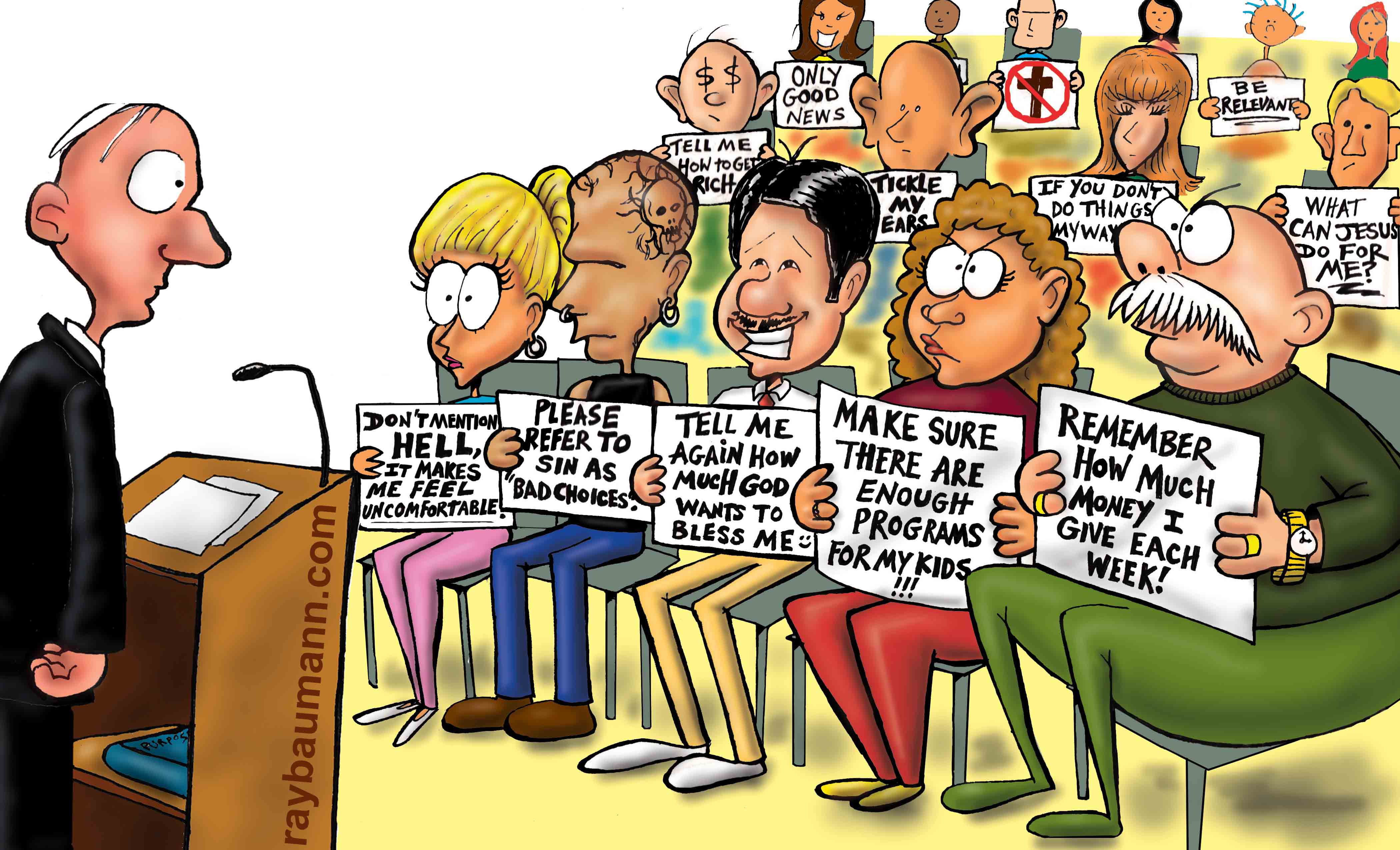
But the theology of the culture is so much easier, right? Of course it is. It tempts me all the time. It would be much easier to just play chaplain to a bunch of church people who sit comfortably in their pews week after week. It would be much easier to believe God has no holy expectations of his people. It would be much easier to believe I need to take care of myself first and look out for my own needs first and then take care of others. I’m reminded of something G. K. Chesterton wrote years ago in Orthodoxy: “Christianity has not been tried and found lacking; it’s been found difficult and never tried.” Something like that.

Scates particularly addresses Blow’s attack on the traditional views of hell and of Jesus as the only way to salvation:

“Do I believe hell exists? Yes. Do I fear hell? No. I hold both those beliefs for the exact same reason that I believe Jesus is the only way to eternal life because he says so… and that if I be in Christ, hell is not my eternal destiny. In the Gospels, Jesus talks more about the reality of hell than he does about heaven. It is Jesus himself who makes the claim (as much a minority claim in the 1st as in the 21st century) that he alone is the way to the Father… and away from an eternity in hell (John 14:6). Good theology always takes Jesus at his Word… rather than extends a wet finger to the prevailing winds of culture.”

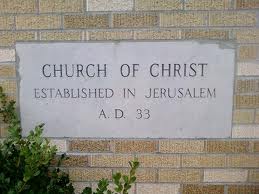
Here at Central, we’re learning in our Sunday morning Bible classes that our Church of Christ history and particular theologies have been shaped and formed almost as much by culture and popular opinion as by our Lord. Almost. And that’s not a knock against CofC. Good gravy, it’s a commentary on our fallen humanity. It’s a call to be on our constant guard against it. And it’s a challenge to be always ready to grow and change and restore.

Scates’ last lines are perhaps his best. I’ll close with them the way he did.

When all is said and done, good theology is a “revealed” theology… it comes from outside of ourselves… not something of our own making. Historically, the Church has always said that that source of revelation is God himself… revealing himself to us through is Living Word, Jesus Christ, and his written word, the Holy Scriptures. Good theology usually arises when you and I attend to, not contend with, the Bible.”

Peace,

Allan

Religious Freedom: Part Two

In our Sunday morning Bible classes here at Central, we’re studying the history of our Churches of Christ within what is called the American Restoration Movement. The hope and prayer is that we, in the words of Doug Foster, “raise our historical spiritual consciousness,” that we come to understand how our distinctive faith and doctrines and practices have been shaped by particular history and culture in order to better grasp the founding vision of our movement and make a deliberate turn back to the best parts. And if you’ve made it past those two sentences to this one, congratulations. Sorry about that.

We’re using Foster’s book, Renewing God’s People, to guide our study and discussions. I’m sharing the fruits of our study and openly processing some of it in this space. You might look at yesterday’s post if this one’s going to make sense.

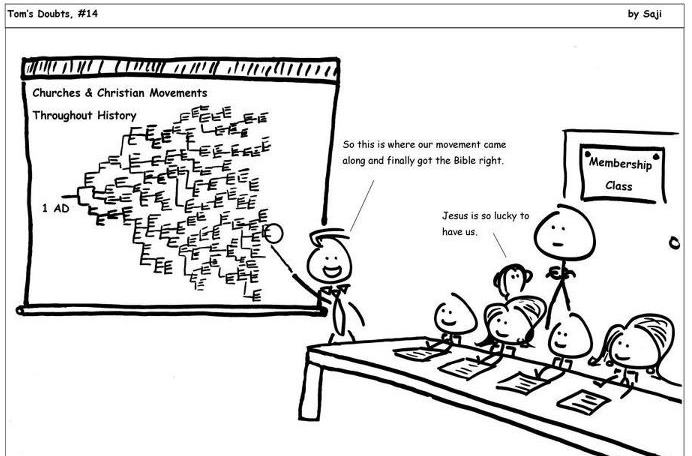
It was during the prolific exercising of “religious freedom” in the colonial days of the American frontier when the call for “restoration” became a popular cry among Christians. The denominationalism of the day couldn’t be good for the spread of the Gospel. The constant dividing and splitting and planting and branching probably wasn’t communicating the truth of unity in Christ. There seemed to be no end to the numbers of new churches and new forms of Christianity that were being established in the States based on somebody’s new or different interpretation of the Scriptures. Finally, a few church leaders began questioning whether new churches and new denominations, the exercise of this nationalistic and democratic and individualistic religious freedom, was actually harming their Christian witness. Some religious leaders went so far as to say this denominationalism was a direct affront to the prayer of our Lord in John 17 in which Jesus prays for unity among all believers “so the world may believe.” Denominationalism, in their view, was in fact a sin.

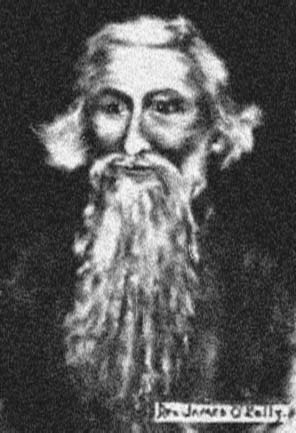
James O’Kelly (1735-1826) was one of these guys. A Methodist preacher in North Carolina and Virginia, O’Kelly openly questioned the power and authority of the bishops in the Methodist church, particularly the two in Baltimore. He balked at the whole bishop system, arguing that each Christian congregation should act democratically, like a republic, to govern its own affairs. His motto was “Bible government, Christian equality, and the Christian name!” In 1793, he formed the “Republican Methodists.” Then he went even farther the next year, dropping the name “Methodists” alltogether. We are only Christians, he said, “Christian” is the only name for disciples of Jesus.

In that same year, 1794, O’Kelly published his Cardinal Principles of the Christian Church:

~ The Lord Jesus Christ is the only Head of the Church

~ The name Christian should be used to the exclusion of all party and sectarian names

~ The Holy Bible is our only creed, and a sufficient rule of faith and practice

~ Christian character is the only test of church fellowship and membership

~ The right of private judgment and liberty of conscience are the privilege and duty of all

~ The union of all followers of Christ to the end that the world may believe

What do you think about those six rules? Is this a fairly decent summary of standards and practices for a Christian church based on the Gospel of Jesus? What would you add to a list like this? What would you subtract? Could a church or a group of churches even function with this type of charter? Could a group of churches — Churches of Christ, maybe — function this way today?

O’Kelly’s churches grew to about ten thousand members in North Carolina and Virginia. They eventually adopted believer’s baptism by immersion as their standard practice and taught that the unity of all Christians is God’s plan for redeeming the world.

At the same time, a group of Baptists in Vermont led by Abner Jones (1772-1841) and another group of Baptists in New Hampshire led by Elias Smith (1769-1846) began to independently proclaim a non-creedal Christianity. They  denounced Calvinism and took the name “Christian” as the only acceptable label for disciples of Jesus. These two, again independently of one another, established at least fourteen churches in the early 1800s.

Funny, huh? Barton Stone and Alexander Campbell weren’t the first ones or the only ones with these kind of ideas. The idea of “restoration,” stripping away what is new and unnecessary to get back to something in its pure and original condition, actually was fairly popular at the turn of the 19th century.  It was being preached and practiced by many. And Jesus’ prayer for unity in John 17 was driving it.

“…that all of them may be one, Father, just as you are in me and I am in you. May they also be in us so that the world may believe that you have sent me. I have given them the glory that you gave me, that they may be one as we are one: I in them and you in me. May they be brought to complete unity to let the world know that you sent me and have loved them even as you have loved me.” ~John 17:20-23

Peace,

Allan

Religious Freedom

We began our Bible class on Sunday morning by trying to name all the different Christian denominations in the U.S. As you can imagine, the names came fast and furious and I scribbled the words on the white board as quickly as I could to keep up: Methodist. Presbyterian. Catholic. Lutheran. Church of God. Baptist. (What kind of Baptist? OK, four or five different kinds we could think of.) Christian. Disciples of Christ. Unitarian. Non-Denominational/Community. Episcopal. Assembly of God. Then it started to slow down a little. I asked, “No Church of Christ? Why hasn’t anybody said Church of Christ?”

And someone in the back, on the right hand side of the room said, jokingly, “We’re not a denomination!”

Much laughter and frivolity ensued.

OK, Church of Christ. What kind of Church of Christ? One-cuppers. No-classers. Acappella. Instrumental. No kitchens. Etc.,

It took about two minutes to fill the giant board with all the names of all the different versions of Christian churches in the U.S. We kind of started cheating at the end by naming Cowboy Church, Biker Church, and Skater Church. But the point was well made and well illustrated. As Yakov Smirnoff used to say, “Only in America!”

There are more Christian denominations in the United States than in any other country in the rest of the world. More sub-sets of denominations. More splits and plants and branches than anywhere else in the history of this planet. It’s always been that way here. When America was being colonized, there was no official national religion. (There still isn’t, of course; we forget that sometimes.) Unlike the rest of the world, no one denomination could serve as the state church. In the colonies you had Puritans and Baptists, Anglicans and Presbyterians, Methodists and Lutherans, Quakers and German Reformed, all here to establish “the true church.” They had left their own churches and homes, they had fled their own families and nations, because they couldn’t implement their own individual ideas and preferences in their established churches. They didn’t want a Pope or bishop or church board telling them what to do. So they came here where they wanted — and they got! — religious democracy. Here in America, ordinary members were making decisions for the churches. Ministers were not formally educated. It was religion without the creeds and councils. In that age of reason and enlightenment, people figured they could read the Bible for themselves and come to their own conclusions about the right and wrong ways to do church. And they did!

The result of that is what you saw on our white board Sunday morning.

Back then, the idea was that if you read your own Bible with an open mind and good common sense and the conclusions you drew were different from what your church was teaching, you just started another church. What do I mean “back then?” It’s all still the same today!

Religious freedom. Yuk.

“You, my brothers, were called to be free. But do not use your freedom to indulge the sinful nature; rather, serve one another in love. The entire law is summed up in a single command: ‘Love your neighbor as yourself.’ If you keep on biting and devouring each other, watch out or you will be destroyed by each other.” ~Galatians 5:13-15

The American concept of “freedom” is a whole lot different from the Scriptural view of “freedom.” The apostle Paul writes that freedom means we are released from the things of this world — sin, selfishness, ego, pride, unalienable rights — that would keep us from serving others. Scripture says freedom is being loosed from the shackles of self to consider the needs of others more important than our own, to become less so that Christ and his holy will can become more. This nation’s concept of freedom is just the opposite. This nation’s founding documents and ideals, based on the prevailing thoughts at that time and still supporting the prevailing thoughts in our time today, tell us that Americans are free to do what we want, free to choose, free to own, free to pursue personal happiness, free to move, free to make money, free to speak, free to do whatever we want wherever we want, and whenever we want to do it with nobody ever telling me I can’t.

How do you think the freedom the colonists had to start all their own churches based on their own individual understandings of Scripture benefited the Kingdom of God? How might it have hurt? I’m certain there is both good and bad here. What’s good about our religious freedom in this country? How does this same freedom hinder the spread of the Kingdom or the sanctification of Christians? How might things be different — then and now — had American Christians understood and were to understand freedom as the liberty to serve others instead of ourselves?

Peace,

Allan

Do We Have a History?

“Every renewal of the church, every great age in its history, has been grounded on a renewed reading of history.” ~Justo Gonzalez

You know the familiar quotes and the wisdom behind them: Those who cannot learn from history are doomed to repeat it; Whoever wishes to foresee the future must consult the past; History cannot give us a program for the future, but it can give us a fuller understanding of ourselves so that we can better face the future.

We’re taking the advice to heart with our current Sunday morning adult Bible class series here at Central. Our curiculum is based on Gary Holloway and Doug Foster’s book “Renewing God’s People: A Concise History of Churches of Christ.” With this book as our guide, we’re considering our past, contemplating its relationship to Scripture, and having conversation about the paths ahead. The hope is that we can raise our “historical spiritual consciousness” by gaining a better understanding of how our faith and our churches have been shaped by inside and outside forces we may have never even considered.

In doing so, our aim is to collectively come to a better understanding of the vision and the call that resulted in the beginning of the American Restoration Movement, of which Churches of Christ are a part. They had a dream, right? There’s a reason Stone and Campbell and those founding fathers left their churches to begin our movement, right? Well, what in the world was it? What was so compelling that they left their own faith traditions and family stories?

Secondly, we want to see just where, why, and how we drifted so far away from that initial dream. What happened? What were the influences that got us off track? What role did culture play? History? The American Revolution? The Civil War?

Next, we need to determine if those original dreams and vision were right. Were those ideals on which our movement was founded faithful to the Gospel and to God’s mission for his Church? And, if so, how do we recover the best parts of those ideals for Central today? How do we reclaim the best parts of the Restoration heritage in our local context and setting, time and place?

We started yesterday by discussing the things that make the Churches of Christ different from the rest. What sets us apart? What makes us unique? The response from our class — a diverse group of people who range in age from late 20s to late 70s, some CofC lifers and a couple of people who were just baptized two months ago — was fairly typical. We ran down the list pretty fast: acappella worship, weekly communion, autonomous congregations led by a plurality of elders, believer’s baptism by full immersion, limited role for women, and a high regard for the authority of the Bible and personal knowledge of the Scriptures. After that came the slogans: Speak where the Bible speaks and be silent where the Bible is silent; We do Bible things in Bible ways and call Bible things by Bible names; etc., And then came a little honesty: Somebody mentioned that we’re perceived as thinking we’re the only ones going to heaven, and one of our brand new Christians confessed rather sheepishly that her mom had always told her the Church of Christ was a cult.

For the most part, these distinctives are dearly held by those of us in the Churches of Christ. For a lot of us, these are red flag issues. It’s emotional. Just mention a buzz word or a key phrase related to any one of these things around most of us and you’ll receive an impassioned plea touting the merits of such a practice or belief. Or a fight.

What we learn when we look at church history is that those things are not that unique to us. We didn’t come up with this stuff. It was all handed down to us by the Christians who went before. Martin Luther is the one who pushed for the authority of Scripture alone. John Calvin is the one who caused us to pay more attention to the sovereignty of God. The “anabaptists” of that same era were persecuted and mercilessly killed for their move to believer’s baptism by full immersion. John Knox and the Presbyterians pushed for the autonomy of local congregations led by a plurality of presbyters, or elders.

Any of that sound familiar?

Would it surprise you to learn that a whole mess of these faithful Christians came to America in the 18th century from Germany and Switzerland and Geneva and England and Scotland and brought their peculiar Christian beliefs and practices with them? And that Barton Stone and Alexander Campbell were among them?

We can find traces of us, Churches of Christ, in almost every strand of Christianity. They are our spiritual ancestors, too. They faithfully did the best with what they had at the time and diligently moved the Gospel story forward. We are not the first Christians. Or the only Christians. And we won’t be the last.

Our God is faithful; and very, very good.

Peace,

Allan

« Older posts Newer posts »