Category: Unity (Page 8 of 9)

Uniting as One

More than one-thousand followers of Jesus from at least sixty-three churches in Amarillo gathered on the downtown Potter County Courthouse lawn last night to praise God together and to pray to him for healing for our land and harmony for his people. “Uniting as One” was a city-wide, all-church, interracial, interdenominational event meant to express our unity as one Body of Christ.

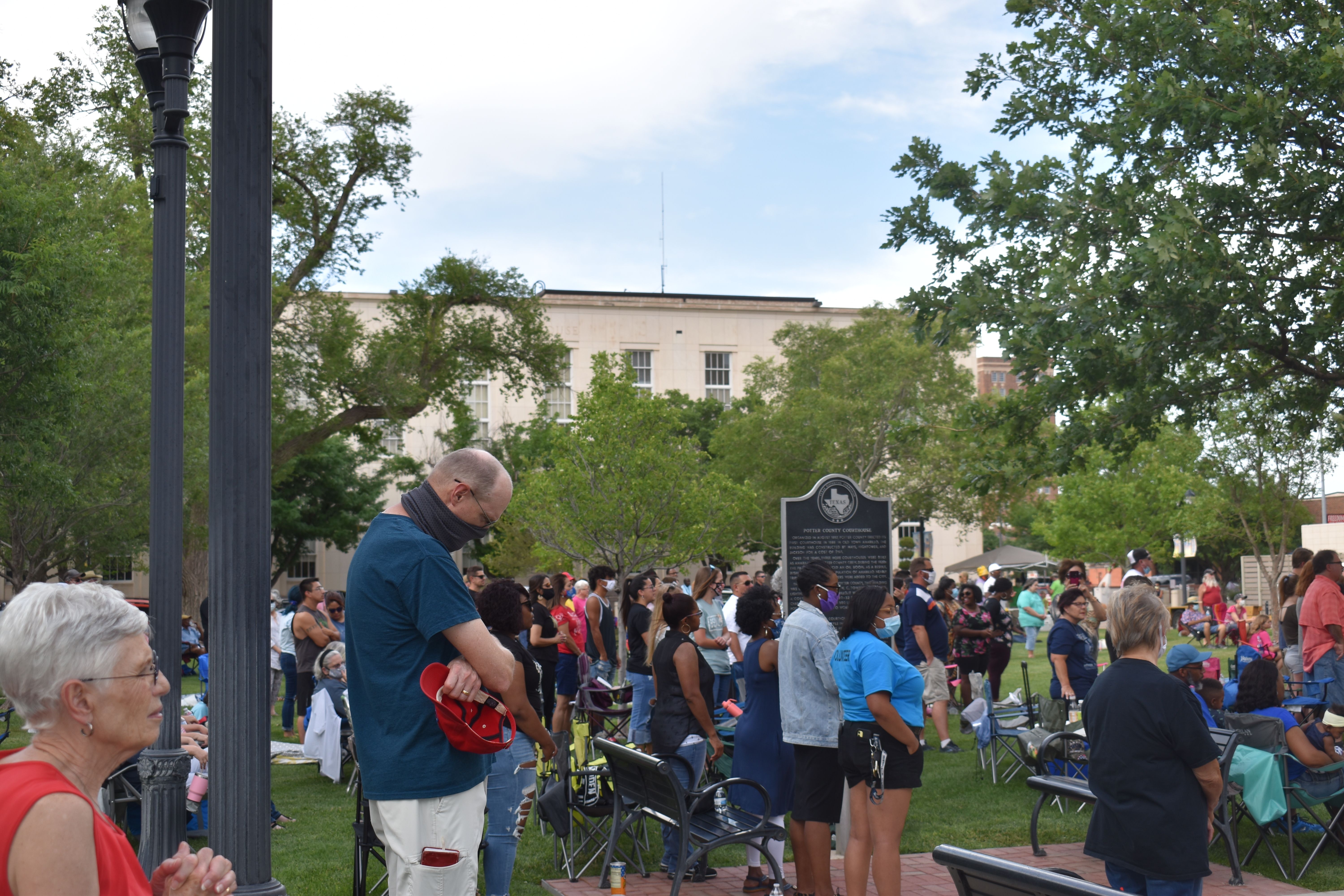


It was not a protest, it was not a demonstration; it was a Christian worship service. Black and white and Hispanic churches, young and old, the overly-demonstrative and the too-laid-back, folks from both sides of I-40 — together in Spirit and in truth. We sang Gospel hymns and contemporary praise (for a brief moment when the power went out, we even sang acappella!), we read Scripture about unity and humility and obedience, we prayed for our city and our churches, and we met a lot of people. We prayed for God’s justice and peace for the state of Texas, for the United States, and for all of God’s creation. And we showed all of Amarillo and anybody else who’s paying attention that all Christians are united together in Jesus, that we are committed to living and serving and worshiping together in peace and love and unity, that we are resolved to tear down walls and build bridges. Together.



This was not a photo opp (although many pictures were taken and posted) and this was not a box to check for what a church is supposed to do when racial strife makes the news (Remember? We had that worship service!).  No, this was a stand. This was a Christian line in the sand that the followers of Jesus in Amarillo, Texas will not be divided over anything. Not race, not color or ethnicity, not zip codes or geography, not language or culture or national politics — nothing is going to divide God’s people in this city!


There was also a call to action last night, a serious challenge for all in attendance. Pastor Anthony Harris, from St. John Baptist Church, asked all of us to sit down to a meal with somebody of a different color sometime in the month of July. Breakfast, lunch, dinner, whatever. Go to their house, invite them to your house, meet at a restaurant, doesn’t matter. But everyone was challenged to commit to sharing a meal together with somebody whose skin is a different color sometime in the next five weeks.

Because if we all do that, things will change.


Our God chose a table, he chose a common meal as the way to show his oneness with his people. Around the table is where you experience unity and fellowship. Sharing a meal is how you strengthen family and develop friends. Being at the table together expresses acceptance and presence. To eat and drink a meal with someone is a show of solidarity: “We have things in common!” And if all the Christians in Amarillo do this, things will change.

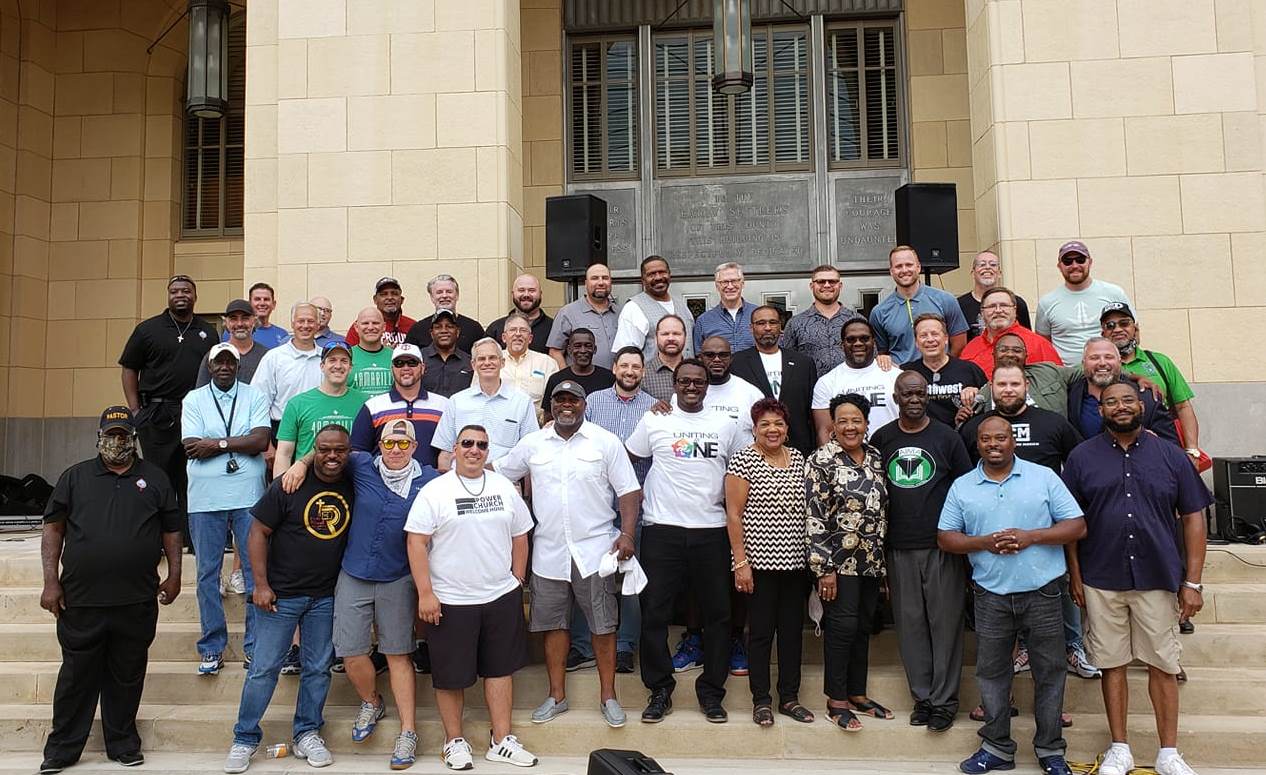


I was honored to be asked to speak at last night’s historic event. I was humbled by the sheer enormity of what God seems to be doing in our city and grateful to be involved in some small way.  I was encouraged by the spirit of the gathering, the mutual love and acceptance, the combined eagerness to do something significant “that the world may believe.”  And I was reminded why it’s so great to live in Amarillo and so great to be at Central.

I praise God for the new friends I’ve made in the past six weeks and I thank him for whatever is coming next.

Peace,

Allan

Evidence of the Grace of God

“When he arrived and saw the evidence of the grace of God, he was glad and encouraged them all to remain true to the Lord with all their hearts.” ~Act 11:23

Barnabas saw things in Antioch that proved to him God was active and working among the Christians there. He saw visible proof, tangible evidence that God’s grace was having an important impact. Part of the proof was that disconnected disciples were becoming one in Christ. They were unified in spirit.

“During this time some prophets came down from Jerusalem to Antioch. One of them, named Agabus, stood up and through the Spirit predicted that a severe famine would spread over the entire Roman world (this happened during the reign of Claudius). The disciples, each according to his ability, decided to provide help for the brothers and sisters living in Judea. This they did, sending their gift to the elders by Barnabas and Saul.” ~Acts 11:27-30

In our society today, we have perfected the art of screaming at each other. I say we’ve perfected it because God help us if there are more levels of that to attain. If we still have a ways to go in developing newer methods of yelling, insulting, labeling, ignoring, fighting, and separating from one another, God help us.

Our first impulse is to define our differences. Our worst habit is dividing. We have black churches and white churches. We have blue churches and red churches. Rich churches and poor churches. Progressive churches and traditional churches. And hundreds of different denominations. What can be done about that?

God’s grace. Only the power of God’s grace.

This is the work of Jesus, right? This is what Jesus does. He’s got Matthew the tax collector and Simon the Zealot in the same band! That’s like having Nancy Pelosi and Donald Trump in the same house church! And Jesus tells both of them: Knock it off! I’m in charge! We’re not into identity politics here! We’re not motivated by our differences! We’re on a mission from God for the Kingdom of God compelled by the grace of God that’s bringing all things and all people together in Christ!

You’ve got a really volatile thing in Antioch. Jews and Gentiles, Greeks and Barbarians, slave and free, rich and poor, Mediterranean culture and Syrian desert culture — all kinds of racial, cultural, and socioeconomic differences. And they’re all united together by the blood of Christ. Their life in Christ is bigger and more important than their differences. The mission is bigger and more important than their comfort or their preferences.

And what about the gift? They’re sending money to the church in Jerusalem. They’re sending their own financial resources to the brothers and sisters they’ve never met in a different culture 300 miles away. It’s extraordinary! How does this happen?

Barnabas sees it as evidence of God’s grace.

Do we see that kind of counter-cultural Christian unity in our churches today? Are we even looking for it?

Peace,

Allan

Prioritize the Realities

“If you have any encouragement from being united with Christ, if any comfort from his love, if any fellowship with the Spirit, if any tenderness and compassion, then make my joy complete by being like-minded, having the same love, being one in spirit and purpose.” ~Philippians 2:1-2

The four realities Paul describes in verse one lead us as a church family to pursue the four goals in verse two or, better said, to prioritize the blessings we all have in Christ. Place great emphasis, he says, on being like-minded, on having the same love, on being one in spirit, and one in purpose. This sounds like unity, and it is. But it’s so much more than that, it’s a lot bigger than just unity. Just unity is not the goal.

You can have unity in a group of thieves or murderers or in a group of Red Sox fans. Or in a church where nothing’s happening. A stagnant church that takes no risks, that never tries new things, that doesn’t reach beyond its own walls or outside its Sunday morning worship.

Yeah, but we’re united! We’re so together!

So, what? To what end?

This whole thing — all of it — is about relationships and mission. Some of you have been at your current church for more than 30 or 40 years. I’m guessing you’re there because of relationships and the church’s mission. Some of you have only been at your current church for a month or so. But I’m guessing you’re there for the same two reasons.

That doesn’t mean we all have to agree on every single thing. That’s impossible. I’ve said before that if we all had to agree on every single thing in order to belong to the same church, Carrie-Anne would be at a different church. And then she reminds me, “No, Allan, you would be at a different church!”

The Bible calls for unity in spirit, not unity in beliefs or practices or opinions. Unity is about your attitude, your motivation. What drives you? What are you thinking about? Unity doesn’t do anybody any good if our thinking is out of line with the Gospel. So, does our thinking serve the Gospel? Does our love reflect the Gospel? Does our unity declare the Gospel? When Scripture says I want you to think the same thing, that thing is Christ Jesus and his mission to save.

That’s why we think together and love each other and unite as one in spirit and purpose: to advance the Gospel. To tear down the walls. To make the paths straight. To speak and show love and mercy and forgiveness and grace and life! We live the Gospel. That’s always the goal.

Peace,

Allan

Some Churches

I hope the posts this past week did not give you the impression that I think all churches are alike. They’re not all the same. Some churches are better than others. Some churches are more biblical than others, some are more orthodox than others, some are more healthy, some are more lively, some are more on point with God’s mission — some churches are better than others.

But nobody can make those judgments by looking at the name on the sign.

Now, I’m biased, but I think Central Church of Christ is a pretty great church. We mostly support Church of Christ understandings and traditions. We uphold baptism by immersion for the forgiveness of sins, we practice a weekly Lord’s Supper, and we enjoy our acappella singing. We’ve got a vision for Christian formation and a mission to serve our city and the world that I believe comes straight from God’s Holy Spirit. This is a great church!

But some of the best ways we’re formed and some of the more significant ways we minister are in partnership with Christians from other denominations. Our “4 Amarillo” worship services and our “4 Amarillo” week of Bible block parties and outreach projects are so important. What an undeniable testimony to the saving and uniting power of God in Christ!

Two weeks ago our elders and ministers went over to Polk Street United Methodist Church to pray with their leadership. Their Senior Pastor, Burt Palmer, is moving to Houston and that church is in an anxious time of transition. So we showed up at their leadership meeting two weeks ago to put our arms around our brothers and sisters in Christ and to put our hands on them and ask our God to bless them during this transition and to bless their congregation.

When people at Polk Street want to be immersed instead of sprinkled, Burt uses our baptisty at Central. This coming Friday, one of Burt’s last acts of ministry in this city is going to be in baptizing two Methodist teenagers in our holy hot tub!

Our unity with all Christians from all stripes and traditions allows us to see and experience just how big God’s Church really is. It drives us to our knees in gratitude to God for the greatness of his salvation activity throughout our city in hundreds of different ways. Central is just one small way God is drawing people to himself. The Churches of Christ are just a tiny part of God’s enormous salvation plans.

Yes, some churches are better than others. But all churches are better when we’re together.

Peace,

Allan

Out of Line with the Gospel

When I was in elementary school, I remember several conversations I had with my friend Terry. Terry lived around the corner from me, we played together almost every day. And I remember several times telling Terry he was not going to heaven because he didn’t go to church. I also remember telling Sherry across the street she wasn’t going to heaven, either. Sherry did go to church. She just didn’t go the right church.

This was the way I was raised.

We were focused on our Church of Christ distinctives. We were obsessed with what makes Churches of Christ different from everybody else. We took pride in it.

It’s “gospel meeting,” not “revival,” because “revival is not a biblical word. Although, it is.

It’s “preacher,” not “pastor,” because the biblical word “pastor” is really for elders. But we don’t call our elders “pastors” either because that’s what the denominations say.

Oh, the denominations! We are NOT a denomination! We’re different from everybody else!

We baptize by immersion. We do it the right way. And, yeah, we know there are some denominations that immerse the right way. But they do it for the wrong reasons. So we’re still more right.

We eat the Lord’s Supper every week and we only sing with the instruments God gave us in our throats. We call it an “offering,” not a “tithe.” It’s an “invitation song,” not an “altar call.”

Some critics have said, “If we’re so obsessed with seeing just how different we can be from everybody else, why don’t we put bars on all the church doors and go in and out through the windows?”

Well, no, that would be silly. But we call it an “auditorium,” not a “sanctuary.”

Our focus on our distinctives, our obsession with what separates us from the rest of the Christian world, has resulted in several generations of us referring to the CofCs as “The Church.” You know what I’m talking about. “She was raised in the Church.” “They’re members of The Church.” “Does he belong to The Church?” We say “The Church” and we’re only talking about us!

We’ll admit that folks in other churches are Christians, we’ll admit they’re saved. But we’re not so sure we should be calling them brothers and sisters in Christ. The way we talk and the way we behave, we’re claiming to be more saved. We’re claiming to be better, more correct, and closer to God’s will because of our Church of Christ culture.

If you want me to call you a brother or sister in Christ, you have to belong to MY group. You have to conform to OUR rules and adopt OUR customs and embrace OUR traditions. We’re saying that salvation and the unity of God’s people is based on methods and interpretations and not grace and faith.

When that’s the case, we are clearly in the wrong. In Paul’s words, we are not acting in line with the truth of the Gospel.

“We who are Jews by birth and not ‘Gentile sinners’ know that a person is not justified by works of the Law, but by the faith of Jesus Christ. So we, too, have put our faith in Christ Jesus that we may be justified by the faith of Christ and not by works of the Law, because no one will be justified by works of the Law.” ~Galatians 2:15-16

We are not justified by perfectly obeying God’s Law or by being in the right group, we’re not saved by our own merits or works; we are justified by the faith of Jesus. That was true when Peter was differentiating between Jewish and Gentile Christians back then and it’s just as true today when we’re differentiating between Church of Christ Christians and Methodist Christians and Presbyterian Christians.  We are all saved by the exact thing in the exact same way: by Christ’s death and resurrection through faith. Period.

If we are justified by the faith of Jesus Christ, then all Christians are included in the Christian community on no different level and by no different terms. That means we accept Christians with a different history, a different tradition, a different story to tell.

And, yeah, it’s not easy. It’s almost offensive. God’s matchless grace totally disregards human merit, his mercy and love totally break down barriers that are socially acceptable. And that kind of unity is hard to swallow.

Jonah got ticked off at God’s grace because the Lord showed favor to the Ninevites. The older son refused to join the family feast when the Father invited the runaway little brother. The Pharisee stands in the temple and thanks God he’s not like this other guy. But this is God’s way: He unites us as he saves us; he saves us as he unites us.

It is wrong to say your kind of church is God’s true church and demand that others come to your kind of church to find the truth and criticize other kinds of churches because they do things differently. That’s denominationalism and it’s a perversion of the Gospel. We can’t ever try to make people join a specific group in order to be acceptable to God.

Peace,

Allan

Clearly in the Wrong

“When Peter came to Antioch, I opposed him to his face, because he was clearly in the wrong.” ~Galatians 2:11

Peter? Clearly in the wrong? Seriously? I mean, we know Peter’s got a big mouth and he’s a little impulsive, but clearly in the wrong? Peter’s one of the original twelve apostles, part of Jesus’ inner circle. He’s like the captain of the apostles. He’s a pillar, a foundation stone of God’s Church. He’s clearly in the wrong? Well, what in the world is he doing?

He’s refusing to share meals with Christians who have not been circumcised. He’s “drawing back and separating himself” from the Gentile Christians because some of the other Jewish Christians were starting to talk.

Apparently, the Jewish and Gentile Christians were all eating together. They were ignoring circumcision and food laws and Jewish holy days — they weren’t worried about the Law of Moses, they were all one in Christ. They ate together all the time. And when Peter came to Antioch, he joined in. He’s good. He participated in the practice of these fellowship meals, these symbols of unity. But then these “certain men from James” show up and Peter excuses himself from the table. Either the presence of these men or the message they brought — something — shook Peter up and he stopped eating with the Gentile Christians. He drew back and separated. And his actions were so obvious and so influential that “even Barnabas was led astray” and stopped attending the fellowship meals.

What Peter is saying by his actions is that Gentile Christians are only second-class Christians. If they want to eat with Peter and the other Jewish Christians, if they want the full benefits of God’s salvation, then you have to belong to a certain group: MY group. You have to conform to OUR rules, you have to adopt OUR practices, you have to embrace OUR traditions. What Peter is saying is that salvation and the unity of God’s people is based on circumcision and law and not on grace and faith.

And when Paul shows up at Antioch and sees what’s going on, he can’t handle it. It’s too much. “There is neither Jew nor Greek!” That’s Paul, right? “We are all one in Christ Jesus!”

So Paul opposed Peter to his face, “in front of them all.” This is a public rebuke because it was a public problem, I guess — because he was clearly in the wrong. This is strong language. Most scholars agree that Paul is saying more than “You’re wrong.” He’s saying, “You’re condemned by God.” Peter is perverting the Gospel with his behavior.

This isn’t just a minor disagreement over a trivial part of the Gospel; this is the very heart of the Gospel! It’s not a little squabble over an interpretation; this is about who you are in Christ, your identity in the Lord!

Peter and these Jewish Christians are withdrawing and separating from the Gentile Christians. They’re claiming to be better, to be more saved, to be more correct, and to be closer to God’s will because of their Jewish culture. Paul says they’re “not acting in line with the truth of the Gospel.”

Hmmm…. do we see any parallels today? I wonder about making application, particularly with those of us in Churches of Christ.

Tomorrow. I’ll finish this up tomorrow.

Peace,

Allan

« Older posts Newer posts »