 Before we continue our discussion of Dr. Keith Stanglin’s article “Restorationism and Church History: Strange Bedfellows?” I must wish my beautiful wife Carrie-Anne a very happy birthday. Today is Wednesday so, with our church schedule, it’ll be impossible for the family to celebrate together with our traditional birthday dinner. That’ll have to wait until tomorrow evening. It’ll be our typical Sharky’s burrito tonight and the birthday steak dinner tomorrow. But, Carrie-Anne, I love you, darling. I hope you have a fabulous day.
~~~~~~~~~~~~~~~~~~~~~~~
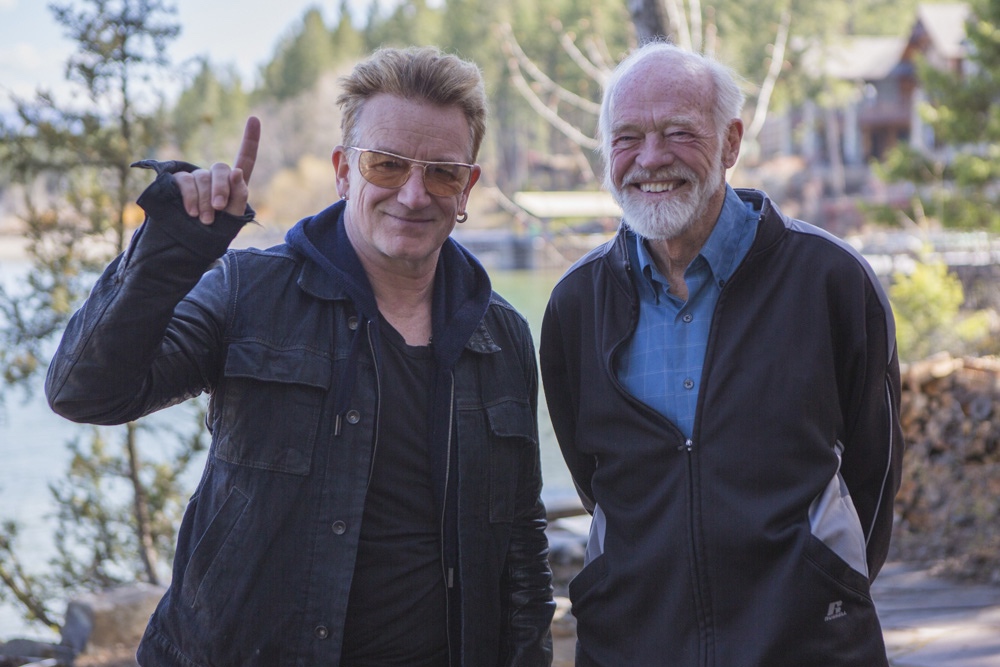 Also, if you’re a Eugene Peterson fan or if you’re a fan of U2 or, especially, if you’re a fan of both the Irish rocker and The Message translator you might spend 21-minutes today checking out this video. Fuller Theological Seminary has produced a very short and very high-quality documentary on how Peterson and Bono engage the Psalms. Apparently, once Peterson finished the Old Testament “Message-style,” Bono began reading the Psalms in a whole different way. He reached out to Peterson and the two have become pretty good friends. The short film documents a visit Bono had with Peterson at the author’s mountain home in Montana in which they discussed together the Psalms, honesty and dishonesty in Christian art and music, and violence. It’s good. Really interesting. It’s funny listening to Peterson butcher the name of “Rolling Stone” magazine and refer to the floor near the stage at a U2 concert as the “mash pit.” It’s also really cool when Peterson, while discussing the imprecatory psalms, tells Bono, “We’ve got to learn how to cuss without cussing.” Bono replies, “Yeah, I like that. That’s going to stick with me.” You can watch the video by clicking here.
~~~~~~~~~~~~~~~~~~~~~~~~~~~~
Though we in the American Restoration Movement have been intentional in ignoring and resisting any church history before the early 19th century, we cannot deny that all of us are influenced and shaped by all church history. We don’t acknowledge it, mainly, because we take it for granted. Keith points out that the New Testament table of contents in our Bibles is taken for granted as some kind of unquestionable truth as if it came straight from the apostles at the end of the first century. So, we make an exception to Thomas Campbell’s “nothing not as old as the New Testament” when we accept the New Testament itself (see yesterday’s post).
Keith argues for making these exceptions, which we all make, “with clear eyes and full awareness.”
We could spend several days talking about the things we believe and practice in our churches that are not “as old as the New Testament.” The separation of the Lord’s Supper from an actual meal didn’t begin to happen until late in the second century and into the third. Nobody thought to refer to God as a three-person Trinity until the second century and it wasn’t made an official church position until the fourth. The idea of translating the Old Testament from the original Hebrew instead of the Greek came from the fourth century. The use of unleavened bread in the Lord’s Supper didn’t happen until the eleventh century. Congregational singing in harmony wasn’t practiced until the twelfth century. These are all beliefs and practices (innovations?) that are not “as old as the New Testament.” Yet, instead of throwing them out, we take them for granted in our faith and worship.
Let’s also acknowledge that there are plenty of practices which are as old as the New Testament, commands and examples written in our holy Scriptures, that we don’t practice, and would never consider practicing, because of church history and tradition. To move the conversation along, allow me to concentrate today on two very obvious ways Keith observes that we adhere to church tradition and actually use church history to interpret Scripture and inform our practice.
The first is with baptism for the dead that the apostle Paul mentions in 1 Corinthians 15:29:
“Whatever this practice was, we do not practice or endorse it. Why don’t we practice it? It is not because Paul expresses disapproval, because he does not. In fact, he raises the issue to show the Corinthians how, though they deny the resurrection, their practices are undergirded by a belief in the resurrection. Far from being negative about baptism for the dead, Paul is neutral or perhaps positive. So why doesn’t the church now baptize for the dead? The reason we do not baptize for the dead is because the historic church has not baptized for the dead.”
Imagine if we had nothing else in Scripture about baptism for the dead other than this one verse in 1 Corinthians which, by the way, is indeed the case. But what if the historical record were different? What if there were written documents from the second and third centuries attesting to and approving a ritual for baptism for the dead? We would probably be practicing it today! But with the exception of Latter-Day Saints, no one in the history of Christianity has practiced baptism for the dead. So we interpret the verse in 1 Corinthians 15 as an aberrant practice. We’re convinced that if Paul had been writing a sacramental theology, he would have clearly condemned the practice in unambiguous terms. Why? Because no one’s ever done it. As Keith points out, Sunday School classes have a lot of questions when they study 1 Corinthians, but they never seriously consider the thought of restoring this practice. So, we’ve got a first-century New Testament practice left completely out of our faith and worship today based solely on church tradition and history.
Let’s do one more: the Lord’s Supper. The way we observe the meal today bears almost zero resemblance to the ritual as it is understood and taught and practiced in the New Testament. The very fact that we eat the cracker and sip the little swallow of juice separate from a full evening meal is enough evidence to acknowledge that we are influenced and shaped by church history and tradition. Our insistence on the use of unleavened bread is a relatively new innovation that helped split the Eastern and Western churches in the eleventh century. The early church didn’t use unleavened bread for the same reasons it didn’t use bitter herbs, lamb, and multiple cups of wine. But we demand unleavened bread today. Why? Because the Roman Church made the change about a thousand years ago.
So, let’s look at Scripture. What does the New Testament say regarding the day to eat the Lord’s Supper? According to Acts 20:7, the church in Troas met on the first day of the week to break bread. This is the only reference we have in Scripture for Sunday. And it’s tricky because they wound up eating it after midnight. The Last Supper took place in the middle of the week. The church in Jerusalem did it daily (Acts 2:46) and Paul doesn’t give us a day in 1 Corinthians (11:26). We don’t have a whole lot on the day itself.
On the other hand, there’s a much more clear and consistent Scriptural testimony regarding location. The Last Supper was eaten in an “upper room.” The early church also celebrated the meal in an “upper room” (Acts 20:8).
So why do we insist on Sunday as the day to observe the Lord’s Supper but we place no guidelines at all on where the Supper can be taken? Based on Scripture alone, it’s not clear that the day is any more or less important than the location. If anything, there’s more testimony about the location than the day. Why do we dismiss any discussion about where we’re supposed to eat the Lord’s Supper as irrelevant while, at the same time, we spend a ton of time and energy searching the Scriptures to make a strong case for the Sunday timing?
“Tradition — a tradition that extends unbroken back to the second century — repeatedly attests to the importance of the day, not the location. The historic tradition supports the theological case for the importance of resurrection day and, therefore, the possibility of celebrating other significant times and seasons. Celebrating the Supper in an upper room has always been, according to this same tradition, an indifferent matter, as it rightly is for us. But despite all the vast changes in the theology and practice of communion, a Lord’s Day never passed in the first fifteen centuries without celebration of the Lord’s Supper. Whether we realize it or not, the church’s history is a decisive factor that influences our faith and practice.”
Rather than attempting to run away from church tradition, which we cannot; instead of ignoring or resisting church history and tradition, which would require we deny most of our formation influences, why not embrace the history and examine it? Why not search for the centuries of wisdom that are available in acknowledging our past: the good and the not so good, the faithful and the not so faithful?
Peace,
Allan

Recent Comments