Category: Matthew (Page 9 of 24)

He Will Come to Judge

“On the third day he rose again from the dead, ascended into heaven, and sits at the right hand of the Father Almighty, from which he will come to judge the living and the dead.” ~from the Apostles’ Creed
RightHandSaintsNobody wants to see a judge. Appearing before a judge is not at the top of anybody’s list of enjoyable things to do. Not even lawyers, as sick as they are, want to go see a judge (sorry, that’s a cheap shot; I should apologize to Utsinger, Flow, the Egglestons, J. Bailey, and maybe even a couple of judges). If you walk into any government building or have a conversation with any government official and she says, “The judge wants to see you” or “You’ll need to appear before the judge” all your organs start to shut down. It’s not fun.

“The Son of Man is going to come in his Father’s glory with his angels, and then he will reward each person according to what he has done.” ~Matthew 16:7

This is a tough topic. The idea of a judgment is offensive to our culture. In this age of uber-tolerance, in this age of “Don’t judge me!” society bristles at the concept of any kind of judgment on almost anything. This might be Christianity’s most offensive doctrine. Our culture has no problem at all with a God of supreme love who supports us and accepts us no matter how we live. But it strongly objects to a God who punishes people. We have no problem with a forgiving God, but we can’t accept a God who judges.

Well, guess what? It’s both. We know it to be both.

Christians believe that God is both a God of love and of justice. Lots of people struggle with that. They believe a loving God can’t be a judging God. I’ve been asked this before, and maybe somebody’s asked you, “How can a God of love also be a God of anger and wrath? If God is loving and perfect, then he should forgive and accept everybody, right? He shouldn’t ever get angry.”

All loving persons are sometimes filled with anger because of their love. I’m grateful to Tim Keller’s insights here from his eye-opening “The Reason for God.” If you really love a person and someone harms that person, you get angry. If someone hurts your spouse or harms your child, you get ticked off. Even if they are the ones hurting themselves, you get angry. Think about how you feel when someone you love deeply is being damaged by terrible decisions or stupid actions or bad relationships. You don’t just tolerate it with kind of an apathetic “whatever” like you would if she were a stranger. Far from it! You get mad. Angry. Anger is not the opposite of love; hate is the opposite of love. God’s wrath is not a cranky explosion; it’s his determined opposition to the cancer of sin that’s eating out the guts of the human race he loves with his whole being.

The Bible says God’s wrath flows from his love and delight in his creation. He gets angry at evil and injustice because it’s destroying his creation’s peace and integrity.

“The Lord is righteous in all his ways and loving toward all he has made… The Lord watches over all who love him, but all the wicked he will destroy.” ~Psalm 145:17-20

Another thing I hear is that believing in a God who judges makes Christians very narrow-minded people. We’re exclusivists and we’re divisive and it might even make us violent people because we believe in God’s judgment. Now, hold on. Everyone believes that actions have consequences. Everyone believes that bad actions have harmful consequences. But because Christians believe that souls never die, Christians also believe that our actions affect us forever. Even non-Christians believe that there are terrible moral actions like lying and murder and exploitation and cruelty and self-centeredness. But since they don’t believe in an afterlife, they don’t think the consequences of those bad actions go on into eternity. Does that make Christians narrow-minded, because we believe wrongdoing has more long-term consequences than non-Christians do? It doesn’t make us narrow just because we believe the consequences of wrong actions are more serious.

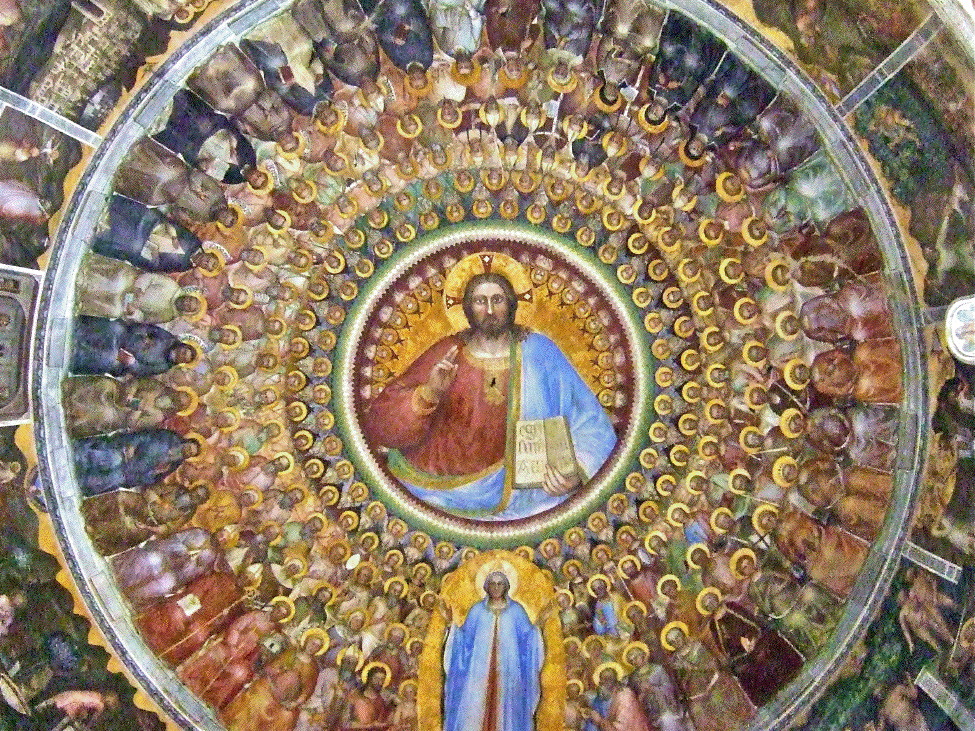
We believe that today Christ Jesus sits at the right hand of the Father Almighty, from which he will come to judge the living and the dead. We’ll unpack some of that here this week.

Peace,

Allan

Resurrection Vindicates the Jesus Way

EmptyTombCaveThe resurrection of Jesus proves that this difficult way we wrote about yesterday is the right way to live. We believe this, yes? We’re committed to it. We know that the more we talk like Jesus and act like Jesus, the more we behave and respond like Jesus, the more naturally we’ll come to consider the needs of others more important than our own. The more we’ll sacrifice for others and serve others and show others unconditional grace and love. This is definitely the only way to live.

But it doesn’t always feel right. It doesn’t always work. Sometimes living like this will get you killed.

Why was Jesus crucified? Not because he was powerful, not because he was violent, not because he was exclusive and judgmental. Our Lord was rejected, he was mocked and beaten, he suffered and was killed, because he loved so unconditionally. Because he was so liberal with his forgiveness. Because he ate with prostitutes and partied with sinners and hugged the lepers. He was killed because he gave everybody the benefit of the doubt, because he worked so hard to tear down the walls that divided people, because he refused to label people, because he never one time did anything in his own interests. The world was offended by the way he lived. And they killed him.

And for a couple of days it looked like the world was right and the Jesus Way was wrong. The world’s way was the right way to live and this opposite Jesus Way? Ha! He’s dead! He’s not the Son of God, he’s hanging on a tree! He’s cursed by God! He’s not the promised Messiah, he’s no representative of God to tell us how to live! Duh! He’s dead!

“Christ Jesus was declared with power to be the Son of God by his resurrection from the dead: Jesus Christ our Lord!” ~Romans 1:3-4

The resurrection vindicates the Jesus Way. God bringing a dead Jesus back to life proves that the Jesus Way is the right way. It validates the Jesus Way as the eternal way, the only way to live.

When Jesus says when someone hits you on the right cheek, turn your other cheek to him, too, he doesn’t say, “Then that person will stop hitting you.” Turning the other cheek may actually get you punched a couple more times; it might put you in the hospital. When Jesus says forgive others unconditionally, he doesn’t say, “Then that person will stop sinning against you.” That person may betray you and hurt you up to 469 more times! When Jesus do not resist an evil person doing you harm, he doesn’t say, “Then that person will become nice.” Not resisting might get you killed.

No, our Lord says turn the other cheek, forgive without limits, walk the extra mile, give up your coat, love your enemies, and pray for those who persecute you because that’s the way of our Father in heaven. The resurrection proves that it’s the right way to live, that it’s our calling. That’s the reason we exist — to live this very difficult, counter-cultural, other-worldly way and to be raised, to be vindicated in the end by the Creator of Heaven and Earth.

Peace,

Allan

A Promise From the Future

HardWorkAnt

“Blessed are the dead who die in the Lord from now on. ‘Yes,’ says the Spirit, ‘they will rest from their labor, for their deeds will follow them.'” ~Revelation 14:13

It’s a promise from the future that impacts our every moment in the present: Your labor in the Lord is not in vain. Not at all.

You know, salvation is not a private thing. God saves us in order to work through us to save others. And everything we contribute to the cause — everything! — is used by God toward that great and ultimate end. Just like the parable of the talents, what we use to his glory, whatever it is, will be multiplied and used. Like the cup of cold water given in his name, it will be rewarded. Our deeds will follow us into eternity. Our efforts for the Lord are going to last forever.

We are building for the Kingdom. All of our work matters. Every minute of your day is packed with heavenly potential. Every action is loaded with eternal consequences.

To his enduring praise and glory!

Peace,

Allan

Forgiveness is the Only Way

SinfulWomanForgiven3There are more than 50 words in the Bible for sin: debt, evil, wickedness, trespass, unrighteousness, guilt, transgression, disobedience, rebellion, etc., But exposing the sin and naming the sin is not what matters. Keeping score is not the Gospel. Witch-hunting is not the Gospel. Shaming people is not the Gospel. Forgiving sin — that’s the Gospel. Because it’s the only thing that works.

Our Lord teaches us to pray: “Forgive us our sins as we forgive those who sin against us.”

We are faced with lots of sin, sin everywhere — personal sin, family sin, institutional sin. But Jesus doesn’t tell us to get a mop and a bucket and a brush so he can show us how to scrub the sin from our lives and the lives of our children and spouses and neighbors. He doesn’t tell us how to hook up a power hose so we can blast away all the corruption in government, all the sacrilege in our churches, and all the unbelief in our schools. Jesus tells us to pray: “Forgive us as we forgive.”

Our God deals with sin. He deals with sin decisively. Head-on. Effectively. It’s not like getting rid of a germ: “Here’s a shot, take these two pills, and call me in the morning.” It’s not like getting rid of mice in the attic: “Set out these traps, put out this poison, then Whack! Whack! Whack! All the sin is gone!” And God doesn’t deal with sin by amputation, like it’s gangrene on a diseased leg: “We’re going to chop it off. It’s really going to hurt. You’re going to have a severe limp the rest of your life. But, hey, there’s no sin!”

God deals with sin by forgiving us.

If something’s going to be done about sin, it’s not going to be with laws and commands and rules. Do we think what’s wrong with this world is something we can fix on our own? We can’t. Do we think there are judicial or governmental or educational or psychological ways to deal with sin? There aren’t.

Forgiveness is the only way.

“As God’s chosen people, holy and dearly loved, clothe yourselves with compassion, kindness, humility, gentleness, and patience. Bear with each other and forgive whatever grievances you may have against one another. Forgive as the Lord forgave you.” ~Colossians 3:12-13

Forgiveness is the only way to deal with sin. It does not settle all the questions of blame and fairness. In fact, it purposefully avoids those questions. What forgiveness does is allow a relationship to start over. Forgiveness brings people back together. It begins a good thing anew.

But a lot of us live in a logjam between forgiveness and justice. When somebody does me wrong, I can think of a million reasons not to forgive. He needs to learn a lesson. I don’t want to encourage her irresponsible behavior. She needs to learn that actions have consequences. I was the one wronged – he needs to make the first move. How can I forgive if she’s not even sorry?

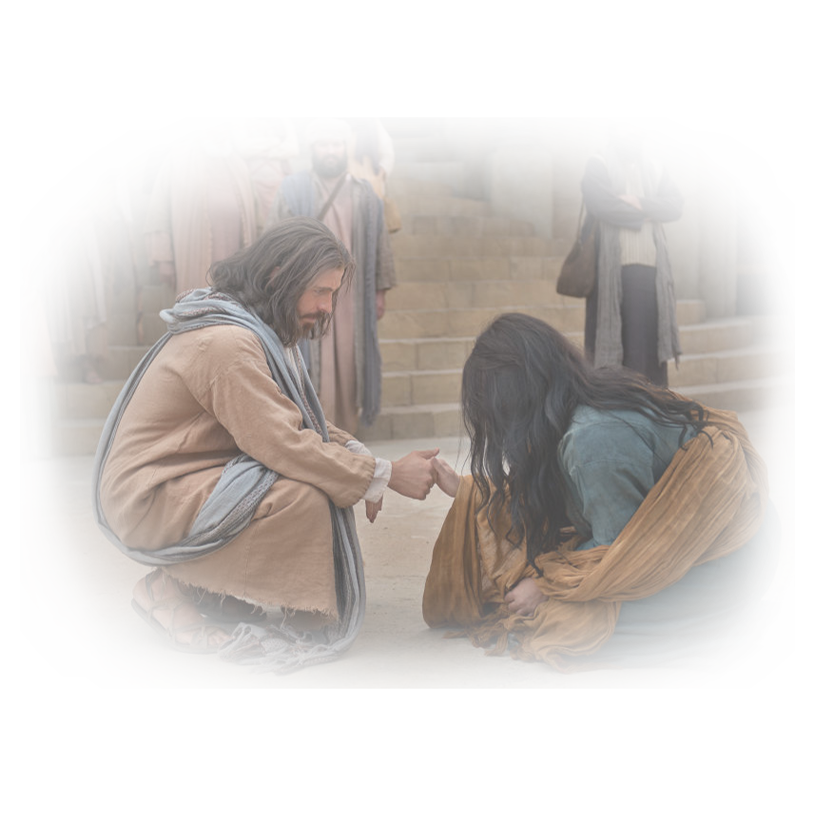
Remember the woman in John 8 who was caught in the act of adultery? They bring her to Jesus and throw her down at his feet. The Law says she should be stoned. But Jesus says, “Hey, whoever has never sinned can throw the first rock at her.” The young look to the old. The old look to their hearts. And they drop their rocks and walk away.

Jesus and the woman are left alone. The Lord stands up and looks around.

“Where is everybody? Has no one judged you guilty?”

“No one, sir,” she answers.

“I also don’t judge you guilty.”

If you ever wonder how God reacts when you fail, take those words and frame them. Hang them on your wall. Read those words of the Christ. Drink from them. Take them into your soul. “I don’t judge you guilty.”

When we sin against God, that creates a barrier. But forgives us and removes that barrier. God gives up his holy right to get even. Instead, he bears the cost of our sin in his own body. The sin is gone, the price is paid, and the relationship is restored. God made him who had no sin to be sin for us. You can’t get any more plain than that.

Justice is not the best or last word. In all matters of wrongdoing, in all matters of sin, in all that is wrong with the world and with us, in all that is wrong with our enemies and our friends, forgiveness is the best and last word. And forgiveness must be our first response to every person who hurts us or sins against us. We’ve got plenty of police officers and judges and juries and prosecuting attorneys to say, “You’re guilty!” Who’s going to say, “Father, forgive them?” If it’s not Christians, who’s going to say, “I don’t judge you guilty?” If not us, who’s going to say, “Your sins are forgiven?”

However important justice is — and it is very important — forgiveness is more important. Not soft sentimentality, but hard-edged Gospel. Not an apathetic shrug of the shoulders, but the white-hot flame of resurrection love forged in the furnace of the cross. Assuming that the criminal crucified next to Jesus was receiving a just sentence — he admitted it himself — forgiveness trumped justice that day. It always does.

Peace,

Allan

Forgiveness Honors God

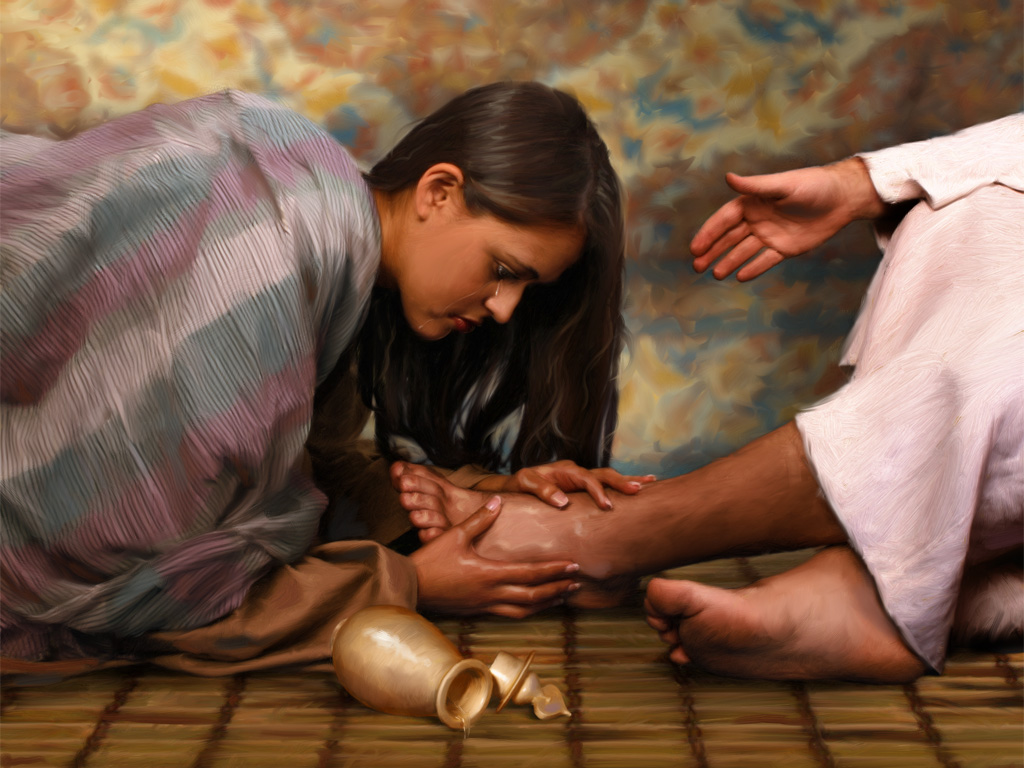
SinfulWomanWashingFeetWhen Jesus tells us to forgive, one of the main reasons he gives is because this is what God is like. In the Sermon on the Mount, our Lord commands, “Love your enemies and pray for those who persecute you that you may be children of your Father in heaven” (Matthew 5:45).

Real forgiveness honors God.

All people, all men and women, are created by God and made in the image of God. Every single person on this planet is a being of supreme value to God. That’s why in Genesis 9, God says anybody who takes the life of a human being is going to be held accountable. Even when an animal kills a human, God says he’s going to hold that animal accountable. Why? “For in the image of God has God made mankind” (Genesis 9:6). Every human life is sacred. Every human being has dignity.

Because all people bear the image of God, because all men and women are so valuable to God, we are not only forbidden to kill people, we are forbidden to curse people or talk bad about people. Any people. Scripture tells us we cannot “curse men and women who have been made in God’s likeness” (James 3:9). All human beings have this. Not just the “good” human beings — all human beings. Regardless of their track record, regardless of their character, God made them and God loves them. So we do, too.

Timothy Keller illustrates this by imagining a foreigner who visits Mount Vernon in Virginia. He doesn’t know anything about American history, he’s never been here before, and he’s surprised that Mount Vernon is a national monument. He might be confused. There are lots of old Virginia plantation houses that are bigger and fancier and more beautiful than Mount Vernon. Lots of those houses have more architectural merit than Mount Vernon. What makes Mount Vernon so worthy of all this honor and respect?

You’d say to this foreigner, this is George Washington’s house. George Washington is the father of this country. And that would explain it. You wouldn’t have to say anything else. The merits and quality of the house itself are irrelevant. Because we treasure the owner, we honor his house. Because it was so precious to him and we revere him, it’s precious to us and we take care of it. So we treasure every single human being on earth as a way of showing respect for their maker and owner.

Forgiveness also honors God because it’s an act of faith in God. By forgiving someone, I’m trusting that God is better at justice than I am. By forgiving, I give up my rights to seek fairness and to get even; I leave it all for God to work out. He will. I trust that he will. So I forgive.

Peace,

Allan

Bringing the World to a Halt

“I was hungry and you gave me something to eat, I was thirsty and you gave me something to drink, I was a stranger and you invited me in, I needed clothes and you clothed me, I was sick and you looked after me, I was in prison and you came to visit me… I tell you the truth, whatever you did for one of the least of these, you did for me.” ~Matthew 25:35-40

CupColdWaterYou can stop the world with these acts of mercy in the name of Jesus. You can bring the whole world to a screeching halt when you do these little things to bless others with the grace of our God that maybe they’ve never experienced.

You’re not going to stamp out illiteracy, but you can read books once a week at the elementary school in your neighborhood. You’re not going to solve the problem of world hunger, but you can buy a hot meal for those two guys down at the corner. You can’t stop all sex trafficking, but what if you threw a birthday party for a prostitute?

Seriously. What if your Bible class or your small group threw a birthday party for a prostitute? Can you imagine? That would interrupt the world. That would make the world pause and take notice and pay attention. Those kinds of things give the world a sign that there’s another reality here.

You can’t say anything to this world with an act of power. Big, loud acts of power and numbers and strength don’t say much. Jesus Christ stopped the whole world when he died. On a cross. The kinds of things that make a real difference have to come out of our weakness and submission, out of forgiveness and sacrifice and service.

A cup of cold water doesn’t sound like much. Apparently, it means a whole lot to Jesus. It’s not what you do, it’s what God does with it.

Peace,

Allan

« Older posts Newer posts »