Category: Lord’s Supper (Page 7 of 16)

Maundy Thursday

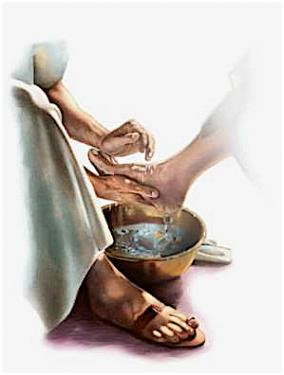
On this fifth day of Holy Week, the “4 Amarillo” churches are assembling together at Polk Street United Methodist Church this evening for a traditional Maundy Thursday service. “Maundy” comes from an old French word (mande) and a Latin term (mandatum) that mean “command,” and point to Jesus’ words around the table with his disciples on that night he was betrayed: “A new command I give you: Love one another. As I have loved you, so you must love one another.”  Tonight we are reminded of the sacrificial and self-giving love demonstrated by our Lord as he washed the feet of his followers. We’re reminded of his faithfulness and obedience as he went willingly to his death that very night. And we’re inspired to imitate our Savior in living lives of service to others, considering their needs more important than our own.

And they’ve asked me to preach it again.

Still not sure why. It probably has something to do with the fact that Howie and Howard and Burt all have Good Friday services and multiple Easter Sunday services they’re preaching this weekend. And I don’t. So I get the Maundy Thursday gig.

Regardless, I’m very, very honored and excited to do it. This is a communion service. And there’s nothing more distinctly Christian we can do than to share the Lord’s Meal with a bunch of different disciples from a bunch of different denominations and backgrounds and interpretations. Christ died to destroy all the things that separate us from God and from one another. He died to tear down the walls, to annihilate the barriers, to rip the veil in two from top to bottom so that we all have equal access to the Creator of Heaven and Earth and all his people. So that we can all eat and drink together in his everlasting face-to-face presence. That’s why he died. And the only thing that keeps us from enjoying little slivers of that eternal feast here in this life is our refusal to love one another as Christ loved us.
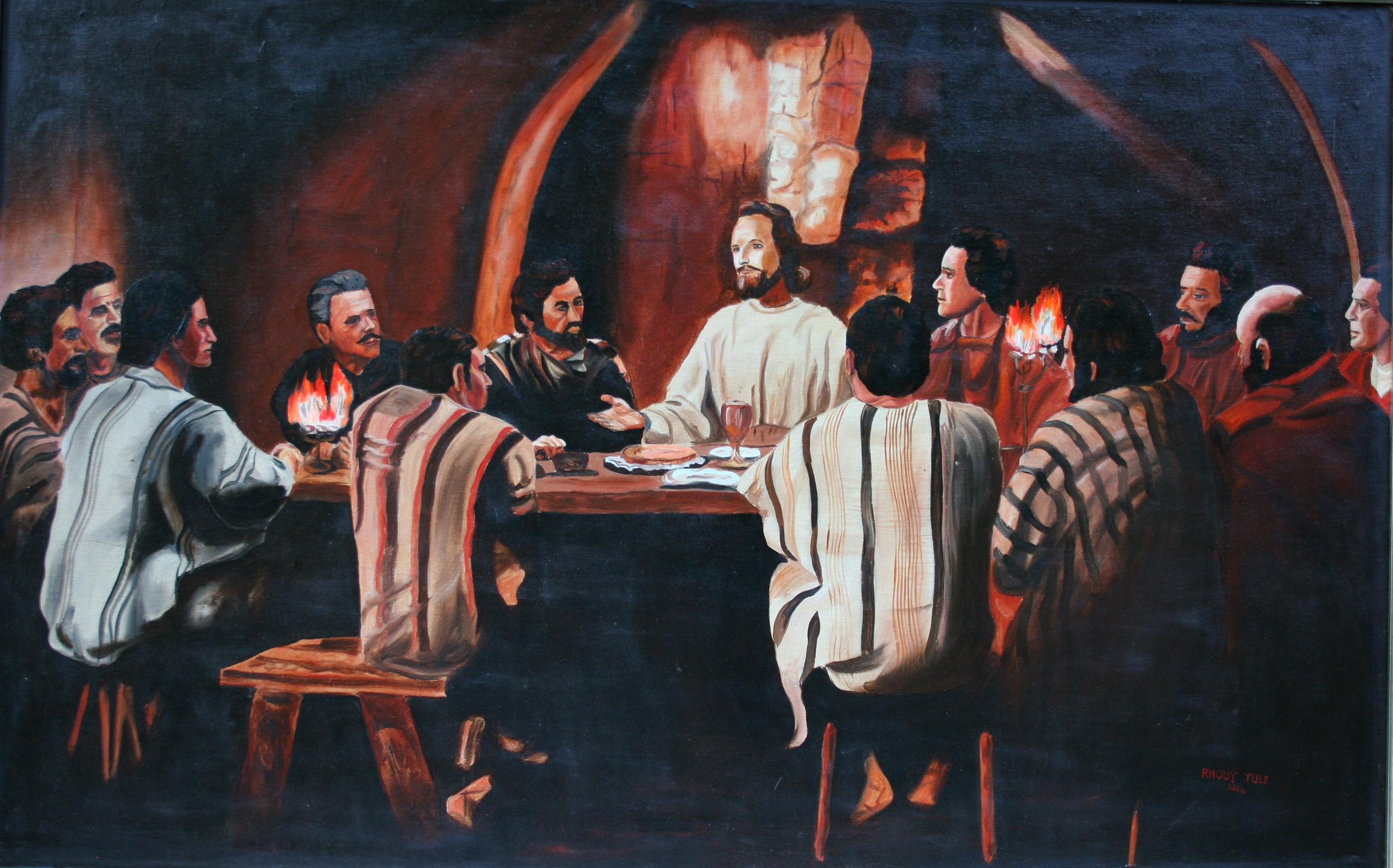
Our own prejudices. Man-made lines of distinction. Our own arrogance and pride. Our unwillingness to practice the same love and acceptance and forgiveness and grace to other Christians that God in Christ showed and continues to show to us — that’s the only thing that keeps all God’s churches from expressing and practicing the kind of unity that would flat-out change the world.

I am grateful to belong to a faith community that understands this. I praise God that the leadership of our four downtown churches is pushing us to do more together, not less. And I cherish my partnership and friendship with Burt, Howard, and Howie. I pray that our Maundy Thursday gathering tonight encourages our churches, that it testifies boldly to the transforming work of Christ Jesus, and that it results in praise and glory to God.

Peace,

Allan
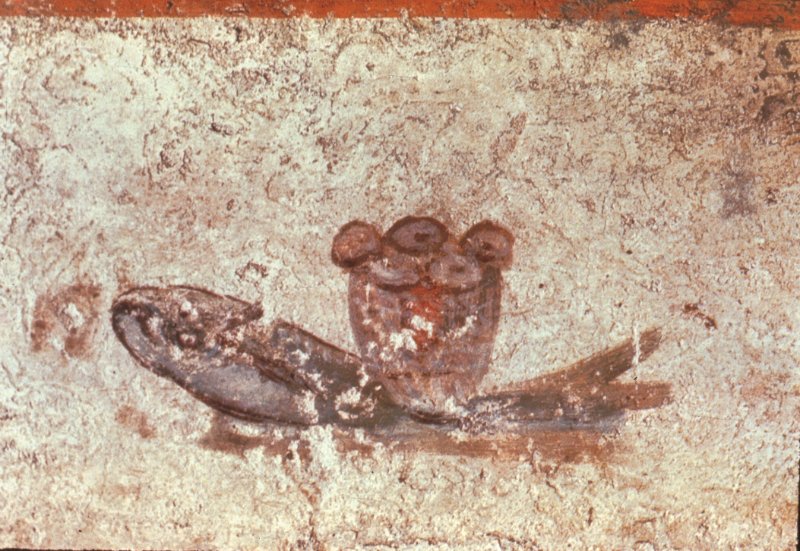


Banquet Sounds

Here’s a quote I didn’t have time to include in this past Sunday’s sermon about eating and drinking at Christ’s table:

“There is little that we can point to in our lives as deserving anything but God’s wrath. Our best moments have been mostly grotesque parodies. Our best loves have been almost always blurred with selfishness and deceit. But there is something to which we can point. Not anything that we ever did or were, but something that was done for us by another. Not our own lives, but the life of one who died in our behalf and yet is still alive. This is our only glory and our only hope. And the sound that it makes is the sound of excitement and gladness and laughter that floats through the night air from a great banquet.”    ~Frederick Buechner

The table of our Lord has always been the place to experience his great love and mercy, his forgiveness and peace, and righteous relationship with him and all his children. Praise God for the weekly grace of the Lord’s Supper. And for the seats he has reserved for us at the wedding feast of the Lamb.

Peace,

Allan

Eating and Drinking with Losers

“When you give a banquet, invite the poor, the crippled, the lame, the blind.” ~Luke 14:13

“Why does your teacher eat with tax collectors and sinners?” ~Matthew 9:11

“Bring in the poor, the crippled, the blind, and the lame!” ~Luke 14:21

“Here is a glutton and a drunkard, a friend of tax collectors and sinners.” ~Matthew 11:19

The gospels show us that the Kingdom of God is a big party with a bunch of losers. Jesus wants us to see that God’s idea of a great time is a huge feast with a bunch of people you wouldn’t be caught dead with on a Saturday night. Or any other time of the week. Jesus came eating and drinking with losers.

And you are one of those losers. So am I. We are all losers together at the table of our King.

We’re all coming to the table with a limp. We’ve all got a wound or a chronic pain. We come to the table with a horrible story or a distorted view or a serious issue. All of us are maimed. Or dysfunctional. Or disabled. And broken. All of us.

The Pharisees at these dinner parties — the ones “watching closely,” the ones criticizing Jesus and complaining — are so self-righteous and smug with their nice and tidy lives in their pressed and flowing robes. They set themselves apart from and above the losers. “They’re sinners; but we’re saved. Their lives are a mess; but we’ve got it all together. They need a whole bunch of God’s grace and forgiveness; we just need a little grace to get us over the top.”

No! In Luke 14, Jesus says, at these dinner parties, don’t choose a place of honor for yourself. You’re not as great as you think you are. And these people you categorize as losers are my cherished children.

We are all sinners, every one of us. We have all sinned and fallen terribly short of the glory of God. And we are all being saved together by the lavish grace of our Father. Yes, the ground is level at the foot of the cross. And, yes, all the seats are the same around the table of our Lord.

Scripture says we’re all going to eat and drink together with Jesus forever. We’re all going to take our places with him around the table at the wedding feast of the Lamb. And I think Sundays are the warm-up. I think Sunday mornings are party practice. Sunday mornings together are like the chips and hot sauce to the fajitas and enchiladas. Eating and drinking with sinners, sharing a meal with broken losers, with each other, together on Sundays, teaches us how to live together. It’s one of the places we learn to bear one another’s burdens. We learn to help each other, to encourage each other, to challenge each other.

We look at all the faces around the Lord’s Table on Sundays and they’re all looking back at us. No doubt, seeing very clearly our messes, knowing fully our sins. And, yet, still choosing to eat and drink with us. And we know at that moment that Jesus was crucified for the lousy company he kept. And he still is.

Peace,

Allan

To This You Were Called

Maundy Thursday. Yeah, I wasn’t overly certain of what it meant until I was asked by Howard Griffin, my neighbor and friend and senior pastor at First Presbyterian Church here in Amarillo, to preach their traditional Maundy Thursday service this evening. The communion gathering remembers that last dinner Jesus had with his disciples the night he was betrayed. The traditional text is John 13, specifically Jesus washing the feet of his disciples. And I’m so honored and blessed to be bringing the message this evening.

Part of the reason Howard asked me to do this, he says, is because we Church of Christ folks have a pretty good handle on communion. I like to think that we do. And that’s another reason I’m so excited about tonight.

It’s a communion service. It reminds us that Christ’s table is an open table, that all are invited to participate together in his presence, that we are all one people together in his death, burial, and resurrection. There are no divisions at the table of our Lord. When we gather around the table there are no barriers to fellowship, no differences in our status or standing with one another or with our Savior. We are all accepted, all justified and sanctified, all saved by the same faith in the same risen and coming Lord. And we eat together and share the meal together as a universal symbol and reminder of that blessed unity.

So, naturally, this became a “4 Amarillo” event.

We’re expecting a full house at First Pres tonight. Baptists and Methodists and Presbyterians and a bunch of CofC’ers sharing the Lord’s meal together, lifting praise to our Father together, praying together, and committing to serving one another and considering the needs of each other more important than our own.

I’ve always known that this is the way it’s going to be in heaven. What a glorious blessing, an unexpected gift, to experience this sliver of eternity in downtown Amarillo tonight.

Peace,

Allan

A Time to Laugh

“There is a time for everything… a time to weep and a time to laugh.” ~Ecclesiastes 3
I wish I could take credit for the potency of the “fruit of the vine” we shared around our Lord’s table here at Central yesterday morning. I wish I had set it all up ahead of time. I wish I had made the right phone calls and contacted the right people, even shown up here on Saturday night to supervise the filling of the cups.
The plan was to spend the morning together considering the power of the resurrection. And, boy, did we! The powerful video from the dedication ceremonies of the Alara school reminded us of the power of our God who gives brand new life to more than 300 African orphans in a situation most people gave up for dead about five years ago. Jim Killingsworth’s powerful testimony reminded us of the power of our God who restores and heals, who brings joy and peace to his people walking through a dark desert. John T. Langley’s powerful words at the table connected us to faithful communion prayers from 1,800 years ago, reminding us of the power of our God to crush Satan and destroy all evil in the resurrection of Jesus.
The powerful grape juice — “powerful” may be an understatement — reminded us…. Hmmm. What did that juice remind us of?
How about this: the power of our God who saves us and changes us and bonds us together and empowers us to do his will despite our terribly feeble and inadequate efforts.
What a great reminder yesterday that even our best endeavors and our hardest tries always fall short. What a testimony to the grace of our God who loves us and takes care of us despite our continual missteps. What a powerful witness to our own humanity and to God’s amazing patience and faithfulness to us all.
One of our more clever young men in the youth group texted me as soon as the assembly was over, “It was either the wine or the sermon, but one made me sleepy.” Funny guy. Somebody else emailed me this morning, “Do we need to raise the traditional Church of Christ ‘Age of Accountability’ to twenty-one?” Good.
Yeah, that was strong stuff we were passing out yesterday. No, it wasn’t an intentional thing to be used as a sermon illustration. No, it wasn’t connected to “4 Amarillo.” It was a mistake. We’ve discovered the cause of the mistake and are taking steps to make sure it doesn’t happen again.
In the meantime, enjoy the jokes and the laughs, re-live the animated expressions on the faces around you yesterday, and remember that none of us is perfect. But we belong to a powerful, powerful, powerful God who is.
Peace,
Allan

Around the Table: Part 9c

The destructive shift in the Church’s communion meal — from celebratory feast to solemn service — reached the lowest point of its departure from the Scriptural witness and the faithful practice of the earliest Christians during the Middle Ages. The move from table to altar, from a celebration of Christ’s resurrection and reign to an introspective and remorseful remembrance of the crucifixion, was well underway. Prayers and rituals designed by church officials to scare nominal Christians into better living were certainly having an impact. Priests and bishops pounded church members with the notion that unfaithful living during the week prohibited one from eating and drinking the body and blood of Christ on Sunday. To partake of the communion bread and cup in this “unworthy” manner would result in eternal damnation. So you must straighten up if you’re going to do communion.

Oops. Church officials never considered that church goers might just stop doing communion.

Over the years, people just stopped going forward for the bread and cup. It was too scary, too risky, too dangerous. Go to hell if I’m not worthy of the communion? Well, how was one to know? Who’s truly worthy? I think I’ve been good all week, but what if I’ve missed something? So people began to just stay in their seats during communion time, turning the interactive participatory feast into mainly a spectator event.

The doctrine of transubstantiation, the belief that the bread and the wine actually turn into the literal and actual body and blood of Jesus at the words of sanctification, had done a real number on communion. Consider the progression of thought and practice during the middle ages:

Instead of a festive table, communion had become the solemn altar where Jesus was re-sacrificed every Sunday. Cyril of Jerusalem’s communion prayers contained the words, “We offer Christ who has been slain for our sins.” Gregory Nazianzus wrote communion instructions to his church, reminding his parishioners “we sacrifice the Master’s body with bloodless knife.”

Special unleavened bread was introduced in the 900s. Instead of common table bread that had been used by the Church for nearly a millennium, priests and bishops needed the elements to be more ritualistic, more distinctive than what one would find in their own pantries. So they began using a pure, white wafer of unleavened bread, specially baked by sanctified hands, to symbolize the pure and incorruptible priestly sacrifice. This made the bread more mysterious, more sanctified. And it caused the ceremony to be even more connected to that last supper Jesus ate the night before his death.

Eventually, the cup itself was taken from the people. Spilling the actual blood of Jesus would be an unforgivable offense; only the ordained priests could be trusted with such a precious responsibility. So communion became the swallowing of a thin, flavorless wafer and nothing with which to wash it down. The priests were the only ones drinking the wine in more and more elaborate ceremonial style. These elements contained power. They had to be treated with reverence and awe. The bread and the wine were said to confer blessing, to heal disease, to protect from evil. Only the clergy could handle it. As a result, fewer people were coming forward for any of it at all.

By the Lateran Council of 1215, the Church was officially recommending that Christians partake of communion once a year. On the other 51 Sundays, people were encouraged to pray their own individual prayers during the ceremony. Prayer beads and prayer books were introduced to keep the laity occupied while the clergy did their thing with communion down front. The Lord’s Supper became more and more personal. It was private, just between you and God while the priests did the eating and drinking on behalf of the church. With all the robes and banners and magic words and smoke, the emphasis was much more on the adoration of Christ, instead of communion with Christ.

Few have seriously attempted to renew the original table aspect of the communion feast. It’s not an easy thing to do. In order to change what had evolved (or devolved) over the course of a thousand years means taking a highly critical stance against Church tradition. And it requires a strong restoration impulse, a deep desire to go back to what was original and unblemished. But by the mid 1400s, several reformers had said, “Enough is enough!”

Peace,

Allan

« Older posts Newer posts »