Category: Faith (Page 21 of 24)

How Long, O Lord?

How Long, O Lord? 

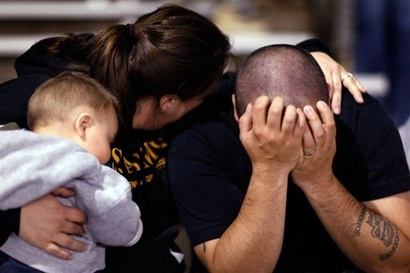
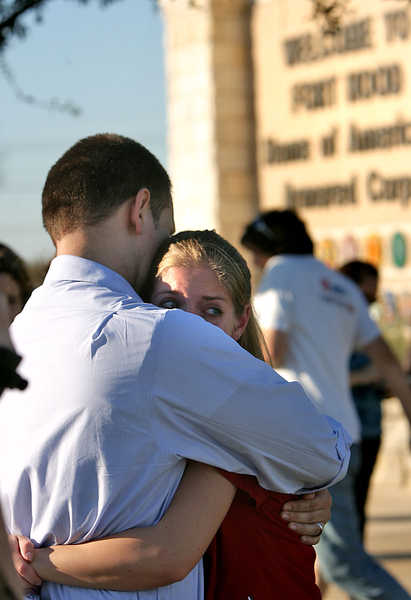
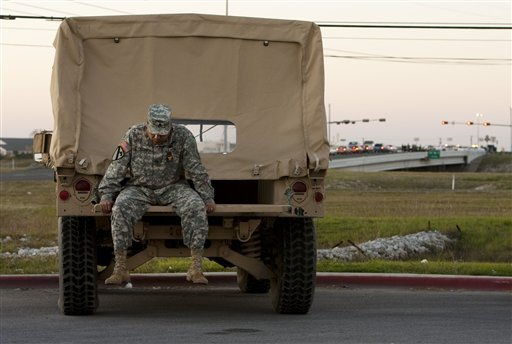
I’ve watched and listened to with fascination over the past 48 hours the continuing coverage of the horrible shootings at Fort Hood. I’m drawn to the news stories for several reasons.

My brother-in-law was stationed there for a couple of years right in the middle of the Gulf War. He and my sister lived there at Fort Hood. Carrie-Anne and I visited there, met their neighbors, played ping-pong and air hockey in the rec center there, and shopped at the military store there. On two different occasions, Brent was designated for deployment to the Persian Gulf. On both those ocassions they gave him less than 48 hours notice to tell Sharon and their families goodbye. And we prayed. And prayed. And prayed. And on both of those ocassions, after he had been packed and processed, the orders changed and his unit was told to stay put in Killeen.

Their daughter, my first niece, was born at Darnell Army Medical Center there at Fort Hood. Her birth, on New Year’s Day 1991, interrupted my plans to watch the #3 Longhorns and the #4 Miami Hurricanes in the Cotton Bowl. We spent two days at that hospital on that base for Cassie’s arrival.

A few years later Carrie-Anne and I saw Foreigner at a rock concert on base they called “HoodStock”.

Twice after that I called high school games at the Killeen Kangaroos football stadium.

And so, while I don’t know anybody in Killeen anymore, we do have some very deep and vivid memories of some wonderful family times there. I’m watching this thing unfold and listening to the horror and watching the tears of the families and feeling deeply impacted. This is a truly horrible thing that’s happened here. It’s awful. It’s evil. How Long, O Lord?

“Why, O Lord, do you stand far off? Why do you hide yourself in times of trouble?” ~Psalm 10:1

And I recall the age-old statement of the skeptic: If God is good, he’s not really God. And if God is really God, he’s not good. In other words, God could have prevented what happened at this army base in Central Texas. The fact that he didn’t must prove he’s not good. And if he could have prevented it, he must not be the powerful God we think he is.

Wrong. And wrong again.

How Long, O Lord?In times of tragedy — in our own lives, in our local communities, globally — we hold on in faith to the anchor of God’s eternal love for his creation. We know he loves. We know his great love is the force behind everything our Father does and everything he allows.

The truth is, we don’t see everything yet. We don’t fully understand everything. We’re assured that our God is working out everything according to his purposes. And we know that his purposes are driven by what’s in our best interests and what’s best for the redemption of his creation.

So, we trust and we pray.

It’s OK to appeal to God’s omnipotence and his righteousness and declare to him that we don’t understand. It’s OK to question God and wrestle with him and beg him to change things. These kinds of prayers actually reveal our deep faith. They say to God, “We know you are just and righteous and all powerful; we just don’t understand.”

“Pour out your hearts to him, for God is our refuge.” ~Psalm 62:8

Peace,

Allan

Between Intention and Result

Between Intention & ResultI ran across a collection of letters last night written by famous Texas sportswriter / novelist Bud Shrake. Back in the mid ’60s Shrake, who wrote for the Dallas Times Herald and the Dallas Morning News, moved to New York to take a job with Sports Illustrated and to work on his novels and screenplays. During Shrake’s colorful career he managed to write ten novels exploring two hundred years of Texas history; several sports-related books, including Barry Switzer’s biography Bootlegger’s Boy; and five books with golf legend Harvey Penick, including the number one all time best-selling sports book in history, Harvey Penick’s Little Red Book.

Shrake died earlier this year at 77 years of age. And the current issue of Texas Monthly has compiled an edited selection of letters he wrote from New York in 1964-65 to friends back here in DFW and Austin. The letters are fascinating to me. They are of a long-gone style of writing that characterized the work of the best-ever sports writers from the ’50s, ’60s, and ’70s. But they also reveal the guts of a guy struggling to make it. Shrake is restless in his letters. Searching. Unsure of himself, but determined to keep on.

I see myself in a letter he wrote to his ex-wife, Joyce, on April 10, 1965:

“I do not think you can show me a writer who is not insecure about his work, unless he is one of those who is merely plodding over the same weary ground; a pattern mystery story man, or historical novel writer, or perhaps a memoirist. Or perhaps a [Thomas] Mann or someone in the later years of his craft when he is not doing anything that is for him new. Do you think Mailer, for example, was insecure about “An American Dream?” Sure he was, and is. Such feeling partially accounts for the sudden eccentricities, the erratic-nesses, the gropy destruction bouts of drunken wildness, the hysteria even, of writers who are at least trying to be serious regardless of their true merit. One simply does not know for sure what is being achieved, what the gap might be between intention and result.”

Couple of observations. One, can you imagine one of the current sportswriters of a major newspaper writing this way today? Incredible, huh? Stories about Bob Lilly and Don Meredith and Stan Musial and Bob Cousey were written this way.

Two, I don’t feel exactly this way as a preacher. There haven’t been any “bouts of drunken wildness.”

But I can certainly relate to the insecurity. I can easily relate to “trying to be serious regardless of [my] true merit.” It’s the last line of the letter there, this gap “between intention and result,” that perfectly captures my thoughts and feelings about being a proclaimer of the Word of God. I never know for sure what’s really being achieved.

What’s being achieved?I never know what’s going to happen. I never know. From day to day and week to week — sometimes it’s an hourly mystery — I never know how what I’m going to say is going to be received by those who hear it. I’m acutely aware that there are 900 sermons being preached at Legacy every Sunday morning. I’m preaching one and the 899 other participants are hearing their own. There’s a huge unknown gap between intention and result.

The maddening thing is that I have no control. None. It’s all on God. He guides me all week on the words I’m going to say. He shows me by his Holy Spirit what to preach. He gives it to me during long periods of prayer and meditation and study. And then he uses those words to do with them what he wants. Totally independent of me. I’m really of very little significance in all this. He speaks to people. He touches hearts. He convicts and converts. He does things I never imagine. He causes things I never could have planned. I understand that. I get it. And that should bring me a real peace. Those things should calm me and relax me. It’s not on me. It’s all on him.

But I really don’t know what, if anything, is “being achieved.”Insecurity

My security is in my God. Yeah, I know. But…

My confidence comes from God. Yeah, I know. But…

My “merit” is not mine. I don’t have any. It all belongs to God. But…

I haven’t been doing this long enough to know if it’s just me or if every preacher has these feelings of insecurity. Inferiority. Is it just a personality thing with me or are all preachers this way? How do I look at my own sinfulness and selfishness and fallenness and inclinations to evil and then presume to speak for God to a congregation of his holy children? I’m still not very good at this yet. And it frustrates me.

I take comfort from the words of Augustine. “My own way of expressing myself almost always disappoints me. I am anxious for the best possible, as I feel it in me before I start bringing it into the open in plain words; and when I see that it is less impressive than I had felt it to be, I am saddened that my tongue cannot live up to my heart.” OK, I’m in good company here. Augustine can relate.

I live in that gap between intention and result.

It’s all in God’s hands. And that’s good news. Better him than me. He’s never failed me. Those unknown results are nearly always better than my intention. Praise God! Give him the glory! It happens all the time.

But most days, that doesn’t give me the comfort or peace that I think it should.

If We Endure…

“If we died with him,
we will also live with him;
If we endure,
we will also reign with him;
If we disown him,
he will also disown us;
If we are faithless,
he will remain faithful,
for he cannot disown himself.” ~2 Timothy 11-13

Don't Be A Navin

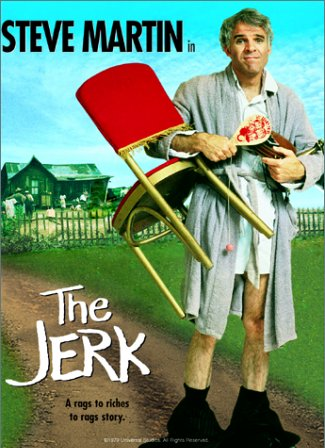
Navin JohnsonMy favorite scene in the old Steve Martin movie, The Jerk, is right at the very end when Martin’s character, Navin Johnson, is having everything taken away. All his money, his house, his cars, his business, his possessions — he’s losing everything as the result of a class-action lawsuit against his invention. (The Opti-Grab, remember?)

Navin finally loses it in an argument with his wife (“I just heard a song that reminded me of the way we were.” “What was it?” “The Way We Were.”) and he walks out of the house declaring, “I don’t need anything! I don’t need any of this! I don’t need the money! I don’t need the house! I don’t need anything!”

“Except this.”

And he picks up an ashtray from the corner of his desk. And then he picks up a paddle ball game from the floor. And he screams, “I don’t need anything” and picks up a remote control. “I don’t need anything!”

“Except this.”

And he picks up a box of matches. And a lamp. “This is it! These five things. This is all I need! I don’t need anything!”

“Except this.”

And he picks up a chair as he walks out the door and into the yard.

Navin walks down the road carrying these possessions, carrying these material things, burdened by the physical things he just can’t let go of.

I admit, this is high-brow stuff. The stinging social criticism of The Jerk goes over most peoples’ heads. But I’m convicted by the image of this man clinging to these worthless possessions with no regard for the bigger picture of what’s really happening.

We believe that everything we have comes from God and is to be used for God’s purposes and to God’s glory. We know that God promises to make us rich in every way. He promises to give us everything we need. We teach it. We sing it. “I Surrender All.” Everything I have belongs to God! I give everything to him!

Except this money I need for our vacation. And except this money I need to buy the 96-inch HDTV. The vacation and the big screen. That’s all I need. Everything else belongs to God. I give everything else to God.

Except the money I need to upgrade the family’s cell phones. And we want to re-do our kitchen. And we’re going to invest in our retirement. And buy a new car. And save for a rainy day.

Next thing you know, you’re walking down Main Street in your bathrobe, like Navin Johnson, hanging on with a white-knuckle death-grip to material things, temporary things, which Scripture says reveals a lack of faith in our God who promises to provide for your every need.

It’s a radical thing to declare that God — not me! — is responsible for everything we are and everything we have. It’s huge. It’s an insight that’s so simple, yet, it’s absolutely life-changing. God gives us everything and promises to give us everything. So it’s not that we care less about our material goods, it’s that we care much more about God’s purpose in giving us these material goods. Ironically, his purpose is that we, in turn, give these things away to others. That kind of mindset and living and giving demonstrates our continuing confidence in our God’s faithful promises to his people.

~~~~~~~~~~~~~~~~~~~~~~~~~~~~~~~~~~~~~~~~~~~~~~~~~~~~~~~~~~~~~~~~~~~~~~~~~~~~~~~~~~

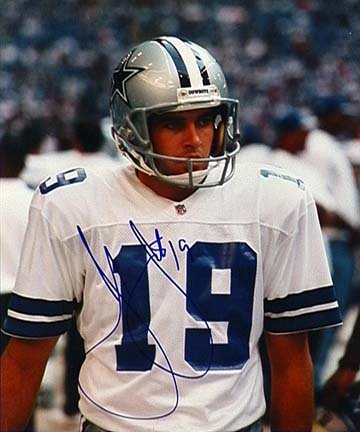
John JettNineteen days until the Cowboys season begins in Tampa Bay. And we’re counting down the days with a look at the second-best players in Cowboys history according to jersey number. And #19 is a punter. John Jett. He kicked for Dallas for four years, from 1993-96. He averaged 42 yards a punt. He never had one blocked in 253 kicks. And he won two Super Bowls.

Boring.

The other #19s in Cowboys history have much more interesting stories. They’re more fun to talk about. Lance Rentzel. Clint Longley. Keyshawn Johnson. And while they’re more talented than Jett, even at their positions, they each played a role in ripping apart the Cowboys’ lockerroom. And none of them won any championships.

Jett’s the guy. Deal with it.

Peace,

Allan

Quincy's Knees

I love the sounds God’s people make when they are praising him, when they are living in him, when they are being shaped by him, when they are giving their all to him. I love listening to God’s people. I love to hear the 14 children in our small group sing “Sanctuary” together in our living room. I love the sound of Bible pages turning in the worship center. I love listening to groceries being boxed and car trunks being slammed shut in the parking lot outside our food pantry and benevolence center. I love listening to Jimmy and Bill trade English and Chinese with their Let’s Start Talking students out in the concourse and in the library.

The sound baptismal water makes when a body is slammed into it and brought back out again. The giggles and sighs of joy from the newly-baptized. The audible smiles of all those participating.

The high-pitched squeal of Kent’s squeegee up and down all the windows. Muffled sounds from Jim and Gary in the next office discussing the finer points of one of Paul’s letters. Lance and Jason teasing teenagers in the hall. Jackie’s pleasant voice warmly greeting visitors at the door. Loud and abrubt sounds of tables being moved for the quilting ladies. The tap-tap-tap of Suzanne’s keyboard as she works on the church website. Laughter from the teacher’s workroom next door. Tara and Pam encouraging Tim and Collin to behave as they practice for VBS. The constant whir of the copier cranking out more bulletins and brochures and announcement sheets. Duane buffing the upstairs floors. Howard humming the pitch of the next song as he sings, “please be seated.” The banging of communion trays against rings and buttons. Manuel’s impossibly-fast Spanish. Bonny’s clanging key ring as she unlocks another door for another busy church member.

The quiet roll of Mike’s wheelchair as he takes his spot halfway down on the right side of the center aisle. The hum of Angela’s breathing devices. The dull thud as Howard sets his oxygen tank down on the floor beside him. The scooting and sliding of Retha’s walker.

And Quincy’s knees. I love the sound of Quincy’s knees.

Quincy’s knees crackle and pop when he kneels down to pray. Sounds almost like a ten-year-old with a yard of bubble wrap. It’s unmistakable. It’s hard for Quincy to get down on his knees like that in our worship center. It’s even more difficult for him to get up. But down he goes, submitting himself to God, bowing before his Lord and Master, acknowledging his place before the Creator of Heaven and Earth.

PrayerI kneel down beside Quincy, this humble servant of God. And I listen to him praise God. He thanks God for all of creation, recounting all six days in order. He thanks God for bringing Israel out of Egypt and through the Red Sea into the Land of Promise. He prays the Prophets and the Psalms back to the God who gave them to us. He quotes Jesus in his prayer. He boldly calls on God to be true to his Word. He reminds God of his promises to his people.

And then Quincy prays for me. And Carrie-Anne. And Whitney and Valerie and Carley. And my sisters and my brother and my parents. By name. Like he’s done every single morning up here since last December. Then Quincy prays for every single one of our Legacy shepherds, by name, and thier wives and children, by name, just like he’s done every morning up here for the past eight months. He prays for every name on every page of the bulletin, lifting those brothers and sisters up to the Lord, begging him to take care of them and bless them. He prays for every young person in our youth group. By name. He prays for every missionary connected to this church family. By name. Quincy prays for church secretaries and custodians and deacons and shut-ins, by name, every morning.

And then he finally gets around to praying for himself. He thanks God for the massive stroke that nearly killed him in 1993. This stroke that has so debilitated Quincy. This stroke that makes it more than difficult for Quincy to even walk. This stroke that’s left his legs and arms weak, his eyes crooked, his mouth twisted, and his speech slurred. He thanks God for it all. He recounts to God the ways God has delivered him through his physical pains and emotional setbacks. He praises God for redeeming him through Christ, realizing if he had not been humbled by that stroke, he never would have given his life back to his Creator.

HE. THANKS. GOD. FOR. HIS. STROKE.

And when our sweet hour of prayer is over, Quincy puts his hands on the pew and pushes himself up. And his knees pop again. I get up with him. My knees are sore and my back hurts. Quincy smiles and looks at me and says, “I appreciate you, Allan. I’m so glad you’re here.”

And I realize how small and selfish and stupid I am.

Quincy, I appreciate you. Your faith does move mountains. Your trust in our God puts mine to shame. Your commitment to his Church is unwavering. Your love for his people is unconditional. Your submission to him is genuine in every sense of the word. You bless me, brother, more than I can ever tell you. Being with you, praying with you, moves me to grow up. It moves me to give. It moves me to trust. It increases my faith. It erases my doubts. You are a giant, Quincy. You are a man of God. And I’m so grateful that he put you here at Legacy to help us, to teach us, to show us what faith looks like.

This is a busy place with a lot of busy people. It’s a loud place with a lot of loud noises. And I’m a loud person. I like noise. Turn it up! I’m starting, though, to appreciate more and more the quiet sounds. The unnoticed noises of faith and perseverance. Wheelchairs and walkers and oxygen tanks and tubes.

And I love the sound of Quincy’s knees.

~~~~~~~~~~~~~~~~~~~~~~~~~~~~~~~~~~~~~~~~~~~~~~~~~~~~~~~~~~~~~~~~~~~~~~~~~~~~~~~~~~

Red Ribbon ReviewThere are 53 days left until the Cowboys kick off the 2009 football season in Tampa Bay. And we’re getting there together by honoring the second-best players in team history according to jersey number. We call it the Red Ribbon Review because these are the also-rans, the almost-weres, the second-place finishers.

Today’s #53 is laid-back long-haired conspiracy theorist and activist Mark Stepnoski.
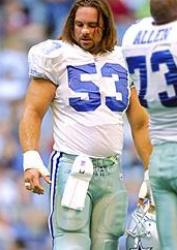
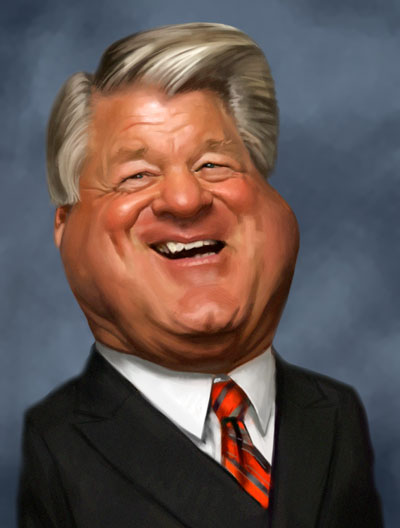
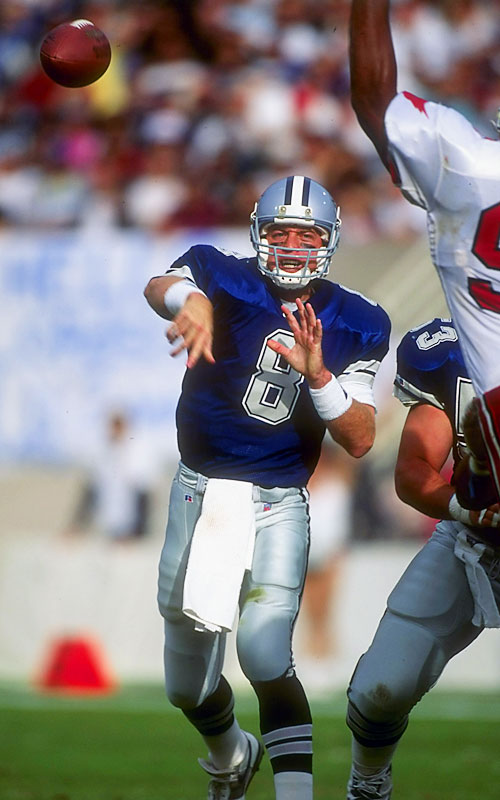
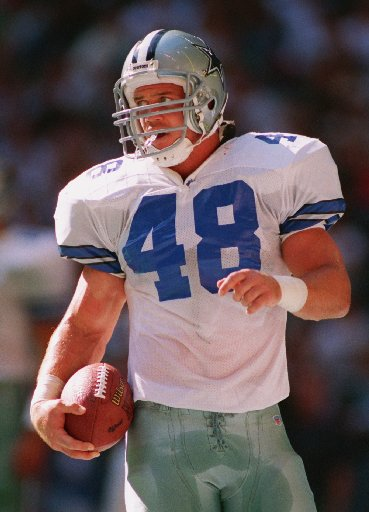
StepnoskiStepnoski was a third-round draft pick by the Cowboys out of Pitt in 1989. Jimmy Johnson took him as a center right after he took Troy Aikman and Daryl Johnston. Probably the smallest offensive lineman ever employed by the Cowboys during the Jimmy Era, Stepnoski made up for his lack of size with great speed and agility and smarts. He went through that 1-15 season and became a locker room leader and true stabilizing force on those first two Super Bowl title teams in ’92 and ’93.

Stepnoski left for the big free agent money the Oilers threw his way in ’94, playing two years in Houston, one in Memphis, and one in Nashville before re-signing with Dallas in 1999.

He was elected to five Pro Bowls, three of them with the Cowboys. He played in 133 games with Dallas over nine years. And he was named second-team center on the NFL’s all-decade team of the ’90s.

Stepnoski’s more notorious now for his role with the National Organization for the Reform of Marijuana Laws. He serves on the national advisory board and was once president of the Texas chapter for the decriminalization of marijuana efforts. Anyone who knew him as a player isn’t surprised. The long hair. The half-opened eyes. The “yeah, dude, whatever, man” attitude. Funny guy. But he always seemed half asleep. He’s also, just in the past two or three years, become a very vocal member of the 9/11 truth movement, questioning the mainstream explanations of the events of September 11, 2001. He’s a conspiracy theorist all the way on that one, which makes for pretty interesting reading. There’s no proof that his views on that are connected in any way with his participation in NORML. None.

Peace,

Allan
Called To Be Free

Called To Be FreeHuman beings are created by God to live in relationships of love. God is love. God’s perfect law for his creatures is summed up by love. Love is what sets us free. It’s what makes us alive. Love is what gives us hope.

But love demands sacrifice and service. It calls for selflessness. It’s characterized by giving. It’s risky. Love is hard.

Strange, huh? Perfect life and perfect freedom is found in love. But love involves giving up freedoms and our lives.

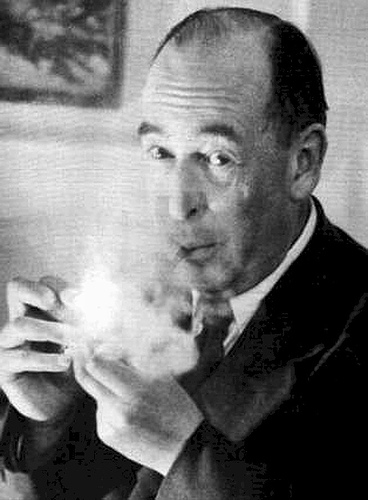
C. S. Lewis, in his book entitled The Four Loves, describes this paradox:

Love anything, and your heart will certainly be wrung and possibly broken. If you want to make sure of keeping it intact, you must give your heart to no one, not even to an animal. Wrap it carefully round with hobbies and little luxuries; avoid all entanglements; lock it up safe in the casket or coffin of your selfishness. But in that casket — safe, dark, motionless, airless — it will change. It will not be broken; it will become unbreakable, impenetrable, irredeemable. The alternative to tragedy, or at least to the risk of tragedy, is damnation.

Our Christ tells us to throw away our lives and we’ll find them. make yourself last and he’ll make you first. Lose everything you have and he’ll save it.

Surrender and obedience to the Father and his perfect law. Only then will we realize our eternal calling to be free.

~~~~~~~~~~~~~~~~~~~~~~~~~~~~~~~~~~~~~~~~~~~~~~~~~~~~~~~~~~~~~~~~~~~~~~~~~~~~~~~~~~~~

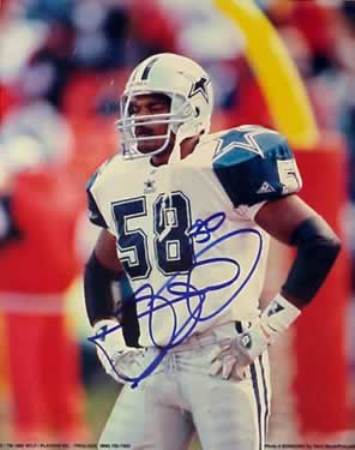
Red Ribbon ReviewThere are 58 days left until the Cowboys kick off their 2009 football season. And our Red Ribbon Review is counting down the long summer days by honoring the also-rans, the almost-weres, the second-best players Dixon Edwardsin Cowboys history by jersey number. Today’s #58 is linebacker Dixon Edwards. A starter for Jimmy Johnson’s teams in the ’90s, Edwards was overlooked at times because he played next to Ken Norton and Robert Jones. But Edwards was good. He was taken in the second round of the 1991 draft out of Michigan State and wound up starting in three Super Bowl wins. He racked up 216 solo tackles during his five-year Cowboys career and then bailed for bigger money in Minnesota.

Bruce HutherIt’s going to be an incredibly busy weekend (maybe I’ll tell you more about it on Monday) so I’m going to give you tomorrow’s #57 today. It’s Bruce Huther. He was a backup linebacker on Landry’s Super Bowl teams in the ’70s. During his five years in Dallas, Huther only started one game. That was in his final season in 1983. But he wound up with playing time in three NFC Championship Games and two Super Bowls. Huther was an undrafted free agent out of New Hampshire. A perennial backup and special teams player on some pretty good teams. And the second-best to ever wear #57 for the Cowboys.

~~~~~~~~~~~~~~~~~~~~~~~~~~~~~~~~~~~~~~~~~~~~~~~~~~~~~~~~~~~~~~~~~~~~~~~~~~~~~~~~~~~~

 Happy Birthday, Popper!My dad’s birthday is Sunday. To celebrate, go to Whataburger and discuss gas prices and the weather together over a “senior Coke.” Then wrap it up with some bean juice and a straw. Happy Birthday, dad. I love you.

Allan

« Older posts Newer posts »