Category: Church (Page 55 of 59)

A Spirit of Unity: Part Two

ASpiritOfUnity“Has it ever occurred to you that one thousand pianos all tuned to the same fork are automatically tuned to each other? They are of one accord by being tuned, not to each other, but to another standard to which each one must individually bow. So one thousand worshippers meeting together, each one looking to Christ, are in heart nearer to each other than they could possibly be were they to become unity conscious and turn their eyes away from Jesus to strive for closer fellowship.” ~A. W. Tozer

What if we’re talking about a “salvation issue?”

What’s a “salvation issue?” Will somebody please tell me what a “salvation issue” is? We get into discussions about “salvation issues” and we start ranking things in order of importance to God, in terms of what’s going to save us or condemn us. And we’ll talk about baptism and church and the authority of Scripture and worship practices. But we never talk about helping the poor or being kind to our enemies. Scripture says those are actually the weightier matters.

They’re all salvation issues! Everything we do is a salvation issue! That’s why the heart is the most important thing. The attitude is the most important thing.

“The Kingdom of God is not a matter of eating and drinking, but of righteousness, peace, and joy in the Holy Spirit, because anyone who serves Christ in this way is pleasing to God and approved by men.” ~Romans 14:17

As children of God and followers of the King, we take our example, we take our inspiration and motivation, from Jesus. The Son of God is the one who motivates us to live with each other the way we do. We realize that Christ Jesus never once did anything to please himself. Instead, he gave up everything, he sacrificed everything, to benefit and build up others. And by choosing to serve others instead of please himself, Jesus sets the pattern that we must accept as our own. Putting others first. Putting the needs of others first. It’s never about me. It’s always about you.

It’s not about hands. It’s about hearts. It’s never about hands, whether they’re raised or clapping. It’s always about hearts, whether they’re pure and holy.

And Paul puts it on the strong. It’s up to the strong, not the weak, to make sure this happens in God’s Church. It’s on the strong to bear with the failings of the weak brother. That’s hard. It’s up to the strong to make the sacrifices and concessions to our weaker brothers and sisters. That’s not easy. It’s easier to be the weaker Christian, drawing lines and insisting everybody cater to me. It’s the strong, Paul says, who are able to grasp the truth that our love and mercy and grace to others is Christ-like.

Here’s what separates the strong Christians from the weak. Bottom line. Here it is. Strong Christians with strong faith realize that the more you sacrifice and the more you give up for others, the more Christ-like you are. The more you insist on your own way and the more you assert yourself for your own interests, the less like Christ you are. Pretty simple.

So if all of us, all thousand of us here at Legacy, all-how-ever-many-there-are at your church, if all of us to a person decided right now today that we put ourselves at the end of the line, that we would all bend over backwards to make everybody else happy and sacrifice our own feelings and desires in order to build up others—if we all did that—wow! If we all accepted each other just like Christ; if we all bore the failings of the weak just like Christ; if we all pleased our neighbor for his good just like Christ; it still wouldn’t result in a perfect church. It won’t eliminate our differences of opinion. It won’t do away with all arguments and debate. But it would mean figuring out how to live together. And we’ll know for sure that the Christ who unites us is greater by far than the differences that may divide us. And our grace-filled conversations and our mercy-laden interactions with each other will reflect that conviction.

Peace,

Allan
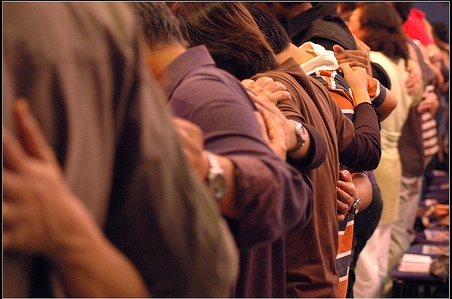
A Spirit of Unity

“Accept one another, then, just as Christ accepted you, in order to bring praise to God.” ~Romans 15:7

SpiritOfUnityRomans 14 gives us the background for the above exhortation from the apostle Paul. There are two groups of Christians in this church in Rome. Weak and strong. Paul’s words. The weak believers are vegetarians. The strong believers enjoy a good steak. The weak brothers keep all the Jewish holy days. The strong brothers don’t. The weak Christians are developing all kinds of elaborate worship and lifestyle theologies and drawing lines in the sand over what’s right and what’s wrong. The strong Christians don’t have very many lines and they’re not as concerned about which worship and lifestyle practices are right or wrong. The weak are criticizing the strong for being spiritually insensitive. The strong are looking down on the weak for being spiritually immature and inferior. The strong proclaim freedom in Christ. The weak say that doesn’t mean anything goes. The weak tell the strong, “You’re wrong.” The strong tell the weak, “Grow up.”

Over what?

Over food. Over days. Over worship styles and traditions. The use of technology. Women’s roles. Alcohol. Praise teams. Divorce and remarriage. Clapping. Creeds. Dancing. Songleaders. Preachers(!) Small groups. Bible translations. Politics.

Are you a weak Christian or a strong Christian? Again, these are Paul’s words. Is your faith weak or is it strong? According to what Paul’s talking about in Romans 14, which are you? Are you the one who worries and frets and draws lines in the sand and develops intricate tests of fellowship for other Christians? Or are you the one who has a total grasp on our salvation in Christ and understands that the things we argue about and worry about don’t really matter at all? Are you the weak brother or sister? Or the strong?

What is it that makes you strong? What is it that makes you weak? If I were to ask somebody else about you—whether your faith is strong or weak in this context—what would they say about you? Why would they say it? What do they see or experience in you that makes them think that way?

Romans 14:1-4 > Nobody looks down on anybody. Nobody condemns anybody. For God has accepted him. Accepted whom? Who has God accepted? The brother or sister or groups of brothers and sisters who disagree with me on this church tradition or who don’t see eye to eye with me on this disputable matter, this matter of opinion that should not in any way divide the Lord’s Body. You’re not his master. Christ Jesus as Lord is his master. Not you. Whether he stands or falls is up to our Lord. Whether he’s right or wrong is up to our Lord. And Paul goes ahead and makes the call. He’ll stand! Whether he agrees with you or not. Whether y’all are on the same page or not. He’ll stand because he’s in Christ. So, you accept him because Jesus accepts him. Christ died for him, Paul says. What are you doing?

Romans 14:5-8 > Each of us should be fully convinced in our minds that what we’re doing is the right thing to do in the eyes of our God, but don’t bind that on another brother who doesn’t feel that way. If he practices something different, we assume we’re both doing it to the Lord, before the Lord, in the presence of the Lord with a clear conscience. We assume that my sister with a different belief or a different practice is not believing flippantly or practicing casually. She’s doing it with careful study and reflection and prayer and conviction. She’s fully convinced in her mind that she’s doing the right thing. So everything’s OK.

Paul is calling for unity in Spirit here. Not unity in opinion, not unity in practice, not even unity in belief. And he’s dealing with what at this time in the Church were huge issues. Unity comes with where your heart is. What’s your motivation? What drives you? Who are you thinking about?

Paul clearly identifies himself as one of the strong. But it’s interesting to me that he doesn’t say the weak need to change their minds or their opinions or their practices. In fact, he goes so far as to command them not to change their practices unless their minds are fully convinced. Paul’s prayer is not that all the Christians in Rome come to the same opinions on these things. No. He’s praying that they may possess a spirit of unity that transcends the differences.

“May the God who gives endurance and encouragement give you a spirit of unity among yourselves as you follow Christ Jesus, so that with one heart and mouth you may glorify the God and Father of our Lord Jesus Christ.” ~Romans 15:5-6

Peace,

Allan

The Poll, The Ball, and A Quote

KK&C Top 20 Logo 

Texas is not the unanimous #1 team in this week’s poll. After holding off Oklahoma State on Saturday, the Longhorns receive 13 of 14 1st place votes. The lone dissenter is Larry T. He gives his top spot to Alabama stating, “You know where my allegiance lies. Go SEC!” Penn State and Alabama are tied 24 points behind Texas. Texas Tech moved up eight spots to the #4 position. And OU remains at #5. TCU continues to inch up the polls to #12. With Kansas falling out of our Top 20, Charlie J gives us what he promises is his last Mangino crack. I hope not. Then again, it appears Charlie truly is running out of material. Jennifer G gives us a most honest poll, placing Penn State below OU and USC in her rankings. Janie R lets her Tulsa past catch up with her by ranking the Golden Hurricane #7, while Paul D was so impressed by OSU’s performance in Austin, he put the Cowboys at #3. South Florida, Pittsburgh, and Kansas dropped out. Ball State, Minnesota, and Florida State jumped in. To view this week’s poll in its entirety, with all the comments, complete with pictures and bios of all the pollsters, click here or click on the green “KK&C Top 20” tab in the upper right corner of this front page.

~~~~~~~~~~~~~~~~~~~~~~~~~~~~~~~~~~~~~~~~~~~~~~~~~~~~~~~~~~~~~~~~~~~~~~~~~~~~~~~~~~~~~~~~~~~~~~~

JerryWayneJerry Wayne has been involved in many, many cheesy stunts over his 18 years as the owner of your Cowboys, none hokier than awarding the game ball from Sunday’s win over Tampa Bay to coach Wade Phillips. Unless it’s the guy’s 200th career win or something, you don’t give a game ball to a coach. Maybe they do that kind of thing down in Hewitt or over in Gilmer, but not in the NFL. If they felt they had to award a game ball, they should have given it to Roy Williams. No, not the Roy Williams who caught his first ever touchdown pass as a Dallas Cowboy, the only TD of the game. I’m talking about the injured reserve safety Roy Williams who was on the sidelines in street clothes. If it weren’t for that Williams forcing the NFL to adopt a horse-collar tackle rule three years ago, Ronde Barber wouldn’t have been flagged for a 15-yard penalty on a Marion Barber one-yard gain on what was a 3rd and 12 at the Tampa 48 with 40-seconds to play. Instead of punting, Dallas is awarded a first down and a stopped clock at the Bucs’ 33. And they go on to score the TD to the other Williams. Thank you, Roy Williams. *

*original thought by Aaron W at our men’s Bible study this morning.

~~~~~~~~~~~~~~~~~~~~~~~~~~~~~~~~~~~~~~~~~~~~~~~~~~~~~~~~~~~~~~~~~~~~~~~~~~~~~~~~~~~~~~

“A society or a community that is religiously alert will invariably react to whatever may be perceived as a religious innovation because whatever is new is perceived as an implied threat or contradiction to what has already been settled by history and confirmed by tradition. The ‘innovators’ seldom see their new doctrine or practice as innovation but are quite likely to find its justification, or indeed its roots or requirements, in precisely the ‘Old-time Religion’ to which all parties appeal as jus canonicum.”

 —C. Eric Lincoln, 1974

Quitting Church

Julia Duin, a religious reporter for the Washington Times, has written a book entitled Quitting Church: Why the Faithful Are Fleeing and What to Do About It. I haven’t read it. But a friend of mine recently sent me a review by the Wall Street Journal’s Terry Eastland.

According to Eastland, church-quitting in the United States is characterized by Duin in her book as “epidemic.” The problem though, in her view, is not in the souls of the church quitters but in the character of the churches they choose to leave. Relying on her own reporting and surveys, Duin lists several things that are wrong with a lot of America’s Christian Churches.

~a lack of a feeling of community among church members, inducing loneliness and boredom
~church teaching that fails to go beyond the basics of the faith
~church teaching that fails to reach members who are grappling with suffering or unanswered prayer
~pastors who are out of touch with their parishioners or themselves unhappy
~pastors who fail to shepherd their flocks or try to control the members in high-handed ways

Duin’s conclusion seems obvious, that our churches need to become places where people feel eager to be. This goes straight to the “community” aspect of what we do and why we do it. In this regard, she calls for better teaching, better preaching, and better pastors who are in touch with the lives of their worshippers. I agree. For two-thousand years we’ve called the Church a Christian community. We need to be much more intentional about cultivating that community. And while a large part of that falls to our elders and preachers and teachers, let’s not forget we are called by our God to be a Kingdom of priests. We serve each other. We sacrifice for each other. We put the needs of others ahead of our own. It’s on all of us to treat each other in ways that form and sustain community.

Two, Duin says churches hurt themselves when they view their organization or allow their own members to view the organization as primarily functioning to meet the members’ needs. (So, there is at least a little theology in the book. That’s good.) The Lord adds us to his Body of Believers in order to serve, not to be served. I had lunch last week with a couple who are considering placing their membership here with us at Legacy. And they asked me three or four times, “Allan, what can we do to serve here? Where’s a place, what’s a function, what’s a service we could really perform here that would help this church and the people?” Wow! How wonderfully refreshing!

It’s not, “What can this church do for me?” It’s always, “How can I serve in this church?”

According to Duin, churches dedicated to this kind of discipleship mindset, this sort of serving and sacrificing in the manner of Christ, will “do well in this era of dumbed-down, purpose-driven, seeker-friendly Christianity.” That means teaching and preaching beyond the five (or six. or seven. how many are there now?) steps of salvation and first principles and deeper than the Christianity-Lite we find in a lot of places.

She says churches will prosper if they concentrate on making disciples. And that’s where Eastland makes his point. Churches like this aren’t always going to prosper—if we judge prosperity by church membership alone. He says, “A church might conscientiously carry out its biblical tasks and yet, by measures of popularity, do poorly in this world. Such a church would not be doing right if it adjusted its mission for the sake of higher attendance records.”

Amen.

~~~~~~~~~~~~~~~~~~~~~~~~~~~~~~~~~~~~~~~~~~~~~~~~~~~~~~~~~~~~~~~~~~~~~~~~~~~~~~~~~~~~~~

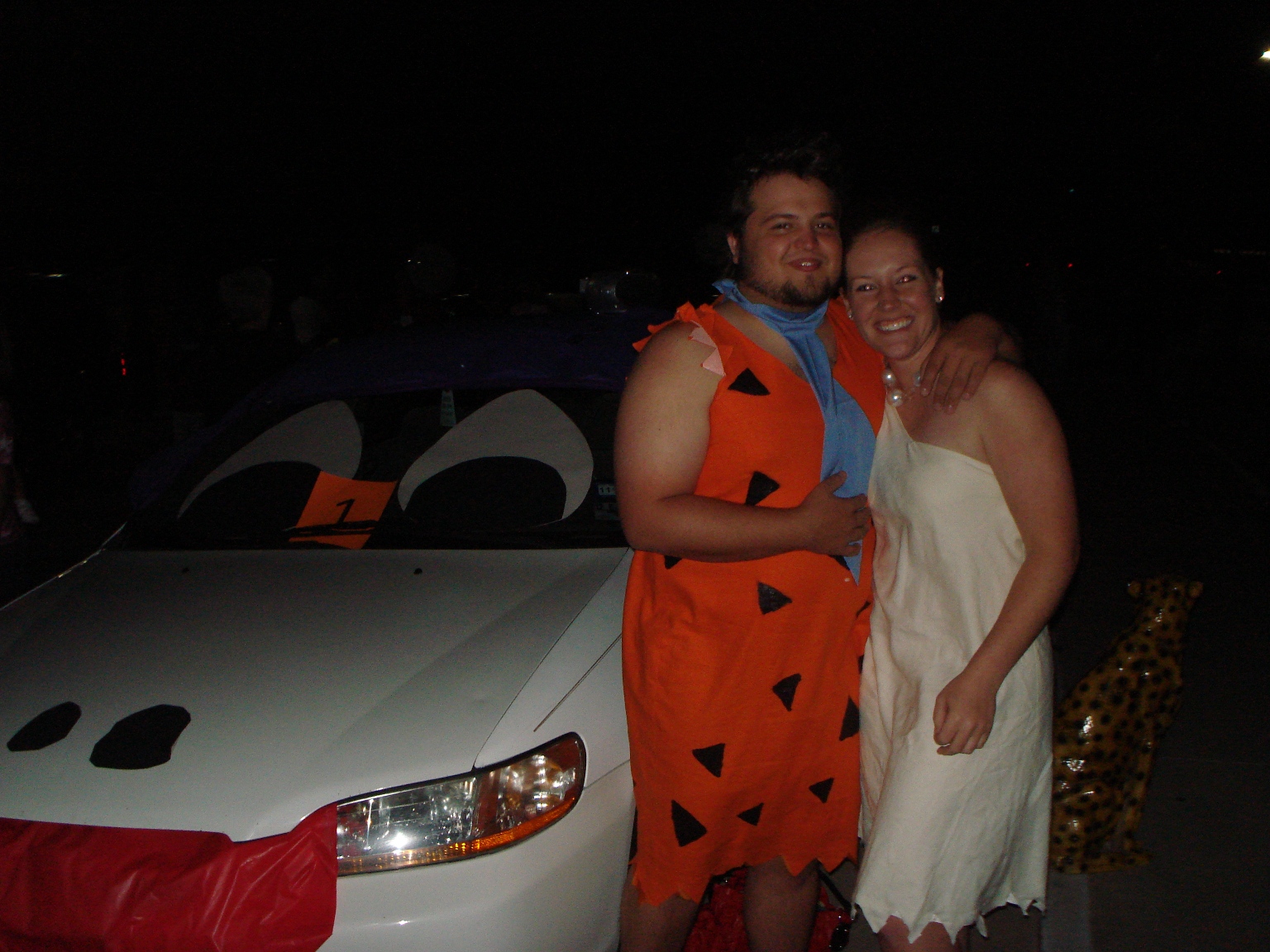
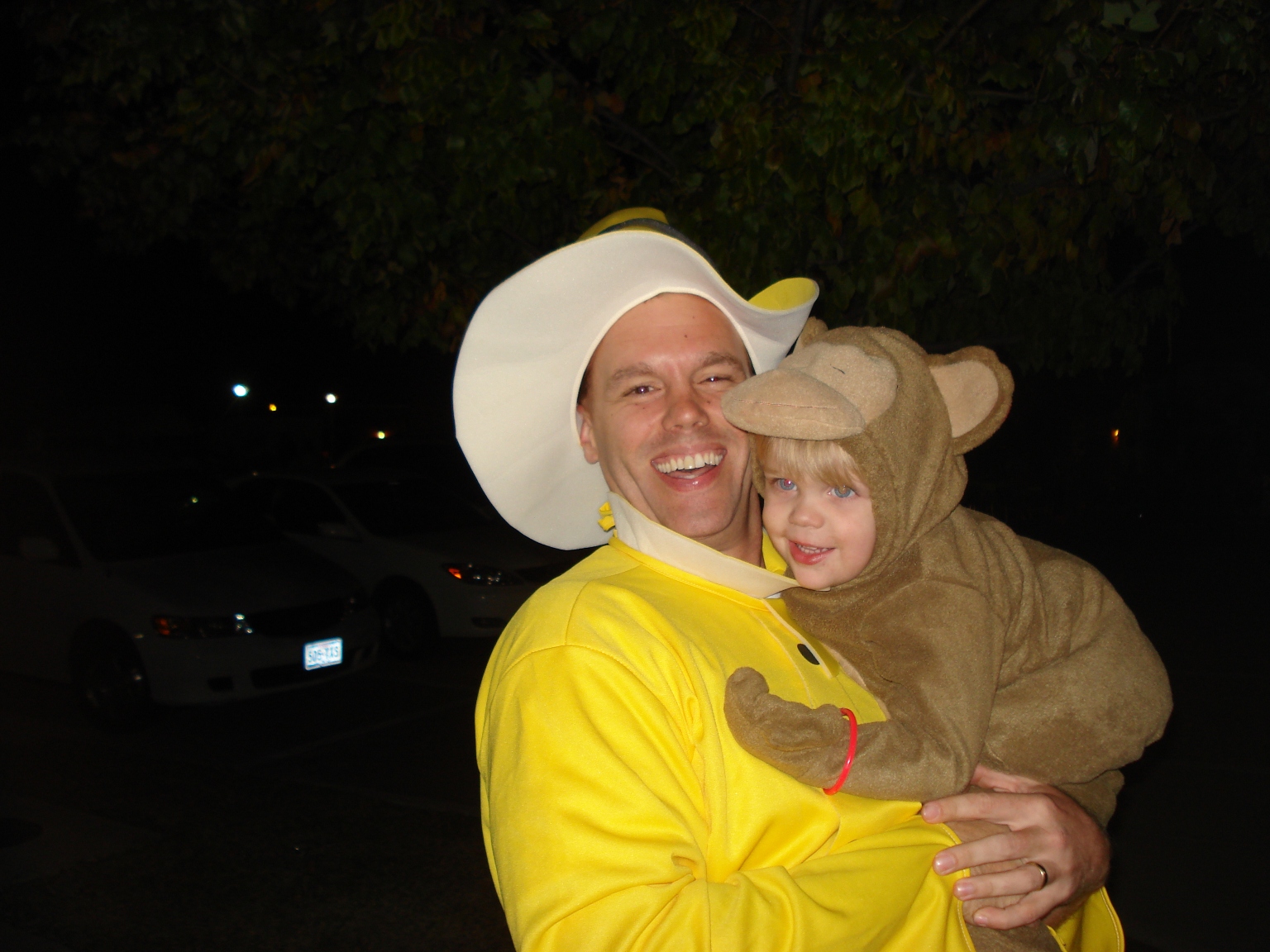
TrunkOrTreatTrunk or Treat last night here at Legacy and there’s absolutely no way in the world to know how many people came through our parking lot and building. All four of the front sections of the worship center were full as we rehearsed together the story of David and Goliath from 1 Samuel 17 as a wild west shootout movie. Wade P saved the day when he provided the whistle soundtrack from The Good, The Bad, and The Ugly from his cellphone. Larry T blew it—or didn’t blow it—when I needed him most. And John W ad-libbed several lines during his evil Goliath laugh. Everybody, it seemed, had a great time with Sheriff Saul and “Ohhhh, David!” But hopefully we all left with a greater appreciation for the God of Israel, our God, who always delivers. He always wins. And those who belong to him always win. And we don’t win by sword or spear. We win by putting our faith and trust in the One who made us and promises to sustain us. David never doubted God’s deliverance. Because God always delivers. We should all feel so deeply and act so boldly.

Carley&ElizabethSquared DakotaFrog DinoCar

After that, it was off to the parking lot where hundreds and hundreds of folks were already milling around the decorated cars, bounce houses, face-painters, balloon-sculptors, and food and drink booths. What a night! Cake walks and games and costume contests. Tons of people. I know we served over 1,100 hot dogs. And not everybody got one. I’ll bet 20% of the people here were not members of Legacy. It was fantastic. Truly a community event. Probably, including Give Away Day which brings in people from Fort Worth and points even further south and west, Trunk or Treat is our biggest annual event that draws the most people from our corner of Tarrant County. It’s probably time to do what we’ve done with Give Away Day the past couple of years and start concentrating on some outreach and follow up and evangelism with Trunk or Treat. Thanks to Kipi and Todd and all the dozens and dozens of volunteers!

WardCar SpiderCar Val&O Aaron&Parker

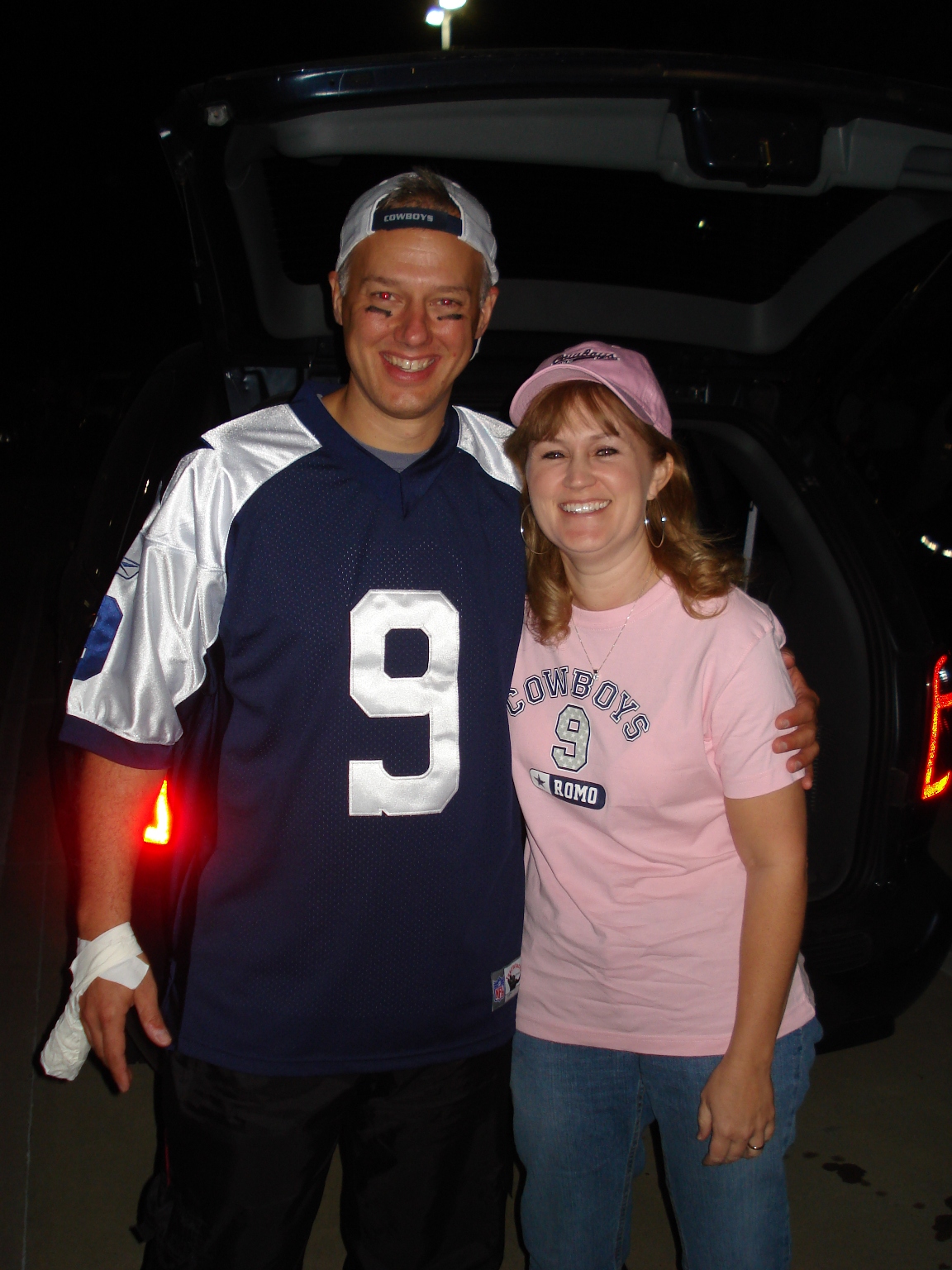
Tony&JessicaI dressed up as Tony Romo for the Trunk or Treat, complete with the over-sized pinkie splint fashioned out of a toilet paper roll and lots of athletic tape. Instead of simply donning Valerie’s blond Hannah Montana wig, Carrie-Anne spent two-hours straightening her own hair to play Jessica Simpson. We were quite the pair.

Peace,

Allan

The Final Amen…for now

Thank you for your kind comments and provocative insights regarding our discussion on the “amen” in our Christian assemblies. I’ll address here a couple of the things raised by your comments and then we can be done with this discussion for now. Unless you have something to add.

Please keep in mind, I’m not speaking exclusively about our sermon time together. I’m talking about verbally affirming the songs we sing, the prayers we lift, the Scriptures we read and recite, and what’s said around the table. Lance writes,

 I’ve always viewed the “Amen” or “Preach on” or “That’s right” as an affirmation of truth. It’s like when you talk to a friend about politics, or sports, and you share an observation with that friend and their response is, “Yes! Absolutely! I feel the same way!” Saying amen throughout the assembly is our way of saying, “Yes! Absolutely! I feel the same way!” When I hear truth in preaching, in prayer, in scripture, or in song…I try to affirm that truth with an “amen” or “that’s right.”

Caleb says,

I appreciate and say Amen to your thoughts and longings for a more involved people; not just in worship, but in every facet of our daily walk. I pray this conversation will be fruitful. I don’t thing were bound by the amen, but with so much precedence, both scriptural and historical, why not?

Besides publicly affirming the truth of the message in our Scriptures and songs, encouraging one another, and being actively engaged in what’s happening during an assembly, our verbal participation also strengthens our bonds of unity. I find that when someone next to me says “amen” or “yes” it causes me to pay more attention to the prayer being said or the song being sung. (Why did he say “amen” to that?) But it also gives me great insights into that person who said it. (Why did HE say “amen” to that?) I’ll never forget one of the 24 Hours of Prayer three weeks ago I shared with Quincy and Manuel. The three of us were literally and verbally participating in each other’s prayers. When one of us was praying, so were the other two with continuous affirmations of “Yes, Lord” and “Amen” and “Yes, Father” and “That’s right” and “Please, God.” It was an hour of that homothumadon — in one accord, with one voice, as one man — we see throughout the book of Acts. We’ve all experienced something like that in these small groups. The unity. The focus. The single-minded fidelity to the worship at hand and our brothers and sisters in the room with us. When that kind of thing begins to happen in larger settings, it can change a church.

Some of your comments addresed the culture in a lot of our churches that hinders the kind of open expressions we find throughout our Holy Scriptures. Broadly speaking, Churches of Christ have cultivated a mindset and worldview that favors sitting still and being quiet and staring straight ahead. Here’s Caleb,

I think we don’t say amen because we are church of Christ. While we are experiencing a form of “global warming” in the way in which we worship it is a slow thaw. Until recently, standing for the invitation song was as participatory as our worship has been.
Here’s Jesse,

It’s a matter of practice, or lack of. We’re not in the habit of engaging in worship, so it’s a little weird to fully engage…at least at first.

Chris writes,

It is hard to engage at first. In worship or in class, I’ve got something to say but I still get shake voice so it sounds funny. Not a problem in business but a problem in church. Great description with the slow thaw. It reminds me of the pictures that show glaciers shrinking – it’s hard to tell except over a long period of time.

And Lance,

There’s a fear of “outward” expression in our public assemblies. Raising hands, standing, sitting, kneeling, closed eyes, clapping, and amens are all outward expressions of worship. We, as a brotherhood (speaking in generalities), have very much discouraged any kind of visual or audible expressions of worship that might have been interpreted as “showy.” My mom used to tell me not to be showy, and that people who raised their hands or said amen were showing off…or trying to get attention

Unfortunately, this culture in our faith tradition has much more to do with the Enlightenment way of thinking than it does with Scripture’s way of thinking. We come at our faith and, as a result, our assembly times together in a very rational way. We want an equation.  We need a formula. We want some rules and regulations. We want everything explained to us until it makes sense. And the mystery gets edged out. There’s no room for gray areas. No place for ambiguity. Everything’s black and white. Everything’s either right or wrong. It all has to be controlled. And that means controlling what we do and how we do it together on Sunday mornings.

It’s mostly an over reaction or over correction to the anxious bench of 150 years ago and the waiting and wailing for the Spirit. Emotion became a bad thing. Knowledge and intellect became the good thing. We taught that emotions had very little, if any, place in our religion and in our churches. Emotion is shallow. It’s false. Emotion deceives us. It’s not real. Some of your comments reflected this history of ours. Caleb,

We don’t want to look like we are trying to look like we are religious. We as a brotherhood have eschewed outward signs of our faith, especially in the assembly. Its the reason we are so hesitant to raise our hands in song or during a prayer, despite biblical example. Its why we balk at clapping.

And Jesse,

I think we hold back in worship b/c we’re afraid to embrace emotion in worship, and also afraid of what others will think / say / do / react, etc. At least, that has by MY struggle. After getting over a lot of that (more to go still), my question is: how can we NOT be emotional, at least a little, about salvation, grace, heaven, God, eternity, etc.? When it clicked in my heart, when it pierced my soul a few years ago that my salvation is totally, TOTALLY, because of Jesus, it hit me like the proverbial ton of bricks…and I cried like a baby…for hours. How else should we react to God’s grace?


One quick thing about emotion and then I’m done for the day. I think for decades and decades we’ve believed and taught that if we can get their head, we’ll get their heart. If we can just explain it to people and write it down in five little steps and show the gospel to them with logic and rational, if we can get people to understand it with their heads, then their hearts will follow. Praise God, sometimes that works. But that’s certainly not the way it’s presented in Scripture.


The truth is, if I can get your heart, I know your head will follow. God always goes first after our hearts. If a person’s heart has been captured by God, his head will also be right there. And so will the rest of his body and his billfold and his time and his energy and his focus.


And you and I know tons of people who have God in their heads, but their hearts are cold as stone.


Peace,


Allan

Take Two

Let’s try again. Maybe yesterday’s post was buried in all the sports stuff there at the beginning.

I’m sincerely seeking some comments and a conversation here on why we don’t say “Amen” more in our Christian assemblies. Is this a Church of Christ thing? Or is this a white suburban thing? Is it something we used to do all the time and don’t anymore? Or have we never been a people to verbally participate as a congregation in the things that are said from the front?

What’s the deal?

If you participate verbally in the assemblies, why? If you don’t, why not? Do you feel like that’s an individual thing or a congregational thing? If you want to say “Amen” but don’t, why? How do you feel when others around you say “Amen” during a prayer or sermon or after a song or Scripture reading?

I’m really interested in our assemblies being participation events instead of spectator events. So we’re doing much more as a congregation together. That’s why we invite the whole church to jump up on the stage and surround a person being baptized and read the Colossians 3 blessing together. That’s why we’re trying to involve the congregation more in our baby blessings, affirming to the parents and the new child that we take the role of helping pass the faith on to this new child seriously. I’d like to see us, together as a congregation, affirm to new members our love and support to them when they place membership. We’re working in that direction right now. I certainly see our communion time together becoming more and more interactive and participatory. That will probably take a lot more time and teaching.

But let’s start the conversation with this simple little curiosity. Why don’t we say “Amen?”

Click the red “comments” line in the upper right hand corner of this post and let’s go.

 Peace,

Allan

« Older posts Newer posts »