Category: Church (Page 52 of 59)

Green Bean Casserole & Banana Pudding

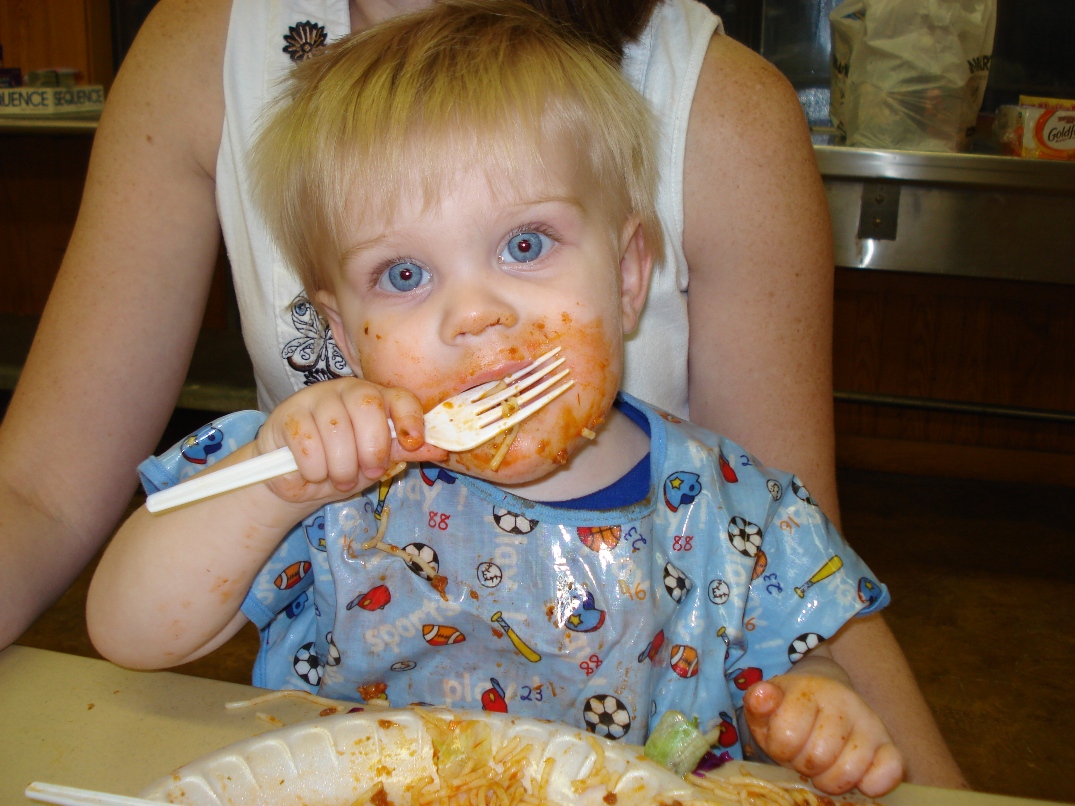
Church Potluck: What’s the Deal?I’ll just throw it out there. Here it is. The burning issue of the day. I want this blog to be way ahead of the curve. I want us to tackle this hot topic here before The Christian Chronicle gets hold of it.

“The Growth and Decline of the Church Potluck”

I love a good church potluck dinner. Theologically speaking, I defy you to show me a better way for a church family to live out its divine call to meet, fellowship, encourage, and share. Is there anything better than sharing a common meal in potluck fashion?

What a beautiful church-as-body model. Everyone gifted with different gifts. Everyone bringing their best gifts to the common table. All those different gifts coming together in one extravagant embarrassment of a massive meal. Potlucks celebrate our different gifts. Potlucks recognize our diversity.

What a wonderful church-as-fellowship model. Sitting by and sharing a meal with brothers and sisters with whom you don’t normally spend much time. “Who made this cherry pie?” “Did you get some of this spaghetti thing?” “I have no idea what this is.” It’s amazing to me that younger people blame the older people for what’s wrong with the church and the older people blame the younger. But once we sit down to share a meal together, once we start to visit and talk about our kids and grandkids and vegetable gardens and vacation plans, we realize we’re all on pretty much the same page about almost everything. Potlucks foster unity.

What a wonderful church-as-sacrifice-and-service model. “No, keep your seat, let me go get you some napkins.” “What do you want to drink?” “Have you seen my kids?” “We need help folding up these tables and stacking up all the chairs.” “Let me carry that out to your car.” Potlucks foster Christ-like attitudes of looking to the interests of others.

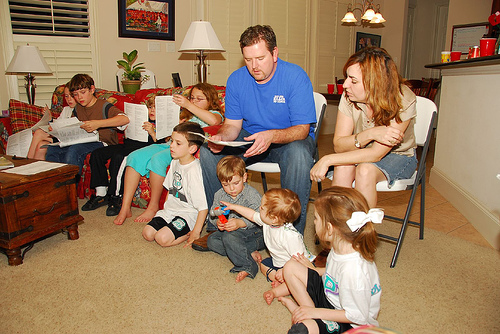
I love everything—EVERYTHING—about church potluck dinners. We held one here at Legacy two Sunday nights ago. Over 400 people showed up. Tables and tables of food. We could have easily fed 800. There were entire tables of desserts that didn’t even get touched. We ate loudly. Laughing. Hollering across rows. We sang devotional songs together. Again, loudly. Enthusiastically. Something very basic, something very first-century-church about worshipping God together around the tables. We shared communion together. Again, something very, very first-century about eating the bread and drinking the wine in the context of a common meal; remembering our Lord as we consider his body, his church, our brothers and sisters sitting right next to us and across from us.

What’s not to like about the church potluck?

But church potlucks, I’m afraid, are out of style. Of the 400+ at our potluck last week, there was one group of people conspicuously absent: people my age and younger.

We have 80 in our Young Families class. (Don’t make jokes about my being in the young families class. As I recall, my parents kept going to the Young Marrieds class at PGrove even when I was in high school.) And I only counted five from that class who were younger than me at the potluck. There were plenty of singles there and lots of young marrieds without children. But it seems that couples in their 30s with young kids almost completely stayed away.

So, what’s the deal? More than anything, I’m just curious. Is the church potluck, even with all its (according to me, I guess) benefits of positive reinforcement of the Christian values we hold dear, about to disappear? Is it past its prime? Why? I’d like for everyone reading this post to submit some kind of potluck comment. What you like or don’t like about church potlucks. Why you go or don’t go to church potlucks. The good, the bad, and the stuff in that blue dish over there.

~~~~~~~~~~~~~~~~~~~~~~~~~~~~~~~~~~~~~~~~~~~~~~~~~~~~~~~~~~~~~~~~~~~~~~~~~~~~~~~~~~~~~~

Buddy HollyFor an excellent story on the plane crash that killed Buddy Holly 50 years ago, check out this link. Texas Monthly’s Michael Hall goes back to Clear Lake, Iowa—the site of that last concert and the place from where the plane both took off and crashed—and delivers a comprehensive look at all the events surrounding what he dubs “the first modern tragedy in America.” He interviews people who were at the last show and the man who leased the plane to Holly. It’s a long read. But it’s excellent.

~~~~~~~~~~~~~~~~~~~~~~~~~~~~~~~~~~~~~~~~~~~~~~~~~~~~~~~~~~~~~~
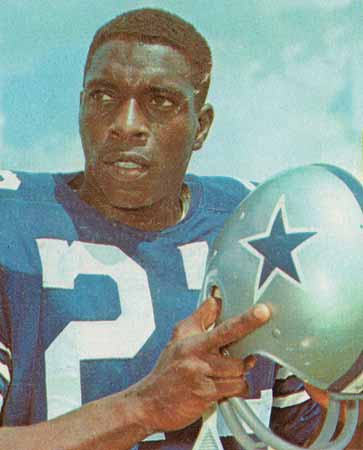
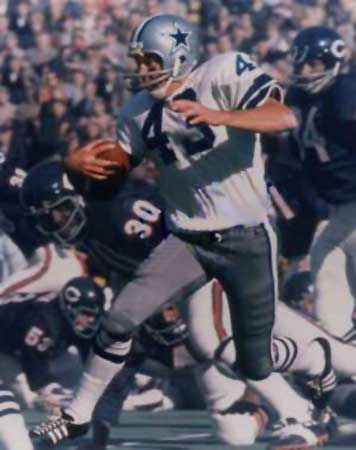
Bullet BobAnd, belated congratulations to Bob Hayes. I had him on my show from the end zone at Cowboys camp in Austin back in the mid-90s and called him “Bullet Bob” on the air. He corrected me, “It’s Blimp Bob now!” No, no. Hayes will always be the bullet, the world’s fastest human, the man who forced NFL defenses to come up with zone coverages, the original Cowboys #22. Roger Staubach or Don Meredith should introduce his representative in Canton this summer, not sister/half-sister/friend Lucille Hester. That’s eleven Cowboys now in the Hall of Fame. Hopefully Cliff Harris will be next.

Peace,

Allan

The Way Of The Kingdom

The Way of the KingdomJerry Plemons and I met for about an hour Tuesday with the principal and a couple of counselors at Thomas elementary school less than three miles south of our church building. They had contacted us first, asking if there were anything we could do to help them and the children in their school. Sixty-five percent of these children are on free and reduced lunch, economically-disadvantaged kids with only one parent, barely one pair of shoes, and no sense of community beyond their 8:00 to 3:00 school day behind the bricks. The school is lacking adequate funds for playground equipment, day planners, uniforms and underwear and socks. They need scholarships for field trips and science camps.

Can we help them? You bet!

And we are. Legacy is committed to giving every penny of our Sunday night contribution for the next 12 weeks—hopefully over $6000—to Thomas Elementary. We’re going to organize a rotation of volunteers to greet kids at the door in the mornings and read with the children in the afternoons. We’re going to adopt this school in much the same way we’ve adopted Walker Creek Elementary across the street. It’s a no-brainer.

I’m reminded of N. T. Wright’s comments about how to live in the Kingdom of God. In his book The Way of the Lord: Christian Pilgrimage Today, Wright says the royal decree of our King, the Christ, is “an invitation to a Kingdom-spirituality, invoking the power of the King to liberate those held in Satan’s bondage.” So, living in the Kingdom looks like this: a life of complete submission to the King, a life marked with loyalty and love and total commitment to his cause. It means taking up his cause and planting the flag of his Kingdom in territory currently occupied by enemy forces. Territory like Thomas Elementary.

“You commit yourself to the work of healing and liberation, both actual and symbolic. You commit yourself to freeing slaves, to loosening the bonds of debt, to bringing good news to the poor. And you commit yourself to doing these things, not as a grand social action which you will implement by your own energy and ingenuity, but in the power, and with the weapons, of the Kingdom of God: by prayer and fasting, by truth and righteousness, by the gospel of peace, by faith, by salvation, by the Word of God.”

Where Are The Kids?

Where are the kids?Where are the kids? The local TV stations used to ask us at 10:00 every night. It’s the question I ask Carrie-Anne when I come home after work. Thirty minutes after church when I’m ready to get in the car. In a crowded mall. At the park. When it’s especially quiet in the house. When the bikes are left on the lawn. Where are the kids?

If we ask that question as we’re reading Scripture—where are the kids?—the answer always comes back, “right in the big middle of everything.” Right where God put ’em. Right where God wants ’em.

Matthew 21 – Jesus enters the temple in the last week of his life. The children are there shouting “Hosanna to the Son of CaddellsDavid!” The religious leaders in the temple are indignant. Maybe the kids were clapping, I don’t know. Maybe just the fact that the kids were in the middle of the temple being loud was enough to upset these teachers and priests. Jesus answers their indignation by quoting Scripture. “From the lips of children and infants you have ordained praise.”

Exodus 10 – Before the plague of locusts, God tells Moses he’s doing this “that you may tell your children and grandchildren…”

Exodus 12 – God insitutes the formational Passover Supper with everyone’s kids right there around the table. “When your children ask you…then tell them.”

WrightsExodus 13 – God explains the dedication of the first-born. “On that day, tell your son, ‘I do this because of what the Lord did for me.'” Also, “when your son asks you…,” tell him the great story.

Deuteronomy 4 – God’s giving the Law to his people. “Teach them to your children and to their children after them.”

Deuteronomy 6 – Same thing. “Impress them on your children. Talk about them when you sit at home and when you walk along the road, when you lie down and when you get up.” And again, when your son asks you, tell him the stories.

Joshua 4 – Setting up the stones to mark the spot where they crossed the Jordan River. When your children ask you, tell them.

Matthew 18 & 19, Mark 10, Luke 18 – Parents bring their children to Jesus. And he welcomed them gladly. They brought their kids to Jesus so he could touch them and bless them and teach them. And he did. Jesus took little kids in his arms, he placed his hands on their heads, he prayed for them. He warns us not to ignore them or neglect them or discourage them in any way because the Kingdom of Heaven belongs to our little children and he’s not willing that any of them should be lost.

In our Scriptures, the kids are always right in the big middle of everything. Exactly where God put ’em. In our Bibles, the Matt&Elizabethchildren are never on the edges, they’re not peripheral participants in the community of faith. They’re not sent to the other room. They don’t eat at a different table. They’re not placed in an “age-appropriate educational environment.” They are critical components. They are integral to God’s plan for his people. They are the centerpiece to our sacred conversations and the core of our holy gatherings.

Where are the kids?

When you’re praying. When you’re reading the Word. When you’re singing praises to God. When you’re at the common table with your brothers and sisters in Christ. When you’re talking about our Savior and the Gospel’s impact on your life.

Where are the kids?

Making The Exchange

“What we have heard and known, what our fathers have told us; we will not hide them from the children; we will tell the next generation.” ~Psalm 78:3-4.

The apostle Paul calls life in Christ a race. He tells us to run the race in order to win. And we have to understand that this race we’re running is a relay. None of us is running this race alone. We’re all in it together. Someone passed the baton to you. And you are charged with passing the baton to others. Today we are standing on the shoulders of those who’ve gone before. At the same time, we’re paving the way for those who are coming after.

Nobody runs the race alone.

Notice these boys who are receiving the baton. Looking back. Eyes on the runners who are racing toward them. Stretching back with their hands open to receive the baton. Measuring their steps so they match up with their teammates.

Making the Exchange

Look at this girl who’s passing the baton. She’s running her fastest right here at the exchange. She’s given it all she has. Her part of the race is almost over. But she’s running faster and working harder now than she was at the beginning. Look at how she’s stretching and straining and lunging forward to pass this baton to the one who will run after her. Look how they’re both concentrating on this critical task.

Making the exchange

Now look at the point of exchange. This is my favorite moment of a good relay. Notice how, for a time, these two are actually running together. Step by step. Side by side. In perfect rhythm. One finishing her assignment, one just getting started. Running. Cooperating. Sprinting. Enduring. Together at the point of exchange. Side by side.

Making the Exchange

We appealed to the older members of our Legacy church family last night to embrace their God-ordained mission of passing on the faith to the younger generations. And I want to repeat and reinforce that plea here today, specifically to those 50-years-old and older in our Legacy family, and generally to any of our older brothers and sisters who might be reading this today.

Passing the BatonWe believe the most effective way for us to pass on the Christian faith is through our deeply-rooted relationships with one another. And we believe those powerful relationships are best formed in our Sunday night Small Groups. These meaningful relationships are forged on living room couches and around kitchen tables. These bonds are strengthened in our homes and in our shared meals. And we need you older members of this body of believers to jump in with us.

We need you. We need your wisdom. We need your experience. We need your example of someone who’s seen it all, endured it all, and kept the faith. Our children need to see it in you. They need older people to look up to. We need your love.

You’re running the race. You’ve been running it a long time. But you’re not done. Now’s the time to pass the baton. It’s Passing the batontime to understand that we’re not running this race alone. As the younger lean back and strain with open hands to receive your love and concern and stories and faith, we need you to run faster and stretch out with everything you have to pass it on to us. You’re not finished. We need you.

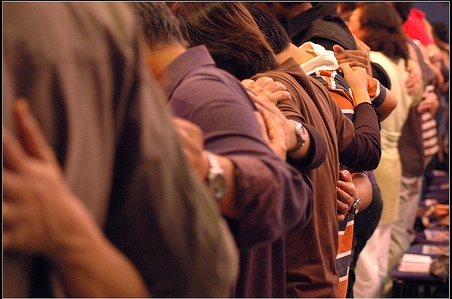
Where else are you going to be able to have the impact on those younger than you? Not in our church assemblies where we sit in rows of pews and look through the backs of each other’s heads to a single person up on a stage and then go to lunch with people our own age. Certainly not in Bible class where, again, we naturally (and usually intentionally) segregate by age. It doesn’t happen there. It happens in our homes.

Please join us. Please work with us in forming intergenerational Small Groups where you can be energized by our kids and our energy and our relative youth, where you can be served by us and loved and appreciated by us as we get to know you in ways we never will otherwise.

Passing the batonAnd as we make the exchange, as you stretch out and we lean back, as we lock eyes and match our steps, as the faith is being passed in these Christ-centered relationships, we’ll soon discover that we’re actually running together. Side by side. Step by step. In perfect rhythm.

Amen.

Passing The Baton

Raising kids, not grass!In his 1984 Hall of Fame induction speech, Harmon Killebrew recounted the days when his father taught his brother and him how to play baseball out in the front yard. One afternoon Killebrew’s mother admonished his dad from the porch, “Y’all are ruining the lawn!” To which his dad replied, “We’re raising kids—not grass!” 

At the Legacy Church of Christ, we’re raising kids—not grass. We’re raising kids—not immaculate buildings and well-oiled programs. We’re raising kids—not perfect worship services and effective curricula.  We’re raising kids.  

We’re passing on the faith to the children our Lord has entrusted to us. We’re teaching them from a context of grace and love and support and respect and encouragement. We’re attending to the material and emotional needs of our children. And we’re showing them what it means to live a full life in Christ Jesus, as genuine disciples of the Savior, with all the loving instruction, enlightening, warning, and disciplining that goes along with that.  It’s a serious commitment at Legacy; not a casual obligation or an afterthought. The Christian training of our children is not attained by irregular and isolated efforts, but by regular and unceasing repetition in meaningful relationship, as commanded by our God through Moses:  

“These commandments that I give you today are to be upon your hearts. Impress them on your children. Talk about them when you sit at home and when you walk along the road, when you lie down and when you get up.” ~Deuteronomy 6:6-7 PassingTheBatonMay our Father bless us as we pass on the faith to our children. And may we experience the thrill of the Apostle John who rejoiced in the knowledge that his “children are walking in the truth.” 

Peace,   Allan 

First, Be Reconciled

“I plead with Euodia and I plead with Syntyche to agree with each other in the Lord.” ~Philippians 4:2

First, be reconciledThe apostle Paul believes Christian unity is huge. It’s critical. It’s paramount to the successful advance of the Gospel and it’s necessary for the continuing growth, or sanctification, of the Church. And not just in idealistic or imaginary ways. Paul means unity on every pew, in every relationship.

Jesus taught the same thing. In fact, I’d say this is where Paul gets it. The Holy Son of God says our relationships with one another are much more important than anything we do in our worship assemblies. But we always want to worry about our worship assemblies. We write about our worship practices, we discuss our worship trends, we fret over worship changes or lack of changes, we spend a lot of ink and time and energy and effort on what we do in a big room together for 75-minutes every week. Jesus says if you’re not reconciled to your own brother, forget it.

“If you are offering your gift at the altar and there remember that your brother has something against you, leave your gift there in front of the altar. First go and be reconciled to your brother; then come and offer your gift.” ~Matthew 5:23-24

If you’re fighting with your sister, if you’re arguing with your brother, if you’re not on speaking terms with somebody in your congregation right now, if there’s ill will between you and somebody in your church, Jesus’ instructions would be to make things right before you offer a song, before you offer a prayer, certainly before you come to the table.

You might say, “It’s none of your business. This is a private matter between us.”

Paul would say, “Oh, no. Your disagreement, your arguing is everybody’s business. The unity and sanctity of God’s Church is too important.”

First, be reconciled. Then, come worship.

Whether it was something that happened between you two last week or you two are nursing a grudge that was born twenty years ago. Make that phone call. Go to her house. Invite him out for coffee. Agree with each other in the Lord. It could be the most important New Year’s resolution you make. It would be just the kind of “starting over” a God of reconciliation who gives his people the ministry of reconciliation would be expecting.

First, be reconciled. Then, come worship.

It’s important.

« Older posts Newer posts »