Category: Church (Page 33 of 61)

Confess That We Have Been Wrong

We’re hosting a free Acappella Reunion concert here at Central tomorrow night. The current touring group will be joined on stage by Keith Lancaster and some of the originals, including our very own Kevin Schaffer, for what promises to be a high octane, high energy show. I’ve been blessed to enjoy the worship and encouragement led and provided by Acappella many times over the course of my life. In Abilene, in Tulsa, and at various churches over the years, including a really wonderful show two years ago at Legacy. Keith Lancaster, of course, has always blessed us with his gifted song leading and a cappella workshops.

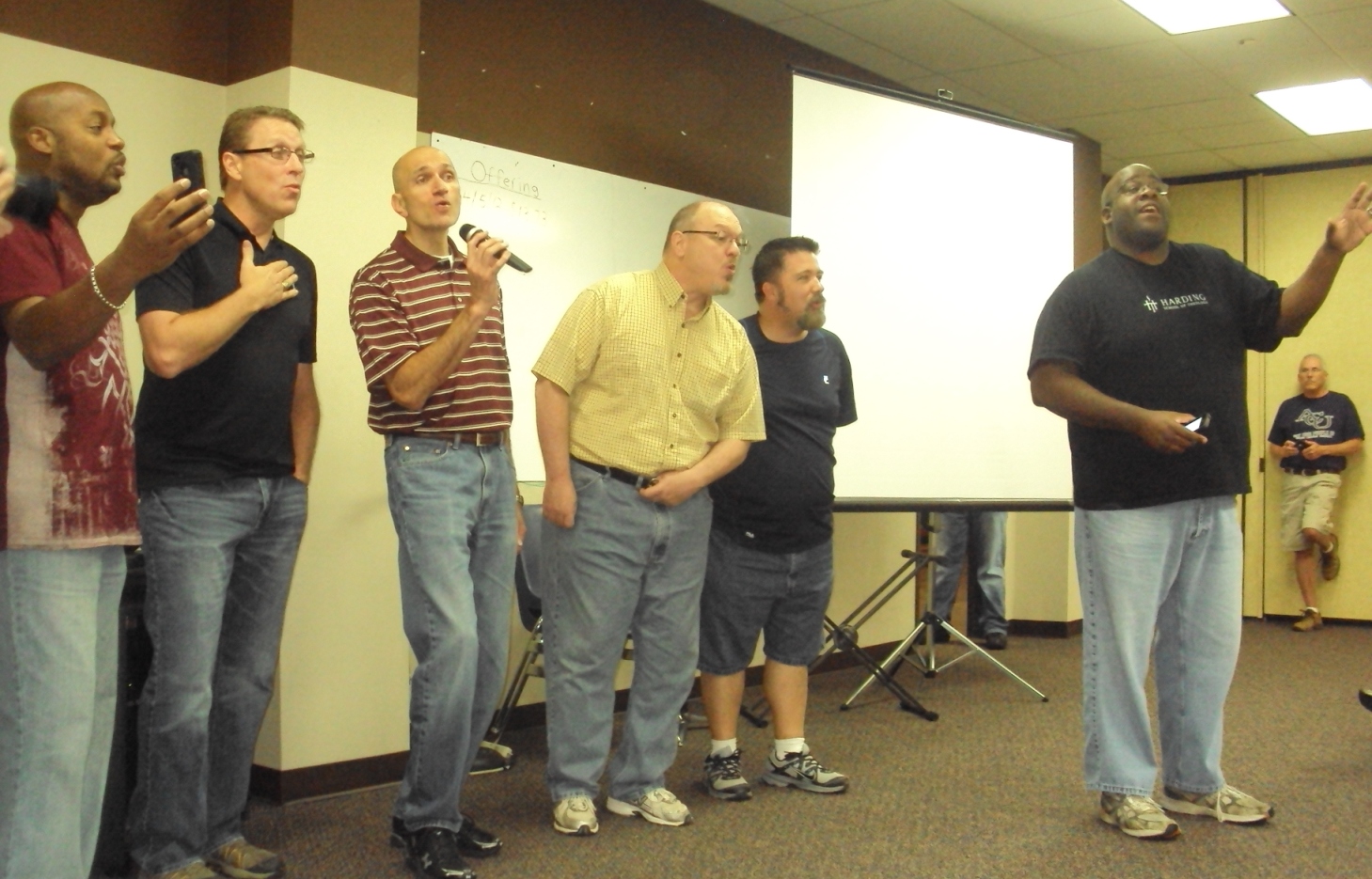
Most of the older guys got into town last night and blessed us this morning with an impromptu performance at our weekly Loaves and Fishes outreach ministry. It was just a couple of songs, but they had about 140 of us snapping our fingers and clapping our hands and really getting excited for tomorrow’s concert. So good to see Keith again. And, man, Kevin is really on Cloud Nine. Big time.
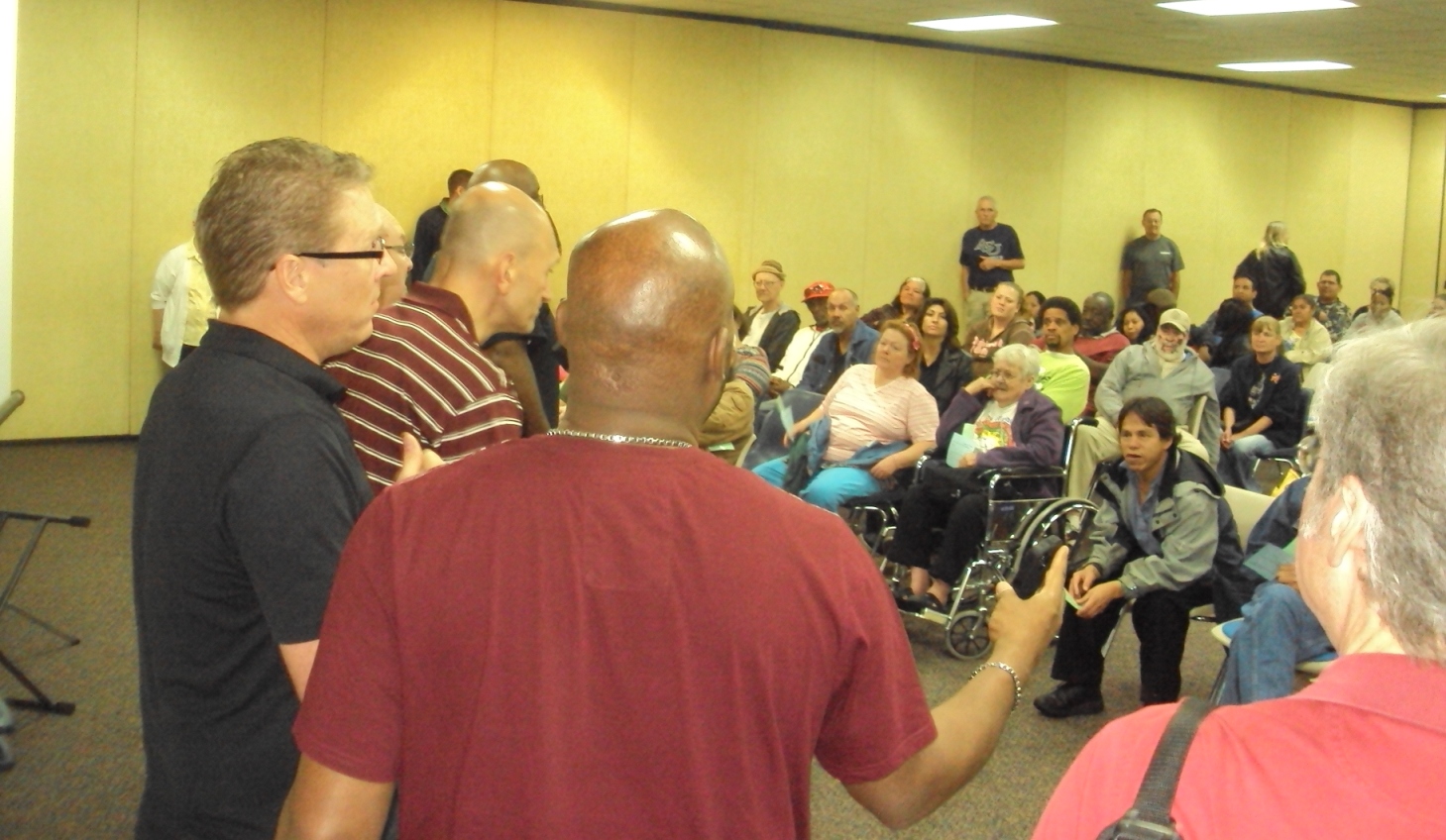
The doors open at 6:00 tomorrow evening here at Central for those who have their free tickets. Doors open for everybody else at 6:45 and the show starts at 7:00.

~~~~~~~~~~~~~
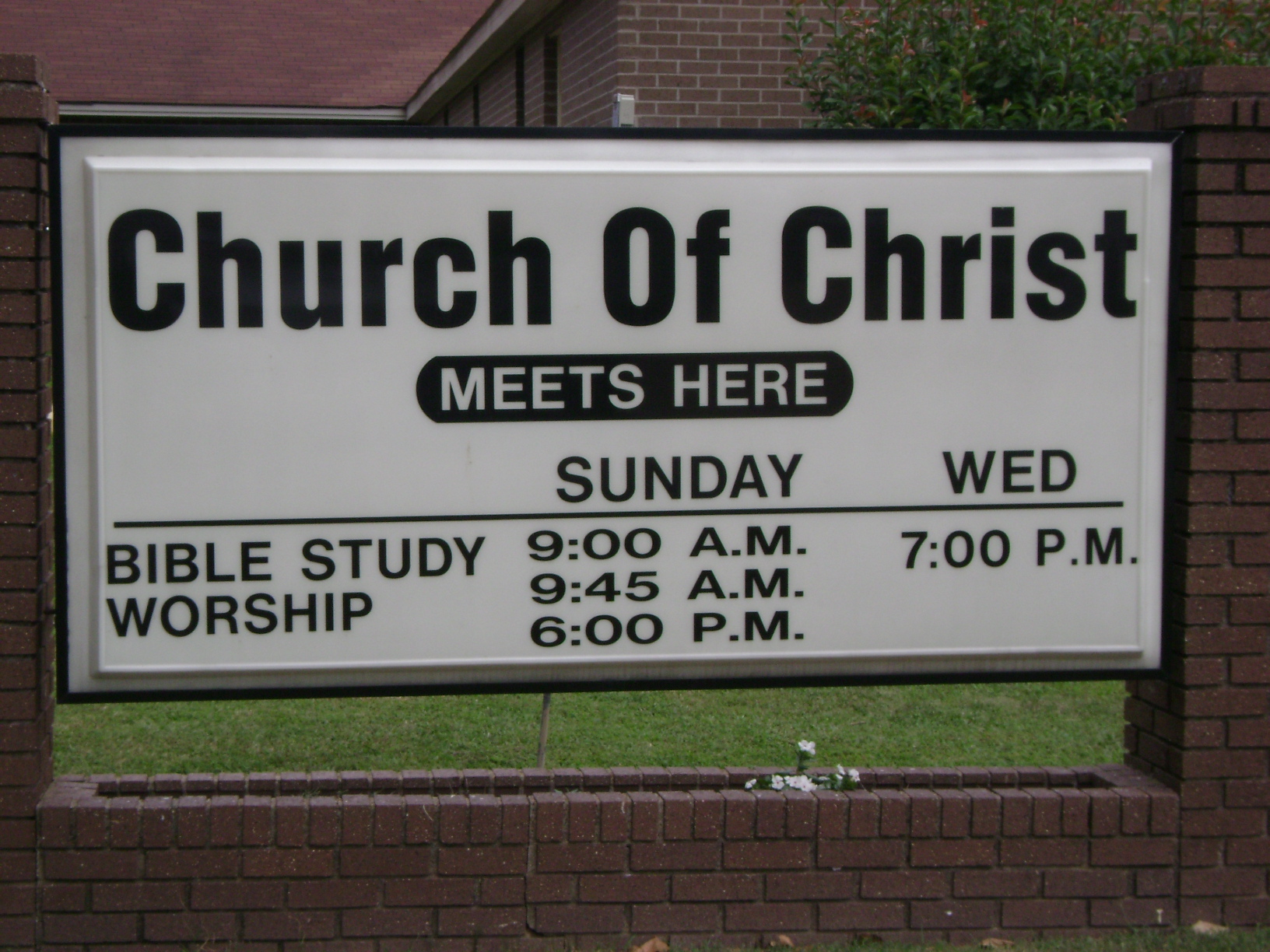
Acknowledging together that we in the Churches of Christ must do something different if we’re going to remain a viable witness to the Christian faith in our rapidly changing world, we’re spending the next several days in this space taking Leroy Garrett’s “What Must the Church of Christ Do to Be Saved?” chapter by chapter.

To paraphrase Garrett, what must we do to escape extinction in the decades ahead, to avoid being regarded as an insignificant Texas-Tennessee sect? What must we do to be loyal to the Scriptures and true to our Stone-Campbell heritage of unity? What’s it going to take for us to, as a movement, advance toward being “truly ecumenical, truly catholic, truly holy, and truly apostolic?”

Here’s Garrett’s first suggestion: We must confess that we have been wrong about some things.

The sin that we must confess is our patent refusal to have anything to do with other churches and Christians. In the old days we attacked other churches from the pulpit and mailed out tracts condemning “denominationalism,” implying of course that we were not a denomination. On the radio we “skinned the sects” and we debated anyone who had the nerve to take us on. We soon gained the reputation of believing that we were the only true church, the only faithful Christians, and the only ones going to heaven. We succeeded in causing other believers to resent us if not hate us. When they showed such resentment our response was that they didn’t really want the truth. In rejecting us they rejected God himself!

You know, I grew up this way, believing and proclaiming that we were the only ones going to heaven. Did you? I vividly recall as a young child telling my good friend and next-door-neighbor, Kevin, that he was going to hell because he didn’t go to church. And I know I told my across-the-street neighbor, Sherry,  just as many times that she, too, was going to hell. Sherry went to church. Every Sunday and Wednesday. She just went to the wrong one.

I cringe when I remember those arrogant positions with which I would so proudly and confidently beat up my friends. I don’t remember exactly when I stopped spouting that nonsense out loud; it probably was during my college years when I heard about God’s grace for the very first time, and actually experienced it first hand. But, even while keeping those thoughts to myself and, perhaps, beginning to mature out of them, I still harbored this sectarian attitude deep inside me. I ran into an old high school football coach at a Tulsa Workshop in 2004 and, while exchanging comments during a powerfully moving congregational song (probably led by Keith Lancaster), I said to him, “Yeah, but I’m still not sure about us trying to get back together with the Christian Churches.”

That was less than ten years ago!

Wrong! Wrong! Wrong! I was wrong. So wrong. God forgive me.

Garrett calls for corporate confession of this sin. Preachers and elders, in the pulpits, on our websites, in our publications, confessing the wrong, expressing remorse, accepting the blame, and vowing to change.

Garrett says even though the “we’re the only ones going to heaven” rhetoric has declined — significantly, thankfully — we’re still very “sectarian  and exclusivistic” in the ways we behave. We don’t talk badly about other churches, but we still don’t have anything to do with them. It’s as if they don’t exist. No joint Thanksgiving or Easter services. No joint community service projects. No cooperative campaigns. We still talk about “the Lord’s church” or “the church” and mean “Church of Christ.”

We can be saved from such sectarian exclusivism without compromising any truth we hold. Our preachers can belong to the ministerial alliance and we can join “the denominations” in a Thanksgiving service without approving of any doctrine we consider false, just as we can read a commentary written by a Methodist (as we do) or sing hymns written by Roman Catholics (as we do) without approving of any error practiced by those churches.

We are supposed to be a people who believe in and work for the unity of all Christians — that is our heritage! — but how can we be a witness for the oneness of all believers when we isolate ourselves from all other believers?

There is only one answer to all this: We must change our ways and confess that we have been wrong. We are wrong when we imply that we are the only true church or that we are the only Christians. We are wrong when we suggest that people have to belong to what we call the “Church of Christ” to be saved and go to heaven. We are grievously wrong when we believe that if people are “not of us” they are going to hell.

I’m thankful that during the Great Communion autumn of 2009, we at Legacy participated in a joint communion service with all the Restoration Movement churches at Compass Christian. In fact, I’d say there were more Legacy people there than Compass people. It was beautiful. But we need to do more. I’m thankful that here at Central our shepherds actively call up elders at other churches in town and meet at their buildings to pray with them. I’m grateful that we’ve already swapped pulpits in the past with preachers in the local Christian churches. I’m so blessed to be encouraged here to meet and pray and plan with the pastors of the other downtown churches here in Amarillo. It’s beautiful. It’s powerful. But we need to do more.

Garrett claims that if we actively confess that we were wrong and enthusiastically begin to embrace other believers as equals by the grace of God, our Church of Christ people would be liberated and encouraged. And our elders and preachers would be shocked to quickly learn that most of our members didn’t really believe that way anyway.

Peace,

Allan
Saving the Churches of Christ

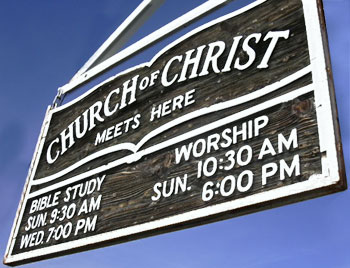
Nearly one hundred Church of Christ elders, preachers, teachers, professors, and college administrators are gathering in Dallas this Friday — by special invitation from ACU’s Royce Money only — to discuss and brainstorm, to contemplate and plan, to pray over the future of the Churches of Christ. Obviously, I’m not one of the invited. I wouldn’t make the cut for the top ten thousand. But I do know a few of the people who will be there Friday. And I’m prayerful and hopeful — even excited —  for some clear-cut vision and suggestions and direction for our little stream of Christianity.

In advance of that ten-hour session Friday and the subsequent reports and papers and speeches that are sure to follow, I was hoping to get into a similar discussion in this space. The invitation here at KK&C is open to all. No RSVPs or hotel reservations required.

Today, I move from “Changing the Churches of Christ” to “Saving the Churches of Christ,” a slightly more provocative heading inspired by the title of Leroy Garrett’s latest book, “What Must the Church of Christ Do to Be Saved?”  Like Garrett, I’m not suggesting in any way that the eternal salvation of those within our Churches of Christ tradition is in jeopardy. Not at all. The concern is with “saving” our Church of Christ heritage — our stream, our tribe, whatever — so that we remain a viable voice for God’s Gospel in our increasingly post-modern, post-denominational, post-Christian world. I think that’s why our most influential brothers and sisters are meeting in Dallas on Friday. They know we need to do something. Something. We need to do something if we are to remain in any way relevant to the larger church and Christianity and Kingdom conversations.

We really do need to change some of the ways we think, some of the things we believe, some of the traditions we practice. We need a deeper understanding of some things. We need a relaxed spirit on some differences we may have. We need a stronger unity on a few essentials. We need to teach some things with more vigor and we need to stop teaching some other things at once.

So, for the next several days in this space, I’d like for us to break down Garrett’s book chapter by chapter. Yeah, I know, we’re not all going to agree with every single sentence or thought. (Good gravy, what book are you reading with which you do concur on every point? Then put that book down immediately!) Let’s engage Garrett with a spirit of unity and brotherly love, with sincere hearts and unblemished motives, with the intent of placing God’s Gospel mission for us ahead of our own comforts. Let’s acknowledge our biases and predispositions, let’s get some of these things out there in the open, and freely discuss in faith and trust how to save this Church of Christ thing we all so dearly love.

We’ll start with Garrett’s first chapter tomorrow.

Meanwhile, be in continual prayer for the group of our brothers and sisters who are meeting in Dallas Friday. May our gracious Father bless them with his holy wisdom and his divine vision. May he guide them. May he protect them. May he open all our hearts and our minds to be receptive to his leading. And may his will be done in the Churches of Christ just as it is in heaven.

Peace,

Allan

Changing the Churches of Christ

The numbers are undeniable. The Churches of Christ are losing congregations, we’re losing members and their kids, we’re losing our families and our teenagers and our college graduates. We’re losing people. Big time. According to the recently released “Churches of Christ in the United States,” we’ve lost more than 23,000 members and their children since the last edition of the directory in 2009. Since the edition before that, in 2003, we’ve lost over 102,000 people and 708 congregations! 

(As a brief aside, let me make clear my disdain for directories such as this that label and pigeon-hole congregations according to what they believe or practice regarding communion services, Bible classes, worship styles, and outreach efforts. Directories such as these are part of our problem.)

That’s the bad news. And it’s real. Brother, is it real. It needs to be seriously studied and discussed. We need to prayerfully and carefully consider the reasons for these significant losses. And we need to be wide open to where our God is leading us, to what he might be doing in other places and in other ways, and to how we can adapt to more effectively create and maintain communities of faith that will spread the Kingdom of God to his eternal glory and praise.

Here’s the good news:

We’re not alone. Most every single Christian denomination in the United States is losing members right and left. It’s not just us.

Wait a second… this is still bad news. We’re not alone. More and more people in this country are checking “none” when asked their religious affiliations. According to a recent survey by the Pew Forum, sixteen percent of Americans claim to belong to no religious organization. That number grows to twenty-five percent — one out of every four! — when you consider just the 18-29 age group.

OK, now here’s the good news:

People my age and younger (how much longer am I going to get away with saying that?) are joining community churches and non-denominational churches like crazy. Some of them are going to Baptist churches and Disciples of Christ churches, too. But most of them are worshiping and serving in these community churches. They’re not giving up on Jesus and the Christian faith. It’s just that they have no real brand loyalty to Churches of Christ. They’re looking for genuine Christian worship. They’re seeking real faith relationships with Jesus and with other Christians.

As a result, “independent/non-denominational” churches in the U. S. have over twelve million members in more than 35,000 congregations.

That’s good news, right? This move toward a non-denominational following of Jesus is right up our Church of Christ alley, right? Isn’t that how we began? Isn’t that what we’ve always taught and worked toward? Isn’t that the ultimate answer to Christ’s prayer and God’s eternal will for his children?

(I’d love to put a new sign out in front of our building in Amarillo. “Central Church of Christ: a non-denominational community church.” That’s what we are, correct? Wouldn’t most of our people claim that’s what we’re supposed to be?)

Whether there’s a restoration taking place right now in the Restoration Movement or whether we’re at the edge of another broader Restoration Movement in this country altogether, we in the Churches of Christ are perfectly positioned and poised to lead the way. “Christians only, but not the only Christians!” “Bible things in Bible ways and Bible names!” “In matters of faith, unity; in matters of opinion, liberty; in all matters, charity!” Come on, it’s all right there in our DNA! This is right in our wheelhouse. This is a hanging 82-mph slider that stays up in the zone. This is an answer to prayer.

We could be the leaders of such a movement. But we’d have to make some changes.

Like what?

Go ahead. I’d like to hear from you. To take advantage of this fluid church situation and lack of brand loyalty and non-denominational movement in a way that would bring glory and honor to God, what would we have to change in the Churches of Christ? We very obviously can’t keep doing what we’re doing. To stay viable, to remain as a voice at the table, what needs to happen?

Peace,

Allan

Adventure in the Kingdom

A new cancer diagnosis every minute. More pink slips and foreclosures. Economic uncertainties. Tornados. Divorce. Car wrecks. War. Rumors of wars. These are not settled times in this country. Not at all. But they are — they should be — exciting and adventurous times.

Praise teams. Women’s roles. Church leadership structures. Instruments in worship. Small groups. Ecumenical movements and interdenominational partnerships. These are not settled times in the Churches of Christ. Not at all. But they are — they should be — exciting and adventurous times.

I’m reminded of something Stanley Hauerwas, that great theologian from the Grove, wrote almost twenty years ago:

“God has not promised us safety, but participation in an adventure called the Kingdom. That seems to me to be great news in a world that is literally dying of boredom.”

It’s all out there in front of us. Adventure. Thrills. Daring missions. Risky change. Challenging discussions. Exciting encounters. What are we waiting for? To get all our ducks in a row? To find all the answers first? To make sure everybody in our boat is on board with the exact same theology and uniform practices? No! What’s exciting about that?!?

What’s going to save more people? What’s going to redeem my part of the world for Christ? What’s going to make you and me more like Jesus?

Not worrying or complaining about current politics or health care or the culture. No ma’am. And not arguing and debating about church politics and practices and church culture.

Getting out there in the middle of it, with other Christians, sacrificing and serving, saving and learning, throwing our entire selves into the mission of God with full knowledge and trust that he is going to do something incredibly wonderful with it if we’ll just submit to him and his calling. That’s going to save people! That’s going to reconcile God’s world! That’s going to make us all more like our Risen Lord!

But what about this post-modern, post-Christian society? Nobody wants to listen to anything about Jesus. No, stop it. Everybody you know at work and in your neighborhood and at your Wal-Mart is desperately looking to be a part of something that’s hugely significant and bigger than themselves.

But what about our Church of Christ identity? How is the world going to know that we’re different from other churches? No, stop it. Jesus died on the cross so we would all be one in him, so I’m sure he’d be thrilled if we worked according to his plan for a change.

These are exciting and adventurous times in the Kingdom of God. Of course, as long as your faith is in you and your particular church or congregation instead of in the Almighty Creator of Heaven and Earth, you won’t see them as anything but unsettling and dangerous. Faith in God tells us that we’re surrounded by divine potential. Holy mystery. Heavenly adventure. Eternal excitement. It’s high time we abandon ourselves and jump in with everything we’ve got.

Peace,

Allan

The Slogan

“In essentials, unity; in opinions, liberty; in all things, love.”

Barton Stone didn’t come up with that old Restoration slogan. Neither did Alexander Campbell. Nor Thomas. It’s certainly a Restoration Movement marker. It identifies us. We’ve used it out front and center, rallied around it, preached it in our pulpits and published it in our papers for more than 20 decades. But it’s not exclusively ours.

“In essentials, unity; in opinions, liberty; in all things, love.”

I’ve always believed it was Stone or Campbell who came up with this inspirational motto. I think I’ve always been told we’re the ones who started it. As a unity movement, a restoration revolution that sought to destroy all denominational barriers and bind all believers together in our common Lord, it makes sense that we’re the ones who made this up. But we didn’t.

“In essentials, unity; in opinions, liberty; in all things, love.”

I’ve always loved this slogan. I adopted this slogan from almost the moment I first heard it as a teenager reading a paperback history of our Stone-Campbell heritage. It’s a powerful little statement, full of energy and potential and life. Just look at what it says: 1) We in the Churches of Christ believe that there are only a very few things that are absolutely essential to the faith and those are things we must all hold to and protect; 2) we in the Churches of Christ believe there are countless numbers of things about discipleship to Jesus that don’t really matter that much, there are myriad opinions that go with each of those issues, and we should all be confident to express those thoughts and views with great freedom; and 3) we in the Churches of Christ believe that in all these things with which we certainly agree and might possibly disagree, we love one another with an unconditional acceptance and grace.

That’s what the slogan says. And I’ve always cherished it. I think the slogan has meant so much to me because in most of my Church of Christ upbringing and life, my experiences have been just the opposite of what our slogan stands for. The slogan always represented a Scriptural ideal that my Restoration forefathers aspired to and one that should still compel our religious endeavors. Despite our obvious and intentional obliteration of the slogan’s mandates, I always saw the slogan as something to which we ought to turn back, toward which we ought to strive.

“In essentials, unity; in opinions, liberty; in all things, love.”

This was our slogan and I’ve always been proud of it. I’ve always thought this was something we could point to as a great contribution to the wider Church conversation. We came up with that. We’re not very good at following it. But at one time, we thought these things were really important and, someday, we might again think they are really important. And, if by God’s grace that day ever comes, we might really make a difference in this broken world for Christ!

But it’s not ours.

I was somewhat disappointed to learn at the Arminius conference last week that the slogan has been used by church reformers and restorers, by religious rebels and remonstrants, for more than 400 years. It was first coined by Lutheran theologian Peter Meiderlin in the early 17th century, in a different place, but at the same time as the Arminius-Calvin controversies in the Dutch Church.

It’s Lutheran.

Hans Rollmann has published his own extensive research into the origins and evolutions of the slogan, including its use in the dedication of a Roman Catholic Church in Neuweid, among Bohemian Brethren, Quakers, Puritans, and in our own Restoration history. The most disturbing part of Rollmann’s study is his conclusion that Barton Stone never once personally endorsed the slogan. He didn’t believe in it. He thought it was too reductionist. In fact, Rollmann contends that the slogan was only first used in our Restoration churches during the post-Civil War disputes regarding slavery, instrumental music in worship, and premillinialism. (You can access Rollmann’s report in its entirety by clicking here.)

“In essentials, unity; in opinions, liberty; in all things, love.”

I still like the slogan. I still like the ideals it affirms of one common salvation because of our one common faith in our one common Lord and of an unconditional and godly love for one another that transcends all other things. I still like the slogan and still believe it’s something we can and should strive toward.

It’s just not exclusively ours. It’s much older and it’s much more universally held. And I think today that makes the slogan even better.

Peace,

Allan

Church Politics

During Eddie Wynn’s funeral yesterday, I must have heard at least a dozen phones go off at 3:18. “Yet I will rejoice in the Lord!” I was informed later by three or four others that there were dozens of phones beeping and buzzing all over the worship center at Comanche Trail. In the middle of a funeral. Hey, what better time or place?

~~~~~~~~~

“The Church exists to set up in the world a new sign which is radically dissimilar to the world’s own manner and which contradicts it in a way which is full of promise.” ~Karl Barth, Church Dogmatics, 4.3.2

Oh, my word, we get so caught up in the politics of this world. The time we spend listening to talk radio and watching our own cable network’s spin on the news of the day, the energy we use extolling the virtues of our party or candidate and bashing the policies and platforms of the opposition, the ways we engage so passionately in debate betray a troubling preoccupation with the methods and means of an Empire to which we are not citizens. Yes, as children of God, we are rightly concerned with social injustice, disease, violence, war, crime, death, poverty, abuse, and all the effects of sin on his creation. But, as citizens of heaven who declare Jesus as Lord, not Caesar, we are called to join him in redeeming his creation in his name and by his manner.

Someone — I can’t remember who — once either told me or wrote in something I read that we are not to conform to the world, we are to convert the world.

Yeah. We don’t use the world’s ways; we use God’s way. And God’s way is by his Church.

“The most interesting, creative, political solutions we Christians have to offer our troubled society are not new laws, advice to Congress, or increased funding for social programs. The most creative social strategy we have to offer is the Church. Here we show the world a manner of life the world can never achieve through social coercion or governmental action. We serve the world by showing it something that it is not, namely, a place where God is forming a family out of strangers.

The Christian faith recognizes that we are violent, fearful, frightened creatures who cannot reason or will our way out of our mortality. So the Gospel begins, not with the assertion that we are violent, fearful, frightened creatures, but with the pledge that, if we offer ourselves to a truthful story and the community formed by listening to and enacting that story in the Church, we will be transformed into people more significant than we could ever have been on our own.” ~ Stanley Hauerwas and William Willimon, Resident Aliens, p. 82-83

Last month, when the movers were re-locating our furniture from the apartment to our new house, the driver of the huge truck asked me, “Do you think it’s OK for preachers to preach about politics in the pulpit?”

I answered, “I preach politics every single Sunday!”

We are citizens of the Kingdom of God. Our King is the risen Christ. Our allegiances are to him and his sovereign rule over every aspect of our lives. Thank goodness I’m not dependent on the sinful ways and means of this world’s governments for my well being. Thank goodness I’m not counting on this world’s leaders for my safety or security or sanity. Hallelujah, our God reigns! And he is redeeming the world in ways that make no sense to those who are driven by power and control, compelled by money and status, motivated by force and threat.

We belong to a polis. And, as our King says, it is not of this world.

~~~~~~~~

Huge rivalry basketball game tonight: Amarillo High at Tascosa. Whitney and I are going to take in the JV boys at 5:30 (let’s see what Braden’s got), the varsity girls at 6:30, and then the headliner varsity boy’s contest at 7:30. If the Sandies (20-3, 4-0) win it tonight, they’ll clinch a playoff berth in District 2-5A. This AHS team seems to be pretty good. They’ve got nine lettermen back from last year district champs, eight seniors on the team, and lots of big game experience.

I’m also interested to watch my friend Bret McCaslan tonight. The man puts himself in a position to act like Christ every Tuesday and Friday night. He intentionally places himself in harm’s way, he subjects himself to ridicule and humiliation, he makes himself vulnerable to the violence and hatred of the masses. He’s a high school referee. He’ll be in the middle of a crazy scene tonight, and in position to occasionally become the focus.

Go, Sandies!

Allan

« Older posts Newer posts »