Category: Church (Page 17 of 59)

The Creed & Biblical Identity

CommunityPeople“The Lord is our God, the Lord alone.” Deuteronomy 6:4

This “creed” in Deuteronomy is about the corporate identity of Israel as the people of the one true and living God. This is who we are. This is in your heart. Impress this on your kids. Talk about this all the time. This is who we are.

In Corinth, the church was really struggling with their identity. “The church leader I follow is more important and more respected than the church leader you follow.” “I have more and better spiritual gifts than you do.” “I pledge my loyalty to Christ, but I don’t want to give up the prestigious civic luncheons at the pagan temple.” “Pool people can belong to our church, but the culture says they can’t eat the meal with me at my table.”

Paul answers all of that by reminding them of who they are and to whom they belong. In correcting their behavior, he reminds them of the story to which they now belong:

“I want to remind you of the Gospel I preached to you, which you have received and on which you have taken your stand. By this Gospel you are saved, if you hold firmly to the Word I preached to you… For what I received I passed on to you as of first importance: that Christ died for our sins according to the Scriptures, that he was buried, that he was raised on the third day according to the Scriptures, and that he appeared to Peter, and then to the Twelve.” ~ 1 Corinthians 15:1-5

This is who we are. Summaries of the core beliefs remind us. There’s a difference between the non-negotiables of the Christian faith and the disputable matters that aren’t that important. Likewise, the Apostles’ Creed reminds us: these are the mountains we die on. And becoming more familiar with the mountains keeps us from sticking our flags in the molehills, from getting our knickers in a wad over silly stuff.

This is who we are. This is what we believe.

And today, as Christianity falls farther out of favor with our culture, as the world becomes more secular and more hostile to our faith, we’re going to be less and less identified by the secondary things. The primary things will move more and more to the center of who we are. The Apostles’ Creed is primary. Things of first importance.

Peace,

Allan

Packing the Pews with Pistols

“My Kingdom is not of this world. If it were, my servants would fight to prevent my arrest by the Jews. But now my Kingdom is from another place.” ~Jesus

GunsInChurchI don’t know how many guns there are inside our church building on Sunday mornings. I don’t want to know. I’m guessing around fifty but, again, I’m not sure and I seriously don’t want to know. We operate mainly on a don’t-ask-don’t-tell policy on that around here. In light of the recent mass shootings — asking “Which one?” is a legitimate question and a terrible commentary on our sick society — I’m afraid more and more disciples of Jesus are bringing their firearms to our public worship assemblies. And using the Bible to justify it.

A recent front page column in the Church of Christ publication The Christian Chronicle quoted a dozen ministers from a dozen different congregations in several states who believe and, apparently, teach that carrying a gun and being prepared to use it against another human being is a good thing to do.

Some of the comments spoke to the realities of guns in the church building and Christians’ readiness to use them to protect themselves against an invader. A minister in Florida said “walking in with the intent to harm our congregation would be like walking in to harm someone at an NRA rally or gun show.” A minister of another church in Florida told the Chronicle that lots of people in his congregation are packing and “someone would be sorry to try anything here.” A Mississippi CofC minister said of his church’s strategy, “We remain vigilant, and we have selected brethren who have a tactical background and are armed amidst our assembly. Unfortunately, we can’t ultimately eliminate the threat, but we can definitely minimize the impact it could possibly have on our beloved.”

Some of the preachers interviewed even attempted to say shooting a criminal inside the church building is the “Christian” thing to do. In describing a scene in which an active shooter begins opening fire in a worship assembly, one minister from the Houston area said, “There is a world of difference in being ready to die for your faith than to die at the hands of a crazy man simply because he’s crazy. I believe that God would permit me to protect myself and my family in cases such as that.”

A minister in Kentucky went so far as to claim that Christians are required to shoot when he said, “We believe theologically we have an obligation to protect and defend our church membership, especially children, against a stranger or angry member who was to come in and begin shooting.”

A preacher in Alabama who admits to bringing his own Ruger .380 to the church building on Sundays invoked the name of Jesus in justifying the use of deadly force by a Christian: “I do not believe that Jesus — or even the old law — taught members to cower in the face of danger. It was Jesus who told his apostles to take a sword in Luke 22.”

OK. Stop right there.

Two things.

One, you cannot use the name of our Lord to justify the killing of anyone under any circumstances. Ever. Yes, Jesus would protect those under attack, not by killing the attacker but by stepping in front of the bullet. And he would forgive the attacker and pray for him while he was dying. I’m always surprised to hear Christians say, “Jesus would not allow himself to be a victim.” Actually, our Lord willingly left his home in glory, put all of his trust in the One who judges justly, and purposefully submitted to being the worst kind of victim. He blessed those who attacked him, he loved those who hated him, he forgave those who killed him. I’ve heard other Christians acknowledge that truth about our Lord and then reply, “Well, Jesus wouldn’t shoot anybody, but I would.” That actually makes you, by definition, not a Christian.

Two, Jesus’ words in Luke 22 do not authorize the use of gun violence in any way. Jesus is telling his disciples that things have changed. The first time they went out, they were all welcomed with goodwill and hospitality. But now, when they are scattered, they are going to face opposition. They’re going to be ridiculed, rejected, and maybe even killed. Now, Jesus says, you’re on your own out there. Don’t count on other people to help you. You’re going to need a purse, a bag, a sword, whatever. He’s speaking figuratively. He doesn’t discount in this moment every word out of his mouth for the past three-plus years against violence. He’s not saying the opposite now of his every teaching against violence. He’s speaking symbolically. How do we know? Because when the disciples reply, “Look, Lord, we’ve got two swords right here,” Jesus rebukes them, “Enough, already! Stop!”

Yes, you’re going to face an intense opposition to me and my message, your very lives are going to be endangered. But you don’t respond with self-defense and violence. Enough! You’re missing the point! Jesus will have nothing to do with swords, even for defense. How do we know? Because later on in this same chapter, in the very next scene when Jesus is being arrested, one of the disciples asks him, “Lord, should we strike with our swords?” And Jesus says emphatically, “No!”

One of the Christ-followers uses his sword to cut off the ear of the high priest’s slave. And Jesus sharply rebukes him. “No more of this! Stop!” And he heals the injured attacker. In Luke 22, literal armed resistance is exposed as a foolish misunderstanding of Jesus’ message.

Could the Scriptures be any more plain? The question is asked, “Should we strike with our swords when we’re being attacked?” and the direct answer from our Lord is “No!” I’m not sure why we even have these arguments.

Of all the ministers quoted in the Christian Chronicle article, only one expressed a theological and scriptural objection to the use of gun violence by Christians in self defense: Tyler Jarvis, the student and family minister for the Oak Ridge Church of Christ in Willow Park, Texas. “I think that the church should trust in the protection and mercy of God, even if it means not being able to defend against an attacker or intruder. The church ought to be able to extend love and forgiveness to those who wish to harm them, even if it costs them their lives in the process.”

The author of the story introduces Jarvis’ quote by saying the Willow Park minister “wrestles with the gun question.” It doesn’t sound like he’s struggling to me.

There are many reasons Christians in the U.S. believe it’s OK to kill people in self-defense. Culture plays a role, society has something to do with it, fear informs our understandings, and there appears to be a general unwillingness to carefully think things through and reflect. It doesn’t help when Christian publications present such a lopsided view of the issue. This article normalizes gun violence as if there’s no choice. It accepts the culture’s position and approves it for God’s Church. There’s no theological challenge, just an out-of-context proof text. If you must present both sides — I think you must! — at least present them equally.

Since when is showing unconditional mercy and love and grace and forgiveness in the face of danger and death labeled as cowardly? Since when is praying for our enemies and refusing to repay evil for evil and sacrificing self preservation for the sake of the sinner viewed as “cower[ing] in the face of danger?” Our Lord was not cowardly in the Garden of Gethsemane that night. And he didn’t cower in the face of danger when he willingly submitted to the cruelty of the cross. Neither are Christians who reject the use of violence to get their way. They are courageous and brave, faithful and true.

Christians, leave your guns at home this Sunday. Practice prayer. Practice forgiveness and mercy. Practice discipleship and obedience to the Way. Pray to God that nobody with violent intent ever attacks your church family in the sanctuary. But also pray to God for the strength, should it ever happen, to respond in ways that will honor our Lord, the Prince of Peace.

Peace,

Allan

Community Proclamation

CommunityColorsHandsI don’t know if it’s possible to have as many white people as black people in the same church. I don’t know if it’s possible to have just as many people living in poverty as people living in the upper middle class in the same church. I don’t know if it’s possible to have more than one language worshiping and serving God and the community together in the same church. It’s hard. The differences between us are real. The barriers are many and imposing. I can’t name more than four or five churches in this whole country who are doing it successfully.

So, don’t hear me say that breaking down the barriers in our churches is easy. It’s not. In fact, I fully understand it might truly be impossible.

But the reality of the lordship of Jesus and the Kingdom of God, the urgent message that Jesus is Lord and that he’s fixing everything, compels us to try. We have to try. Together.

“All the believers were together and had everything in common. Selling their possessions and goods, they gave to anyone as he had need. Every day they continued to meet together in the temple courts. They broke bread in their homes and ate together with glad and sincere hearts… And the Lord added to their number daily those who were being saved.” ~Acts 2:44-47

Please notice how God’s Church, in breaking down the dividing walls to bring people together — living together, worshiping together, serving the community together — leads directly to the spread of the message. It is the spread of the message. The Church is the proclamation.

“They were all filled with the Holy Spirit and spoke the Word of God boldly. All the believers were one in heart and mind. No one claimed that any of his possessions was his own, but they shared everything they had. With great power the apostles continued to testify to the resurrection of the Lord Jesus.” ~Acts 4:31-33

“All the believers used to meet together in Solomon’s Colonade… more and more men and women believed in the Lord and were added to their number.” ~Acts 5:12-14

“The Word of God spread. The number of disciples in Jerusalem increased rapidly.” ~Acts 6:7

The Word of the Lord, the message, the Good News spread rapidly and with Holy Spirit power through the way the Church was living. Their lives together in Holy Spirit community was the proclamation.

Karl Barth said, “Grace is the enemy of everything.” He claimed that grace is what declares to the world that all the powers have been defeated. Jesus said the Kingdom of God is like a woman who mixes a little bit of yeast into about 60 pounds of flour until that yeast has worked all through the dough.

It’s not about taking something little and turning it into something large. It’s not about mixing the two things together. It’s about taking the qualities of the yeast and encrypting them into the flour until the whole thing is changed. The whole thing becomes something brand new. New creation.

A little bit at a time. One act of grace here. Another act of mercy there. Forgiveness in this situation. Sacrificial love in that circumstance. Service. Justice. Generosity. Subversive acts that disrupt and reverse the world around us until the world around us has completely changed. It’s completely different. That’s the Kingdom of God.

And we proclaim it when we live it. Together.

Peace,

Allan

Holy Spirit Community

CommunityCrowdHow do we do this? Community. Family in a congregational setting. It doesn’t matter the size of your church, you have many different opinions and viewpoints, different ways of receiving and responding, competing ways of experiencing and expressing the Christian faith within your congregation. There are different values and priorities. And a whole lot of that breaks along the lines of generation.

The Builders generation constructs an auditorium, installs carpet and pews, and calls it God’s House. They show up every Sunday in their suits and ties and nice dresses. And when they’re in church, they show respect.

The Baby Boomers have all the money. They pay for everything (thank you). And they want more: more programs, more buildings, more ministries; bigger and better and louder. When they’re in church, everything had better run smoothly.

The Gen Xers are the consumers. They wear blue jeans to church and bring their coffee with them. And that makes the Builders shudder. Their kids are loud. And that makes the Boomers cringe. When the Gen Xers are in church, they’re comfortable.

The Millennials and Generation Y and Generation Z and whoever is sitting with the youth group want experiences. They want action. They think saving whales is just as important as saving souls. They come to church wearing whatever they had on last night. And when they’re in church, they’re looking for something to do.

Bringing all these people together under one roof, together as one body, is hard. Because we think differently. We behave differently.

If we’re in the middle of a worship service and the electricity goes out and everything goes dark:

The Builders would sit in their pews and shake their heads. “Why aren’t we taking care of our building?” They’re embarrassed. Ashamed. And they sit there in the dark until 11:30, because that’s when church is over.

The Boomers would get on their phones and call an electrician and pay him the quadruple-overtime it would take to come over and get this power turned back on immediately. “Nobody move!”

The Gen Xers would call Home Depot and rent a generator. “That’s all we need.”

The Millennials would get up and leave. But they’d feed 94 homeless people and adopt twelve children on the way home.

Generations Y and Z would grab a guitar and head over to the park, sit under a shade tree, and sing a worship song they wrote at Taco Bueno the night before. They’d take a picture, post it on Instagram, and call it the best worship experience they’ve ever had.

There are differences between us every Sunday on every pew. How do we do this?

God’s Spirit tears down all the walls and brings us together and keeps us together. I can’t explain it; I don’t know how he does it. But he holds us together by his Spirit.

“You who once were far away have been brought near through the blood of Christ. For he himself is our peace, who has made the two one and has destroyed the barrier, the dividing wall of hostility… His purpose was to create in himself one new humanity…thus making peace… For through him we all have access to the Father by one Spirit.” ~Ephesians 2:13-22

Paul goes on to write in this chapter of Ephesians that we are all fellow citizens with God’s people and members together of God’s household. We belong to God and we belong to one another. We are being “built together to become a dwelling in which God lives by his Spirit.”

We are joined together. We do life together. We rejoice with those who rejoice and mourn with those who mourn together. We bear one another’s burdens together. We consider the needs of others more important than our own together. God has brought us together and he’s not finished with us yet. He’s still working on us, changing us, transforming us, and empowering us by his Spirit to proclaim his Kingdom and the lordship of his Son by the ways we love each other and get along.

So, younger people, sing the older, slower songs you hate for the sake of the community. Pay attention to the Scripture readings, shake hands with the older guy in the back in order to bless others in the family. Older people, sing the newer songs you hate and, maybe, clap your hands for the sake of the community. Smile during the skit or the video clip, ask the younger guy down front about his car or his soccer team in order to bless others in the family.

Peace,

Allan

On Offense

Power

“Upon this rock I will build my church, and the gates of Hades will not stand against it!” ~Matthew 16:18

Somehow, we’ve developed this idea that Jesus’ Church is about forming close little safe communities where we protect our innocence and ourselves from the ugliness of the devil and the horrible ways he works in the world. And we hide ourselves in our churches until the second coming. Or until we die. And our Lord says, “No!”

Jesus claims to be building his Church in the middle of all the sin and sickness, the evil and desperation. “My Church attacks it,” he says. “My Church destroys it.”

You ever thought about that? Are gates an offensive or defensive weapon? If Jesus says the gates of Hades won’t stand against Christ’s Church, who is attacking whom?

We don’t build a fort to keep Satan out; that’s backward. Christ has established his Church, his disciples, his body, to take on Satan himself. Jesus says he’s going to build his Church, and the gates of Hades, the gates of hell, the gates of death and evil and sin, everything that distorts God’s creation, everything that separates the Father from his beloved children, all the forces that oppose the Messiah and God’s Kingdom — none of that can stop it! By his Church, through his Church, through us, Jesus Christ storms the gates of Hades and he wins! Big time!

The Church is on offense, not defense.

Jesus is making a bold, radical, dramatic, world-changing, overthrow statement here. Peter makes the inspired confession — “You are the Christ, the Son of the Living God” — but Jesus tells him what that means.

It means we did not establish the Church, we did not build it; our Lord Jesus did. And his Church is not weak. It is not fragile or frail. It’s not irrelevant or insignificant. Christ’s Church is an extension of Christ’s power. His power! And the Church is on offense, not defense.

The power of the Church does not come from us; we don’t have to generate it or produce it. The power belongs to the Messiah and he has given it to us.

God’s purposes have already been accomplished in Jesus. What remains is an unfolding of what’s already been established. And our Lord is using his Church to do it. (And we think the Church is a place that puts on services!) The Church is created by and infused with God’s power. We live and we act in that power. We need to be aware of that power. We need to acknowledge it and feel it. The Church — your home congregation, my home congregation, each of Jesus’ congregations individually, all of God’s congregations corporately — is the means by which the glory and power of God beams out into all the world. Through the Church, your city and my city and the whole world is learning that God is sovereign, that Jesus is Lord, that the Holy Spirit is with us, and that the forces of darkness are in big trouble!

We’re on offense, not defense.

Peace,

Allan

Wake Up!

ClarkAsleep

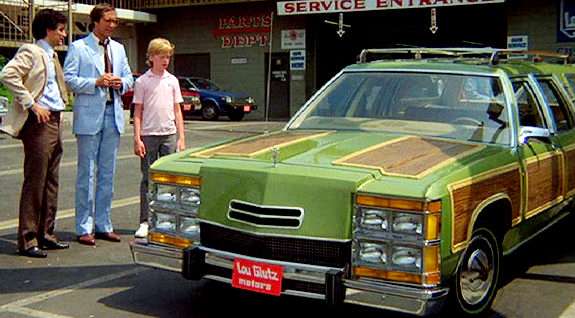
There’s a scene in the first Vacation movie (the original 1983 version with Chevy Chase, Beverly D’ Angelo, Randy Quaid, and John Candy) to which everybody with a drivers license can relate. The Griswolds are driving in the Family Truckster from Chicago to California to visit Wally World. They’re driving super late at night. It’s dark. Super quiet in the car. The moving shadows caused by the street lights and the glow from the dash board is about it. All you can hear is the Fleetwoods’ “Mr. Blue” on the car radio. The camera shows the kids in the back seat, sound asleep. Rusty: sound asleep. Audrey: sound asleep. Aunt Edna: sound asleep. Ellen in the passenger seat: sound asleep. The camera moves to the driver’s seat where we see Clark Griswold behind the wheel: sound asleep!

As God’s children and recipients of his eternal salvation, we have a divine purpose. We play a critical part in all of God’s new creation plans. We are his vital agents. But I think, sometimes, a lot of us are missing it. Some of us are dozing right through it. Sleeping. Maybe you’re in a full-on coma.

And we need a wake-up call.

“Wake up, O sleeper,
rise from the dead,
and Christ will shine on you!”
~Ephesians 4:14

Paul says it’s time to wake up. Living at the level of the non-heavenly world around you, living like everybody else, is like being asleep. Or, worse, it’s like what sleep is the metaphor for: death. When our daily and hourly lives do not reflect the glory of God and his eternal purposes for his world, we’re sleepwalking. We’re just going through the motions. And we’re really missing out.

Paul says it’s time to wake up. Come alive to the real world, the world where Jesus is Lord, the world to which your baptism calls you, your new creation, the world you claim to belong to when you say Jesus is Lord and that, yes, God has raised him from the dead! What we all need from time to time is a friend, or even a stranger, somebody to remind us. We all need a sermon or a verse of Scripture, something to wake us up. You’ve been asleep long enough. We need to be told the sun is shining, it’s a wonderful day out there. Wake up and get involved in it!

If God really is fixing everything that’s broken, if he really is repairing everything and making everything new, then our purpose as his children is to live like it. To really live like it. To join him, even, in repairing and restoring and renewing. That’s the goal. That’s what God is doing.

So many of us, though, see the Church as the goal instead of as the means to the goal. So many of us, when we talk about fixing and repairing and restoring and renewing, we’re talking about fixing and repairing and restoring and renewing the Church. As if that’s the mission. We get so wrapped up in what happens inside our church walls, we spend so much of our time and energy and money and passion on what happens in the church, we don’t have any time or energy or money or passion for what God is doing out in the world!

Wake up!

FamilyTrucksterNow, hear me clearly: God’s Church is important. It’s vital. Christ died for his Church. The Church of God is paramount to the mission of God — as a means to that mission end, never as the end itself. The Church is not Wally World. The Church is the Family Truckster. The Church is the imperfect, beat-up, unbeautiful, sputtering, backfiring vehicle God uses to take his creation to its intended destination. And a lot of us are asleep at the wheel!

The Church is not a retreat from the world. It’s not a safe place to hide from the world. No! Shades of reason, neighbor! The Church is a vehicle into the world. But we’re not supposed to be asleep while God buckles us in and takes us to our destination. God saves us, he redeems us, and he brings us together as a church in order to work through us to save others. Our purpose as a church is to live and give and sacrifice and serve for the sake of others.

“Be very careful how you live — not as unwise, but as wise, making the most of every opportunity.” ~Ephesians 4:15-16.

Peace,

Allan

« Older posts Newer posts »