Category: Church (Page 15 of 59)

Lousy Leaders & Sorry Sheep

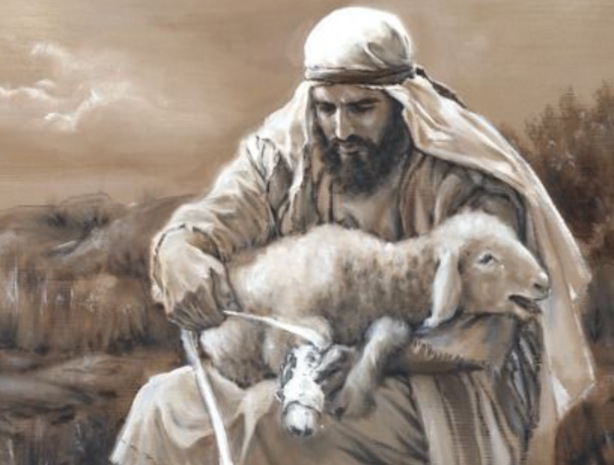
imyselfbandage“This is what the Sovereign Lord says: ‘I myself will search for my sheep and look after them… I will rescue them from all the places where they were scattered… I will bring them into their own land, I will pasture them on the mountains of Israel… I will tend them in a good pasture… I myself will tend my sheep and have them lie down,’ declares the Sovereign Lord. ‘I will search for the lost and bring back the strays, I will bind up the injured and strengthen the weak.'” ~Ezekiel 34:11-16

God speaks through his prophet in Ezekiel 34 about lousy leaders. God points out the kings and elders, prophets and priests — shepherds — the leaders of God’s people who only cared about themselves. The leaders were fat and full and happy. But the people were neglected and forgotten. The shepherds ruled harshly and tough. They didn’t pay attention to the weak. They didn’t minister to the sick. They didn’t care for the injured. They only thought about themselves. Their first priority was to maintain their control. Their main goal was to hang onto their position. They enjoyed the power. They relished the status. And God’s people suffered. They were scattered. They didn’t have any guidance or support, so they looked to the idols in the high places. They made deals with the world and the world ate them alive. And nobody cared.

And God says that’s not going to happen anymore! “I myself will be their shepherd! I’m going to fix this. I’m going to restore everything. I’m going to make everything right. I myself will be their shepherd!”

badsheepEzekiel 34 is also about sorry sheep: older women who think they run everything, younger men who think they know everything, rich people who think they own everything. And they only care about getting their way. They use their experience and knowledge and education and wealth to get it. They don’t just want the blessings of God, they want the blessings you’re getting, too. It’s not enough to have a lot, they want more. And if they need to take it from others, they will. They assert their opinions about everything. They ignore or completely discount the opinions and feelings of others. These sorry sheep push and shove and they leave a trail of devastated people behind them. Hurt feelings and broken relationships. And it’s driving the sheep away.

And God says that’s not going to happen anymore. “I myself will judge between the fat sheep and the lean sheep! I will save my flock. I’m going to fix this problem. I’m going to make this right. I myself will be their shepherd!”

I read Ezekiel 34 and sometimes it makes me sick.

badshepherdsBecause sometimes we can be really lousy leaders. God rips into the bad shepherds because they’re ignoring the fat sheep who are running over the other sheep. Sometimes church leaders don’t want to challenge church bullies because they don’t want the conflict. Sometimes the fat sheep are the big givers. Sometimes preachers just preach safe messages — they don’t confront the pushing and shoving — because they don’t want anybody to leave. Elders and ministers don’t always take care of the weak sheep like we’re supposed to. Taking care of wounded sheep is hard and painful and time-consuming. It’s work. Sometimes we pay more attention to and rule in favor of the fat sheep who can yell down or outspend the broken sheep. Sometimes church leaders crave the attention themselves. Some of us are tempted by the spotlight. And sometimes we do want our own way. Sometimes we’ll do something or say something only to save our own necks. And our selfishness and inconsistencies can sometimes drive people away. God help us.

If you have ever felt run over by anybody in church, I’m sorry. If you have ever felt like your feelings have been dismissed or your opinions have been discounted by any church leaders, I’m sorry. If I have ever used my position as the preacher to shove you or run over you, please forgive me. I’m sorry. I’m know I’m capable of those things. God, help me.

We can also — all of us — be sorry sheep. We can be territorial about our ministries or our preferred practices or our pews. We can not let anybody in. We can shove our brothers and sisters out the door by being dogmatic and unyielding about our own personal beliefs. We can push people to the curb by insisting they believe and think and worship and parent and dress and pray just like me. We’re so good at it, sometimes we’re oblivious to it. We can actually use a weak sheep position as an 18-pound sledgehammer to bully and head butt and ram other sheep into my comfort zone and inside my lines and behind my boundaries. There are sheep in your flock who’ve been in your flock for years and don’t have any friends. That’s the truth. There are sheep in your church who don’t feel like they matter because we’ve run over them on the way to our next committee meeting or service project. There are people in your congregation who sit by themselves every single Sunday. In your building. God, help us.

If you are a broken sheep, if you’re wounded and weak, if you’re tired, if you feel neglected or ignored or flat-out pushed aside by the people or the programs or the culture of your church, please forgive us. I’m so sorry. I know we’re capable of those things. God, help us.

Peace,

Allan

Where is Jesus? Part Three

BandAidRedPlease keep my darling wife Carrie-Anne in your thoughts and prayers for the next few days. She’s having surgery this afternoon to repair a fairly significant hole in a sinus passage. The surgery is only supposed to take about an hour and a half, but everybody’s telling us the eight days after are going to be horrible. As you’re probably aware, Carrie-Anne has the best looking nose in our family, and we don’t want anything to happen to it.

~~~~~~~~~~~~~~~~~~~~~~~

RightHandSaints2

“Since, then, you have been raised with Christ, set your hearts on things above, where Christ is seated at the right hand of God.” ~Colossians 3:1

“God raised us up with Christ and seated us with him in the heavenly realms.” ~Ephesians 2:6

It’s a well known and well rehearsed spiritual reality that by our baptisms we all participate in the death, burial, and resurrection of Jesus. We are united with Christ, we are one with him and share in his death and resurrection. But the Scriptures are clear that we also share in his ascension. We reign over the world with Christ both now and, ultimately, when he returns, in the future forever. We’re co-regents, co-rulers with Jesus.

Now, let’s be clear about what this means and what it doesn’t mean. Reigning with Christ does not mean that Christians are supposed to take over the world and start passing laws and trying to push the way we live on others by power or threat or force. Reigning with Christ does not mean telling everybody what to do. Christians have tried that. Christians are still trying that. And it’s always led to disaster.

Reigning and ruling with Christ means the Church — empowered by the presence of Christ by the grace of the Holy Spirit — enters the world vulnerable and suffering, praising and praying, sacrificing and serving. The Church lives in the world as misunderstood and misjudged by humanity, saved and vindicated and raised by God. Like Jesus. Why would we ever believe we can reign with Christ if we’re not going to reign like Christ?

Man, that’s a good sentence right there. I’m going to write it again. Maybe you should tweet it right now: Why would we ever believe we can reign with Christ if we’re not going to reign like Christ?

RightHandWeReignWe like the idea of Jesus being with us everywhere, even inside us. Jesus is present with us because of his Holy Spirit. He dwells in and with his Church. But the One who is present with us and living inside us by his Spirit is also the King of Kings and Lord of Lords who rules with all power and authority from a position over us, directing us, rebuking us, encouraging us, teaching us. So, yes, in a very real sense we do reign with Christ today in the heavenly realms, but only in the ways he directs — with Jesus, in the name and manner of Jesus.

We are a kingdom of priests, or kings and priests, it depends on how it’s translated. Either way, it means we participate in the reign of God like Jesus. We have important roles to play, we have Christ-ordained jobs to perform with our Lord as he brings his Kingdom rule to earth just as it is in heaven. But we don’t fight what’s wrong in the world with the power of the sword, we use the power of love. We don’t threaten or condemn anyone; like our Lord, we suffer and we serve everyone. We’re priests, so we intercede, we pray, we bring the world to God, we lift up people to God. We cannot bring in the Kingdom of God, but we can witness to it. We can’t create the Kingdom of God, but we can set up signs and tell stories. We can’t build the Kingdom of God, but we can live it with humility and faith — turning the other cheek, walking the extra mile, forgiving others, giving up our freedoms and rights, loving our enemies, and praying for the people who want to do us harm.

Jesus is bringing his eternal rule to this world in ways this world does not understand. 1 Timothy 6 says it’ll happen in God’s own time. He is with us, yes. We reign with him, oh yeah. But he is our Lord. And for us to use methods that are contrary to Jesus’ methods is to reject him as Lord and to try to establish a rival kingdom.

Peace,

Allan

Open Letter to Donald Trump

Mr. Trump,

I watched with an odd mixture of amusement and dread as you took the stage in New York City Saturday to introduce Mike Pence as your running mate for the 2016 election. That mix of feelings has become standard for me every time you step in front of a microphone — I’m at once entertained as if I’m viewing an old Saturday Night Live skit which becomes more outrageous as the bit goes along and horrified that conditions in the United States and, indeed, in this world that would make your candidacy for president even a remote possibility actually do exist.

I could expound for several pages on the particular things that nauseate me about your run for national office. But the point of this letter is to set the record straight between you and me and every Gospel preacher I know.

The reason we do not endorse candidates for political office is not because we’re afraid of losing our tax exempt status in our congregations. The pastors, preachers, and Christian leaders who are telling you this do not represent me or any pastors, preachers, or Christian leaders I know.

Since right after Christmas, you’ve made it a point in several speeches and interviews to say, if you’re elected president, you will abolish the “Johnson Amendment” that binds tax exempt status for non-profit organizations to silence when it comes to those organizations endorsing candidates for public office.

This past weekend you told the American people you’ve had several meetings with “top evangelical leaders, top Christian leaders,” who are afraid to speak. You particularly quoted “a great, great gentlemen who everybody knows” — refusing to give us his name — as telling you “We live in fear in our churches that we’re going to lose our tax exempt status if we say anything that’s even slightly political.”

Mr. Trump, the reason Christian preachers and pastors don’t endorse political candidates has nothing to do with the threat of losing our tax exempt status. It has, instead, everything to do with our conviction that worldly politics and national political structures and candidates are opposed to both the means and the ends of our Lord Jesus Christ and his Kingdom. We are thoroughly convinced that God through Christ and, amazingly, even through his Church is changing this world and fixing what’s wrong with this planet with love and grace, mercy and forgiveness, reconciliation and peace. We believe Jesus willingly went to the cross to abolish all violence, to tear down all the barriers between people, and to show us the eternal power of selfless sacrifice and service. Why would any Christian preacher of that Good News or any church he’s a part of officially endorse any political candidate running for office within the political structures of this country? None of you stand for any of the things our Lord says are important.

Your vice-presidential partner, Mr. Pence, on Saturday stated emphatically to thunderous applause that he was “a Christian, a conservative, and a Republican; in that order!” And then just a few minutes later, in the same speech, he vowed to “hunt down and destroy our enemies,” in complete violation of every other paragraph in the New Testament. If our Lord taught us anything, if the Scriptures say anything at all about Kingdom life, it’s that we are to bless our enemies and do good to those who harm us. To be fair, when you’re working for the national government, you don’t have much choice except to use violence and force to get things accomplished. We understand that. It’s the way the world works. We don’t hold that against you or any other politician. It’s just not the way the Kingdom of God works. It’s not how our Lord has commanded us to live.

We’re not afraid of losing our tax exempt status. It’s just that endorsing one of you would be like a regional manager at Target doing his shopping at WalMart. Endorsing one of you would be a betrayal of all we know to be true about the ways our God is saving his creation. It would undercut our message. Building walls? Killing enemies? Insulting our opponents? Self-promotion? Divisiveness? Name-calling? Seriously, you wouldn’t expect a preacher of God’s Word to endorse any of that, would you? Surely, you know better.

Yes, I know many, many Christians and many churches have bought into the idea that the salvation of this country somehow depends on electing the right politicians. I am saddened by that. They campaign and picket, scream and yell, insult and fight right alongside everybody else for their particular party or platform, all of which is decidedly unchristian behavior. And you’re tapping into that for your own personal and political gain. Of course. I don’t blame you.

As for myself and all Christian preachers and church leaders I know, we don’t buy into your ideas of the power of power to do any real lasting good. Frankly, sir, with all due respect, you’re wrong about power. You say “Christianity is under siege in this country and it’s getting weaker and weaker and weaker.” You say you’re “going to work like hell to get rid of the [Johnson] prohibition and we are going to have the strongest Christian lobby.” You say, “Politically if we (Trump and the Church) use that power, we’re going to start going up, up, up because right now we’re being decimated.” You told us Saturday that regular people walking on the streets have more power than the pastors and “we’ve got to do something about that.”

You say the government has “taken a lot of the power away from the church. I want to give power back to the church because the church has to have more power. Christianity is being chopped; little by little it’s being taken away.”

Really? In response, I’d like to go on the record as stating that no person or organization or force of this world has the capability to remove any power from God’s Church. Give me a break. Again, you misunderstand the way power works. Secondly, I dare say the church does not need you, of all people, to restore power to God’s Church. Thanks, but neither you nor any politician can act as the savior of the Church. We don’t need the state’s power to practice love, to selflessly serve others, to suffer for righteousness’ sake, to pray, to sing, to comfort and heal.

Lastly, allow me to add that for several years now I and a lot of preachers I know have wondered aloud if losing our tax exempt status might actually be the very best thing that could happen to the church in America. If some of the church leaders you’re talking to are genuinely afraid of losing the tax free designation then, God help us, we really are tied to the wrong things. Maybe being forced by the government to pay taxes like everybody else will wake all of us up to the realities that the United States and God’s Church are not only two separate entities, they actually oppose one another and are working in completely different ways for totally different purposes. We would clearly see, finally, that the Church has very little, if anything, in common with the State. Maybe then we would be bold in understanding and practicing the subversive love and sacrifice that changes lives. Maybe then we would be courageous enough to renounce violence and bless our enemies, tear down walls and build bridges, sacrifice and suffer in the name and the manner of Jesus. Maybe then we would once and for all — good grief! — stop displaying the Christian flag in a subservient position to the U.S. flag in our church parking lots and inside God’s sanctuaries.

Removing the prohibition and allowing the churches to have an equal voice in this country’s politics might actually do great harm to the Gospel in America. We would receive power from the wrong sources and be tempted to use power in the wrong ways. Removing the “Johnson Amendment” would actually be a work of the devil, I think. He would love it. Thanks, again, Mr. Trump. Please don’t do the Church any favors.

Again, just to set the record straight, Mr. Trump, the Christian leaders with whom you’re in conversation do not represent me. I’m not afraid and I don’t feel like God’s Church is, or could ever become, powerless because of some worldly government’s policies. I don’t endorse candidates, not because I’m afraid of being forced by the government to pay taxes; I feel like that might actually do God’s Church more good than harm. Christian pastors, preachers, and leaders don’t endorse candidates because, as ordained proclaimers of the Good News, it would be a personal, professional, and spiritual betrayal of the highest order.

Sincerely,

Allan

The Vision

This is our two-part vision at Central. Transformation and mission, discipleship and ministry. Being formed into the image of Jesus in order to bless those outside ourselves. Paying close attention to what God is doing in us and what he is doing through us. We’re committed to it here. We believe in it. We’re sold on the truth that the more we think like Jesus, the more we talk like Jesus and act like Jesus, the more we behave and respond like our Lord, the more naturally we’ll come to consider the needs of others more important than our own. The more we’ll sacrifice for others and serve others and show the love and grace of God to others.

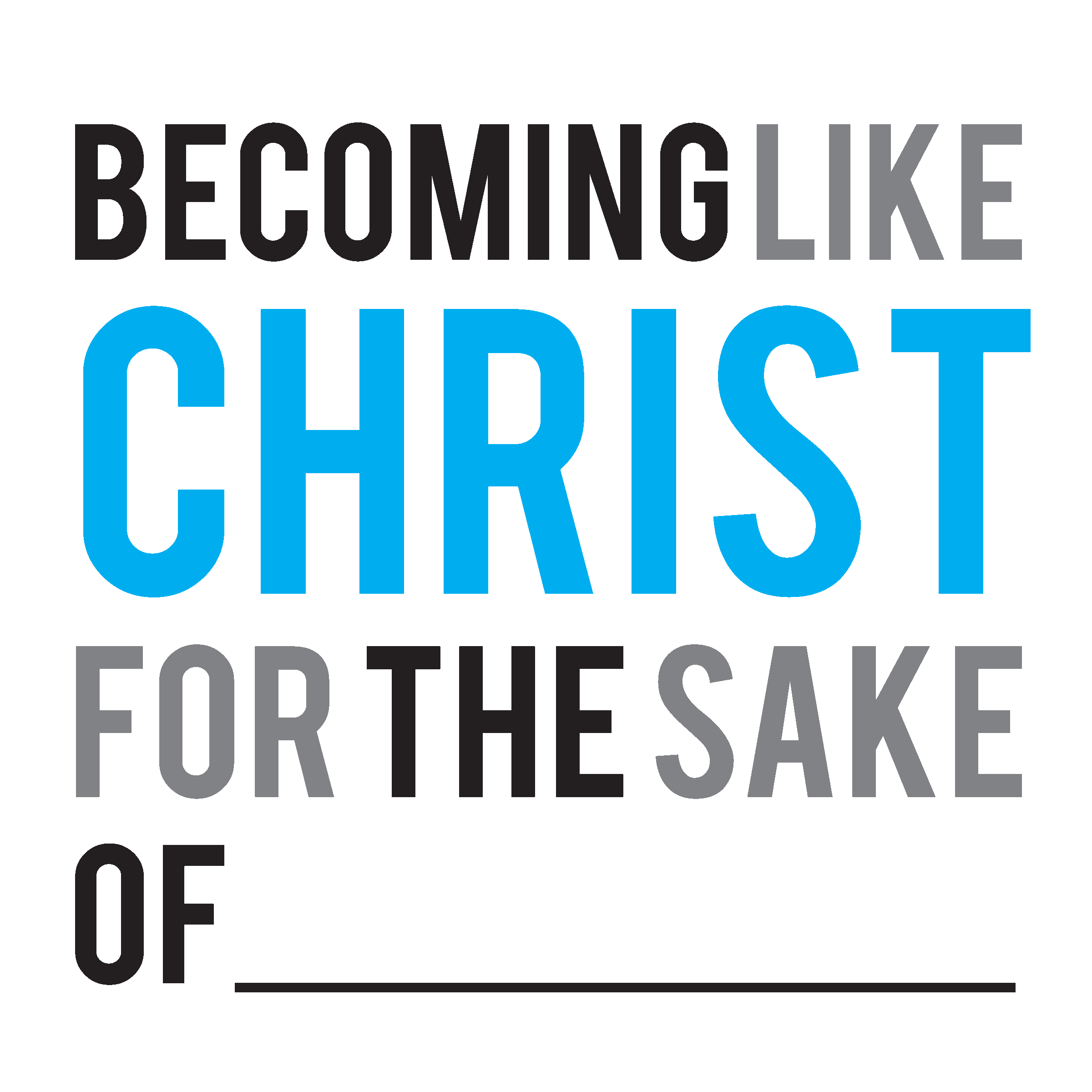
That is not the goal of other institutions. That’s not what the schools are doing. That’s not what your neighborhood Property Owners Association is doing. That’s not the government’s vision. And it’s not the goal of Apple, Fox News, or the Texas Rangers. Becoming Like Christ for the Sake of  __________ is only the mission of the Church. Disciples of Jesus are the only ones committed to this vision. In fact, this Gospel vision actually opposes the vision of most all other worldly establishments. This vision makes us an alternative community. We’re the oddballs, the weirdos. We stick out. What we’re committed to as a group doesn’t make sense to the world.

“If anyone comes to me and does not hate his father and mother, his wife and children, his brothers and sisters — yes, even his own life! — he cannot be my disciple. And anyone who does not carry his cross and follow me cannot be my disciple.” ~Luke 14:26-27

We’re called by Jesus to break free from all the ties of society, he wants us to shake loose from this world’s way of thinking and doing so we can live in this radically new kind of life as a follower of Jesus.

And we do it together.

As disciples, we’re called to forgive others as Jesus forgave us. That means we have to forgive everybody, even people who hate us and want to do us harm. We’re called to suffer and serve instead of use our power and influence to get our way. We’re told to give up our freedom and rights, not fight to preserve them. We’re called to turn the other cheek, to walk the extra mile, to willingly die to ourselves every day. And that is so opposite of what everybody in the world besides Jesus is saying, that we can’t do this by ourselves. We have to do it together.

That’s Church. That’s us. Together. Committed to his vision of Becoming Like Christ for the Sake of  __________.

This world, especially our culture here in the West, has no use for a philosophy or a position that puts others first. David Hume, the Enlightenment Age philosopher who was so influential in the mid 1700’s during the forming of the United States, wrote and spoke continually about the age of reason and logic, the age of the individual. This sample is from his Enquiry Into Morals:

“Fasting, penance, self-denial, humility, sacrifice, silence, solitude, and the whole train of monkish virtues — they are rejected everywhere by men of sense because they serve no manner of purpose. They do not advance a man’s fortune in the world, nor render him a more valuable member of society. They don’t aid him in entertaining company nor increase his power of self enjoyment. We observe, on the contrary, that they all oppose these desirable ends. These practices stupefy the understanding and harden the heart, obscure the fancy, and sour the temper.”

According to Hume and the foundational thoughts that formed this country, the highest purpose of human life is happiness and the well-being of the individual. Everything that might distract from that happiness or compromise that well-being has to be avoided.

Picking up a cross and becoming like Christ makes no sense to our world. It’s incomprehensible. Being crucified with Christ doesn’t compute. Losing your life for the sake of the Gospel sounds silly. But for children of God and disciples of Jesus, this is our calling.

Peace,

Allan

Retrieval Theology

ChurchFathers3

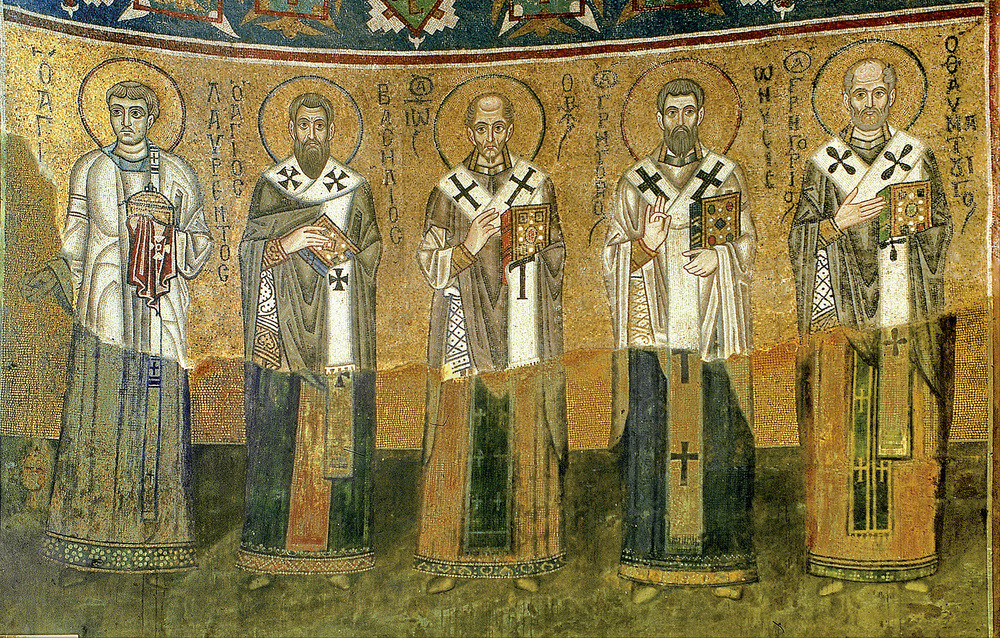
If, as we have noted in this space this week, the Church cannot escape its past and if the Church is influenced in both negative and positive ways by its history and tradition, it seems like we ought to embrace this history in order to examine it. It’s ours anyway; we belong to it. Why not learn from it? Why not study the things we find misguided so we can avoid them in our time today and incorporate the things that might actually benefit our spiritual formation and our passing on of the faith?

I’ll conclude my thoughts on Dr. Keith Stanglin’s article “Restorationism and Church History: Strange Bedfellows?” with today’s post. Honestly, this has been much more a re-hash of his work — not too much original thought from me.

Keith suggests we engage in what a lot of people call “retrieval theology.”

“This is not a call to re-create or ape the faith and practice of a specific time or place from the past; not every thought or practice in church history is equally good or relevant for us. It means learning from the wisdom of our ancestors and appropriating the best that it has to offer for the sake of the church today.”

There are many valid and good reasons for embracing all of church history. One, it gives us our identity; knowing our past helps us know who we are and from where we came. Two, it gives us wisdom; most of the questions and debates we face today have been handled or anticipated at some point in the church’s history. Third, we could gain some needed perspective from the study of church history; the history calls us to a holy balance. Knowing the history of our practices and traditions will help us recognize the swing of the pendulum over time. Then we can start to get a good idea of the pendulum’s position and direction and momentum. Then we’ll be better equipped to take the pendulum where it needs to go or, as Keith puts it, “to stand in its way and push back before it goes too far.”

Studying church history can confirm or challenge our interpretations of Scripture. Maybe this is one of the main reasons we resist it. We like to think our interpretation and practices are pure and strictly biblical and come from an un-biased heart. I know that’s what a lot of us have thought. I remember being told at an early age that if everybody in the world would just read the Bible with clear eyes and an open, honest heart, without any preconceived notions, then everybody would believe and worship just like we do. I still occasionally hear versions of that today! When will we admit that a lot of our “distinctives” in Churches of Christ are not born of slam-dunk biblical arguments or unambiguous passages of Scripture? Most of our distinctive practices are not wrong — I think I’d argue they are all faithful and good and beneficial to a life of discipleship to Jesus. But our arguments come from history, not from Scripture. Every Sunday communion and acappella worship and baptism for the forgiveness of sins comes from what our own guy Everett Ferguson calls “historical foreground.” It’s the historical norm that confirms no baptizing for the dead AND observing the Lord’s Meal every Lord’s Day.

Finally, this concluding section from Keith’s article, with which I strongly agree and advocate:

“Restorationism and church history need not be an odd couple, but can be more like the dynamic duo. I personally applaud and support the genius of Thomas Campbell’s restoration vision: The unity of all Christians by means of restoration based on Scripture. Thus articulated, I stand behind the restoration vision. But I must take leave of any interpretation and application of Scripture in the church that seeks to bypass nearly two millennia of church history, or tries to read the Bible as if no one has read it before, or tries to do theology and worship as if they have not been done for the last 1,900 years. The “Bible only,” in this sense, has never worked.”

Retrieval theology is about embracing and knowing our past — all of it —in order to benefit the Church today and into the future. It requires the discipline of learning from our mistakes, the stamina to refuse to repeat bad decisions and bad practices, and the hard work of incorporating the good and faithful from our past into our present. It also demands a humility in the knowledge that we’re not the first ones to attempt to follow Jesus, we’re not the only ones, we’re not the only ones who have done some really good work by God’s grace, and we’re not the only ones who need God’s grace to cover us in the things we’ve really messed up.

Peace,

Allan

Tradition Informing Scripture

DoleHulaBefore we continue our discussion of Dr. Keith Stanglin’s article “Restorationism and Church History: Strange Bedfellows?” I must wish my beautiful wife Carrie-Anne a very happy birthday. Today is Wednesday so, with our church schedule, it’ll be impossible for the family to celebrate together with our traditional birthday dinner. That’ll have to wait until tomorrow evening. It’ll be our typical Sharky’s burrito tonight and the birthday steak dinner tomorrow. But, Carrie-Anne, I love you, darling. I hope you have a fabulous day.

~~~~~~~~~~~~~~~~~~~~~~~

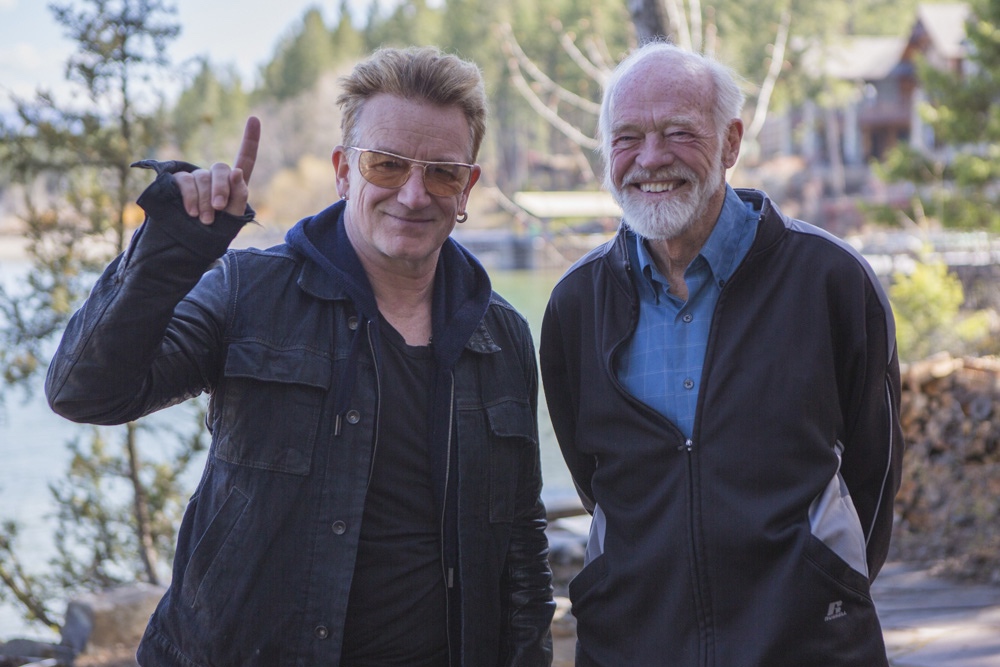
BonoPetersonAlso, if you’re a Eugene Peterson fan or if you’re a fan of U2 or, especially, if you’re a fan of both the Irish rocker and The Message translator you might spend 21-minutes today checking out this video. Fuller Theological Seminary has produced a very short and very high-quality documentary on how Peterson and Bono engage the Psalms. Apparently, once Peterson finished the Old Testament “Message-style,” Bono began reading the Psalms in a whole different way. He reached out to Peterson and the two have become pretty good friends. The short film documents a visit Bono had with Peterson at the author’s mountain home in Montana in which they discussed together the Psalms, honesty and dishonesty in Christian art and music, and violence. It’s good. Really interesting. It’s funny listening to Peterson butcher the name of “Rolling Stone” magazine and refer to the floor near the stage at a U2 concert as the “mash pit.” It’s also really cool when Peterson, while discussing the imprecatory psalms, tells Bono, “We’ve got to learn how to cuss without cussing.” Bono replies, “Yeah, I like that. That’s going to stick with me.” You can watch the video by clicking here.

~~~~~~~~~~~~~~~~~~~~~~~~~~~~

ChurchFathers2

Though we in the American Restoration Movement have been intentional in ignoring and resisting any church history before the early 19th century, we cannot deny that all of us are influenced and shaped by all church history. We don’t acknowledge it, mainly, because we take it for granted. Keith points out that the New Testament table of contents in our Bibles is taken for granted as some kind of unquestionable truth as if it came straight from the apostles at the end of the first century. So, we make an exception to Thomas Campbell’s “nothing not as old as the New Testament” when we accept the New Testament itself (see yesterday’s post).

Keith argues for making these exceptions, which we all make, “with clear eyes and full awareness.”

We could spend several days talking about the things we believe and practice in our churches that are not “as old as the New Testament.” The separation of the Lord’s Supper from an actual meal didn’t begin to happen until late in the second century and into the third. Nobody thought to refer to God as a three-person Trinity until the second century and it wasn’t made an official church position until the fourth. The idea of translating the Old Testament from the original Hebrew instead of the Greek came from the fourth century. The use of unleavened bread in the Lord’s Supper didn’t happen until the eleventh century. Congregational singing in harmony wasn’t practiced until the twelfth century. These are all beliefs and practices (innovations?) that are not “as old as the New Testament.” Yet, instead of throwing them out, we take them for granted in our faith and worship.

Let’s also acknowledge that there are plenty of practices which are as old as the New Testament, commands and examples written in our holy Scriptures, that we don’t practice, and would never consider practicing, because of church history and tradition. To move the conversation along, allow me to concentrate today on two very obvious ways Keith observes that we adhere to church tradition and actually use church history to interpret Scripture and inform our practice.

The first is with baptism for the dead that the apostle Paul mentions in 1 Corinthians 15:29:

“Whatever this practice was, we do not practice or endorse it. Why don’t we practice it? It is not because Paul expresses disapproval, because he does not. In fact, he raises the issue to show the Corinthians how, though they deny the resurrection, their practices are undergirded by a belief in the resurrection. Far from being negative about baptism for the dead, Paul is neutral or perhaps positive. So why doesn’t the church now baptize for the dead? The reason we do not baptize for the dead is because the historic church has not baptized for the dead.”

Imagine if we had nothing else in Scripture about baptism for the dead other than this one verse in 1 Corinthians which, by the way, is indeed the case. But what if the historical record were different? What if there were written documents from the second and third centuries attesting to and approving a ritual for baptism for the dead? We would probably be practicing it today! But with the exception of Latter-Day Saints, no one in the history of Christianity has practiced baptism for the dead. So we interpret the verse in 1 Corinthians 15 as an aberrant practice. We’re convinced that if Paul had been writing a sacramental theology, he would have clearly condemned the practice in unambiguous terms. Why? Because no one’s ever done it. As Keith points out, Sunday School classes have a lot of questions when they study 1 Corinthians, but they never seriously consider the thought of restoring this practice. So, we’ve got a first-century New Testament practice left completely out of our faith and worship today based solely on church tradition and history.

Let’s do one more: the Lord’s Supper. The way we observe the meal today bears almost zero resemblance to the ritual as it is understood and taught and practiced in the New Testament. The very fact that we eat the cracker and sip the little swallow of juice separate from a full evening meal is enough evidence to acknowledge that we are influenced and shaped by church history and tradition. Our insistence on the use of unleavened bread is a relatively new innovation that helped split the Eastern and Western churches in the eleventh century. The early church didn’t use unleavened bread for the same reasons it didn’t use bitter herbs, lamb, and multiple cups of wine. But we demand unleavened bread today. Why? Because the Roman Church made the change about a thousand years ago.

So, let’s look at Scripture. What does the New Testament say regarding the day to eat the Lord’s Supper? According to Acts 20:7, the church in Troas met on the first day of the week to break bread. This is the only reference we have in Scripture for Sunday. And it’s tricky because they wound up eating it after midnight. The Last Supper took place in the middle of the week. The church in Jerusalem did it daily (Acts 2:46) and Paul doesn’t give us a day in 1 Corinthians (11:26). We don’t have a whole lot on the day itself.

On the other hand, there’s a much more clear and consistent Scriptural testimony regarding location. The Last Supper was eaten in an “upper room.” The early church also celebrated the meal in an “upper room” (Acts 20:8).

So why do we insist on Sunday as the day to observe the Lord’s Supper but we place no guidelines at all on where the Supper can be taken? Based on Scripture alone, it’s not clear that the day is any more or less important than the location. If anything, there’s more testimony about the location than the day. Why do we dismiss any discussion about where we’re supposed to eat the Lord’s Supper as irrelevant while, at the same time, we spend a ton of time and energy searching the Scriptures to make a strong case for the Sunday timing?

“Tradition — a tradition that extends unbroken back to the second century — repeatedly attests to the importance of the day, not the location. The historic tradition supports the theological case for the importance of resurrection day and, therefore, the possibility of celebrating other significant times and seasons. Celebrating the Supper in an upper room has always been, according to this same tradition, an indifferent matter, as it rightly is for us. But despite all the vast changes in the theology and practice of communion, a Lord’s Day never passed in the first fifteen centuries without celebration of the Lord’s Supper. Whether we realize it or not, the church’s history is a decisive factor that influences our faith and practice.”

Rather than attempting to run away from church tradition, which we cannot; instead of ignoring or resisting church history and tradition, which would require we deny most of our formation influences, why not embrace the history and examine it? Why not search for the centuries of wisdom that are available in acknowledging our past: the good and the not so good, the faithful and the not so faithful?

Peace,

Allan

« Older posts Newer posts »