
Category: Christ & Culture (Page 21 of 43)

Tradition Informing Scripture

DoleHulaBefore we continue our discussion of Dr. Keith Stanglin’s article “Restorationism and Church History: Strange Bedfellows?” I must wish my beautiful wife Carrie-Anne a very happy birthday. Today is Wednesday so, with our church schedule, it’ll be impossible for the family to celebrate together with our traditional birthday dinner. That’ll have to wait until tomorrow evening. It’ll be our typical Sharky’s burrito tonight and the birthday steak dinner tomorrow. But, Carrie-Anne, I love you, darling. I hope you have a fabulous day.

~~~~~~~~~~~~~~~~~~~~~~~
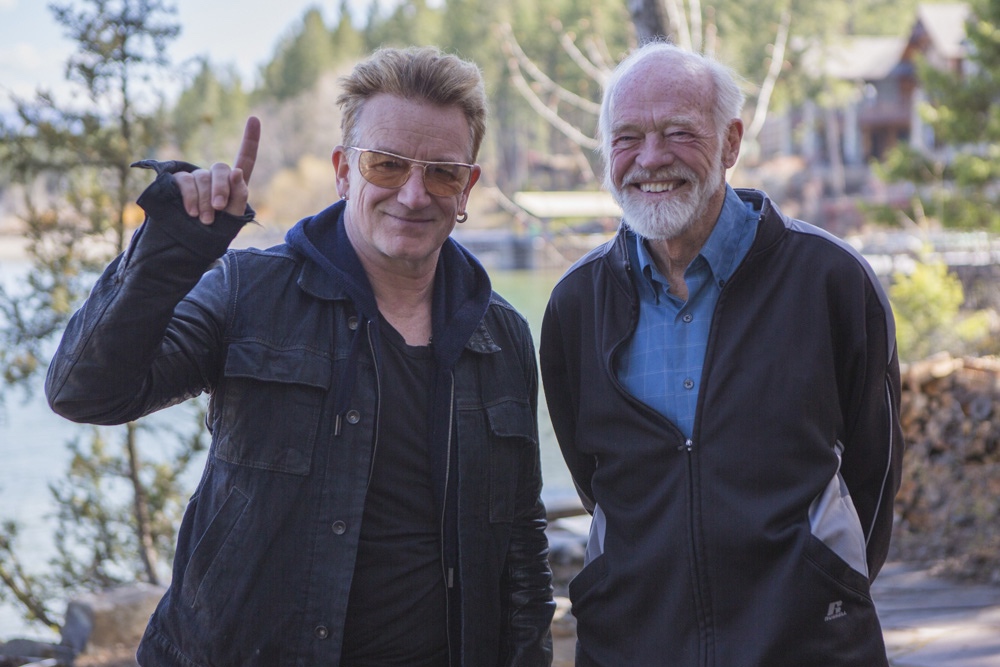
BonoPetersonAlso, if you’re a Eugene Peterson fan or if you’re a fan of U2 or, especially, if you’re a fan of both the Irish rocker and The Message translator you might spend 21-minutes today checking out this video. Fuller Theological Seminary has produced a very short and very high-quality documentary on how Peterson and Bono engage the Psalms. Apparently, once Peterson finished the Old Testament “Message-style,” Bono began reading the Psalms in a whole different way. He reached out to Peterson and the two have become pretty good friends. The short film documents a visit Bono had with Peterson at the author’s mountain home in Montana in which they discussed together the Psalms, honesty and dishonesty in Christian art and music, and violence. It’s good. Really interesting. It’s funny listening to Peterson butcher the name of “Rolling Stone” magazine and refer to the floor near the stage at a U2 concert as the “mash pit.” It’s also really cool when Peterson, while discussing the imprecatory psalms, tells Bono, “We’ve got to learn how to cuss without cussing.” Bono replies, “Yeah, I like that. That’s going to stick with me.” You can watch the video by clicking here.

~~~~~~~~~~~~~~~~~~~~~~~~~~~~
ChurchFathers2

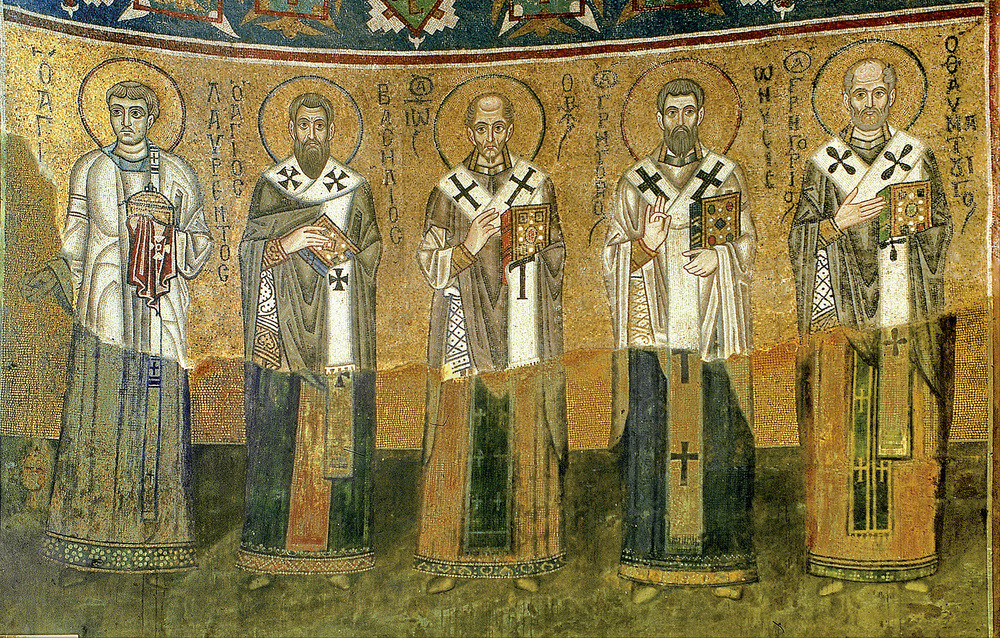
Though we in the American Restoration Movement have been intentional in ignoring and resisting any church history before the early 19th century, we cannot deny that all of us are influenced and shaped by all church history. We don’t acknowledge it, mainly, because we take it for granted. Keith points out that the New Testament table of contents in our Bibles is taken for granted as some kind of unquestionable truth as if it came straight from the apostles at the end of the first century. So, we make an exception to Thomas Campbell’s “nothing not as old as the New Testament” when we accept the New Testament itself (see yesterday’s post).

Keith argues for making these exceptions, which we all make, “with clear eyes and full awareness.”

We could spend several days talking about the things we believe and practice in our churches that are not “as old as the New Testament.” The separation of the Lord’s Supper from an actual meal didn’t begin to happen until late in the second century and into the third. Nobody thought to refer to God as a three-person Trinity until the second century and it wasn’t made an official church position until the fourth. The idea of translating the Old Testament from the original Hebrew instead of the Greek came from the fourth century. The use of unleavened bread in the Lord’s Supper didn’t happen until the eleventh century. Congregational singing in harmony wasn’t practiced until the twelfth century. These are all beliefs and practices (innovations?) that are not “as old as the New Testament.” Yet, instead of throwing them out, we take them for granted in our faith and worship.

Let’s also acknowledge that there are plenty of practices which are as old as the New Testament, commands and examples written in our holy Scriptures, that we don’t practice, and would never consider practicing, because of church history and tradition. To move the conversation along, allow me to concentrate today on two very obvious ways Keith observes that we adhere to church tradition and actually use church history to interpret Scripture and inform our practice.

The first is with baptism for the dead that the apostle Paul mentions in 1 Corinthians 15:29:

“Whatever this practice was, we do not practice or endorse it. Why don’t we practice it? It is not because Paul expresses disapproval, because he does not. In fact, he raises the issue to show the Corinthians how, though they deny the resurrection, their practices are undergirded by a belief in the resurrection. Far from being negative about baptism for the dead, Paul is neutral or perhaps positive. So why doesn’t the church now baptize for the dead? The reason we do not baptize for the dead is because the historic church has not baptized for the dead.”

Imagine if we had nothing else in Scripture about baptism for the dead other than this one verse in 1 Corinthians which, by the way, is indeed the case. But what if the historical record were different? What if there were written documents from the second and third centuries attesting to and approving a ritual for baptism for the dead? We would probably be practicing it today! But with the exception of Latter-Day Saints, no one in the history of Christianity has practiced baptism for the dead. So we interpret the verse in 1 Corinthians 15 as an aberrant practice. We’re convinced that if Paul had been writing a sacramental theology, he would have clearly condemned the practice in unambiguous terms. Why? Because no one’s ever done it. As Keith points out, Sunday School classes have a lot of questions when they study 1 Corinthians, but they never seriously consider the thought of restoring this practice. So, we’ve got a first-century New Testament practice left completely out of our faith and worship today based solely on church tradition and history.

Let’s do one more: the Lord’s Supper. The way we observe the meal today bears almost zero resemblance to the ritual as it is understood and taught and practiced in the New Testament. The very fact that we eat the cracker and sip the little swallow of juice separate from a full evening meal is enough evidence to acknowledge that we are influenced and shaped by church history and tradition. Our insistence on the use of unleavened bread is a relatively new innovation that helped split the Eastern and Western churches in the eleventh century. The early church didn’t use unleavened bread for the same reasons it didn’t use bitter herbs, lamb, and multiple cups of wine. But we demand unleavened bread today. Why? Because the Roman Church made the change about a thousand years ago.

So, let’s look at Scripture. What does the New Testament say regarding the day to eat the Lord’s Supper? According to Acts 20:7, the church in Troas met on the first day of the week to break bread. This is the only reference we have in Scripture for Sunday. And it’s tricky because they wound up eating it after midnight. The Last Supper took place in the middle of the week. The church in Jerusalem did it daily (Acts 2:46) and Paul doesn’t give us a day in 1 Corinthians (11:26). We don’t have a whole lot on the day itself.

On the other hand, there’s a much more clear and consistent Scriptural testimony regarding location. The Last Supper was eaten in an “upper room.” The early church also celebrated the meal in an “upper room” (Acts 20:8).

So why do we insist on Sunday as the day to observe the Lord’s Supper but we place no guidelines at all on where the Supper can be taken? Based on Scripture alone, it’s not clear that the day is any more or less important than the location. If anything, there’s more testimony about the location than the day. Why do we dismiss any discussion about where we’re supposed to eat the Lord’s Supper as irrelevant while, at the same time, we spend a ton of time and energy searching the Scriptures to make a strong case for the Sunday timing?

“Tradition — a tradition that extends unbroken back to the second century — repeatedly attests to the importance of the day, not the location. The historic tradition supports the theological case for the importance of resurrection day and, therefore, the possibility of celebrating other significant times and seasons. Celebrating the Supper in an upper room has always been, according to this same tradition, an indifferent matter, as it rightly is for us. But despite all the vast changes in the theology and practice of communion, a Lord’s Day never passed in the first fifteen centuries without celebration of the Lord’s Supper. Whether we realize it or not, the church’s history is a decisive factor that influences our faith and practice.”

Rather than attempting to run away from church tradition, which we cannot; instead of ignoring or resisting church history and tradition, which would require we deny most of our formation influences, why not embrace the history and examine it? Why not search for the centuries of wisdom that are available in acknowledging our past: the good and the not so good, the faithful and the not so faithful?

Peace,

Allan
CenterPeace at Central

SallyGaryApril2016I sincerely appreciate the sensibilities of our leadership group at Central. Truth and grace is not just something Jesus said, it really is a guiding principle for us here. In fact, our elders and ministers are more likely to argue with each other about whether we’re showing enough grace than about anything else. We’ll delay and delay and delay and talk and pray and pray some more to insure we’re expressing enough compassion. We’d much rather risk being wrong about something than to write a rule about it.

And I love that. Not all churches are like this. Not all leadership groups act this way. We’re all very blessed by the merciful and gracious sensibilities of our leaders at Central. Our church is blessed and I believe our city and God’s world is ultimately blessed by the Christ-like attitudes of our leaders.

And lately we’ve been praying and talking together about same-sex attraction and homosexuality. Since June last year. In our staff gatherings and elders meetings. On Wednesday nights and Saturday mornings. We’re committed to having the conversations. We’re committed to talking about this difficult topic. And we’re committed to showing the love and grace of our Lord to all men and women, just like he did.

We’re also dead set on working harder to make Central a safe place to have these conversations. One thing the Supreme Court decision legalizing gay marriage did was force us to start talking about something we should have been talking about 40 years ago. We’re so far behind on this deal. We’ve put our heads in the sand for too long, rationalizing our refusal to engage the issue because “nobody here is dealing with it.”

Well, those days are over. More and more people are struggling with same-sex attraction issues themselves and within their families. And we must be able to talk openly about it at church. The world is certainly ready to talk about it. We can’t keep ignoring it and acting like nothing’s going on. Following that Supreme Court decision last summer, lots of churches just added two new sentences to their wedding policies and moved on to something else. And we’ve decided we can’t do that. There has to be Christian ministry. There has to be prayer. There has to be loving engagement with the hurting.

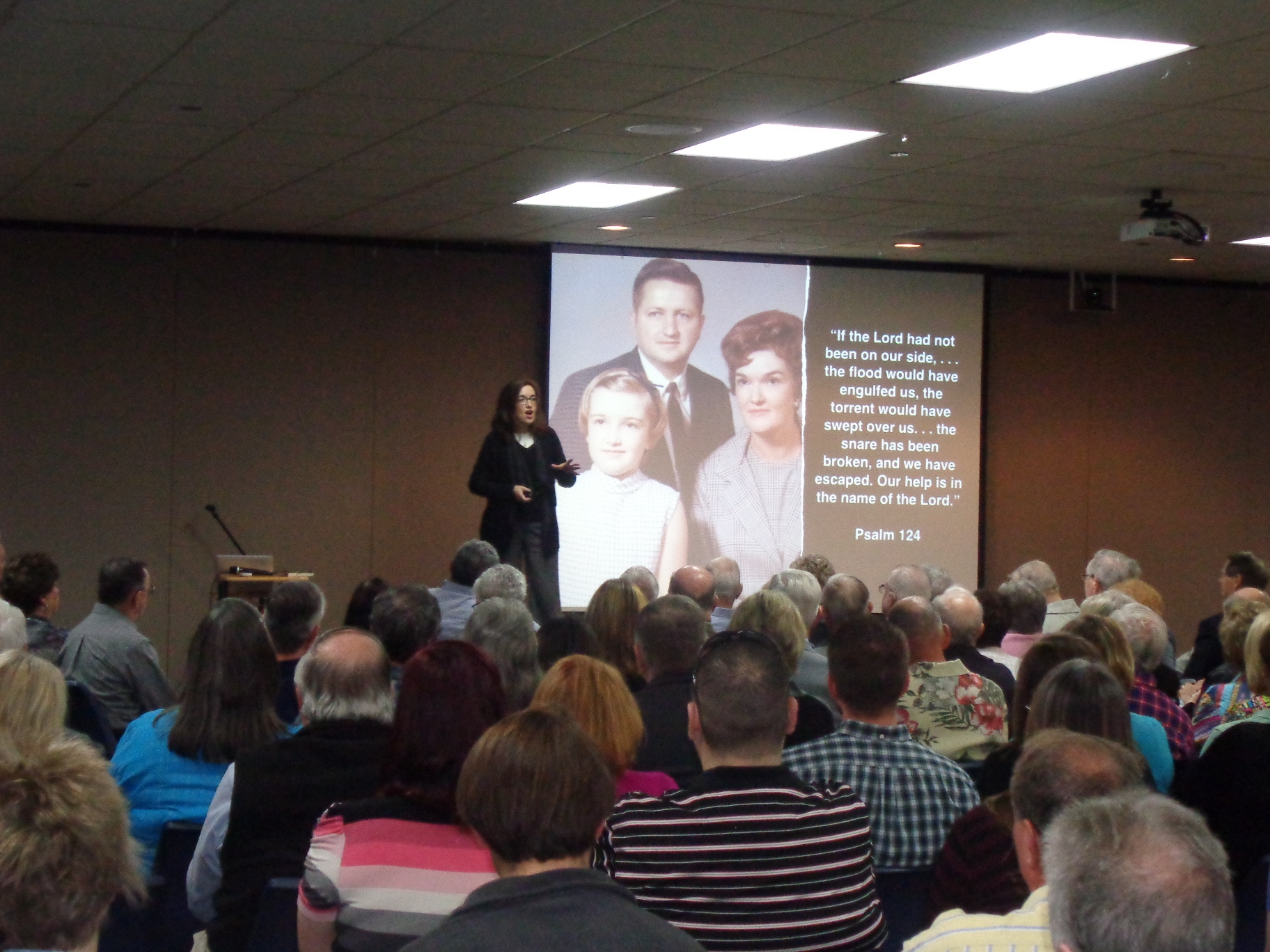
SallyGaryMugSally Gary, the founder and director of CenterPeace, was kind enough to give up her weekend to spend parts of three days with our church family here in Amarillo. Sally’s ministry is devoted to making churches and families safe places to have these conversations about homosexuality. And having her here to talk to and to process with was a terrific help. Sally spent three hours Friday night with some of our leadership and five Central couples who are dealing with same-sex issues in their families. Blessing them. Listening to them. Loving them. Encouraging them. And showing us how to do it. She spent nearly four hours with our entire leadership Saturday morning walking us through her story, challenging us to “keep the conversation going,” to “keep the doors of communication open,” and to remind people that God loves them. Then today she spoke to nearly 500 members of our church, imploring us to make Central a safe place to talk, reminding us that there are people in our congregation, young people probably, who have questions, who are struggling, who desperately need somebody to talk to. Again, the world is ready to talk. God’s Church needs to be just as ready.

It’s very, very easy for me to get to a place pretty quickly where I’ve got everything figured out. I have all the information, I know what we’re supposed to do, I know the strategy and the course of action, and here we go. And then I have a two hour lunch with a young person struggling with sexual identity or a long phone conversation with a friend whose daughter has come out as gay or a weekend with Sally Gary. And I don’t know what to do. I don’t know what God wants us to do. I don’t have any answers really at all. I’m only convinced for sure that all men and women are created by God in his holy image, that he loves them dearly, and that Jesus died for them all and was raised for them all. And that I’m supposed to love all people. I’m supposed to engage all people with his mercy and grace. His Church is called to show his love to all people. And church should be a safe place for us to talk about anything. We ought to be able to talk and pray together about difficult things and still feel very protected and very safe. And deeply loved. Those are the things I know. And that’s about all I know for sure.

I’m grateful to Sally for the weekend we’ve just had at Central. We all pray for her God’s richest blessings of boldness and courage, strength and peace. And I’m grateful to God for our elders and ministers at Central who are leading us through this conversation. May God’s holy will be done in and through this church just as it is in heaven. And may we be faithful to him, may we reflect his glory, as we pursue the conversation.

Peace,

Allan

Instrument of God’s Peace

Mom70We spent all weekend behind the Pine Curtain in Liberty City celebrating my mother’s 70th birthday. As our children get older and our schedules become less predictable, getting the entire family together is becoming more and more difficult. But it’s always worth it. Dad grilled burgers in the rain, we played football and Frisbee and board games, we ate a ton, laughed a lot, and worshiped together as a big family yesterday morning at the Chandler Street Church of Christ in Kilgore.

The highlight for Carley was probably getting to drive the Impala. My dad owns a fully restored 1960 Chevrolet Impala that belonged to my grandfather. It’s a beautiful turquoise head-turner: huge fins on the back, wide whitewall tires, rocket-style tail lights, wrap-around windshield, add-on AC, and plenty of chrome. The younger kids all wanted to go for a ride and, somehow, they returned to the house with Carley behind the wheel. I’m not sure how she talked her grandpa into letting her drive, but it was pretty cool.

1960Impala1960Impala2


~~~~~~~~~~~~~~~~~~~~~~~

I received an email from Jerry Taylor last week. Totally out of the blue. Completely unexpected. No context. No explanation. Just a couple of short sentences from a great man of God whom I respect and admire.

“One person has said about the current political season that this is a time of moral reckoning for every American citizen. It can better be said that this is a time of moral reckoning for every Christian in America.”

That was it. Nothing else. Short. Simple. Yet penetrating. And provocative.

ShoutingI wonder about those in the United States who declare themselves to be Christians and, at the same time, are personally and emotionally invested in the race for president. As the shouting grows louder, as the insults become more pointed, as the fear tactics reach ridiculous levels, how do Christians participate in the process without personally joining and even contributing to the rancor of the political campaigns? I’m sure it’s possible; I just wonder how. It seems to me it would be maddeningly difficult.

Is there even one political YouTube video you can recommend that only builds others up without tearing anybody down? Is there even one political email you can forward that only encourages people without insulting or disparaging others? If you put a candidate’s name on the back of your car, are you telling everybody that you agree with that candidate’s position on everything and that you stand by his or her tactics? It must be really difficult for a Christian to engage this thing and still hold true to our calling as ambassadors for Christ.

I’ve been thinking about the opening lines of an ancient prayer that’s been attributed to St. Francis. The prayer petitions God to empower the one praying to be an instrument in the world of God’s peace. The one praying is asking God to work through him to show the world a different way

Lord, make me an instrument of thy peace;
where there is hatred, let me sow love;
where there is injury, pardon;
where there is error, the truth;
where there is doubt, the faith;
where there is despair, hope;
where there is darkness, light;
and where there is sadness, joy.

I’m sure I’m not the only one who’s getting the forwarded videos and emails, who’s thrust into the conversations at meal times, who’s bombarded with the rhetoric while waiting in line at Wal-Mart or while I’m getting my oil changed. How do you answer that hateful email? How do you reply to the mean-spirited video? How do you respond to the insults that disparage entire groups of people?

What it requires is discipline. Diligence. A refusal to join the rage. A commitment to combat the evil with love and grace. A constant awareness. A continuing asking of the question: Am I acting as an instrument of God’s peace?

Christians have to be intentional about sowing love where there is hatred. We must carefully choose words that build up, never injure; we must speak to forgive, never to hurt. We have to look through the lens of Christian hope in the face of so much despair. We must be full of joy when so many around us are filled with hate. And it’s not going to happen accidentally. We have to do this on purpose.

Peace,

Allan

The Counter Cultural Way

JesusPraysInPainThe Word of God confronts us with two ways. The Law and the Prophets, the Psalms and Proverbs, the Gospels and Letters all present us with the choice of two ways. It’s not where you’re going to live or what career you’re going to pursue or who you’re going to marry or where you’re going to eat. The choice given us in Scripture certainly encompasses and impacts all the daily choices we make while we live in those places with the people we marry and in the work we do and while we’re eating lunch. But there’s only one choice in the Bible: the way of life of the way of death; the way of blessing or the way of curses; the way of God or the way of the devil.

Jesus says, “I am the Way.” I am the Way to God and I’m also the way God comes to you. I’m a two-way Way. And so we choose Jesus. And when we choose Jesus, what is it specifically that we’ve chosen? What are we signing up for when we say “Yes” to Jesus?

Well, the Gospels tell us plainly that Jesus’ Way is counter cultural. Popularity and power mean just about everything in our society, but popularity and power mean absolutely nothing to our Lord. In the Gospels, it looks like Herod has the power. The governing officials in the Roman Empire have all the power. So the Roman soldiers. The religious leaders have a lot of power. The chief priests and teachers of the Law and the Sanhedrin wield plenty of power. And all of these people and groups seem to have their way with Jesus. Jesus is the lowly servant who’s despised and rejected, beaten and crucified. Cursed by God and man.

But remember the centurion clearly sees the truth when he sees how Jesus dies: “Surely this man was the Son of God.”

Jesus’ way is upside down. It’s counter cultural. Our default, though, is the pursue the ways of the world. As disciples of Jesus individually and as churches of God collectively, we’re not very careful with this. Without even thinking about it, we embrace and adopt the ways of the culture. We imitate the ways used by powerful people who run large companies and corporations, high profile people who lead political parties and nations. By threat and force and power; with money and might; by out-yelling and out-insulting others; by demonizing those who disagree with us; by walling ourselves off from anyone who may do us harm. And we don’t even consider that those ways are totally at odds with the way of Jesus.

We see accomplished men who’ve achieved great success by using these worldly methods and we make them elders of the church. We make these guys preachers of the Word. Whatever the culture decides is exciting and successful and influential, whatever gets things done, whatever will gather a crowd.

We usually have to take four or five different looks at guys whose main character traits are gentleness and humility before we consider them for leadership roles — if we even look at those kinds of guys at all. Shouldn’t the man who lives only to serve others be moved to the top of the list? Shouldn’t the guys who consider the needs of others more important than their own, the guys who refuse to advance their own agenda, the guys who you’ve never heard say one bad thing about anybody else, shouldn’t they be the frontrunners for leadership positions in our congregations? Shouldn’t they be the ones to set the tone in our churches?

Peace,

Allan

Saying “No” to the Good Ol’ Days

Demolition update from the west parking lot at Central Church of Christ: two buildings down, one to go.

MadisonApts4MadisonApts5MadisonApts6
MadisonApts7


VotePinAs the Super Tuesday voting frenzy continues — on the streets of Amarillo, along the crawl at the bottom of my laptop screen, on the TVs at the Chinese food restaurant — I’d like to consider aloud a question posed by Philip Yancey in his 1999 work The Bible Jesus Read:

“Is it possible that God permitted the entire tragic experiment of Israel’s nationhood in order to prove a point about the visible kingdom — any visible kingdom? Solomon, with every advantage of wisdom, power, and wealth — all good gifts from God — led his nation to destruction. Did God grant Solomon those advantages in order to put to death illusions and thus prepare the way for a new kingdom?”

David had every blessing of God’s strength. He possessed great military might and strategic power. He conquered foreign lands and expanded Israel’s territory. Every enemy Israel ever had surrendered to David’s kingdom. Solomon after him had every blessing of God’s wisdom and peace. Great building programs. Wonderful economy. Peace. And it all failed. It collapsed. It was destroyed.

All kingdoms of this world are built on strength and power, on wealth and force, violence and intelligence. Yet even at their very best, they all fail. History has proven this over and over again.

Yancey continues:

“A later king — one greater than Solomon, he claimed — established his rule instead among the lame and poor and oppressed and ritually unclean. He belittled Solomon’s glory by comparing it to that of a common day lily. He offered no rewards other than the prospect of an executioner’s cross.”

Consider that the Jews in Jesus’ time were clamoring for a return to the good ol’ days. They wanted a Davidic King who would restore the nation back to the days when they were in charge, when they submitted to no one, when their enemies bowed to them, when the differences between them and everybody else was clear. They were hungry for a return of their nation to Solomon’s splendor, when peace was protected by the world’s biggest army, when religion reigned in fancy robes under the magnificent national temple, when everybody had plenty of what they wanted.

Jesus said “No” to that. Clearly.

Even after he was brought out of the tomb by God’s Holy Spirit, the disciples were still asking, “Are you going to restore the kingdom now?”

I hear Christians today clamoring for some return for the United States to some long ago glory days when followers of Jesus were in charge. Christians made the rules, I hear. Christians set the tone, they say. Christians had the respect, the power, the influence. Our churches were full and the laws of the land reflected our Christian will. That’s what they say. And, apparently, that’s why they vote. For the good ol’ days of Bush. Or Reagan. Or Solomon.

The good ol’ days were never ever ever better than David’s and Solomon’s. Those were the very best of anybody’s good ol’ days. And Jesus said “No.”

The kings of Israel who followed Solomon did not learn. The disciples who followed Jesus did not learn. What about us?

Peace,

Allan

Seeing God’s Plan at the Cross

“When the Centurion who stood there in front of Jesus, heard his cry and saw how he died, he said, ‘Surely this man was the Son of God!'” ~Mark 15:39

JesusCrossShadowsWhen we see how Jesus dies, we see very clearly the way God is going to save the world. We see how God is going to transform the world and win the victory.

Politicians are not going to save the world. Platforms and promises are not going to change your country. This country and this world are not going to be won by votes or armies or power or partisanship. Only our God in Christ can save the world — God alone!

And his way is the way of death. His way is the way of suffering and sacrifice and service. His will is to change people and save people, not by force or through threats, not out of anger or with an attitude, but with humility and love and forgiveness and grace. And peace.

This world will change, not when more Christians vote, but when more Christians serve. This country will change, not when Christians get their man or woman in the White House, but when Christian men and women get suffering and sacrifice in their hearts. This world will change, not when the Church is in power, but when the Church is persecuted for righteousness’ sake and suffers for doing good. This country will be changed, not when our enemies are shot and bombed and destroyed, but when our enemies are forgiven and prayed for and loved.

We see clearly only through the lens of the cross.

Jesus blessed those who cursed him; he taught those who ridiculed him; he did not resist those who told lies about him and beat him; he loved those who spit on him; he forgave those who killed him. That’s the “way.” That’s what’s going to save the world.

Peace,

Allan

« Older posts Newer posts »