
Category: Christ & Culture (Page 13 of 43)
I was privileged to spend almost three days in Memphis this week with Jim and Charlotte Martin. Jim is a fellow Grove Rat — we’re both from the same southeast Dallas neighborhood — and a long-time family friend and a trusted partner/mentor to me. We ate pulled-pork barbecue, southern fried catfish, blackberry cobbler, and banana pudding together. We talked about ministry and kids and churches and the political climate and preaching. We played touch football with his two grandsons and prayed together. I spent a day on campus at Harding School of Theology where Jim is the vice president. I attended chapel, met a ton of people who know my brother Keith, and sat in on one of Dave Bland’s preaching classes (what an unfortunate name for a preacher).
 One of the unexpected highlights of my trip was visiting the National Civil Rights museum in the historic Lorraine Motel, the site of the 1968 assassination of Dr. Martin Luther King, Jr. I thought I might spend a couple of hours in there on Monday, but it wound up being closer to five. They’ve done such an outstanding job of transforming that motel into an excellent and inspirational journey through the history of the Civil Rights Movement in the United States. So many exhibits, so many stories, so many pictures and videos, so many lives are represented here.
The worst and the best of humanity are both represented here, the heroic and the horrible, the tragedy and the victory. It breaks my heart and compels me to tears of sorrow for the way sinful people treat God and one another and, at the same time, inspires me to want to be a better person.
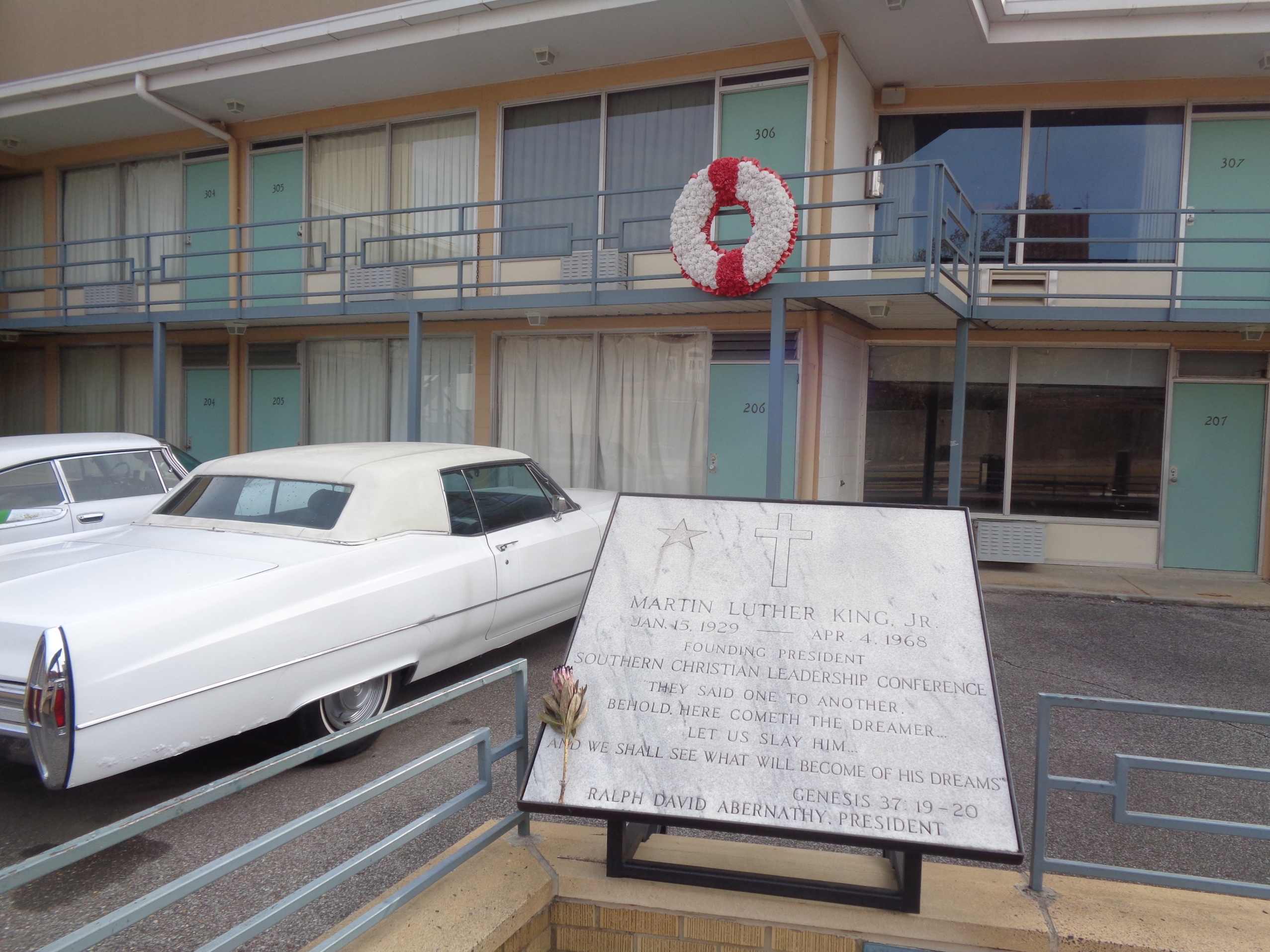

After three or four hours of reading and watching and reflecting and walking the maze that is the museum, you forget you’re in a motel. Suddenly, without much warning, you actually find yourself standing in MLK’s room 306. You’re in his room. You’re looking through his window, just two or three feet away from the spot on the balcony where the assassin’s bullet took him down from across Mulberry Street. Such an historic site. Such a turning point. Such a watershed moment for this nation.
And, personally, I’m not sure we’re much better as a people today than we were forty-one-and-a-half years ago.
“Those who make peaceful revolution impossible will make violent revolution inevitable. When machines and computers, profit motives and property rights, are considered more important than people, the giant triplets of racism, extreme materialism, and militarism are incapable of being conquered.” ~ Dr. Martin Luther King, Jr., April 4, 1967
God have mercy on us.
Peace,
Allan

CNN’s Ed Lavandera has conducted an interview with Judge Tammy Kemp, the Dallas County judge who presided over the recent murder trial of former Dallas police officer Amber Guyger. Kemp has come under fire and is facing formal ethics complaints for allowing Brandt Jean, the younger brother of the victim in this case, Botham Jean, to hug his brother’s killer during the sentencing phase. Judge Kemp also hugged the defendant in the courtroom and gave Guyger her personal Bible to take with her to prison. The judge’s controversial actions clearly are against courtroom protocol and have generated lots of discussion nationally.
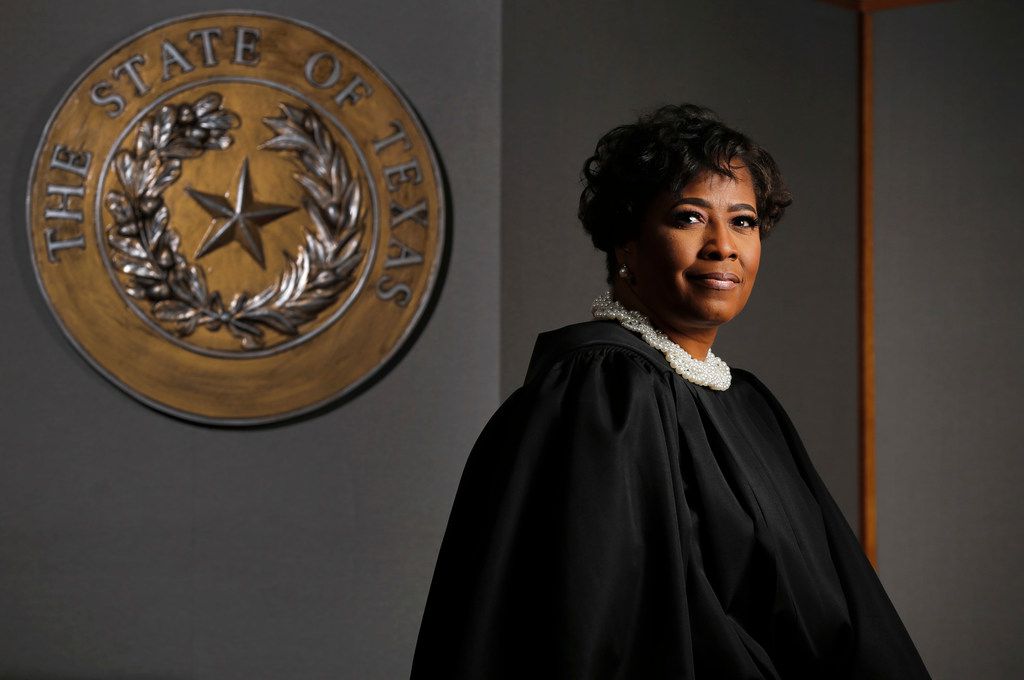 This interview is fascinating. It depicts so vividly the struggle Judge Kemp faced in deciding to allow Brandt to hug Guyger. The judge herself says she had to decide that, in addition to being a judge, she is a human being first. She knew that both Brandt and Guyger needed the hug in order to heal and to be liberated from anger and bitterness and to retain a sense of purpose for their lives. She speaks candidly about the power of forgiveness and compassion. She quotes from Micah 6:8 as a weighty passage of Scripture that guides her thoughts and actions. And she comes across as a very impressive follower of Christ as Lord.
Click here for the video.
Here’s to more forgiveness and more compassion.
Peace,
Allan

I’ve watched the video a dozen times and I’m moved to the verge of tears and inspired to the point of my heart bursting each time. You’ve probably seen the video: Botham Jean’s little brother, Brandt, speaking directly to Amber Guyger in the Dallas courtroom where she was convicted of murdering Botham and sentenced to ten years in prison. Brandt forgave her, told her he loved her, and then, in an unprecedented display of that forgiveness and grace, hugged his brother’s killer.
It’s remarkable. It’s beyond description. It’s Jesus. It’s the Kingdom of God. And it’s the only thing that can fix what’s wrong with us and with our world.
We can’t fix what’s really wrong. We try, but we can’t — not with education or technology or ingenuity or force. It takes forgiveness. It takes grace. It takes love.
It takes the words 18-year-old Brandt Jean spoke to Amber Guyger yesterday:
“I forgive you. If you go to God and ask him, he will forgive you. I love you just like anyone else. I’m not going to say I hope you rot and die just like my brother did. I personally want the best for you… I don’t even want you to go to jail. I want the best for you. Because I know that’s exactly what Botham would want. And the best would be to give your life to Christ. I think giving your life to Christ would be the best thing that Botham would want you to do. Again, I love you as a person. And I don’t wish anything bad on you.”
Brandt then looked back at Judge Tammy Kemp and asked, “I don’t know if this is possible, but, can I give her a hug, please?”
When Judge Kemp hesitated, Brandt pleaded, “Please?”
When the judge said, “Yes,” Brandt stepped down from the witness stand and he and Guyger hugged.
But here’s what strikes me. Everything I’ve written to this point is only leading to this. This is what I really want you to read and seriously consider today. Pay attention to this.
When Brandt gets down from the stand and approaches Guyger she RUNS to him. She runs. She almost leaps into his arms to hug Brandt. And at the point when a normal hug would be over and the two huggers would typically separate, she re-hugged him. She wouldn’t let him go. His arms were open, he initiated the hug, but Amber Guyger ran to him and wouldn’t let go.
That moves me to the core of my soul.
I don’t know Amber Guyger. I don’t know anything about her other than what’s been written in the news and testified to in court. I don’t know much about her past, I don’t know the darkness in her heart, I don’t know why she shot and killed Botham, and I can’t imagine what she’s going through right now. But I know that when Brandt offered forgiveness and grace, she ran to him.
I don’t know but if Amber Guyger has been waiting her whole life for somebody to show her some unconditional Christian love. I don’t know but that her soul has been crying out for this for years: “Somebody forgive. Somebody express some love. Somebody say something kind. Somebody show grace. Somebody open your arms to me in acceptance and mercy.” And when somebody did — the teenage brother of her victim — she ran to him.
I also know that Brandt’s act of courageous forgiveness and unconditional love diffused the violence that was percolating in the streets of Dallas last night. Yes, there was a small protest in front of the courthouse. While Botham’s family sang and prayed at the Dallas West Church of Christ, dozens of demonstrators marched through downtown in protest of the relatively light sentence handed to Guyger. But there was only one arrest. Nobody got hurt.
I’m reminded that when the families of the victims of the church shooting in Charleston four years forgave Dylann Roof in that court hearing right after the massacre, the head of the Black Lives Matter movement called off their march. “It shut us down,” he said. “When they forgave him, it shut us down.”
The way she ran to him. I can’t get that out of my heart today.
That’s the power of the Kingdom of God, friends. The power of our Lord Jesus is not in threat or force or punishment, it’s not in numbers or petitions or boycotts, it’s not in protests or marches or demonstrations. The power of God’s Kingdom — what moves people and changes hearts and heals souls and destroys evil and will eventually transform us and the world — is forgiveness and mercy.
Brandt’s father said last night that his son’s actions in that courtroom didn’t surprise him because that’s how he was raised. That Church of Christ in St. Lucia taught and nurtured that, they practiced that. I hope our Church of Christ in Amarillo and your church wherever you are is teaching and nurturing the same thing.
Peace,
Allan

I’m always on the lookout for balance and objectivity when it comes to viewpoints regarding the way American Christians follow our Lord while living in the United States. Logic. Rational discourse. Theological insights coupled with Christian hope. Who is able to prophetically call out the idolatry of combining God and Country and, at the same time, acknowledge the really good things about this country and the blessings we enjoy here?
Mark Galli, the editor in chief of Christianity Today, is one such thinker/communicator. His recent editorial, A Great and Terrible Nation, correctly observes that calling the United States a Christian nation founded on Christian principles is a bald-faced lie at best and probably blasphemous.
“Can we, in any way, shape, or form say that America was founded on Christian principles when its very existence and prosperity were set on a foundation of unimaginable cruelty to millions of other human beings?”
At the same time, Galli calls us to love this country and to pray fervently for the United States.
“Let us continue to love it as we love our flawed families and friends. Let us continue to serve it as God leads us to. Let us continue to reform it as has been the practice of every generation. And, most of all, let us continue to pray for it, that God would continue to have mercy on us and on our children, and on our children’s children to the third and fourth generation.”
The United States was founded the way all worldly nations are founded: violence, rebellion, power, and oppression — nothing Christian about that. Since then, the U.S. has, ironically, become a land of freedom and opportunity for untold millions — it is possible for people to prosper here in ways they just can’t in most other countries. In short, Galli’s piece concludes that the U.S. is just like every nation that’s ever existed on this earth, blessed by God in many ways and in many ways standing under God’s judgment. This seems like the right perspective.
I recommend his editorial, which you can access by clicking here. If you like that, you might also enjoy and be challenged by his editorial in the May 2019 print edition “Repenting of Identity Politics.”
Peace,
Allan

“We don’t need more Christians, we need better Christians.” ~Francis Chan
The world is turned off by “radical Christians.” The world is sick of “Christian fanatics.” People don’t listen to Christians anymore because some of them are “too Christian” and are offending everybody. I can’t become “too Christian” and I don’t want my church to be “too Christian” because we’ll just make people mad.
Yes, we do hear the world complain about “Christian fanatics.” These “radical Christians” get born again and they start hollering, they start screaming against things. They yell and make speeches and forward emails against politicians and parties, same-sex marriage and evolution and abortion, immigration and homelessness. Pick a topic, pick any issue, and Christians can appear to be very judgmental and intolerant and loud. That’s what turns people off.
And when that kind of behavior is done in the name of my Lord, it turns me off, too.
When did those kinds of people and that kind of behavior get labeled “Christian?” Or “radical Christian?” Why do people who act that way get accused of taking their Christianity too seriously?
It’s terrible that the world thinks overbearing and judgmental and narrow and self-righteous is what it means to be Christian. It’s awful. Whose fault is it? How did that happen?
It’s our fault because we are not Christian enough. We don’t take our Christianity seriously enough.
When we’re loud and opinionated and harsh and judgmental, we’re not being radical Christians; we’re really not being very Christian at all. Christians are people who are following Jesus in his ways, imitating Christ, obeying his teachings, and living by his call. Christians should be radically humble. Fanatically sensitive. Over-the-top loving. Extravagantly forgiving. Extremely understanding. Christians should be servants. Just like Jesus.
Some of us can be arrogant and pompous and selfish and actually be a hindrance to the Gospel. We can actually be working against our God as he redeems the world. We say we carry a message of grace, but how will people experience it if we act that way? Sometimes, in the name of Jesus, we’ll just run over people. We can be so narrow-minded and stubborn sometimes that nobody’s right about anything but us.
Our Lord Jesus completely embodied and brought a powerful message of truth that called people to repentance and accountability and change. But he never ran over people.
If we were all really “fanatic” about our Christianity, if we were all truly “radical Christians,” the whole world would fall in love with our God.
 What if every one of us made the decision today, right now, that from here on out everything is going to come from and flow through denying ourselves, taking up our crosses, and following Jesus? Every word spoken is a word of grace and encouragement. Every human interaction is drenched in mercy and goodwill. Every action is motivated by sacrifice and service for others. If the world saw all of us walking to the cross, walking with a cross, serving and sacrificing, dying to ourselves and dying for one another, loving unconditionally, forgiving extravagantly, showing mercy and grace to all, speaking only kind words, the whole world would fall down and worship our Lord.
People wouldn’t know what to call us. But they would more clearly see Jesus.
Peace,
Allan
Recent Comments