Category: 1 Corinthians (Page 13 of 21)

God’s Not Done

So, you were baptized! Great news! Praise God! Hallelujah!

What happens between now and the time you’re saved?

Your salvation is a process, right? Lots of wonderful things happen at baptism: you confess that Jesus is Lord and you put all of your faith and trust in him to remove your sins; you commit to follow in Christ’s steps as a loyal disciple; you become one with Jesus as you die and are buried and are raised up with him in baptism; you receive the gift of God’s Holy Spirit living inside you; you’re initiated into the Lord’s Body, the Church of Jesus Christ. All that happens at baptism. Justification. Reconciliation. A righteous standing before God. Peace. Joy.

But that’s not the last step. In as many ways as you can imagine, baptism has never been the last step.

We are being saved.

Being saved means being changed into the image of Jesus. It means being shaped into his character, being formed into his nature. It means we spend our lives “working out our salvation” (Philippians 2:12), we are predestined by God to be conformed to the image of his Son (Romans 8:29), we are to bear the likeness of the Christ from heaven (1 Corinthians 15:49). Paul says he agonizes and prays “until Christ is formed in you” (Galatians 4:19). We are all

“being transformed into his likeness with ever-increasing glory, which comes from the Lord.” (2 Corinthians 3:18)

God is saving us by making us like Jesus. Being saved is becoming like Christ. Acting like Christ. Talking like Christ. Thinking and behaving like Christ. Sacrificing and serving like Christ. That’s our salvation. That’s God’s good purpose and what God is doing with us today.

And that takes time. It doesn’t happen overnight. It’s not an immediate thing.

None of us is done. Our salvation is not complete. None of us. There’s nobody alive God is finished with yet. Until the day you die or the day our Lord returns in glory — whichever comes first for you — until that last day, our God is working in you to give you more humility. He’s renewing your mind to make you more sacrificial for others. He’s transforming your attitude and your actions to better reflect the life, death, and resurrection of Jesus.

If we’re not careful, we can view our baptism as God’s completed work. We can think we’ve already arrived, that we’ve changed enough, that we’ve done enough, that we have nothing else to learn or do until we’re saved. We might think, “I’ve been baptized, so God’s done with me what he wanted to do.” Or, “I’ve been baptized, so God’s got me in his holy holding area until I die.” Or, “I’ve been baptized, so God’s put me in neutral here until I get to heaven.” It might be arrogance, it might be complacency, it might be ignorance — all three are killers!

You need to know that God is not done with you yet. You need to be aware that God is still working on you. I don’t care how long ago you were baptized or how many great things you’ve done in the name of Jesus, God still has things to teach you. He still has things to show you. He is still changing you and he is still very interested in seeing you grow and in using you for his good purposes.

Peace,

Allan

Around the Table: Part 9b

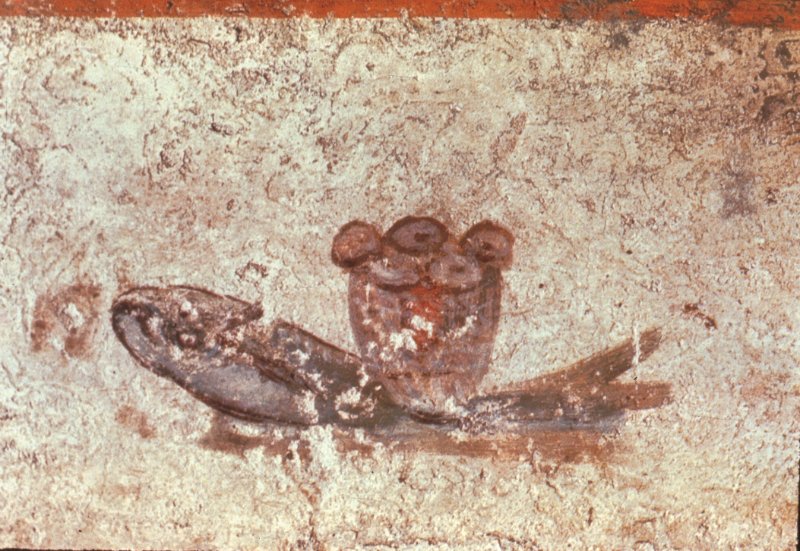
The most destructive shift for the Lord’s Supper — from celebratory feast to solemn snack — occurred in large part as a result of the legalization and official recognition by the Roman government of Christianity as a legitimate religion. Once Emperor Constantine recognized Christianity in 313 AD, made it official seven years later, and then made it mandatory throughout the empire in 321 AD, the marriage of church and state was on. In a hurry. And the form of the Lord’s Meal, which largely shapes the meaning and message of the Lord’s Meal, took one of the biggest hits.

The first and most dramatic thing that happened was that churches began to meet on Sundays in official state buildings, big meeting halls and large auditoriums, instead of private homes. People of the empire were forced to be Christians, compelled by law to worship Jesus as Lord, so these bigger buildings not only served to legitimize Christianity, they were the only venues able to accommodate the larger numbers of worshipers. As Kierkegaard famously said, “When everybody’s a Christian, no body’s a Christian.” And this was true in the 4th and 5th centuries. Augustine, writing at the end of the 4th century, claimed that only five-percent of those worshiping on Sunday were actually part of God’s true church. The new church buildings were full of nominal converts at best, outright unrepentant pagan sinners at most. John Chrysostom wrote about these worship services in the 360s:

“They pushed and pulled one another in an unruly manner during the services; they gossiped with one another; young people engaged in various kinds of mischief; and pickpockets preyed upon the crowd.”

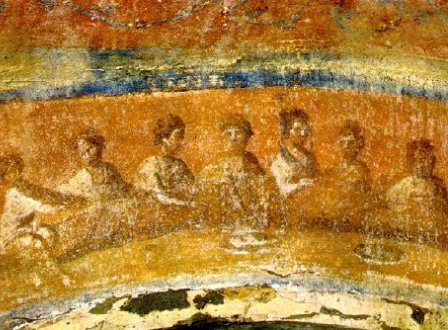
Keep in mind, all Christian gatherings to this point, for more than 300 years, had included a full meal Lord’s Supper as the main event. With bigger crowds of barely converted Christians in state buildings instead of houses, this was becoming increasingly difficult to pull off. When they were able to stage the meal, abuses around the table became the norm. The problems with the Lord’s Dinner in 1 Corinthians — drunkenness, not sharing, divisions among classes — were getting out of hand here three centuries later. Attempts to correct those abuses eventually led to an official church ban on meals and tables in the church buildings. The Council of Laodicea, in 363 AD, made it official: no tables and no meals in the church buildings. The Trullen Council of 692 AD repeated the meal and table prohibitions of Laodicea, so that by the end of the 8th century, the full meal was no longer a part of any Lord’s Supper celebrations.

Consider for a moment the impact of the new innovation of the church building. When Christianity was legalized and mandated, the Church moved from meeting in small, intimate groups in one another’s homes to meeting in larger, impersonal groups in big auditoriums. The setting changed dramatically from a family fellowship around a kitchen table to a ceremony in a Roman state house. Instead of informal visiting and sharing around a table, Christians now sat in rows, looking at the backs of one another’s heads, and listening to a single speaker. Keep in mind, these were nominal converts. The Church was no longer an exclusive group of committed disciples. Not very many had experienced a true conversion. Most had an incomplete understanding of what it meant to be a Christian. Church leaders were unsure of how to handle it. Scholars and historians call it the Constantinian Shift. I refer to it as the Communion Killer.

The most damaging thing that occurred during this time is the shift from a celebratory fellowship meal in a resurrection context to a solemn and individualistic ceremony in a crucifixion context. This is the point in history during which the meal changed from a table event to an altar event.

Since these new Constantinian Christians were not completely committed to the faith, since the numbers of people in the assemblies were growing larger and their lives were increasingly at odds with the faith, church leaders resorted to attempting to scare these Christians straight. And they used the Lord’s Supper to do it. It’s during the late 4th and early 5th centuries when the doctrine of transubstantiation is developed: the bread and the wine actually turn into the literal flesh and blood of Jesus at the saying of the magic words of institution. If one is living his life in a way that doesn’t measure up, and then dares to ingest the holy body and blood of Jesus, he is eating and drinking himself straight into hell. 1 Corinthians 11:27-32 no longer meant that we are to share the supper with sacrificial and servant hearts, treating one another as brother and sister, honoring Jesus as the one who unites us forever. It meant look at your own life, examine your heart, see if you’re living the way you ought to be living Monday through Saturday, and then determine before you participate in this ceremony if you’re worthy. Those who were stealing from their customers or cheating on their husbands or struggling with pride or greed were eating their own damnation when they dared to approach the holy bread and cup. It’s during this time we see the communion instructions and, especially, communion prayers intentionally worded to scare the people into better lives.

In his written communion prayers in 350 AD, Basil made frequent use of the words “sinners,” “unworthy,” and “wretched.” Near the end of the 4th century, Cyril of Jerusalem wrote lengthy and complicated instructions on how to handle the bread and the cup, “careful not to drop a particle of it, for to lose any of it is clearly like losing part of your own body.” At the same time, Chrysostom referred to the communion ceremony as “that dreadful and fearful moment when the mysteries are accomplished at the terrible and awful table.” He demanded that Christians live their lives in a constant state of “purity of soul,” adding, “With this [purity of soul] approach the table at all times; without it, never!” In a communion prayer written in 380 AD, James encourages disciples of Jesus to “keep silence, and with fear and trembling stand; ponder nothing earthly minded…”

The communion meal was changing into a scary reflection of the crucifixion of Jesus. Over time, it actually shifted into a re-sacrifice, a re-crucifixion of Jesus. More pomp and circumstance was added to the ceremony, including a parade of priests and clergy who walked the bread and cup down the main aisle toward the table to symbolize Jesus marching to the cross. The white cloths used to cover the elements symbolized the burial cloths that covered Jesus’ bleeding and mangled body. The physical presence of Christ in the bread and the cup, the re-sacrifice of Jesus on the cross every Sunday was an awesome and fearful thing indeed. It evoked feelings of guilt and remorse, exactly what the priests were going for.

I don’t question the pure intent of the church leaders during this time. They were doing, I’m convinced, what they honestly believed needed to be done in order to faithfully express and live out the Gospel in their time. But, wow, did this profoundly change the form and the meaning and the message of the table of the Lord! It changed everything! And now, 1,600 years later, we’re still suffering the effects. By the end of the seventh century, eating and drinking with joy in the presence of a forgiving God and with his people, all blessed together by the gift of our loving God’s righteousness, celebrating an eternal relationship of acceptance and unity with our Father and his children, was no longer the focus of the communion words and prayers on Sundays. Communion was no longer interactive, it was silent. It wasn’t celebrative, it was solemn. It had been communal, but now it was individual. It was intended to deliver joy, but now it was bringing sorrow. Instead of thanksgiving, the mood became one of remorse. The original intent of the Lord’s Supper was fellowship, but it shifted to contemplation. Communion was practiced expressively in the Bible, but now it was an exercise in introspection. And instead of being focused on the Resurrection as the first century Christians were, the focus was on death.

It was an awesome and fearful thing. In fact, it was so awesome and so fearful, most Christians stopped participating.

Peace,

Allan

Around the Table: Part 8b

“Therefore, whoever eats the bread or drinks the cup of the Lord in an unworthy manner will be guilty of sinning against the body and blood of the Lord. A man ought to examine himself before he eats of the bread and drinks of the cup. For anyone who eats and drinks without recognizing the body [of the Lord] eats and drinks judgment on himself.” ~1 Corinthians 11:27-29

I’m trying to keep these Around the Table posts from being too long. So allow me today to clean up a little bit from yesterday’s observations from Paul’s Lord’s Supper correctives in 1 Corinthians 11.

A lot of our distorted communion theology comes from the misunderstanding and misapplication of two key phrases in these three verses. These two phrases, as we’ll see more clearly in future posts, have been used and misused in all the worst ways to shift the Lord’s Supper over the centuries from the celebratory communal meal as it was originally intended to today’s solemn introspective snack.

Eating in a Worthy Manner

The word Paul uses here is not an adjective, it’s an adverb. It’s anaxios, which could be translated as “unworthily” or “unworthy manner.” The word describes the way one eats and drinks, not whether one is worthy to eat or drink in the first place. None of us is worthy to eat and drink in righteous relationship at the same table as our God. Or, put another way, all of us, by the grace of God and the blood of his Son, are worthy to share a meal at the Lord’s feast. Our worthiness to be at the table is not in question; that was settled at the cross of Christ. Praise God! What’s in question is how we eat when we’re gathered at our Lord’s Meal with other Christian brothers and sisters. According to the particular situation that Paul’s addressing there in Corinth, eating in an unworthy manner means eating in a way that only concerns yourself or your peers. It means eating in a selfish way that erects barriers between people and groups of people. It means drawing lines at the table between people of different backgrounds, different life circumstances, or different color, language, or race. Eating in a worthy manner is not about silently meditating on the cross of Jesus or reflecting on one’s own sins committed during the previous week. It’s not about quickly judging yourself and deciding you’d better not take a cracker crumb this week or, yeah, I’m good enough to participate today. It’s not private introspection; it’s public action. Worthy manner means considering the needs of others around the table more important than your own. It means sharing. It means paying attention to the people around you. Which leads us to…

Recognizing the Body:

First, it’s not “recognizing the body of the Lord.” The earliest original Greek language manuscripts do not contain “of the Lord.” Those three words were added to the text somewhere along the way, probably several centuries later, undoubtedly to help shift the mood of the Supper to one of quiet reflection. (There was a reason for that. Again, we’ll see it more clearly and explore it more thoroughly in upcoming posts.) Everyone at the table, in Paul’s words, must recognize the body while they eat and drink. Recognize the body? How can that possibly mean anything other than the Church?

Earlier, in the same conversation, Paul has used “body” to describe the church: “Because there is one loaf, we, who are many, are one body, for we all partake of the one loaf” (1 Corinthians 10:17). Later, in the same letter, he leaves no doubt as to what he means when he uses the word “body” at least 17 times in 16 verses to mean “church” (1 Corinthians 12:12-27). This is just the way Paul writes; he loves to refer to the gathered saints as “the body.”

“…for the sake of his body, which is the Church.” ~Colossians 1:24

“…to be head over everything for the Church, which is his body.” ~Ephesians 1:23

“For we are all members of one body.” ~Ephesians 4:25

“…just as Christ does the Church — for we are members of his body.” ~Ephesians 5:30

To recognize the body at the Lord’s Supper is to recognize God’s Church as a united community. This is about acknowledging the communal meaning of the Meal. The Lord’s Supper is a powerful witness to unity, it’s a strong testimony to a tangible fellowship that transcends all barriers. Especially in the context of the particular issues in Corinth, Paul’s command to recognize the body can only mean to recognize all the people around the table together. This is not about concentrating on the battered body of Jesus hanging on the cross. It’s not about tuning out distractions, not making eye contact with anybody, being super quiet, so as individuals we can focus on the death of our Lord. It’s just the opposite; it’s exactly the opposite! It’s explicitly about tuning in to everybody and everything around us, about making eye contact and physical contact with our brothers and sisters, it’s a command to talk and visit and smile and chat and welcome and serve, to focus on the resurrection community we’re blessed by God to share together.

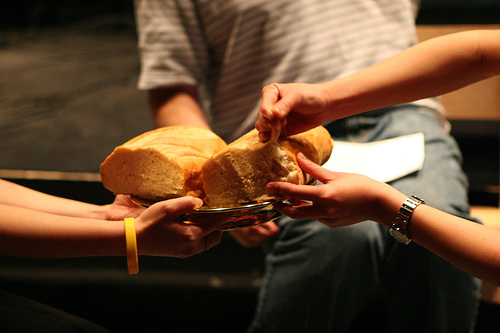
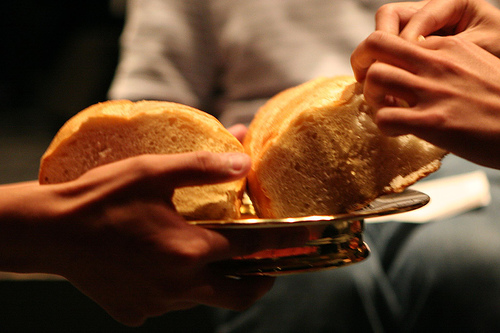
You know, the communion meal is genius. It really is. God knew what he was doing when he gave us this Supper. Because you can’t do communion by yourself. You can’t do communion on TV, you can’t order it on-line, and you don’t get communion at a drive-thru. In order to do communion, you have to be within arm’s reach of other people. You must be within touching distance of other Christians. You have to share a loaf, you have to serve a cup, you have to look at each other. Doing it by yourself is not communion. Doing it by yourself even in a room full of hundreds of people is not communion. Distorting these two key phrases in 1 Corinthians 11 has profoundly damaged our Lord’s Supper. Expressing the intended communal aspects of the meal is what’s required. It’s what must be recovered.

Peace,

Allan

Around the Table: Part 8

“When you come together, it is not the Lord’s Supper you eat, for as you eat, each of you goes ahead without waiting for anybody else. One remains hungry, another gets drunk… When you come together to eat, wait for each other.” ~1 Corinthians 11:20-21, 33

Paul’s instructions/corrections to the Corinthians regarding the communion meal are the earliest and oldest written accounts in existence about the Lord’s Supper. What we find is not an elaborate or systematic blueprint of the church’s meal; we have a narrow and focused response to a very particular and localized problem. However, in this response in 1 Corinthians 10 and 11, we find Paul’s very clear Lord’s Supper theology that informs and instructs the Lord’s Meal today: the church’s supper should be shared as a communal act that breaks down barriers between people and proclaims and promotes Christian unity. That’s what the meal is all about. But that’s not what’s happening at this church in Corinth.

The main overarching problem in Corinth is division within the church. Paul acknowledges the issue right out of the gate. He appeals to them in the name of Jesus to “agree with one another so that there may be no divisions among you and that you may be perfectly united in mind and thought” (1 Corinthians 1:10ff). The same exhortations appear again in chapter three where Paul points out their jealousy and arguing and pleads with them to stop. Elsewhere, it appears that these Christians were taking pride in their spiritual gifts, exalting some gifts over others, differentiating and dividing along lines of giftedness. And those decidedly anti-Christians attitudes were being expressed and manifested on the Lord’s Day at the table.

The Problem: Not Waiting for Others (11:21, 33)

Paul tells them they’re gathering for the Lord’s Supper, they’re calling it the Lord’s Supper, they’re saying all the right prayers and repeating all the right rituals, but it’s definitely not the Lord’s Supper. “You’re each eating your own supper,” he says. Why? Because you’re not sharing. You’re not waiting. You’re thinking only of yourself. You’re showing no regard for your own brothers and sisters who are going hungry while you’re stuffing your face and getting drunk. The problem is not that they were eating a full meal — the Lord’s Supper had always been a full meal (dipenon) and would be a full meal for another couple of centuries — it was that they weren’t sharing. This meal wasn’t about Christian unity, it was about taking care of one’s own needs over those of another. This, of course, is in direct violation of the way of Jesus. The rich homeowners were eating and drinking while the working class members of the church were getting nothing at all. This meal was being shaped by the culture instead of the Christ. The Gospel of Jesus is intended to break down barriers, to destroy division, and unite all people in his salvation blood. Instead, around this Corinthian table, poor people were being humiliated in the corner while rich people were gorging themselves in the main dining room. Even if they had no idea what the Lord’s Supper was about, common courtesy demands they refrain from getting fat and drunk while others are going hungry. Instead, they were making a mockery of the Gospel by their selfish behavior.

The Corrective: Pointing to Jesus (11:23-24)

Paul tells the Corinthians he cannot praise them for their awful behavior at the table. Their manners need correcting. So, he reminds them about their Lord. He reminds them that Jesus, “on the night he was betrayed,” gave up his very body and blood for the sake of others. The meal, Paul says, remembers the self-giving nature of our Savior. Our covenant with God, he recalls for these Christians, is based on sacrifice and service. It’s ratified by death. Around the table, we proclaim with one another that death and resurrection. Our actions at the table with one another must reflect and express that same sacrificial and servant-hearted nature of our Lord “until he comes.”

The Instructions: Wait for Each Other (11:33-34)

Paul does not discourage the eating of the meal. He does not command them to stop eating and drinking at the Lord’s Supper. Instead, he tells them how to eat and drink together around the Lord’s table. This follows his obvious pattern in correcting other abuses in the Corinthian congregation. He doesn’t tell them to stop speaking in tongues; he says, “When you speak in tongues, do it this way.” He doesn’t tell the disruptive women to stop praying; he says, “When the women pray, do it this way.” He doesn’t tell them not to eat meals at their Lord’s Day gatherings; he says, “When you come together to eat, do it this way.” Wait for each other. Eat and drink together. Share with one another. Consider the needs of others more important than your own. Now, if you’re unable to wait, if you’re incapable of restraining yourself, if you just can’t help it, go ahead and “eat at home so that when you meet together it may not result in judgment” (1 Corinthians 11:34). Don’t stop eating the Lord’s Supper. Eat it together, Paul says, in a way that honors the forever-giving nature and way of our risen and coming Lord.

Conclusions: Communal Intent of the Meal

Over the past 1,300 or so years, culture has turned the Lord’s Meal into a time of silent, individualistic piety. The Supper is restricted to the recesses of each individual’s mind and personal thoughts. In Corinth, the communion meal was restricted to class and socio-economic status. Today, it’s mainly a private affair. We have turned a celebratory meal designed by our God to proclaim and express unity and community and salvation into an individual ritually swallowing a crumb and drinking a sip while silently staring at the floor. I’m not completely certain how we recover the communal aspect of the church’s meal while worshiping in an auditorium with several hundred people, but we must try. Maybe we could use bigger portions of bread and more juice in bigger cups. Maybe we could all hold the cracker bits and tiny cups and wait for each other to eat and drink at the same time. Maybe we should enjoy a time of welcome and hospitality — a time to “shake hands and be friendly” — leading up to our time at the table. Singing together during the meal. Reading Scripture together during the meal. Instructing our churches to share with one another in the pews our favorite words of Jesus, our favorite deeds of our Lord, our favorite passage of Scripture, or our favorite song during the meal. Truthfully, there is more communion happening while passing a hot dog to a stranger at a football game than in most communion services in our churches on Sunday mornings. The form is the function; the medium is the message. It’s important that we recover the communal aspect of the Lord’s Supper.

The Lord’s Supper is serious. Not because it’s quiet time or meditation time or a time to solemnly reflect on Jesus’ death. It’s serious because the communion meal bears witness to the Gospel. It reflects and expresses the good news of salvation from God in the sacrificial death and powerful resurrection and eternal reign of the Christ. Judgment will come to those who deny the Gospel message and its values around the table (1 Corinthians 11:27-29). My advice would be to make sure communion is not about you. Make sure it’s about the people around you.

Peace,

Allan

Around the Table: Part 2

We’re seeing right now with the Rangers the exact same thing we saw at this point last season. They’ve smashed into the wall. They can’t hit, they can’t field, they can’t pitch. They’re flat. They’re done. And Oakland’s on a tear. The same thing happened last year at this exact same time. And we’re running out of options for turning things around. You can’t hold a players-only meeting every week. You can only call a special team meeting with the manager a couple of times a year. Now what? I wore my 1996 AL West Championship T-shirt to bed last night, trying to channel some of that magic from the first ever playoff year for the Rangers. We could use some of that Johnny Oates mojo, some of that Pudge Rodriguez intensity, some of that Will Clark leadership. We need something. This is the do-or-die weekend for Texas. If they don’t take at least two out of three from the A’s, beginning tomorrow, we’ll play Taps for the team here on Monday. Yuk.

~~~~~~~~~~

“They ate and drank with great joy in the presence of the Lord.” ~1 Chronicles 29:22

If put on the spot, most of us would not be able to quote anything out of Leviticus. Most of us have never participated in or even seen an animal sacrifice. And a decreasingly fewer number of us have ever slaughtered an animal to eat. Anything having to do with the sacrifices prescribed by God and practiced by his people in the Hebrew Scriptures is mostly ignored by us. That was Old Testament, we like to say. That was the Law of Moses. Those are complicated rules and regulations, outdated and ineffective means of obtaining forgiveness from which New Testament Christians have been freed. We don’t know much about these sacrifices because we don’t study them. Those sacrifices are not important for us today. They’re certainly not binding.

Not so fast.

When Paul is writing to the Corinthians about what is actually happening around the Lord’s Supper, he asks them to first understand what’s happening at the Israelites’ sacrifices.

Consider the people of Israel: Do not those who eat the sacrifices participate in the altar?” ~1 Corinthians 10:18

Eat the sacrifices??? Most Christians today don’t realize that God’s people always ate the sacrifices. They made a community meal out of the meat. And Paul says this is significant for understanding the function of the Lord’s Supper. Paul doesn’t just talk about the Passover sacrifice and meal as informative, he mentions the entire sacrificial system. Paul reflects on the meaning of eating the sacrifice to help Christians better comprehend what’s happening at Christ’s table.

The fellowship offering was ordered to go alongside all sin offerings and burnt offerings. You can’t find a place in Scripture where God’s people didn’t offer the fellowship sacrifice in the course of observing the others. The word translated “fellowship,” or “peace” in some English versions, is actually shelem, from the shalom root that means “peace.” Shalom means peace, while shelem communicates a relationship of peace, a communion or fellowship between two parties. And fellowship sacrifices were always eaten together by the people.
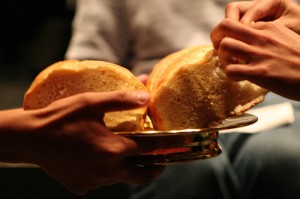
You find God’s people offering fellowship sacrifices at the ratification of the Mosaic covenant, at the inauguration of the priesthood, and as a part of every major festival, including Passover, Pentecost, and Tabernacles. Fellowship offerings and meals were required at the end of a Nazarite vow. Fellowship offerings were the climactic moments at the inaugurations of Israel’s kings, at covenant renewal ceremonies at Shechem and Jerusalem, at the dedication of the temple, and as part of the regular corporate worship of God. You have to read most of Leviticus and Deuteronomy to get it, but sacrifice and fellowship and communion meals were a normal part of life with God and with one another in this community of faith.

The way it worked was that the fat of the animals was left on the fire to burn, while the people ate the meat together as a community. It happened at the same time. God was consuming the fat on the fire, the people were consuming the meat on their plates. God and his people were sharing a meal together, eating at the same time, around the same table. Fellowship, shelem, with God and with one another. These fellowship meals always followed the sacrifice. And they were consistently characterized by two things: the presence of God and great joy.

Exodus 18:12 – Moses, Jethro, and Aaron eat the sacrifice “in the presence of God” to celebrate their salvation from Egypt.

Exodus 24:8-11 – “they saw God, and they ate and drank.”

Deuteronomy 12:4-7 – “Eat and rejoice in the presence of the Lord your God.”

Deuteronomy 12:17-18 – “Eat them before the presence of the Lord… rejoice before the Lord.”

Deuteronomy 14:23 – eat the grain and livestock offerings “in the presence of the Lord.”

Deuteronomy 14:26 – “Eat there in the presence of the Lord your God and rejoice.”

Deuteronomy 15:20 – regarding the first born animals of the flocks: “eat them in the presence of the Lord.”

1 Chronicles 29:21-22 – the people ate and drank with great joy in the presence of the Lord

Deuteronomy 27:7 – at the covenant renewal in Shechem; the people ate the fellowship offerings “rejoicing in the presence of the Lord.”

2 Chronicles 7:10 – at the building of the temple; people eating the fellowship offerings were “joyful and glad in heart.”

Ezra 6:13-22 – at the re-building of the temple; the people “celebrated with joy” because the Lord had “filled them with joy.”

Nehemiah 8:1-18 – at the re-building of the city walls; “do not mourn or weep… enjoy choice food and sweet drinks… the joy of the Lord… celebrate with great joy.”

Numbers 10:10 – “at your times of rejoicing, your appointed feasts.”

I could fill up your screen with many more references. The point is that the covenant meals were always, without exception, eaten by and with the entire community, always in the presence of God, and always with great joy. The fellowship meal is a joy-filled celebration of the righteous relationship — the peace, the communion — with God that resulted from the sacrifice at the altar. You can’t find a community meal anywhere in the Old Testament in which joy was not the mood and celebration not the command. In fact, in the one place in which Israel was weeping during the meal, God rebuked them and corrected them, commanding them to “celebrate with great joy.”

Fellowship meals in the Old Testament were never intended to be moments of solemn silence or private introspection. Communion meals were not in any way individualistic. They were interactive, participatory meals in which the entire community actively engaged with one another and with God. The meals were joyful and grateful celebrations of the blessings of God. This is the understanding and the practice of Jesus himself, his disciples, and all the New Testament writers. Not just them, but their grandfathers and great-great-great-great grandfathers before them.

Paul says if you understand this, you can better understand the Lord’s Supper. As an expression of peace and communion between God and his people. As a communal act shared among the people of God. As a salvation celebration characterized by great joy and thanksgiving. Do our Lord’s Supper practices and experiences today reflect this understanding?

Someone in our class last night asked, “Why don’t we do the Lord’s Supper this way? Why do we look at the floor and get so quiet during the Lord’s Supper?”

Good question.

Shalom,

Allan

God Bless the Newtons

Just a couple of weeks after Judy Newton had been diagnosed with brain cancer, she looked right into my eyes and told me, “Allan, I want to spend whatever time I have left getting closer and closer to God. I want to spend all my time with God. I want to talk to him and hear him. I want to see him. I want to be more present with him and more available to him. I want to understand him and know him better. I want to get closer to God. I want to see God.”

About nine months into the trial, this sweet sister I had only met about a month before she was diagnosed confirmed that it was happening. She told me she was hearing God and seeing God in ways she never had before. She felt closer to our Lord than she ever had. She was filled with an inexpressible peace — and even joy! — that she had never before experienced.

This afternoon Judy Newton, a loving wife, a fabulous mother of two, a beloved third grade teacher at Bivins Elementary, and a valuable member of our praise team here at Central, passed from this life to the next. Surrounded by her family, forgiven by her Savior, and wrapped in the loving arms of her God.

I can confidently say today that all of us who have known Judy through this trial have also seen God. We’ve seen God through Judy. We’ve all seen God in Judy. We’ve heard his voice. We’ve felt his presence. We’ve experienced his peace and joy through our sister, Judy. God has revealed himself to us in powerful ways through his precious daughter, Judy. He showed us.

Of course, we’ve witnessed it and participated in it by walking through this with their whole family. We’ve seen God’s glory in the great faithfulness of her husband, Lanny. We’ve seen God’s glory in their daughter Aleisha’s sacrificial service to her mother. We’ve seen God’s glory in the compassion and tenderness shown by their son, Zach. Judy’s faith never wavered. Her commitment to her God never waned. Her determination to trust her Lord, to see his work in everything and everyone around her, was astonishing.

Judy wanted so badly to see God. She wound up showing God to all of us.

“Where, o death, is your victory? Where, o death, is your sting? Thanks be to God! He gives us the victory through our Lord Jesus Christ! ~1 Corinthians 15:55-57.

Peace,

Allan

« Older posts Newer posts »