Category: 1 Corinthians (Page 12 of 21)

Christian and Single: Intro

SingleScarf

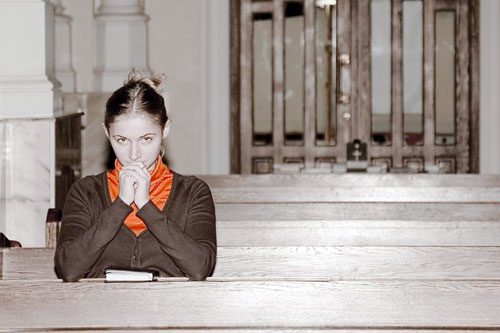
Most churches have a blind spot when it comes to singles. We’re pretty good at supporting families. If you want to become a better father or mother or a more godly husband or wife, we’ve got you covered. We’ve got classes and books and sermons and small groups and support groups and tons of volunteers. But a lot of the time we don’t know what to do with unmarried people except try to force them into one of those frames. We don’t do a great job with this.

Today, for the first time in the history of the U.S., less than half of all adults are married. More and more people are staying single and staying single longer. And nobody thinks these trends are going to change. It’s way past time for us to have a better theology and a better practice when it comes to the unmarried. We need more faithful beliefs and actions as it relates to singles.

You know how there’s stuff in the Bible we ignore because it goes so against the ways we’ve always lived or the ways we’ve always done church? It would be too hard to change the way we think or the way we live, so we just ignore it. We don’t talk about it.

Like prayer postures. The Bible tells us to pray with our hands raised, to pray standing up, to pray on our knees, to pray flat on our faces. But the way we most often pray is the only way not mentioned in Scripture: sitting on our rear ends! We ignore the biblical teaching; we act like it’s not there. Like almost every sentence in the Sermon on the Mount. We ignore it.

There are huge chunks of 1 Corinthians 7 we just flat-out ignore. We pick out the parts on marriage we like. We index and proof-text and take out of context a lot of it. But there are huge sections of it we never address. Like the very first verse:

“It is good for a person not to marry.”

The apostle Paul, inspired by God’s Holy Spirit, wants all Christians to remain unmarried. Singles, widows, divorced — he says everybody who’s single ought to stay single. And he doesn’t just say it once:

“I wish that all people were as I am…” (7:7)

“About virgins… I think that it is good for you to remain as you are. Are you married? Do not seek a divorce. Are you divorced? Do not seek a wife… Those who marry will face many troubles in this life, and I want to spare you this.” (7:25-28)

“I am saying this for your own good, not to restrict you, but that you may live in a right way in undivided devotion to the Lord.” (7:35)

“He who marries the virgin does right, but he who does not marry her does even better.” (7:38)

This whole chapter urges Christians to be single. Paul certainly permits marriage; it’s not a sin to get married. But Paul claims it’s best to be single.

Paul is single. He’s not married. And because he doesn’t have a wife or any children, Paul is able to risk his health and his safety and even his life to spread the Gospel. By the way, spreading the Gospel is the most important thing to Paul. So it’s not surprising that he would recommend to his churches that, if you’re unmarried, you should stay that way. We would expect that from Paul.

But this idea of voluntary singleness? We don’t get it. Voluntary celibacy? What? We pass that off as some kind of first century weirdness and we move on to other verses because the only reason we’re in 1 Corinthians 7 is to argue about divorce.

But we’ve got to come to grips with this. Paul thinks it’s better to be single.

Through the course of this week, we’re going to telescope this. Tomorrow, we’re going to look at the big picture of this and then bring it in closer and tighter to us in our churches.

We all have a very high view of marriage because we believe our God has a very high view of marriage. We believe marriage is created by God to embody and reflect the relationship between the Father and the Son. We believe marriage creates an experience of and provides a testimony to the love and faithfulness that exists between our Lord and his Church. We have a very high view of marriage.

But not everybody’s married.

Peace,

Allan

Tradition Informing Scripture

DoleHulaBefore we continue our discussion of Dr. Keith Stanglin’s article “Restorationism and Church History: Strange Bedfellows?” I must wish my beautiful wife Carrie-Anne a very happy birthday. Today is Wednesday so, with our church schedule, it’ll be impossible for the family to celebrate together with our traditional birthday dinner. That’ll have to wait until tomorrow evening. It’ll be our typical Sharky’s burrito tonight and the birthday steak dinner tomorrow. But, Carrie-Anne, I love you, darling. I hope you have a fabulous day.

~~~~~~~~~~~~~~~~~~~~~~~

BonoPetersonAlso, if you’re a Eugene Peterson fan or if you’re a fan of U2 or, especially, if you’re a fan of both the Irish rocker and The Message translator you might spend 21-minutes today checking out this video. Fuller Theological Seminary has produced a very short and very high-quality documentary on how Peterson and Bono engage the Psalms. Apparently, once Peterson finished the Old Testament “Message-style,” Bono began reading the Psalms in a whole different way. He reached out to Peterson and the two have become pretty good friends. The short film documents a visit Bono had with Peterson at the author’s mountain home in Montana in which they discussed together the Psalms, honesty and dishonesty in Christian art and music, and violence. It’s good. Really interesting. It’s funny listening to Peterson butcher the name of “Rolling Stone” magazine and refer to the floor near the stage at a U2 concert as the “mash pit.” It’s also really cool when Peterson, while discussing the imprecatory psalms, tells Bono, “We’ve got to learn how to cuss without cussing.” Bono replies, “Yeah, I like that. That’s going to stick with me.” You can watch the video by clicking here.

~~~~~~~~~~~~~~~~~~~~~~~~~~~~
ChurchFathers2

Though we in the American Restoration Movement have been intentional in ignoring and resisting any church history before the early 19th century, we cannot deny that all of us are influenced and shaped by all church history. We don’t acknowledge it, mainly, because we take it for granted. Keith points out that the New Testament table of contents in our Bibles is taken for granted as some kind of unquestionable truth as if it came straight from the apostles at the end of the first century. So, we make an exception to Thomas Campbell’s “nothing not as old as the New Testament” when we accept the New Testament itself (see yesterday’s post).

Keith argues for making these exceptions, which we all make, “with clear eyes and full awareness.”

We could spend several days talking about the things we believe and practice in our churches that are not “as old as the New Testament.” The separation of the Lord’s Supper from an actual meal didn’t begin to happen until late in the second century and into the third. Nobody thought to refer to God as a three-person Trinity until the second century and it wasn’t made an official church position until the fourth. The idea of translating the Old Testament from the original Hebrew instead of the Greek came from the fourth century. The use of unleavened bread in the Lord’s Supper didn’t happen until the eleventh century. Congregational singing in harmony wasn’t practiced until the twelfth century. These are all beliefs and practices (innovations?) that are not “as old as the New Testament.” Yet, instead of throwing them out, we take them for granted in our faith and worship.

Let’s also acknowledge that there are plenty of practices which are as old as the New Testament, commands and examples written in our holy Scriptures, that we don’t practice, and would never consider practicing, because of church history and tradition. To move the conversation along, allow me to concentrate today on two very obvious ways Keith observes that we adhere to church tradition and actually use church history to interpret Scripture and inform our practice.

The first is with baptism for the dead that the apostle Paul mentions in 1 Corinthians 15:29:

“Whatever this practice was, we do not practice or endorse it. Why don’t we practice it? It is not because Paul expresses disapproval, because he does not. In fact, he raises the issue to show the Corinthians how, though they deny the resurrection, their practices are undergirded by a belief in the resurrection. Far from being negative about baptism for the dead, Paul is neutral or perhaps positive. So why doesn’t the church now baptize for the dead? The reason we do not baptize for the dead is because the historic church has not baptized for the dead.”

Imagine if we had nothing else in Scripture about baptism for the dead other than this one verse in 1 Corinthians which, by the way, is indeed the case. But what if the historical record were different? What if there were written documents from the second and third centuries attesting to and approving a ritual for baptism for the dead? We would probably be practicing it today! But with the exception of Latter-Day Saints, no one in the history of Christianity has practiced baptism for the dead. So we interpret the verse in 1 Corinthians 15 as an aberrant practice. We’re convinced that if Paul had been writing a sacramental theology, he would have clearly condemned the practice in unambiguous terms. Why? Because no one’s ever done it. As Keith points out, Sunday School classes have a lot of questions when they study 1 Corinthians, but they never seriously consider the thought of restoring this practice. So, we’ve got a first-century New Testament practice left completely out of our faith and worship today based solely on church tradition and history.

Let’s do one more: the Lord’s Supper. The way we observe the meal today bears almost zero resemblance to the ritual as it is understood and taught and practiced in the New Testament. The very fact that we eat the cracker and sip the little swallow of juice separate from a full evening meal is enough evidence to acknowledge that we are influenced and shaped by church history and tradition. Our insistence on the use of unleavened bread is a relatively new innovation that helped split the Eastern and Western churches in the eleventh century. The early church didn’t use unleavened bread for the same reasons it didn’t use bitter herbs, lamb, and multiple cups of wine. But we demand unleavened bread today. Why? Because the Roman Church made the change about a thousand years ago.

So, let’s look at Scripture. What does the New Testament say regarding the day to eat the Lord’s Supper? According to Acts 20:7, the church in Troas met on the first day of the week to break bread. This is the only reference we have in Scripture for Sunday. And it’s tricky because they wound up eating it after midnight. The Last Supper took place in the middle of the week. The church in Jerusalem did it daily (Acts 2:46) and Paul doesn’t give us a day in 1 Corinthians (11:26). We don’t have a whole lot on the day itself.

On the other hand, there’s a much more clear and consistent Scriptural testimony regarding location. The Last Supper was eaten in an “upper room.” The early church also celebrated the meal in an “upper room” (Acts 20:8).

So why do we insist on Sunday as the day to observe the Lord’s Supper but we place no guidelines at all on where the Supper can be taken? Based on Scripture alone, it’s not clear that the day is any more or less important than the location. If anything, there’s more testimony about the location than the day. Why do we dismiss any discussion about where we’re supposed to eat the Lord’s Supper as irrelevant while, at the same time, we spend a ton of time and energy searching the Scriptures to make a strong case for the Sunday timing?

“Tradition — a tradition that extends unbroken back to the second century — repeatedly attests to the importance of the day, not the location. The historic tradition supports the theological case for the importance of resurrection day and, therefore, the possibility of celebrating other significant times and seasons. Celebrating the Supper in an upper room has always been, according to this same tradition, an indifferent matter, as it rightly is for us. But despite all the vast changes in the theology and practice of communion, a Lord’s Day never passed in the first fifteen centuries without celebration of the Lord’s Supper. Whether we realize it or not, the church’s history is a decisive factor that influences our faith and practice.”

Rather than attempting to run away from church tradition, which we cannot; instead of ignoring or resisting church history and tradition, which would require we deny most of our formation influences, why not embrace the history and examine it? Why not search for the centuries of wisdom that are available in acknowledging our past: the good and the not so good, the faithful and the not so faithful?

Peace,

Allan
The Creed & Biblical Identity

CommunityPeople“The Lord is our God, the Lord alone.” Deuteronomy 6:4

This “creed” in Deuteronomy is about the corporate identity of Israel as the people of the one true and living God. This is who we are. This is in your heart. Impress this on your kids. Talk about this all the time. This is who we are.

In Corinth, the church was really struggling with their identity. “The church leader I follow is more important and more respected than the church leader you follow.” “I have more and better spiritual gifts than you do.” “I pledge my loyalty to Christ, but I don’t want to give up the prestigious civic luncheons at the pagan temple.” “Pool people can belong to our church, but the culture says they can’t eat the meal with me at my table.”

Paul answers all of that by reminding them of who they are and to whom they belong. In correcting their behavior, he reminds them of the story to which they now belong:

“I want to remind you of the Gospel I preached to you, which you have received and on which you have taken your stand. By this Gospel you are saved, if you hold firmly to the Word I preached to you… For what I received I passed on to you as of first importance: that Christ died for our sins according to the Scriptures, that he was buried, that he was raised on the third day according to the Scriptures, and that he appeared to Peter, and then to the Twelve.” ~ 1 Corinthians 15:1-5

This is who we are. Summaries of the core beliefs remind us. There’s a difference between the non-negotiables of the Christian faith and the disputable matters that aren’t that important. Likewise, the Apostles’ Creed reminds us: these are the mountains we die on. And becoming more familiar with the mountains keeps us from sticking our flags in the molehills, from getting our knickers in a wad over silly stuff.

This is who we are. This is what we believe.

And today, as Christianity falls farther out of favor with our culture, as the world becomes more secular and more hostile to our faith, we’re going to be less and less identified by the secondary things. The primary things will move more and more to the center of who we are. The Apostles’ Creed is primary. Things of first importance.

Peace,

Allan

House Money

MoneyHundreds

Most of us, to some degree or another, live with a conviction that we control our possessions because we earned them. At the most, we’ll admit that, yeah, where we were born and when we were born and into what socio-economic circumstance we were born plays a role in the stuff we have. But even then, we attribute what we have to our own hard work. God may provide the raw materials. But it’s still up to me to make the most of it. So these are my possessions. And I do with them what I please.

Listen, when the Bible speaks about blessings or wealth, it doesn’t talk about some vague sense of having it pretty good. Scripture puts it in terms of very specific acts and very specific gifts of the one true and living God.

“What do you have that you did not receive? And if you did receive it, why do you boast as though you did not?” ~1 Corinthians 4:7

It’s like the people who work for Publisher’s Clearing House. I’ve read interviews with the people who actually award those big winners checks. They get to fly around the country and knock on the doors and give away 25-million dollars or 100-million dollars to unsuspecting strangers. And they love their job. They change people’s lives. They bring untold joy and happiness with every interaction.

You know why they love their job? They’re not giving away their own money. They’re giving away the company’s money.

The money in your checking account is Kingdom money. It’s not yours. The money in your retirement fund or in your savings account, the money in your pocket right now doesn’t belong to you. It’s God’s. We’re all playing with house money.

God is the giver of everything you have. God is responsible for all of it. And that doesn’t mean we care less about our possessions. It means we care so much more about God’s purposes in giving us all these gifts, which, ironically, is to use them to bless others.

Peace,

Allan

Getting Out a Leaf

“You did not choose me, but I chose you and appointed you to go and bear fruit — fruit that will last.” ~John 15:16

J. R. R. Tolkien, who had one too many middle names, wrote a short story about an artist named Niggle. He was a painter. And Niggle wants to paint a tree, a perfect tree, “a beautiful tree,” he says, “and behind it, snow-capped mountains and a forest marching off.” And so Niggle began painting the first leaf. Painstakingly. With excruciating attention to detail. He painted slowly. Every line had to be perfect. Every color and shade had to be just right. Every single leaf on this beautiful tree would be exquisite.

And Niggle would get interrupted and distracted. He’d grumble from time to time and lose his temper and maybe even cuss, mostly to himself. But he kept at it. Working and painting and laboring over this beautiful tree. And when Niggle dies, he’s only painted one leaf.

Tony Morrow made it his mission to move to Eastern Ukraine to house and feed and train and minister to orphaned kids who have aged out of the government programs. The Central church has partnered with Tony. We bought him a van last year. Some in our church have made Tony’s mission their mission. They’re sending him money and cards and emails, they’re planning to visit Ukraine and minister alongside him themselves. The truth is, there are still thousands of street kids in Ukraine. Tony’s not even making a dent.

For four years Central has been providing weekend meals for Bivins Elementary with the Snack Pak program. 84 children a week. They’d go hungry without it. A lot of our folks work in that important mission: picking up the food, sorting and stuffing the backpacks, delivering it to the school. Yet, more than 32-thousand children in the Panhandle still go hungry every week.

Some of our church family have gone on a Let’s Start Talking trip. Some are planning to go this summer. That’s their mission: teaching people the English language through the Bible. And we believe in it. We train them, we plan the trips, we schedule the whole thing, we help them pay for it. But I’m not sure any of them have witnessed one single baptism.

Loaves & Fishes. Martha’s Home. Another Chance House. We’ve partnered with them for a dozen years and there are just as many homeless men and abused women in Amarillo today as there were when we started.

For nine years, maybe, you’ve poured your life into your next-door neighbor, trying to form a holy relationship that’ll lead her to Christ. So far, nothing.

You’ve spent seven years, maybe, trying to keep a Bible study going at your workplace. It’s sporadic at best. Nobody seems that interested.

For three years, maybe, you’ve given money and brought groceries and bought Christmas presents for the single mother who happens to be your cashier at Toot ‘N’ Totem. She never came to church. Last week she moved to Colorado.

We’ve been doing “4 Amarillo” for more than two years now. But lots of churches still have nothing to do with each other in this city. Division among Churches of Christ is still a huge problem.

Central has been on a mission in downtown Amarillo for 107 years. Good ministry. Gospel ministry. Powerful ministry. And there are still many, many dark and godless places in this city.

Sometimes it feels like we’re only getting a leaf out. We have a beautiful picture in our hearts. And we’re painting that perfect tree with everything we’ve got. And when we die, maybe we’ve only painted one leaf.

In Tolkien’s story, when Niggle dies, he’s going into the afterlife and he sees something way off in the distance. He jumps off the train and runs to the top of the platform and there’s his tree! His tree! His beautifully perfect tree, the one he had felt, the one he had worked on his whole life. In the afterlife, Niggle’s work has become an eternal reality. In heaven, his life’s mission has been made complete, not on canvas, but in the everlasting stuff of new creation.

We spend our lives working on the painting, but it’s only going to be completed on that day in glory. We know that eventually all our work is going to be made perfect because our Christ is returning and he’s bringing heaven with him. Scripture says on that day our work will be shown for what it is. That Day will bring it to light and it will survive. Revelation 14 promises us that the dead who die in the Lord will be blessed and they will rest “for their deeds will follow them.”

Sometimes mission seems like a losing battle. For those who are serious about justice and mercy and peace and love; for those working to bring God’s will to earth just as it is in heaven; it seems like we’re only getting out a couple of leaves. But in the end, the masterpiece that God has placed in your soul, the picture you have in your heart, becomes an eternal reality, far more beautiful and perfect and everlasting than you could ever ask or imagine.

Peace,

Allan

Thanksgiving in Christ

In good times and bad, we have much for which to be thankful. Much. Odds are that you personally rank in the top ten percent of the wealthiest people in the world. And, yes, we are thankful. We are thankful for all the wonderful blessings of our lives: our families, our children, our friends, our jobs and houses, our cars and money. And that’s good. It’s very good to acknowledge God as the giver of all good gifts. Everything you have is a gift from God. We thank him for every good thing we see.

But beyond that — way, way, way beyond that — we enjoy the blessings of a righteous relationship with God through our Lord and Savior Jesus Christ. Everything we’ve been given, all our possessions, every blessing you could possibly count this week finds more significance because of Christ. Every blessing is richer, it’s better, it’s deeper, it’s more significant, it’s more meaningful because of Christ. In fact, all thanksgiving is because of, related to, and in the name of Jesus.

The things the Scriptures long for, the blessings the psalms yearn for, the promises the Bible begs to be delivered are all fulfilled for us in Christ Jesus. He is our righteousness, our holiness, and our redemption.

So, you’re thankful today? “Thanks be to God — through Jesus Christ our Lord!” (Romans 7:25)

You’re thankful for a particular person today? “I always thank God for you, because of his grace given you in Christ Jesus!” (1 Corinthians 1:4)

You’re thankful today even in tough times? “Give thanks in all circumstances for this is God’s will for you in Christ Jesus!” (1 Thessalonians 5:18)

You’re thankful for salvation? “Thanks be to God! He gives us the victory through our Lord Jesus Christ!” (1 Corinthians 15:57)

In Ephesians 5:20, Paul tells us to give thanks to God “for everything in the name of our Lord Jesus Christ.”

We have a whole lot for which to be thankful today. Let’s be reminded that all thanksgiving — all of it — finds its source and its meaning in our Savior and Lord.

Peace,

Allan

« Older posts Newer posts »