Author: Allan (Page 298 of 500)

A More Faithful Church

“I have little use for purity, but I do pray for a more faithful church. A more faithful church would, I suspect, make being a Christian more difficult but also more interesting.” ~Stanley Hauerwas, Approaching the End

One of the many reasons I read Stanley Hauerwas is that he is widely recognized as the greatest theologian in America. Another reason is that he’s from Pleasant Grove, my old neighborhood in the southeast corner of Dallas. The main reason I read Hauerwas is that he writes so eloquently and inspirationally about the role of Christ’s Church in the world. He consistently points to the holy mission of God’s people and paints with bold color and lofty strokes a picture of what Christians worshiping and working and living together should look like today. I’ve just finished reading Hauerwas’ latest book, “Approaching the End: Eschatological Reflections on Church, Politics, and Life.” And I’m anxious to share some of it with you.

The church in the U. S. today, according to Hauerwas and just about anybody paying attention, is in a “buyer’s market.” It’s in survival mode. It’s approaching the end. And so a whole lot of them are more concerned with staying alive and viable, by their own definitions, than with pursuing the mission of God. Some of these churches are already dead. They’ve been dead for a long time. But we don’t recognize them as dead because they still appear to be in business. The problem, though, is that their business may only be accidentally related to Christianity.

“The general societal approval and support the church has enjoyed particularly in America is coming to an end. Of course one of the costs Christians have paid for the social and political status they have enjoyed is not to take their Christian identity so seriously that they might destabilize the social order by, for example, challenging the presumption that war is a necessity if democracies are to survive. Thus I am long on record as thinking the loss of Christendom to be a ‘good thing.'”

I, too, have believed for a while now that the loss of Christendom — the culture actually propping up the church and supporting its values, Christianity seen as routine and normal by society, the church depending on the Empire to help it with its mission — to be a good thing. All this coddling by the culture has made us soft. (Now this is me, not Hauerwas.) At some point, whether it’s over ordaining homosexual ministers, protesting against federally funded violence and murder, or protecting the poor, the church is going to discover that we are not friends with the culture. And the church will be shocked. What we’ll learn is that we were never intended to be friends with the culture; we’re intended by God in Christ to convert the culture, not conform to it.

Now, when that day comes, I don’t think we’ll be arrested or jailed or beaten or shot. No, the government will first threaten our tax-exempt status.

And then we’ll all have decisions to make.

Some of our churches will bow to the dollar and pay homage to the Empire to protect the tax-exempt status. After all, they have never known a church to pay taxes to Caesar, they’ve never known a church not in cahoots with the nation, and their imagination to be a church free from the government’s control has been terminally damaged. But some of our churches will be more faithful. Some of our churches will proclaim the Christian confession that “Jesus is Lord,” not Caesar, and actually become the alternative society that our Lord established at the empty garden tomb.

It’ll be difficult. Less money for our programs. Less status for our platforms. Less community support for our evangelism. It’ll be difficult. But a whole lot more interesting. Being the political movement we were always meant to be, the more faithful counter-society, will be very interesting.

“Jesus was not successful. Jesus did not promise his followers that if they did things right, they would conquer with time. The non-coerciveness of agape includes renouncing the promise of power; it includes renouncing the mechanical model of how to move history. Yet that acknowledgement does not mean simple despair or unconcern. It rather means a promise of victory, the paradigm of which is the Resurrection.”

Hauerwas gets in trouble for saying that the first order of business for the church is not to make the world just, but to make the world the world. But he’s right. How will the world ever know it needs saving, that it needs forgiveness and healing and reconciliation, how will the world ever know that it desperately needs Christ Jesus unless the Church shows it something totally different and new? And faithful? And interesting?

Peace,

Allan
Are You Bringing It?

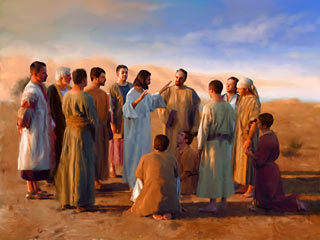
Jesus prays to our Father, “Your Kingdom come, your will be done on earth as it is in heaven.” Jesus preaches the Kingdom of God. Jesus declares the Kingdom of God. He prays it. And he proclaims it: “It is at hand!” “It is here!” Jesus points it out: “The Kingdom! Yes! Look at it!”

But, more than that, Jesus brings the Kingdom of God to earth. He brings it. Jesus does God’s will on earth just as it is in heaven.

Jesus casts out demons because there are no demons in heaven.
Jesus heals because there is no sickness in heaven.
Jesus feeds because there is no hunger in heaven.
Jesus raises the dead because there is no death in heaven.

“Your will be done on earth as it is in heaven.”

Are you praying this prayer? Jesus said it was a good idea to pray this prayer, to ask God to please do his will here on earth just like it’s done in heaven. More importantly, are you bringing it? Are you bringing the Kingdom of God to your part of the earth? Are you obeying his will just like the rocks and the trees and the oceans and the animals obey his will?

There is no revenge in heaven. There is no hate in heaven. There are no arguments in heaven. There are no disagreements in heaven. No suspicion. No politics. No war. No division of any kind. No power-grabbing. No violence, verbal or physical. No mistrust. No complaining. You won’t find any of those things in heaven.

Do you find any of those things in your church? In your elders’ meetings? In your congregational committees? Are you bringing the Kingdom of God into your part of the world or some other, very different things? Into your marriage? Into your family around the dinner table at night? Are you bringing the Kingdom of God to your workplace? To your school? To the Little League team you’re coaching or the civic club to which you belong?

If God has completely eradicated selfish behavior and gamesmanship and competition in heaven, if that is his holy will, why would you tolerate it in your church? Or in your house? Why in the world would you actually insist on bringing it into your congregation? Or putting up with it?

The rivers and the trees and the squirrels and the fish all obey God’s will on earth just as it is in heaven. What’s wrong with us?

Peace,

Allan

People People

Our Jesus is a people person. He loves a crowd.

Yes, there were times when our Lord went alone into the desert or climbed a mountain to pray. But it’s much more typical in the Gospels for Jesus to be interacting with people. The eyewitnesses paint a picture of Jesus constantly mixing it up with the multitudes, meeting strangers on the road, hanging out with family and friends. Mostly Jesus was known for eating and drinking with gusto in the homes of sinners and religious leaders, with the prostitutes and the Pharisees, men and women, Jews and Gentiles.

Praying with people. Worshiping with people. Walking with people. Fishing with people. Teaching and debating with people. Laughing and crying with people.

Jesus was a supremely social, communal person. Whatever it was that the Father called the Son to do, he had no interest in doing it by himself. Just a casual glance at Jesus is enough to tell us today that we are fully living as God-created humans, not in our solitude or isolation, but in our relationships and connections with others. If we’re going to be Jesus followers, then we must be people people.

We need God, yes. And we desperately need each other.

Peace,

Allan

Y’all’s Armor

“Put on the full armor of God so that y’all can take your stand against the devil’s schemes… Put on the full armor of God, so that when the day of evil comes, y’all may be able to stand your ground.” ~Ephesians 6:11-13

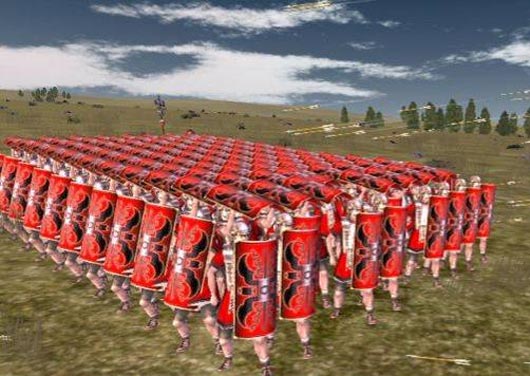
Every person listening to these words of Paul was familiar with the Roman soldier. They knew what he looked like, how he was dressed, and how trained for battle he was. Every one also understood very clearly that Roman soldiers did not exist as individuals. The story of the victory of Rome over the armies of the world is not about a Roman soldier. It’s the story of the Roman legions.

They knew how to march together into victory after victory. Arms locked, shields overlapping, protecting themselves and one another on all sides — they were an unstoppable force. Together. Their power was in their movement together. What made them impenetrable and kept them undefeated was their step by step movements as a single unit. Together.

I imagine that before each battle every soldier would not only put on his own armor, he would also help other soldiers with theirs. He would help another guy strap on his helmet and tighten it up, he would assist a fellow soldier or two in cinching up their belts and sharpening their swords, he would oil his own shield and the shields of others, he would check the breastplates and re-tie the boots of every soldier who marched near him. He wanted the soldiers next to him and all around him to be well dressed and ready for battle. His own life depended on it!

As with us. If your breastplate of righteousness isn’t buckled on straight, I’m going to suffer. If your belt of truth is sagging a bit, I could wind up in trouble. If my feet aren’t laced up with readiness, it could impact you. If just one of us is going into battle with a big chunk missing in their shield of faith or with no helmet of salvation or sword of the Word of God, we’re all going to be in danger.

Most of us are very aware that it’s difficult to practice our Christianity. Some days are harder than others. But following Jesus in this world is certainly not easy. We may not be aware, though, that our individual struggles are all part of a much larger Kingdom battle. Every personal victory of yours is a victory for all of us who call Jesus our Lord. In the same way, every defeat you suffer is a defeat for the Kingdom.

We need to be in the business of checking armor. Yes, check yours first; but don’t ignore the neglected or missing pieces from your buddy’s set. Check each other. Tighten up your walk and that of your Christian brother and sister. When we’re doing discipleship together, my armor helps give you cover and your armor plays a role in protecting me, too.

The devil is scheming. He’s clever. He’s methodical. He uses cunning and strategy. He plots and plans. He knows all our individual and communal weaknesses. And he’s serious about hitting us hard.

So we commit to helping each other get ready. Then we walk into the battle together.

Peace,

Allan

Delight in the Law of the Lord

“Blessed is the man who does not walk in the counsel of the wicked
or stand in the way of sinners
or sit in the seat of mockers.
But his delight is in the law of the Lord,
and on his law he meditates day and night…
For the Lord watches over the way of the righteous,
but the way of the wicked will perish.”
~Psalm 1

The first psalm asserts that how one responds to Scripture, how a person responds to the revelation of God in Torah, will determine that person’s ultimate destiny. When it comes to the Law of the Lord there are two choices, two paths. Moses gives us two paths in his farewell sermon on the mountain and says, “Choose life.” Jesus gives us two paths in his sermon on the mountain and says, “Choose the straight and narrow.” And the psalmist does a similar thing.

By using both positive and negative examples, the psalm encourages us to adopt the fruitful and satisfying life that’s characterized by complete immersion in God and his Word. So immersed in the Word of God, so focuses on the Law of the Lord, that it shapes and dominates your worldview. This is the way of the righteous. And God watches those who walk in that way. By contrast, the one who does not delight in the Law of the Lord is shaped by the counsel of the wicked. He is formed in the way of sinners. Those who walk in this way will perish.

It’s a choice.

God speaks. God reveals. He calls. God makes his holy character and perfect will known through Torah, and what we do with that word is everything. It’s the difference between growing as a fruitful tree and fading away as useless chaff. It’s the difference between well-watered and well-nourished stability and dry, dusty, windblown impermanence. Two choices: the way of the righteous that God oversees and the way of wickedness that leads to destruction. It’s the wise man and the foolish man building their houses in Matthew 7. The only difference between the two men is attention to and obedience to the teachings of Jesus, hearing the Word of the Lord and putting it into practice.

Our God does not reveal himself to be catalogued and studied; he reveals himself to be followed. Our God does not speak to be heard; he speaks to be obeyed.

You ask your daughter to fold the clean towels and put them away in the cabinet (this is purely a hypothetical situation). You come back in twenty minutes and the towels are still in a wad on the couch and the same daughter is sitting in the same spot watching the same TV, only now she’s eating a Pop Tart. And you say to your daughter, “Did you hear me?!?” By that, you don’t mean, “Did the sound waves caused by the vibrations in my tongue and throat penetrate your ear canals to be carried to your brain where they are deciphered into understandable language?” When you say, “Did you hear me?” you’re actually saying, “Why didn’t you obey me?”

To delight in the Law of the Lord, to meditate on it day and night, is to do it. Hearing is doing. Faith is acting.

The Word of God is powerful. It changes lives. It alters destinies. In 1 Thessalonians, Paul acknowledges the Word of God that “is at work in you.” In 2 Timothy, he claims that Scripture equips a man for every good work. Not doctrinal perfection. Not knowledge about facts and patterns. Paul says it leads to action. Hearing is doing. The righteous one delights in the Law of the Lord and meditates on it day and night not to know more. To become more. We don’t learn or study Scripture as much as we ingest it. We assimilate it. We take it into our lives in such a way that it becomes a part of us and it metabolizes into this fruit: acts of love, cups of cold water, prison and hospital visits, cakes baked, groceries delivered, comfort and encouragement, evangelism and justice.

When Samuel was confronted with God’s voice, he replied, “Speak, for your servant is listening.” James says to not just hear the Word, but to do it.

“I desire to do your will, O my God; your law is within my heart.” ~Psalm 40:8

Peace,

Allan

Only in Community

“After Christ’s work on this earth was completed, God continued to work through the Holy Spirit to create and empower a new community characterized by mutual servanthood, radical equality, and an unprecedented sharing of power and resources. Their experience demonstrates that spiritual life and power are to be found only in community… Biblical community is a commitment to take the spiritual journey together, to be present (in face-to-face relationship) with each other as we are transformed by an increasing connection with God and with each other.”

~Ruth Haley Barton, Equal to the Task

Barton claims that “spiritual life and power are to be found only in community.” She doesn’t say spiritual life and power are enhanced in community. She doesn’t say community will make us better Christians or that community is the preferred way of walking with Christ. She says rather emphatically that it’s the only way. Does that resonate with you? Or do you resist it?

In Ephesians 4, near the end of a discussion about the unity of the Body of Christ, the apostle Paul writes that if God’s people will live and worship and serve together we will grow. It’s in this community of mutual service and love, within the context of this devotion to one another in the name and manner of our Lord Jesus, where we grow up and “become mature, attaining to the whole measure of the fullness of Christ.”

As a result of life together, we are “built up,” we are unified in both faith and knowledge, we grow up in Christ. Together we are stabilized against any false teachings. Strong. Confident. Sure of our salvation and our purpose in the Kingdom of God.  Well supported and coordinated as we stretch and grow.

God is at work to form community, to create a people. We are not a bunch of conglomerated individuals. We are members of the Body of Christ and we all belong to each other. The call is to hold firmly to our Lord and walk with him as we live with and for one another. Together.

Peace,

Allan


« Older posts Newer posts »