Author: Allan (Page 288 of 500)

Bring It With You

I want to ask you to stop saying something to your brothers and sisters in your church. If you’re a preacher or a prayer leader or a communion guy table talker or a call to worship person or an announcement maker in your congregation, I want to ask you to consider never again saying the following in front of your congregation:

“Let’s clear our minds of our worldly troubles and just focus on our worship.”
“Let’s put everything out of our thoughts and concentrate only on the sacrifice of Jesus.”
“Let’s get out of our heads everything that’s happened this week and just think about why we’re here.”
“Let’s leave the cares of the world out there and turn our attention to God.”

These are certainly well-intentioned phrases uttered by well-meaning men and women in our Christian assemblies. And I know most of us have heard them in church for most of our lives. But they don’t make any sense. They’re not only impractical suggestions, they’re actually contrary to what our Father asks us to do.

Truthfully, it’s impossible for most people to put their struggles out of their minds. How do you ask somebody to not think about their deep loss or their painful trial or their debilitating disease? Imagine for a moment…

“You want me to just forget about the fact that I’m in a wheelchair while we pray?”
“My wife’s got cancer; you want me to just put that aside while we sing Firm Foundation?”
“I’m supposed to block out the fact that I’ve been out of work for four months or that my daughter is in rehab or that my husband just left me while we read Philippians 2?”

We may as well be asking people to hold their breath for 60-minutes. Or to just stay home. It’s impossible. Why burden people by expecting them or asking them to do the impossible?

Secondly, our Father begs us to bring ourselves to him in our worship. All of ourselves — all of our hurts and pains, all of our wounds and scars, all of our sin and sickness. These things are a genuine part of who we are as people, these things have worked to shape us and form us into the men and women we are. Our theology says God is actually using those tribulations, he’s working in and through those very tough things, to teach us, to transform us, to make us more like his Son. In the Christian assembly, Philippians 2 should speak to a person’s doubts and fears. Our time at the Lord’s table should speak into a man’s sickness and shortcomings. The Church’s prayers and songs are intended to give meaning and purpose to a woman’s struggles and trials. Why would we ask people to put that aside or ignore those parts of us while we’re in the holy presence of our God who desires that we give all of ourselves to him?

I know you mean well when you say those things. But, please, stop.

Peace,

Allan

From the Promised Land to God’s Country

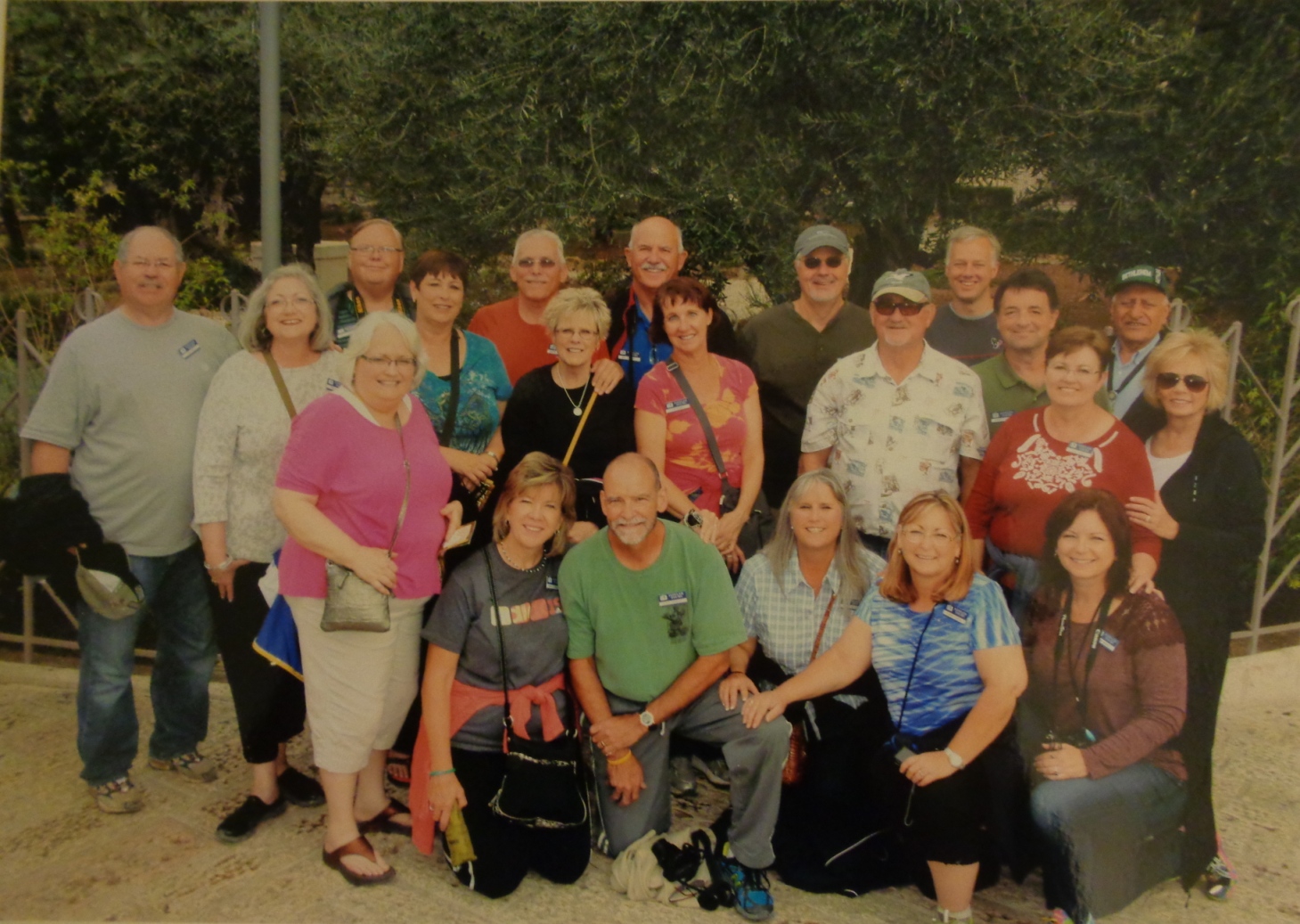
Our group touched down safely in Amarillo at 1:00 this afternoon, glad to be home, grateful for the blessings of the trip to Israel, forever transformed by our time together in the Holy Land. It’s been more than 40-hours since any of us were in a bed — sleeping on a plane is worse than terrible. And I’m doing my best right now to stay awake until 10:00 or so tonight in order to get my body and brain back on Texas time.

I’m so grateful to Bill Humble, Ted and Becky Liles, Anton Farah, and everybody at Fowler Tours in Dallas and Guiding Star in Jerusalem for putting together such an outstanding trip. Every part of every day was smooth, really smooth. We got to visit sites and see things that most American tourists don’t. And I believe we were all transformed by God’s Spirit. Our Father revealed himself to us in extraordinary ways in Israel. And we’re all closer to him and much closer to one another for having experienced it together.


I’m planning on doing it again in three years. Start saving your money now for 2017.

Shalom,

Allan

47 Hours Until Blue Sky!

We have had a really unforgettable time here in the Holy Land, but I’m ready to get home. I’m ready to see my beautiful wife and my three terrific daughters; I’m ready to pull my clothes each morning out of a closet and not a suitcase; I’m ready to watch TV in English; and I’m ready to eat a huge juicy cheeseburger with everything on it and fried jalapeno rings from Blue Sky!

We spent our last full day of hard core sight-seeing at the Church of the Holy Sepulchre, the Western Wall of the Temple Mount, the Burnt House of the Katros, Nehemiah’s wall, the Herodian Quarter, the Shrine of the Book to see the Dead Sea Scrolls, and the Israel Museum.

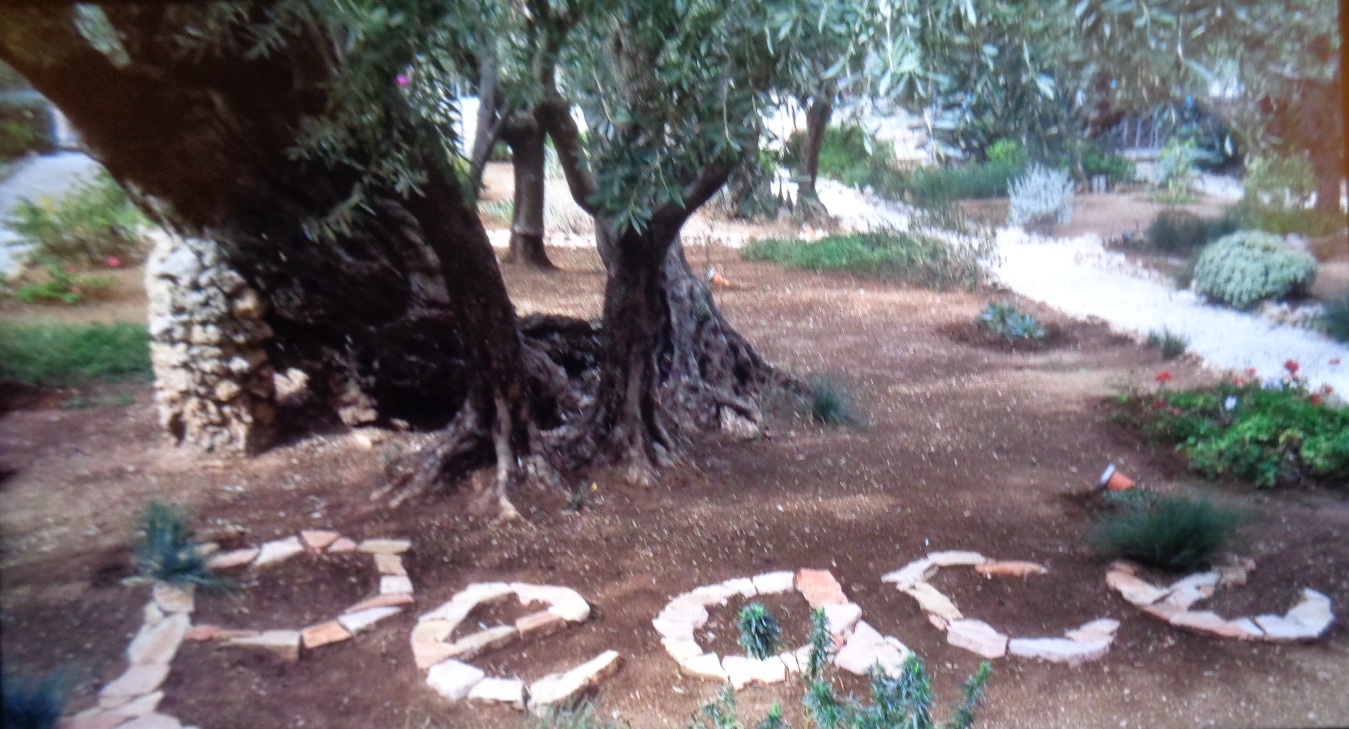
We’re sleeping late in the morning, doing some shopping on Jaffa Street until lunch, walking to the Garden Tomb (not the real one; the traditional one), and finishing our sight-seeing tomorrow afternoon at the Valley of Elah, the sight of David’s great victory over Goliath. After that, it’s our farewell dinner and then to the Ben Gurion airport for an 11:00 pm overnight flight out of Israel.

After a couple of changeovers in Newark and Houston, we’re landing at Rick Husband in Amarillo at 1:04 Saturday afternoon. As surely as the Lord lives, I’ll be eating that cheeseburger by 1:45.

Shalom!

Allan

Pray for Peace

“Christ Jesus is our peace. He came and preached peace to you who were far away and peace to those who were near. For through him we all have access to the Father by one Spirit.” ~Ephesians 2:14-18

We experienced just a wee bit more excitement today than we had anticipated — today’s clashes at the Temple Mount and Hamas attack at a Jerusalem light rail station were not on the itinerary. But everybody in our little Central group is OK and feeling very safe tonight. We have the best tour guide and bus driver in the entire Middle East and we trust them implicitly. We’re not sure what our schedule will be like for our final full day tomorrow; we don’t know what will be opened or closed or how our plans will be interrupted. But everybody in our group is fine. We spent a full hour after dinner together tonight processing the events of the day and it’s all actually been very, very powerfully good for us. Talk about bonding… man!

It’s 10:00 pm Wednesday night in Jerusalem. Time to say those evening prayers. I would ask you to pray for this holy city.

Our Lord is a King of Peace. He came to this earth in order to bring peace, to reveal to us our God of peace, to tear down the hostilities and break down the walls that come between humans and God and humans and one another. And, two thousand years later, his people still don’t know how to live it. It’s tragic, really. It’s terrible. This city of peace is anything but. This is a city of pride and envy, power and control, greed and selfishness, hatred and violence, revenge and death. It must sadden our King. And so it must also sadden us.

It must.

We must share our Lord’s sorrow. “O Jerusalem,” he lamented, “O Jerusalem, how I long to gather your children together as a hen gathers her chicks under her wings. But you are not willing.” “O Amarillo, how I long… but you are not willing.” “O Dallas, how I long… but you are not willing” “O Atlanta…” “O Brasilia…” O Kharkov…” “O St. Louis…” “O Bogota…” O fill in the blank of any city in the world…

Lord, come quickly.

Shalom,

Allan

Across the Border

We spent much of today in the Palestinian-controlled areas of Hebron and Bethlehem in order to visit the Tomb of the Patriarchs, which is now a massive Muslim mosque, and the Church of the Annunciation, the historical birthplace of our Lord. These are two places most tour groups to Israel never have a chance to even consider. But because our great guide, Anton, and our wonderful driver, Muhammad, are both Arab, we’re able to go back and forth through the checkpoints without any troubles at all.

The famed Cave at Machpelah where Abraham, Isaac, and Jacob are buried along with their wives and children, has proven to be a place of violence and turmoil through history, not a resting place of peace. Herod built massive walls around the cave to preserve it for Christian worshipers, Crusaders built a huge church inside and on top of those walls, which the Muslims in turn transformed into a mosque. There are large covered shrines inside the mosque which mark the tombs of the patriarchs, but not everybody can get to all of them. Muslims can access the tombs to Isaac and Rebecca, Jews can get to the tombs of Jacob and Leah, and everybody can see the tomb of Abraham. But it’s a mess. Muslims control 80-percent of the total building and the Jews have 20-percent. Ten days a year the Muslims can have 100-percent access and the Jews get a different ten days every year. So, it’s strange, really. This is not really a place of worship at all, but a place to exert power and control, a place to remind everyone who’s in charge — who are the winners and losers — and who’s running this thing. And it’s not God. Our God is not like this; our Lord is not interested in this. There were lots of people praying around us the whole time we were there this morning, but it doesn’t feel like a place of worship at all. There’s tension there. No peace. But it is where the father of our faith is buried. And so we put on the robes and scarves and took off our shoes to see it.


We also saw the expert pottery and glass artisans in Hebron at their workshops. We also toured the impressive Herodian palace complex on top of the mountain just south of Jerusalem. We visited the Oak of Mamre where God told Abraham that he would have a son. We met Shipley Cando, the grandson of the shoemaker Cando who discovered the Dead Sea Scrolls in 1947, at his shop in Bethlehem and saw priceless antiquities of pottery and oil lamps and glass bottles that date from Abraham’s time in Israel to the time of our Lord and through the Roman periods. Bill Humble and this Cando family have been dear friends for 50 years and today was the first time Shipley had ever met Bill’s daughter, Becky, who’s on our trip. Needless to say, the meeting was emotional and we were all blessed to experience it with them.

The last thing we did today was visit the Church of Annunciation in Bethlehem, the historical site of the birth of Christ Jesus. Like the Church of the Holy Sepulchre, Jesus may not have been birthed by Mary on the exact spot of stone marked by the silver star inside the shrine of this church, but you can bet it happened somewhere inside the walls. There’s too much history and it goes back too far to be wrong. Emperor Hadrian tore down a Christian shrine to the birth of Jesus on this spot less than ninety years after the resurrection in a vain attempt to kill Christianity and replaced it with a temple to Venus. Constantine tore down that temple in 325 AD to build the Christian church over the spot. And today it is the only Christian church built by Constantine that was never destroyed. Most of this building, inside and out, top to bottom, dates from the early 4th century and can be confidently classified as the legitimate historical site of the birth of Jesus.


And it was good today to be in that spot. To imagine belonging to the community of Christians — those first two or three generations —  who had gathered there over the years to worship and pray. It was good to remember that, as a follower of Jesus, I belong to something so much bigger than me, so much older than my church denomination, so much more meaningful than Christianity in my country or my tribe or my family. It is eternal. It is truth. Our God chose to enter into an intimate relationship with us, to come to this earth in the form of a vulnerable baby boy, to live with us, to work with us, to eat and drink with us, to suffer with us, and to bear our sins for us. God chose to do that for us. And he chose to do it right here in this specific square block of Bethlehem. In the fourth century, Jerome and Cyril of Jerusalem wrote that this place was a wooded forest. Today it’s covered by a 1,700 year old church. And today we were there.

I pray things are going well in Amarillo, Texas. I’m really starting to miss home. But I’m really glad that I’m here.

Shalom,

Allan

Greetings from the Holy City

The group arrived in Jerusalem late this afternoon wearing sandals and shorts after hiking in the Judean Desert for most of the day to be greeted by a blast of super cold air and a strong north wind. It was just enough — well, honestly, the massive dinner buffet also helped — to get us ready for our last three days of sight seeing here in the Holy City.

We started today at Masada, Herod’s desert palace and fortress at the top of a plateau mountain just east of the Dead Sea. This is Israel’s “Alamo” where 967 Israelis holed up after the Roman Empire crushed Jerusalem and burned the temple in 70 A.D. It took three years, but the Roman army finally built a siege ramp on the west side of the mountain, marched to the top, set fire to the walls, and stormed the fortress, only to discover that every family inside had decided the night before to commit suicide rather than become slaves of the Romans. A sacred sight, for sure. Instead of riding the cable cars down, thirteen of us made the decision to descend the mountain by the ancient Serpent Path, a winding, rocky, steep, narrow trail that, up until the time of the siege, was the only way to get up and down Masada. When the strenuous hour-long hike was over, most of us still felt it was a good idea.


After Masada we visited En Gedi, the beautiful and surprising oasis in the desert where David and his 600 men hid from King Saul. It was in one of the more than three thousand caves of En Gedi where David moved to cut off the corner of Saul’s robe instead of take the life of the Lord’s anointed. There are dozens of running streams and pools and several waterfalls that take a lot of hiking and climbing to get to. But the payoff is worth it.


After En Gedi we spent about fifteen minutes at Qumran, the sight of the discovery of the Dead Sea Scrolls before a huge rain shower blew in. And then we found the camels.


The camels were on a grassy area on the highway just north of the Dead Sea. Three teenage boys were selling short rides on the camels for five dollars each and when we asked our driver, Muhammad, to stop, he did. And just about every one of us did it.


Now we’re in Jerusalem for the final leg of what has been a truly wonderful experience. We’re still to see the places of our Lord’s birth, death, and resurrection; the sights of his miracles and his teachings; the temple mount where he worshiped and sang; the garden where he prayed and was betrayed. We’ve already done so much and experienced so many wonderful and unforgettable things. But, seriously, the best is still to come.

Shalom,

Allan

« Older posts Newer posts »