Category: Unity (Page 9 of 9)

Changed by the Gospel

Paul’s experience on the Road to Damascus changed him. Paul was dramatically converted that day. He went from arresting Christians and throwing them in jail and trying to stamp out the Jesus movement to preaching and teaching the very faith he was trying to destroy. It was radical. The scales on his eyes that made Paul blind to what God was doing in Jesus were removed. The veil that hid the salvation realities in Jesus was lifted. The truth of Christ was revealed to Paul and it changed everything.

Paul came to a brand new understanding of Jesus. It was revealed to Paul, as he writes in the opening lines of Romans, that Jesus is declared with power to be the Son of God by his resurrection from the dead: Jesus Christ our Lord! Paul understood that God is forgiving sinful people and fixing the broken world not by a hard core keeping of commands but in Christ Jesus by faith. To be grabbed by Jesus is to be dragged into a new eternal reality where our standards of success and our priorities and the ways we measure what’s valuable and important no longer apply. My education, my zip code, my bank account, my vacation plans, my entertainment options — all of that is garbage! Everything that mattered to Paul before he knew Christ is meaningless now that he’s living in the light of Christ.

“Whatever was to my profit I now consider loss for the sake of Christ. What is more, I consider everything a loss compared to the surpassing greatness of knowing Christ Jesus my Lord, for whose sake I have lost all things. I consider them rubbish, that I may gain Christ and be found in him, not having a righteousness of my own that comes from the law, but that which is through faith in Christ — the righteousness that comes from God and is by faith!”  ~Philippians 3:7-9

And Paul’s new understanding of Christ means he has a new view of the people of God.

Paul sees these rag-tag Jesus-followers as marginal people. They don’t have the religious chops, they’re not dedicated to the Law, they’re unworthy in dozens of ways. But on the Road to Damascus, Jesus says, “Paul, why are you persecuting me?” Jesus the Lord ties himself directly to these outsiders Paul’s trying to crush. Paul realizes that the people of God are people of faith, not people of a certain birthright or ethnicity or race. The days of using the Law to separate Jews and Gentiles are over. The community of God is no longer defined by race or color or sex or economic status or politics. As Paul says in Galatians, “We are all one in Christ Jesus!”

And you say, “Yes! Of course! We know all this!”

We don’t know it well enough. We don’t.

We still use Christian words and Christian phrases and Christian Scripture and Christian churches to elevate men over women and to separate black disciples from white disciples. We are still fighting to keep up the walls our Lord Jesus  died to tear down.

Paul saw things differently because he was changed by the Gospel.

“Through the Gospel, the Gentiles are heirs together with Israel, members together of one body, and sharers together in the promise in Christ Jesus.” ~Ephesians 3:6

Our God is right now today continuing to convert and call. May we pay attention to it. May we be open to it. And we be completely committed to it so our lives and our churches can be an everlasting glory to God.

Peace,

Allan

Baptism: Unity In Christ

You’re not baptized by yourself. Baptism is not a private deal. When you’re baptized into the name of Jesus Christ, you’re baptized into his community. You become part of God’s eternal people. It’s not only unity for you with Christ, it’s also unity in Christ will all baptized followers of our Lord.

“You are all children of God through faith in Christ Jesus, for all of you who were baptized into Christ have clothed yourselves with Christ. There is neither Jew nor Greek, slave nor free, male nor female, for you are all one in Christ Jesus.” ~Galatians 3:26-28

This is a bold, radical, mind-blowing claim for any Christian living in America in 2018. Because whatever our society is, it cannot be called “one” in anything. It’s almost impossible to find unity anywhere. There are more and more options, which means more and more opinions, and more and more platforms to declare those more and more opinions. We’re inventing new ways to disagree with each other. We’re identifying new ways we’re different from each other. We can’t find unity in a country or in a family or in a neighborhood or in a middle school choir. There’s only one place to experience the realities of unity and togetherness and community: through baptism into Christ.

We are not baptized into a nation or a political party. We’re not baptized into a denomination or a faith tradition. We’re not baptized into an economic brackets or a language or a skin color or a blood type. We are all baptized into Christ.

Baptism is not just about an individual’s conversion. It’s also very much about being initiated into a community. Baptism allows you to participate in the Gospel and it makes you a member of God’s eternal people. Baptism creates an eternal unity with all followers of Jesus. There are no divisions at all among baptized disciples.

When there were divisions in that church in Corinth and people were dividing between rich and poor, men and women, tongue speakers and prophesyers, favorite preachers and teachers — yes, just like today, people divide and pick sides and decide who’s right and who’s wrong and split up accordingly — Paul addresses it head-on. Right out of the gate in 1 Corinthians:

“Hey, this is Paul. How’s it going? What’s the matter with you?!? Is Christ divided?!? Was Paul crucified for you?!? Were you baptized into the name of Paul?!?

When the unity of the church and the integrity of the Gospel is at stake, Paul reminds them of their baptisms. We were all baptized by one Spirit into one body, Paul writes, whether Jews or Greeks, slave or free. Which, by the way, sounds a lot like Ephesians 4:

“Make every effort to keep the unity of the Spirit through the bond of peace. There is one body and one Spirit — just as you were called to one hope when you were called — one Lord, one faith, one baptism; one God and Father of all, who is over all and through all and in all.”

And that sounds a lot like Galatians 3.

There is neither Jew nor Greek, Texan nor Mexican, American nor Syrian, for you are all one in Christ Jesus.

There is neither slave nor free, Republican nor Democrat, Church of Christ nor Presbyterian, for you are all one in Christ Jesus.

There is neither male nor female, black nor white, old nor young, for you are all one in Christ Jesus.

For some reason, our Lord chose you. And he chose me. And he has united us to him forever and he has inseparably united us to one another in him. In baptism. What a gift. What a challenge.

Peace,

Allan

Faith and Water

Since the mid-1500s, as a result of the Reformation, an increased focus on individual interpretation and the freedom to split up and start our own churches, Christians are all over the map on baptism. The specific beliefs and practices concerning baptism are diverse. Some Christians immerse in water, some Christians pour the water, and some merely sprinkle. Some Christians only baptize confessing adults and other Christians baptize babies and children. Some are baptized for the forgiveness of sin and others are considered saved first and baptized later. Some of us baptize for more reasons than we can count.

Regardless of method or belief regarding the conversion model, baptism is the common denominator in every Christian tradition throughout the history of God’s Church. It’s the one thing that unifies all disciples of our Lord Jesus. We are brothers and sisters in Christ with all who are baptized into his name.

In Peter’s sermon on Pentecost, he’s proclaiming the total deliverance and restoration of God’s people to a transformed Holy Spirit relationship with God and with one another. The question “What shall we do?” was not primarily focused on a personal decision. Peter was preaching about the whole world being turned upside down. He called those at the feast to more than individual salvation, he called them to the Kingdom rule of God, to a transformed relationship with the Father, Son, and Holy Spirit. And about three-thousand that day took the plunge.

Some Christians, though, obsess about baptism so much they’ve turned away from the essential transforming truths of the sacrament to questions about technicalities and methods. They turn to condemning diatribes against Christians who don’t believe or practice baptism in the same ways they do.

We uphold what we are convinced are the Scriptural and historical beliefs and practices. But we all agree that all Christians are also doing what they sincerely, and in faith, believe is right. The reason we have misunderstandings and differences is not because anybody’s stubborn or willfully rejecting Scripture. Not everybody who believes or practices baptism different than you is living in rebellion against God.

All Christians agree that baptism is a vital part of the Christian faith. The disagreements are about methods and about the specific role baptism plays in the conversion process. Those are hermeneutical issues, not heart issues. It’s about interpretation. The tensions we feel are the result of centuries of tradition and debates over particular Scriptures. We all have to approach these conversations with humility. We have to recognize we, too, are also influenced by our traditions and debates. We’re all open to criticism.

People ask me: How do we treat Christians who don’t share our exact understanding of conversion? They affirm baptism, but they do it differently? Or the believe differently about what happens at baptism? Do we treat them as genuine or as false brothers and sisters?

Well, let me ask you: How should they treat us? Especially if they see our views as legalistic and sectarian?

The question is: How do we all treat each other?

Salvation is not just about forgiveness of sins. That’s not the goal, it’s not the end game. The goal is transformation to the image of God, the end is a holy relationship with God in Christ and with his people. When baptism becomes a legal technical line in the sand, we’ve turned it into something God never intended. We reduce his transforming work into a legal detail, like a person’s eternal destiny hangs or falls on perfectly understanding and obeying this one command exactly right. We exalt the means over the end. We misconstrue the heart of God. We make God into a judge of legal technicalities instead of a God who transforms us through love and grace. God is our Father who lovingly pursues us and is gracious with our mistakes.

We do well to remember it’s always heart over ritual. It’s Hezekiah’s Passover in 2 Chronicles 30. Unclean people are eating the Passover in the temple. They hadn’t been properly consecrated. This was a clear violation of God’s Law. But Hezekiah appealed to the grace and mercy of our loving God:

“‘May the Lord, who is good, pardon everyone who sets his heart on seeking God — the Lord, the God of his fathers — even if he is not clean according to the rules of the sanctuary.’ And the Lord heard Hezekiah and healed the people.” ~2 Chronicles 30:18-20

It’s David and his men eating the bread in the tabernacle because they were hungry. It’s Jesus and his disciples picking grain on the Sabbath. The Pharisees call them out: Hey, you’re not doing that right! Technically, this goes against the religious codes. But Jesus points them back to David and his men eating the consecrated bread. Jesus rebukes the Pharisees for even needing the example he gave them. If you know what God’s all about, Jesus says, you wouldn’t have even questioned us. “I desire mercy, not sacrifice.”

Sacrifice and Sabbath are essential and necessary. They’re not unimportant, they’re not optional. But they’re both subordinate to the big picture principle of mercy and grace. The ritual is not the most important thing. The Sabbath was made for people, not people for the Sabbath. Rituals serve the ends, the goals, for which God designed them. They were not given to deny mercy to the heart that is seeking him.

What are the greatest commands? Love God and love others. That’s more important than ritual. That’s more important than sacrifice and Sabbath and, yes, even the technicalities of one’s baptism. We have to put things in the proper order — the big picture, Story of God order — or we exalt the details of baptism over the love of God.

We do not draw lines around God’s grace. We do not box in God’s mercy. And we don’t put limits on God’s eternal love and faithfulness.

We are brothers and sisters in Christ with all who have been baptized into his name.

Peace,

Allan

A Prayer for Peaceful Discourse

The tone needed to be set. The true reality needed to be raised. The eternal perspective had to be introduced. Citizens of Amarillo and other panhandle communities crammed into the city council chambers and a standing-room-only overflow space last evening to offer their opinions on the Confederate Soldier statue in our city’s Elwood Park. Uniformed police officers lined the sidewalks and steps outside City Hall where four or five demonstrators displayed the Confederate flag. Another dozen or so officers patrolled the lobby and doors inside. The director of the local chapter of the NAACP was there to speak. So were representatives from Sons of the Confederacy, Indivisible Amarillo, The Freedom Riders, and the VFW. It was tense.

We needed a prayer.

Greg Dowell, our long-time associate minister here at Central, was on deck to lead that prayer. Greg is in a rotation with several other pastors in Amarillo who lead the invocation at city council meetings and, as luck or God’s providence would have it, last night was his night. He leads the opening prayer once every couple of months, just five or six times a year. But last night’s was his.

The mayor instructed everyone to be seated, called the meeting to order, and then asked Greg to lead the prayer. He stepped to the podium, cleared his throat, allowed the room to go silent, and then boldly called on the Lord of all Creation.

It was truly inspiring. It was Spirit-led. God-breathed. It was beyond perfect in every respect. Every line. Every word. It set the tone. It reminded of THE true issue at stake. It provided the eternal perspective. I’m not sure I’ve ever been more proud of a co-worker. Ever. And more proud to be a guy’s brother and friend.

Greg is very thoughtful with his prayers — it’s one of the many things I admire about him. He doesn’t take prayer lightly. He researches his prayers. He sprinkles them with holy Scripture and with the faithful words of the saints who’ve gone before. Greg’s prayer last night were the first words publicly offered in the meeting. And they were the best.

God of all humanity, you call us to live in community.
Fill us with charity so that we can care for one another.
Fill us with mercy so that we can have compassion for each other.
Fill us with grace so that we can live in harmony.

Father, help us resolve conflicts peacefully.
When we disagree, teach us to communicate respectfully.
When we see things from different perspectives, teach us to listen.
When our convictions are strong, we pray that our love for our neighbors is even stronger.
Teach us how to love.

We pray for those in positions of leadership. Their influence is great and they impact the lives of many in our community.
Equip them with discernment and wisdom.
Inspire them with vision.
Fill them with hope.

Father, we ask you to drive out discontent and strife, anxiety and fear. Reveal to us a better way of life. A life filled with love. Joy. Peace. Patience. Kindness. Goodness. Faithfulness. Gentleness. Self-control.

Father, you have created us in your image. You have blessed us with great diversity. It is only in You where we can find true unity. And that is the beautiful life which we seek.

Amen.

The Ultimate Feast

“People will come from east and west and north and south, and will take their places at the feast in the Kingdom of God.” ~Luke 13:29

Jesus is talking about heaven when he says Abraham, Isaac, and Jacob and all the prophets will be around that table. John’s Revelation tells us that heaven will be the ultimate gathering of “every nation, tribe, people, and language,” the ultimate feast around our Lord’s banquet table.

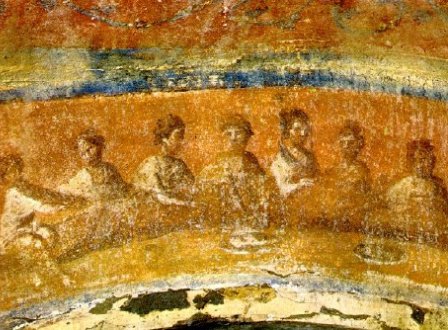
At communion, we get a small heavenly glimpse of that great eschatological feast. We come together around our Savior’s table. In the eating of the bread and the drinking of the cup, we connect not only to our Lord, but to every person in history — past, present, and future — who’s been saved by the blood of the Lamb. Past the barriers of time and space, we’re united as one

Different people. Different ages. Different cultures. Different languages. Different backgrounds. Different viewpoints. Different habits. Different genders. Different denominations. Different jobs. Different haircuts. Different beliefs. Different likes and dislikes.

Same sin. Same need. Same Lord. Same baptism. Same forgiveness. Same salvation. Same commitment. Same table. Same loaf. Same cup. Same body. Same Church. Same Spirit. Same hope. Same faith. Same God and Father of us all who is over all and through all and in all.

Our communion meal points us to the heavenly meal. It gives us a peek. The way we eat and drink and share the Lord’s Supper must be shaped by our great anticipation of that day when all God’s children will be home, gathered around our Father’s table.

Peace,

Allan

Newer posts »