“American preachers are abandoning their posts, left and right, at an alarming rate. They are not leaving their churches and getting other jobs. Congregations still pay their salaries. Their names remain on the church stationery and they continue to appear in pulpits on Sundays. But they are abandoning their posts and their calling. They have gone whoring after other gods. What they do with their time under the guise of pastoral ministry hasn’t the remotest connection with what the church’s preachers have done for most of twenty centuries.”
This is how Eugene Peterson’s Working the Angles begins. I just finished it last night. What a fantastic book. Here’s the second paragraph:
“A few of us are angry about it. We are angry because we have been deserted. It is bitterly disappointing to enter a room full of people whom you have every reason to expect share the quest and commitments of pastoral work and find within ten minutes they most definitely do not. They talk of image and statistics. They drop names. They discuss influence and status. Matters of God and the soul and Scripture are not grist for their mills. The preachers of America have metamorphosed into a company of shopkeepers, and the shops they keep are churches. They are preoccupied with shopkeepers’ concerns—how to keep the customers happy, how to lure customers away from competitors down the street, how to package the goods so that the customers will lay out more money.”
Peterson’s book is a call to preachers to be committed to the three disciplines that shape our relationships with our God and our ministries to him. Those disciplines are prayer, Scripture, and spiritual direction. A minister of the Word is not a preacher, not a pastor in the purest sense, if his life is not defined by continual conversation with the Father, constant immersion in the Scriptures, and a daily practice of giving spiritual direction to others.
The premise is that, while all three of these “angles” are essential, all three of them are extremely private. Our prayer lives as preachers, our reading of the Word, and our conversations with others are not public knowledge. There’s no hoopla or praise or affirmation from others when we commit to these foundational disciplines. And there’s not really anyone in our churches urging us or demanding us to stick with it.
Again, from Working the Angles:
“Besides being basic, these three acts are quiet. They do not call attention to themselves and so are often not attended to. In the clamorous world of pastoral work nobody yells at us to engage in these acts. It is possible to do pastoral work to the satisfaction of the people who judge our competence and pay our salaries without being either diligent or skilled in them. Since almost never does anyone notice whether we do these things or not, and only occasionally does someone ask that we do them, these three acts of ministry suffer widespread neglect.”
The hard part of this is that, because of where we live and the way we live in America, we’re all dominated by a strong sense of self instead of a strong sense of God. Most of the people in our churches and the people we meet in our communities are very concerned about self. And when we, as preachers, deal with them and their primary concerns of self—directing, counseling, instructing, encouraging, doing tasks for them—they give us high praise in our jobs as preachers. And whether we deal with God or not isn’t really considered.
Here’s the last quote: “It is very difficult to do one thing when most of the people around us are asking us to do something quite different, especially when these people are nice, intelligent, treat us with respect, and pay our salaries.”
(Along those lines—paying our salaries—my great friend Jim Gardner has blogged today about the professional preacher versus the prophet. It’s excellent. “We are not professionals!” You have to read it. It’s called “Professional Pressure.” Click here as soon as you are done with mine. It’s good.)
I’ll spend the first three days of next week discussing these three “angles” from Peterson’s book: prayer, Scripture, and spiritual direction. I think it’ll challenge you in the way you walk in your own Christian life. And maybe it’ll help shape the way you view your preacher and his role in your church and in your life.
~~~~~~~~~~~~~~~~~~~~~~~~~~~~~~~~~~~~~~~~~~~~~~~~~~~~~~~~~~~~~~~~
For over four years I played full-court pickup basketball early in the morning three days a week. When we moved to Marble Falls for the two years at Austin Grad, I could only find a game once a week up in Burnet. But for the last year we were there, I didn’t play once. I was doing much more preaching at Marble Falls, I was making monthly trips up here to Legacy, that second year of school demanded much more time and energy than the first year, exit exams, moving plans, on and on it went. I haven’t played in over a year.
Until yesterday. Our Junior High Youth Minister (he’s not in Junior High. He works with our Junior High kids) Lance Parrish plays a weekly game with several of the other area youth ministers and church workers from all over Tarrant County at the gym at Ft. Worth Christian. Super great guys. Very competitive and very friendly. Fairly evenly matched. Exactly what I’ve been looking for.
Except we’re playing inside the gym at Ft. Worth Christian. For a DC boy, that’s kind of weird. I was raised to strongly dislike FWC. We were taught and coached that beating the Cardinals was just about the noblest thing we could ever do in our lives. Just walking into that place yesterday was so very surreal. Because I have been there so many times before. In a different time. Under different circumstances. A completely different world. But it still looked exactly as I remembered it. Everything’s red. The huge cardinal logos on the court and up on the walls and the scoreboard. The red seats where I sat many, many times and cheered on the Chargers in our epic battles with our bitter rivals. I’m certain I yelled some ugly things on occasion toward the Cardinals players and coaches in that very gym. Now, that was a long time ago—well over 20 years ago. But it was still weird.
Everyone I met and played with was very welcoming and I had a great time. I’m looking forward to making it a weekly ritual.
~~~~~~~~~~~~~~~~~~~~~~~~~~~~~~~~~~~~~~~~~~~~~~~~~~~~~~~~~~~~~~~~
Super great meeting last night with the Bible class teachers and Ministry Leaders regarding the new Legacy Church website! Thank you to John West who’s spearheading our efforts to better communicate within the church family and in our broader community. John’s not an official part of the staff. But he’s married to it.
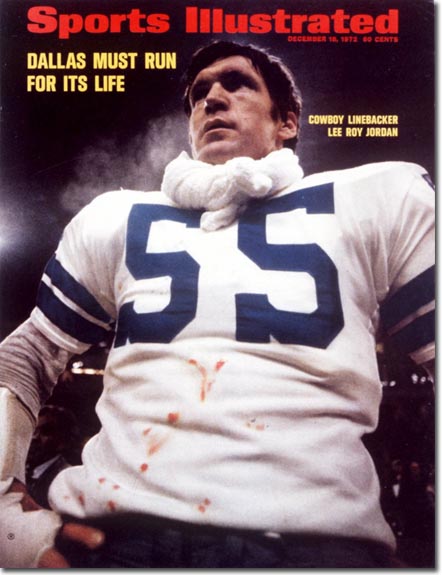
I walked into the meeting just a couple of minutes before it started and as I was walking down the aisle Paul Dennis shouted, “If #55 is not Lee Roy Jordan, I’m never reading your blog again!”
~~~~~~~~~~~~~~~~~~~~~~~~~~~~~~~~~~~~~~~~~~~~~~~~~~~~~~~~~~~~~~~~
Of course it’s Lee Roy Jordan. Who else could it be, Brian Bosworth?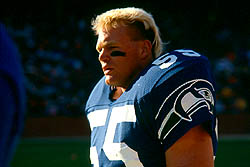
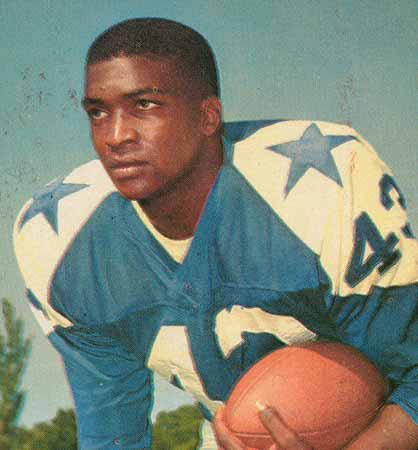
Jordan actually wore the number 54 at Alabama because he played both ways, as a linebacker and an offensive center. But to me, he’s always going to be the #55 he wore as the Dallas Cowboys middle linebacker for 14 seasons. 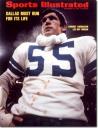 Jordan was the Cowboys number one pick in 1963 and “quarterbacked” that Doomsday Defense to three Super Bowls. He was there for every play of those difficult transition from “Next Year’s Champions” to “Super Bowl Champions.” Jordan holds the Cowboys team record for most solo tackles in a career at 743. And he was just passed by Darren Woodson three seasons ago for most total career tackles (1,236 solos & assists combined). Jordan’s solo tackles in a game against the Eagles in 1971 is still a team record.
A contract holdout made things personal between Jordan and Tex Schramm, which kept  Jordan out of the Ring of Honor until Jerry Wayne bought the team in ’89 and made things right. That was about the only thing, P.R.-wise, Jerry did right in ’89.
Peace,
Allan
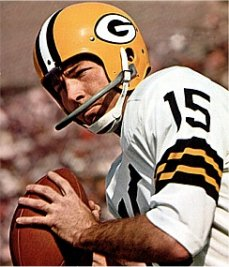 Bart Starr spent 16 years with the Packers, leading them to six Division titles, five NFL titles, and two Super Bowl wins. He was the NFL MVP in 1966 and the MVP in both of those first two Super Bowls. He was the NFL passing champion three times and represented Title Town in four Pro Bowls. His career completion rate of 57.4% is among the best ever. And, of course, he’s in the Pro Football Hall of Fame.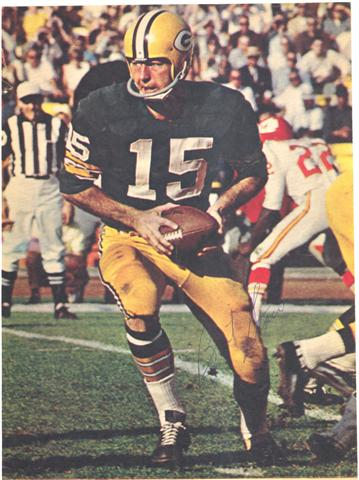



Recent Comments