Category: Preaching (Page 11 of 25)

The Spirit of Larimore

Rick Atchley takes a well known Restoration Movement slogan and updates it to reflect our most recent history: “We speak where the Bible speaks, and where the Bible is silent, we speak even more.” Oh, yeah, the silence of Scripture — is it permissive or prohibitive?  If we’re honest, most of us decide based on the issue of the moment and/or our own comfort zones. Strange, but that never really was a question that concerned anybody in our churches until right after the Civil War when we were looking to divide and punish, to humble others and make ourselves feel better.

The Civil War and the resulting hatred and bitterness that lingered into and through Reconstruction in the South played a critical and undeniable role in the divisions among the Stone – Campbell churches that ultimately led to the official “split” between the Disciples of Christ and the Churches of Christ. To deny this would be to ignore the evidence. Similar splits along North and South lines occurred in the Methodist, Baptist, and Presbyterian denominations at the same times. And, no, we were not immune.

As further proof, Holloway and Foster’s Renewing God’s People offers up the issues of instrumental music in corporate worship and the American Christian Missionary Society.

While the centralized missionary organization had its detractors almost as soon as it was established in 1849, the Missionary Society was not something over which anybody in a Stone-Campbell church would have fought or divided. Until after the Civil War. Following the Society’s pro-Union resolutions and its official support of the United States military, it became the firestorm issue of the Restoration Movement. To demonstrate how the War Between the States had influenced feelings and thoughts, consider that two of the Society’s most outspoken critics were former officers of the organization. Tolbert Fanning served on the board and even addressed its annual meeting in 1859. Benjamin Franklin (no, not that one) served as the Society’s secretary for thirteen years. But after the war they both repeatedly blasted the group as unbiblical in Franklin’s American Christian Review. Their main official objection was based on the “silence of Scripture.”

Since the Bible does not specifically mention anything about multi-church organizations or boards that support a combined effort among different congregations, they argued that the Missionary Society was unscriptural. Of course, those who supported and served the Society claimed that silence in Scripture is what gave them permission to do it.

The same arguments were used in debating the issue of instrumental music in our corporate worship assemblies. While the first recorded instance of an instrument used in worship in a Stone-Campbell church was in Midway, Kentucky in 1859, it really was a post-Civil War issue. The churches that brought in pianos and organs argued that, since the Bible did not prohibit it, they were permitted to use the instruments to help their singing and to appeal to the younger generations. Opposition to this “innovation” came mostly from the South, and mostly from the same “silence of Scripture” argument. The New Testament, they claimed, authorizes congregational singing, but not musical instruments. On the other hand, those who used instruments cited the same Bible verses that gave them authority to use song books and song leaders and church buildings to aid their worship: none.

The one man who might have done the most to hasten the division among the Stone-Campbell churches on these issues is Daniel Sommer who, in 1889, outlined his plan to save the Restoration Movement from “innovations and corruptions.” Unoriginally titled “An Address and Declaration,” Sommer’s paper proclaimed that if leaders and churches would not give up practices such as instrumental music, support of the Missionary Society, located preachers, and others, then “we cannot and will not regard them as brethren.”

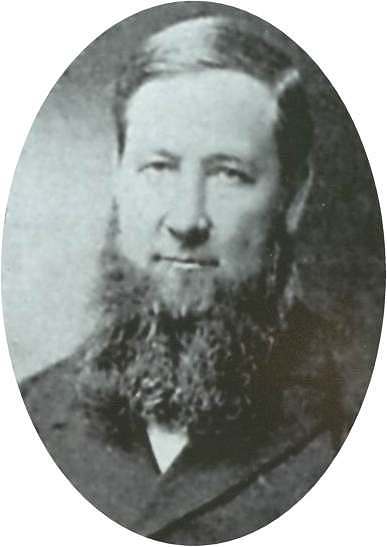
On the other end of that attitude was a Stone-Campbell educator and preacher named T. B. Larimore. He was baptized in Kentucky in 1864 and later attended Franklin College near Nashville, studying under Fanning. This loyal son of the South was influenced and taught by some of the strongest opponents of instrumental music and the Missionary Society, but he refused to ever take sides on these issues. He never declared himself publicly. Larimore believed God’s Church should never divide over such trivial matters and, as a preacher of the Gospel, saw his duty as only to proclaim the good news of salvation from God in Christ. Larimore said he would have nothing to do with those questions over which “the wisest and best of men disagreed.”

Larimore was a highly successful and influential preacher. He baptized more than ten thousand people in his lifetime. And he would preach wherever people would listen. He was invited by both Churches of Christ and Disciples of Christ and he honored each invitation. He wrote articles and religious papers for both groups. As his popularity grew he was pressured more and more to take sides on the issues that divided the Movement, but he never did. He only spoke well of people in both camps. In his words:

“I never call Christians or others ‘anti’s,’ ‘digressives,’ ‘mossback,’ ‘tackies,’ or ‘trash.’ I concede to all, and accord to all, the same sincerity and courtesy as the Golden Rule demands.”

I’m not sure what it means to be called a “tackie” — only Doug Foster knows.  But Larimore’s legacy during one of the most contentious times in our history is that he spoke only of matters of first importance. He taught and lived, by word and deed, that the only way for God’s Church to avoid the evils of division and maintain Christ’s vision for unity was to allow freedom in matters of opinion. And he kept on preaching.

Peace,

Allan

Bold and Stouthearted

“When I called, you answered me; you made me bold and stouthearted.” ~Psalm 138:3

The Word we preach and teach, the Gospel we proclaim and practice, the Kingdom of God we live in to and out of is mind-blowing, history-changing, earth-altering Truth. We declare the unmerited love and favor of the Almighty Creator of the Universe. We proclaim a righteous relationship with this Holy God through the selfless sacrifice of his perfect Son. We preach the unsurpassed power and authority extravagantly given to us by his Holy Spirit. It is the greatest news this world has ever heard. It impacts all who hear it. It transforms all who respond to it. And preaching and teaching it, practicing it and living it comes with a price.

Allow me to tell you: Hang in there. Don’t stop.

“I will praise your name for your love and faithfulness, for you have exalted above all things your name and your Word.” ~Psalm 138:2

The name and the Word of our Lord are highest above all other things. Exalted. In Truth, in power, in beauty, in holiness, in everlasting glory, the name and the Word of our God are above all else. Yes, we know it. Yes, we believe it. But it’s not easy. In fact, proclaiming it and living it are very difficult. Marva Dawn has much to say about this in A Royal Waste of Time:

“If we are truly passionate about the texts and the Lord of the texts when we preach, it will cost us. We are painting a vision of the Kingdom of God in opposition to the reign in this world of other powers, so it is a spiritual battle we are fighting, which will also physically exhaust us. We have to allow ourselves plenty of time to recover, a Sabbath of rest. We might also have to fight the darkness of doubts, the fiends of seeming failure in society’s terms, the monsters of personal hang-ups, the demons of misunderstanding on the part of those who hear or refuse to hear.”

Dawn is addressing preachers in that passage. But all of us — yeah, you, too! — need to pay attention to it. Most of the time, our words don’t come close to matching what’s in our hearts. Most of the time, our sermons and lessons don’t live up to the power of the Truth. Most of the time, our best efforts to live the Kingdom of God fall woefully short of the splendor of our King and the beauty of his love and majesty and reign.

Hang in there. Don’t stop.

God is doing something wonderful with you.

For all of you who teach and preach; all of you who cook and clean, plan and pray, sacrifice and serve; all of you who give of yourselves day in and day out for the glory of our God and his holy Kingdom:

“The Lord will fulfill his purpose for you; your love, O Lord, endures forever — do not abandon the works of your hands.” ~Psalm 138:8

~~~~~~~~~~~~~~~~

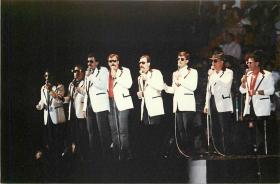
The room was packed, the energy was electric, and the anticipation was high. The Sharks concert in our worship center Saturday night had been sold out for weeks (most free concerts are) and the thousand or so in attendance (preacher’s count) were not disappointed. Johnny Weems belted out the crowd favorites while Kelly Utsinger maintained the tone of the evening with the harmonica and the corny jokes and the rest of the Sharks — a little wider and a little grayer than when they were tearing it up back in the ’80s — performed each of their musical and entertainment roles beautifully. It was a great trip down memory lane for the Sharks and their die-hard fans. But it was a wonderfully powerful night for thousands of folks in Kenya who’ve never even heard of Elvis or Buddy Holley, or the Coasters.

The Sharks were attempting to raise $10,000 at Saturday’s show to benefit Christian Relief Fund’s efforts to dig a single water well in the drought-stricken and famine-plagued area of Turkana, Kenya. The numbers are in today and the total has been announced as $19,500! With money still trickling in!

Thanks to Kelly and the Sharks, thanks to the generous hearts and open wallets of the Christ-followers at Central and all over Amarillo, thanks to our gracious God in heaven and his faithfulness to the cries of his children, CRF is going to be drilling two wells now in Turkana, not just one! Doppler Dave made the plea on behalf of CRF Saturday night. But our God is the one who moved his people to respond to his call to bring his love and goodness to those in need.

Except for the awful fish jokes, praise God for everything that happened here Saturday night and for everything he will do for the starving people in Kenya tomorrow.

~~~~~~~~~~~~~~~

My heart goes out to Beth Bobo. She and her husband, Elvin, were great encouragers of mine during our time at Legacy. Whether praying together in my office, sharing laughs over funny stories and pictures, kidding each other about sermon length and yet another story about yet another cruise, Elvin and Beth cared for me. They cared for the young people of our church, faithfully teaching and volunteering in our children’s programs. They cared about the older people in our church, tirelessly planning and coordinating more events and functions than you could imagine. They cared about the needy and the marginalized of our community, setting up and serving and tearing down and cleaning at every single Give Away Day. They cared about the lost of the world, giving and giving and giving to our local and foreign missions efforts. Elvin and Beth cared about God’s Church. And they cared about God’s Gospel preachers. And they went way out of their way to care for me.

Elvin died early this morning. And my heart goes out to his sweet wife, Beth.

There is in store today a crown of righteousness for my brother, Elvin, awarded to him by our Lord, the righteous Judge. Elvin has finished his race. And he ran it well. He ran it very well.

Grace & Peace,

Allan

Let Us Walk Through the Door

I’ve been in a really confessional mood this week. So indulge me one more time: I’ve almost got this Sunday’s sermon finished, and it’s not that great.

The Easter sermon is the hardest one to write. It’s nearly impossible. And I struggle with it every year. It’s not for lack of effort. I began planning this year’s Easter sermon way back in the fall when Bill Humble was taking us through the seven churches of Asia on Wednesday nights. He used racks and racks of pictures and slides from his numerous trips to those ancient sites to capture our imaginations as he taught us. And it occurred to me then that, if I showed you pictures from my tour of the traditional site of Jesus’ tomb in Jerusalem, I could stir you to experience the thrill of the Resurrection that I experienced. But it’s not working like I thought it would. The pictures are great. They’re spectacular. Powerful. But my words… my words are not enough. Not even close.

Reinhold Niebuhr is quoted as saying that he would always attend a “high” church on Easter Sunday where there would be great music but very little preaching. In his estimation, “No preacher is up to the task on Easter.” I think he’s probably right.

John Updike’s poem “Seven Stanzas at Easter” beautifully and perfectly identifies the cause of every preacher’s frustration leading up to Resurrection Sunday. One of the lines is: “Let us not mock God with metaphor, / analogy, sidestepping transcendence… / let us walk through the door.”

Yes, it is a waste of time to try to explain the Resurrection. Some things can’t be reduced to an explanation and are greatly diminished in the process of trying. The task on Easter is proclamation, not explanation. On Easter, the preacher should only offer an invitation to “walk through the door” into a brand new world where the ultimate reality isn’t death, but everlasting life in the One who brought our Lord out of the grave. Accept it in all of its mystery and wonder. Rejoice in the powerful love and gracious blessing we experience at the empty tomb. Proclaim the Resurrection, don’t explain it. Proclaim it. That’s what the apostles did. And that’s what I’ll attempt to do this Sunday.

Peace,

Allan

Stay Put

Every now and then I’ll let my guard down and turn this space into a self-therapy session that I like to think reads more like serious reflection. I know it doesn’t; I just like to tell myself it does. Sometimes, honestly, my writing here is only for me. It helps me process. It helps me think. It helps me articulate better what I want to say to you or to God’s Church later. I’m OK with that. I’ve stated from the very beginning that one of the purposes of this blog is to help me wrestle and think out loud. Those of you who know me and who read this regularly are already aware of that. Those of you who are kind of new here: You’ve been warned.

Yesterday’s reflection here got me thinking about the little book by Mitch Albom, Have a Little Faith. It’s a true story in the style of Tuesdays with Morrie about the author’s faithful visits with his rabbi, Albert Lewis. Until his death about five years ago, the old man had been Albom’s rabbi since his birth. Albom has only been an official member of one synagogue his whole life, and Lewis his life-long spiritual director. For his first 50 years on this earth, Albom only had one rabbi. And the book, given to me as a gift by Steve Rogers last winter, explores the great beauty and depths of a long and faithful relationship between a pastor and his congregation.

I started the book at about 6:30 one evening last December because it looked like a quick and easy read that would serve as a departure from my normal reading. Something I wouldn’t have to think too seriously about, maybe find some good illustration ideas, but that’s it. No, it wasn’t like that at all. The book actually drove me straight to the floor of my bedroom to God in prayer, confessing, begging, promising, thanking; and then it kept me awake for a while. Way to go, Steve. Thanks a lot.

I finished the book at just before 10:00 that night. I don’t think I ever looked up. And by the time I was done, I was a weeping wreck. I seriously could not stop crying. The story put me to shame for all my failures as a pastor/preacher/leader in God’s Church. I’m not sure why yet — I’m still working on it, and may be for a while — but I really felt ashamed at my own efforts to be a Gospel preacher both at Legacy and now here at Central. At the same time, the book inspired me to be better. To try harder. It moved me to do more, to take more time with people, to pay attention more, to be less anxious, to live with more and more Christian integrity.

The guy in the story was faithful to his work and stayed put. That’s Steve’s way of saying it: “the guy was faithful to the Lord and to his congregation by being the same guy everywhere he went and he stayed put.” Yeah. As we discussed here yesterday, there’s something powerful, very powerful in staying at one church. I think I sometimes struggle a little with the fact that I left Legacy after less than five years. Sometimes I feel like I quit on them, bailed on them. I preached funerals and weddings, baptized their kids and did FaithBuilders with their families, lived and died in small groups, wrestled and fought over worship practices and outreach efforts. And then I left. True, I could not continue in my role there, no way. But I sometimes feel bad for leaving. Like I failed there. I worked through some of this with Tim and Gary coming back from ElderLink. But it weighs on me sometimes. And it smashed me like a two-by-four in the throat as I read the book.

I’ve reassured myself that, for lots of young people here at Central, I can still be that preacher they’ve known their whole lives. I can still do those faithful longevity things that I, too, think are so important. And I want to. I really do.

I, too, want to be a better leader. My faults are many. I’m pretty sure my heart is right most of the time, but I’ve got such a long, long way to go.

I highly recommend the book. It’ll move you to thanksgiving and praise of our God who uses holy and sacred relationships over time to redeem this broken world. It’ll force you to evaluate your own relationships within God’s Church. And it’ll compel you to try harder. And to stay put.

Peace,

Allan

My Greatest Sermon

(Today’s post is over 2,600 words. Forgive me. I’m not writing for you today, I’m writing for me. I don’t want to forget what God taught me this past Sunday. Reflecting on it here is the best way for me to remember. Every now and then you’re going to be subjected to stuff like this as I analyze and over-analyze my walk and my calling. Sorry.)

Elaine introduced me to George a couple of weeks ago. George grew up as an orphan in Kenya, born to a prostitute and abandoned to the Lakeside Orphanage. Elaine and a few other of our Central members met George two years ago on a mission trip to Kenya and, as is Elaine’s glorious habit, she’s kept in touch. George, through the generous work of Christian Relief Fund and by the ultra-generous grace of God, wound up working at the Alara school and is now a law student at the University in Nairobi. While on a winter break here in the states, George popped in to see Elaine and I was honored to be introduced.

A couple of days later Elaine asked if we could give George two or three minutes on Sunday to say ‘hi’ to the congregation and thank them for their prayers and support. “Absolutely!” I said. “Of course. We do that all the time.”

And we do. Every few weeks or so it seems we’re giving a missionary or a visiting evangelist a couple of minutes in the pulpit to thank the church. And I try to get them involved in the leading of our worship. I ask them to lead a prayer or read a passage of Scripture or something. It’s good for our church to see up close what our God is doing in other parts of the world. It broadens our understanding of the Kingdom, it raises our vision for what’s really happening, it deepens our commitment to our Father’s work in the world to see and to hear these kinds of reports.

So I told George on Thursday. And again on Saturday. And again Sunday morning right before our worship assembly began. “I’ll introduce you right at the start. I’ll call you up to the front. You take two or three minutes to thank the church. And then you’ll ask the congregation to stand for a reading of Psalm 23.” It would be fine. No, it would be more than fine. It would be great.

As I welcomed the congregation into the assembly I told them I was beside myself with anticipation about what our God was going to do with us today. I expressed to the whole church my excitement for the potential of this day, my enthusiasm for the unknown mighty work our Father was going to do during our Christian gathering. Of course, I was thinking about my sermon.

We were launching a time for selecting additional shepherds. Sunday was the first day to talk as a church family about additional elders at Central and to go over the process together. The sermon I had prepared was excellent. It was going to be one of my best, I just knew it. It challenged some of our long-held beliefs about those elder “qualifications” in Paul’s pastoral letters. It quoted Flavil Yeakley and Everett Ferguson. It painted the very clear differences between worldly leadership and spiritual leadership, between being a church administrator and being a godly shepherd. It praised our past and looked to the future. What a sermon! It contained a riveting illustration from the movie Dead Poet’s Society in which I was seriously considering jumping up on the communion table to say “Oh, captain; my captain!” It also had an illustration from a Herman Mellville novel to show my literary side and the requisite sports analogy to keep it real. What a sermon, indeed! When I was finished with this masterpiece of a sermon, our entire congregation would be inspired to choose Christ-like men through study and prayer. Our current elders would be moved to greater things as a result of my sermon. I knew God was already pleased with my sermon, but he’d be even more so after he saw and felt the response from the church. This was a really good sermon, the perfect sermon to kick off a crucial time in the continuing story of our congregation. I was really excited for what God was going to do with my sermon.

So, I welcomed the church and introduced George so he could say “thank you” and read Psalm 23 and we could all get on with what we came to do.

That was at 10:18 am.

At 10:46 am, George was still talking. I know what time it was because I looked at my watch about a zillion times.

George told our church family his story about growing up in poverty in Kenya, an orphan abandoned by his prostitute mother. He described the poverty in graphic terms and contrasted it to the wealth that surrounds us here in the states. He praised our God and exhorted us to do the same. He thanked God for delivering him from the pit and encouraged us to do the same. He boldly challenged our consumeristic culture in Texas and dared us to think outside ourselves to the poor and needy around the world and around our own zip codes. He courageously reminded us of how truly blessed we are and, as children of God and followers of his Christ, how much responsibility comes with it.

And I was upset.

While my church strained to understand every third or fourth word George said and labored to put it together, while my church family encouraged this young brother in Christ who was preaching his heart out with their “amens” and applause (applause!?!), I fidgeted in my seat and grew more and more anxious. And — I’m so ashamed to admit this — upset.

I told him two or three minutes! I told him to thank the church and then read Psalm 23! He’s talking for 30 minutes!

I looked at Kevin’s order of service. Can we cut some songs? I won’t have time to preach. Can we skip a prayer? I won’t have time to preach. As George kept talking, I began mentally chopping my sermon. I can lose the intro. I can take out an illustration. I can leave out a couple of Scripture references. I looked at Kevin, but he was focused on George. I looked at Elaine — maybe she can subtly gesture to George to get him to sit down — but she was zeroed in on the guest speaker. I fidgeted some more. I didn’t know what to do. I’m not going to have time to preach.

Thirty minutes after he began, George finally led us in that reading of Psalm 23. Then, once he sat down, we started to sing.

My God Reigns. Everlasting God. Be Unto Your Name. O, Draw Me, Lord.

And while we sang, my gracious and compassionate God, slow to anger and abounding in love and faithfulness, told me in no uncertain terms that I was being a short-sighted egotistical idiot and that I had no right to question the order of things or how they happen when his beloved children gather in his holy presence. I could almost hear our Father — almost — say to me, “Sit down, Allan! Who do you think you are? Sit down and be quiet.”

It was almost immediate. I really don’t know how to describe it. But in a flash, in a blink, I went suddenly from thinking about my plans and my time and my sermon t0 considering God’s plans and God’s time and God’s work. I often tell others to do this: try to figure out what God is doing and then do your best to join him. So as we sang, I practiced it myself.

God, what are you doing right now? What are you doing during this church service? Why is George here? Why did he take up all my sermon time? I don’t have time to preach now. Why? What do you want me to say? What do you want me to do? What is supposed to happen here?

I’m not sure how God did this, but he shot the 21st chapter from C. S. Lewis’ “The Screwtape Letters” right straight into my brain. In chapter twenty-one, the senior devil is teaching his nephew that men are so silly because they believe their time actually belongs to them:

“You will notice that nothing throws [the man] to a passion so easily as to find a tract of time which he reckoned on having at his own disposal unexpectedly taken from him. It is the unexpected visitor (when he looked forward to a quiet evening), or the friend’s talkative wife (turning up when he looked forward to a tete-a-tete with the friend), that throw him out of gear. Now he is not yet so uncharitable or slothful that these small demands on his courtesy are in themselves too much for it. They anger him because he regards his time as his own and feels that it is being stolen. You must therefore zealously guard in his mind the curious assumption “My time is my own.” Let him have the feeling that he starts each day as the lawful possessor of twenty-four hours. Let him feel  as a grievous tax that portion of this property which he has to make over to his employers, and as a generous donation that further portion which he allows to his religious duties. But what he must never be permitted to doubt is that the total from which these deductions have been made was, in some mysterious sense, his own personal birthright.”

“He is also, in theory, committed to a total service of [God]; and if [God] appeared to him in bodily form and demanded that total service for even one day, he would not refuse. He would be greatly relieved if that one day involved nothing harder than listening to the conversation of a foolish woman; and he would be relieved almost to the pitch of disappointment if for one half-hour in that day [God] said, “Now you may go and amuse yourself.” Now, if he thinks about his assumption for a moment, even he is bound to realize that he is actually in this situation every day.”

What if our Father, in his infinite wisdom and matchless grace, had gathered a church family in Amarillo into his presence so they could encourage and bless a young preacher he had rescued from the slums of Kenya? What if God wanted nothing more than to use us to spur George on to things in the Kingdom grander and greater than any of us could imagine? What if God had planned for 23 years — or 2,300 years!!! — to bring George to Amarillo so he could be blown away by the love and grace, by the prayers and hugs of 750 Christians? Yeah, but he’s got this selfish pulpit guy in the way down there. That’s OK, God says. We’ll have George go first.

Finally, I began to see it. God, I think I see what you’re doing. Please help me to join you and make it just half as grand as you’ve planned it to be. Please help me to get out of your way here. Please, Father, help me to do the right thing that brings glory to you. And only you.

By this time, we were in the middle of communion. It was 11:10. I got up and walked four pews back to the nearest elder. I told him I wasn’t going to preach. He whispered to me, “Do you have anything in the sermon that’s critical to the elder selection schedule we’ve got?” I replied, “Apparently not.”

I walked around to where Mary was seated on the other side of the worship center to tell her she was only going to have about ten minutes with the kids for children’s worship. She didn’t ask any questions. I gulped a communion cup full of grape juice with Colby and McKaden (“The blood of Christ!”) and headed to the stage.

I asked the church to turn to John 10. It was 11:15 am. I walked to the edge of the platform, looked at George seated next to Elaine on the second pew, down to my right. I leaned over to him. “George, this is how you get 750 Texans to say ‘Amen!'” Then I stepped to the center of the stage and declared, “I’m not going to preach today.”

Once the thunderous ovation died down and we swept the bits of plaster that had fallen from the ceiling out of our hair, I proceeded to confess to my brothers and sisters in Christ that I had been convicted by our merciful God. I told our church that while George was boldly proclaiming the Gospel of Jesus, I was worried about my sermon. I confessed that while George was courageously challenging us to live more sacrificial lives in the name and manner of our Lord, I was anxious and concerned about my time in the pulpit. This young man, so full of God’s Spirit, was saying things our Father needed us to hear. And I wasn’t really listening. I told my church family that Scripture declares God is the one who raises orphans from the dust, he lifts the needy from the ashes, and seats them with princes. Hannah, the mother of Samuel sang that song! David, the great and glorious king, sang that song! And we were looking at it in George! George: living, breathing, flesh-and-blood proof of our God’s glory right in front of us. And I almost missed it. George had said a couple of times during his talk, “Look at me and see what our God can do!” He was right. I couldn’t come up with a better illustration. I could never write a better sermon than what we’ve already heard.

Then I paraphrased the passage from Screwtape. What if God only needed us today to blow George out of the water with our encouragement and blessing? What if that’s all we’re called to do today? Wouldn’t we do it with all of our might? Enthusiastically? With great gusto and energy?

I thanked George and gave praise to God.

I read a couple of verses from John 10 to remind us that our Father has placed us in Christ’s hands and nothing will ever snatch us away. We are saved. We are secure. We are redeemed for all eternity. So we submit. And we serve. And we sacrifice for the sake of the world.

Then we gathered around George. All of us. We actually got up off our seats, out of our pews, and came forward. The whole church. It looked like 700 of the 750 in the house came down to gather around George. There were tears and giggles, hugs and high fives. And big, big, big smiles. We surrounded our brother from Kenya. We put our hands on him. George had hands on his head, his shoulders, his back, his arms. We almost dog-piled this poor kid. And then we prayed. Thanksgiving. Blessing. Praise. Encouragment.

His Christian Relief Fund sponsors were in the room. They’d never seen anything like it. Some guy who was born in Kenya, same tribe as George, a guy they had met Friday night at the only African restaurant in Amarillo, was in the room. He’d never seen anything like it. People George had never met before were getting his email address and his phone number. People were pledging financial support and vowing to keep in touch. I’d never seen anything like it. I had begun the service by declaring my eager anticipation over what God was going to do with us. And then, as always, he did more. Even as I questioned him, even as I selfishly ignored him, even as I sinfully rebelled against what he was doing, he did it. He always does.

From the moment that service ended (I had stopped looking at my watch by this time) up until just a few moments ago this Tuesday afternoon, I’ve received a fairly steady stream of compliments, phone calls, emails, texts, and in-person compliments for handling the situation Sunday with such grace and leadership. No. That’s not right. It was God’s grace and God’s leadership in spite of me, or despite me, certainly not because of me.

I’ve also heard the obligatory, “That was the best sermon you’ve ever preached!” joke at least 30 times.

I agree.

Peace,

Allan

Augustine’s Pain

“My own way of expressing myself almost always disappoints me. I am anxious for the best possible, as I feel it in me before I start bringing it into the open in plain words; and when I see that it is less impressive than I had felt it to be, I am saddened that my tongue cannot live up to my heart.” ~Augustine

Augustine the preacher penned these words more than 1,600 years ago. And from time to time I, too, feel his great pain. Not all the time; not every single Sunday; not even every month or so. But there are times when I am almost crushed by a painfully horrible sermon that I’ve delivered.

The old joke goes that the only thing worse than finishing a sermon and realizing it wasn’t very good is just getting started preaching a sermon and realizing it isn’t very good.

I was there this past Sunday. I don’t know what it was. I think I tried to say too much in too short amount of time. I think I tried to do too much. I think the subject matter (Exodus 34:7b) was too complex and difficult. Maybe I was distracted by some heavy things we had just finished discussing in our Bible class. Maybe I was a little travel logged from the drive home from our family Thanksgiving back to Amarillo that was made a bit longer by the blowout in Bowie. Maybe it was the sparse, sparse, sparse crowd in our worship center. Maybe it was none of those things at all. But for whatever reason, or reasons, nothing was flowing. Nothing was communicating. Ten minutes into the sermon, I couldn’t wait for it to be over. And I just knew 650 other people in the room were feeling the same way.

When it was over, I couldn’t hardly pray with our brother who had walked down to the front to ask for the prayers of our church family. I found myself asking God to forgive me instead of him, to help me instead of him. It’s the first time I’ve ever welcomed a person responding to the sermon by grabbing that person’s hand and begging God to help me.

And I sat there through most of our communion time wondering how weird it would be if I stood up one more time — to the shock and horror of the congregation, no doubt — to apologize for delivering such a poor sermon. I don’t think it was a homilitical homicide, as my friend Jason Reeves says about really catastrophic sermons that can set a church back several decades theologically. It wasn’t like that. It just wasn’t very good.

I had great hopes for the sermon. I was prepared to preach about the utter holiness of our God and the utter repulsiveness of our sins against that holiness and the unexplainable gift of his grace and forgiveness that allows us to dwell in his presence anyway. I was ready. But it just fell flat. And it was crushing me. My tongue didn’t live up to what was in my heart. I felt I had really let everybody down.

I walked to my study — pitiful, pathetic, sad — and was greeted by an email from one of our teenagers at Legacy, a great young man with an eager spirit for our Lord, getting ready to finish school now at ACU and enter the ministry. He wrote the email from Fort Worth at 11:15, right in the middle of my lousy sermon:

Allan, you’re probably preaching right now but I want to say something to you. Years ago, you challenged this church at Legacy and me to consider others. You spoke of how it didn’t make sense for anyone to take communion alone. You encouraged us to move, and some did, but you instilled something in my heart and soul that I will never forget. We don’t have to be alone in this life, we don’t have to do it on our own.

This morning I was encouraged by the Spirit to go sit by a brother of mine who was by himself. I know the Spirit compelled me, encouraged me, and supported me to do it past all the lies that Satan was filling my head with.

You know this, but you have made a difference in my life and I am blessed to call you a mentor, a brother, and a friend.

Thank you for being bold enough to spur people on to act. You are a servant of God and I am blessed to have you in my life. I want to tell you that I have been praying for you and am intentionally praying right now that the words from your mouth will encourage Central and others to believe in the Spirit and act. To be bold! To know that God is with them and that they are not doing it alone.

Reading this young man’s email didn’t cause me to smile. Reading it a second and third and fourth time didn’t bring me to laugh out loud. It buckled my knees and brought into sharp focus my own pettiness and shortsightedness, my own sin in the presence and service of God. It reminded me that every sentence I speak from the Word of God will serve an eternal purpose that I’m not always going to recognize. It reminded me that our Father is in charge of our sermons, not our preachers. He alone inspires, he alone speaks, he alone puts his Word exactly where it needs to go and when it needs to go there and he alone causes it to grow and bear Kingdom fruit to his eternal glory and praise.

Who am I, sweating out a sermon that I don’t think stacks up to my standards, when 300 miles away a young man is begging God in trusting faith to use my words, no matter how poorly written or delivered, to encourage the saints? Who am I? I am shallow and weak.  I have a big ego and a low self esteem, a terribly dangerous combination. And I can get really defensive. I take things way too personally and I worry a lot.

And when I get in a really weird place — not every single Sunday, not even every month or so — our God sends a divinely ordained messenger to lift me up and remind me of who I am and who God is. This is God’s work, not mine. These are his sermons, this is his Church, not mine. Thank you, Lord, for not destroying me. Thank you, God, for reminding me and encouraging me. Thank you for using me at my best and at my worst.

Amen

« Older posts Newer posts »