Category: Luke (Page 23 of 24)

Which Is Lawful?

Which Is Lawful?“Some of them were looking for a reason to accuse Jesus, so they watched him closely.” ~Mark 3:2
“(They) were looking for a reason to accuse Jesus, so they watched him closely.” ~Luke 6:7
“…looking for a reason to accuse Jesus…” ~Matthew 12:10
“…he was being carefully watched.” ~Luke 14:1

The Pharisees and Teachers of the Law, these self-appointed Sheriffs of the Synagogue, were watching Jesus closely so they could pounce on him the second he broke one of their rules. In Luke 13, Jesus heals the woman who’d been crippled for 18 years. In the synagogue. On the Sabbath. In Mark 3, it’s this man with the withered hand. In the synagogue. On the Sabbath. And the Sheriffs didn’t like it. They were indignant. They plotted to kill him.

And Jesus challenges these religious leaders with his question in Mark 3:4 > “Which is lawful on the Sabbath: to do good or to do evil, to save life or to kill?”

Jesus presents to the synagogue rulers—and to you and me—two ways of doing the religious rules and regulations. He doesn’t throw them away. He says there are two ways of keeping them. One way is good and one way is bad. One way gives life to people and one way takes life away from people. One way frees people from burdens and one way places more burdens on people. One way liberates people from their chains and one way locks people up in prisons.

Jesus gives us two ways of doing religion. Two incompatible outlooks. Two opposite and conflicting views about our God and his Law and his intentions for his Law. And he presents it as a choice between the two. You have to choose. You can’t have it both ways.

“Which is lawful?” he says. For hungry people to eat or for them to remain hungry in order to protect your rules? (Mark 2:23-27) Which is lawful? For this man with the debilitating injury that singles him out as less than whole to be healed and to made whole or to remain withered and less than what he’s meant to be in order to keep your traditions? (Mark 3:1-6) Which is lawful? For this woman who’s been bent over for as long as she can remember, burdened by the weight of the world and her own sins, to be delivered from these burdens and made to walk again or to remain stooped over and burdened even more in order to keep your order? (Luke 13:10-17) Which is lawful?

God’s Law is not about the rules. It’s about people.
God’s Church is not about the institution. It’s about people.

And if we’re partnering with God and with his plan to redeem the world, we take care of people, not rules. So why, sometimes, do we act like Sheriffs of the Synagogue? I’m afraid, sometimes, we get together with God’s people on God’s holy day, the day set aside for us to celebrate salvation from God in the resurrection and reign of Christ, and we’re watching closely. Looking for a reason to accuse.

“Did you see what he’s wearing? Did you hear what she said? He’s raising his hands. She’s closing her eyes. He’s clapping. She’s kneeling. He won’t stand. She won’t sing.

And Jesus asks, “Which is lawful?” To do good or evil? To watch for those who might stray from my tradition and call them on it? Or to praise God with them in the understanding that we’re both redeemed by the blood of the Lamb? Which is lawful? To save life or to kill? To watch closely for someone who might violate my regulation and talk to them about it? Or to encourage them and be thankful that you both share salvation from God in Christ? Which is lawful? To remove the barriers and burdens and hurdles from my brothers and sisters or to weigh them down with my rules and regulations that act as chains and prison bars to those we’ve told have been set free?

Jesus says there are two ways. One way cares about people. One way doesn’t. The synagogue ruler in Luke 13 actually addresses the people after Jesus heals the crippled woman. “Hey! he says. “If you’re looking for freedom, if you’re looking for healing, if you’re looking for relief and rescue, if you’re looking to be delivered from the things that are weighing you down, come back some other day. You’ve got six other days to do stuff like that. Come back tomorrow. We have our rules, you know.”

Nobody—and I don’t care if they’ve been members of the congregation for 45 years or if they’re completely unknown strangers off the street—nobody should ever come into our church buildings to sit with us, worship with us, sing and pray with us, and study the Scriptures with us and feel like somebody’s watching him closely. Or looking for a reason to accuse.

That situation says a whole lot more about the watcher than it does the watch-ee or the rules. Jesus called it hardness of heart.

Aren’t we glad we serve a King who’s much more about mercy than ritual?
Aren’t we glad our God deals with us compassionately with patience and grace instead of Law?
As God’s children and subjects of the King, aren’t we compelled to treat others the same way?

Peace,

Allan

Home Sweet Home

A perfect Sunday. Perfect. Absolutely perfect.

Praying with Jim Gardner in the hour of calm and peace before the morning assembly. Maybe the thing I miss the most about working with Jim is our prayer time together. Those early Sunday morning times with God and Jim were always such blessings. To pray for each other as we prepared to preach or teach or lead the singing each Sunday always seemed so critical. It was so important. It always filled me with so much confidence and courage. My faithful brothers Paul and Mike fill that role with me now here at Legacy. They bless me with their presence and their encouragement and their prayers every Sunday. Praying with Jim yesterday at Woodward Park was special.

I preached on the parables of Luke 15. A young man named Evan was baptized. His father told me afterwards that it was due, in large part, to the sermon I had preached there Saturday night on God’s promises. I tied the strange and obscure blood path ceremony story in Genesis 15 to the crucifixion of Jesus. God made a covenant with his people and then stood in their (our) place and took their (our) punishment for them (us) when they (we) broke that covenant agreement. Our God loves us that much. He’s that committed to us. I don’t care how many books are written about the death of Jesus. I don’t care how many great poets and authors and songwriters put pen to paper. There are no words to describe the power of the picture of the blood of Almighty God dripping into the dust—just like he promised—to pay for my sins. It moved Evan. It still moves me.

Following the morning assembly, Jim and I walked into the Laotian meeting where a hundred or so Laotian brothers and sisters had gathered to worship. We walked in while they were singing How Great Thou Art. One of my all time favorite Christian hymns. It’s a funeral song for me, right? You know what I’m talking about. We sang it at my grandmother’s funeral eight years ago. And so now everytime I hear it or sing it, I think of her. So there’s added weight and emotion there for me. And these beautiful brothers and sisters from the other side of the world are praising our God with this wonderful song. And I’m so blessed to be there. And humbled. They sang He Leadeth Me. Of course, the tunes are ultra-obvious. I know the songs. I’ve known them my entire life. But I can’t sing with them. It’s a different language. I can only listen. And hum. It sounds so wildly different. And yet so amazingly familiar. Comforting. Inspiring.

They introduced Jim and me to their congregation. We stood and bowed toward their church family with our hands together in front of our faces. And they smiled at us and nodded. Then we sang (hummed) Amazing Grace. And then we shared communion. Together. Same table. Same loaf. Same cup.

It was heaven. It IS heaven!

“This IS heaven!” I thought as we communed together, in perfect community, unified by the blood of our common Savior.

But we had to leave to catch my 12:50 flight out of Fresno. So Jim and I hustled through the Bible classrooms to round up Trae and Tori for the trip to the airport. And I saw the exact same thing in the 4th grade room and in the 4-year-old room: red and yellow, black and white. Or, as Helen Dobbs would say, “Red and yellow, blackbrownandwhite!” They were all there. White. Black. Hispanic. Asian. Rich. Poor. No barriers. No segregation. No walls. No borders. The Kingdom of God. His rule. His dominion. Heaven on earth.

I landed at DFW at 6:00. And there were all my girls waiting for me at the baggage claim. Hugs and kisses all around. And then more hugs and kisses. Wow, I missed them. Big time. We went straight to Posado’s to eat Tex-Mex. They don’t have Tex-Mex in California. The Mexican food they have there is real Mexican. Real bland. No flavor. So dinner was excellent last night.

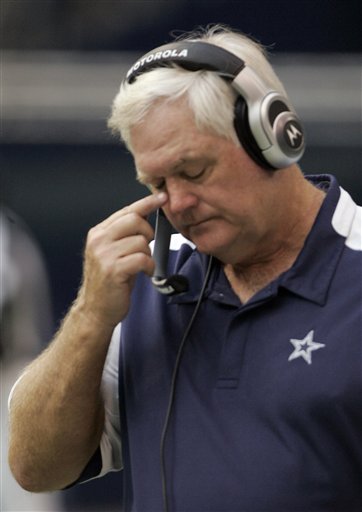
Whitney had DVRd the Cowboys-Redskins game so we could watch it last night. It’s funny, isn’t it, to use DVR as a verb? We had gone to great lengths to avoid all TVs and radios and conversations that could have given us clues as to the outcome of the game. Nothing in the airport. Nothing at the restaurant. Although, a family of four wearing Romo jerseys and blue face paint came into the restuarant with sad frowns prompting us to believe Washington had won. But I reminded us all that a full-day at Texas Stadium with all the kids would be enough alone to put those looks on those faces. The Cowboys could have won a dramatic thriller and those parents and kids would still look that way. But then Steve Croft, an avid Redskins fan, called our house at 8:15 or so and asked to speak to Whitney. I told him we didn’t know anything about the game, that were watching it on DVR and were only in the first quarter. So he apologized and hung up. But it was too late. Why would Steve call Whitney unless the Redskins had won? We knew.

Washington wins. Whitney’s faith in her Cowboys hung true right up to the point at which the onside kick attempt bounced off Sam Hurd’s fingers.

What a perfect day. Tank Johnson’s name was never called. Pacman Jones didn’t make a single play. And T.O.’s telling reporters he’s not getting the ball enough. Perfect.

~~~~~~~~~~~~~~~~~~~~~~~~~~~~~~~~~~~~~~~~~~~~~~~~~~~~~~~~~~~~~~~~~~~~~~~~~~~~~~~~~~~~~~

InNOutBurgerLorie, we went to In-N-Out Saturday afternoon. I’m hooked. Jerry, it’s as good—maybe even a little better—as Kincaide’s, the burger that changed my life. Is it garlic? What’s in the meat? It’s more than just that sauce. And, as directed by Steve and Mandy, I ordered my fries to be “animal-ed.” Piles of melted cheese and grilled onions and that sauce right on top. Wow. If they ever open an In-And-Out here in DFW, I’ll be like Gardner and his new Fresno Chick-Fil-A: Unbearable.

~~~~~~~~~~~~~~~~~~~~~~~~~~~~~~~~~~~~~~~~~~~~~~~~~~~~~~~~~~~~~~~~~~~~~~~~~~~~~~~~~~~~~~

Tonia and Paul and Carol and David! I finally read “Same Kind of Different As Me” by Ron Hall and Denver Moore. I read it on the flight to California Wednesday. And I cried the whole way. Out loud. Sniffing and sobbing and blubbering like a middle-aged woman watching Steel Magnolias. As the passengers within three rows all the way around kept looking at me I thought of David Watson who suffered a similar meltdown while reading this wonderful book two weeks ago on a flight to Chicago.

If you’ve read it, you can relate. If you haven’t, I’m not going to spoil it for you. I’ll just recommend it to you as excellent reading. It’s a local story from right here in Fort Worth. And it’s a true story. You know it’s a true story when, on page 18, the authors joke that “the only heavy industry in Haltom City was the three-hundred-pound Avon lady.”

I’m about three-quarters of the way through “The Shack” by William P. Young. Very interesting. VERY interesting. Theological reflection on the God-Head-Three as the Triune Community. The Father, the Son, and the Spirit living in divine community and our call to live into that community. The question of human suffering. The concept of mutual submission. The problems with judging others and judging God. A very good book. Not life-changing. It hasn’t rocked my world. But it challenges and affirms—at the same time—my beliefs and practices and worldview.

~~~~~~~~~~~~~~~~~~~~~~~~~~~~~~~~~~~~~~~~~~~~~~~~~~~~~~~~~~~~~~~~~~~~~~~~~~~~~~~~~~~~~~

Washington 26, Dallas 24. JasonCampbell

The Cowboys gave up 161 yards on the ground. They gave up 220 yards passing. I think Terrance Newman gave up 190 of that by himself. The Redskins outmuscled Dallas up and down the field. Jason Campbell made big time plays, stepping up in the pocket time and time again, fighting through would-be sackers to make big throws. Smoot and Rogers and Springs shut Terrell Owens out in the first half. They punched him in the lip and watched him cry. Embarassing. And when the Cowboys started forcing things to Owens in an effort to cheer him up and keep him happy, it severely limited their offensive options and their ability to come back. Barber gets only eight total carries? Felix Jones gets none? All to keep T.O. happy. They go to Owens 19 times in 58 offensive plays, and he’s still pouting after the game. Give me a break. Remind me, why is it y’all cheer for him?

In fairness to Owens, he was set up by the reporter who asked him if he thought he got the ball enough in yesterday’s loss. What else is T.O. going to say? Of course he’s going to say he wants the ball even more. Of course he’s going to say there were opportunities that Romo missed. Of course he’s going to say that when he gets the ball they move the chain and when he doesn’t get the ball they stagnate. Of course. When Romo was told of Owens’ postgame comments, Romo asked reporters, “What were his stats?”

If Jason Garrett is as concerned with Owens getting his stats as Romo, that might explain Barber’s eight carries. And the loss.

Pat Watkins was the 12th man on the field there at the end of the game that allowed the Redskins to continue the drive that culminated in that last nail-in-the-coffin field goal that sealed the Cowboys’ fate. How do you commit that penalty coming out of a timeout? Inexcusable.

Lots of questions today. The NFC East is truly up for grabs.

Peace,

Allan

Given Much

“From everyone who has been given much, much more will be demanded; and from the one who has been entrusted with much, much more will be asked.” ~Luke 12:48

When I see Shaquille O’Neal shoot 35% from the free throw line; when I see Ricky Williams throw away a Hall of Fame career with drug use; when I hear about a record-setting high school quarterback get suspended because he’s flunked Social Studies; I want to scream. All that talent. All those gifts. All that natural ability. All that potential. All those blessings. How in the world can you just throw that away? How can you not see how you’ve been blessed and how you can use those blessings to make yourself and your team better? How does Shaq live with himself, knowing that in a tight playoff game his coach has to sit him on the bench because he might get fouled? How can Williams ever show his face again in the state of Louisiana after what he did to the Saints? How does the high school quarterback walk the halls of his campus knowing how he’s let down his whole community?

We expect much more out of the people who’ve been so richly blessed.

Boy, if I had only been given those same gifts. If only I had those same talents, those same abilities. I’d do everything in my power to use them to their maximum potential. I’d keep my nose clean. I’d work hard. I’d dedicate myself to getting even better. Nothing could ever hold me back or get me down if I had those blessings.

We hate seeing gifts gone to waste. But we drastically change our view when the tables are turned and we become the objects of scrutiny.

Are you blessed? Of course you’re going to say “Yes.” Your wealth is not just measured by your money and your possessions, of which we have more than anyone in history, but also by your options. If you have lots of options, you’re very blessed. For most people in the world, especially if you consider the whole of human history, the main choice of life is, “Will I pick the grain today with my left hand or my right hand?”

In contrast, consider the kinds of questions we ask ourselves today. It’s not, “Will I get to go to college?” It’s “Which college will I go to?” It’s not, “Can I find a job?” It’s “Which job pleases me the most?” We never ask, “Am I going to eat dinner?” It’s always, “What’s for dinner?”

We are wealthy. We are blessed.

And just like us, our God never wants to see all these blessings go to waste. Jesus never wants to see his gifts thrown away.

He expects more.

~~~~~~~~~~~~~~~~~~~~~~~~~~~~~~~~~~~~~~~~~~~~~~~~~~~~~~~~~~~~~~~~~~~~~~~~~~~~~~~~~~~~~~

Cowboys & Eagles. Monday Night Football. The only thing that could make it any better is if it were being played in Philly (better atmosphere) and if Frank and Howard and Dandy Don were calling the game on ABC.

The Eagles have certainly broken the hearts of the Cowboys many, many times in the past. I vividly remember watching the 1980 NFC Championship Game in Paul Barron’s living room. Tom Landry’s weird Russian fur hat with the earflaps and the collar on his coat up around his neck. Wilbert Montgomery going for 42 yards and a TD on the game’s second play. I remember Paul throwing his not-quite-empty Coke can across his living room after a Danny White sack midway through the third quarter of that 20-7 loss.

80sEaglesLogoLots of Cowboys misery at the hands of the Eagles. The pickle juice game. The Bounty Bowl. Jaws. Harold Carmichael. McNabb’s 14-second scramble. Andy Reid is 13-5 against the Cowboys. Philly’s beat Dallas in three of the past four meetings. Nobody has a better road record in the NFL over the past seven seasons than the Eagles. McNabb is totally healthy. Westbrook’s one of the four best backs in the league. The Eagles’ defense is menacing. Their blitz is unnerving. Their secondary is excellent. They held Dallas to just six points at Texas Stadium last December.

WadePhillipsEagles 27, Cowboys 20.

Peace,

Allan

One Of The 99

Thank you, Chris (Rob’s Dad).

In a comment regarding yesterday’s post, Chris writes, “What happens if one of the 99 is really not safe? Everything looks good on the outside but they are broken and hurt on the inside.”

Something happened in our Small Group Sunday night that hit me in the face like a Kenny Rogers uppercut. I’ve been thinking about it and talking it about for the past two and a half days. But I’ve been double-clutching like Dirk at the buzzer, apprehensive about sharing it on the blog. (OK, no more sports references.) Chris’ comment has pushed me now to share this. If you’re impacted by it half as much as I was, it’ll radically change the way you see things. And hopefully the way we act.

In looking at Luke 15 again, our group was exploring the subtle forms of “muttering” (Luke 15:2) that take place in the Church today against “tax collectors and sinners.” We discussed the hard-hitting question of whether Legacy attracts or repels those who are lost. Do the way we act and the things we do reach out to those marginalized by society or drive them away?

And Virginia is right there in the middle of us, sitting at my dining room table.

Virginia and Bobby were spending the night in their car in the Walgreen’s parking lot down the street from our church building when they showed up here looking for some help six weeks ago. Tatoos on their arms and necks. Smoking. Out of work and out of luck. Pregnant. Again. And carrying with them, in addition to all their wordly possessions in the back of their car, a history of alcohol and drug abuse, physical abuse, prison time, rejection, dejection, and all the physical and emotional scars that come from a life most of us reading this blog can never imagine.

And she’s crying.

She’s been coming to our Small Group for the past four or five weeks. (We still can’t get Bobby there, but we’re not giving up.) She’s been helped and encouraged and loved by everybody in our group for over a month.

And she’s crying.

And so I just asked her. Virginia, you know what it’s like to be an outsider. You know what it’s like to be left out. Pushed aside. Ignored. Please tell us what it’s like. What’s it like when you and Bobby walk into our church building on Sundays and Wednesdays. What’s it like to walk our halls and sit in the auditorium and share the Wednesday meal with us? How do people treat you? Look at you? Make you feel? Help us understand what it’s like to be an outsider, the very kind of person Jesus came to seek and save.

She told us everything, I guess, most of us expected to hear. She gets the looks from a lot of us. People are polite and kind, but they keep their distance. Bobby, especially, she said, feels singled-out. He feels like people treat him as if he’s about to steal their wallets. However, she also said that she’s never felt as warmly received by any church family in her whole life as she has here at Legacy. She’s overwhelmed by the love and acceptance that she does feel. And she told us that being invited to our homes as part of our Small Group is the nicest thing anyone’s done for her in her entire life.

And she kept crying.

And then Matt said, “I know exactly how she feels.”

And I did a double-take.

Matt and Rechele are upper-middle class white people like the rest of us in our group, like most of us in our church. Matt’s a highly-decorated police officer. Rechele’s a respected school teacher. Theirs is a “blended” family due to divorce and remarriage, again, not unlike nearly half of our church families. On the surface they don’t stick out in any discernible way. And I called him on it. Out loud. In front of the whole group. Boldly and confidently.

“Matt, that’s not what we’re talking about. You’re just like everybody else. Bobby and Virginia stick out. They’re outsiders. They’re the ones Jesus is talking about in Luke 15.”

And then Matt and Rechele explained. Because of their divorces and the circumstances surrounding their divorces, they had suffered the pain and rejection of their own Christian brothers and sisters. They had been told by church leaders over the past 13 or 14 months at two or three different churches that they weren’t welcome. They were told they could drop their children off at the front door on Sundays and Wednesdays but that they would have to keep driving. They themselves would have to go somewhere else. They were told they were sinners, living in sin. They were kicked to the curb by their own best friends. They asked God to forgive them. They wrote letters and made phone calls asking for forgiveness from the Church. They’ve humbly confessed. They’ve done everything they know how to do. But they were still rejected. Singled out. Pushed away.

And Matt said being invited into our homes as part of our Small Group was the nicest thing anyone’s done for Rechele and him in over a year. They live in Carrollton. It takes them 40-minutes to get to church. But he said he’d drive all day and night to be with the family at Legacy. Because they finally feel loved and accepted.

By this time he’s crying, Rechele’s crying, Virginia’s crying, Carrie-Anne’s crying, Tim’s crying, Beth’s crying, everybody’s crying. And I’m just sitting there soaking in the amazing revelation that is dramatically changing the way I see people.

Bobby & Virginia and Matt & Rechelle couldn’t be more different. I don’t have the time or the space here to adequately tell you how different they are. And they both told the same story. They both have experienced the same things. They’ve shared the same feelings and thoughts. They’ve both been outsiders. Marginalized. One is way outside our flock and very obvious. The other is part of our 99.

May our God bless us with his eyes and his vision to see the people around us who are dying for love and acceptance and relationships. And may we better understand that some of the people buried under the dirt in the dark corners of our messy world or wandering desperately in the vast wilderness of rejection are on our church rolls and in our classrooms and pews.

Peace,

Allan

Attractional v. Missional

I know. I know. I try my very best to stay far away from Church Buzzwords. You know, words that we use that automatically end the conversation. Words that, once used out loud, label the user so that everybody else in the discussion stops listening to the actual conversation because they’ve already drawn their conclusions.

But try to hear me out.

In a column on mission-minded churches by Kent Marcum in the latest Christian Chronicle, he writes,

“Many congregations suffering from problems could probably attribute their internal struggles to an internal focus.”

It’s easy, perhaps, for some to see that in our churches. But I’ve also recently begun to witness this phenomenon in our Small Groups here at Legacy. (Now, please recongize that the following couple of statements are broad, general observations.)

It seems to me the groups that were built around friendships and strong existing relationships are struggling. These are the groups that started out so strong and so big and with so much promise. But these are the groups now that are fighting and arguing and getting feelings hurt and not growing and not inviting visitors and not really achieving what the groups are meant to achieve. People in these groups report that they almost dread Sunday nights. They’re walking on eggshells. Attendance is sporadic and the tension is real.

On the other hand, it seems that our groups that began with a few families who didn’t really know each other are doing so much better. These are the groups that started with doubt and uncertainty and lots of questions. I wasn’t sure about a couple of them. But now these are the very groups that are growing and inviting visitors and reaching out to the community and serving other people. Every week they report new people coming in, new projects they’re taking on, and new ways they’re getting to know each other. They love their Sunday night meetings together and they can’t wait to multiply and share what they have and what they’re doing with others. They seem to be achieving what the Small Groups are built to achieve.

Again, I don’t mean to paint our entire Legacy Small Groups Church with a broad stroke. But there is something important in the mindset of the groups in the same way there’s something significant about the mindset of an entire congregation. When the focus is on “us,” we struggle. When the focus is on “others,” we excel.

Whether in our Small Groups or in our congregations, it’s the difference between being attractional versus being missional.

A church with an attractional viewpoint says if we build it, they will come. If we do church better, they will come. If we sing newer songs (or older songs) they will come. If we take an appealing position on the hot church topic of the day they will come (or, they won’t leave). If we start more exciting programs, they will come. Bigger screens, cushier chairs, and a coffee bar! They will come!

A church with a missional mindset is different. It infiltrates its community. A missional viewpoint says it’s not what we do but, rather, what we do for you in the manner of God. Our Father through Christ shows grace, our God through Christ forgives, our God through Christ heals and loves and comforts. Jesus teaches and restores and shows compassion and brings justice. God, through his Son and by the power of the Holy Spirit, is today, right now, reconciling all of creation back to himself. And a missional church models that Good News. We go out from our places and, like our Savior, we show mercy and grace and compassion  and forgiveness to a lost and dying world.

This is what I’ve learned from Luke 15 over the past week and what I’m trying to communicate to my brothers and sisters at Legacy.

Forget the nine coins in the jar on the counter. As long as there’s even one single lost coin buried in the dirt in the corner of a dark house, I’m not going to stop until it’s found. Forget the 99 sheep safe in the nurturing and loving environment of the flock. As long as there’s even one solitary sheep wandering out there alone in the wilderness, I will not quit until it’s found. Every single sheep. Every single coin. Every single person. Everyone is significant. Everybody matters.

Luke 15 says clearly to forget the church building and the contribution and the worship traditions and the programs and the committees. Forget the ones already in. Don’t worry about them. Worry about the ones who aren’t in. Worry about the outsiders. Worry about the lost. And do something about it.

In Luke 15 the religious people are muttering. “Those kind of people don’t give. Those lost people don’t speak English. Their kids are not well-behaved. Have you seen what they wear? They’ll just mess things up. They’re on welfare. He just got out of prison. She has AIDS. He cusses. She smokes. We have to protect our kids. We have to be careful. Maybe those kind of people should just go somewhere else.”

Stop looking in. Start looking out. Forget the nine meeting in your house on Sunday night. Forget the 99 meeting in your church buildings on Sunday mornings. Go seek and save the lost.

~~~~~~~~~~~~~~~~~~~~~~~~~~~~~~~~~~~~~~~~~~~~~~~~~~~~~~~~~~~~~~~~~~~~~~~~~~~~~~~~~~~~~~

I must share this with you. Alvin Jennings sent me this video. Watch it once and you’ll watch it half a dozen times. If this little two-year-old girl can sing this beautiful classic hymn, why can’t we? What a precious angel.

And after you watch it, ask yourself this question: the way I’m smiling right now, does God smile like this when I sing to him?

Peace,

Allan

Suppose One Of You…

It’s shocking to find Jesus in Luke 15 having to defend to the religious leaders of God’s people his actions of welcoming and eating with “sinners.” The contrast in attitudes between the Pharisees and teachers of the Law with that of Jesus is obvious. But understanding that contrast and the manifestations of it is paramount to Christ’s Church accomplishing its God-ordained mission.

Jesus attracted sinners while the Pharisees repelled them.

Lost sinners came to Jesus, not because he catered to them or compromised his message, but because he cared for them. He understood their needs and tried to help them, while the Pharisees criticized them and kept their distance.

Jesus’ implicit rebuke of that approach to sinners by the Pharisess is timeless. His every word and deed challenges that self-centered mindset. Jesus invested his time and energy in sinners. He associated freely with them. He ate with them. He became personally and intimately involved in their lives and in their struggles. And then in order to restore them to a right relationship with God, he died for them.

Jesus pursued sinners with such enthusiasm and commitment that the religious community questioned his character and his motives. And the parables in Luke 15 explain why that pursuit of sinners meant so much to him. He knew that rescue was possible. And love compelled him to go after them with everything he had.

If Jesus’ worldview and perspective is informed by this powerful theology of the lost, so should ours.

To hear the Luke 15 parables today is to be unavoidably challenged by them. It’s a direct challenge from our Savior to his Church as he says, “Suppose one of you…”

 Peace,

Allan

« Older posts Newer posts »