Category: Luke (Page 12 of 24)

The Heart of God

InvisibleStoryHeaven

“The time came when the beggar died and the angels carried him to Abraham’s side.” ~Luke 16:22

Helping the hurting in this world gets us very, very close to the heart of our God. Our God personally identifies with the poor and the needy. His heart is with the most powerless and vulnerable people of our society: the widow, the orphan, and the immigrant. God himself is so closely connected to the poor and the hurting, he personally feels it when you ignore them.

“He who oppresses the poor shows contempt for their Maker,
but whoever is kind to the needy honors God.” ~Proverbs 14:31

This is a strong statement here. But it’s still just a metaphor, right? Disliking the poor is not exactly the same as disliking God. It’s still just a figure of speech, right?

In case you wanted to use that weak loophole as a way to avoid helping the poor, God himself came to this earth to show us how much he identifies with the helpless. Jesus was born in a livestock trough to poor peasant parents. Jesus lived with the poor and the marginalized. The poor and the hurting were drawn to him.

“Foxes have holes and birds of the air have nests, but the Son of Man has no place to lay his head.” ~Luke 9:58

He rode into Jerusalem on a borrowed donkey, he spent his last night with his followers in a borrowed room, and when he was killed they laid him in a borrowed tomb. Apparently, his only possession was a single robe. He didn’t have anything the world valued. And what little he had, was taken away. He was unfairly accused and unjustly tried, beaten on the stand and cruelly tortured, executed with extreme prejudice.

Our God knows. He knows. He identifies with all the nameless and powerless and invisible poor and hurting people in our world. He lived it. This is the very core of who God is and what he’s all about.

He sees Lazarus. God protects Lazarus and provides for him. God loves Lazarus and cares deeply about his situation. And he’s going to fix it. God is a God of justice and he’s making all things right. God is reversing the tip of the scales and he’s bringing his perfect and righteous justice to all people who are injured and abused and ignored by the structures and systems of a fallen world.

God also sees the rich guy and the way he neglects Lazarus. God is aware of all of it. And he’s going to make things right.

Peace,

Allan
The Invisible Man

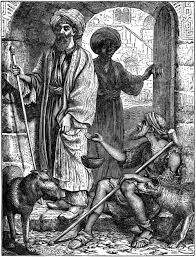
“There was a rich man who was dressed in purple and fine linen and lived in luxury every day. At his gate was laid a beggar named Lazarus, covered with sores and longing to eat what fell from the rich man’s table.” ~Luke 16:19-21

InvisibleIgnoreLazarus is invisible.

He’s right there on the rich man’s front porch. But he’s invisible to the rich man. The rich man doesn’t see him. The rich man has to step over him when he leaves his house in the morning and he has to step around him when he returns in the evening. But he doesn’t talk to Lazarus. He doesn’t invite Lazarus in. He doesn’t even offer the crumbs he’s begging for. He’s invisible.

And I wonder about the invisible people in our churches. I think our churches are probably full of invisible people.

There are people in our churches with six-figure incomes and five-bedroom houses and three-dozen close friends who feel invisible. We don’t see their hurt. Maybe I legitimately don’t see it because I’m clueless. Maybe I suspect there’s some pain, but I don’t want to go there with that person. Maybe the hurting person is just really good at hiding it. But inside, she’s dying. Inside, he’s miserable.

There are people in our churches who just don’t fit in. They’re ignored by the world and neglected on Sundays. Here at Central, we make a lot of promises to people when they join our church. But our track record is not perfect in keeping those promises. We’re trying; I don’t doubt anyone’s hearts or intentions. But we’re not perfect. Not everybody is able to easily slide into our classes and groups and cliques.

There are people in our churches  who feel invisible to God. Maybe they’re in the middle of something that just started or it’s a situation they’ve been living with their whole life. But they feel like God doesn’t understand. God’s not listening. He’s not helping me right now. He’s ignoring me.

We need to be better, yes. We need to try harder. And we’ll talk more about that this week. In the meantime, especially if you’re one of the invisible people, please notice this: Lazarus is the only one in Jesus’ story who has a name. The Hebrew word “Lazarus” literally means “God helps” or “helped by God.” Nobody else may be helping this poor man, but God certainly is. God sees this person. And God is protecting and providing for this person.

So, we need to see this man and all the men and women all around us who are hurting in obvious ways and in ways unseen. These people are not invisible to God. Our heavenly Father sees everybody. May we have eyes and hearts to see them, too.

Peace,

Allan

One More Year

“Leave it alone for one more year, and I’ll dig around it and fertilize it. If it bears fruit, fine! If not, then cut it down.” ~Luke 13:8-9

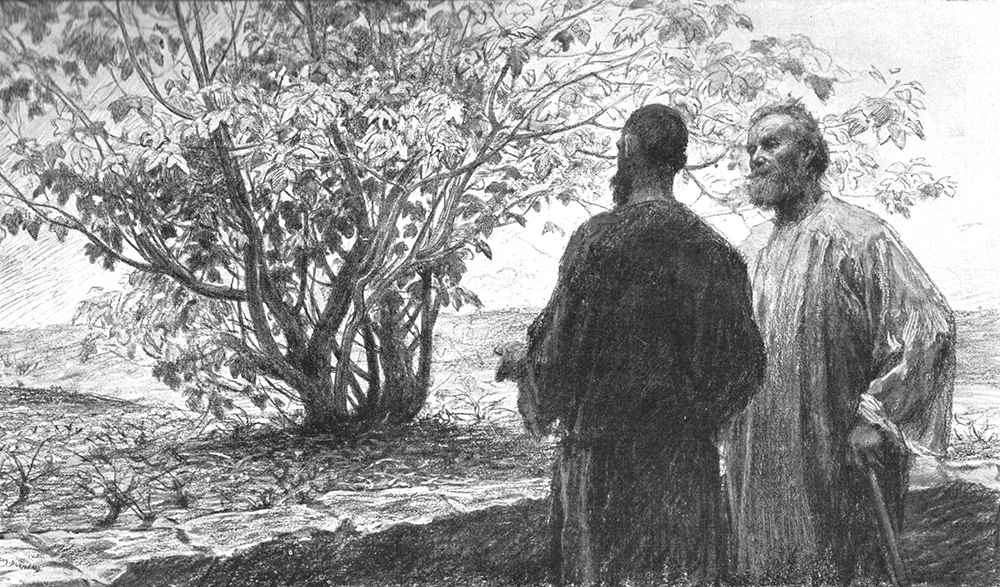
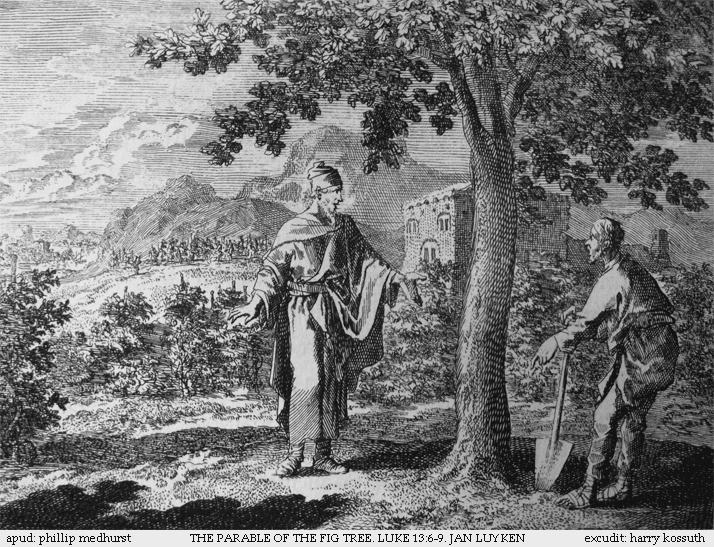
FigTreeCoupleThere is a time limit. The Master is not calling for the indefinite existence of a bad tree. It’s got one more year. The health of the vineyard is too important, the Master’s expectation for fruit is too strong to leave in place an unproductive, non-responsive tree taking up good ground. It’s got one more year. One more season. One more chance. And then, if it doesn’t respond to the patience and care of the Master? Then, cut it down.

There’s an urgency in this parable that we shouldn’t miss. The tree is going to be held accountable. And it’s only got a short time left to respond to the farmer’s patience. Something’s got to change. The coming judgment is real.

“We must all appear before the judgment seat of Christ, that each one may receive what is due him for the things done while in the body, whether good or bad.” ~2 Corinthians 5:10

The holiness and righteousness of God demands justice and judgment. Romans says we will all stand before God’s judgment; every knee will bow and every tongue will confess; each of us will give an account of our lives to God. There is a judgment coming. God is going to judge the world. And it’s one of the best kept secrets in the Bible.

We don’t talk about it. Judgment sounds harsh or cruel. The idea of God’s divine judgment clashes with what works in our culture — even our church culture. We barely acknowledge it anymore. The only time we speak about God’s judgment is when we’re making fun of people who talk about God’s judgment. We don’t preach God’s judgment. I don’t. Not very much.

But this parable…

This tree’s got one year. That’s it. And then it’s over.

There’s a story about Satan meeting with his demons in hell, working on their strategies against us humans. The first demon said, “I’ll go tell people there’s no heaven.” The second demon said, “I’ll tell people there’s no hell.” The third demon said, “I’ll tell people there’s no hurry.” Satan said, “Yes! That’s the plan!”

No hurry? That tree’s got one year. That’s it. If it bears fruit next year, fine. If not, then cut it down.

There’s an urgency in Jesus’ story. But we don’t feel that urgency. We appreciate the manure of God’s great patience and his merciful restraint. But we don’t even think about that coming judgment. In this country, in this century, as our sense of self grows larger and larger and our sense of God becomes smaller and smaller, we fear God so little we don’t understand the seriousness of our sin. And we sense the seriousness of our sin so little, we very seldom fear God. That’s a bad place to be.

“Do you show contempt for the riches of his kindness, tolerance, and patience, not realizing that God’s kindness leads you toward repentance? But because of your stubbornness and your unrepentant heart, you are storing up wrath against yourself for the day of God’s wrath, when his righteous judgment will be revealed.” ~Romans 2:5-6

He gave the tree one more year. One more season. If it bears fruit, fine. If not, cut it down.

There’s an urgency here. It’s later than we think. One of the elders at the Legacy church, Kent Robinson, says every single day, “It’s later now than it’s ever been before!” He’s right. And the time to act is right now, during this season of God’s patience, during this time when God is holding back the ax and spreading the manure of his grace and forgiveness. Now is the time to respond, not tomorrow. Now is the time of God’s favor. Now is the day of salvation. God’s mercy is being extended now. The opportunity for a fruitful life is now.

I don’t know how much time we’ve got. I don’t know. Apparently, even Jesus isn’t sure. But that day’s coming for each of us. That tree’s got one more year. You might have longer. Maybe.

Peace,

Allan

Dung It!

“Leave it alone for one more year, and I’ll dig around it and fertilize it. If it bears fruit next year, fine! If not, then cut it down.” ~Luke 13:8-9

FigTreeShovelThe Greek phrase for what the farmer wants to do to the tree is literally “Dung it.” Most English Bible translations say “Fertilize it.” A couple of them, including the Revised Standard Version, use “manure.” But the old King James and American Standard Versions go with the literal “Dung it.” It’s a weird little line in a short little parable. But the solution to the barren fig tree is to give it more time and spread around a little manure (No, that doesn’t mean preach to the tree).

Manure is not a word, especially back then, that anybody would use in a religious illustration or religious teaching. It’s just not polite. It’s gross. In fact, this is the only place in the entire New Testament this word is used. Why do you think Jesus said “manure?” He could have said, “Let me bring in some better soil” or “Let me water the tree” or “let me prune some branches.” Why did he say, “Let me dung the tree?”

Well, there’s nothing glamorous about manure. It’s not exciting. It’s messy. Smelly. And it takes time. It’s not a quick fix. Digging around the tree, mixing in the manure, caring for the tree, nurturing the tree, paying careful attention to the tree — that takes patience. And great restraint. It’s going to take a while to see if it makes any difference.

Normally we want immediate results. So chopping down the tree seems like the best thing to do. We clear the ground out and get ready for a new tree. A new start. A new beginning. We love new beginnings: new efficient programs, new shiny buildings, new attractive members, new exciting projects, new fulfilling jobs, new shock-and-awe wars. But spreading manure has none of that exhilaration. It’s not dramatic. It doesn’t get anybody’s admiring attention. Manure is a slow solution. And it sounds a lot like our Lord, huh? Jesus is very much about the small, the slow, the unglamorous: yeast and salt and seeds. And manure.

This is how our God deals with people. Patience and restraint. Slow. I don’t care what 2 Peter says, God is slow. He’s not in a hurry. Scripture tells us over and over again we need to wait on God. And Scripture also tells us that God spends a lot of his time waiting on us.

“The Lord is not slow in keeping his promise, as Allan understands slowness. He is patient with you, not wanting anyone to perish, but everyone to come to repentance… Bear in mind that our Lord’s patience means salvation.” ~2 Peter 3:9, 15

The holy God of Heaven and Earth holds off on his judgment, he delays his punishment, he refrains from putting the ax to the root because he loves us. He gives us time. And while he gives us this time, he nurtures us and takes great care of us. He carefully digs around us and blesses us with love and mercy and forgiveness. God keeps coming to us, keeps sparing us, keeps giving us opportunities and unlimited chances to respond. He never gives up on us. He keeps forgiving.

For me not to respond to that grace, for me to go through my life every day and not make changes, not start bearing Kingdom fruit for his glory — I’m without excuse.

“Do you show contempt for the riches of his kindness, tolerance, and patience, not realizing that God’s kindness leads you toward repentance?” ~Romans 2:4

If God dealt with us strictly by his holy justice, we wouldn’t stand a chance. But he doesn’t. He is patient with us. He gives us time and second chances and third and fourth and fifth and sixth chances to repent. That’s patience. Grace. The Master’s been digging around you for years. He’s been reaching out to you and taking loving care of you for a long time. You’ve responded, right?

Peace,

Allan

Leave It Alone

FigTree“A man had a fig tree, planted in his vineyard, and he went to look for fruit on it, but did not find any. So he said to the man who took care of the vineyard, ‘For three years now I’ve been coming to look for fruit on this tree and haven’t found any. Cut it down! Why should it use up the soil?'” ~Luke 13:6-7

Notice the violence of the command. “Cut it down!” It’s not producing fruit. Chop it down! It’s not doing what I need it to. Get rid of it! This tree is disappointing me, it’s taking up space and eating valuable resources and doing nothing productive. Cut it down!

That’s usually our first instinct: Cut it down. We see something we don’t like, we meet somebody who treats us wrong: Cut it down!

The disciples, while they were on the way with Jesus, reacted this same way. Just three verses into this journey, Jesus and his followers are rejected by the people in a Samaritan village:

“Lord, do you want us to call fire down from heaven to destroy them?” ~Luke 9:54

Burn ’em out! Turn this whole place into a giant sand trap! Cut ’em down!

We’re the same way. We something wrong, we rush in to make it right. We encounter sin in the world or sin in the church and we fly into action with accusations and judgments and violence. Something offends us or some person is useless to us or just taking up space in the Kingdom, not doing what I think they should be doing, and we either verbally or physical get rid of them. Cut him down! Cut her out! Get rid of it!

We like to solve problems by amputation. That’s our instinct.

According to our Lord’s story, though, the preferred solution is to wait.

“‘Sir,’ the man replied, ‘leave it alone for one more year, and I’ll dig around it and fertilize it. If it bears fruit next year, fine! If not, then cut it down.'” ~Luke 13:8-9

Notice the patience and restraint in that response. Leave it alone. And let’s spread around some manure. I want to write more about the manure tomorrow. Today, let’s look at the great contrast between “Cut it down” and “Leave it alone.”

There are times when brave and decisive action is demanded. And those times are exhilarating. It’s exciting to be in the middle of God’s action. But there are other times that demand restraint. There are times when the command from Christ is to not do something.

Sometimes Jesus says, “Go and do likewise” or “Come, follow me!” His commands move us, they push us. “Put out into the deep” or “Go make disciples!” But sometimes his commands stop us in our tracks. “Get behind me” or “Put your sword away.” “We’re not calling down any fire today” or “Leave it alone.”

This is a good lesson for us. I think this is a great lesson for me. I’m too quick to retaliate when I’ve been wronged; I need to be quicker to say, “I forgive you.” I’m too quick to correct others; I need to be quicker to say, “How can I help you?” Instead of evaluating and judging and fixing others, I need to be nurturing and caring and paying attention to others. Instead of chopping down, I need to leave alone.

The world desperately needs our patience and restraint. If we don’t forgive, who’s going to? If we don’t spread love and hope around all the hate and fear, who will? This world is full of people who demand and take; who’s going to give and give and give?

Peace,

Allan

The Holy Spirit to Those Who Ask

One last thing about the DeAndre Jordan situation: it has made Mark Cuban a sympathetic figure. Crazy, huh? You know that Jordan has done an under-handed, diabolical, evil thing when it causes me to actually feel sorry for Cuban.

~~~~~~~~~~~~~~~~~

FriendPrayers2

Now, back to our look at Jesus’ parable in Luke 11 and, today, what I find the most interesting about the story. Our Lord concludes his comments regarding the story with this often-overlooked line: “How much more will your Father in heaven give the Holy Spirit to those who ask him!”

Wait a second! Holy Spirit? I thought we were talking about bread! I thought this story was about our basic needs, the fundamental necessities.

We’ve seen in this story that God promises to give us everything we need and he promises to answer our prayers when we ask for what we need. Now Jesus closes it out by telling us that what we really need is the Holy Spirit. So ask for it! This is what you pray for: the Spirit. And when you do, God says, “Yes!”

This is not an open-ended teaching here. It’s not a blank check. It’s never been about asking for anything you want. God never promises to give us everything we want; but he always guarantees to give us every single thing we need. And what we need is God’s Spirit. So pray for it.

FriendPrayers3This is hard for us. We don’t really know how to do this. We know how to pray for sick people. We know how to get our names on the prayer list and how to pray for my relatives and friends of my relatives and for the second cousin of my insurance guy’s mother. Who lives in Kentucky. Yeah, we’re very good at praying for healing. We know how to pray for what we want.

Give me this new job, Lord. Help her fall in love with me, God. Father, get me out of this traffic. We pray for what we want.

Lord, keep my children safe. God, help our church to grow. Father, help our candidate win the election. Lord, help our Wednesday nights to be successful. We know how to pray for what we want.

Jesus tells us to pray for what we need. And what we need, he says, is the Holy Spirit.

What would it look like to pray for the Holy Spirit? The Holy Spirit convicts hearts of sin, right? Can you pray that? “Father, please convict me of the sin in my life. Please shine a bright light on the sins in my heart, God. Convict me of my sin. Expose it, Lord. And deal with it.” That’s not necessarily what I want. But it’s certainly what I need.

What would it look like to pray for what we need instead of what we want? The Holy Spirit helps us in our weaknesses, right? Can you pray that? “Father, maybe I need to go through some suffering. Maybe I need a season of washing and purifying. I know your Spirit will help me, Lord. You know what I really need, God. Maybe I need to be weak for a while.” Not what I want; maybe what I need.

What would it look like? Jesus calls the Spirit the “Spirit of Truth.” Can you pray that? “Lord, give me your Spirit of Truth. Show me what’s really true in my life, the things I can’t see, the things I ignore, the things I neglect. Show me the truth about myself. And force me to deal with it, God.” Not what I want, but what I need.

What if you went this whole weekend, from this moment through Sunday night, and only prayed for what you really need and did not pray at all for what you merely want? What if you took our Lord Jesus completely at his word? What if you really trusted him with what he says about prayer: that God provides everything we need, that God will answer us when we pray for what we really need, and that what we really need is his Holy Spirit?FriendPrayers4

What would it look like?

Maybe you’ll need help. Maybe flipping to the “fruit of the Spirit” passage in Galatians 5 could be a good starting place for you. Pray for more of that Holy Spirit character in your own life.

Pray for joy. Not joy because you sold your house or you got the raise. Joy because even though you’re going through a very difficult time, God is mercifully sustaining you. Or joy because the blood of Jesus is washing you.

Pray for patience. Yeah, I know, you’ve heard your whole life not to ever pray for patience. Jesus says pray for what you need, not what you want. It’s the Spirit. Pray for patience.

Pray for kindness. You know that person you’re not nice to. Be specific. Ask the Holy Spirit to break your heart for that person.

Pray for self-control. Part of your life is probably out of control. Part of your life is led by your impulses, your urges and desires, not by God’s Spirit. The way you eat, the way you experience sex, the hours you work, the hobby you pursue — pray for the Holy Spirit to bring those things under his control.

What would it look like?

Peace,

Allan

« Older posts Newer posts »