Category: Discipleship (Page 6 of 30)

Choosing the Way

The Bible confronts us with two ways. A choice. Not where you’re going to live, not what career you’re going to pursue, not who you’re going to marry, nor where you’re going to lunch. The choice we have certainly encompasses and impacts all those other decisions you make. But there’s only one choice in Scripture: the way of life or the way of death, the way of blessing or the way of curse, the way of God or the way of the world.

Jesus says, “I am the Way.” I am the Way you get to God and I am the Way God comes to you. I am the Way.

So we choose Jesus. We choose the Way of life, the way of blessing, and the way of God when we choose Jesus. And when we choose Jesus as the Way, when we choose the way of Jesus, what is it exactly that we’ve chosen? When we choose Jesus, what are we signing up for?

The very first recorded words of Jesus are in Mark 1. If Mark is the earliest of the four Gospels – almost everyone concludes it is – these are the earliest and first words of our Lord we have recorded and preserved. A radical inaugural announcement and then three commands.

“The time has come! The Kingdom of God is near! Repent and believe the Good News! Come, follow me!” ~Mark 1:15-17

A dramatic declaration. The Kingdom of God is near. Right now. Present tense. And then three primary commands. Three imperatives. These come first.

Repent: Leave your current way of life and start out on another way. Repent means to change your mind and heart. It’s a reverse-course. A change of direction.

Believe: See it. Experience it. Get into it. Live into a personal, relational, trusting involvement in the realities of the Kingdom of God.

Follow me: Live your life obediently in a way that matches up with the lordship of Jesus. What you do and why you do it and the way you do it – all of that submitted to Jesus. Follow me. It’s a direct command.

This isn’t a signup sheet like for small groups leaders or the women’s retreat. Jesus isn’t posting office hours so he can discuss the Kingdom with you if you’re interested. He commands it. “You! Follow me!”

You sitting in a church building on Sunday doesn’t make you a disciple anymore than sitting in a chicken coop makes you a chicken. You’ve got to get behind Jesus and follow him in his way. As a church, maintaining a status quo is not the same thing as following Jesus. Being a member in good standing or being a good middle-of-the-road church is not the same as following Jesus. Being a disciple means we make the call to give it all for the sake of others. We choose to lose our rights and refuse to use our might for the sake of his great name. We obey and we do things his way. The Jesus Way.

Peace,

Allan

The Two-Way Way

“The way up and the way down is the same way.” ~Heraclitus, 502 BC

Jesus is our Way to God, but at the same time Jesus is God’s Way to us. The Way we come to God is the same Way God comes to us. God comes to us in Jesus; we come to God in Jesus.

God comes to us in Jesus speaking the words of salvation, healing our infirmities, promising the Holy Spirit, teaching us how to live in the Kingdom. It is in and through this same Jesus that we pray to and believe, hear and obey, love and praise God. Jesus is the Way God comes to us. Jesus is the Way we come to God.

On earth, Jesus is the Way of faith and obedience and prayer to God. From heaven, Jesus is the Way of God’s revelation and salvation and blessing to us.

Jesus is the Way of salvation. So we follow his Way. He is the Way of eternal life. So we follow his Way. The Way Jesus does it is the Way we do it. Period. End of discussion.

Heraclitus was more right than he ever knew.

~ from Eugene Peterson’s The Jesus Way, 2007

Don’t Be Afraid

When Jesus walks across the water in Mark 6, it’s not like he’s performing a card trick to amaze his friends. He’s not showing off. And it’s not something he did all the time. Jesus walks across the surface of the sea in order to communicate something very specific to his followers in this particular moment. In the middle of their struggle to obey his command to go across the lake to the other side, in the middle of their fear of the storm and their frustration at being blown off course, Jesus comes to them as only he can. He walks on the water and calms the winds to say clearly to them, “I am God.” And “I am with you.”

“Take courage. It is I. Don’t be afraid.” ~Mark 6:50

Actually, Jesus doesn’t say, “It is I.” The original Greek words in this verse are eigo eimi — “I AM.”

Only God, the Creator of heaven and earth, walks on the water and treads the sea. Only God Almighty calls himself “I AM.” Jesus comes to his disciples in the middle of their fear to say, “You’re not following a great prophet like Elijah, you’re not following a scriptural superhero like Moses. I am God.”

And he climbs into the boat with them.

“I am God. And I am with you. I’m right here. I’m in your boat with you. We’re doing this together.”

It’s important to notice that Jesus doesn’t rescue his followers out of the sea. He gets in the boat with them. And he takes them to the other side. What he commanded them to do, he did with them. For them.

Jesus is saying, “I’m doing this with you. We’re together. I have dominion over heaven and earth, I’m in charge of the skies and seas, I have authority over the earthly powers and the demons in hell — and I am with you. I will carry you through this.”

He who began a good work in you will  carry it through to completion.

The one who calls you is faithful, and he will do it.

“Take courage. I AM. Don’t be afraid.”

Peace,

Allan

The Way

“Jesus has many who love his heavenly Kingdom, but few who carry his cross; many who yearn for comfort, few who long for distress. Plenty of people he finds to share his banquet, few to share his fast. Everyone desires to take part in his rejoicing, but few are willing to suffer anything for his sake. There are many who follow Jesus as far as the breaking of the bread, few as far as drinking the cup of suffering; many who revere his morality, few who follow him in the indignity of his cross.”

~Thomas a Kempis, The Imitation of Christ

Costly Imitation

“The humble person is not one who thinks meanly of himself; he simply does not think of himself at all.” ~Andrew Murray

We are disciples of Christ knowing that, when we sign up to imitate the Son of God, it’s going to cost us. His grace is free. His love and forgiveness is a gift mercifully given to all of humanity. But in order to accept that gift, we must humbly submit to his lordship and follow in his steps of sacrifice and service.

And that’s not easy. In fact, it’s quite costly.

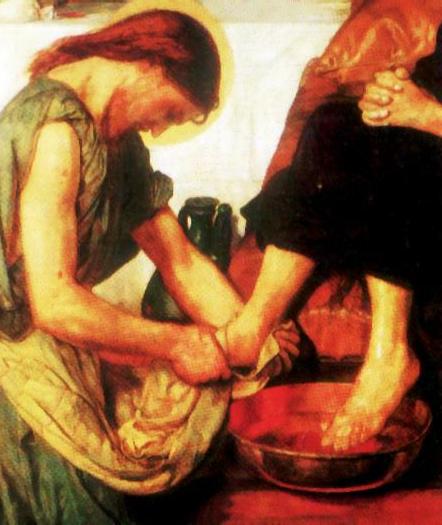
According to the beautiful passage in Philippians 2, the One we imitate gave up everything that was rightfully his: deity, equality with God, eternal power, heavenly glory. He gave all that up in order to serve humans. Jesus’ outlook was shaped by unselfish concern for others. His attitude was one of deep humility. Jesus willingly traded heaven for earth, glory for shame, a royal scepter for a slave’s water bowl, life for death — “even death on a cross!” This is the true expression of his innermost character, the nature of our Father.

To fully imitate the Christ is to humbly consider others better than ourselves, to look to the interests of others. And that will mean willingly sacrificing our very lives, dying to ourselves to meet the needs of those around us. That sometimes means giving up our pew. Occasionally, it means giving up our preferences, It always means giving up our position.

What is it costing you to be an imitator of Christ?

Peace,

Allan

Your Comfort Zone

How do I know the difference between my own voice and the voice of God? My heart, my mind, my conscience – I talk to myself a lot.  And sometimes I lie. I get nudges and impulses everyday. And sometimes they’re wrong. How do I discern when it’s God speaking to me and when it’s just me?

One way is to know that God’s voice will always challenge your comfort zone.

The voice of the self always leans toward safety and security. That’s our default. The flesh always moves to do and say whatever it takes to protect the self. It’s natural for us – we don’t even think about it. So we assume the voice of God will tell us the same thing. We think God will say to us, “Be safe. Be careful. Protect yourself.”

But that’s not true. You’ve noticed that people in the Bible who hear the voice of God are generally called to move out of their comfort zones. They’re called by God to be risky. Our God never appeared to anybody in the Bible and said, “I am the Lord your God. I am calling you to stay put! Don’t change a thing! You’re good!” No. God’s people are called by God to take bold steps and make even dangerous moves for the Kingdom.

In Acts 21, Paul is on his way to Jerusalem when he and Luke stop in Caesarea to stay a few nights at Philip’s house. One of those nights, a prophet from God shows up and relays a message from the Holy Spirit: Paul is going to be captured in Jerusalem on account of his preaching and turned over to the authorities.

“When we heard this, we and the people there pleaded with Paul not to go up to Jerusalem.” ~Acts 21:12

The people interpret the message from God as “Don’t go to Jerusalem.” Stay here. Be safe. Luke says, I was right there with ’em. We begged Paul not to go.

“Then Paul answered, ‘Why are you weeping and breaking my heart? I am ready not only to be bound, but also to die in Jerusalem for the name of the Lord Jesus.’ When he would not be dissuaded, we gave up and said, ‘The Lord’s will be done.'” ~Acts 21:13-14

Why would we assume that when God warns you about danger, he’s telling you to avoid it? Paul says, look, I knew what I was doing when I surrendered my life to a Lord who carries a cross. Paul knew that following God’s voice is risky. It’s dangerous.

That is the voice of God pushing you to witness to a co-worker. That is God’s voice challenging you to trust him with your giving. It’s the voice of the Lord calling you to serve people who don’t look like you or talk like you. God’s voice will always challenge your comfort zone.

Think about it. If your great ambition in life is to have a nice house or two and a big bank account and to put off your funeral as long as possible, why do you need to hear from God? You don’t need God to do any of that. If you’re not on a divine quest, why would you need a divine guide?

Do you want to hear God’s plans for you, or do you just want God to endorse your plans?

If you will grow in your eagerness and your capacity to hear God, a whole new life will open up for you. A life of adventure. A full life behind the leading of God’s Spirit. An exciting relationship with the Creator of Heaven and Earth. The life you were meant by him to always live.

Peace,

Allan

« Older posts Newer posts »