Category: Christ & Culture (Page 22 of 43)

Evangelicalism or Christianism?

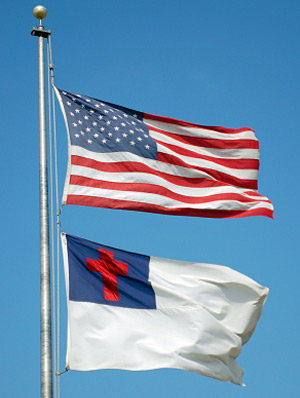
FlagsI shudder whenever I hear someone I know use the word “evangelical” to describe themselves or their church. The word has been used to describe the Churches of Christ, it’s been used to describe Central, and it’s been used to describe the partnership between the four downtown churches here in Amarillo.

But it’s not a religious term anymore. It’s not even a Christian term anymore. It hasn’t been for a while. It’s been misused and re-defined and hijacked by the politicians and the media in the United States for so long now that it’s become a purely secular word. I refuse to use the term to describe myself or any branch of God’s Church. Last week I regrettably took a phone call from a pollster who promised a three minute questionnaire who badgered me into labeling Central either “evangelical” or “mainstream.” I told him over and over that we reject both labels.

For the past several years it’s been clear to me that the word “evangelical” actually means Christians who want to use the cause of Christ to validate their own un-Christ-like methods to win elections and change laws and force their values and beliefs on others. Using the term “evangelical” ties you and me and your church to the politics of the groups who use fear and force and ugly language to get their way.

I’ve had a difficult time articulating this in a concise way (those of you who read or listen to me regularly might say that particular problem is not limited to this topic). But last week a good friend of mine forwarded me an article written by Skye Jethani that does it very well.

Skye reminds us that in 1989 David Bebbington identified four characteristics that defined evangelicalism:

Biblicalism: a high regard for the Bible
Crucicentrism: a focus on the atonement of Christ through the cross
Conversionism: a commitment to proclaiming the gospel
Activism: a belief that the gospel should change one’s life and the world

That sounds right. That sounds like me. It sounds like my church and probably you and your church, too. But, wait. A majority of African Americans are “evangelicals.” They believe and practice everything that represents the true definition. But because African Americans vote heavily for Democratic candidates, the media will not refer to them as “evangelicals.” The term is purely political now. “Evangelical” means Republican. “Evangelical” means guns and lower taxes and immigration reform and repealing Obamacare.

There are lots of reasons this matters so much. But one of the reasons summarized by Jethani — this reason is discussed at length in every “unchristian” and “You Lost Me” type of book that’s been written in the past fifteen years — is that our young people now identify traditional Christianity with right wing American politics. Young people are not leaving the Church because they reject Christ Jesus as Lord, they’re leaving the Church because they reject the angry politics that seem to go along with it. Jethani rightly notes that “those raised in the evangelical tradition under the age of 40 have no experience of Christianity apart from conservative Republican politics.” Millennials, a couple of generations younger than me, now associate “evangelical” with Donald Trump, Ted Cruz, Sarah Palin, and the NRA.

A dozen years ago, Andrew Sullivan attempted to coin a new word to describe this: Christianism.

“I have a new term for those on the fringes of the religious right who have used the Gospels to perpetuate their own aspirations for power, control and oppression: Christianists. They are as anathema to true Christians as the Islamists are to true Islam.”

What Sullivan saw as a fringe minority then has sadly become almost mainstream today. That Christians can show such foam-mouthed enthusiasm for somebody like Donald Trump is flabbergasting. To quote Jethani:

“There is almost nothing in Mr. Trump’s character, story, agenda, or candidacy that finds alignment with Scripture, the cross, the gospel, or personal / social transformation (Bebbington’s evangelical markers in simpler terms). However, his ‘Make America Great Again’ slogan, along with his maligning of women, immigrants, and all ‘losers’ while triumphantly holding up a Bible, fits Christianism perfectly. Trump, unlike the increasingly unpopular voices of orthodox evangelicalism, is giving the people what they want — a gun wielding, aggressive, capitalist Jesus who builds walls and kills terrorists.”

It’s a good article. I wish you would read it.

And, look, you know my position on all this. Every Christian who votes in these national elections are voting for the lesser of all the evils. Most Christian voters will admit it. We’re not looking at one good party and one bad party. It’s not one party is righteous and one party is evil. It’s one big evil worldly system. The whole system is opposed to the name and manner of Jesus. The whole system is coming down when our true King returns to reign in all his power and glory. So, vote if you must, but don’t act like your campaigning and voting for these politicians is some act of holy righteousness or will of God. In his last speech last night, Ted Cruz told his supporters at a rally in Iowa to “caucus tomorrow for righteousness!”

Yuk.

The United States is not going to be changed by votes or parties. It’s not going to be saved by force of numbers or force of rhetoric. It’s going to be saved by Christ Jesus along with the rest of the world. And his way is about love and forgiveness, sacrifice and service. And peace. Let your Christianity be defined by those things. Let your congregation be characterized by those things. “Evangelical” and “Christian” are not the same thing anymore.

Peace,

Allan

Bad Investment

TacoBueno

There’s an old Taco Bueno at Bell Street and I-40 here in Amarillo, just a couple of miles from my house. And it’s got death written all over it. The paint is peeling and the window blinds don’t work. They don’t replace the light bulbs on the inside or the outside. I’ve been there twice when they’ve told me they’ve run out of taco meat. There’s never anybody in the drive thru. When we eat inside, there’s usually only one other person or couple in there eating with us.

There used to be three Taco Buenos in Amarillo, but now there’s only one. With the Fuzzy’s Taco and now the third Rosa’s location and the unexplainable local obsession with Taco Villa, this last remaining Taco Bueno is in trouble. The first one closed about five years ago, the second one about two years ago, and this last one closest to my house just feels doomed. It’s right on the interstate, it’s in the busy southwest part of town, and it’s got a big parking lot. But it just feels like it’s not going to make it.

I wouldn’t invest anything in this Taco Bueno. I pull in from time to time to grab a couple of beef Muchacos on the way to a meeting. It’s a nice place to stop on the way home when we don’t feel like cooking. But I wouldn’t put any of my money or energy into that place looking for some kind of long term return. It’s not going to last. It’s dying. It’s a bad investment.

StripMall

I’ve seen strip malls that have death written all over them. One nail salon, one computer repair store, and a dozen empty windows and store fronts. Weeds in the alley, broken glass on the sidewalk, one car in the parking lot. Would you invest in that strip mall? No. It’s not going to last. It’s dying. It’s a bad investment.

Why are you investing so much in the upcoming presidential election? Why are you expending so much of your energy into it? Why does it seem your very identity is wrapped up in who wins and who loses? Why are you pouring your money into it? Why are you giving so much of yourself to this campaign season and election? Your thoughts, your emotions, your feelings, your very heart and soul — why are you investing so much of yourself into the government of this country and the people who run it?

It’s not going to last. It’s dying. It’s a bad investment.

Politicians are not going to save this country. Policies and laws, platforms and promises are not going to change this world. Political power and parties and polls are not going to change a thing. This country and this world will not be won by votes or armies, by policies or partisanship, by sound strategies or brutal violence. Our Lord Jesus, our risen and coming King, is the only One who will save anything. He alone can change the world.

His politics are love and humility. His policies are service and sacrifice. His way is about mercy and grace and forgiveness and peace.

Christ Jesus is right now today overtaking and overthrowing all the world’s governments, including that of the United States. His reign will ultimately prevail. His rule will eventually win the day. All the governments of this world, including that of the United States, are not going to last. They’re dying. It’s a bad investment.

Why not invest your money and your time and energy into the politics of our King, which are completely opposite of and opposed to the politics of this world? Instead of wrapping your identity in the cloak of a donkey or an elephant, instead of hanging your hopes on a party or a politician, why not give yourself wholly to our Lord and his policies of love and peace? It’s the difference between a bad investment and a good investment.

Peace,

Allan

Ending Racism – Good Luck

Mom&DadHappy Birthday to my dear mother, Beverly Ann Stanglin, who probably celebrated this morning with a free breakfast at Denny’s in Kilgore. Classy, dad!  She’s seventy today. Seventy. Mom, you’re officially, legally, undeniably old now. Seventy is old. That’s you. And you’re doing it very well. I love you.

~~~~~~~~~~~~~~~~~~~~~~~~~


Racism is alive and well in the United States and, sadly, throughout the entire world. No one can deny it. We have passed anti-racism legislation and outlawed racist practices. We have marched and preached, promised and reformed. We have boycotted, protested, and rioted. Yet racism is seemingly just as much a local and global problem right now as it was a hundred years ago, if not worse.

Obviously, racism has not been ended, nor will it be ended in our lifetimes. And that’s a terrible thing to believe. It’s a horrible thing to be true. But it probably shouldn’t lead to despair for followers of Jesus.

Racism, just like all sin, is the result of something good gone bad. Mark Galli, in a recent column for Christianity Today, reminds us that racism is an evil distortion of affection for loved ones. Affection for loved ones makes family pride possible. It allows us to feel and display pride in our community. And that’s healthy. But just like healthy sexual attraction is prone to turn into lust and healthy self-esteem might turn into pride, healthy loyalty to one’s own people can easily turn into racism.

Galli’s point is this: given our sinful nature and the fallen condition of the world, we will never get rid of racism in this age any more than we will get rid of lust or pride.

RacismCT

But just because we can’t completely wipe out racism doesn’t mean we have to give in to its nasty and sinful expressions. And isn’t this where God’s Church comes in?

Like with lust, our societies create social norms and laws to keep it in check. We expect men to refrain from making lewd comments to women and we prosecute employers who sexually exploit their employees. Christ’s Body can lead the way in similar fashion as it relates to racism. If we acknowledge the terrible reality, if we can admit that there’s no way human beings are ever going to eradicate sin, we can turn our eyes and our hopes toward the only One who can. We can confess honestly, we can forgive faithfully, and we can work together toward various gospel expressions of reconciliation.

It requires accountability. It takes patience and long-suffering, love and kindness, goodness, gentleness, and self control. These are the characteristics of the Spirit of our God who lives inside us. This isn’t about disposing of all tensions, it’s about creating space where people can commit to reconciliation and can treat each other with grace and mercy through the tensions.

It’s the only way.

In the meantime, we wait in hope together. We wait for the great day of true and eternal reconciliation between the races when that “great multitude… from every nation, tribe, people, and language” worships our God together.

Peace,

Allan

Packing the Pews with Pistols

“My Kingdom is not of this world. If it were, my servants would fight to prevent my arrest by the Jews. But now my Kingdom is from another place.” ~Jesus

GunsInChurchI don’t know how many guns there are inside our church building on Sunday mornings. I don’t want to know. I’m guessing around fifty but, again, I’m not sure and I seriously don’t want to know. We operate mainly on a don’t-ask-don’t-tell policy on that around here. In light of the recent mass shootings — asking “Which one?” is a legitimate question and a terrible commentary on our sick society — I’m afraid more and more disciples of Jesus are bringing their firearms to our public worship assemblies. And using the Bible to justify it.

A recent front page column in the Church of Christ publication The Christian Chronicle quoted a dozen ministers from a dozen different congregations in several states who believe and, apparently, teach that carrying a gun and being prepared to use it against another human being is a good thing to do.

Some of the comments spoke to the realities of guns in the church building and Christians’ readiness to use them to protect themselves against an invader. A minister in Florida said “walking in with the intent to harm our congregation would be like walking in to harm someone at an NRA rally or gun show.” A minister of another church in Florida told the Chronicle that lots of people in his congregation are packing and “someone would be sorry to try anything here.” A Mississippi CofC minister said of his church’s strategy, “We remain vigilant, and we have selected brethren who have a tactical background and are armed amidst our assembly. Unfortunately, we can’t ultimately eliminate the threat, but we can definitely minimize the impact it could possibly have on our beloved.”

Some of the preachers interviewed even attempted to say shooting a criminal inside the church building is the “Christian” thing to do. In describing a scene in which an active shooter begins opening fire in a worship assembly, one minister from the Houston area said, “There is a world of difference in being ready to die for your faith than to die at the hands of a crazy man simply because he’s crazy. I believe that God would permit me to protect myself and my family in cases such as that.”

A minister in Kentucky went so far as to claim that Christians are required to shoot when he said, “We believe theologically we have an obligation to protect and defend our church membership, especially children, against a stranger or angry member who was to come in and begin shooting.”

A preacher in Alabama who admits to bringing his own Ruger .380 to the church building on Sundays invoked the name of Jesus in justifying the use of deadly force by a Christian: “I do not believe that Jesus — or even the old law — taught members to cower in the face of danger. It was Jesus who told his apostles to take a sword in Luke 22.”

OK. Stop right there.

Two things.

One, you cannot use the name of our Lord to justify the killing of anyone under any circumstances. Ever. Yes, Jesus would protect those under attack, not by killing the attacker but by stepping in front of the bullet. And he would forgive the attacker and pray for him while he was dying. I’m always surprised to hear Christians say, “Jesus would not allow himself to be a victim.” Actually, our Lord willingly left his home in glory, put all of his trust in the One who judges justly, and purposefully submitted to being the worst kind of victim. He blessed those who attacked him, he loved those who hated him, he forgave those who killed him. I’ve heard other Christians acknowledge that truth about our Lord and then reply, “Well, Jesus wouldn’t shoot anybody, but I would.” That actually makes you, by definition, not a Christian.

Two, Jesus’ words in Luke 22 do not authorize the use of gun violence in any way. Jesus is telling his disciples that things have changed. The first time they went out, they were all welcomed with goodwill and hospitality. But now, when they are scattered, they are going to face opposition. They’re going to be ridiculed, rejected, and maybe even killed. Now, Jesus says, you’re on your own out there. Don’t count on other people to help you. You’re going to need a purse, a bag, a sword, whatever. He’s speaking figuratively. He doesn’t discount in this moment every word out of his mouth for the past three-plus years against violence. He’s not saying the opposite now of his every teaching against violence. He’s speaking symbolically. How do we know? Because when the disciples reply, “Look, Lord, we’ve got two swords right here,” Jesus rebukes them, “Enough, already! Stop!”

Yes, you’re going to face an intense opposition to me and my message, your very lives are going to be endangered. But you don’t respond with self-defense and violence. Enough! You’re missing the point! Jesus will have nothing to do with swords, even for defense. How do we know? Because later on in this same chapter, in the very next scene when Jesus is being arrested, one of the disciples asks him, “Lord, should we strike with our swords?” And Jesus says emphatically, “No!”

One of the Christ-followers uses his sword to cut off the ear of the high priest’s slave. And Jesus sharply rebukes him. “No more of this! Stop!” And he heals the injured attacker. In Luke 22, literal armed resistance is exposed as a foolish misunderstanding of Jesus’ message.

Could the Scriptures be any more plain? The question is asked, “Should we strike with our swords when we’re being attacked?” and the direct answer from our Lord is “No!” I’m not sure why we even have these arguments.

Of all the ministers quoted in the Christian Chronicle article, only one expressed a theological and scriptural objection to the use of gun violence by Christians in self defense: Tyler Jarvis, the student and family minister for the Oak Ridge Church of Christ in Willow Park, Texas. “I think that the church should trust in the protection and mercy of God, even if it means not being able to defend against an attacker or intruder. The church ought to be able to extend love and forgiveness to those who wish to harm them, even if it costs them their lives in the process.”

The author of the story introduces Jarvis’ quote by saying the Willow Park minister “wrestles with the gun question.” It doesn’t sound like he’s struggling to me.

There are many reasons Christians in the U.S. believe it’s OK to kill people in self-defense. Culture plays a role, society has something to do with it, fear informs our understandings, and there appears to be a general unwillingness to carefully think things through and reflect. It doesn’t help when Christian publications present such a lopsided view of the issue. This article normalizes gun violence as if there’s no choice. It accepts the culture’s position and approves it for God’s Church. There’s no theological challenge, just an out-of-context proof text. If you must present both sides — I think you must! — at least present them equally.

Since when is showing unconditional mercy and love and grace and forgiveness in the face of danger and death labeled as cowardly? Since when is praying for our enemies and refusing to repay evil for evil and sacrificing self preservation for the sake of the sinner viewed as “cower[ing] in the face of danger?” Our Lord was not cowardly in the Garden of Gethsemane that night. And he didn’t cower in the face of danger when he willingly submitted to the cruelty of the cross. Neither are Christians who reject the use of violence to get their way. They are courageous and brave, faithful and true.

Christians, leave your guns at home this Sunday. Practice prayer. Practice forgiveness and mercy. Practice discipleship and obedience to the Way. Pray to God that nobody with violent intent ever attacks your church family in the sanctuary. But also pray to God for the strength, should it ever happen, to respond in ways that will honor our Lord, the Prince of Peace.

Peace,

Allan

Starbucks’ Red Cup

StarbucksRedCup

From Weird Al Yankovic’s Twitter:
“OK, Starbucks, NOW you’ve gone too far!”

Boy, this whole thing. How embarrassing. What an astonishing and pitiful testimony to some Christians’ misplaced values. If you are a Christian, please, in God’s name, refrain from talking or posting about the red cup unless you’re making fun of the people who are complaining about the red cup.

Peace,

Allan

Concerning the Ruling Again

I felt good about Sunday. We were launching a new sermon series on the parables of Jesus from the Travel Narrative in Luke 10-19 and were beginning with the Good Samaritan: “Love God and love neighbor.” The timing was good. Providential, probably. The text seemed to work really well with what was happening in our society over the weekend and with what most of our people were bringing in their brains to our assembly.

I told our congregation here at Central a lot of what I had written here Friday morning. I made it very clear that our church believes, teaches, and upholds that homosexual practices are against the will of God. Not the urge, not the temptation, not even the orientation — the willful conduct is outside the limits of God’s purposes for his created people in the same ways it’s wrong when any of us gives in to conduct that is beyond the limits of God’s intent. But I also was very clear that all people are deeply loved by God and that Jesus died and was raised for the sins of the homosexual just as he was for the sins of all people. So Central is going to be over-the-top loving to everybody. We’re going to treat homosexuals with respect and dignity and we’re going to show them mercy and compassion and forgiveness and grace.

I left out completely the part I wrote in this space Friday about not seeing the Supreme Court’s actions as persecution of Christians or an attack on the Church. I do believe what I wrote in that paragraph Friday. Very much. It just didn’t need to be a main point on Sunday. Instead, I talked a little bit about fear. I asked our people to please not be afraid. The Kingdom of God has nothing to fear and plenty to gain right now. For more than four thousand years God’s people have always wrestled with how to be faithful when the culture changes. That’s one of the main themes of Scripture. I don’t see this as being much different. We will be faithful and, knowing our Lord, he will advance his Kingdom in ways that will surely surprise us. So don’t be afraid. Or angry. Scripture and history tells us this is normal. It’s expected.

I closed my comments with an appeal to negotiate this uncharted present and future in the name and manner of Jesus. I asked that we commit to upholding Christian principles with truth and grace, speaking and acting in ways that can never be labeled mean or hateful.

And then we prayed. We acknowledged to our God the fallen condition of his world, we confessed our own sins as a church, and we begged for his mercies so that we could be his light of mercy and salvation.

And it was good.

I had already written the sermon before the high court’s ruling Friday. But I added a couple of things Sunday to include gays and lesbians in Jesus’ definition of neighbor. In Luke 10, the lawyer’s question to Christ assumed distinctions among the people we meet: some of them we are demanded by God to love and some of them we are not demanded by God to love. Jesus’ story says there are no distinctions. We are called to love God and love neighbor, which means helping anyone in need. Anyone. So, in a list of people who are just like us and people who are nothing like us, people who live across the street and people who live on the other side of the boulevard, people who are dirt poor and people who are crazy rich, I mentioned “and the guy who’s flying his rainbow flag in front of his house this weekend.”

Jesus’ story says we are the unlikely neighbor rendering aid to people who don’t expect to see us coming. So, after mentioning our “4 Amarillo” week of service projects and after explaining our partnership with “Heal the City” free clinic, I also mentioned that “we’re going to welcome gays and lesbians into our worship assemblies with love and compassion and we’re going to eat with members of the LGBT community around our Lord’s Table in mercy and grace. And we will have conversations. And we will listen. And we will help. And it will all seem so very unlikely. And so Gospel.”

And, yeah, I know, none of this is going to be easy. This is going to be very difficult. This is going to take a whole lot longer than some of our people think it should and it’s going to be way too much too fast for many others. I heard from many people in their 20s and 30s on Sunday who appreciated so much our position as it was articulated. A young woman who was visiting our church from another city approached me, along with her husband, with tears in her eyes, so thankful for our grace and truth stand. Others in that same younger age range texted me and emailed me Sunday in gratitude for helping them sort out their feelings and forming a Gospel game plan with their gay and lesbian friends. A few people who are older than me began almost immediately asking questions about the details of how we’re going to do this, maybe a little concerned about our level of interaction or acceptance. I don’t know yet how we’re going to handle every single situation. We won’t be able to predict every situation or how our people are going to respond to those unforeseen circumstances.

Only two things are certain. We will not condone behavior we believe is a willful practice of a lifestyle that goes against God’s will. We won’t sanction by word or deed homosexual individuals or couples who are engaging in ongoing sinful conduct. But, at the same time, we will not turn them away from our building or our gatherings. We will love all people with truth and grace. That’s our commitment. And it might get messy. We might struggle with this. But it is our call and our duty as servants of our King.

Overall, I feel the same way I felt right after we unveiled to the church our partnership with the downtown Baptist, Methodist, and Presbyterian churches two years ago. I sensed great appreciation and even relief from our church family. Liberation. Freedom. I think on Sunday we provided our people with a theology and a language for something most of them have felt for a very long time, but just didn’t know how to articulate.

The hard work of loving and teaching, of grace and truth, is still ahead of us. May we enter into this work with complete abandon, trusting our God to advance his Kingdom to his eternal glory and praise.

Peace,

Allan

« Older posts Newer posts »