Category: Bible (Page 7 of 10)

Quick Theology Check

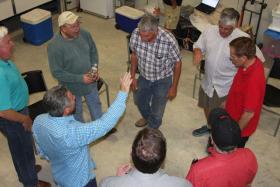
All right, let’s get some theology straight here. Our church is in the middle of this “Gifted 2 Go” project and it’s important that we be somewhat clear regarding the reasons we do things. Our motivations and expectations for what we do should always be guided by the Gospel of Christ. And we should all be at least close to the same understandings about what that is.

If we don’t guard ourselves, we can very easily be confused into thinking that the Bible is mainly about what we’re supposed to be doing instead of Scripture being mainly about revealing to us a picture of our God. That makes a huge difference in the way we view and apply the Bible and in our own motivations for doing good.

Jesus taught that we should turn the other cheek. Yes. But Jesus never said turning the other cheek toward someone who hits you is a useful and efficient method for bringing out the best in that person. Turning the other cheek, giving up your coat, walking two miles instead of one — it’s not taught by our Lord because it works. Let’s be honest, it usually doesn’t. It’s taught because this is the way our God is. God is kind to the selfish and ungrateful. He is merciful and loving to his enemies. As we in Amarillo can testify this week, our Father brings his rains equally on the just and the unjust.

Doing good to others is not a strategy for getting what we want. Instead, doing good to others is the only way to live since, in Jesus, we clearly see what God wants. We seek reconciliation and relationship with our neighbor, not because it makes us feel good, but because reconciliation and relationship is what God is doing in the world right now through Christ.

So, tonight we’re baking and delivering cookies to our neighbors. We’re changing the oil in their cars, washing their pick-ups, and helping them with their laundry. Not because it’ll work. Not because it’ll make us feel good about ourselves. Not because it’ll cause our church to grow or give Central great publicity. We serve our neighbors because this is who God is.

Peace,

Allan

The Silence of Scripture

When our Restoration Movement divided between Disciples of Christ and Churches of Christ at the turn of the 20th century, it was largely a result of two different interpretations of silence in Scripture. As we’ve already seen, those opposed to the use of instrumental music during congregational worship reasoned that, since the Bible didn’t specifically authorize it, it was not allowed. There were no New Testament examples, so it couldn’t be practiced. On the other hand, proponents of pianos and organs declared that silence in the Bible permitted the use of instruments — Scripture didn’t specifically prohibit or condemn it. Since there was no biblical command against it, it was OK to practice it.

The same arguments regarding the interpretation of biblical silence were used for and against the Missionary Society, for and against located preachers, for and against open and closed communion. Is scriptural silence on a particular issue prohibitive or permissive? Does silence allow or condemn? I’m afraid we still run into forms of this debate almost every day. And we ought not.

When Alexander Campbell said, “Speak where the Bible speaks and be silent where the Bible is silent,” he didn’t mean that the lack of a clear biblical directive should embolden us to scream and yell and assert our own opinions about that silence and loudly and aggressively and divisively bind those opinions on others. He meant that we could all form our own thoughts and opinions — and they could be very strong opinions and passionately held — and then keep them to ourselves. Being “silent where the Bible is silent” means, in the words of the apostle Paul, “whatever you believe about these things keep between yourself and God” (Romans 14:22).

In my view, a reading of Romans 14:1-15:7 would convict any Christian of binding his opinions on anybody.

Paul says very plainly that we have “strong” Christians and “weak” Christians. His words, not mine. The weak Christians are vegetarians; the strong believers enjoy a good steak. The weak brothers keep all the Jewish holy days; the strong brothers don’t. The weak Christians are developing all kinds of elaborate worship and lifestyle theologies and drawing lines in the sand over what’s right and what’s wrong; the strong Christians don’t have very many lines and they’re not as concerned about which worship and lifestyle practices are right or wrong. The weak are criticizing the strong for being spiritually insensitive; the strong are looking down on the weak for being spiritually immature and inferior. The strong proclaim freedom in Christ; the weak say that doesn’t mean anything goes. The weak tell the strong, “You’re wrong!” The strong tell the weak, “Grow up!”

Paul commands both of these groups of disciples not to look down on anybody. Nobody is to condemn anybody. For God has accepted him. Accepted whom? This brother or sister or this group of brothers and sisters who disagree with you on your church tradition. This other Christian or group of Christians who don’t see eye to eye with you on your disputable matter. You’re not his master, Paul says. Christ Jesus as Lord is his master. Not you. Whether this other guy stands or falls is up to the Lord. Whether he’s right or wrong is up to God, not you.

And then Paul goes ahead and makes the judgment, he makes the call. “He will stand!” Whether he agrees with you or not or whether you’re both on the same page or not, Paul says this guy will stand because he’s in Christ. So, you accept him because Jesus accepts him. Christ died for him, Paul reminds.

Why do we have such a hard time with this? Is it because there might not actually be a “right way” or a “wrong way” to do a lot of the things we do in the name of Jesus, and we can’t stand it? Could it be that if we disagree with someone over a church matter or a biblical interpretation, one of us just has to be right and one of us just has to be wrong? How else would you explain our two thousand year history of dividing and dividing and then dividing even our divisions over trivial matters such as worship practices and leadership structures, days of the week and food and drink, baptism methods and signs on the front of the church? How else would you explain Paul’s clear command to be silent about such disagreements and never to label or divide over them? And our clear disregard and disobedience to that command?

You know, in this same Romans 14 passage, Paul doesn’t tell the weak Christians to change their minds about their immature beliefs. He does not tell them to change their practices which, again, he considers “weak.” In fact, he tells them not to change a thing. Why is that? Is it because, again, there might not actually be a “right way” or a “wrong way” to do a lot of the things we do in the name of Jesus?

“Whatever you believe about these things keep between yourself and God.” ~Romans 14:22

“Speak where the Bible speaks and be silent where the Bible is silent.” ~Alexander Campbell

Peace,

Allan

Bold and Stouthearted

“When I called, you answered me; you made me bold and stouthearted.” ~Psalm 138:3

The Word we preach and teach, the Gospel we proclaim and practice, the Kingdom of God we live in to and out of is mind-blowing, history-changing, earth-altering Truth. We declare the unmerited love and favor of the Almighty Creator of the Universe. We proclaim a righteous relationship with this Holy God through the selfless sacrifice of his perfect Son. We preach the unsurpassed power and authority extravagantly given to us by his Holy Spirit. It is the greatest news this world has ever heard. It impacts all who hear it. It transforms all who respond to it. And preaching and teaching it, practicing it and living it comes with a price.

Allow me to tell you: Hang in there. Don’t stop.

“I will praise your name for your love and faithfulness, for you have exalted above all things your name and your Word.” ~Psalm 138:2

The name and the Word of our Lord are highest above all other things. Exalted. In Truth, in power, in beauty, in holiness, in everlasting glory, the name and the Word of our God are above all else. Yes, we know it. Yes, we believe it. But it’s not easy. In fact, proclaiming it and living it are very difficult. Marva Dawn has much to say about this in A Royal Waste of Time:

“If we are truly passionate about the texts and the Lord of the texts when we preach, it will cost us. We are painting a vision of the Kingdom of God in opposition to the reign in this world of other powers, so it is a spiritual battle we are fighting, which will also physically exhaust us. We have to allow ourselves plenty of time to recover, a Sabbath of rest. We might also have to fight the darkness of doubts, the fiends of seeming failure in society’s terms, the monsters of personal hang-ups, the demons of misunderstanding on the part of those who hear or refuse to hear.”

Dawn is addressing preachers in that passage. But all of us — yeah, you, too! — need to pay attention to it. Most of the time, our words don’t come close to matching what’s in our hearts. Most of the time, our sermons and lessons don’t live up to the power of the Truth. Most of the time, our best efforts to live the Kingdom of God fall woefully short of the splendor of our King and the beauty of his love and majesty and reign.

Hang in there. Don’t stop.

God is doing something wonderful with you.

For all of you who teach and preach; all of you who cook and clean, plan and pray, sacrifice and serve; all of you who give of yourselves day in and day out for the glory of our God and his holy Kingdom:

“The Lord will fulfill his purpose for you; your love, O Lord, endures forever — do not abandon the works of your hands.” ~Psalm 138:8

~~~~~~~~~~~~~~~~
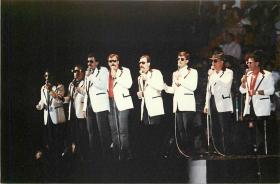
The room was packed, the energy was electric, and the anticipation was high. The Sharks concert in our worship center Saturday night had been sold out for weeks (most free concerts are) and the thousand or so in attendance (preacher’s count) were not disappointed. Johnny Weems belted out the crowd favorites while Kelly Utsinger maintained the tone of the evening with the harmonica and the corny jokes and the rest of the Sharks — a little wider and a little grayer than when they were tearing it up back in the ’80s — performed each of their musical and entertainment roles beautifully. It was a great trip down memory lane for the Sharks and their die-hard fans. But it was a wonderfully powerful night for thousands of folks in Kenya who’ve never even heard of Elvis or Buddy Holley, or the Coasters.

The Sharks were attempting to raise $10,000 at Saturday’s show to benefit Christian Relief Fund’s efforts to dig a single water well in the drought-stricken and famine-plagued area of Turkana, Kenya. The numbers are in today and the total has been announced as $19,500! With money still trickling in!
Thanks to Kelly and the Sharks, thanks to the generous hearts and open wallets of the Christ-followers at Central and all over Amarillo, thanks to our gracious God in heaven and his faithfulness to the cries of his children, CRF is going to be drilling two wells now in Turkana, not just one! Doppler Dave made the plea on behalf of CRF Saturday night. But our God is the one who moved his people to respond to his call to bring his love and goodness to those in need.

Except for the awful fish jokes, praise God for everything that happened here Saturday night and for everything he will do for the starving people in Kenya tomorrow.

~~~~~~~~~~~~~~~

My heart goes out to Beth Bobo. She and her husband, Elvin, were great encouragers of mine during our time at Legacy. Whether praying together in my office, sharing laughs over funny stories and pictures, kidding each other about sermon length and yet another story about yet another cruise, Elvin and Beth cared for me. They cared for the young people of our church, faithfully teaching and volunteering in our children’s programs. They cared about the older people in our church, tirelessly planning and coordinating more events and functions than you could imagine. They cared about the needy and the marginalized of our community, setting up and serving and tearing down and cleaning at every single Give Away Day. They cared about the lost of the world, giving and giving and giving to our local and foreign missions efforts. Elvin and Beth cared about God’s Church. And they cared about God’s Gospel preachers. And they went way out of their way to care for me.

Elvin died early this morning. And my heart goes out to his sweet wife, Beth.

There is in store today a crown of righteousness for my brother, Elvin, awarded to him by our Lord, the righteous Judge. Elvin has finished his race. And he ran it well. He ran it very well.

Grace & Peace,

Allan

Words We Cannot Ignore

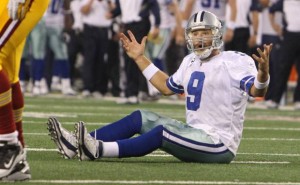
If I were Skip Bayless, I’d write this morning that the “Cowboys O-Line Almost Costa Game!”

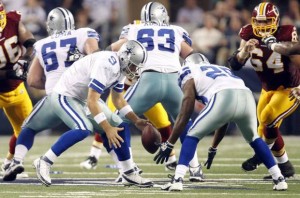
I detest the way Jon Gruden was wanting to ship Tony Romo’s cleats to Canton for immediate induction. But I give a lot of credit to the Cowboys’ quarterback for last night’s never-say-die, gut-it-out win over the Redskins. Romo was like a rookie catcher behind the plate with Charlie Hough or Tim Wakefield on the mound: just wait for the ball to stop rolling and pick it up. He had no help from his line or his receivers. He really is playing with a cracked rib. And the long scramble and throw to Dez on that late third-and-forever was a clutch play.

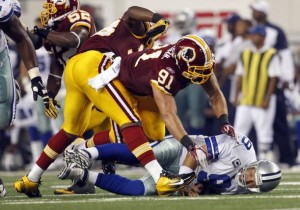
Still, that line is going to be the end of this team. If the secondary doesn’t kill ’em, that offensive line will. And I keep waiting for somebody to put out the over/under on when Rob Ryan goes all “Buddy Ryan punching out Kevin Gilbride on the sidelines” when Jason Garrett’s offense blows another first-and-goal at the two yard line or fumbles in the red zone after a tough defensive stand. Will that happen before, during, or after the November 20 game at Washington?

This is an 8-8 team that’s going to miss the playoffs again. But, as always, it’s a whole lot of fun to watch.

~~~~~~~~~~~~~~~~~~~~~

The Bible makes some pretty bold assumptions that we would all do well to recover. Scripture envisions the world as a much different place than the one we see and experience every day. The Bible calls us as children of God to live into the world differently than everybody else does, to challenge it, to change it. The Bible says that the world as it is right now is broken, it’s messed up, it’s not right. God wants it to be right, he’s working every moment to fix it. And as his agents of reconciliation, we are commissioned by him to live in such a way that moves things along in the right direction.

The Bible is a scandalous document. If you read it correctly, it can’t be ignored. And it calls us to be radically different from all that’s going on around us. We don’t conform to the culture; we convert the culture. And that’s tough.

In her book, An American Childhood, Annie Dillard asks why in the world her parents wanted her to read the Bible. She can’t understand why her mom and dad wanted her to study and memorize Scripture:

“If they had really read it themselves, I thought, they would have hid it from us. They didn’t recognize the vivid danger that we would, through repeated exposure, catch a case of its wild opposition to their world. Instead, they bade us study great chunks of it, and think about those chunks, and commit them to memory. And ignore it.”

Scripture is challenging. The words of the Bible shatter all our assumptions about life. They command us to seek justice, not just order; they demand that we show respect, not just politeness; they mandate that we act in love, not just friendliness.

God does not validate governments and power structures and the establishment the way we see it. The Bible calls us to question those structures and live lives of contrast to the values that sustain those structures and make sure those worldly values and structures never become a part of God’s Church.

That’s dangerous. It’s like quoting from the Declaration and Address — one of the Church of Christ’s founding documents — to a Church of Christ congregation. We don’t realize our faith and practices and traditions originate from such powerful words. Words that still challenge today. Words that call us to be different. Words that call us to partner with God in changing everything that’s wrong with his world. Words we cannot ignore.

Peace,

Allan

Just Like Us

The apostle Paul tells us in Romans four that Abraham never wavered in his faith regarding the promise of a son and countless descendents. He never wavered. Yet, I seem to recall a situation or two with laughter. And Hagar. And Ishmael. Never wavered?

Scripture makes it clear that King David was a man after God’s own heart. Really? What about Bathsheba? Didn’t David go out of his way to premeditate and plan to break six or seven of the ten commandments in one weekend? Didn’t he lie and cheat and steal with his band of strong men in the wilderness? A man after God’s own heart?

We tell our little kids the story of Samson. We use flannelgraph and puppets and color sheets to tell them all about this hero of the faith. But when’s the last time you really read his whole story? You don’t tell the kids about the women and the sex and the lying and the breaking of his holy vows and his selfish pride and lust for violence and revenge.

Why not?

Because that’s the bad stuff.

Exactly.

The heroes in the Bible are more like us than we think. In a lot of ways, they are exactly like you. And me. A mixture of good and evil. A mess of noble intentions and horrible choices. A fluid cocktail of loyalty and rebellion. A patchwork of ultimate highs and miserable lows.

Our God has always chosen to do his greatest work through people exactly like you. And me. People just like the ones in your church. “Elijah was a man just like us…” Yeah, he was. So was Peter and Jacob and John and Joshua and Mary and Ruth.

Just like us.

~~~~~~~~~~~~~~~~~~

For Legacy members only!!!

It’s crazy — absolutely crazy — that Carrie-Anne and I are the only ones from our congregation who make the trip north of the border to the Tulsa Workshop. Crazy! Next year, if I must, I’m planning our Legacy church trip to Tulsa. I’ll handle the hotel reservations, plan the caravan, and pick out all the restaurants. You’ll be encouraged, uplifted, inspired, equipped, empowered, enlightened, and educated. You’ll sing at the top of your lungs, you’ll ‘amen’ some of the greatest preachers in the faith, and you’ll be transformed. You’ll grow. God will change you.

And you will thank me.

Hold me to it.

~~~~~~~~~~~~~~~~~~~~~~~

Check out this blog post from a theology professor at SMU’s Perkins School of Theology. The man’s name is Ted Campbell. He’s a Methodist — a “heart-core Methodist, — who recently attended a Sunday worship assembly at Preston Road Church of Christ in Dallas. And in his review of the experience , Campbell concludes that “the Churches of Christ were right after all.” It’s a good read from an outsider’s perspective. And I only mean “outsider” as not an official member of our little stream of the Christian faith. Click here to read his article.

Peace,

Allan

Trust the Word

[Allow me just a couple of more postings about Dietrich Bonhoeffer from Eric Metaxas’s latest biography.]

Preach the Word. Preach the Word. How many times I have been told, “Preach the Word!” Jimmy Butler here at Legacy exhorts me with, “Preach the Word, brother!” at least a couple of times every week. People write that to me at the ends of cards and letters and emails. I’ve written it and said it — even texted it —  to my preacher friends countless times. In California, I’ve heard it shouted from the congregation as a preacher takes the pulpit.

Preach the Word. Yes. That is our call as ministers of the Scriptures. Proclaim boldly and courageously the Holy Word of God. Faithfully. Without compromise.

Bonhoeffer certainly pushed his students to preach the Word. But he encouraged them to a deeper understanding of what it means to be a Christian proclaimer when he urged them to “trust the Word.”

In 1932, Bonhoeffer told his young seminarians at his illegal underground training school at Finkenwalde, “We must be able to speak about our faith so that hands will be stretched out toward us faster than we can fill them. A truly evangelical sermon must be like offering a child a fine red apple or offering a thirsty man a cool glass of water and then saying, ‘Do you want it?’ Do not try to make the Bible relevant. Its relevance is axiomatic. Do not defend God’s Word, but testify to it. Trust the Word. It is a ship loaded to the very limits of its capacity.”

Trust the Word. What a powerful idea.

We must understand that when the Word of our God is presented it will shake people, it will wake people, it will completely undo people. The Word of God has the power within itself to cause people to see their great need for salvation from God in Christ. If the Word is truly preached, the answers to the deepest needs of mankind will be received without all the baggage and camouflage and add-ons of “religion” and false piety and denominational hogwash. The grace of God, without filters and arguments, will touch people.

We don’t have to try to make it relevant. It is eternally relevant!

We don’t have to worry about it being powerful. It is supremely powerful!

And we preachers need to trust it. Trust the Word.

The God of Abraham, Isaac, and Jacob has promised us that not one bit of his proclaimed Word will ever return to him empty. Trust that great promise. Trust the Word.

~~~~~~~~~~~~~~~~

The Packers and Steelers arrived in North Texas yesterday and brought snow and ice and temperatures in the teens and minus-zero wind chills with them. The roads are all completely iced over after an all night sleet and freezing rain and flurry fest. Schools are out today. The church offices are closed. Ditches are littered with abandoned cars. Tree limbs are snapping. Power lines are sagging. Nobody’s outside.

It was sunny and 75-degrees Saturday and Sunday. It’s 16-degrees right now, snowing, with 30-mile-per-hour north winds. I’m really interested to watch all the national shows tonight and read all the national press tomorrow to see how DFW fares in the eyes of the global sports media.

~~~~~~~~~~~~~~~~

I’ve added another great link to the “Around the Table” page on this blog. It’s a click to several communion meditations by Jay Guin. I recommend checking them out. Instead of beginning your table talk this Sunday morning with, “When Howard called me last night and asked me to do the Lord’s Supper…” how about starting it with some theology? Some inspirational Scripture? A short illustration that ties what’s happening at the table today with Jesus’ meals from two thousand years ago or that great wedding feast of the Lamb to come? I invite you to read these meditations. And use them.

Peace,

Allan

« Older posts Newer posts »