Category: 1 Corinthians (Page 9 of 21)

An Apology

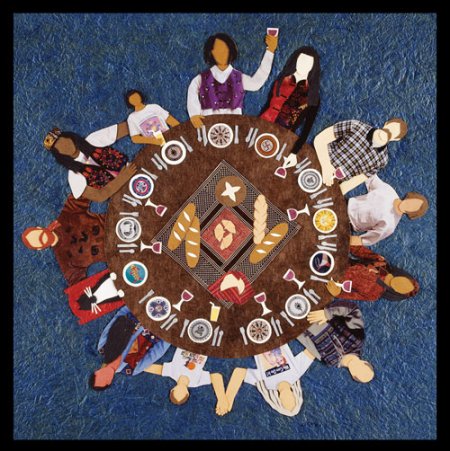
In an attempt to present the Lord’s Supper as the time and place where we experience our unity with Christ and express the unity we have with all Christians in Christ, I used a picture during yesterday’s sermon depicting a variety of people joyfully gathered around a communion table. The picture served as the background in a PowerPoint slide for 1 Corinthians 12:13: “We were all baptized by one Spirit into one body — whether Jews or Greeks, slave or free — and we were all given the one Spirit to drink.”

A concerned parishioner gently informed me later that the picture showed a cat at the table.

A terrible, terrible mistake on my part. As God is my witness, I never once saw that cat when putting the PowerPoint together last week. We all know that all cats are reserved for the fiery lake of burning sulfur and do not have a place at the Table of our Lord. I regret the mistake. Please forgive me.

Peace,

Allan

Baptism: Identity in Christ

Ephesians 2 tells us who we used to be and, now that we’ve been baptized into Christ, who we are.

This is what you were: dead; this is what you are now: alive with Christ!

This is what you were: following the ways of the world; this is what you are now: raised up with Christ and seated with Christ at the right hand of God!

This is what you were: objects of divine wrath; this is what you are now: saved!

1 Corinthians 9 affirms that we are cleansed and made pure from our many sins, we are set apart and dedicated to the holy God as belonging to him, and we are declared righteous in God’s eyes “in the name of the Lord Jesus Christ.”

“Jesus is Lord.” Romans 10 tells us that’s the Christian confession. “Jesus is Lord.” 1 Corinthians 12 says that’s how we worship. Philippians 2 says on that last day every tongue in heaven and on earth will declare “Jesus is Lord!”

But we first say “Jesus is Lord” at our baptisms. And to say Jesus is Lord is to say Caesar is not. To say Jesus is Lord is to accept a brand new identity as his servant and to affirm that the shape and direction of my life now lays wholly within his power. I belong to him. I no longer live. The Lord Jesus lives in me and through me. Baptism is that moment of transfer. By faith, the waters of baptism move you from sin and separation from God to forgiveness and communion with God. By his love and grace, baptism transfers you from an outsider to the Kingdom of God to an insider with all the privileges and benefits. It’s a brand new way of life.

“He has rescued us from the dominion of darkness and brought us into the kingdom of the Son he loves, in whom we have redemption, the forgiveness of sins.” ~Colossians 1:13-14

A few verses later, Paul says all of you who have been baptized into Christ have clothed yourselves with Christ. In baptism, there is an exclusive devotion to Christ Jesus as Lord. Our loyalties are not to the fading kingdoms of this world but to the eternal Kingdom of our Lord. Our priorities are not in the interests of this world’s structures and institutions but to the missions and goals of our God.

Our very identity is rooted in what God has done for us in Christ. And we’re given that new identity in baptism. But our increasingly fractured and polarized culture is exposing our primary identities. It seems that we identify with our nation and national politics, race and socio-economic groups first and then our Christian beliefs and practices are filtered through those identities instead of the other way around. We struggle to identify first with our Lord and his ways and then filter our national and political and race and group beliefs and practices through that.

Whatever the issue — immigration, race relations, tax reform, gun control, war, abortion, social security, gay rights, Obamacare, the environment, the construction on the bridge at I-40 and Bell — my first instinct is to view it and talk about it through the lens of my political affiliation or my race or gender. How should a Republican feel about that? How would a Democrat talk about that? How might a patriotic American deal with this? How does a white guy, how would a black woman, how does a conservative say this? How does a liberal view this?

Our priorities are out of whack. Our identities are compromised. We think first as Republicans or Democrats, as Texas Tech of OU, and not first as baptized disciples of Jesus. Our positions are solidified and our decisions are made through the lenses or our race or zip code or voter registration card and not first and foremost by our identity as baptized followers of the crucified and risen Christ.

“You have been given fullness in Christ, who is the head over every power and authority… having been buried with him in baptism and raised with him through your faith in the power of God, who raised him from the dead… God made you alive with Christ. He forgave us all our sins… And having disarmed the powers and authorities, he made a public spectacle of them, triumphing over them by the cross… Since you died with Christ to the basic principles of this world, why, as though you still belonged to it, do you submit to its rules?” ~Colossians 2

Now, I think all Christians in America have dealt with this for 242 years — we’re no different. Our divided and polarized society is just exposing it in more obvious and disappointing ways. I do know our Christian impulses are good and holy. It’s deep inside us, it’s in our DNA to serve others, to sacrifice for the sake of others, to view the needs of others as more important than our own, to do things the Jesus way and not the world’s way. The impulse is there. So is the desire. But the follow-through is becoming more difficult because our culture is telling us to do the opposite.

“Since, then, you have been raised with Christ, set your hearts on things above, where Christ is seated at the right hand of God. Set your minds on things above, not on earthly things.” ~Colossians 3:1-2

Remember your baptism, the Bible says. Remember where you were. Remember who was there. Remember how you felt when you came up out of the water. Remember the spiritual experience and claim all the spiritual resources you received that day.

“For you died, and your life is now hidden with Christ in God. When Christ, who is your life, appears, then you also will appear with him in glory.” ~Colossians 3:3-4

Baptism is a touchstone moment for followers of Christ Jesus. It’s an event that embodies the faith and participates in the Gospel. But it’s also a definitive moment in time that we can reflect on for strength. Dying and rising with Christ. Putting off and putting on. Living this life under his exclusive lordship. Putting off and putting on. Every day. Dying and rising. Romans 13 says clothe yourselves with Christ and stop making room for sin.

We have a new identity. We have a different worldview. We see things differently. We see people differently. We know God’s work is not complete in me or the world, but we know it’s begun. If anyone is in Christ: new creation! The old has gone, the new has come! Baptism doesn’t just symbolize new life, it actually gives us a new identity. It doesn’t just symbolize our washing, it actually empowers a new way of living by the Holy Spirit. It not only symbolizes a break with the fallen world of sin and death, it delivers us into a brand new creation and a new world view.

If you’ve been baptized, God wants you to see yourself as one with Christ and united with all his people. God wants you to consider yourself as under the lordship of Jesus with new priorities, new goals, new methods and practices, new Holy Spirit power to live for his Kingdom.

If you’ve never been baptized, let me ask you: Why not?

Peace,

Allan
Baptism: Unity In Christ

You’re not baptized by yourself. Baptism is not a private deal. When you’re baptized into the name of Jesus Christ, you’re baptized into his community. You become part of God’s eternal people. It’s not only unity for you with Christ, it’s also unity in Christ will all baptized followers of our Lord.

“You are all children of God through faith in Christ Jesus, for all of you who were baptized into Christ have clothed yourselves with Christ. There is neither Jew nor Greek, slave nor free, male nor female, for you are all one in Christ Jesus.” ~Galatians 3:26-28

This is a bold, radical, mind-blowing claim for any Christian living in America in 2018. Because whatever our society is, it cannot be called “one” in anything. It’s almost impossible to find unity anywhere. There are more and more options, which means more and more opinions, and more and more platforms to declare those more and more opinions. We’re inventing new ways to disagree with each other. We’re identifying new ways we’re different from each other. We can’t find unity in a country or in a family or in a neighborhood or in a middle school choir. There’s only one place to experience the realities of unity and togetherness and community: through baptism into Christ.

We are not baptized into a nation or a political party. We’re not baptized into a denomination or a faith tradition. We’re not baptized into an economic brackets or a language or a skin color or a blood type. We are all baptized into Christ.

Baptism is not just about an individual’s conversion. It’s also very much about being initiated into a community. Baptism allows you to participate in the Gospel and it makes you a member of God’s eternal people. Baptism creates an eternal unity with all followers of Jesus. There are no divisions at all among baptized disciples.

When there were divisions in that church in Corinth and people were dividing between rich and poor, men and women, tongue speakers and prophesyers, favorite preachers and teachers — yes, just like today, people divide and pick sides and decide who’s right and who’s wrong and split up accordingly — Paul addresses it head-on. Right out of the gate in 1 Corinthians:

“Hey, this is Paul. How’s it going? What’s the matter with you?!? Is Christ divided?!? Was Paul crucified for you?!? Were you baptized into the name of Paul?!?

When the unity of the church and the integrity of the Gospel is at stake, Paul reminds them of their baptisms. We were all baptized by one Spirit into one body, Paul writes, whether Jews or Greeks, slave or free. Which, by the way, sounds a lot like Ephesians 4:

“Make every effort to keep the unity of the Spirit through the bond of peace. There is one body and one Spirit — just as you were called to one hope when you were called — one Lord, one faith, one baptism; one God and Father of all, who is over all and through all and in all.”

And that sounds a lot like Galatians 3.

There is neither Jew nor Greek, Texan nor Mexican, American nor Syrian, for you are all one in Christ Jesus.

There is neither slave nor free, Republican nor Democrat, Church of Christ nor Presbyterian, for you are all one in Christ Jesus.

There is neither male nor female, black nor white, old nor young, for you are all one in Christ Jesus.

For some reason, our Lord chose you. And he chose me. And he has united us to him forever and he has inseparably united us to one another in him. In baptism. What a gift. What a challenge.

Peace,

Allan

Rules of Worship

The Bible does care about what we can and cannot do in church. The guy who wrote half the New Testament did lay down a few rules about our worship assemblies. I’ll suggest those rules are about attitude and heart, not about methods and forms.

The apostle Paul knows that what we do when we’re together shapes us. Our habits in our worship gatherings are molding us into a particular kind of people. So, Paul’s main concern is that our worship assemblies reflect the Gospel. Our Christian assemblies have to reflect the character of Christ. When he writes to churches, he expresses his deep desire that Christ be formed in them. He asks them to imitate Christ Jesus who, in his own words, said he came not to be served, but to serve and to give his life for others. Paul says being united with Christ, having the same attitude as that of Jesus, means considering others better than yourselves, looking to the needs of others.

So, yeah, he spills a lot of ink in 1 Corinthians to fix what they’re doing wrong.

“I have no praise for you, for your meetings do more harm than good.” ~1 Corinthians 11:17

That’s harsh. Brutal. Can you imagine? Your church is so bad, your people would be better off if they slept in!

Paul goes on to explain that the church is divided. They’ve got little cliques and groups among them and he sees it when they’re around the table.

“When you come together, it’s not the Lord’s Supper you eat; you’re eating your own supper! You’re not waiting for others, you’re not sharing your food with others. People are going hungry, people are being humiliated. The rich folks are getting stuffed and drunk while the poor people are starving and being singled out as not fitting in. What am I supposed to say to you? Nothing good!”

Then he reminds them that when we eat and drink together, we’re proclaiming and practicing all the salvation things that Jesus died for. Our meal proclaims everything that was accomplished at the cross: acceptance, fellowship, unity, love, forgiveness, peace. Jesus is alive and he’s coming back. And until he comes, Paul says, we proclaim his salvation in our church meals. So, then, my brothers and sisters, when you come together to eat, wait for each other. Consider the needs of others. Treat each other as equals.

That’s Paul’s constant instruction when it comes to doing church: consider others. Pay attention to others. Put yourself last.

These Corinthians Christians were showing off their spiritual gifts. They were clamoring for the spotlight in their assemblies and judging others according to giftedness. In 1 Corinthians 12, Paul says the gifts of the Spirit are given for the common good. They’re supposed to benefit everybody, not just you. In fact, in chapter 14, he says since you’re so eager to have spiritual gifts, try to excel in gifts that build up the church!

What does Paul say about speaking in tongues? Well, sometimes there’s no interpreter, nobody knows what you’re saying, and it’s not doing anybody any good but yourself. And sometimes y’all are talking over each other, trying to upstage each other and it’s a mess. You’re not thinking about others. So, brothers and sisters, stop thinking like children! Take turns. Speak one at a time. And if you don’t have an interpreter, sigato (Greek). Don’t speak until it’s appropriate.

Same thing with prophesy. Take turns, just speak one at a time. Why? What’s the point? So that everyone may be instructed and encouraged. And if you’re speaking and someone else has something to add, the one speaking should sigato. Stop speaking until it’s your turn again.

Same thing with women. Some women were apparently disrupting the gatherings. They, too, were speaking out of turn. So Paul uses the same word, sigato. Be quiet until it’s appropriate to speak. Put yourself last. Consider others more important than yourself.

There’s a big picture principle at work here.

Paul didn’t say stop eating or do away with the meals, he said WHEN you eat be nice to others, treat everyone as equals. He didn’t say stop speaking in tongues, he said WHEN you speak in tongues be considerate of others. He didn’t say stop prophesying, he said WHEN you prophesy take turns, be polite. He didn’t tell women to stop praying and prophesying, Paul didn’t say they couldn’t. He said WHEN you pray and prophesy, women, do it like this. Don’t offend people. Don’t elevate yourself.

We worry about our Sunday mornings. We’re anxious to do everything just right. Instead of worrying about whether a worship practice is prescribed or legal, we should be asking if what we do fosters community and equips us for mission. Applying the Gospel to our assemblies is much more important than trying to do it right.

Do we value all people? Do we treat everyone the same? Do we make sure everyone belongs? Are we serving and loving others during our time together? Are all voices heard? Is everybody sharing? Is everybody made to feel welcome? Does everybody get a say? These are the questions we ought to be asking about our worship assemblies.

None of the New Testament gives us a set of legally specified timeless rules for conducting a Christian worship assembly. The New Testament gives us Jesus and the Gospel embodied by a community gathered by the Holy Spirit around word and table.

Peace,

Allan

God at Work: Sacrament

Sacrament: A physical symbol that acts as a means of God’s grace by which we participate in a spiritual reality.

This Sunday at Central we’re beginning a 13-weeks Bible class series on the sacraments of baptism, communion, and the Christian assembly. Our intent is to move more toward viewing these special moments together as places and times when our God is redemptively present and seriously at work. We want to learn how to focus more on what God is doing and less on what we are doing in these practices. And the word “sacrament” is significant for our understanding and growth.

The definition above is my own version of how the Church has understood the term for centuries. Let’s explain it using each of the divine ordinances.

Baptism – The physical symbol is the water. The water is real, it’s tangible. You can see it, you can feel it, you can experience it. It’ll ruin your phone, it’ll go up your nose — it’s real. But the water also represents a reality beyond itself. It points to something bigger. The water symbolizes the death, burial, and resurrection of Jesus. What makes baptism a sacrament is that, by God’s Spirit, we actually participate in the reality it symbolizes. In baptism, we are buried and raised with Christ Jesus. Baptism connects us to Christ’s death and resurrection.

“Don’t you know that all of us who were baptized into Christ Jesus were baptized into his death? We were therefore buried with him through baptism into death in order that, just as Christ was raised from the dead through the glory of the Father, we too may live a new life. If we have been united with him like this in his death, we will certainly also be united with him in his resurrection.” ~Romans 6:3-5

Lord’s Supper – The physical symbol is the bread and the cup, the cracker and the juice. Those are concrete, real things, physical things. You can smell the juice, you can crunch the cracker; it gets stuck in your teeth, it can stain your slacks — it’s real. But the meal represents Jesus eating and drinking with his disciples. What makes the communion meal a sacrament is that, by God’s Holy Spirit, we actually are participating in the thing it represents. We are literally eating with the Lord. Somehow, mysteriously, yes, he meets us at the table and eats with us.

“Is not the cup of thanksgiving for which we give thanks a participation in the blood of Christ? And is not the bread that we break a participation in the body of Christ?” ~1 Corinthians 10:16

Christian Assembly – The physical symbol is the people in the room. It’s us. Real men, women, and children, wearing clothes, laughing, singing, whispering, chewing gum, praying; babies crying and people sneezing — it’s real. And it symbolizes something bigger. It represents the heavenly assembly around the throne of God. By God’s Spirit, we join that heavenly chorus — we are actually participating in what we can’t see yet. We are singing and praying with all the saints of all time in heaven, in the eternal presence of God. That’s what makes the Sunday morning worship gathering a sacrament.

“You have come to Mount Zion, to the heavenly Jerusalem, the city of the living God. You have come to thousands upon thousands of angels in joyful assembly, to the Church of the firstborn, whose names are written in heaven. You have come to God, the judge of all people, to the spirits of righteous men and women made perfect, to Jesus, the mediator of a new covenant…” ~Hebrews 12:22-24

God is present with us, saving us, nourishing us, changing us. When we view these three ordinances as merely commands to obey, we’ll focus on what we are doing. When we understand them as sacraments, we’re better able to focus on what God is doing.

Peace,

Allan

Leadership: Pleasing God First

“We are not trying to please people but God, who tests our hearts.” ~1 Thessalonians 2:4

“We were not looking for praise from people, not from you or anyone else.” ~1 Thess. 2:6

Paul and Silas and Timothy tell the church in Thessalonica that they all ought to follow their model of Christian leadership: We “make ourselves a model for you to follow (2 Thess. 3:7, 9). A critical component of their leadership style is their commitment to pleasing God instead of people. Paul’s ministry — his whole life! — is characterized by this attitude.

“Am I trying to win the approval of people, or of God? Am I trying to please people? If I were still trying to please people, I would not be a servant of Christ.” ~Galatians 1:10

Paul is not one to take a vote or check the opinion polls before doing what he knows needs to be done in his capacity as a Christian leader. President Harry Truman had a similar disdain toward catering to the whims of the people:

“I wonder how far Moses would have gone if he’d taken a poll in Egypt? What would Jesus Christ have preached if he’d taken a poll in Israel? Where would the Reformation have gone if Martin Luther had taken a poll? It isn’t the polls or public opinion of the moment that counts. It’s right and wrong and leadership, men and women with fortitude, honesty, and a belief in what’s right that makes epochs in the history of the world.”

We’ve been entrusted with the Gospel (1 Thess. 2:4) as stewards of God’s Good News. So we are responsible to God, not people. We seek to please God first, not people. This was Peter’s leadership style, too. In Acts 5, Peter tells the Sanhedrin in the face of Jewish persecution, “We must obey God rather than people!”

But there’s such a strong temptation to please people. It’s human nature. We want to please people, not just to be popular, but because we don’t want to make anybody mad. We don’t want to make enemies. We don’t want to come across as mean. We want to keep the peace. Elders want to keep their members. Preachers want to keep their jobs.

Well, hold on. We don’t want to offend or upset our weaker brother. We’re responsible for our weaker brother.

You know, that passage in 1 Corinthians 8 is one of the most grossly misapplied passages in all of Scripture. The weaker brother Paul’s talking about is a brand new Christian. He’s just been baptized. He’s still wet behind the ears, figuratively and literally. He’s from a pagan, idol-worshiping, bacon-loving background. He doesn’t know anything. He hasn’t had time. He’s just a baby. That’s the weaker brother of the Bible. But I’m afraid sometimes it’s the men and women who were born and raised in the faith, baptized 20, 30, or 40 years ago, who are using weaker brother arguments to thwart Christian leadership.

When I was interviewing here at Central almost six years ago, the leadership told me, “We’re a Church of Christ. We’re always going to be a Church of Christ. We’re proud of our Church of Christ heritage and we uphold our Church of Christ traditions. But when those traditions come into conflict with the Gospel, we’re going to go with the Gospel every time.”

Sold! I love that!

Strong Christian leaders keep their eyes on the goal, they’re focused on the big picture. They lead with courage in the will of God, to please him. What’s going to challenge us and mature us? What’s going to lead to Christ-likeness? What’s going to move us toward more sacrifice and service? What’s going to make us more accountable to God and one another?

Well, that makes me uncomfortable. I’m not comfortable with that.

Who said anything about comfortable? That’s why they put crosses up in church buildings, to give you a clue that this is not about being comfortable!

Leaders worth following don’t pay much attention to the polls or public opinion. Pleasing God, not people. Remember, Jesus was OK with letting the rich young ruler walk away.

Peace,

Allan

« Older posts Newer posts »