Category: 1 Corinthians (Page 14 of 21)

Let’s Astonish the World

What a tremendous response! What a terrific reaction to what our God revealed to us at Central this past Sunday! And, my, how it continues even now into the middle of the week! The emails and texts that began pouring in during lunchtime Sunday are still being received today in a fairly steady stream. There’s an enthusiasm over what we’ve discovered together as a church family. There’s an overwhelming resolve to jump wholeheartedly into what our God has put in front of us. There’s a continual hum, a buzz, a current of Holy Spirit energy that’s tangible in this place. It’s real. You can feel it. We’ve tapped in to something here. Maybe… God’s holy will?

Allow me to share with you in this space today the heart of the message we heard together Sunday from God’s Word. Tomorrow, my plan is to share some of the response to the message in an effort to further process what happened Sunday.

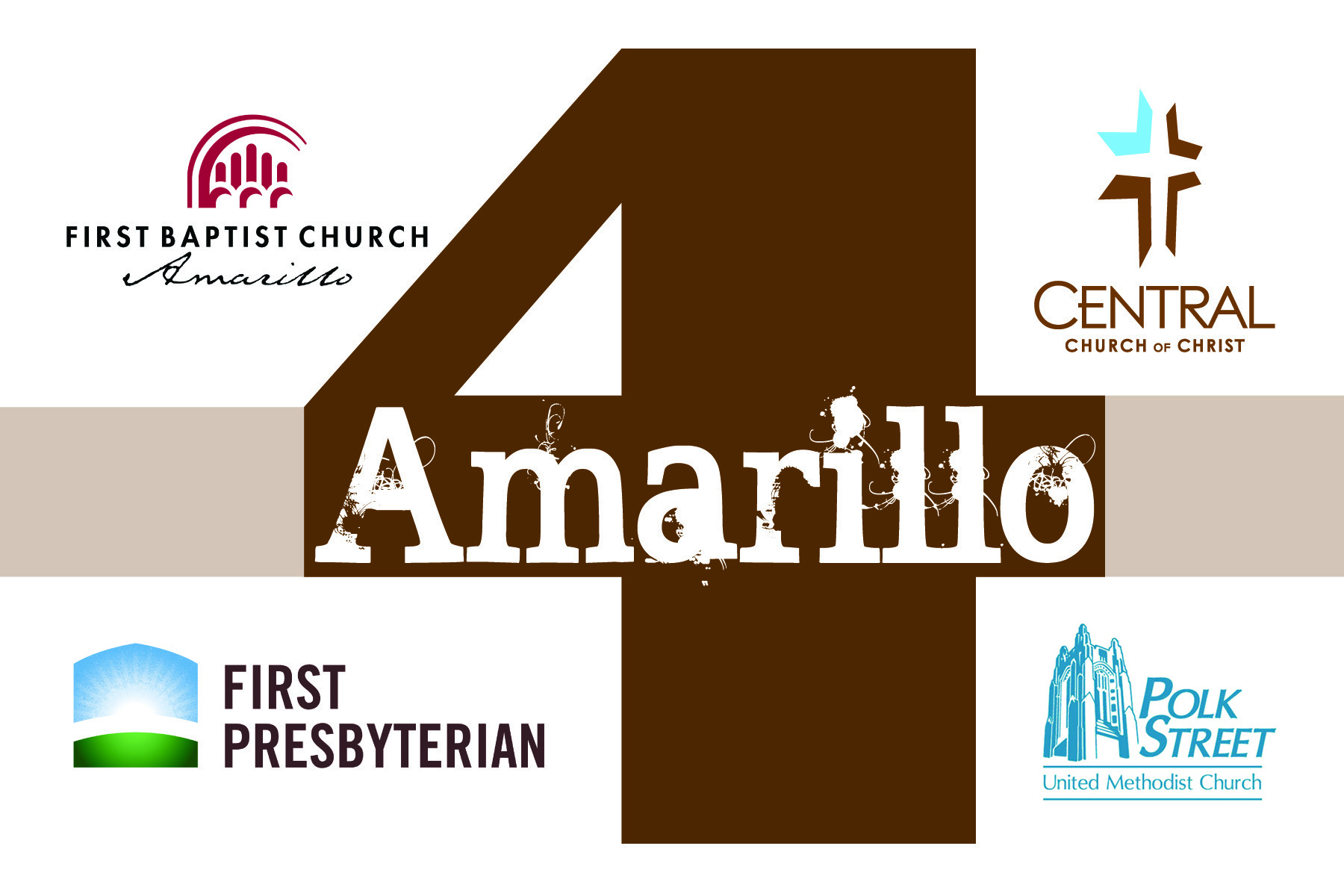
The lesson Sunday came from the last part of Jesus’ prayer in John 17, his plea for unity among all future believers. It served as the culmination of our sermon series on this powerful prayer. And it provided the theological base for our “4 Amarillo” partnership with First Baptist, First Presbyterian, and Polk Street Methodist.

My prayer, Jesus says, is that all of them may be one. May they be brought to complete unity. It’s this unity, this uncompromising love and acceptance we have for all baptized Christian believers that will prove to the world Jesus really is who he says he is and who we say he is. Our unflinching dedication to love and defend all Christians, to worship and serve with all Christians, will astonish the world.

Well, Allan, not all people who’ve been baptized, right? I mean, a lot of people are baptized in different ways than we are, and for different reasons. We can’t worship with and have fellowship with all Christians.

That’s why the church is not astonishing the world.

Christ’s prayer is for unity. Christ’s will is for complete unity among all his followers today. So, let’s go there.

If God accepts someone, I must also accept them, too, right? I can’t be a sterner judge than the perfect judge, can I? Nobody would say, “Well, I know that God accepts this woman as a full child of his, I know she’s probably saved, but she doesn’t meet all of my standards in the things she believes and the way she worships, so I’m not going to accept her.” Nobody would say that. We must fellowship everyone who has fellowship with God. We must fellowship everyone who is saved. All the saved.

So… who are the saved?

There was a time when we would say everyone who hears, believes, repents, confesses, and is baptized is saved. OK, for the sake of this discussion, let’s go with that. The next question is, “He who hears what?”

“The Gospel!”

“She who believes what?”

“The Gospel!”

“Whoever repents and confesses and is baptized by what or through what or into what?”

“The Gospel!”

Right. That means the next question is… what is the Gospel?

That Jesus Christ is the Son of the living God, that he alone is Lord, and that we are saved by faith in him. You might check out 1 Corinthians 15:1-8 or several other places in Scripture where Paul sums up the Gospel. It seems pretty clear that it’s about declaring Jesus as Lord and as the only way to the Father and submitting to his lordship in baptism and in a new way of life. We’ve never required anything else. The Church has never asked for another confession. We’ve never asked anybody their position on women’s roles or children’s worship before they’re baptized. We don’t put a teenager in the water and catalog all his views and opinions on instrumental worship before he’s saved. (Unfortunately, some of us do that about a month later.) That stuff is not Gospel. Paul says it’s nothing but Christ and him crucified.

Romans 15:7 says we are to accept one another as Christ accepted us. We are to receive others by the same standards we were received at our baptisms. You know, your acceptance by God is a gift. That fact that Christ Jesus has accepted you is pure grace. The imperative for us is to extend that same gift, to show that same grace, to all others who have received it from our Lord.

Well, what about the Christian who disagrees with me on divorce and remarriage, or on the age of the earth? What about the Christian who doesn’t see church names or the Lord’s Supper the way I do? What about our discord over steeples or shaped notes?

In Romans 14-15, the issues are eating mean versus vegetables and the observance of holy days. And Paul knows what’s right and wrong. He knows the correct answer. There is a right and wrong on these matters. But Paul says, in Christ Jesus, it doesn’t matter. You don’t believe me? Read Romans 14:1-15:7.

Now, here’s where it gets us. You ready?

Do you believe that you are perfect? Do you believe you have God’s will completely and perfectly figured out? That you are living exactly right, that you believe everything exactly right, that your worship is exactly right according to God’s plans? Do you think you know everything and do everything perfectly? No? That’s what I thought. Then what in the world saves you? What covers you in your innocent mistakes? What saves you in your accidental misunderstandings and your sincere misinterpretations? Why, it’s God’s grace, of course. His matchless grace.

Do you believe that the Churches of Christ are perfect? Do you think that the CofCs  have everything totally figured out? That we are worshiping exactly right, that our leadership structures are completely lined up with God’s intent, that we have all of God’s will entirely mapped out and expressed perfectly? No? That’s what I thought. Then what in the world saves us? What covers us in our innocent mistakes? What saves us in our accidental misunderstandings and our sincere misinterpretations? Why, God’s grace. Yes, his wonderful grace.

You think there’s any chance at all the Methodists might be doing something right according to the will of God that we’re not? You think the Presbyterians might possibly have something figured out that we don’t? What if the Baptists’ understandings of something in the Bible are richer and fuller than ours? What if another group’s practice is more in line with God’s will than ours? Is it even possible? Yes, of course. Then, what covers us in our innocent mistakes and accidental misunderstandings and sincere misinterpretations? Grace. Yeah, I know.

Now, let’s assume that we have it right on the Lord’s Supper and the Methodists have it wrong. Let’s pretend that we’re right about baptism and a plurality of elders and the Presbyterians and Baptists are wrong. Does the grace of God not cover them completely in their innocent mistakes and accidental misunderstandings and sincere misinterpretations? Are they any less saved?

But they’re wrong and we’re right!

So you get God’s grace where you lack understanding but they don’t? You get the grace of God in your misinterpretations of God’s will but they don’t? Why? Because you try harder? Because we’re more sincere? Because, somehow, we deserve it?

Whoa.

The unbelieving world looks at that and says, “No, thanks.” And I don’t blame them. A religion as visibly divided as ours does not reflect the truth. It reflects our fallen world, not the glory of our God.

Our Christian unity will have an eternal impact on our world. But the world has to see it. Our unity, which already exists as a gift from God, must be visible. It must be practiced and experienced. When it is, the world will believe.

A Methodist preacher, a Church of Christ preacher, a Baptist preacher and a Presbyterian preacher all walk in to a bar is the first line of a bad joke. The Methodist church, the Church of Christ, the Baptist and Presbyterian churches all putting aside their differences to worship and serve together for the sake of the city is a serious and everlasting testimony to the love and power of God! Our “4 Amarillo” efforts are a witness to the world that this is for real! That Christ Jesus is our King! That the world really is changing! That hearts are being melted and people are being transformed! That barriers are being destroyed and walls are coming down! That the devil has been defeated and the Kingdom of God is here!

Peace,

Allan

Through Water to Salvation

“…this water symbolizes baptism that now saves you.” ~1 Peter 3:21

In recalling to his readers how Noah and his family were “saved through water,” the apostle Peter points us to Christian baptism that, in the same way, saves us. Peter’s clear, succint statement is astounding. For a lot of people, it’s scandalous. Peter tells us that baptism has a salvation function.

Paul draws the same conclusion as he looks back on the one foundational and identifying event for Israel: the exodus and the crossing of the Red Sea (1 Corinthians 10:1-4). He sees what happened in Exodus 14 as a baptism “into Moses” and compares it to our baptisms “into Christ” (Romans 6:3, Galatians 3:27). Paul wants us to understand our baptisms as a comparable moment of deliverance and redemption.

Baptism, just like the flood and the Red Sea crossing, is a saving event. Just as God saved Noah through cleansing the old world with water, so God saves us from our old lives through baptism. Just as God delivered Israel by using water to destroy their enemies, Pharaoh and his army, he delivers us by using water to eradicate our enemies of sin and death. Noah and Israel both pass through the waters into a new world, a new creation. Christians pass through the waters of baptism into a new world, eternal life with the Father through the death and resurrection of the Son.

It’s a divine gift. It’s a sacrament of God’s grace. It’s a salvation experience. In baptism our God redeems us, gives us a new identity, and frees us from slavery to sin and death. And it shapes who we are and how think and act as a people of God.

“We were therefore buried with him through baptism into death in order that, just as Christ was raised from the dead through the glory of the Father, we too may live a new life.” ~Romans 6:4

~~~~~~~~~~

What a marvelous joy to welcome into our home overnight Friday our great friends David and Olivia Nelson and their sons, Caleb and Seth. The Nelsons timed their furlough in the States from their missionary lives in Ukraine to coincide with the birth of Seth last month in Lubbock. David and Olivia figured one boy born in Kharkov in Hospital 17 was enough. So we were very blessed that they took a long, winding route from Lubbock to Fort Worth, through Amarillo, to spend almost 24 hours with us last weekend.

After answering several questions Friday night from servers and other customers at Blue Sky about David’s accent, we stayed up way too late passing Seth around, drinking egg nog and Dr Pepper (no kafir, David)  and playing our favorite, Phase 10. Caleb entertained us the next morning by splashing through his pancake breakfast. And then we spent a good long while with our Father in prayer, thanking him for the awesome privilege of serving him in his Kingdom together on opposite ends of his world.

The Nelsons are in Fort Worth now for another month, reconnecting with the church family at Legacy, stocking up on picante sauce and Jello-O and other stuff they can’t get in Ukraine, and being reminded of how much they are truly love and appreciated and admired by everyone who knows them.

I praise our God for the ways he works through and with David and Olivia. I thank him for our rich friendship and partnership in the Gospel. And I acknowledge gratefully that I’m a much better Christian, a more faithful follower of our King, because I know them.

Peace,

Allan

Love Trumps All

(Posting a comment on this blog still qualifies you for the books to be given away later this month. Just click on the “comments” line in the upper right hand corner of the post. Scroll down — way down — to the September 20 & 21 posts for more details on the drawing.)

We spend a lot of our time and energy in God’s Church, it seems, on things that don’t really matter at all. Special meetings are called in the church foyer and around the church library conference table to discuss and decide critical matters of corporate worship and important points of Christian doctrine and pressing items regarding belief and/or practice and/or politics. We spend a lot of time and energy on all that. Way too much time and energy.

We spend a lot of our time and energy in God’s Church, it seems, complaining about things that don’t really matter at all. Concerned members question the order of service, worried ministers dispute the makeup of a committee, discontented congregants accuse others of straying from the path, uneasy elders lament the fading away of old leadership structures. We spend a lot of time and energy on that. Way too much time and energy.

We level charges and voice complaints, we fire off emails and whisper in the halls. There’s way too much of this going on in Christ’s Body. Too much.

We’ve lost our focus on Christ’s command, our Lord’s singular command, the most important command that outweighs them all.

“Love each other as I have loved you.”

While attempting to settle disputes between Christian brothers and sisters over gender issues and economic segregation and spiritual snobbery, the apostle Paul tells the Corinthian church that love trumps everything. Everything!

In 1 Corinthians 13, Paul makes it crystal clear that love is the question and the answer; it’s the beginning and the end; it’s the end-all, be-all to everything that might possibly harm or divide the community of faith.

All the preaching, all the prophesying, all the giving, all the good works are worthless — they have absolutely no value — if there’s not any love. Love is more important than faith. Love is more important than hope. I don’t know if we’ve ever really read that the way Paul wrote it. Love is more important than Christian faith. Seriously.

So, if love is really more important than faith and hope, if love is really more important than good preaching and good works — and it is — then love is more important than everything. Love trumps our worship assemblies and our worship styles. Love is bigger than our business meetings and church budgets. Love is more critical to life in Christ than any of our rules or doctrines. Love is bigger and more important than any issue that could ever possibly divide us.

And, if that’s true, why aren’t we as committed to loving each other as we are to our doctrines and practices?

We must place unconditional, God-ordained love in the supreme position of our hearts and minds in God’s Church. All our time and energy, all our strength and resources, should go first and forever toward loving each other. Then, as has been my experience and as is the teachings of our Lord, all that other stuff takes care of itself. Love trumps all.

Peace,

Allan

Concerning the Women: Part Two

Acknowledging together that we in the Churches of Christ must do something different if we’re going to remain a viable witness to the Christian faith in our rapidly changing world, we’re spending our time here reviewing and reflecting on Leroy Garrett’s “What Must the Church of Christ Do to Be Saved?”

To paraphrase Garrett, what must we do to escape extinction in the decades ahead, to avoid being regarded as an insignificant Texas-Tennessee sect? What must we do to be loyal to the Scriptures and true to our Stone-Campbell heritage of unity? What’s it going to take for us to, as a movement, advance toward being “truly ecumenical, truly catholic, truly holy, and truly apostolic?”

In the 18th chapter, Garrett returns to the subject of women he addressed in chapter nine:

Bring women into the church.

Although Garrett gets much more into the “women’s role” passages in Corinthians and Timothy here than he did in the previous chapter, his focus in this essay is on Paul’s universal statement (creed?) in Galatians 3:28: “There is neither Jew nor Greek, slave nor free, male nor female, for you are all one in Christ Jesus.”

If that passage means anything it means that gender is not to be made a test of fellowship or ministry, such as, “She can’t do that because she is a woman.” Paul himself may have sometimes fallen short of that ideal of perfect equality, due to the pressures of custom, as in the case of slavery, which he tolerated, and which is forbidden in that same passage, “There is neither slave nor free.” If socio-economic conditions had been different, Paul might not have said what he did about women and slaves, tolerating their unequal treatment.

To put it another way, Paul almost certainly would not say to the 21st century church what he said to the first century church about women and slaves. But still he laid down the principle that applies to all generations because it so reflects the mind of Christ: In the Church of Christ there is to be no distinction between slaves and freedmen, Jews and Gentiles, men and women! We have to recognize that this was the ideal that even he was not always able to effect due to the conditions beyond his control.

Despite Paul’s clear directive here and his similar admonition in Colossians 3:11, the Christian church in America used the Bible for decades to justify slavery. Wherever slavery is mentioned in Scripture as the current conditions in society at the time of the writing, those passages were used by Christians to say, “Well, God didn’t condemn it in that Scripture; it must be OK. Or at least, it’s just the way things are.”

Today the practice of slavery is officially, socially, morally, and publicly condemned in every corner of the United States. Our churches now preach against slavery, loudly abhor the idea of slavery, and lament the behavior of our forefathers who justified it. What changed? Scripture certainly has not changed. Our God has not changed. The evil of slavery has not changed. What’s changed is our society. That’s what’s different now. For an American church today to actually uphold the idea of slavery and teach and practice in favor of slavery is unthinkable. That church would not do very well at evangelizing. That church wouldn’t grow. That church today wouldn’t have much credibility when it came to proclaiming the good news of salvation in Christ Jesus. Who would listen to a church like that?

Regardless of the ways you might interpret 1 Corinthians 11 and 14 or 1 Timothy 2, we all agree that the social conditions that existed then in first century Corinth and Ephesus do not exist today in 21st century America. It’s vastly different. It is certainly not a shame for a woman to speak in public. It’s not a disgrace for a woman to teach in a room full of men. It happens all the time. Women are just as educated as men, just as capable as men, just as qualified as men. Nobody blinks when a woman is named president of a major university or CEO of a global corporation. Your professor or your police officer or your accountant or your doctor is just as likely to be a woman as a man. The cultural conditions to which Paul wrote in Corinth and Ephesus do not exist in America today. It’s different. It’s changed. For an American church today to actually uphold the idea of man’s superiority and teach and practice in favor of denying women leadership and teaching roles is unthinkable. That church would not do very well at evangelizing. That church wouldn’t grow. That church today wouldn’t have much credibility when it came to proclaiming the good news of salvation in Christ Jesus. Who would listen to a church like that?

OK, is that a little strong? Maybe. I hesitated to write it that way, but I think I need to in an effort to at least present the possibility that the two issues are the same in Paul’s eyes. Afterall, in speaking to the Galatians he uses both examples in the same breath.

Garret points out that we are very good at drawing lines according to our own preferences and comforts. Foot washing is both a command and an example in Scripture, but we decline to practice it because it only applied to that biblical culture during that biblical time. Same with the holy kiss. In Acts 15, the church council claims the Holy Spirit himself gave them four commands that had to be followed by all Gentile Christians. We completely ignore the first three! And I’m not so sure we even take the fourth one very seriously.

1 Timothy 2:8 tells men everywhere to lift up holy hands in prayer, without anger or disputing. It’s a command. Is it then, that all men who do not lift their hands while they pray are sinning against God and his Church? No! Of course not. The command is to pray; lifting hands was the customary and cultural prayer posture of the day. Does that mean that it’s OK for the women to be angry and to dispute? No! It’s that the men were apparently the problem in this particular Ephesian church, not the women.

1 Timothy 2:9 tells women to dress modestly, with decency and propriety, not with braided hair or gold or pearls or expensive clothes. Does that mean that all women who braid their hair are sinning against God? No! Of course not. It’s cultural. The command is to dress appropriately for the culture in order to preserve your Christian witness to a lost and dying world.

1 Timothy 2:11 says women should learn in quietness and submission; women are told not to teach or to seize authority from a man; women must be quiet. Does this mean then that a woman who speaks in church is sinning against God?

For way too long we’ve not hesitated to answer “Yes! Of course!” For way too long we’ve interpreted verses 8-10 as cultural and no longer applicable and verses 11-12 as universal and for all time.

A husband’s rule over his wife is part of the curse of sin and death in Genesis 3, not part of the original creation plan of God as found in Genesis 1-2. A husband’s superiority over his wife is a result of sin and death, not a divine facet of God’s eternal will. As children of God and partners of reconciliation with his son Jesus, we are commissioned to reverse the curse, to join our God in overturning the effects of sin and death. We never ever actually labor to impose the curse.

Our task in the 21st century is not to do precisely as they did, but to do for our generation what they did for theirs, bring in the Kingdom of God. And our men and women should be at it today just as their men and women were at it back then, but not necessarily in exactly the same way.

What I want for the Church of Christ down the road is that there will be no social, racial, or sexual lines drawn. None whatever. Liberties and ministries will be shared equally and indiscriminately, according to gifts and talents. We must overcome the mentality that half (or more) of the church is to be subservient to the other half. All because of gender! Christ has made us one and we are all equal — and half of us are not more equal than the other half!

Peace,

Allan

Discover the Good News

We’re exploring chapter by chapter Leroy Garrett’s “What Must the Church of Christ Do to Be Saved?”  In our increasingly post-denominational, post-Christian world, Garrett writes that we must make some significant changes if we are to remain a truly viable tool for God. The fifteenth of those suggestions is to center and focus our preaching and teaching and living on salvation from God in Christ, not on church ordinances and church histories and church rules.

Discover the Good in the Good News

Garrett points to the New Testament sermons of Peter and Paul and observes that they were centered on Christ and him crucified. They were all about God’s grace and his free gift of eternal life in the risen Jesus. New Testament sermons are about God’s great love as it’s revealed in the life, death, and resurrection of his Holy Son. That’s the Gospel! That’s the Good News! Jesus died for the sins of the world to redeem the world back into a righteous relationship with God!

Garrett says it’s wrong to preach sermons about baptism for seven straight nights and then call it a Gospel Meeting. But that’s what we’ve done.

Recent studies by some of our own scholars reveal that there has not been much good news in what we have called “gospel preaching.” In a 1988 article in the Gospel Advocate, F. W. Mattox explains that Church of Christ preachers have left it to “denominational preachers” to preach grace, faith, and the atonement while they “went about straightening out their misunderstandings of the place, action, and order of faith, repentance, and baptism in obtaining church membership.” Mattox notes that while others preached the atonement of Christ but not baptism, we preached baptism but not the atonement of Christ.

Garrett cites a study conducted by Bill Love in which Restoration Movement sermons from the early 1800s through the 1950s were analyzed for content. Compared to the 33 sermons found in the New Testament in which all 33 centered on the atoning death and resurrection of Jesus, our own Church of Christ sermons are embarrassingly weak. Love found the cross and empty tomb mentioned in only 25-percent of the hundreds of sermons he studied.

According to Love, 56% of the sermons during the Stone and Campbell generation contained the Gospel. But that number falls to 23% during the G. C. Brewer and Foy Wallace era. In the first two generations, before the Churches of Christ became a separate group, preachers referred to the cross an average of 52% of the time. Since then, the rate falls to 25%. Love’s conclusion is that “our focus moved from Christ crucified to his church, a subtle but destructive shift. Once our sickness took hold, we grew weaker and weaker, more and more anemic. Without the gospel, we lost the source of our faith.”

Yes, I’m afraid we have been guilty of diligently studying the Scriptures and believing that by them we have eternal life. At some point, sooner not later, we need to start preaching and teaching again that salvation is not found in the Bible, it’s found in the One to whom the Bible points. Forgiveness and reconciliation and eternal life are not found in the church, but in the One the church worships and serves. We’ve been guilty of maintaining a religion when we should have been maintaining a relationship with the Savior of the world.

More to Garrett’s point, he closes this chapter by claiming there are two “gospels” we can preach:

We can tell the world it is lost and must repent to be saved. Or we can tell the world what the Bible says, that just as in Adam all died so in Christ are all made alive, that all people are saved, so one only needs to accept the free gift. We can look at the world and say every one is lost except those the Bible says will be saved, or we can look at the world and say every one is saved except those the Bible says will be lost. Which is good news: You are lost, therefore repent; or You are saved, won’t you accept it?

The Church of Christ has had it backwards and has consequently preached bad news. We have preached that every one is lost, while the Bible teaches that every one is saved. Every one is saved except those who refuse the free gift.

Let’s preach the glorious good news. God has saved you through Christ, taking away all your sins. Won’t you accept it through faith and baptism?

Peace,

Allan

Abandon Our Claim To Exclusive Truth

Thanks so much to Jim Sundberg for the fabulous work he did for us at the Great Cities Missions dinner and fundraiser Friday night at the Ballpark in Arlington. The Rangers great showed up with a whole bunch of autographed baseballs and then auctioned them off with great energy and flair. Baseballs signed by perennial All-Stars like Josh Hamilton, Michael Young, and Nelson Cruz each went for between $500 – $750. But the big money item was a ball autographed by both Nolan Ryan and Greg Maddux that brought a whopping $1,600! A night at a Rangers game beats a boring old fundraising banquet any time. But throw in Jim Sundberg auctioning off autographed baseballs and it becomes a spectacular event to never forget. As a kid in Dallas, Sunny was always my all-time favorite Texas Ranger. That spot has now been solidified forever. Thanks, Jim.

~~~~~~~~~~

I hesitated to review Leroy Garrett’s book “What Must the Church of Christ Do to Be Saved?” chapter by chapter in this space for several reasons. Chief among them is the fact that Garrett is a bit of a lightning rod in our faith heritage. His books and articles challenging us, pushing us, chastising us, have traditionally had polarizing effects. And he can come across to some as overly critical, overly cynical, and too harsh. But, ultimately, I believe the issues he raises in this compilation of essays and the conversations they provoke are way too important. It’s critical. We need to have these conversations.

Garrett’s next suggestion for saving the Churches of Christ for vital Kingdom work in the future is another angle on what is by now a familiar refrain:

We can believe we are right without having to believe everyone else is wrong.

Again, this idea that we in the Churches of Christ believe we are the only ones going to heaven dies hard. I understand not everybody was brought up to believe this. I know not every Church of Christ preacher and elder has always made this claim. But it is the way I was raised. In fact, recent conversations in my own extended family have confirmed that this position is still held quite firmly in many of our churches. I’m regularly asked by sincere and well-meaning Church of Christ brothers and sisters, “If we’re no better than the other churches, then why should we even exist?”

The thinking goes that if we surrender our claim to exclusive truth we forfeit our right to exist. If we are right — and we do believe we are — then everyone else must be wrong. If we are true and faithful Christians, then those who are different from us are not.

It is one thing for us to believe in absolute truth, which we all do since we believe in God, but it is something much different for us to presume that we have an absolute understanding of that truth. Truth is absolute; our grasp of truth is relative. One sobering truth speaks to that: “For now we see in a mirror, dimly, but then face to face. Now I know in part, but then I shall know just as I also am known (1 Corinthians 13:12). So, we can surrender our claim to exclusive truth (only we have all the truth) and still believe in absolute truth (which is a reality that is beyond our perfect understanding).

On the face of it, we are forced to conclude that we must abandon our claim to exclusive truth in order to be an authentic people. We have no right to exist believing that we and we only have the truth. We must admit that we are both fallible and finite, that we, like everyone else, are wrong about some things and ignorant about other things.

And yet we can believe, in common with all Christians, that we have found many precious truths that we live for and would die for.

I’m reminded of those powerful passages in 1 Corinthians 8-10 that speak to our so-called knowledge. These passages outline very clearly the mindset and attitude we are to have as we consider our own understandings of the Gospel as they relate to beliefs and practices:

“Knowledge puffs up, but love builds up. The man who thinks he knows something does not yet know as he ought to know.” (8:1-2)

“We put up with anything rather than hinder the Gospel of Christ.” (9:12)

“I make myself a slave to everyone to win as many as possible.” (9:19)

“I have become all things to all men so that by all possible means I might save some.” (9:22)

“Nobody should seek his own good, but the good of others.” (10:24)

A claim that we alone know everything there is to know about the will of God and that we alone have everything figured out and that we alone are doing everything right, or at least better and more faithfully than everyone else, goes completely counter to the above passages in 1 Corinthians and, honestly, against the whole of Scripture and the Spirit of Christ.

And, again, I’ll go back to our misunderstanding and misapplication of grace. If we ever actually comprehend that our righteous relationship with God is not a matter of our “rightness” or our worship practices or our baptism or communion theology, but a matter of surrendering to God’s merciful love and grace, we will quickly abandon our exclusive claim to salvation truth. Instead, we will praise God for his boundless mercy. We will then claim only to be a people who are continually seeking the truth as it’s revealed in Jesus. And we’ll eagerly join all those disciples of other traditions and different heritage as equals in seeking and understanding that truth together.

Peace,

Allan

« Older posts Newer posts »