Author: Allan (Page 118 of 500)

COVID and Church

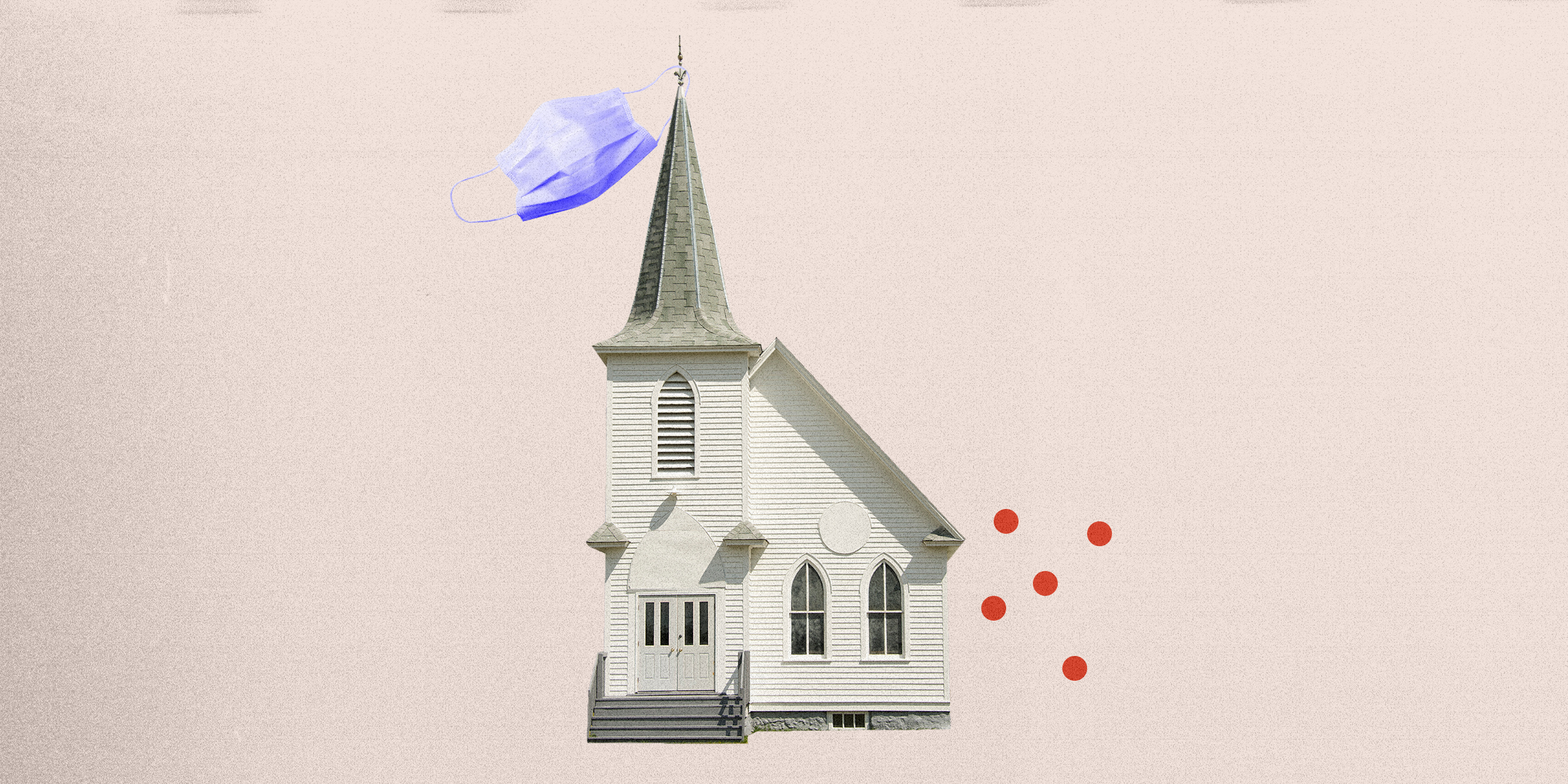
I was recently asked by the editor of a Christian journal to share with him my experiences with COVID and the Church, specifically the challenges of leading a church during the early stages of the pandemic, the shutdowns, and the re-opening of churches during the Spring of 2020. I posted my answer to his first question in this space yesterday. I am posting my responses to the other two questions today and then will elaborate a little more and process a little further tomorrow and Thursday. As a reminder, I was the Senior Minister at Central Church of Christ in Amarillo during that time. So my answers reflect the experiences in that setting.

What was the greatest success or unexpected blessing for your congregation that came out of COVID?

The most immediate blessing was that we were forced to think outside the box. The situation demanded creativity and allowed a flexibility to experiment with almost anything. We held an Ash Wednesday drive-thru service, we organized prayer parades that blessed our local missions partners, we did online talent shows and hosted livestreamed ten-minute “Word and Prayer” sessions four days a week. I began hosting a weekly podcast that highlighted our local missions partners and favorite “Passages and Prayers” from our elders. Some of the ideas were brand new and some were things we had talked about before but never had the space to try them out. Some of the things we tried failed terribly and others turned into meaningful events that will continue to bless that church for years to come.

With two-thirds of our church family participating from their homes on Sunday mornings and most all Bible classes and midweek activities canceled for a full year, we were given a wonderful opportunity to reimagine what we were doing as a congregation, and why. We had the space to rethink our priorities and the freedom to refocus our church programming and events. As shepherds and ministers, we developed criteria for using our time and resources on only those things that synced up with our congregation’s vision. We surveyed the church and put together a few focus groups to identify those things that truly transformed our members and brought them closer to God and to one another. We radically changed our Wednesday night programming, made significant adjustments to our Bible class and small groups structures, and refused to restart any program or event just because we had been doing it for twenty years – it had to match the criteria. We made the decisions to pour our church resources and our volunteer hours into fewer things that yield the most Kingdom and Holy Spirit fruit. We made things simpler and more streamlined to match our church’s twin values of transformation and mission.

What biblical passages or principles have taken on more importance for you – or have you seen in a new light – during and after the lockdowns?

The incarnation of our Lord and that same flesh-and-blood nature of his Church took a hit during COVID. As a society, we were already well down the path of increasing individuality and isolation. But the pandemic sped us along so that, somehow, church online has become a viable substitute for the physical presence of and in the Body of Christ. Our salvation is not a one-time event. Yes, we are connected to the life, death, and resurrection of our Savior when we are baptized. But our salvation continues – in fits and starts, with ups and downs, slowly but surely – in church. With people.

God’s Spirit transforms us in community. Our Lord changes us and shapes us into his image with other people. When we give and receive forgiveness. When we sing each other’s songs. When we bear one another’s burdens. In the hugs and during the meals. No matter what we’ve been told or what we’ve been doing for the past year-and-a-half, you can’t experience communion at a drive-thru or do church over the internet. We must work overtime, now more than ever, to reclaim the sacramental view of the Christian assembly. We are required now to teach and re-teach, to reassert and reaffirm the transformational purpose and effect in regularly meeting together in person. And we must work just as hard to make sure our Sunday assemblies cultivate the kind of life-changing transformative environments our God intends.

Peace,

Allan

Congrats to Kristin

Kristin Rampton held off her challengers with last night’s Georgia win over Alabama to take first place in the inaugural GCR Bowl Challenge. Kristin is one of only three of us on the GCR church staff who, back nearly a month ago, picked the Dawgs to win the college football national championship (Crystal and J.E. are the other two) and it was crucial to her victory. Kristin correctly chose the winner in 20 of the 34 games we picked overall, and finished strong with seven wins in the final nine games.

I was glad to see Brandon here at the church building this morning. He and I were texting throughout last night’s game – he’s a hard core ‘Bama fan and I’m for whoever is on the opposite sideline of Nick Saban. Late in the third quarter and early in the fourth, when Georgia really started rolling, I stopped texting Brandon because I didn’t want to jinx it. When I went back to my phone at the end of the game, Brandon had turned off his notifications. I’m happy to report that he’s okay. And all the doors at his house remain firmly on their hinges.

Kristin gets her lunch and her dessert free at next week’s monthly staff lunch. We’re also buying lunch for the last place finisher, but I’ll let him or her divulge his or her identity.

Peace,

Allan

Considering COVID and Church

I was recently asked by the editor of a theological / ecclesiological journal to answer a couple of questions related to the ways our church responded to the COVIDĀ  pandemic. He is in the process of dedicating the upcoming issue of his journal to reflections regarding COVID and he’s gathering input from a variety of church leaders. His questions to me dealt specifically with the problems encountered and the lessons learned during theĀ  lockdowns of the Spring of 2020 and the re-opening of churches in the early Summer 2020. I was the Senior Minister at Central Church of Christ during that time, so my answers to him were about what we were doing in Amarillo.

I’m going to post my answer to his questions in this space today and tomorrow and then expound on them a bit more near the end of the week. Once his article and journal are published, I’ll link you to it from this blog and we can further discuss this important topic.

What were the greatest challenges for your congregation to navigate during COVID lockdowns?

We experienced what a lot of church leaders encountered in the polarization of our congregation over the wearing of masks and other mitigation techniques. We, like most elders and ministers, found ourselves in a lose-lose situation: some of our members refused to come to church unless we mandated masks and others vowed not to come if we did. We told our church we were making our decisions based on the science and the medical recommendations but, in reality, we were making our calls based on our own gut feelings and the current mood of the church and our community. The longer the pandemic conditions continued, the more our shepherds relied on the culture instead of the science, and the church became a place that mirrored the inconsistencies and fostered the same mistrust as people were suffering in society.

A challenge I wrestled with personally – this is still a challenge for us to navigate faithfully as church leaders – is the dilemma between telling people to stay home for the sake of their health and asking them to worship with their church family in person for the sake of their souls. We made it really convenient for Christians to “attend church” from the privacy of their own homes, so much so that church became the last place some people would go. We worked hard to purchase additional cameras, add more lights and microphones, and pre-record communion thoughts and announcements so the livestreamed version of church rivaled most any other option. We did it so well, a lot of our folks felt no need to leave their homes. I had one older gentleman, a former elder, tell me he and his wife would probably never come back into the building. “We can turn up the volume to exactly the right level,” he told me. “We can rewind the video when we miss something, we can start it from the beginning if we accidentally sleep in; it’s too easy and nice to just do church from the house!”

I began seeing people out at restaurants and grocery stores who had told me they weren’t coming to church because of COVID. My wife and I attended a Saturday night July 4th dinner and fireworks show with about twenty people from our church. We were all eating at the same tables, sharing the same food, talking loudly and laughing with each other in tight quarters. But at least half of those people told me they would be doing church from home the next morning because of COVID.

Had we turned church into something you could do just as well watching a screen from home as participating in a pew in a sanctuary? It must go further back, to our teachings and our experiences together at church. Why do our people not view the Sunday assembly as uniquely transformative for their lives? Why do they not crave the physical presence of God’s people together in God’s presence around his table? Why do they not miss the inspiration and the transformation, the sheer glory of worshiping God and responding to his movement among his people? Have they not heard anything I’ve said in here for the past ten years?

It’s one of three things. Either the culture of individuality, personal preference, and convenience in our society is too strong and overpowers anything I say about the sacramental importance of the worship assembly. Or I haven’t communicated it very well. Or our people have not experienced much transformation in church.

Probably all three.

Peace,

Allan

41 Forever

Forty-One is a prime number. Fitting that it should belong to, and forever identify such a prime dude.

Dirk Nowitzki’s number was hoisted to the rafters at AAC last night in a post-game ceremony that featured NBA Commissioner Adam Silver, members of the Mavericks 2011 NBA Championship team, an offer of a ten-day contract by former teammate and current Mavs coach Jason Kidd, and the unveiling of a statue honoring Dirk that will be constructed in front of the home arena later this year.

Dirk’s accomplishments are well chronicled and undeniably great. He spent his entire 21-year NBA career in Dallas, the only player in league history to play so long for the same team. During his legendary run, Dirk racked up 14 All Star game appearances and 12 All NBA selections. He was the league MVP in 2007 and the Finals MVP in 2011 when he brought the Mavericks their first and, so far, only championship. When he retired two years ago, he did so as the sixth leading scorer in NBA history with 31,560 points, and the Mavs franchise leader in seasons played, games played, games started, points scored, rebounds grabbed, shots blocked, field goals made, free throws nailed, three-pointers swished, and one-legged fadeaway jumpers.

And he absolutely owns the city of Dallas.

And he has my undying admiration and gratitude.

I was fortunate enough to cover Dirk and the Mavericks up close during my time at KRLD radio in Dallas. For almost five years I attended at least one or two practices a week, sat courtside at most home games, and waited in that Mavs dressing room each night for an eternity waiting on Dirk to finish his post-game shooting in the practice gym and his shower so we could interview him about his and the team’s performance.

I remember those long waits. It didn’t matter if he had played terrible in a tough loss or if he had shot 90% in an important win, he spent that 45-minutes in the practice gym after every game. And we all waited on him. We had to. You don’t leave a Mavs game without getting sound from Dirk.

I remember holding my microphone with the KRLD logo up high with my right arm during those late night media scrums around his locker. You don’t realize how tall a seven-footer really is until you’re holding a microphone up to his face for twenty minutes. I remember how uncomfortable it was. Switching arms. Supporting my right arm with my left hand in a subtle way I hoped nobody would notice.

And I remember how amazingly kind and accommodating he was for all those years. Last night he actually thanked the media for treating him fairly – you don’t hear too many professional athletes say that, if any. He never skipped those post-game talks. He always showed up and he always answered every single question with dignity and class. And patience. I never saw him get upset with a reporter. Ever. I don’t think I can say that about any athlete I covered. Even as laid back and cool as Steve Nash is, he would let fly with the sarcasm and a dismissive eye-roll when he was irritated. Not Dirk. Not ever.

I especially remember one late night after a tough loss when Dirk did something special for me. It was during the ’04-’05 season. The Dallas Observer had somehow talked Dirk into writing a weekly advice column, a tongue-in-cheek, comical outlet for Dirk and a promotional novelty for the downtown paper. The column was funny and well-received. Everybody was having fun with it. And, of course, I wanted to cash in for my own selfish purposes.

My producer, Eric Gray, and I asked Dirk if he would do a bit with us in which he gave us couples advice. We would come to him with our relationship issues, problems that could only happen between a talk show host and a producer, and he would give us his advice for mending the fences and learning to live and work together in harmony. We wanted it to be funny. We would come up with the hilarious problems and he would deliver his comical advice. Dirk was okay with the idea – he wasn’t as in love with it as we were – and agreed to do it after the last game of the current homestand.

That night came and the Mavs lost. I can’t remember now who beat them, but it was not a pretty night. It was quiet in the dressing room that night. There was frustration in the air, maybe even some tension. We waited and waited like always for Dirk to come out and, when he did, he answered everybody’s questions professionally and honestly. Like always. About five minutes into it, he sat down at his locker. He continued to answer questions, but he was sitting down, which was unusual. He was worn out. I could see it in his eyes and hear it in his voice, see it in his body language. He was not in a good mood. And Eric and I were hoping to do this funny bit.

We waited for Sefko and Duane and Stein and the other beat writers to finish and then Dirk looked right at me. He knew what he had agreed to do and when he told me he would do it. But I didn’t have the heart. So I gave him the out. “Dirk, you don’t have to do this. We can do it when y’all get back.”

“No, we’re leaving tomorrow. Let’s do it now.”

I was surprised. And pleased. But not really sure about it. As we set up our recorder and microphones, I wondered to myself if it would it be better to wait a week or so when he’s in a better mood or get it now and risk it not being as funny? What to do?

But Dirk turned it on. He delivered. As always. He found the energy and gave us the funny lines and completely killed it for almost nine minutes.

I love Dirk Nowitzki for playing in Dallas for his entire 21-year Hall of Fame career. I love Dirk for embracing my hometown and bringing my city a championship, for struggling so long to climb the hill and to finally conquer it with hard work and leadership and commitment. So many guys take the easy way out. Dirk never did. There is something very noble in staying where you’ve been placed and doing everything in your power to win right there, with whatever cards you’re dealt. It’s honorable. David Robinson and Tim Duncan did it in San Antonio. Reggie Miller did it in Indiana. And Dirk did it in Big D. It’s rare. And it’s beautiful.

But I admire Dirk and I’m thankful to him for that night at his locker when he gave me those nine minutes after a tough loss. It’s just one small example of the hundreds of things that point to his character and his class.

Forty-One is a prime number. And now it’s in a prime position in the rafters at AAC. Forever.

Peace,

Allan

It’s a Big Church and That’s OK

January is a time when we’re more likely to interact with new people in our church building: more visitors and guests, more of our community, more people who’ve just moved to our city, more folks looking for a church home.

When you’re in a bigger church, those visitors and guests don’t always stick out. It’s not always obvious. It’s easy to mistake that person you don’t know or that person you’ve never seen before as a visitor when, in reality, that person is a 15-year member. It’s embarrassing to ask an unfamiliar face if they’re visiting and they inform us they’ve been coming to GCR longer than we have. It’s awkward. So, we’re paralyzed and we don’t do anything. When we’re unsure, we play it safe and don’t do anything at all. And we wind up with a dozen visitors at Abuelo’s saying, “That’s not a very friendly church.”

Now, long time GCR members don’t help when we become offended if another member doesn’t know our name. The way to respond to another member who mistakes you for a visitor is not, “I’ve been going to GCR for 27-years! How long have you been here?”

If we’re going to be a welcoming church in the name and manner of Jesus, we’ve got to first get over ourselves. This is a big church, and that’s okay. You can’t be embarrassed about not knowing someone’s name. And you can’t be offended if somebody doesn’t remember yours. GCR is not a 150-member church. It’s a big church, and that’s okay.

In fact, let’s just make that something we say to each other when we find ourselves in that awkward position of mistaking a member for a visitor. Both people in the awkward situation need to look at each other with love in their eyes and patience in their hearts and say, “It’s a big church, and that’s okay.”

We want to be a friendly and welcoming church this January, this whole year. And it will take this kind of intentionality to pull it off.

Peace,

Allan

« Older posts Newer posts »