Category: Worship (Page 9 of 27)

Mood Matters

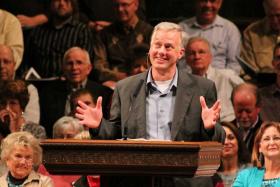
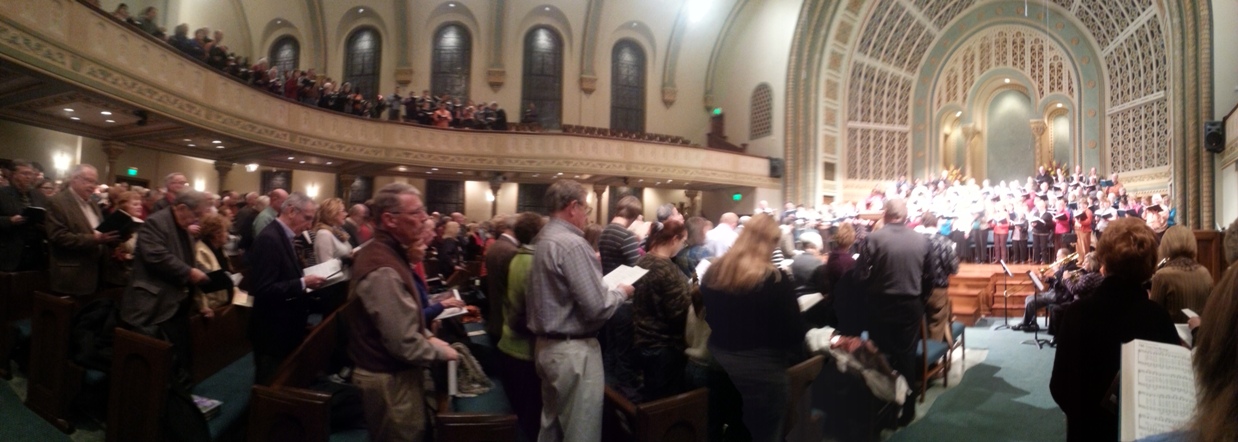
Indulge me one final word or two today as I continue to reflect on the first “4 Amarillo” Thanksgiving service last Sunday night at First Baptist. It’s been eight days now since that historic evening and I’m still receiving at least two or three texts, emails, cards, and calls about it per day. It seems that even through the short work week, the Thanksgiving holiday weekend, hectic trips to the mall, and Auburn’s 109-yard return, you are still processing it, too. Allow me to address the mood of the worshipers in the building that night and how I believe it profoundly impacted not only what happened during that hour but how it has significantly framed the conversations since.

I’ve heard from more than a few of you who believe the sermon I preached during that service was the best sermon I’ve ever preached in my life. Some of you have only heard me preach a couple of dozen times, but others of you have listened to me about a hundred times. My best sermon ever? And you don’t stop there. You’ve been telling me for a week now that the singing that night was the most beautiful singing you’ve ever heard. Really? The responsive readings, the Scripture readings, the prayers, the fellowship — it was all so moving, so awesome, so inspirational, so perfect. I’ve been reading this and listening to this for seven straight days. Best ever? Really?

Yes, I’ll give you the fact that, maybe especially for us Church of Christ-ers, the evening was highly significant. A watershed event. As some of you have written, it truly was “a defining moment,” “a sea-change for us,” “the beginning of something very different and very good.” I acknowledge all of that. Yeah, it was big.
But I’m convinced that the mood of the worshipers had a whole lot to do with it.

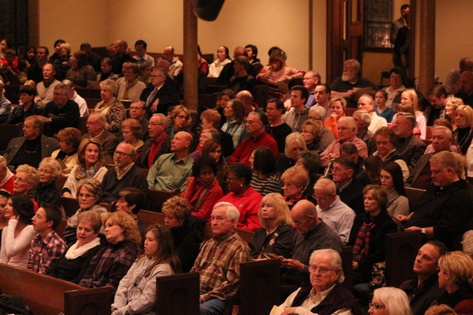
The truth is that every single person in that room — Howie reports 1,150 in attendance; that’s a preacher’s count, a Baptist preacher’s count! — wanted to be there. Everybody there had to put forth a greater than average effort to get there. The roads were slicked over with snow and ice. It was cold. It was dark. None of us have regular Sunday evening assemblies anymore. And the Cowboys-Giants game was still going on. Nobody was there because they felt some kind of a grudging obligation. Everybody in the room really wanted to be there.

In addition, every single person there was anticipating something really special happening. We all entered the worship center expecting to be moved, expecting to feel the presence of God, expecting to be inspired. After all, we had been praying about this night for months. We all knew that we were taking some risks in bringing four different denominations together for a worship assembly, but we were all convinced that it was God’s holy will. We anticipated that he would bless us richly as we worshiped him together.

We had gathered with a purpose. We were — each of us and all together — on a mission, even. We were coming together for the sake of an unbelieving world, expecting to be profoundly blessed, expecting God to reveal himself to us in significant ways. I’m of the belief that preparation and attitude have a whole lot to do with corporate worship.

I’m afraid that when most of us gather in our church buildings on Sunday morning, there hasn’t been a whole lot of prep time. Our hearts and our minds haven’t been focused on the coming encounter with God and communion with his people. We probably haven’t prayed much about it. And most Sunday mornings, I’m not sure we’re expecting much to happen. Some of that may be the fault of an unimaginative preacher or a lazy worship committee. Maybe. But a lot of it has to do with every man, woman, and child in the pews. If we don’t expect it, we might miss it even if it happens right in front of our faces. If we’re intently looking for it, searching for it, anticipating it, expecting it, then the smallest little glimpse of glory will slam us to our knees in joyful praise. Preparation and attitude matter.

I think it would be impossible to try to plan 52 straight Sundays of special events. We couldn’t come up with 52 different ways to pray, observe the meal, illustrate the sermon, or arrange the music to provoke the kind of energy and anticipation we all experienced that night at First Baptist. I’m not sure we’d even want to try; that kind of thing can quickly turn into an idol or a spectator-only affair. But I do believe we can do much better at entering the worship center on Sundays expecting to hear a powerful word from God. Anticipating God revealing himself to us in a new and exciting way. Expecting something really great to happen. Having spent time in prayer, preparing our hearts and our minds to encounter our Father and his people in significant and eternal ways.

It mattered for the “4 Amarillo” Thanksgiving service. The mood in the room had a lot to do with the success of the evening. It matters this coming Sunday morning at your church, too. It matters a lot.

Peace,

Allan
4 Taste of Glory Divine

The more I read and study Scripture and assimilate those holy words into my soul, the more I explore and discover about the unfathomable love and grace of our Father, the more I preach and teach and sing and pray about our King and his eternal Kingdom, the scope of which pushes our imagination to its very limits, the more I’m convinced that denominational lines that divide his Holy Church must sicken our God. Our King who prayed for our Christian unity the very night he was betrayed, our Christ who destroyed all the barriers between God and mankind and between all men and women when he died on the cross, our God who spoke through the prophets and his servant Jesus to foretell the great banquet feast when “every tribe and language and people and nation” will be gathered together on that last day, our Lord who is reconciling all people to himself and has ordained us all as his ministers of that reconciliation, must be nauseated at the historic line-drawing and fellowship-testing and debating and dividing that have characterized us as his children.

What a refreshing wind of Holy Spirit life we experienced together Sunday night at the first “4 Amarillo” Thanksgiving service! What an unflinchingly strong statement about our four churches’ refusal to be divided by insignificant issues, preferred practices, or pet peeves! What an undeniable witness to our city of the unifying will and power of the Prince of Peace who transcends all of whatever differences may keep us apart! What a foretaste of glory divine! What a spectacular preview of what is to come on that day of glory!

Boy, was Sunday night significant. Highly significant.

Yes, I know, for years now we have worshiped with other kinds of Christians in a variety of settings. I’m sure you have, too. At retreats and conferences, youth rallies and Bible camps, before and after service projects. No doubt we’ve all prayed and read Scripture together around sick beds in hospitals and at funerals of loved ones without checking who’s in what denomination. We’ve crossed denominational lines to sing and pray together for a long time now. But there is something different about that ‘sacred hour” in our worship centers on Sunday. If you think about it, generally it’s what happens during that worship hour that divides us. The ways we sing and pray, the particular methods we use to baptize and commune — this is generally where we debate and put up walls, where we draw our lines of fellowship.


Most of us have always been able to worship God with Christians from other denominations at a wedding or a patriotic gathering or down at the homeless shelter. But Sundays in our buildings are different. Theologically, of course, that’s a bunch of hooey. Practically, though? Like it or not, it’s true. Sundays in our worship centers are different. It’s that last piece of turf we’ve never surrendered to the grace of God. It’s the one thing we hold on to in order to protect what distinguishes us from other Christians, instead of emphasizing the countless ways we are just alike. Sunday is different. And if we’re truly going to embrace the will of our Christ as expressed so clearly in his prayer for unity, if we’re going to practice what Jesus says so plainly is a foremost  method of reaching a lost and dying world, we’re going to have to express our one-ness with all his followers in worship.

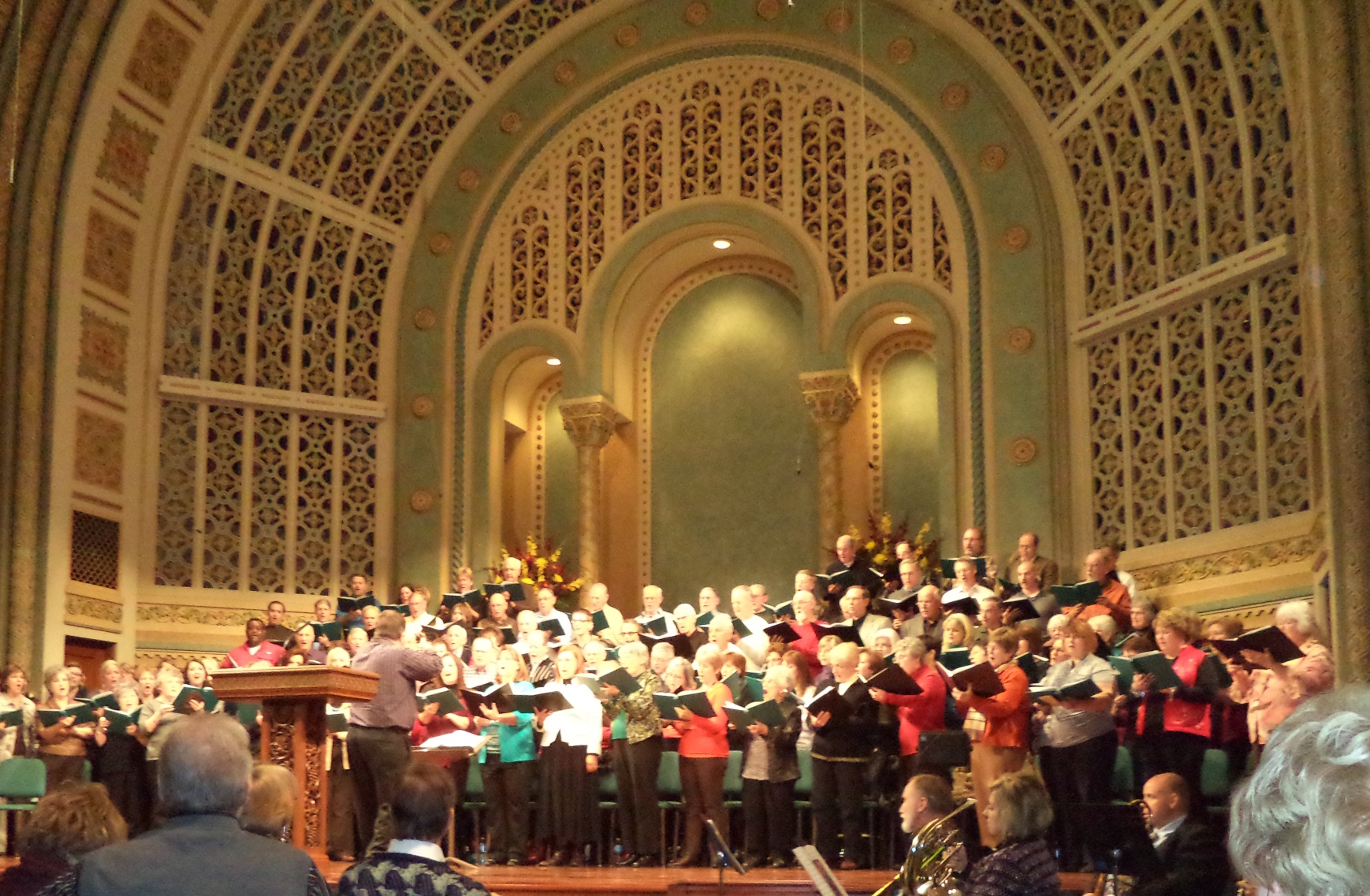
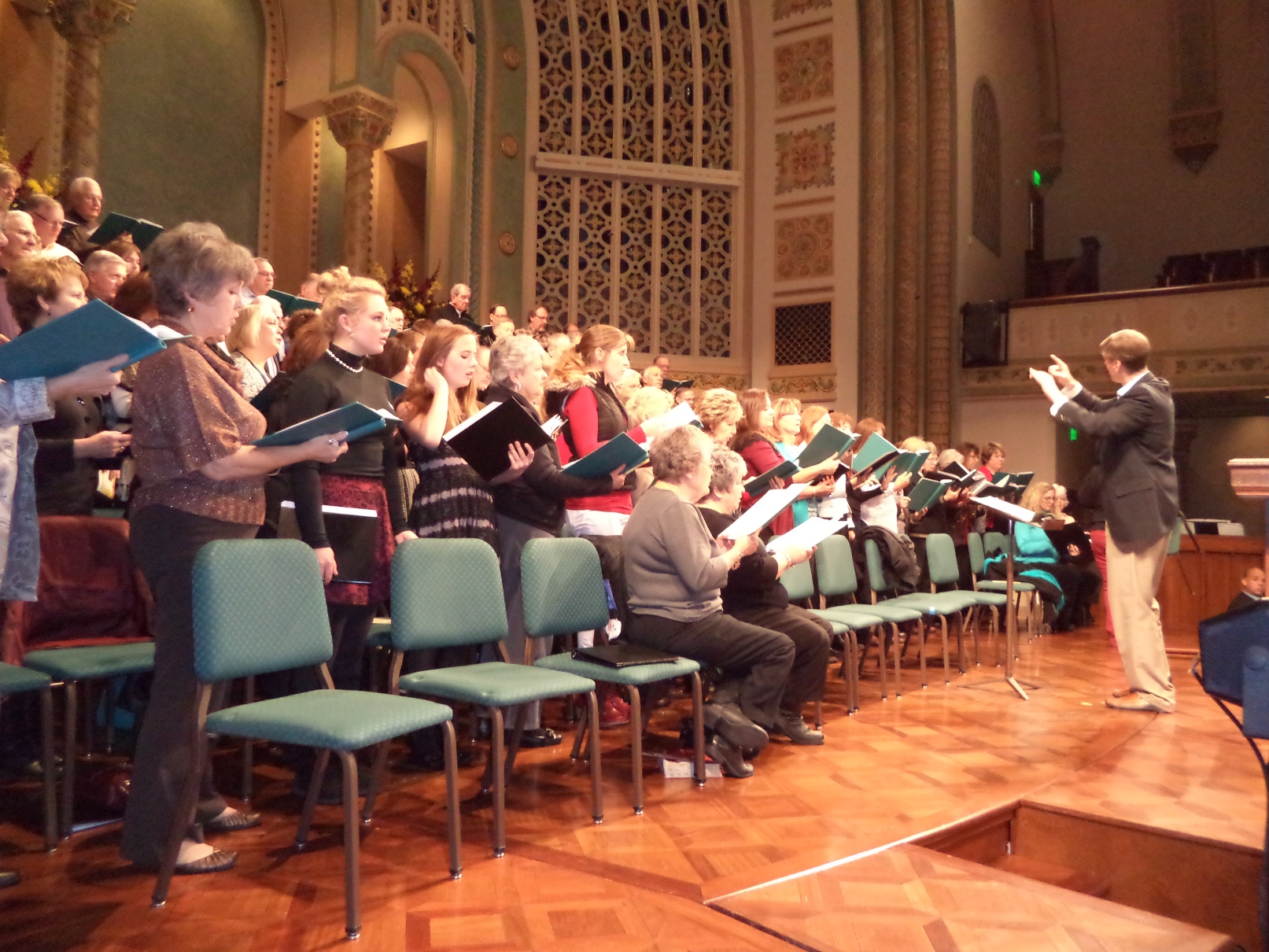
We did it Sunday night. Presbyterians and Baptists, Methodists and us CofC’ers. For almost 75-minutes on a freezing cold night in Amarillo, we did it. Our God was praised. His people were edified. And the city is taking notice.

Again, I may take another post or two to sort it all out. There’s a chance we could do a lot of processing together in the comments section of the blog. That would probably be preferable. But in an effort to continue the post-service debriefing that’s been happening around here since about 7:15 Sunday night, allow me to share just a couple of the more than 50-emails and texts I’ve received from our own Central members in the past 48 hours. I won’t attach their names to the comments, because I haven’t asked any of them for permission. But here’s a sample:

“God has used this to set me free from the bonds of the old confused thinking I grew up with… like, why do we think we (CofC’ers) are the only ones following God’s ways, when my friends and family worshiped differently, but all seemed OK with me, from what I was taught, and more importantly the Christian example they gave me??? Last night all I could do was praise God and thank him for what he is doing. I will say, it has been a long time coming!!! Thank you!”

“I cannot seem to articulate the warm, emotional experience that we had. It took my family 1.5 hours to drive in due to the ice, but we were not going to miss this historic restoration act! Yesterday was so effective in helping me to emotionally release so much of my legalistic baggage from my true, old school Church of Christ rearing in the late ’60s and ’70s.”

“What a night! What a special gift for the four churches to move forward and grow together. The powerful theme of unity and oneness in Christ came through loud and clear. You reminded of Ronald Reagan’s famous theme for ending the cold war, ‘Tear down this wall!’ Tonight, there was NO wall! We were all one in spirit!”

“Thanks so much for articulating our feelings so well.”

“I cannot wait until we all worship together again. I think this is the beginning of something really big — I can just feel it!”

“Tonight was a great blessing to many. I hope it felt as good as you hoped and dreamed it would.”

For more than ten years now I have been praying that someday my children would be able to worship our God together with Christians from other denominations on a Sunday. I’ve begged God that, whether my children are my age and have kids of their own or whether they are old and gray, they will get to experience on earth the kind of unity with other disciples that we’re going to experience in eternity. To realize over the past year that it might actually become a reality in my lifetime, that I might actually get to experience it myself with my wife and kids, has been a tremendous blessing. To actually be the one preaching when the dream came true was an unexpected honor I did not deserve nor will ever forget. It was far better than I had ever hoped.

To those of you who were there Sunday night, I would encourage you to share your thoughts and feelings by clicking on the “comments” at the top of this post. To those of you who were not there, whether you live in Amarillo or somewhere else in the world, I’d like to get your reactions, too.

I’ll write tomorrow about the sermon, about preaching it in that historic setting, and about the spirit of the room on that incredible night. Then, depending on how things go this weekend, I’ll try to find time before Sunday to reflect on our morning service here at Central with Howard Griffin from First Presbyterian.

I don’t know where this is headed. I’m not sure what this turns into over the coming months and years. But I do know it’s significant. It’s important. In our post-modern, post-Christendom, post-denominational world, it’s more important than ever. And I’m so eternally grateful to belong to a church that is determined to jump into these kinds of expressions of faith and grace like Central.

Peace,

Allan

Thanksgiving 4 Sunday

“I have given them the glory that you gave me, that they may be one as we are one.” ~John 17:22

We’ve been given a profound intimacy with the Father and Son that changes all of human life. It’s a unity that encompasses the Father with the Son, all disciples with them both, and all disciples, in turn, with one another. This is the gift of Jesus’ prayer. It’s not what we have to do or maintain; it’s what God through Christ has already given us and continues to maintain through the power of his Holy Spirit. It’s just a matter of whether we recognize it or not.

This Sunday, we are set to gather in gratitude to give thanksgiving to our God for the gracious gift of this unity. We will acknowledge the fellowship we share with the other Christian congregations in downtown Amarillo on this day of worship and praise and thanksgiving. Together.

Our guest preacher here at Central on Sunday is Howard Griffin, my good friend and the senior pastor at First Presbyterian Church. As has become our custom on the Sunday before Thanksgiving, we will share a special time of communion around several tables in the worship center piled high with a wide assortment of breads, representing the divinely-ordained diversity in Christ’s Body, his Church. Then at 6:00 Sunday evening, all four churches are meeting at First Baptist for the first ever “4 Amarillo” Thanksgiving service.

As God’s children, unity is our nature. This is who we are: One with Christ and one with his followers everywhere. What that means is that there is very little, if anything, outside of denying Jesus as Lord in word or deed that can separate us. If that’s the case — and it is! — then our diversity and our differences are not just tolerated, they’re embraced and appreciated. Even celebrated. Thanksgiving seems like a perfect time for just such a celebration.

Peace,

Allan

Around the Table: Part 5

“Obey these instructions as a lasting ordinance for you and your descendants. When you enter the land that the Lord will give you as he promised, observe this ceremony. And when your children ask you, ‘What does this ceremony mean to you?’ then tell them, ‘It is the Passover sacrifice to the Lord, who passed over the houses of the Israelites in Egypt and spared our homes when he struck down the Egyptians.'” ~Exodus 12:24-27

The final dinner Jesus shared with his disciples on the night of his betrayal was a Passover meal. The synoptic gospels all make the explicit claim that this was the Passover. Jesus made preparations and gathered his disciples to “eat the Passover.” Since this last supper has become for the majority of Christians the be-all, end-all paradigm for our own beliefs and practices regarding the Lord’s Supper (for right or wrong), it makes sense to study carefully the Passover context of that last night. I’ve had church leaders on more than one occasion point to the gospel accounts of this last meal to justify their order that we not sing any songs during the Lord’s Supper. After all, the logic goes, the Bible says they sang a song after the meal, not during. Of course, if we’re to follow that logic to its conclusion, we’d be sharing the Lord’s Supper only on Thursdays. Upstairs.

So, yes, let’s look at the Passover context of what was happening around the table on that last night.

As we’ve already noticed in this series, the Jewish Passover meal — all covenant and/or community and/or sacrificial meals for that matter — is a communal celebratory event. As an expression of salvation, it was yet another community meal celebrated following a sacrifice. The Passover, in particular, was a joyous celebration of God’s deliverance of his people from slavery in Egypt.

“Celebrate it as a festival to the Lord — a lasting ordinance!” ~Exodus 12:14

“Celebrate this day as a lasting ordinance for the generations to come.” ~Exodus 12:17

“I am going to celebrate the Passover with my disciples.” ~ Matthew 26:18

The Passover Supper also was a remembrance of that deliverance. By remembrance, we don’t mean a merely intellectual act or emotional recollection. This is a faithful action, a rehearsal, a participation in that deliverance. The Passover liturgies from the Hebrew Scriptures and the Jewish writings from the first century all contain actions and language that help the people around the table to identify with the historic salvation event as if they were present in Egypt and at the Red Sea.

“Celebrate the Passover of the Lord your God because in the month of Abib he brought you out of Egypt.” ~Deuteronomy 16:1

“…so that all the days of your life you may remember the time of your departure from Egypt.” ~Deuteronomy 16:3

“…because you left Egypt in haste.” ~Deuteronomy 16:3

“We cried out to the Lord… the Lord brought us out of Egypt with a mighty hand and an outstretched arm.” ~ Deuteronomy 26:7-8

“Each should celebrate as one who has gone out of Egypt.” ~ Mishna

We also know that as Jesus and his disciples gathered on that last night, their supper together was marked by great joy, praise, and thanksgiving. This was not a dirge or a funeral meal; expressions of joy at this supper were the command of God.

“…with great rejoicing… singing… praise.” ~ 2 Chronicles 30:21-27

“…celebrated with joy… Lord had filled them with joy.” ~ Ezra 6:22

“…your times of rejoicing, your appointed feasts.” ~ Numbers 10:10

The Passover was also established as an anticipation event. Children of God ate the meal together looking forward to that day when they would be eating it in a much better place, in wonderfully better circumstances. They eat and drink with an eye to the future, focused on an upcoming meal that will surpass the one they share today.

“When you enter the land that the Lord will give you as he promised, observe this ceremony.” ~ Exodus 12:25

If we’re really out to imitate every detail of that Last Supper at our communion times together on Sunday mornings — again, for right or wrong — then why don’t we? As good law-keeping Jews, Jesus and his disciples would have been in a festive spirit that night and engaged all the elements of the evening with great joy. The meal was marked by group identity and interaction. It was a present participation in the past events of God’s salvation. They were singing the psalms, specifically Psalms 113-118, before, during, and after the supper.

I would recommend singing songs of salvation, songs of praise for God’s mighty acts, before, during, and after our communion meals together. I would suggest swapping salvation stories around the table. I once was ______, but now I’m ________. Ask each other the questions: from what have we been delivered? From what to what have we passed? Who took our place that day? Do it together in the aisles or along the walls in your worship center. Huddle up around your pews. Allow the children to ask the questions: Why do we do this? And then share the story: because the Lord our God delivered us by the Passover Lamb. And then hug each other and sing another song.

Peace,

Allan

Even the Sparrow Has Found a Home

“How lovely is your dwelling place, O Lord Almighty!
My soul yearns, even faints, for the courts of the Lord;
my heart and my flesh cry out for the living God.
Even the sparrow has found a home, and the swallow a nest for herself,
where she may have her young — a place near your altar,
O Lord Almighty, my King and my God!” ~Psalm 84:1-3

For the Israelites of old, the temple in Jerusalem represented both the physical and spiritual dwelling place of God. The temple is where God lived; it was his throne and his footstool; it’s where his people gathered to meet with him in worship and praise, in sacrifice and service. If one wanted to experience the presence of God, if one wanted to be near to God, he or she went to the temple. Of course, everybody wants to be near to God. Everybody wants to be in his presence. So everybody goes to the temple. Even the birds of the air make their nests in the temple eaves, they lay their eggs and hatch their little bird babies as close to the altar as they can get. Everybody wants to be near to God.

And God is in his holy temple.

Our understanding today is that God, by his Holy Spirit, actually dwells inside each one of us as his dear children and disciples of his Christ. We, the Church, are the temple of God. His presence is within us. And I would never attempt to equate our church building here at 1401 South Monroe with the temple in Jerusalem. The differences are at once obvious and numerous and beyond enormous. But when God’s people come together in his presence, in the name of his Son, and by the power of his Spirit, he does meet with us in a special way. He is present with us together on Sundays in our church buildings in ways that he is not present with us otherwise. There is something unique happening. We can’t put our finger on it, we have a difficult time defining it; but we know.

“Blessed are those whose strength is in you, who have set their hearts on pilgrimage.
As they pass through the Valley of Baca, they make it a place of springs;
the autumn rains also cover it with pools.
They go from strength to strength, till each appears before his God.” ~Psalm 84:5-7

I imagine that God is the one who gathers us together on Sunday mornings. I imagine he blesses his people as they iron their shirts, as they match their socks, as they feed the kids, as they search for their Bibles and the car keys during that hurried early morning hour. He is the one who calls and gathers and blesses. People don’t come to the church building because the preacher called. They don’t gather because the elders or their friends brought them here. It’s God. God calls us to gather as his community of faith and worship him. And as we drive down I-40 and negotiate Washington Street with all of its lights, as we arrive from north, south, east, and west Amarillo and beyond, as we pull into our parking spot, God is preparing us. He’s reminding us. He’s getting us ready to experience his presence in powerful ways we haven’t since the Sunday before.

“Better is one day in your courts than a thousand elsewhere;
I would rather be a doorkeeper in the house of my God than dwell in the tents of the wicked.” ~Psalm 84:10

This church building at 1401 South Monroe is a place where God’s people do regularly experience his presence in profound ways. We discussed this together as a staff earlier this week. After reading and praying through Psalm 84, each of us named two or three places — physical places — around here where we encounter God’s presence. During baptisms on a Sunday morning. Praying with newly baptized believers behind the baptistry. At funerals. During the congregational singing. During the sharing of communion. While watching kind brothers and sisters helping one another up and down stairs, opening doors for each other, cleaning up somebody else’s spill. While spontaneous prayer circles break out in the worship center. In our youth group’s Huddles and Muddles. When we do anything in the old chapel. Walking by Mark’s office while he ministers to a broken young man or a woman who’s lost all hope. Listening to the children laugh at Kid’s University downstairs.

Our God lives here at 1401 South Monroe. Yes, I know, he dwells inside each one of us in powerful and mysterious ways. The ways our God lives with us and in us today is a marvelous fulfillment of his eternal covenant promises. It’s more than any of us could have possibly imagined. It’s so wondrous that even “angels long to look.” It’s so much better now — indescribably better — than when God’s presence was only experienced at the temple. But that doesn’t discount in any way the fact that our God, yes, does indeed live here in our church building, too. Yes, he does.

Where and when in your church building do you really, really, really feel the presence of our God?

See you Sunday,

Allan

Singing Out Loud

“Glorify the Lord with me; let us exalt his name together!” ~Psalm 34:3

One of the many blessings I enjoy as a preacher is the introduction of new authors and ideas to me by members of our church. At least a couple of times a week someone will email me a link to an article that has touched them in a particular way or recommend a book they believe I might really enjoy. I love it. These kinds of things work to broaden my own vision and horizons, they usually give me good things to think about (or “borrow” for a sermon or Bible class), and they always give me another glimpse into the heart and soul of the brother or sister doing the recommending.

Recently, I was directed by a fellow Central-ite to the blog of Jennifer Gerhardt, a preacher’s wife who lives in Round Rock. I was linked specifically to a post titled “One Reason You Should Sing Out at Church.” My great love of congregational singing compelled me to click on the link immediately. My passion for deep Christian community compelled me to pass it on to you.

Here’s the link. But don’t click it yet.

Gerhardt describes an outdoor screening of the Wizard of Oz in which her family and the crowd joined together to sing “We’re off to see the wizard…” to illustrate what happens when we all sing together in worship:

“When people, different in color and taste, personality and position, sing together on a Sunday morning, when they sing-speak the same words in the same second, lifting high the name of the same Savior, they agree and affirm and commingle. When I sing and you sing, we’re saying to one another, in small part, ‘I’m with you.’

When we sing together in worship, we belong.”

Gerhardt goes on to observe that approximately 5,400 species of animals sing: humpback whales, dolphins, gibbons, bats, tree frogs, and all the birds. But of all the animals that sing, apparently not one of them lives on the ground. Every single animal that sings live in the trees or in the ocean. Researchers are convinced that the reason lies in the fact that singing requires security. Singing makes an animal’s presence known both to friends and foes. Tree canopies and ocean depths tend to be more secure than the firm surface of the ground. Animals who live in trees or under water feel safe enough to sing.

There’s only one exception in nature to this rule. Humans.

“Most of us don’t sing in front of strangers. We sing with people we love. People who won’t insult us or embarrass us or stare at us or surreptitiously film us and put the footage on youTube. Singing with others is an act of trust.

When we don’t sing, it often springs from an unwillingness to be vulnerable. That’s what excuses like ‘I’m not good at it’ and ‘I don’t feel comfortable’ boil down to.”

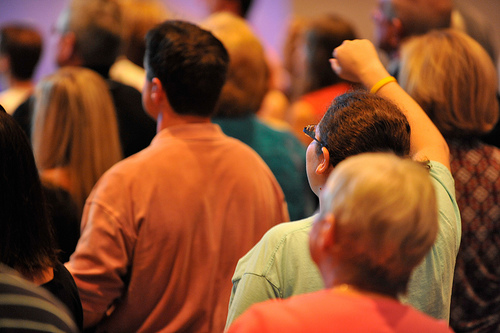
The interesting thing is that being vulnerable is the risk one has to take in order to make any kind of connection with anybody. You’re not going to connect with a person or a group if you don’t open yourself up. It just won’t work. It’s ironic, really, that a lot of us won’t sing because we don’t want to stick out and be separated from the group. But playing it safe like this actually works against us: we wind up not connecting, not belonging. If you want to connect, one of the best things you can do is open up your mouth and let it fly with some serious out-loud singing!

Lots of people don’t sing at church. Maybe you don’t. Man, you’re missing out on a whole lot more than you think. Thank you, Jennifer, for reminding us how vital congregational singing is to unity and connection in the Lord’s Body. And thank you, Suzanne, for the link.

You can click it now.

Peace,

Allan


« Older posts Newer posts »