Category: Preaching (Page 19 of 25)

Every Meeting a Privilege

Every Meeting, Every Meeting, Every Meeting…I have the opportunity here to talk to lots of people. Lots of people. Every day. Every week. People in my study. People in the hallways between Bible class and worship. People on the phone. People in the parking lot. Every day.

Some people come by to encourage me. Some are here to complain. Some are cheerful. Some are grumpy. Some come to confess. To question. To praise. To get advice. To give advice. Some people are hurt. Some just come by to hang out.

What I must remember is that every single person I run in to — without exception — is a person created by our God, made in the image of our God, for our God’s purposes. They are all, each one of them, a child of our Father. And I must approach every single interaction with these people with that specific mindset.

Eugene Peterson, in his outstanding book Working the Angles, says we have to view every one of these meetings — planned or chance, positive or negative — as a great privilege.

“This face before me, its loveliness scored with stress, is in the image of God. This fidgety and slouching body that I am looking at is a temple of the Holy Ghost. This awkward, slightly asymmetrical assemblage of legs and arms, ears and mouth, is part of the body of Christ. Am I ready to be amazed at what God hath wrought, or am I industriously absorbed in pigeon-holing my observations?

The significance of what I see before me is not what I see before me but what Christ has said and done. Far more relevant than what I feel or think, or what this person feels or thinks, is what Christ has said and done. This is a person for whom Christ died, a person he loves: an awesome fact! Am I prepared to admire? Am I prepared to respect? Am I prepared to be in reverence?

Every meeting with another person is a privilege. In pastoral conversation I have chances that many never get as easily or as frequently — chances to spy out suppressed glory, ignored blessing, forgotten grace. I had better not miss them.”

Peace,

Allan

Between Intention and Result

Between Intention & ResultI ran across a collection of letters last night written by famous Texas sportswriter / novelist Bud Shrake. Back in the mid ’60s Shrake, who wrote for the Dallas Times Herald and the Dallas Morning News, moved to New York to take a job with Sports Illustrated and to work on his novels and screenplays. During Shrake’s colorful career he managed to write ten novels exploring two hundred years of Texas history; several sports-related books, including Barry Switzer’s biography Bootlegger’s Boy; and five books with golf legend Harvey Penick, including the number one all time best-selling sports book in history, Harvey Penick’s Little Red Book.

Shrake died earlier this year at 77 years of age. And the current issue of Texas Monthly has compiled an edited selection of letters he wrote from New York in 1964-65 to friends back here in DFW and Austin. The letters are fascinating to me. They are of a long-gone style of writing that characterized the work of the best-ever sports writers from the ’50s, ’60s, and ’70s. But they also reveal the guts of a guy struggling to make it. Shrake is restless in his letters. Searching. Unsure of himself, but determined to keep on.

I see myself in a letter he wrote to his ex-wife, Joyce, on April 10, 1965:

“I do not think you can show me a writer who is not insecure about his work, unless he is one of those who is merely plodding over the same weary ground; a pattern mystery story man, or historical novel writer, or perhaps a memoirist. Or perhaps a [Thomas] Mann or someone in the later years of his craft when he is not doing anything that is for him new. Do you think Mailer, for example, was insecure about “An American Dream?” Sure he was, and is. Such feeling partially accounts for the sudden eccentricities, the erratic-nesses, the gropy destruction bouts of drunken wildness, the hysteria even, of writers who are at least trying to be serious regardless of their true merit. One simply does not know for sure what is being achieved, what the gap might be between intention and result.”

Couple of observations. One, can you imagine one of the current sportswriters of a major newspaper writing this way today? Incredible, huh? Stories about Bob Lilly and Don Meredith and Stan Musial and Bob Cousey were written this way.

Two, I don’t feel exactly this way as a preacher. There haven’t been any “bouts of drunken wildness.”

But I can certainly relate to the insecurity. I can easily relate to “trying to be serious regardless of [my] true merit.” It’s the last line of the letter there, this gap “between intention and result,” that perfectly captures my thoughts and feelings about being a proclaimer of the Word of God. I never know for sure what’s really being achieved.

What’s being achieved?I never know what’s going to happen. I never know. From day to day and week to week — sometimes it’s an hourly mystery — I never know how what I’m going to say is going to be received by those who hear it. I’m acutely aware that there are 900 sermons being preached at Legacy every Sunday morning. I’m preaching one and the 899 other participants are hearing their own. There’s a huge unknown gap between intention and result.

The maddening thing is that I have no control. None. It’s all on God. He guides me all week on the words I’m going to say. He shows me by his Holy Spirit what to preach. He gives it to me during long periods of prayer and meditation and study. And then he uses those words to do with them what he wants. Totally independent of me. I’m really of very little significance in all this. He speaks to people. He touches hearts. He convicts and converts. He does things I never imagine. He causes things I never could have planned. I understand that. I get it. And that should bring me a real peace. Those things should calm me and relax me. It’s not on me. It’s all on him.

But I really don’t know what, if anything, is “being achieved.”Insecurity

My security is in my God. Yeah, I know. But…

My confidence comes from God. Yeah, I know. But…

My “merit” is not mine. I don’t have any. It all belongs to God. But…

I haven’t been doing this long enough to know if it’s just me or if every preacher has these feelings of insecurity. Inferiority. Is it just a personality thing with me or are all preachers this way? How do I look at my own sinfulness and selfishness and fallenness and inclinations to evil and then presume to speak for God to a congregation of his holy children? I’m still not very good at this yet. And it frustrates me.

I take comfort from the words of Augustine. “My own way of expressing myself almost always disappoints me. I am anxious for the best possible, as I feel it in me before I start bringing it into the open in plain words; and when I see that it is less impressive than I had felt it to be, I am saddened that my tongue cannot live up to my heart.” OK, I’m in good company here. Augustine can relate.

I live in that gap between intention and result.

It’s all in God’s hands. And that’s good news. Better him than me. He’s never failed me. Those unknown results are nearly always better than my intention. Praise God! Give him the glory! It happens all the time.

But most days, that doesn’t give me the comfort or peace that I think it should.

Last Call

We’ll wrap up our True Vision = Right Conduct discussion today by throwing out another couple of ideas for ways our churches can present a better picture of the realities of the eternal Kingdom of God.

True VisionWe’ve said this week that until we learn to see the world in the reality of the cross, see how the love of God and the sacrifice of Christ and the promises we have in that salvation act impact all of reality, our character won’t change and neither will our actions. There needs to be a mindset developed in our congregations that everything we do or say is directly controlled by our God. Our actions are always determined beforehand by what God has done for us, is doing for us currently, and has promised to do for us tomorrow. It all has to be connected.

We’ve talked about service and the spiritual disciplines. We’ve discussed prayer and the reading of Scripture. I appreciate your comments and suggestions. And I’m looking for more. Allow me to prime the pump with another couple of recommendations.

What’s wrong with incorporating some of the Liturgical Year into what we do as a church family? I’m not sure we could find book-chapter-verse that would sanction this (like we have for every thing else we do in worship) or if the very first church practiced it. But what’s wrong with following the life of Christ through the Lectionary readings and events over the course of a church year? We change our worship schedules according to the Super Bowl and Thanksgiving holidays, things celebrated by everyone in this country. Why not arrange our lives around things Christians celebrate as children of God? It would give a much needed sense of structure — Christian structure — to our hectic lives and serve as a weekly reminder of how our time and talents are gifts from God and should be used with him in mind. I’m thinking it would be really great to do this as a church family every five years.

I also love the idea of worshiping as a church family in public places and serving the community while we worship. Why not plan a big cookout and worship assembly at a city park or a public recreation center three or four times a year? Maybe on a holiday weekend or a beautiful spring evening. The whole congregation. Invite everybody already there at the park to join you for dinner. Feed everybody in the place. Meet people. Meet needs. And worship. Sing. Pray. Read Scripture. Proclaim the Gospel. Out loud. Together as a Church. The Church. What a huge statement to your community that being together and worshiping God is the most important thing you can do. It’s the most appropriate way to celebrate Labor Day or New Year’s Eve. Won’t that be the same statement your church takes away from the event? I think public worship would help shape our vision of our devotion to God and to each other steering our actions in the world, not the other way around.

I love the concept some churches have adopted of putting the baptistry outside. I’m reading of more churches that have put their baptistry outside in the parking lot, next to the main road, when they’ve built new buildings. The entire church family proceeds outdoors for baptisms where they stand and sing and pray and witness and participate together in a new birth in Christ. What a testimony to the whole community! We try to use the church marquee here at Legacy for welcoming new members into our family. Instead of just cute bumper sticker sayings, how about something like, “Welcome Mike & Pat Fry to the Legacy Church of Christ! See how God is blessing us!” Or maybe, “Congratulations to Trevor Podsednik, baptized into Christ on Sunday! Praise God from whom salvation flows!” Something like that tells the community—and reminds us—that we’re growing, we’re serious about what we’re doing, and that it’s God who gives the increase.

Our society, this culture in which we live, is not a good thing. It’s not even a neutral thing. Our churches should be taught to realize that almost everything about the way this country operates is designed to pull us away from our God and from one another. It works to make us less Christian, not more. It’s time we let go of the culture. It’s time we recognize God’s Church as counter-cultural, an eschatological community of faith, the boot camp that gets us ready for eternity with the Father.

That’s the vision that shapes the attitude that informs the actions.

What else?

~~~~~~~~~~~~~~~~~~~~~~~~~~~~~~~~~~~~~~~~~~~~~~~~~~~~~~~~~~~~~~~~~~~~~~~~~~~~~~~~~~~~

Out of Service from 8p Friday thru 8a SaturdayPlease be patient with the blog this weekend. Our server is being moved — actually, physically, being moved, I think — and will impact a couple of our blogs here at Legacy and our Legacy church website. We’re going to be down and unavailable, I’m told, from 8p Friday through about 8a Saturday. Sorry.

Go Angels. Go Falcons.

Peace,

Allan

If We Endure…

“If we died with him,
we will also live with him;
If we endure,
we will also reign with him;
If we disown him,
he will also disown us;
If we are faithless,
he will remain faithful,
for he cannot disown himself.” ~2 Timothy 11-13

The Kingdom Of God Is Here!

Jesus preaches the Kingdom. “Repent!” he says, “The Kingdom of God is near!” And then what does he do? He frees the prisoner, heals the blind and lame, rescues the oppressed.

Those are the signs of the Kingdom.

John the Baptist sends to find out if Jesus is the Messiah and Jesus says, look, you know what the signs are. “…the blind receive sight, the lame walk, those who have leprosy are cured, the deaf hear, the dead are raised, and the good news is preached to the poor.”

That’s the Kingdom.

Distressed people being encouraged. Cold people being warmed. Hurting people being comforted. The outcasts being brought in and made family.

The Kingdom of God.

When we talk about the Kingdom strictly in terms of church and the institution and the rules and the order — when that’s our whole idea of Kingdom — we quickly lose sight of the very things that the Kingdom of God what it is. Centuries of church development and decision-making and rule-making can cloud our vision. When we see the Kingdom exclusively as church, we tend to focus only on the features and characteristics of the church.

Our challenge is to insure that our identifying characteristics genuinely correspond to those of the Kingdom Jesus was preaching. Maintaining our institutional status quo is not necessarily the same as being faithful to Jesus and his mission. Being a member in good standing or being a middle-of-the-road church isn’t necessarily the same as living under the reign of God.

Our King came into this world in order to serve and to save. And that is the business of his subjects, as well. May our Lord bless us as we serve and rescue and save in his name.

~~~~~~~~~~~~~~~~~~~~~~~~~~~~~~~~~~~~~~~~~~~~~~~~~~~~~~~~~~~~~~~~~~~~~~~~~~~~~~~~~~~~

Only nine days until the Cowboys kick off their 50th regular NFL season. One week from Sunday, they’ll tee it up against the Bucs down in Tampa Bay. And we’re counting down the days with what we’ve been calling the Red Ribbon Review. These are the second-best players in Cowboys history according to jersey number. The almosts. The also-rans. The not-quites.

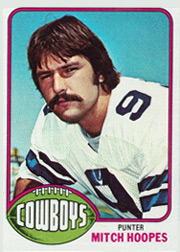
Mitch HoopesToday’s #9 is Super Bowl punter Mitch Hoopes. (Doesn’t his picture just scream “Mid-70s”?) He was part of that historic Dirty Dozen draft of 1975, taken by Tom Landry in the eighth round out of Arizona. One of the few, if only, times the Cowboys have ever drafted a kicker. Hoopes was the punter as a rookie that year, posting a pedestrian 39.4 yards per kick average. Dallas made a shocking run to Super Bowl X, a heart-breaking loss to the Steelers in Miami, and then promptly brought in Danny White during the offseason to back up Roger Staubach.

And to punt.

Hoopes was released. And White became, in Staubach’s own words, “America’s Punter.”

Tomorrow’s #8 in the countdown is the only other player in Cowboys history to wear #8 besides the obvious Hall of Famer. Buzz Sawyer. His real name is Robert Meade Sawyer, according to pro football reference guides. But the Cowboys list him as Buzz. He was born in Waxahachie, punted for Texas A&M and Baylor, and wound up playing for the Cowboys scab team during the 1987 players strike. Three games. 16 total punts. 39.9 yards per kick average. And the only exclusively-scabs player to make the Red Ribbon Review.

Peace,

Allan

Your Church's Accusers

Your Church’s AccusersWho are the people who voice the most complaints about your church? Do criticisms about your congregation come from inside or outside your faith community? Who are your church’s accusers? Is one of them you?

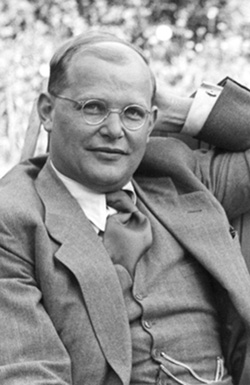
I was visiting with a young brother in Christ this morning about the life and work of Dietrich Bonhoeffer. We were specifically talking about “The Cost of Discipleship” and “Life Together,” arguably his two greatest books. I’m re-reading a bunch of “The Cost of Discipleship” right now in preparation for the Fresno Spiritual Growth Workshop later this month. And skimming “Life Together” three or four times a year is just a smart thing to do if you’re a preacher or some other church leader.

I want to share with you this from “Life Together.” This is especially intended for us preachers and elders and deacons and ministry leaders in our Father’s Church. I was just casually glancing through it today when these underlined words screamed at me.

From Bonhoeffer’s “Life Together”“If we do not give thanks daily for the Christian fellowship in which we have been placed, even when there is no great experience, no discoverable riches, but much weakness, small faith, and difficulty; if on the contrary, we only keep complaining to God that everything is so paltry and petty, so far from what we expected, then we hinder God from letting our fellowship grow according to the measure and riches which are there for us all in Jesus Christ.

This applies in a special way to the complaints often heard from pastors and zealous members about their congregations. A pastor should not complain about his congregation, certainly never to other people, but also not to God. A congregation has not been entrusted to him in order that he should become its accuser before God and men. When a person becomes alienated from a Christian community in which he has placed and begins to raise complaints about it, he had better examine himself.

Let him guard against ever becoming an accuser of the congregation before God. Let him rather accuse himself for his unbelief. Let him pray God for an understanding of his own failure and his particular sin, and pray that he may not wrong his brethren. Let him, in the consciousness of his own guilt, make intercession for his brethren. Let him do what he is committed to do, and thank God.”

Who are your church’s accusers? Don’t let it be you.

A better question, perhaps: Who are your church’s defenders?

~~~~~~~~~~~~~~~~~~~~~~~~~~~~~~~~~~~~~~~~~~~~~~~~~~~~~~~~~~~~~~~~~~~~~~~~~~~~~~~~~~~~

Red Ribbon ReviewThe failure that is the Red Ribbon Review is drawing to a close. It seemed like a good idea at the time. It’s not. Nevertheless, I won’t be deterred. We’ll keep counting down the days until Cowboys season by recognizing the second-best players in team history according to jersey number until they kick off the against the Bucs at high noon on Sunday September 13.

Today’s pickings are so slim, we’re having to actually name two players to equal anything worth mentioning. Even then, it’s a huge stretch. There are ten days left until the Cowboys season begins. And there are half a dozen backup quarterbacks and backup punters and backup kickers who’ve worn that number. And nobody else. Not one starter in the bunch.

So, let’s go with two backup punters. Let’s honor Duane Carrell: seven games in 1974 (a non-playoff year), 40 total punts, an average of 39.8 yards per punt. And let’s also mention Barry Cantrell who punted in two games during the 2000 season (another non-playoff year), racking up an average of 36.7 yards per kick on 10 total punts.

Sorry,

Allan

« Older posts Newer posts »