Category: Prayer (Page 14 of 29)

Returning to the Lord

The first Sunday in January is a good time for a congregation of God’s people to renew our dedication to the Lord. It’s the perfect day to start over, to renew vows, to make fresh commitments. And in Scripture, a lot of the time, when God’s people seek renewed relationship with the Lord, they begin with corporate confession and repentance.

Using biblical texts from 1 Samuel 7, Ezra 9, and Daniel 9, we spent this past Sunday together at Central confessing our corporate sins as a 107-year-old body of believers. We talked about the sins of pride and racism, legalism and sexism, self-reliance and apathy, consumerism, materialism, sectarianism. We haven’t committed all these sins ourselves. Our leadership and our church today are not guilty of all those sins. But in the history of our congregation and in the history of Churches of Christ, we have all been guilty of all of it. Some of these sins we still commit. All of them still impact us to some degree. So, in the manner of God’s people as described in Scripture, we confessed.

One of our shepherds, Tim McMenamy, worded a heart-felt, gut-wrenching prayer of confession from his knees on behalf of the church, recalling the sins of our past and the sins of our present. Another of our elders, Steve Rogers, led a prayer of corporate repentance from his knees, making vows to God on behalf of the congregation that we would renounce the sins of our past and present and seek only the Lord and his ways. And then we offered the church some time to confess their own sins, sins in their families, sins from their distant past, or sins that have them ensnared in the present. Our elders and ministers and our spouses were positioned all around the worship center to graciously receive and pray for our people. We lifted them up to God and begged him to provide his promised forgiveness and righteousness and peace.

It was different. It was very quiet in there. And powerful. Only a few, it appeared, actually took advantage of the opportunity. But those who did experienced those blessings of forgiveness and righteousness and peace.

Immediately after the service concluded, several people came to me to thank me for the special focus of the morning and for the way the assembly had been planned. And I think I must have expressed — non-verbally — some disappointment in the visible response from our congregation during the time of confession and repentance. One of my many, many faults — one I should probably confess regularly before the church — is my sin of impatience. I’m terrible with that. I don’t very much of the time practice what I preach there. And I do a lousy job of hiding it. But, good grief, of all people the preacher should know that God is at work in powerful ways that we don’t always get to see.

And Clay Harper reminded me of that Monday.

Clay called me on the carpet for my disappointment. That’s what good and faithful Christian brothers do; that’s what happens in genuine Christian community. And then he reminded me of the truth I had preached the day before, that God answered the prayers and provided the promised blessings regardless of how engaged the people were in what was happening.

In Samuel, the people approached the prophet looking for ways to fix their relationship with God. They begged him to intercede for them and participated fully as a congregation in the prayers of confession and repentance. In Ezra, the leaders of the people came to the prophet and the people (a lot of them, but maybe not all of them) eventually followed and participated in the confession and repentance, some of them under the threat of loss of their property. In Daniel, it doesn’t look like anybody else is there. The prophet prays confession and repentance to God on behalf of the people, but there’s no indication anybody has any idea he’s doing it.

More than likely, we have people in our church family located at every point on that continuum. From begging to make things right with God and willingly putting away their idols and sins, to almost being forced to confess and repent and reluctantly participating, to not taking part in the exercises at all, we’ve got folks all over the map there. All those different reactions and responses were present in our assembly Sunday.

The good news is that in all three scenarios in Scripture, God answered the prayers immediately, while the prayers were still being prayed, and provided the forgiveness and peace.

In Samuel, while the people are in the middle of confessing and repenting, God answered. God showered his people with victory. He destroyed their enemies right there on the spot and blessed them with peace. Same thing in Daniel. While he was in the middle of his prayer of corporate confession and repentance, God spoke to Daniel about forgiveness of sin, about everlasting righteousness, and peace. In Ezra, God provided his grace immediately and withdrew his anger.

I don’t know where you are with confession and repentance before God. I think if you’ve made some New Year’s resolutions to our Lord, they have to begin with confession and repentance. I don’t know where your church is with that. I don’t know how your elders might feel about corporate confession in a church assembly. I don’t know how many in your family or your congregation would enter in to that kind of exercise willingly, how many would have to be dragged into it kicking and screaming, and how many just wouldn’t participate. I don’t know.

But I do know this: the common thread in all three stories of corporate confession and repentance in Scripture is that God answered. He responded immediately, as soon as the prayers began. He did it consistently then and he’s doing it faithfully right now. Why don’t you and/or your church give it a try?

~~~~~~~~~~~~~~~~~~~~~~~~~
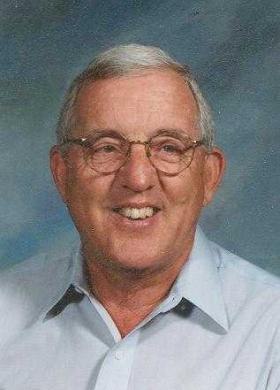
Congratulations to Central’s own Joe Bain who will be inducted tomorrow into the Panhandle Sports Hall of Fame here in Amarillo. Coach Bain was the boys track coach at Amarillo High School for 30 years, winning 15 district championships, including one in his last season in 2006. He also served as a long time assistant coach for the Golden Sandstorm football team under Larry Dippel, coaching the defensive backs in 1992 when the Sandies advanced to the state semi-finals.

Coach Bain poured his heart into hundreds of young men in this region, constantly encouraging them, consistently challenging them to be better, always leading to greatness by the example of his own deep character and integrity. Lots and lots of young men are thanking Coach Bain this week for the tremendous influence of godliness he had on their lives. And at least one older guy who only just met Coach Bain three years ago is thanking him for that same leadership and influence he has on my life right now.

Peace,

Allan
Pray for Peace

“Christ Jesus is our peace. He came and preached peace to you who were far away and peace to those who were near. For through him we all have access to the Father by one Spirit.” ~Ephesians 2:14-18

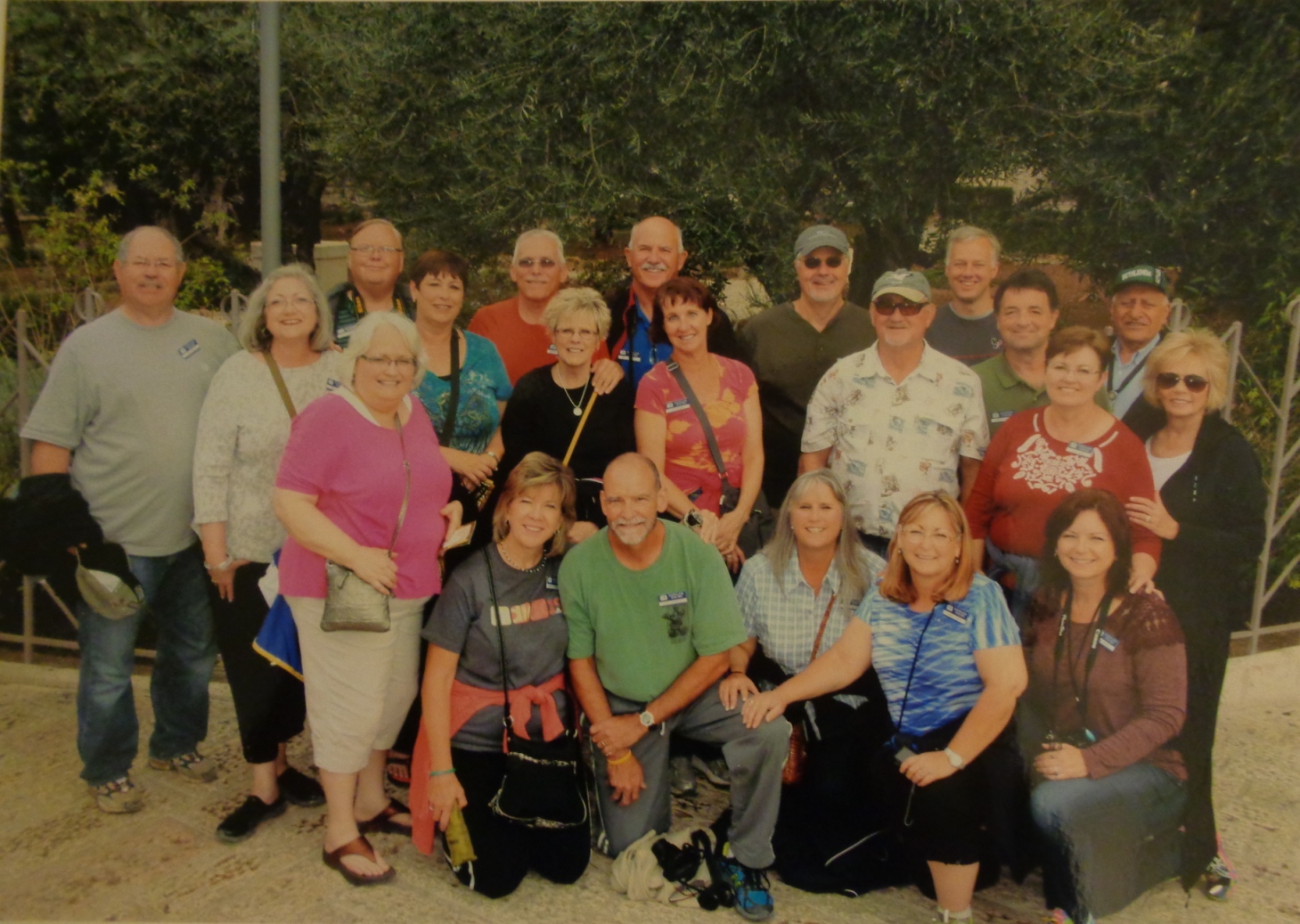
We experienced just a wee bit more excitement today than we had anticipated — today’s clashes at the Temple Mount and Hamas attack at a Jerusalem light rail station were not on the itinerary. But everybody in our little Central group is OK and feeling very safe tonight. We have the best tour guide and bus driver in the entire Middle East and we trust them implicitly. We’re not sure what our schedule will be like for our final full day tomorrow; we don’t know what will be opened or closed or how our plans will be interrupted. But everybody in our group is fine. We spent a full hour after dinner together tonight processing the events of the day and it’s all actually been very, very powerfully good for us. Talk about bonding… man!

It’s 10:00 pm Wednesday night in Jerusalem. Time to say those evening prayers. I would ask you to pray for this holy city.

Our Lord is a King of Peace. He came to this earth in order to bring peace, to reveal to us our God of peace, to tear down the hostilities and break down the walls that come between humans and God and humans and one another. And, two thousand years later, his people still don’t know how to live it. It’s tragic, really. It’s terrible. This city of peace is anything but. This is a city of pride and envy, power and control, greed and selfishness, hatred and violence, revenge and death. It must sadden our King. And so it must also sadden us.

It must.

We must share our Lord’s sorrow. “O Jerusalem,” he lamented, “O Jerusalem, how I long to gather your children together as a hen gathers her chicks under her wings. But you are not willing.” “O Amarillo, how I long… but you are not willing.” “O Dallas, how I long… but you are not willing” “O Atlanta…” “O Brasilia…” O Kharkov…” “O St. Louis…” “O Bogota…” O fill in the blank of any city in the world…

Lord, come quickly.

Shalom,

Allan

Prayer and Peace: Part 3

“Do not be anxious about anything, but in everything, by prayer and petition, with thanksgiving, present your requests to God. And the peace of God, which transcends all understanding, will guard your hearts and your minds in Christ Jesus.” ~Philippians 4:6-7

I’ve suggested this week that Paul is telling the Christians in Philippi that giving everything to God in prayer will result in the Lord’s blessings of heavenly peace ONLY in the context of a relationship with Jesus based on the things he had already written leading up to this point in the letter. Giving everything to God in prayer must be accompanied by giving all of your everything to God. Period.

Paul assumes that disciples of Jesus are still awed and grateful for their salvation (Tuesday), still confident of God’s love and care (yesterday), and identified in the Lord.

Timothy Keller gives us a couple of cinematic illustrations at the beginning of his powerful chapter ten (“The Problem of Sin”) in The Reason for God. He points out that Sylvester Stallone’s character in the movie Rocky is determined to go the distance in his fight because, as Rocky declares, “If I go the distance, then I’ll know I’m not a bum.” Similarly, one of the main characters in Chariots of Fire describes his motivation for training for the one hundred yard dash this way: “At the beginning of every race, I have ten lonely seconds to justify my existence.”

Both of these men were looking to athletic achievement as the defining force that gave meaning to their lives. I’m an athlete. As long as I excel in athletics, then I matter. I’m important. I’m a somebody. I have a purpose. But if I fail. I’m a nobody. I don’t matter. Because I’m athlete. That’s a pretty tough thing to live up to.

But we’re all looking for that same significance. Every one of us needs to matter. We all need to have worthy. And if we’re looking to anything other than Christ for that identity, we’ll never have peace.

Think about it for a second. Where is your identity? Who are you? I’m a successful doctor. I’m a business owner. I’m a great mother. I’m a proud American. I’m an elite runner. I’m a loyal Republican. I’m a popular teacher.

If that’s your absolute value, if everything in your life revolves around that identity, that’s a problem. If that’s actually who you are, you’re going to devote a lot of time and energy to it; you’re going to devote a lot of passion and intensity to it. This thing that is central to your significance, your purpose, your happiness — it becomes your god. It’s your savior. It’s where you put all your resources. It’s where you find your emotional well being. And it’s shaky, at best.

I’m a great mother. Well, what happens if something goes wrong with your children? Or your parenting? Now you’re a loser?
I’m a successful doctor. Fine, but what happens if you lose a patient? What happens if technology passes you by? Now you’re a nobody?
I’m a proud American. OK, but what happens if the country starts to go downhill?
I’m an elite runner. Great, but what happens if you get a disease? Or you get old?
I’m a loyal Republican. Well, what happens if the Democrats are in charge?
I’m a popular teacher. Fine, but what happens if people stop coming to your classes?

If anything threatens your identity, you’ll become anxious. Maybe even paralyzed with fear. If my daughter goes down the drain, then my whole life is a failure! If I can’t teach anymore, then my life will have no purpose! If I get that disease, my whole life will be ruined! If they legalize gay marriage in Texas, then we will have lost everything!

Some parents are probably a little too wrapped up in the accomplishments of their children. We all might need to evaluate how much we’re tied in to our jobs. And I think the unrest in the world and the increased secularization of the United States is causing God’s children more anxiety and stress than it should.

Your identity as a person is everything. So, if you lose your identity because somebody messes up or somebody fails, you’ll be resentful, maybe even locked up in bitterness. If you lose your identity through your own mistakes or shortcomings, you might despise yourself or see yourself as a failure your whole life. Either way, these things don’t hold up. There’s no peace.

That’s why Paul reminds these Philippians throughout this whole letter that their identity is in Christ. He addresses it to the saints in Christ Jesus (1:1). I am in chains, he says, for Christ (1:13). You are preaching in the Lord (1:14). We rejoice in the Lord (3:1, 4:4). I’m hoping in the Lord (2:19). I am confident in the Lord (2:24). Euodia and Syntyche, agree with each other in the Lord (3:2). We worship by the Spirit of God, Paul says, and we glory in Christ Jesus and we put no confidence in the flesh (3:3).

“Whatever was to my profit, I now consider loss for the sake of Christ. What is more, I consider everything a loss compared to the surpassing greatness of knowing Christ Jesus my Lord, for whose sake I have lost all things. I consider them rubbish, that I may gain Christ and be found in him.” ~Philippians 3:7-9

If your identity is in Christ, if your true self is in Jesus, you’ll never be threatened. He is Lord. What’s going to take him down? If everything about you is based on Jesus — your self worth, your security, your future, who you are, your significance, your identity — if all that rests in Christ, you can’t lose it. You can’t mess it up. Nobody else can mess it up for you. If Jesus is your center, nothing can upset that.

Of course, placing your all in Christ is the hard part.

C. S. Lewis, in an essay entitled “Is Christianity Hard or Easy?” summed it up:

“The almost impossibly hard thing is to hand over your whole self to Christ. But it is far easier than what we are all trying to do instead.”

Peace,

Allan

Prayer and Peace: Part 2

“Do not be anxious about anything, but in everything, by prayer and petition, with thanksgiving, present your requests to God. And the peace of God, which transcends all understanding, will guard your hearts and your minds in Christ Jesus.” ~Philippians 4:6-7

I suggested yesterday that Paul is telling the Christians in Philippi that giving everything to God in prayer will result in an experience of divine peace ONLY in the context of a prayerful life lived according to the things Paul had already written in the letter up to this point. Prayer is not a technology or a technique in which we try to get God to give us what we want. It’s not a matter of saying the right words or setting the proper mood or how many times you pray or how many people you get to pray with you or for you. Prayer, to Paul, is an attitude. It’s a manner of living. It’s a way of looking at God and the world that’s based on a real relationship with Christ Jesus.

So, yes, prayer results in peace, assuming you are still shocked by your salvation (yesterday) and confident of God’s care (today).

At the very beginning of the letter, Paul says he is confident that this good thing God has started in you, he will finish. He will see it through (1:6). God is working in you, he says, he’s working through you to make sure it happens (2:13). Paul’s in chains, but that’s causing more and more people to speak the word of God more courageously and fearlessly (1:14). Whatever’s happening to me, Paul writes, will turn out in the end to be for my deliverance (1:19). I am confident, Paul asserts, that I myself will be able to see you soon (2:24).

This isn’t a superficial obliviousness that ignores reality. Paul’s not whistling past the graveyard. He really does trust in the love of God that saves him and the love of God that is taking care of him and protecting him. All of Paul’s circumstances are in God’s hands. God is fully sovereign and totally in control of everything that’s happening to Paul. And Paul’s great with that because he knows that God loves him.

Of course, Paul got this from the example of Jesus.

Peter had the same idea. “When they hurled their insults at Christ Jesus, he did not retaliate; when he suffered, he made no threats. Instead, he entrusted himself to God” (1 Peter 2:23).

Peter’s got it. And Paul’s got it. And they both got it from Jesus.

“Cast all your anxiety on him because he cares for you” (1 Peter 5:7) sounds a lot like “Do not be anxious about anything… present your requests to God” (Phil. 4:6).

I would encourage you today to give to God in prayer that one thing that’s eating you up. It’s keeping you awake at night and distracting you during the day and totally stressing you out all the time. It’s that thing that’s just hanging over you. Give it to God in prayer right now. Don’t ask God to fix it. Don’t ask him to make it better or solve it or make it go away. Just give it to God and tell him you trust him. Tell him you know he’s in control and you’re good with that. Because you’re confident that he loves you and that he cares for you.

Peace,

Allan

Prayer and Peace: Part 1

“Do not be anxious about anything, but in everything, by prayer and petition, with thanksgiving, present your requests to God. And the peace of God, which transcends all understanding, will guard your hearts and your minds in Christ Jesus.” ~Philippians 4:6-7

Prayer is not a technique. It’s not a formula. Prayer is not a technology which we use to get a force or a “higher power” to do what we want. When Paul talks about prayer, he’s talking about a prayerful understanding, a prayer attitude, a particular way of looking at life. Paul wants the Christians in Philippi to have a prayerful relationship with God based on everything he’s written in the letter up to this point.

In order for prayer to result in peace, Paul expects Christians to be still blown away by their salvation.

I think the fact that we are saved by the amazing grace of a merciful God should startle us every single day. The fact that a holy and righteous Creator sacrificed everything in order to save a wretched sinner like me — it should overwhelm me every couple of hours or so. Several times a day, I think, I should be shocked by it all over again. My salvation is impossible; yet it’s real! My salvation is beyond comprehension; it’s a miracle!

And Paul is careful to remind the disciples in Philippi they can’t ever forget it.

He starts the letter by reminding us that God is bringing this wonderful miracle of salvation to completion (1:6). We are pure and blameless, he says, filled with the fruit of righteousness that comes through Jesus (1:10-11). In chapter two, Paul points out again just what Jesus did for us. He gave up everything! All this grand, sweeping poetry about the sacrifice of our Lord who, he says, is right now working inside us according to his wonderful purposes (2:13). Then we’re told that our righteousness is not our own — we don’t have any righteousness — all of it comes from God (3:9). It’s an outrageous gift from our God!

We are beloved children of that merciful God. We are chosen subjects of that glorious Lord. And we are privileged citizens of that heavenly Kingdom…

“And we eagerly await a Savior from there, the Lord Jesus Christ, who, by the power that enables him to bring everything under his control, will transform our lowly bodies so that they will be like his glorious body.” ~Philippians 3:20-21

You are in the Lord, Paul says. You are in Christ. And don’t you ever forget that you never did one crying thing to deserve it.

Every now and then, we might think that we’re better than other people. Sometimes, we might even think we don’t need nearly as much of God’s mercy as somebody else. Prayer will not result in peace unless we are still shocked by our salvation and driven daily to new levels of humility and gratitude to God because of it.

Peace,

Allan

Out of Control

Another reflection or two based on Stanley Hauerwas’ latest book, “Approaching the End: Eschatological Reflections on Church, Politics, and Life.”

One of Hauerwas’ favorite lines goes something like this: “Being a Christian means undergoing the training necessary to know how to live out of control.” We do live under the illusions that we are mostly in control of what happens to us and around us. Especially here in the United States, we like to think that very little is out of our control. And, that flies in the face of our Christian theology, yes? We follow a Lord who gave up all control, who put on the shelf every bit of status and power, who emptied himself of all mastery and prayed, “Not my will, but yours be done.”

And he taught us to pray and to live in that same way.

Hauerwas makes the point in one of the last essays in this latest collection that sickness is one way God trains us to rely on him.

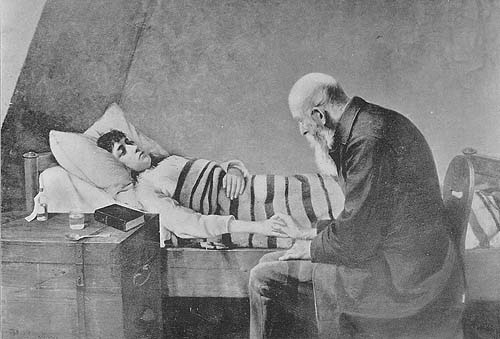
Because of the staggering advances in technology and modern medicine, our approach to sickness sometimes betrays an attitude about sickness that might be close to the same attitude non-Christians have about sickness. (Go ahead and read that sentence again if you need to. Sorry.) Sometimes the God we pray to when we are sick is only a “god of the gaps.” He’s the “middle-man” between us and the doctors and experts, the MRIs and CT Scans, that do the real job of healing. Praying to God that way makes him to be a deistic God whose existence is not much more than an insurance policy for us against disaster. But a god like that is not the God who came to us in the flesh and suffered with us in pain and death.

The God we worship taught us to pray, “Not my will, but yours be done.” We’re all going to get sick. We’re all going to suffer in this life. We’re all going to get hurt, to get disappointed, to get injured, and die. But those are not the kinds of things that fuel our prayers. Our prayers should be motivated by the eternal and right-now presence of God. Hauerwas writes:

“The story that determines the Christian body is the story of Emmanuel, God with us. This is the story we were baptized into, which means we have already died. Therefore, the hope we share is ultimately not a hope to get through life unscathed, but a hope to remain faithful until the end. It is the hope of the resurrection.”

“Illness usually comes as an unexpected guest, threatening to disorder our routines and make our lives incoherent. The stories that constitute our lives are meant to give us a sense of control and to assure us that we know where we are and in what time we live. Yet the stories that we may actually be living may not be the ones we think we are living, but our illusions are dear to us. Illness often destroys our illusions as well as our confidence that we are in control.”

When we get sick, we realize that we are not in control. We acknowledge that God is in control and we lean on him more. We depend on God to sustain us, to give us life, to bless us with breath. When we’re sick, we need God. We recognize our powerlessness and our inabilities to fix the situation. We’re reminded that we are out of control and that we really, really need God.

And isn’t that where God wants you?

Peace,

Allan

« Older posts Newer posts »