Category: Matthew (Page 24 of 24)

The Church In The Kingdom

Only got two suckers to jump in and post corny preacher and corny Bible jokes yesterday and early this morning. I thought we needed a little humor after a couple of days of pretty heavy stuff on the blog. Sure enough, that’s what we got. Very little humor. If you have corny Bible or preacher jokes, it’s not too late to share. Just hit comments on yesterday’s blog and pile on.

~~~~~~~~~~~~~~~~~~~~~~~~~~~~~~~~~~~~~~~~~~~~~~~~~~~~~~~~~~~~~~~~~~~~~~~~~~~~~~~~~~~~~~~~~~~~~

IF the Pats win it Sunday, they end all debate about the best team in pro football history. Period. It’s over. As we’ve said all season long, PatsLogoespecially as it pertains to the Cowboys, it’s difficult to get wins in the NFL. Forget beating everybody, it’s hard beating anybody in that league. They’re all so equal in talent and skill and coaching and scouting and payroll. To do what New England has done is remarkable. And if they pull it off against the Giants on Sunday, it blows away what the ’72 Dolphins did.

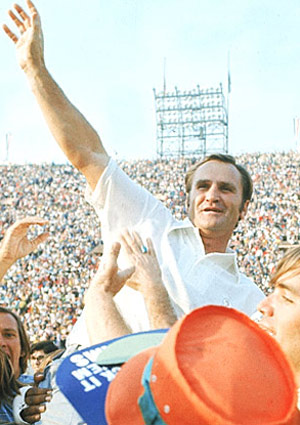
Shula’s72FinsHow many playoff teams did that Miami squad beat during its run to 17-0? Zero. They didn’t play a single playoff team that year. In fact, they only played two teams with winning records: the 8-6 Chiefs and the 8-6 Giants. And you can’t downgrade what New England has done this year because the AFC East is so weak. The ’72 Dolphins’ division opponents that year were the 7-7 Jets, the 4-9-1 Bills, and the 3-11 Patriots. One of thier other wins was against the 1-13 Oilers.

Contrast that with what the Pats have done this season. New England faced seven teams with winning records, seven playoff teams, during the regular season and won by an average score of 37-17. New England scored at least 27 points in every game but two and only gave up more than 28 once.

In their two playoff games, the ’72 Dolphins barely squeaked by the Browns 20-14 and beat the Steelers in Pittsburgh 21-17. (Why did the undefeated Dolphins have to play the AFC Championship Game on the road? I might be looking at a bad list.) And they won Super Bowl VII 14-7 over the ‘Skins. The current edition of the Pats has won their two playoff games 31-20 and 21-12.

Go Giants. And if New York can pull off the biggest Super Bowl upset since Joe Willie’s Jets shocked the Colts in Super Bowl III, then the Greatest Ever tag belongs to the Dolphins without dispute. But if New England does what they’re expected to do, it’s over.

~~~~~~~~~~~~~~~~~~~~~~~~~~~~~~~~~~~~~~~~~~~~~~~~~~~~~~~~~~~~~~~~~~~~~~~~~~~~~~~~~~~~~~~~~~~~~~~

Jesus preaches the Kingdom. “Repent!” he says, “The Kingdom of God is near!” And then what does he do? He frees the prisoner, heals the blind, rescues the oppressed.

Those are the signs of the Kingdom.

John the Baptist sends to find out if Jesus is the Messiah and Jesus says look, you know what the signs are. “..the blind receive sight, the lame walk, those who have leprosy are cured, the deaf hear, the dead are raised, and the good news is preached to the poor.”

That’s the Kingdom.

Jesus, show us the Kingdom. What does the Kingdom look like, Jesus? Where is it?

Not once did Jesus ever say, “See those people over there meeting every Sunday for Bible class and worship? That’s the Kingdom.” Jesus never once pointed out, “That group that takes communion weekly and sings acappella, that’s the Kingdom.” The Son of God didn’t say, “When you see three songs and a prayer and announcements either at the beginning or the end (or both), you’ve seen the Kingdom.”

Distressed people being encouraged. Cold people being warmed. Hurting people being comforted. The outcasts being brought in and made family. That’s the Kingdom.

When we talk about the Kingdom strictly in terms of Church and the institution and the rules and the order — when that’s our whole idea of Kingdom — we quickly lose sight of the very things that make the Kingdom of God what it is. Centuries of church development and decision-making and rule-making can cloud our vision. When we see the Kingdom exclusively as Church, we tend to focus only on the features and characteristics of the Church.

Our challenge as the Legacy Church of Christ is to occasionally flex our autonomy — you know, that autonomy we brag about — to insure that our identifying characteristics genuinely correspond to those of the Kingdom Jesus was preaching. Maintaining our institutional status quo is not necessarily the same as being faithful to Jesus and his mission. Being a member in good standing or being a middle of the road church isn’t necessarily the same as living under the reign of God.

The true marks of the Kingdom have very little if anything to do with what happens between prayers and announcements in our building. The Kingdom of God is firmly grounded in Jesus’ foundational principles, the “weightier matters” of justice and mercy and faithfulness in our community. Our requirements as subjects of the King are not as much about keeping the rules as they are about acting justly, loving mercy, and walking humbly before God.

Our King came into this world in order to serve and to save. And that is the business of his subjects, as well. May our Lord bless us as we serve and rescue and save in his name.

Peace,

Allan

Be Perfect

“Be perfect, therefore, as your heavenly Father is perfect.” ~Matthew 5:48

In the Sermon on the Mount, Jesus takes six specific commands from God’s Law, corrects the faulty interpretation and selfish external applications, and then points his disciples toward the true nature and true intent of the Law: living selflessly with others in community. God reveals himself to man through the Law. The Law is the perfect reflection of our God. And as we pursue this true intent and motive of the Law, as we strive to emulate our God in the ways we live with each other, we are pursuing that perfection of God. It’s a goal that shapes the disciple’s entire life. It’s the ultimate object of our behavior and our thoughts and our will. We accept nothing less than the perfection of God. We’re always striving toward it.

 OK. We understand all that. We also are assured by Holy Scripture that our perfection is found only in Jesus. We are righteous only through the blood of the Son. All have sinned. None are perfect. It’s only by participating in the salvation work of God through the Christ that I can be viewed as righteous in God’s sight.

OK. We get that, too. But here’s where it gets weird.

1) I’m saved by grace. I know I’m going to sin. I’m human. I can’t not sin. And so I wake up every morning resigned to my fate as a sinner. I’m going to sin before I make it out to my car today. When I go to bed at night, I know I’ve sinned. And I’ll sin again tomorrow. I’m human. But I’m saved. As a natural result, I’m not quite as bothered by my sin as I used to be.

or 2) The Holy Spirit dwells in me. I’ve been changed by God. I’m a new creature. Every sin I commit I do so by my own choice. Nobody’s making me sin. So it’s up to me to be perfect. And I will be. From this point forward I will not sin again. God calls me to be perfect. Paul tells me to stop sinning. And I will. As a natural result, I’m continually disappointed. I’m setting myself up for failure.

I struggle with finding the balance between the two extremes. I believe I’m not alone in that. I try to live it one day at a time, like most of us do. I pray every morning that God will give me the power to remain free from sin all day until my head hits the pillow that night. I am confident in my salvation. But I should be grieved by my sin.

Michael J. Wilkins calls the balance “restful dissatisfaction.” He elaborates in his NIV Application Commentary on Matthew:

 “I rest content with what Christ has done in my life and with the growth that has occurred, yet at the same time I balance that contentment with the desire to move on. At any one point in my life I want to be satisfied with what God has been doing in my life, yet I want to be dissatisfied to the degree that I press on to complete maturity. I accept my imperfection, yet I have the courage to press on to perfection. I rest in the indicative of what God has accomplished in Christ’s work of redemption and regeneration, I rest in the assurance that transformation is, at this very moment, being accomplished, and I rest in the promise that ultimately we will be like him. But I am dissatisfied when I see immaturity or impurity in my heart, mind, and life; I am dissatisfied with the state of this world apart from Christ; I am dissatisfied with loving less than the way Jesus loves.”

Peace,

Allan

Anything Else Comes From the Devil

“Simply let your ‘Yes’ be ‘Yes,’ and your ‘No,’ ‘No’; anything beyond this comes from the evil one.”   ~Matthew 5:37

The religious leaders of Jesus’ day had been interpreting the Scriptures’ use of oaths to mean that anything sworn to by the name of God was binding. Promises made by swearing to less sacred things—heaven, earth, Jerusalem—were not as binding. And these loopholes devalued the oath, devalued the word of man.

The existence of oaths is proof that there are lies. Oaths were given to safeguard against lies. But the religious culture of the day was such that oaths were also being used to facilitate lying, to hide dishonesty. It reminds me of the way we acted as kids. We were always able to get out of an “I promise” by confessing that we had our fingers crossed. A one dollar wager on the outcome of a race or a free-throw contest was negated by exclaiming, “We didn’t shake on it!”

Technicalities. Hiding behind our oaths.

By the time Jesus addressed this attitude—these external applications and false practices of the Pharisees and teachers of the Law—in the Sermon on the Mount, some religious groups were already demanding a return to the true intent and spirit of the Law on oaths. Jesus taught that all oaths were wrong. The Essenes were teaching the same thing. Josephus writes this about the Essenes:

“Any word of theirs has more force than an oath; vowing they avoid, regarding it as worse than perjury, for they say that one who is not believed without an appeal to God stands condemned already.” (Antiquities of the Jews, 2:135)

Jesus, and the Essenes, teach that we should be people of such integrity and character and truthfulness of heart that everything we say is absolutely believable and dependable. No doubts. My word should be as trustworthy as a signed contract or notarized legal document. The idea is that every single word we speak is always spoken in the presence of God and so falls under God’s judgment. And since we always speak the truth, there’s no need for an oath. The oath only throws doubt on all our other statements. It’s not necessary. Anything other than a ‘yes’ or a ‘no,’ according to Jesus, comes from the devil. Because anything other than a ‘yes’ or a ‘no’ implies that you’re trying to hide something or deceive someone or lie.

Of course, all of God’s Law and all of Jesus’ teachings have to do with relationships—relationships with each other, with our community, and with our God. And these teachings on truth and honesty and dependability all strongly relate to everything else in Scripture. Untruthfulness and dishonesty destroy relationships. They wreck fellowship. But if we’re a people of complete honesty and total truthfulness, we’re all liberated to trust each other freely without any complications or second-guessing or looking over our shoulders or suspicion or speculating about hidden agendas. And that fosters true community. Wholeness. Peace.

~~~~~~~~~~~~~~~~~~~~~~~~~~~~~~~~~~~~~~~~~~~~~~~~~~~~~~~~~~~~~~~~~~~~~~~~~~~~~~~~~~~~~~

There’s a HUGE crane out here this morning, get ready in a couple of hours to set all the 90-foot steel beams on the worship center. Super cool. I’ll post some pictures this afternoon.

Peace,

Allan

You ARE the Light!

“You are the light of the world. A city on a hill cannot be hidden. Neither do people light a lamp and put it under a bowl. Instead they put it on its stand, and it gives light to everyone in the house. In the same way, let your light shine before men, that they may see your good deeds and praise your Father in heaven.”   ~Matthew 5:14-16

Public Agenda, a national research group, published the results of a study three years ago entitled “Rudeness in America.” The survey queried respondants on the increasingly common breaches of etiquette we encounter in society such as cell phones in restaurants, selfish driving, and public cursing. The report claims that 79% of us believe lack of respect and courtesy is a serious problem. 88% of us encounter people who are rude or disrespectful at least 3-4 times per week. 50% say they’ve walked out of a store in the past month because of poor customer service.

But what do we do about it?

The survey shows that 42% of us believe walking away from the person or circumstance is the proper way to handle rudeness or lack of respect. 36% replied that the proper response is to flood the situation with excessive politeness.

These kinds of things, while they do drive us crazy, may seem trivial in light of the “bigger issues” facing us and our communities. But isn’t this exactly what our Savior meant when he charged his disciples to be salt and light? As trite as it may sound, our actions do speak much louder than our words.

Jesus is preaching in Matthew that the Kingdom of Heaven is near. It’s breaking into earth. It’s here. It’s changing people. It’s changing lives. It’s impacting the world in profound ways. And you, my disciples, are living proof of it. You’re not just bringing the light of the good news into the dark corners of the world. You ARE the light! It’s like what Paul told the church in Thessalonica: forget the message, you ARE the message!

We must LIVE the truth of the gospel so people see that it’s real, that it’s not just so much talk. The Kingdom produces changed lives in us. The world sees by our actions and good works that it’s true. And they, in turn, praise our Father. Being salt and light means being seen being different. And it happens in the ordinariness of life. We’re to live in a transformed way in our everyday activities.

Are you rude or disrespectful? Do you go along with the crowd in ripping the football player on the opposing team? How do you treat your customers? Your students? Your waiter? Your brothers and sisters in Christ?

I’ve been criticized for this, but I won’t apologize. I will not apologize for holding my brothers and sisters in Christ to a higher standard. I’ll never apologize for expecting more out of Christians than I do those in the world. We should never tolerate Christians being rude or disrespectful to anyone, much less to fellow believers. I hear people sometimes excuse selfish and hurtful behavior in the church by saying, “Well, that’s just the way he is.”

No, it’s not! He’s been baptized! He’s a Christian! The Scriptures tell me he’s a brand new creature. The Holy Spirit lives in him. Getting loud in someone’s face in inexcuseable.

Donald McCullough wrote a book in 1998 called Say Please, Say Thank You: The Respect We Owe One Another.

“I’m more interested in the little things, such as remembering to say ‘thank you’ and to call your mom on Mother’s Day. These things may not seem very important when compared with the major problems facing our culture. Yet they may be the best place to begin; they may be the only place to begin. If a person can’t remember to say ‘thank you’ to her housekeeper, it’s won’t matter much if she writes a major philosophical treatise on kindness; if a person is rude to his family, the angels in heaven won’t give a holy rip if he preaches soaring sermons on the nature of love.”

If we are disciples of Jesus, we are the light of the world. The light to the world. Our lives are changed, we’re different, and it’s obvious. As obvious as lighting a lamp in a dark room. If we’re courteous, respectful, considerate, and others-oriented, it’ll be clear to those around us that Christ does make a difference. It’s not just talk.

Peace,

Allan

Newer posts »