Category: Bible (Page 6 of 10)

It’s About Today

“Today this Scripture is fulfilled.” ~Luke 4:21

The good news of the Gospel is not just helpful advice or even truthful statements. Scripture is all about what God is doing right now. Right here. Today. I think Jesus’ sermon in that synagogue in Nazareth really hits home when he says “Today! Today this Scripture is fulfilled!”

It’s one thing to say God will move. God will act. God will save. It’s quite another thing to say God is moving today! God is acting right now today! God is saving right here today!

Today!

That’s exciting. It’s immediate. It’s right now, in your face, all around you, in your space, and it demands a response. Look at it. God is speaking, he is doing, he is disrupting things, he is changing people, he is saving men and women, he is renewing the world! Today!

Do you read the Scriptures the way Jesus and his disciples read them? Do you look in the Bible for what God did back then or for what it says God is doing today? It’s all about today. Do you see his potential in your today? Do you feel his possibility in today? Do you know what he is doing in you and through you right now today?

Take a minute today and read a psalm or two out loud. Real loud. Pray a passage from Matthew 5-7 or John 17 or Ephesians 1-2 out loud. Real loud. Ask God to speak to you. Ask him to show you. Now praise him. Give him thanksgiving and honor. He is not distant or aloof. Our God is not uncaring or inactive, hesitant or restrained. He is gloriously at work right now today!

Peace,

Allan

Preaching the Word

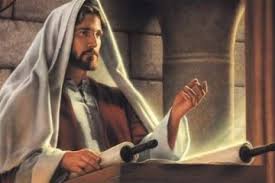
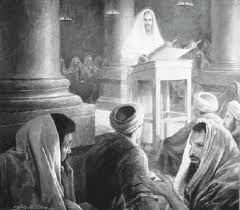
“The scroll of the prophet Isaiah was handed to him.” ~Luke 4:17

When he took the pulpit that day in his home church, notice the congregation at First Nazareth didn’t ask Jesus to share his feelings or talk about the news or quote a best-selling author or show a movie clip. They handed him the Holy Scriptures and demanded that he work from that. Jesus preached God’s Word.

God’s Word.

The same Word that created everything out of nothing. What else would we possibly want to preach?!?

When God speaks, things happen. God’s Word gets things done. God’s Word accomplishes the impossible. It defeats the invincible. It moves the unmovable. God does things — mighty things, eternal things, unbelievably wonderful things — with his Word. He can do anything just by saying a word.

And that’s one reason I preach.

I think I can shake you. I think I can change your life. Sometimes I think I can make you jump up out of your seat and shout “Amen!” or “Hallelujah!” with nothing but the Word of God. I preach because I think Christ Jesus can get a hold of you with nothing but the Word of God.

God’s Word is just as powerful and transformative today as it was when Jesus opened it up in front of his church two thousand years ago. And I get to do it again tomorrow.

How cool is that?

Peace,

Allan

The Gospel is for All

Jesus was a preacher. Jesus preached all the time. And, like every preacher I’ve ever met, he had a couple of common themes he returned to over and over again in his sermons. His favorite was the Kingdom of God. Jesus preached the coming of the Kingdom of God. Constantly.

“Repent, for the Kingdom of God is near!” ~Matthew 4:17
“The time has come! The Kingdom of God is near!” ~Mark 1 :15
“I must preach the good news of the Kingdom of God !” ~Luke 4:43

As he heals the blind and the deaf and the crippled, Jesus proclaims the Kingdom of God is near. As he sends his disciples to preach all over Israel, he directs them to declare the good news of the Kingdom of God. The Kingdom of God was the steady beat that drove Jesus’ preaching, it was the flag at the front of his sermons: the good news of the Kingdom of God.

So, what was Jesus trying to show us in these sermons? What does he want us to know about God and the eternal Kingdom of God? What are we supposed to see?

I think Jesus’ main point in all his sermons is that the Kingdom of God is for everybody. The Gospel is for all. It was a radical idea then, and it’s still very much a dramatic idea today.

In his very first (and, I assume, last) sermon in his hometown synagogue in Nazareth, Jesus preached that the Kingdom of God was for all people. He reminds the listeners that there were many poor widows in Israel during the great famine, but Elijah didn’t feed any of those good Jewish women. He only fed the one alien woman of another nation and race. He points out that there were lots of suffering lepers in Israel, but the only person Elisha healed was a violent, non-Jewish army officer of the occupying Syrian forces. Jesus preaches that, yes, God has come. But he’s not really come in exactly the ways you expected. God really enjoys working the other side of the street.

This sermon and all the others like it didn’t go over so well in front of congregations full of people who believed they were the only ones who had gotten it right. When Jesus says God is doing a new thing, it doesn’t fly with a bunch of people who are holding tight with a white-knuckle death grip to things that are old.

The Kingdom of God is for everybody. That’s what Jesus wants us to see.

Jesus made friends with the poor and oppressed. And we celebrate that. But he also made friends with the rich and the oppressors. And that’s maddening to us because we’re always trying to divide the world up between us and them. Good and bad. Worthy and unworthy. Called and not called. Those who might accept the Lordship of Jesus and those who never will. Those who are a good investment of the church’s money and energy and those who would be a waste of the church’s time and resources.

Jesus wants us to see that his Kingdom is for everybody. Everybody! The curtain is torn! The walls are down! The barriers are destroyed!

That’s the message. It’s what Jesus preached. It’s what he lived. And it kept him in hot water. It got him disfellowshipped from his home church and nearly killed.

And Jesus sends us out to preach and to live the exact same good news. In the exact same ways.

As you go, preach this message: the Kingdom of God is near!” ~Matthew 10:7
“He sent them out to preach the Kingdom of God.” ~Luke 9:2
“Go and proclaim the Kingdom of God!” ~Luke 9:60
“Tell them, ‘The Kingdom of God is near you!'” ~Luke 10:9
“The gospel of the Kingdom will be preached in the whole world as a testimony to all nations!” ~Matthew 24:14

Jesus calls us to speak and to live this same message. We spread this word around liberally. Lavishly. We live it out with others generously. Abundantly. We forgive. We love. We share. We help. We compliment. We bring the gospel to everybody without reservation. We treat everybody like Jesus the Christ came to this earth to save them. We treat them like the Kingdom of God is for them. We speak to a mean neighbor like they belong in God’s Kingdom. We talk about the terrorists like God loves them. Like the rain that falls on the just and the unjust, whether they want it or not, whether they ask for it or not, whether they accept it or not, here it is! The love of God. The forgiveness of Christ. The mercy of the Holy Spirit. Freely and joyfully we proclaim and live the good news of God’s Kingdom with all.

Because that is God. That is the Kingdom of God. It’s the truth. And if we live it, it will truly set us and everybody we know free.

Peace,

Allan

We Use the Same Book

I was reminded again last weekend that our God is a God of reconciliation and that our Lord’s great prayer is that his people be unified. Further, I was awakened all over again to the great joy we feel when one of the last holdouts of Christian one-ness, our denominationalism, is put aside for the sake of unity and faithful witness.

At the ACU preacher’s workshop in Abilene, I found myself in energetic conversation with Ken Holsberry, the preacher at the Edgemere CofC in Wichita Falls. The severe drought in their city, which made them a national punch line of sorts when they began treating toilet water for use as drinking water, has led to a cooperative prayer and ministry partnership between them and other Christian churches. Edgemere has helped orchestrate a couple of prayer services at a downtown theater and a community worship service at gigantic Memorial Stadium in collaboration with a Presbyterian, a Baptist, and a community church congregation.

Wes Crawford, the preacher at the Glenwood CofC in Tyler, reminded me that in the tiny town of Stamford, Texas, the small churches there have gone in together to pay for a youth minister. The CofC, the Baptist, Presbyterian, and Methodist churches are funding a collaborative youth group that worships and learns, plays and ministers together. They’ve been doing it for years.

And it’s fun. It’s exciting. It just feels right — it feels like the Gospel — to put aside our differences, to tear down the walls that divide us, to come together as children of God and disciples of his Son to better witness to an unbelieving world.

Those of us who haven’t quite figured out how to transition from “We’re the only ones who’ve got it right” to “By the grace of God, all those who follow Christ are brothers and sisters in the Lord” focus mainly on our differences. Those who want to make the move but don’t know where to start, also, I think, are hung up on the differences.

The differences are minor and few. The things we have in common as those redeemed by the love and grace of God are many and huge.

I would suggest just starting with the Bible. You know, we all use the exact same Book. Methodists, Presbyterians, Baptists, all the grace churches and community churches, Disciples of Christ, and Christian churches, and the Churches of Christ — we all use the exact same Old Testament and New Testament Scriptures as the authority and guide in the ways we submit to God and follow his Christ.

Bonhoeffer points to the Bible as the great starting point for Christian unity:

“It is really the biblical text as such that binds the whole Christian community into a unity. It assures us of our being bound together in one family of brothers and sisters not only with the Christian community of all past and future ages but with the whole church of the present. As such, the biblical text is of enormous unifying, ecumenical significance. This consciousness of being bound together into one family is clearly strengthened among hearers of the biblical text, since this is an awareness that every deep insight and experience they encounter in this text is the agelong substance of Christian thought and life and so is heard and learned with gratitude and profound awe.”

When you listen to a Methodist preacher and then think, “Why, that could have been a Church of Christ sermon!” don’t be so surprised. When a Baptist minister talks about faith and grace and good works, don’t be shocked. When the Presbyterian guy speaks passionately about the death, burial, and resurrection of Jesus, don’t be caught off guard. We’re all using the same book. We all hold it tightly and defend it fiercely as the revealed and holy Word of the Creator of Heaven and Earth. And, in a run-down of the many things all Christian churches and all disciples of Jesus have in common, this one’s very near the top of the list.

Peace,

Allan

True Prophesy

“We have different gifts according to the grace given us. If a man’s gift is prophesying, let him use it in proportion to his faith.” ~Romans 12:6

According to what we know of Scripture and history, culture and context, prophesy has much more to do with  “forth-telling” than “fore-telling.” Real prophesy — way back then and right now today — means applying the message from God to the current situations of our times. And I think God’s Church today desperately needs a renewed emphasis on this kind of prophesy.

A resurgence of true prophesy would cause us to take firmer stands against the evils of the world. God’s people would speak out against injustice, violence, aggression, war, unfaithfulness, and crime. We wouldn’t allow lying or back-biting or gossip or pride or greed to corrupt our congregations. We would speak more and act more in ways that indict and convict, liberate and transform.

The key to prophesy, though, is to realize that it’s always been intended for the Church. Prophesy is first to God’s people, only secondarily for the rest of the world. Study Isaiah and Jesus, Amos and John, Habakkuk and Paul — that’s the way it works. Only when God’s people are changed by prophesy can they then offer the message to the surrounding community. As we truly learn to live as members of one another, our alternative lifestyle will ultimately challenge the culture around us. But only as we become a truly Christian community with a truly biblical lifestyle will that work.

The Church needs more prophets. We need more men and women proclaiming the powerful Word of God. Even when they don’t feel like it. Even when they know that Word is going to upset some in the faith community. Even when a situation seems to be a lost cause. We need more prophets exercising their God-given graces according to their faith. Then our God, who promises his Word will never return to him empty, will bless both us and this world as we preach and teach, trust and obey.

Peace,

Allan

Delight in the Law of the Lord

“Blessed is the man who does not walk in the counsel of the wicked
or stand in the way of sinners
or sit in the seat of mockers.
But his delight is in the law of the Lord,
and on his law he meditates day and night…
For the Lord watches over the way of the righteous,
but the way of the wicked will perish.”
~Psalm 1

The first psalm asserts that how one responds to Scripture, how a person responds to the revelation of God in Torah, will determine that person’s ultimate destiny. When it comes to the Law of the Lord there are two choices, two paths. Moses gives us two paths in his farewell sermon on the mountain and says, “Choose life.” Jesus gives us two paths in his sermon on the mountain and says, “Choose the straight and narrow.” And the psalmist does a similar thing.

By using both positive and negative examples, the psalm encourages us to adopt the fruitful and satisfying life that’s characterized by complete immersion in God and his Word. So immersed in the Word of God, so focuses on the Law of the Lord, that it shapes and dominates your worldview. This is the way of the righteous. And God watches those who walk in that way. By contrast, the one who does not delight in the Law of the Lord is shaped by the counsel of the wicked. He is formed in the way of sinners. Those who walk in this way will perish.

It’s a choice.

God speaks. God reveals. He calls. God makes his holy character and perfect will known through Torah, and what we do with that word is everything. It’s the difference between growing as a fruitful tree and fading away as useless chaff. It’s the difference between well-watered and well-nourished stability and dry, dusty, windblown impermanence. Two choices: the way of the righteous that God oversees and the way of wickedness that leads to destruction. It’s the wise man and the foolish man building their houses in Matthew 7. The only difference between the two men is attention to and obedience to the teachings of Jesus, hearing the Word of the Lord and putting it into practice.

Our God does not reveal himself to be catalogued and studied; he reveals himself to be followed. Our God does not speak to be heard; he speaks to be obeyed.

You ask your daughter to fold the clean towels and put them away in the cabinet (this is purely a hypothetical situation). You come back in twenty minutes and the towels are still in a wad on the couch and the same daughter is sitting in the same spot watching the same TV, only now she’s eating a Pop Tart. And you say to your daughter, “Did you hear me?!?” By that, you don’t mean, “Did the sound waves caused by the vibrations in my tongue and throat penetrate your ear canals to be carried to your brain where they are deciphered into understandable language?” When you say, “Did you hear me?” you’re actually saying, “Why didn’t you obey me?”

To delight in the Law of the Lord, to meditate on it day and night, is to do it. Hearing is doing. Faith is acting.

The Word of God is powerful. It changes lives. It alters destinies. In 1 Thessalonians, Paul acknowledges the Word of God that “is at work in you.” In 2 Timothy, he claims that Scripture equips a man for every good work. Not doctrinal perfection. Not knowledge about facts and patterns. Paul says it leads to action. Hearing is doing. The righteous one delights in the Law of the Lord and meditates on it day and night not to know more. To become more. We don’t learn or study Scripture as much as we ingest it. We assimilate it. We take it into our lives in such a way that it becomes a part of us and it metabolizes into this fruit: acts of love, cups of cold water, prison and hospital visits, cakes baked, groceries delivered, comfort and encouragement, evangelism and justice.

When Samuel was confronted with God’s voice, he replied, “Speak, for your servant is listening.” James says to not just hear the Word, but to do it.

“I desire to do your will, O my God; your law is within my heart.” ~Psalm 40:8

Peace,

Allan

« Older posts Newer posts »