Author: Allan (Page 342 of 492)

Can You Hear the Prayers?

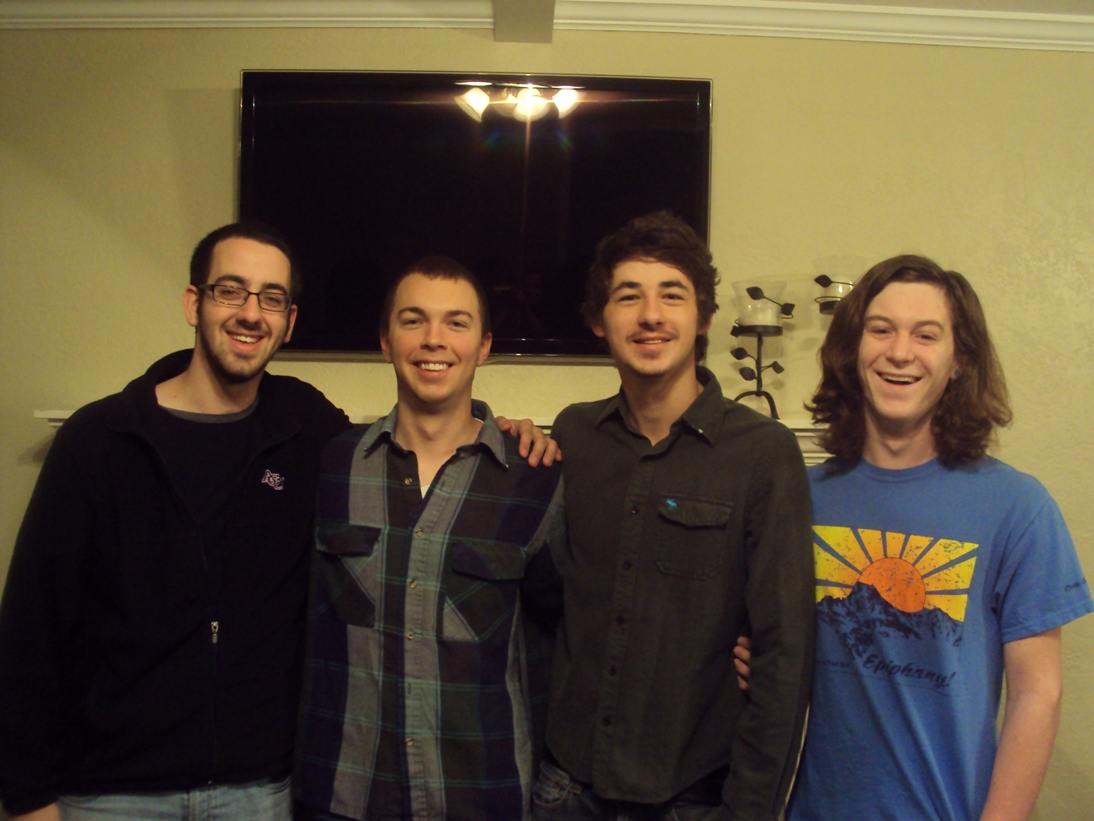
We were so blessed to have four crazy Legacy kids crash at our house last night as they swung through town on their way to snowboard in Colorado. Payton, Chris, Landon, and Paul arrived in time to share a full Carrie-Anne cooked Mexican food dinner complete with sopapilla cheesecake and ice cream and a couple of college basketball games on TV. I’m pleased to report that Chris has lost his lip ring; but Landon showed up with two huge honkin’ earrings! It’s always good to have Payton around because he makes me feel so young. Seriously. He acts older than my dad! And Paul was able to refresh me on my very limited Russian vocabulary. (Remind me to call David Nelson soon. Apparently, the word Nelson taught me to say as “Thank you” while we were in Kharkov is actually “Delicious!” It’s a wonder I didn’t get arrested over there! Somebody’s messing with me.)
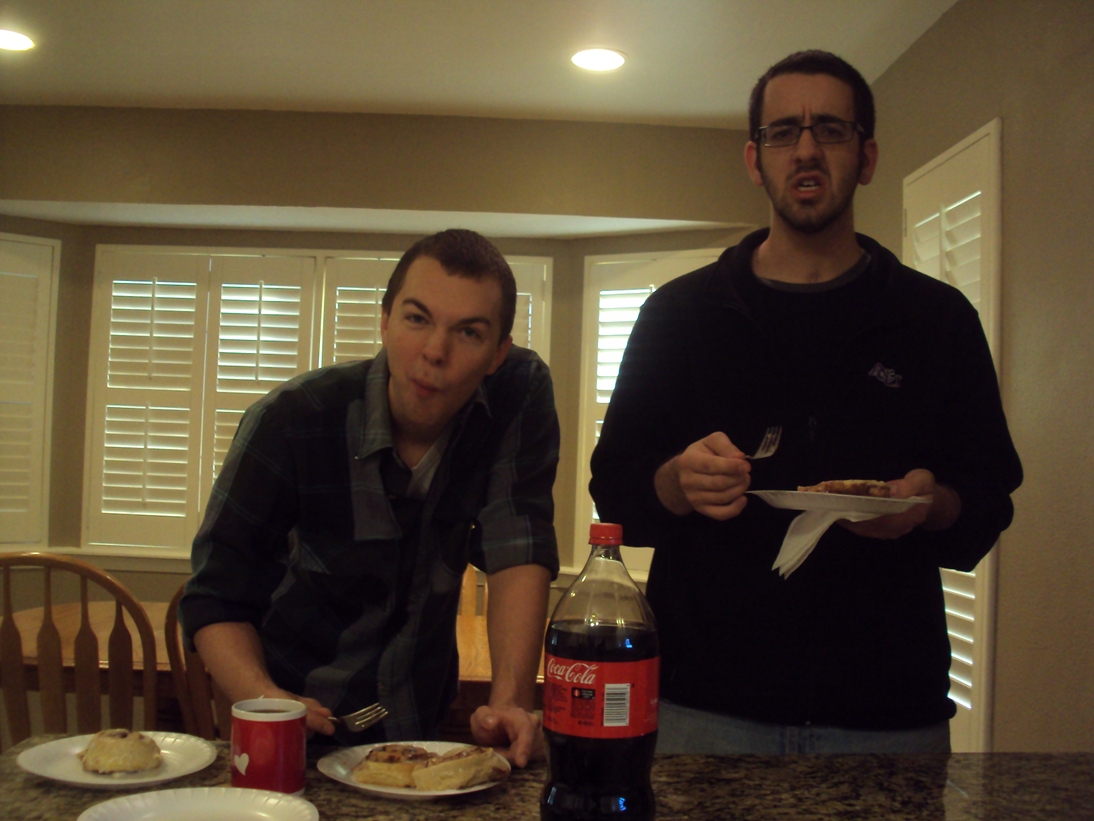
We teased each other mercilessly into the night. We reminded one another about goldfish in the back of my pickup, glow sticks in the front yard, apple trees on the front porch, and living room furniture in the lawn. And we talked about Quincy and praying together and serving the homeless and ministering to the outcast in the name of our King. These are the prayingest young men I’ve ever known. And sacrificial. Servant hearted. What a blessing to have them as friends. What a blessing to be able to worship with these great kids this morning at Central.

~~~~~~~~~~~~~~~~~~~~~~~~~

“About noon the following day as they were on their journey and approaching the city, Peter went up on the roof to pray.” ~Acts 10:9

I love the way this one verse ties two stories together. This one verse takes two men and their two different stories and eternally connects them into one unforgettable reminder of God’s mission and his power to accomplish it. Cornelius’ men had left Caeasarea to find Peter in Joppa. Peter goes up on the roof to pray, not knowing he’s already part of a story that began the day before. Peter is the answer to the prayer of a guy he’s never met. Cornelius’ men are on their way to get Peter and Peter doesn’t even know he’s got an appointment. He just thinks it’s lunch.

The angel of the Lord has already told Cornelius that his prayers have been heard by God and are being honored. His prayers are being answered. Peter is that answer. Peter is the one who will open up the truth of salvation from the crucified and risen Christ Jesus to Cornelius.

See how that works?

I wish we could hear the world praying.

“God, I don’t know where else to turn; I don’t know what to do. God, who’s going to take care of me?”

“Father, I’m at the end of my rope; I’m desperate. Please help me, God; please help me.”

Lord, I want to know you. Please show yourself to me. Please reveal your will to me. I want to belong to you, God.”

“Holy God, please provide someone to help me. Please, God, send somebody to help me.”

I wish we could hear the prayers of everybody at the apartment complex on Washington Avenue. I wish we could hear the prayers of all the kids at Bivins Elementary. I wish we could hear the prayers of the guys living under the bridge at Paramount and I-40. I wish we could hear the prayers of the man across the street in his $200,000 house. I wish we could hear the prayers of the single mom around the corner and the widowed lady who greets us at Wal-Mart and the waiter at The Burger Bar. I wish we could hear their prayers because I bet a bunch of them are praying for us. They’re praying for our hearts and our minds and our attitudes and our mission. They’re praying for God to shake us out of our comfort zones and get us moving in a reconciliation direction.

Can you hear your own prayers? How do you pray? What do you pray? If every single one of your prayers from last week were answered, would the whole world change? Or just your world? Seriously, how do you pray?

God, help us. May God give us minds and dreams and prayers big enough to imagine what he’s going to have us do next.

Peace,

Allan

Forever Changed

You can fertilize your lawn. You can mow and edge, water and weed. You can get your yard in Chamber of Commerce shape, putting green great. But it won’t last forever.

You can clean out your garage. You can throw away and sweep. You can organize and shelve, hang and hook for three straight weekends. You can buy a bunch of plastic bins and put all the junk up in the attic. You can get your garage into mint move-in condition. But it won’t last forever.

You can scrub your oven and vacuum the carpets. You can get a haircut and a manicure. You can wash the car and repaint the kids’ rooms. But it won’t be perfect forever.

We can clean up our church. We can plant new flowers, clear out from under the stairwells, and plug all the holes with spackle. We can polish off another mission statement, coordinate our ministries, re-emphasize our doctrines, and unify our beliefs. But it won’t be nice and neat forever.

We can choose to share Jesus with a neighbor. We can love the guy across the street in Christ’s name. We can reach out to strangers and friends, men and women, rich and poor, with our Father’s mercy and grace. And they will be changed forever. They will be transformed, radically and dramatically re-made for eternity. They will never be the same again. Ever.

The Apostle Peter gets a clear call from our God in Acts 10 to get out of his comfort zone and take the Gospel to people who don’t look like him, talk like him, or think like him. Peter was shocked by the command. And he was astonished by the results.

Jesus says the harvest is plentiful but the workers are few.

Peace,

Allan

Difficult and Untried

Philip Yancey says that American Christians have become the kind of men and women that people appreciate as neighbors but don’t want to spend much time with. We take ourselves too seriously. Yancey points to theologians with long faces and loud voices, lecturing on the imperatives of the faith. I’ve certainly seen the pride and arrogance of those who write and present papers to counter papers that were written twenty years ago which were written and presented to oppose papers that were written two hundred years ago. I’ve seen the TV evangelists with every dyed hair perfectly in place naming the current Antichrist and pointing out their own healthy and wealthy lives as the way to salvation. I’ve seen and heard — especially in this election year; God help us! — the religious right talking about their issues and their great morality and their hard line stances on what’s absolutely right and absolutely wrong with the world.

We’re so eager to point out how good we all are, I fear we’re neglecting the very basic fact that the Gospel is a spectacularly good thing that is happening to spectacularly bad people. Those people should never dare to speak for all Christians the way they do. And they certainly shouldn’t call themselves the Moral Majority. Shouldn’t it be the Repentant Majority or the Forgiven Majority?

G. K. Chesterton wrote, “The Christian ideal has not been tried and found wanting. It has been found difficult; and left untried.”

The question is not, “Why is Christianity so bad when it claims to be so good?” The question is, “Why are all human things so bad when they claim to be so good?”

We are failing the Good News of Jesus Christ when we run around acting like we’ve got everything figured out; like we’ve got all the answers; like there’s no more mystery. We distort the Gospel and do violence to the Scriptures when we proclaim that God sent his Son to establish the United States as some kind of beacon of Truth to the world.

As children of God and disciples of his Christ, if we have any answers at all to what’s wrong with the world, it has nothing to do with our morals or our laws or our candidates. The solution to what’s wrong is not found in anybody’s constitution or declaration or form of government or economic system or military strategies or might. What’s wrong with the world is sin and the solution is only found in the crucified and risen Lord Jesus.

God revealed himself in Christ Jesus to show us how he’s fixing things. It’s in sacrificial service. It’s in unconditional love. It’s in forgiveness and reconciliation. Peace. Obedience. Prayer. Worship. Suffering. Death.

Of course, you already knew that. This is not new information. You’ve known it a long time. It’s just that it’s very difficult. And mostly untried.

Peace,

Allan

Lucky To Be Among Them

“In a good friendship each member often feels humility towards the rest. He sees that they are splendid and counts himself lucky to be among them.” ~C. S. Lewis, The Four Loves

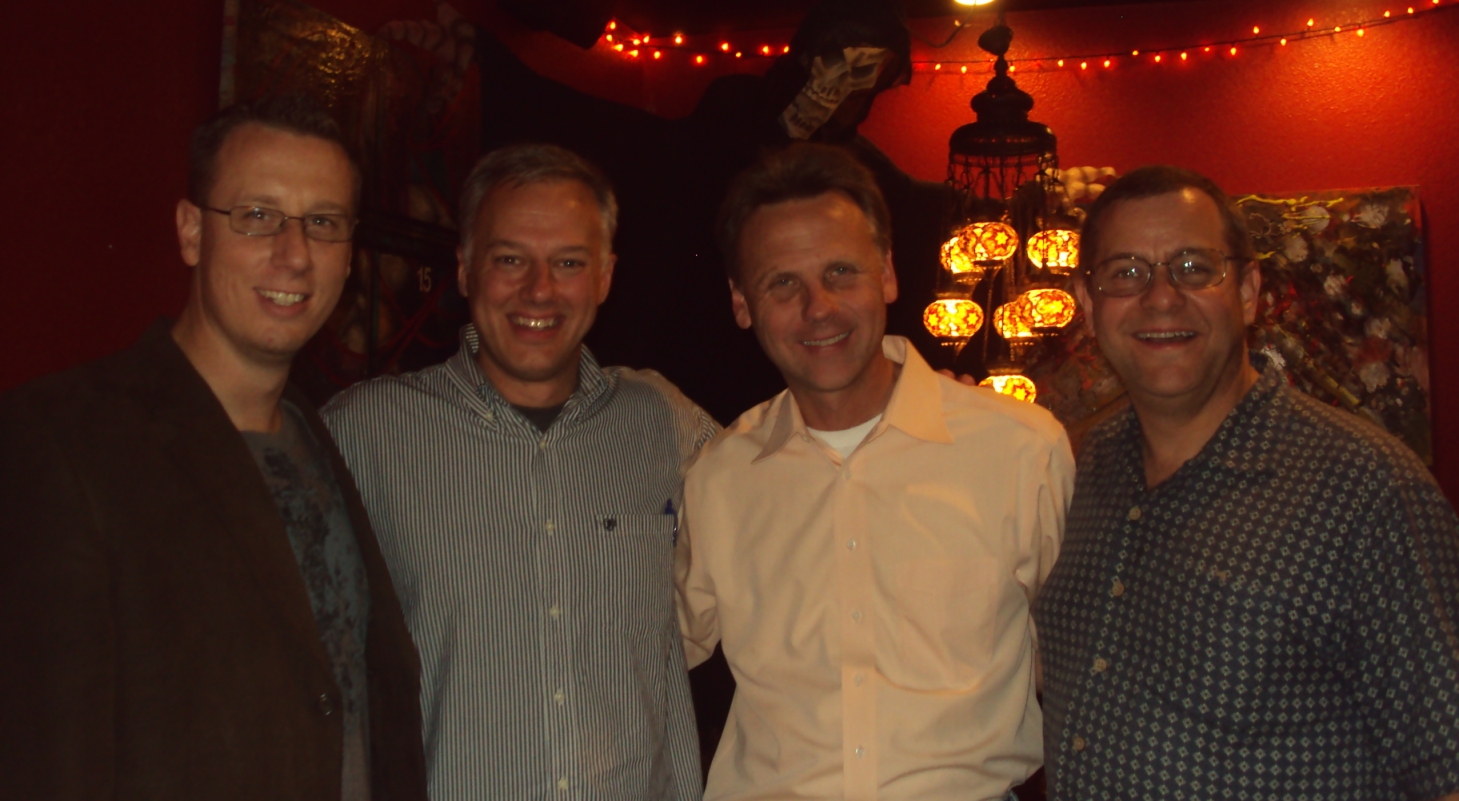
The first weekend in March is sacred. It is holy time, set apart for divine purposes. The first weekend in March is when my three greatest friends and I get together for our annual campout. Jason, Dan, and Kevin and I — The Four Horsemen — will not be kept from our yearly gathering. Neither freezing rain nor sleet nor snow nor record lows nor historic drought nor wild animals nor major surgeries will deter us. Not even one of us moving away to Amarillo will keep us from coming together for 36 hours of food, fellowship, encouragement, funny pranks, wild boasts, daring feats, prayer, spiritual conversation, and belly-splitting laughter.

It’s been a little over ten years since we committed to one another around my dining room table that morning in Mesquite. Weekly bible studies gave way to monthly lunches once we all moved away. And now that I’m in Amarillo, it looks like these campouts are the only regular thing we can count on together. We began this sacred tradition in 2006 in Cleburne, froze our backsides off around the lake in Waco the following year, and have spent the past four campouts in a row at Tyler State Park. For this, our seventh annual Four Horsemen Advance (we never retreat!), we moved things back down to Waco where an elder at Jason’s church, the stately Ray Vannoy (“Papa Ray;” roll your ‘r’) has a tract of land just west of town in Speegle.

Dan always sets our itinerary which revolves completely around the food. Jason always determines in what order we pray. But Dan always picks the restaurants and the menu. As soon as my plane landed at Love Field, the Horseman Advance began with a gigantic breakfast at Lucky’s, apparantly one of Kevin’s favorite spots. Jason had a mild restroom encounter there that amused our table. But my encounter with our waiter near the end of our meal (“You can thank me later”) proved to be equally upsetting and hilarious. A drive to Waco isn’t complete without a quick detour to the Czech Stop in West for some kolaches and cookies. We impulsed bought $118 worth of groceries for dinner at the Waco Wal-Mart. Brisket and jalapeno sausage and “gut-packs” for lunch at Vitek’s BBQ. And a wonderful steak dinner cooked over the open fire at the campsite.

Like all our campouts, this one provided a few adrenaline rush moments of daring and adventure. We felt downright apostolic Friday night when not once, but twice, snakes crawled out of the firewood and began writhing at our feet. Jason felt the only biblical thing to do was to crush them with our heels. Since we all have four different opinions about the controversial ending of the Gospel of Mark, we followed Jason’s lead and stomped the snakes instead of picking them up. We fought a little field mouse to a draw: the tiny creature was in need of an eye patch after we got through with him; but we slept restlessly in the fear and knowledge that he was still around. There was also the constant threat of skunk, although an actual sighting was never confirmed. Dan almost threw out his shoulder tossing the football fifty yards against the wind. And Kevin almost undid his back surgery halfway up the brush pile.

In and around and during all that, we talked. And listened. We reflected and reacted. A lot has happened since last year’s Horseman Advance. A lot. Kevin got married and had major back surgery. Dan’s father-in-law, a great friend of his actually, who had lived with Dan and Debbie for more than a dozen years, passed away. Jason moved to Tyler where he’s now preaching at the West Erwin Church of Christ. My family and I moved here to Amarillo. And our Father has been faithful and good and loving and kind through it all. He has carried us. He has blessed us. He has provided and protected, forgiven and restored, over and over and over again.

The greatest blessing through our ups and downs, in our victories and defeats, with our blessings and our trials, is in our friendships with one another. There is mutual encouragement, honest accountability, thoughtful guidance, and unconditional loyalty and love. Kevin blesses me so much with the way he thinks. He forces me to look at things in ways I would never consider if left on my own. Dan blesses me so much with his vision and his heart for people. He makes me think higher and bigger, he makes me dig deeper and wider, he calls me the way my Lord calls me, always attaining to the ideal. Jason blesses me with his faithfulness. He is faithful. Faithful. Faithful. To me. To his wife and kids. To his friends. To his Lord. I can’t imagine ever knowing a more faithful man. He inspires me.

We prayed for one another’s families. We lifted up one another’s churches and elders. We prayed about one another’s ministries and relationships with God. We hugged. We cried. We affirmed our love and loyalty to one another in Christ Jesus, our risen King. And then we quickly changed the subject to baseball. Afterall, we are men; and we were out in the woods. We hit Chuy’s for fajitas on the way out of town Saturday afternoon and that was it. We just waved at the Czeck Stop on the way back to Dallas. Although it was on Dan’s itinerary, there just wasn’t room.

These are the three greatest friends any person could ever hope for. And they are mine. I praise God for these men. And I count myself lucky — no, blessed; blessed by God —  just to be among them.

Peace,

Allan

The Slogan

“In essentials, unity; in opinions, liberty; in all things, love.”

Barton Stone didn’t come up with that old Restoration slogan. Neither did Alexander Campbell. Nor Thomas. It’s certainly a Restoration Movement marker. It identifies us. We’ve used it out front and center, rallied around it, preached it in our pulpits and published it in our papers for more than 20 decades. But it’s not exclusively ours.

“In essentials, unity; in opinions, liberty; in all things, love.”

I’ve always believed it was Stone or Campbell who came up with this inspirational motto. I think I’ve always been told we’re the ones who started it. As a unity movement, a restoration revolution that sought to destroy all denominational barriers and bind all believers together in our common Lord, it makes sense that we’re the ones who made this up. But we didn’t.

“In essentials, unity; in opinions, liberty; in all things, love.”

I’ve always loved this slogan. I adopted this slogan from almost the moment I first heard it as a teenager reading a paperback history of our Stone-Campbell heritage. It’s a powerful little statement, full of energy and potential and life. Just look at what it says: 1) We in the Churches of Christ believe that there are only a very few things that are absolutely essential to the faith and those are things we must all hold to and protect; 2) we in the Churches of Christ believe there are countless numbers of things about discipleship to Jesus that don’t really matter that much, there are myriad opinions that go with each of those issues, and we should all be confident to express those thoughts and views with great freedom; and 3) we in the Churches of Christ believe that in all these things with which we certainly agree and might possibly disagree, we love one another with an unconditional acceptance and grace.

That’s what the slogan says. And I’ve always cherished it. I think the slogan has meant so much to me because in most of my Church of Christ upbringing and life, my experiences have been just the opposite of what our slogan stands for. The slogan always represented a Scriptural ideal that my Restoration forefathers aspired to and one that should still compel our religious endeavors. Despite our obvious and intentional obliteration of the slogan’s mandates, I always saw the slogan as something to which we ought to turn back, toward which we ought to strive.

“In essentials, unity; in opinions, liberty; in all things, love.”

This was our slogan and I’ve always been proud of it. I’ve always thought this was something we could point to as a great contribution to the wider Church conversation. We came up with that. We’re not very good at following it. But at one time, we thought these things were really important and, someday, we might again think they are really important. And, if by God’s grace that day ever comes, we might really make a difference in this broken world for Christ!

But it’s not ours.

I was somewhat disappointed to learn at the Arminius conference last week that the slogan has been used by church reformers and restorers, by religious rebels and remonstrants, for more than 400 years. It was first coined by Lutheran theologian Peter Meiderlin in the early 17th century, in a different place, but at the same time as the Arminius-Calvin controversies in the Dutch Church.

It’s Lutheran.

Hans Rollmann has published his own extensive research into the origins and evolutions of the slogan, including its use in the dedication of a Roman Catholic Church in Neuweid, among Bohemian Brethren, Quakers, Puritans, and in our own Restoration history. The most disturbing part of Rollmann’s study is his conclusion that Barton Stone never once personally endorsed the slogan. He didn’t believe in it. He thought it was too reductionist. In fact, Rollmann contends that the slogan was only first used in our Restoration churches during the post-Civil War disputes regarding slavery, instrumental music in worship, and premillinialism. (You can access Rollmann’s report in its entirety by clicking here.)

“In essentials, unity; in opinions, liberty; in all things, love.”

I still like the slogan. I still like the ideals it affirms of one common salvation because of our one common faith in our one common Lord and of an unconditional and godly love for one another that transcends all other things. I still like the slogan and still believe it’s something we can and should strive toward.

It’s just not exclusively ours. It’s much older and it’s much more universally held. And I think today that makes the slogan even better.

Peace,

Allan

Another Word on Arminius

With Calvinism and Calvinistic theology popping up here and there more often in conversations I’m having with people inside and outside Christ’s Church, it’s good for me to be able to clearly articulate the differences between Calvin and Arminius doctrine. We’re certainly not going to solve any five hundred year old debates in this space, but writing helps me speak. So…

…another word.

What Jacob Arminius believed and taught about God’s love and grace all goes back to Creation. The creation of the world was God’s very first act of divine love and grace. Creation was for the good of mankind; it was for the benefit of people. The ultimate benefit of people is to live in righteous relationship with the Father, to have eternal communion with him. And that’s why we were created. God’s covenant with man, “I will dwell among you; you will be my people and I will be your God,” reflects his holy purposes in making us in the first place.

According to John Calvin and other Reformed theologists, a big chunk of humanity was (is) created for the purposes of destruction. Others contend that large numbers of men and women were (are) created by God and then passed over without hope or any divine intention of salvation. Arminius says, no, God’s will is for all men to be saved.

As my brother Keith put it Friday in his opening presentation on Arminian theology:

“God’s love for fallen humanity is not simply a love for justice or a vague sense of affection toward reprobate humans; it is a desire to communicate the eternal benefits of Christ to the entire race. In addition, in giving freedom to creation, God limits himself. The Reformed would stress radical divine omnipotence. Arminius would stress the divine self-limitation.”

It was risky for God to create me. He put himself on the line by making me and giving me the free will to obey or rebel, to accept or to reject, to love or to hate, to give life or to kill. In his great love for us that allows us to choose, he came to this earth to suffer with us, to die for us, to defeat sin and death in us, so we could enjoy that eternal communion with him that was intended from the beginning. He did (does) all that; and the majority of us still spit in his face. He certainly has the power to force us to accept his gifts of grace. He has the almighty power to do it. But to elect someone who is unwilling would be as unjust as damning someone who had never sinned. So we can accept his salvation or not. By his great grace, we can say “yes.” Because of his eternal love for us and the high regard he has for us as human beings made in his perfect image, we can also say “no.”

Arminius believed God’s grace does everything for us that Calvin believed it does. Everything. God’s grace is absolutely necessary for us to do any good, to make any right decision, to save us. It’s just that Arminius says the grace from God is resistible. Eternal salvation is ultimately the refusal to resist.

And that frees me to love my fellow man just as unconditionally and in just as many risky ways as my Father. It’s risky to love other people. It’s risky to give and give and give and give to people who may spit in your face. When we love and give in the manner of God and in the name his Christ, we’re going to get rejected. People are going to break our hearts. They’re going to resist our mercy and grace. But we keep giving and keep loving. We don’t stop. When we keep giving and loving at risk of great personal or corporate peril, we reflect the glory of our Father who saves you and me by the same gracious methods. We’re not allowed to pick and choose the ones we love. We’re not allowed to pre-determine who’s going to accept the good news of salvation and who’s not. Like our Lord, our will and our work is that all men will be saved.

Peace,

Allan

« Older posts Newer posts »