Category: Ministry (Page 1 of 35)

Under the Influence

I’m posting an inspiring quote today from Mother Teresa. But first:

I just made good on my annual Silver Boot Series wager with Myles, a bet that I lose every single year, For the sixth straight season and the ninth time in ten years, his Astros took the Lone Star series over my Rangers by winning nine of the 13 games, including that demoralizing sweep a couple of weeks ago. The Whataburger burgers and shakes were on me. Again.

Texas begins a three game set against Washington tonight, three games under .500 and two back of Houston in the putrid AL West. If the winner of this division winds up with a .500 record and it’s NOT the Rangers, they should certainly blow up the whole team. At that point, we would need no further evidence that this version of our baseball team is not working.

And this:

Valerie sent us this picture over the weekend of Elliott and Sammy making their own breakfast. Or something. Somehow one of them pulled the bread off the counter and had it pretty much all over the kitchen floor before they were caught. Sam looks like he’s frozen, not knowing yet whether what they’ve done is good or bad, but certainly feeling the tension. Elliott looks like he’s extremely proud of himself and the whole scene.

Here’s the quote:

“Put yourself completely under the influence of Jesus, so that he may think his thoughts in your mind, do his work through your hands, for you will be all-powerful with him to strengthen you.” ~ from A Gift for God, by Mother Teresa

Peace,
Allan

Trading Places

The Gospel is all about trading places. It’s about substitution. Someone taking my place. Me filling in for someone else. Christ Jesus paying a debt he did not owe. Me bearing burdens that belong to my brother. An exchange. A switch-out.

The Gospel is this way because our God is this way.

God is love. And love–real love, intimate love, liberating love, Gospel love–is all about this exchange.

Think about your small group that meets most Sunday nights. Think of the emotionally wounded person in your group. There is no way to listen to and love that person and stay completely emotionally put-together yourself. As you listen to him and attend to him, he will probably begin to feel stronger and better. But that won’t happen without you being emotionally drained yourself. There’s an exchange. A trade. And it takes a toll.

Parenting is the same way. We sacrifice and give and serve in order that our children may live. We decrease so they will increase.

God’s salvation through Jesus works the same way. He submits to us. He leaves his heavenly home. He serves. He sacrifices and suffers. He takes on shame to give you glory. He dies so you can live.

John Stott wrote:

“The essence of sin is we human beings substituting ourselves for God, while the essence of salvation is God substituting himself for us. We put ourselves where only God deserves to be; God puts himself where we deserve to be.”

If we’ll open our eyes and look for it, we’ll see that the exchange is all around us. We live in the exchange. We are trading places all the time. This is our salvation and our holy call. Praise God for trading places!

Peace,
Allan

Working for Christ

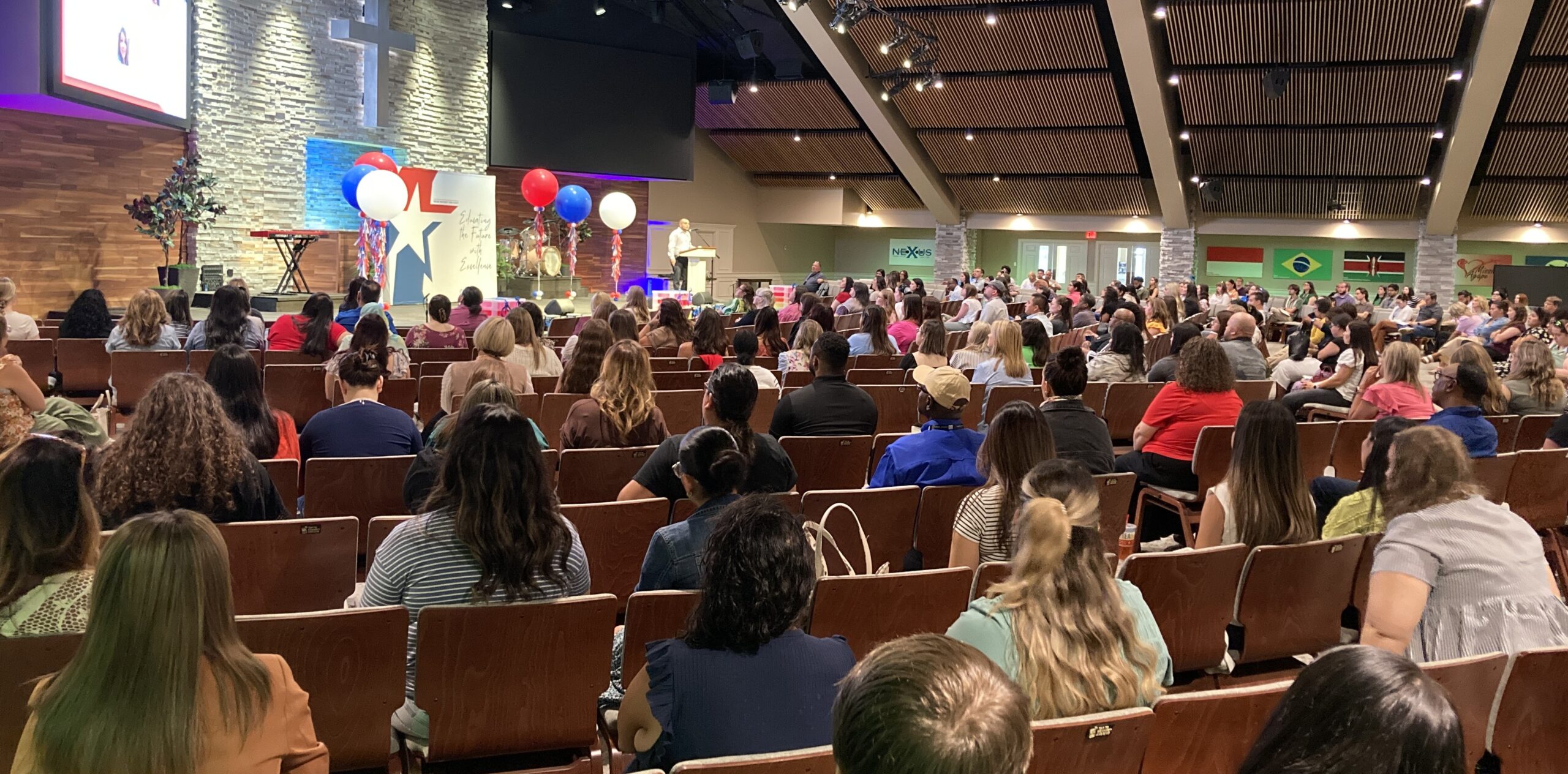
Once again, our GCR Church hosted all the new Midland School District employees this week for their two-day orientation. Almost 400 new teachers, bus drivers, counselors, coaches, nurses, and aides spent all day yesterday and today getting the lowdown on how to do their jobs the Midland ISD way. And it was a tremendous success. Again.


I am so thankful for the more than 30 GCR members who showed up both mornings to greet all the new school district employees, to serve coffee and tea, to point folks to the registration tables, to direct them to the restrooms, and to usher them to the Worship Center, the gym, and Room 301. It’s so much fun when our church recognizes that our building is a ministry hub seven days a week. I have to guess at least half of these 400 new teachers have just moved to Midland from out of town–they’re brand new here–and now they’ve all been inside our building and have had a good experience with some of our best and nicest people.


I don’t know what God will do with that. I remember Jimmy Morgette walking through our doors two years ago as the new choir director at Bowie, and now he and Logan have made GCR their home. And our whole church is better for it. God is at work both in us and through us when we host the MISD new employee orientation. May his name be praised.

~~~~~~~~~~~~~~~~

“Obey your earthly masters in everything and do it, not only when their eye is on you and to win their favor, but with sincerity of heart and reverence for the Lord. Whatever you do, work at it with all your heart, as working for the Lord, not for people, since you know that you will receive an inheritance from the Lord as a reward. It is the Lord Christ you are serving.” ~Colossians 3:22-24

Disclaimer: The relationships between employers and employees in our democratic society today is so different from what it was with masters and slaves during the first century when Paul penned his letter to the church in Colosse, it’s hard to make even one correlation. We certainly can’t do a one-to-one comparison in which slaves equal employees and masters equal employers. That is not the point of this post. The point is the mutual submission the Bible commands, which is definitely applicable in all our workplaces. 

When you’re at work, someone is either over you or you are over somebody else. Most of the time, it’s both. There’s a leadership structure, a chain of command. There are power and control dynamics in every workplace. So, the biblical principles apply: Don’t just work hard when they’re looking, but work hard to honor the Lord. Whatever you do, do it as working for the Lord.

I love how the cosmic realities of a new life in Christ, being raised with Christ and being a new person, all under the Lordship of Jesus totally transforms the workplace. No matter what your job is–“whatever you do”–you are working for the Lord. No matter what you do for a living, submitting to Christ as Lord of your life turns your job into his holy calling.

Your job is not just a necessary evil to make money. It’s not like you just work to pay the bills and your service to Christ is somewhere else, like what you do through the church. You were created to do everyday work for the Lord. When God created Adam and Eve, he put them in the garden to work it. When you are raised with Christ, you are living a new life in his glory, and you work your job in that same glory. God uses what you do, whatever you do, to benefit others. The Bible wants you to see your work this way and to view everybody’s jobs this way–as work that is commissioned by the Lord and used by him to bring glory to God.

Martin Luther wrote:

“When we pray the Lord’s Prayer, we ask God to give us this day our daily bread. And he does give us our daily bread. He does it by means of the farmer who planted and harvested the grain, the baker who made the flour into bread, the person who prepared our meal.”

Today, we could say the truck driver who hauled the produce, the factory workers in the food processing plants, the warehouse workers, the wholesale distributors, the stock boys in the grocery store, and the teenager at the checkout counter. You’ve also got bankers and investors and advertisers and agricultural scientists and mechanical engineers, and they’re all playing important roles in your getting your morning bagel. Or the bag of donut holes. It depends on if we’re talking about you or me.

God could give us what we need every day by his own direct provision. He’s done it before. Several times. It would be cool for pot roast and green beans to just fall from the sky, or for ravens to show up on my front porch with cheeseburgers and fries and spicy ketchup. But the Lord has chosen to work through human beings. And we’ve all got different capacities and different talents and different jobs, but we’re serving each other. And our Lord.

Scripture is calling you to re-think your job. “It is the Lord Christ you are serving.” What you do every day, and the way you choose to do it, blesses people and glorifies God. It’s much bigger and much more important than just the task in front of you. Or whether or not your boss is watching.

Peace,
Allan

Body of Christ: Imitation

As the Body of Christ, God’s Church is the physical, flesh-and-blood presence of Jesus in the world. By our baptismal participation in his life, death, and resurrection, we are commissioned by Christ to do the things he did in the ways he did them for the sake of others. Why? So people will see Jesus. So people will experience Jesus. If anybody’s going to meet Jesus in this world, they’re going to do it through the Church.

Words are never enough. Not even God’s words. That’s why his Word became flesh and made his dwelling among us. That’s Incarnation. Jesus was not crucified because of his words. His words are not what changed the lives of broken people, his words are not what united fractured groups, his words are not what turned the whole world upside down. It was his presence. It was the physical things Jesus did while he was in the body. It was the healing and feeding, the forgiving and praying, the eating and sharing with all the wrong people, the refusal to recognize man-made boundaries, the lavish love, the liberal grace–that’s what got him killed. That’s what altered forever the course of history. That’s Incarnation.

Our words are never enough. The things we say in the safety of our sanctuaries aren’t going to change the world. Abstract truth doesn’t stir anybody’s heart. Theological concepts don’t compel faith and love, even when they’re true. But when that truth becomes embodied, when it’s up close and personal truth, real flesh-and-blood truth, that’s when truth gets interesting. That’s imitation. If we are to be the Body of Christ, the Church must be in the business of imitating our Lord.

The apostle Paul says he always carries around in his body the death of Jesus so the life of Jesus may be revealed, so Jesus’ life may be revealed in our (plural) mortal body (singular).

So, as the Body of Christ, we always side with the oppressed, never with the oppressors. We always stand with the minorities, we always take care of the refugees, we always protect the weak. We never discriminate, we never divide, and we never use violence or force. We always give, always forgive, and we always show love. That’s how people see Jesus, how people experience Jesus. We do the same things Jesus did in the ways he did them for the sake of others. If anybody’s going to meet Jesus today, they’re going to meet him through the Church, the Body of Christ.

Luke 3 tells us that huge crowds of people were coming to the Jordan River to be baptized by John. And the people being baptized asked John, “What shall we do?” John answered, “If you have two coats, give one of them to somebody who doesn’t have one. If you’ve got food, give it to somebody who doesn’t have any.”

Tax collectors were being baptized, and they asked, “What should we do?” John replied, “Stop stealing from people, stop taking advantage of the weak, treat everyone equally.”

Some soldiers were being baptized, and they asked, “What are we supposed to do?” John said, “Stop using threats and force to get your way, stop accusing people and lying about people.”

People are being baptized for the forgiveness of their sins, they’re going into the water for a salvation relationship with God, and the instructions are not about saying the right words or believing the right things or thinking the right way. The instructions are about doing. The expectation is for real, physical actions toward the poor; tangible concrete actions for the oppressed; flesh-and-blood actions for the outcast, the marginalized, and the exploited and the weak. Not the words we say in the safety and comfort of our church buildings, but the real actions we take in our communities; the real, physical skin-and-bones actions in the interests of others–all others!–bold, courageous, Christ-like actions that go against the grain of the culture and will cost us our reputations, our relationships, and our resources. That’s the imitation of Christ that makes the Church his body.

Our Lord Jesus is the One who brings life where it feels like death is in charge. He breaks down walls, he reconciles enemies, he forgives sinners, and he welcomes prodigals home. He brings light to darkness, he provides hope where there is despair. That’s our Lord Jesus! He is still saving people right now today! He is still forgiving and reconciling and redeeming today! That world says that’s not possible. They say Christ’s power alone isn’t enough for all the crises we’re facing, and they are wrong! The same Holy Spirit who raised Jesus from the grave and ignited the first Church is working right now, awakening hearts, renewing minds, and empowering us as the Body of Christ!

So, we faithfully love our enemies and pray for those who persecute us. Why? So people will see Jesus.

We don’t just act on behalf of all people living inside the womb who might be harmed, we also act courageously on behalf of all people living outside the womb who might be harmed. Why? So people can meet Jesus.

We forgive those who sin against us, we lay down our rights for the sake of others, we stand firmly with the oppressed. Why? So the world will know the Kingdom of God is here!

This broken world is sick and tired of the Church’s words–words–words–words–words. They’re all sick of it. This lost world desperately needs the real, concrete, physical, flesh-and-blood actions of the Body of Christ.

Peace,
Allan

Body of Christ: Incarnation

In the beginning, our God spoke words into the darkness and chaos to create light, to create the heavens and the earth. Our God spoke powerful words from a smoking mountain in the middle of the desert to bring forth a holy nation, his sacred people. Our God spoke words through his prophets in Israel–words of truth and grace, comfort and encouragement, judgment and mercy and love.

And God’s words were not enough. Words are never enough. So God’s Word became flesh. God’s Word became a body.

“The Word became flesh and made his dwelling among us. We have seen his glory, the glory of the One and Only, who came from the Father, full of grace and truth.” ~John 1:14

The holy Son of God has a body. We know Jesus has a body–a real, physical, flesh-and-blood body. Jesus ate and drank, he slept and wept, he walked and talked, he worked and played, he taught and prayed in a real skin-and-bones body. He bled real blood. He suffered bodily pain. And he died a real, physical death. Jesus died.

And when God’s Holy Spirit raised Jesus from the grave, he raised him to life in a resurrection body–a real, physical body. Our risen Lord Jesus, in his real resurrection body, was recognized by everyone who knew him. He ate and drank with his followers, whether he was invited or not. He walked and talked with them, he taught them and prayed with them. It was Jesus’ real, physical, flesh-and-blood body that proved to them he was really alive. It was remarkable.

What’s even more remarkable is that our ascended Lord Jesus is reigning right now today and forever at the right hand of the Father in heaven, but he still has a real, physical, flesh-and-blood body on this earth. Jesus still insists on being skin-and-bones present in this world. Jesus has a body. He still does.

It’s us! It’s the Church! We are the Body of Christ!

Through us, by his Church, our Lord Jesus wraps his real, physical, tangible, concrete, flesh-and-blood presence around the whole world. Today, the physical, skin-and-bones Body of Christ lives and breathes and moves and acts in Jerusalem, Judea, Samaria, and to the utter ends of the earth–even to West Texas!

That’s us. The Church.

Now, you’ll hear people say sometimes that Jesus never intended to start the Church. These are mostly well-meaning people, I think. They’ll say Jesus was a holy man; they’ll even say he’s the Son of God and the Savior of the World, but he never wanted to start what we call the Church.

Baloney!

That was his plan all along, from the very beginning of the story. Jesus started the Church when he called together that first group, that first body of twelve apostles. The Jesus Movement was always a corporate, social movement–it was never just a collection of religious individuals. The Church was always meant to be the Body of Christ. That’s the way Jesus meets people today, how Jesus interacts with people now–through his Church.

It’s not just a metaphor. This is about Incarnation. This is about who Christ is and who we are in him and what it means for the risen and reigning Son of God to remain physically present in this world through a people.

Jesus’ body, his physical presence on this earth, is the Church. They are inseparable. You can’t have Jesus without his body. You can’t know Jesus without his body. You can’t be in a relationship with Jesus outside his body. Jesus is the Church; the Church is Jesus. Seriously. That’s not just how the apostle Paul sees it (1 Corinthians 6:15, 10:16-17, 12:12, 12:27; Ephesians 1:22-23). That’s the way Jesus sees it. This is how Jesus talks about it. This is how he always planned it to be.

Saul’s on the road to Damascus when the risen Christ appears and blinds him with his divine light. “Saul, Saul, why are you persecuting me?” (Acts 9:1-19) Saul’s thinking, “I’m not persecuting you, Jesus; I’m arresting all these so-called Christians who are blaspheming Scripture.” But Jesus makes it clear that if you mess with the Church, you’re messing with him.

When Jesus sends his disciples out in Luke 10, he commands them to do the same things he’s been doing. “Heal the sick who are there and tell them, ‘The Kingdom of God is near!'” (Luke 10:9) Then he adds, “The one who listens to you listens to me; the one who rejects you rejects me” (Luke 10:16). Jesus says the exact same thing in Matthew 10:40. He says that he and the Church are functioning in the same way. Jesus sends his Church as his body on earth to do all the things he did: “I have given you the authority!” (Luke 10:19)

On that last night, at dinner with his gathered followers, Jesus says, “I tell you the truth, anyone who has faith in me will do what I have been doing” (John 14:12).

And we do! We heal the sick and proclaim the Kingdom of God! And we turn the other cheek and we go the extra mile and we love our enemies and pray for those who persecute us. Why? Jesus says, “So you can be like me. So you can become sons and daughters of our Father in heaven.”

When we forgive the ones who sin against us, people see Jesus. When we’d rather be wronged than to fight for our rights, people see Jesus. When we sacrifice and serve, when we consider the needs of others more important than our own, people will meet the Lord Jesus in us.

The Church. The Body of Christ.

Peace,
Allan

Being Changed on Mission

A couple of weeks ago, I told our GCR church a story about my three Horsemen friends and I attempting to feed the homeless in downtown Dallas. This was in the summer of 2001, before I was preaching. Jason, Dan, Kevin, and I had never done anything like this; we had no idea how to do it, or where. But we had made some recent commitments together to stop griping about our church and stop complaining about our own needs and start serving other people. So, we made plans to feed the homeless.

We scrambled together $200 on a Tuesday afternoon, purchased 200 sandwiches off the dollar menu at the McDonald’s next to the downtown Greyhound bus station, and drove to an empty parking lot across the street from the downtown Dallas library. And within about four minutes, we had 13-million homeless people surrounding our minivan and grabbing for food.

That’s what it felt like.

We apologized for not having enough food, we got everyone to line up single file, we prayed over every cheeseburger and McChicken sandwich, and we did the best we could. We were uneasy at first; it was a little tense. And, yeah, we ran out of food fairly quickly. And everybody was… cool. Gracious. Thankful. Very thankful.

We wound up having a lot of conversations. We prayed with probably 20 people. And some of them prayed for us. We laughed together about the food shortage and how we didn’t know what we were doing. I was in a place I had never been with people I had never engaged. We heard a lot of stories. We talked about God. And we stayed there until almost dark.

Almost dark.

I’m telling you, that three hours changed me. It profoundly changed me. We did that once a month for a couple of years and it transformed me. It’s a big part of the things that led to me transitioning out of radio and into preaching. It helped set me on that path.

Actually doing some ministry, having a mission–not just talking about it or studying it or agreeing that it’s good–changes you. When you risk going to new places, meeting new people, and trying new activities, the uneasiness creates some space for change. New experiences challenge your beliefs and assumptions. Ministry when you’re in over your head forces you to face your fears and surprises you with resources and strength from God you didn’t know you had. Hearing the stories first-hand, seeing the places and the people, makes the needs in our world and the opportunities to serve more urgent and real. The Scriptures become more alive and more “right now” when you connect them to real ministry. It pushes us out of the comfort of theory and rhetoric and into the places where God really is changing the world.

To empty yourself for the mission of God like that feels good. You know it feels good, because you’ve experienced it, too. The reason it feels so good is because it’s our God-created and God-ordained purpose. He made us to put other people first. When we do that, we are being Christ-like. That’s why it’s so powerful. When we serve others, when we live in the mission zone, we live better. We worship better. We pray better. We love better. Everything’s better.

And you’ll be changed.

Peace,
Allan

« Older posts