Page 352 of 497

Speak To One Another

“Speak to one another with psalms, hymns, and spiritual songs.” ~Ephesians 5:19
“There are different kinds of gifts… given for the common good.” ~1 Corinthians 12:4-7

There are times within the context of congregational worship for us to be edified by others. To be lifted up and encouraged by the singing of others. To be taught, to be inspired, to be challenged by the songs of others. There are times when the God-given abilities of one or two of his children should be used in a congregational setting to benefit the entire church body. We do it all the time in Bible readings, in prayer, in preaching, in worship leading, in teaching, and in making talks at the Lord’s Table. But we in our Church of Christ heritage have generally steered clear of that in our singing.

We have always upheld very strongly the concept of a congregational chorus. No choir. No robes. No select group of people standing up in front of the church and singing. Traditionally, that’s been our stand. Our idea is that everybody participates in the worship of God. We’re not gathered to be spectators; we’re here to worship. I, too, applaud that reasoning and support the theology behind it. However, traditionally, (as long as I can remember, and longer) we’ve taken the idea so far as to deny the exercise of God-given talents in God-ordained ways.

We’ve said ‘no’ to all choirs in our congregational settings. We’ve rejected the idea of quartets or duets. We won’t even have a discussion about solos. No one is to sing — ever! — in a congregational worship setting unless everybody is invited to sing. Whether it’s two dozen people in a choir or a trio of three, nobody can sing in church unless the whole church is singing. Traditionally, that’s been our view. If it’s not been our view, it’s certainly been our practice. And that position cannot be defended anywhere in our Scriptures.

If you’re banning choirs or forbidding the use of duets or solos in your church on Sunday mornings, you can’t use the Bible to justify it.

Regarding spiritual gifts such as singing, Paul writes in 1 Corinthians that they are to “edify the church” (14:4). The Christians in Corinth are to be careful with the exercise of their gifts, keeping in mind the number one objective is “so that the church may be edified” (14:5). The apostle claims we should “excel in gifts that build up the church” (14:12) and refrain from practicing things by which “the other man is not edified” (14:17).

What could be more lovely than a young woman who’s been given an amazing voice by our Father using that voice to glorify him and inspire the church? What could be more appropriate than a group of several dozen Christians teaching and encouraging the congregation through their gift of song?

That man was given that talent by our Creator; let him use it to praise God! Let him use it to minister! And let us be ministered to. Let us listen and enjoy. Let the song take us to the throne of God. Let it inspire us to live better lives. Let it remind us of what our Father has done in our lives and in his world. Allow the man with the gift to sacrifice it to God for the sake of God’s glory and for the benefit of the church. Allow us to affirm the goodness of that gift and the greatness of the One who gives it by listening, by appreciating, by applauding the free use of that gift.

We are so blessed here at Central to be led by a group of shepherds who allow and even encourage a great variety of expressions of praise to God. We’re diverse in the ways we encourage one another in our assemblies. When we’re together, we reach for the fullest manifestation of the gifts of God’s Spirit.

A couple of weeks ago, it was a trio during our communion time. Here in a couple of weeks it’ll be a duet as we close. Yesterday it was Kevin, Johnny, Kelley, and Dick in a quartet getting us ready for the sermon. They sang a medley of songs that included “O Holy Night,” “Mary, Did You Know?” and “I Am” to prepare us for the lesson about partnering with God in the mighty salvation deeds he initiated at that little stable in Bethlehem.

And it was fabulous. Spiritually stimulating. Wonderful.

Now, don’t you dare come at me with “But, that might be perceived as entertainment” or “Aren’t you elevating one group of people over another?” Don’t say, “You’re turning it into a show or a performance.”

To quote Paul again from 1 Corinthians: “Brothers, stop thinking like children!” (14:20)

There need to be planned times in our assemblies to “just listen” to song. The same ways we “just listen” to preaching and praying and Bible reading.” Songs are strong. Music has the power to move people, to motivate and inspire, to encourage and comfort. There need to be times when a brother or sister with God-given abilities can use those abilities in a public way to bring glory to the Father and encourage the church. We need to be blown away every now and then by the talents God’s given us.

~~~~~~~~~~~~~~

Speaking of singing to one another, Carrie-Anne and I were suprised last night at our new house by a gaggle of Christmas carolers from our Central Youth Group. It seems those gathered at Tanner’s house decided to take the party on the road and wound up stopping by half a dozen houses to sing Christmas songs. We were thoroughly honored. And duly impressed. Not so much with Tanner’s Christmas tie and sweater or Spencer’s reindeer solo or Barrett’s improvised falsetto at the end of “Silent Night.” More so with the idea of sharing their gifts of song and fellowship with others.

~~~~~~~~~~~~~

I have no idea what “Blizzard Warning” means. But we’re in the middle of one right now. No snow yet. But the National Weather Service says it’s coming.

On Friday they issued a “Blizzard Watch” for Monday and Tuesday. So we’ve been on alert. Yesterday while Carley and I were stirring paint together in the dining room, the Police song on our classic rock station was interrupted by the harsh tones of a National Weather Service alert. You know, that noise always makes me think thunderstorm or tornado watch. That was my first reaction. But the computerized voice alerted us that the blizzard watch had been canceled. Carley and I looked at each other with a little bit of disappointment. But the voice went on to let us know that a blizzard warning had now been issued for our parts of Randall and Potter Counties in the panhandle.

We’re expecting 12-16 inches of snow over the next 24 hours. North winds gusting to 45-50 miles per hour. Temperatures in the 20s. Whiteout conditions. Visibilities down to nothing. Four and five foot drifts.

I have no idea what that’s going to look like. I don’t know what it might to do to the city here. I’ve never experienced anything even close to this. But we’re excited about it. It’s brand new for us. So our attitude at Stanglin Manor right now is “Bring it.”

Peace,

Allan

For You Died…

“Since then you have been raised with Christ, set your hearts on things above, where Christ is seated at the right hand of God. For you died, and your life is now hidden with Christ in God. When Christ, who is your life, appears, then you also will appear with him in glory.” ~Colossians 3:1-4

I had the tremendous honor of baptizing into Christ yesterday my good friend Junior Doerue. Junior moved here from his native Liberia with his family about seven years ago when he was twelve. Jackie and Carolyn Nall moved next door to the Doerues about five months ago. And God has been working wonderfully and quickly through the Nalls and through our church family at Central to bring Junior into his eternal Kingdom.

What a blessing! What a great joy! Of course, because of my great friend Quincy, I feel a special fondness for Junior. The day I met Junior — a couple of weeks before I even preached my first sermon here — I called up Quincy to get some insights on Liberian culture and, particularly, the African tribe to which Junior belongs. Quincy’s been praying faithfully for Junior every day. And when I phoned Quincy Saturday night to tell him that his little brother — whom he’s never met — was going to put on Christ in baptism Sunday, he just about broke my phone with his loud laughter and praises and thanksgiving to God. What a blessing!

And, I suppose, now’s the time to explain to my Central church family why I baptize people the way I do. Over time, the giggling and question marks were replaced at Legacy by nods of understanding and affirmation. But I’ve not had the time to explain it yet here.

I’ve received the same comments after baptisms here that I did at Legacy. “Why did you hold him under the water so long, was he extra bad?” “I thought you were trying to just send her straight to heaven.” “What do you do, wait until you see a couple of bubbles before you bring them up?”

No, I hold them under the water so long to symbolize as much as we can the death and burial that’s taking place sacramentally in baptism.

A person who is giving himself entirely to Christ is said to participate in Jesus’ death, burial, and resurrection at baptism. At baptism, we put to death our old man of sin; we bury that guy. And when we come up out of the watery grave, we are brand new resurrected men and women. God has created in us a brand new person, full of his Holy Spirit, to experience everything in a brand new holy and eternal way. We are dead to sin, dead to ourselves, dead to everything that separates us from God. And he now lives inside us. The old is gone; the new has come.

So, when I baptize someone, I want it to be real. I want it to have impact. I want it to really symbolize what we preach and teach that it symbolizes. When they go into that water, I want them under in that grave for a long time — long enough for the church to notice, long enough that everybody notices, long enough that we have everybody’s attention, long enough for the church to even begin to wonder “is that guy going to come up?” “Is he going to survive this?” Long enough for there to be some question as to the outcome. Long enough to truly communicate to everybody involved that baptism is death. It’s a burial. Long enough that the person being baptized is anxious to be brought up and take a breath of real air.

And that’s what I really love about the five long seconds the baptizee is under water: the resurrection of the baptizee out of the water. There’s an audible sigh of relief from the congregation when the person is brought up. It’s almost celebratory in sound. Yes! Wow! Even some nervous laughter. I wasn’t sure there for a second! He made it!

For the baptizee, that first breath is a big one. A huge intake of air into the lungs, oxygen flooding the arteries and veins, rushing into the heart and brain. It’s invigorating. It’s a relief. That first breath is a memorable one. It matters. It’s different from the breaths that were taken before going into the water. It’s a life-giving breath.

The greek word for breath in the New Testament is pneuma. It’s the same word for air. And wind. And Spirit. The Holy Spirit. That first breath somebody takes when they come up out of the water is a Holy Spirit breath. It’s God by the mystery of his Spirit entering into that person as a fulfillment of the covenant to make his dwelling among us, inside us. It’s huge. It’s monumental. That first breath is everything. And if I can get the baptizee and the church to experience it together in a memorable way, the better.

The watery grave should resemble and feel like death. The resurrection should resemble and feel like deliverance from death, a brand new life, a gracious gift from a faithful Father.

Now, if we can just get the Lord’s Supper to resemble and feel more like a great celebratory banquet…

Peace,

Allan

The Gospel is for All!

It’s sunny and 22-degrees in Amarillo as I’m penning this post. That’s a full twenty degrees warmer than it was this time yesterday. Oh, yeah. We haven’t been above the freezing mark in nearly four full days. And it has been an adventure. I got stuck in the snow and ice on the way to work Monday morning going around that uphill curve at Hillside and Criss to I-27. The fire department had to push me out. I wasn’t the only one; there were five or six other cars stuck on that hill and they were in the beginning stages of shutting the street down. But it was still a little embarrassing. Then yesterday morning, the van wouldn’t start. The battery was shot. Thankfully, by the time I had the new battery in hand and was ready to install it, the temperature had warmed up to six degrees. You know what it’s like to be turning a bolt and bang your knuckles against a sharp metal plate in six degrees?

I need some weight in the back of my Ranger. I need a better pair of gloves. And maybe one of those George Costanza gortex coats like Kevin Schaffer wears. I’ll never understand how Greg Dowell walks around in this mess in those topsiders without socks. Or how Mark Love is good with just a T-shirt. It’s supposed to warm into the upper 30s later today. But I feel like this snow and ice is going to be with us through March.

~~~~~~~~~~~~

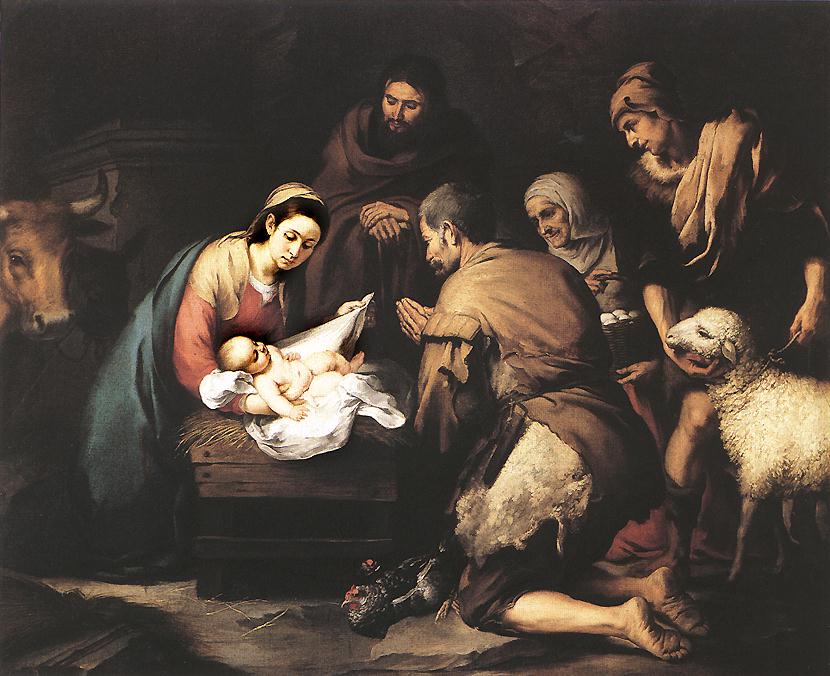
Holy Scripture gives us a beautiful picture of the birth of Jesus. It’s a glorious masterpiece. Breath-taking in detail. Fascinating in theological imagery. One of the many, many things we’re clearly shown in that little stable in Bethlehem is that the good news of salvation from God in Christ is for everybody. Christ Jesus came for everybody. Everybody’s in on this good news.

Look at the manger scene in Scripture. Look at the people in the story. Young and old, rich and poor, male and female, blue collar shepherds and professional scholars, righteous and sinners, Jew and Gentile. God with us means God with all of us!

No exceptions. No fine print. No disclaimers or escape clauses or special qualifications. The angels proclaim that the good news of great joy is for all the people. And the portrait of the stable illustrates it beautifully.

I’ve heard all my life that the ground is level at the cross. Well, the ground is just as level at the manger. In the glory of the nativity, God shows us that we all belong to the same family. We’re all equally lacking and equally blessed. By becoming a human, God draws the entire human family to himself without any distinctions. The good news is that all who are baptized into Jesus are the same. There’s neither Jew nor Greek, male nor female, slave nor free.

God is the God of the universe. But he’s no elitist.

And when we give in to our impulse to avoid uncomfortable people or awkward situations, that’s not Christ-like. The most awkward and uncomfortable birth for the most exalted figure of Jesus Christ shows us and reminds us that the value and importance of life is found in life itself, not in all the things that come with life.

The Gospel is for all. Including the uncomfortable and the awkward. Like you. And me.

Peace,

Allan

Blowout at Armageddon

We know there’s a battle going on between good and evil. We understand the conflict. We get it. Forget the TV and newspaper and the internet. There’s horrifying evidence of the evil on every channel, on every page, on every website. Forget that. Let’s acknowledge that we’re all personally caught up in it. We understand it personally because we’re dealing with it right now. Broken families. Bad news from the doctor. Pink slips at work. Addiction. Rebellious kids. Divorced parents. Intimidation. Depression. Hopelessness. Things are not the way our Father intended. We know that.

The earth God created and called good and the people he created and called very good are being tortured. Tortured by war, disease, violence, death, poverty, greed, lust, injustice, slavery, idolatry. We’re paralyzed by Satan, imprisoned by sin, terrified by death.

We’re in the middle of a cosmic war.

Our merciful Father knows that, too. He understands it. That’s why he gives us a beautiful vision of the already-determined outcome of the battle. He shows us the ending.

God gives it to us in Revelation 20: the battle of Armageddon. Satan calls together all the wicked of the world, all the evil in the universe. They come from all four corners of the earth. They’re gathering for battle against God’s children:

“In number they are like the sand on the seashore. They marched across the breadth of the earth and surrounded the camp of God’s people, the city he loves.”

Looks bad for God’s children. They’re surrounded. No escape. Out flanked. Outnumbered. Outmanned. Out of luck. It’s over.

“But fire came down from heaven and devoured them!”

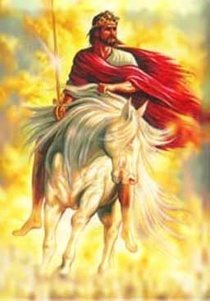
There is no battle of Armageddon. Look it up. Revelation 20. There’s no battle. Satan never even touches the saints. None of God’s children are harmed. Not even a scratch. It’s like Jesus rides up on his white horse and says, “Make my day.” Boom! It’s over. We don’t fight anything. We don’t have to. That’s the Lord’s job.

Of course, it’s against our nature to sit back and let God do the fighting for us. The picture in Scripture of what it looks like for us to oppose the evil in our world is not typically the way we handle things. Instead, our first inclination is to politic. Picket. Petition. Boycott. Lobby. Threaten. We think if we show enough force, if we gather enough power, we can defeat evil by voting correctly or by supporting the right platforms together or by pushing the proper laws through worldly systems.

No.

The ones who are called “conquerors” in Revelation, the “over-comers,” are the ones who have submitted faithfully to suffering and death, totally trusting in God to deliver. God’s children are the ones who live in patience and mercy and grace and trust God completely to take care of the battle.

It’s important for us to know that the victory of Jesus Christ has already been won. In a blowout. A rout. Not even close. And it’s important for us to live with that expectation. Or into that expectation as though it’s already here. We live every moment today in light of what we know is ultimately going to happen.

We don’t wait to acknowledge the complete and sovereign rule of God. We acknowledge it and we submit to it right now. And we witness, we testify. We change the world. Not by power or force or influence. But by patience and gentleness and mercy and love. By faith and loyalty in our God and his victorious Christ. And, yes, even by some suffering. For a little while.

Ephesians 2 says we are already, right now, seated with Christ in the heavenly realms. We are. So we live like it.

Peace,

Allan

Walking the Blood Path for Me

We spent our assembly time together here at Central yesterday considering the weird passage in Genesis 15 about the blood path ceremony between God and Abram. All the pieces of animal, all the blood, the thick and dreadful darkness, the two symbols representing God passing between the pieces.

Clearly, God was promising Abram that God’s promises about giving Abram many descendents and lots of land and, eventually, blessing all the nations of the earth by his seed were trustworthy. God was going to be true to his word. And he staked his life on it by walking between the bloody pieces of the sacrificial animals. God used a very common practice, this ceremony with which everybody was familiar, to demonstrate his commitment to his word.

If what is explicit in Genesis 17:1, that Abram had to be blameless and live in perfection before the Lord, was understood at this time to be Abram’s part of the covenant — and I believe it was — then it’s remarkable that God walked the path between the pieces twice. The smoke and the fire, two theophanies representing YHWH Lord, both pass through the blood. God stands in for Abram. He walks in Abram’s place. The promise from the Lord, in addition to the kids and the land and the Messiah is that God is going to pay for his people’s sins. God pays the price whether he or Abram violates the covenant. Either way, the penalty is on God. Whenever and however the covenant gets broken, when it’s broken, God dies.

The significance of this powerful picture of God walking the blood path in Genesis 15 cannot be overstated. Yes, what God has promised he will certainly do. In the scheme of Genesis and the rest of the Torah, this story goes a long way in reminding us that God overcomes seemingly insurmountable obstacles — barren wombs, enemies in the promised land, the sin of his people — to keep his word. Yes. But it’s so much more than that, too.

God’s perfect promises are free gifts to his people. God is the One who initiates the relationship with us and provides for us what is needed to maintain it. We bring nothing to the table. The Father desires to bond eternally with people who consistently reject him. And he’s willing to prove his devotion to the relationship by offering his own life. Not only that, but the Lord is willing to pay the price himself for the covenant failures of man.

And God’s promise is unconditional. It was not dependent on Abram at all. The covenant stands no matter what the people believe or what they practice. The fulfillment does not depend on man’s faith or faithfulness. God’s “I AM” is perfectly adequate for man’s “I am not.” We can’t perfectly keep the terms of our covenant with God. It’s impossible. We are entirely unable to walk before the Lord and be blameless. But, praise God, that’s not the end of the matter. Our Father made the provision for us long ago. His walking through the blood symbolizes his willingness to stand in for us, to do what is necessary to cover for us, when we violate the terms of the covenant.

At the end of the day, Abram was assured that his own future and the futures of his children and descendents were firmly in the hands of the covenant God. “On that day,” Genesis 15:18 says, “the Lord made (lit: cut) a covenant with Abram.” The point remains the same for you and me under the renewed covenant: God’s word is dependable. It’s perfect. The Lord keeps his promises. Our Father is faithful; and very, very good.

~~~~~~~~~~~~~~~~~~~~~~~~~~~~~~~~~~~

The seeds of yesterday’s sermon were planted in me by a teaching I heard from Ray Vander Laan about seven years ago. A year later, Dr. Mark Shipp assigned the Genesis 15 text to me for an exegetical research project at Austin Grad. Vander Laan inspired me. Shipp challenged me. And now this picture in Genesis 15 is a part of me. You can read Vander Laan’s work on the subject here. You can read my exegetical paper on the passage by clicking here: Genesis 15 Exegesis

~~~~~~~~~~~~~~~~~~~~~~~~~~~~~~

It turned out to be a full weekend project. In and around Thanksgiving food, football, and family; in between Christmas decorating and shopping; before and after church and study and movies and games; Valerie had to write a poem for school. This poem had to be based on an earlier project in which she had described herself by using dualities found in images and ideas from nature. Among other things, Valerie had written about fire, which produces energy and warmth, yet also displays a tendency to ignore boundaries and be destructive. She had mentioned Spring, contrasting songs and flowers against the inevitable wind and storms. There were also the complexities of a diamond: multi-faceted, hard, yet submitting to the gem-cutter’s blade. She also sees herself in the Azaleas: striking in their brilliance, yet so stinking high-maintenance. But could she express all of this in a poem?

Oh, yes she can.

It’s beautiful. I suggested she title it “A Song Unfinished.” She went with “The Stonecutter’s Project.” It describes my little Valerie perfectly. A bundle of energy and talent and unlimited potential. Enjoy.

She crackles, she sizzles, inspires as she dances;
she daringly spreads as she leaps at new chances.
Fiery, bold, contagious.
Careless, impulsive, outrageous.
A tendency to both warm and consume as she advances.

A skip in her Vans and a spritz of perfume;
like Spring, she has sprung, entirely in bloom.
Songbirds, shamed by her voice.
But beware of her other noise:
the lightening and thunder of an alternate mood.

Like the Azalea in season, so striking, so pink;
it takes the right mix of rich soil and zinc.
P, B, and Js.
Grilled cheese and Lays.
For Valerie, nothing more, nothing less, and a D. P. to drink.

Like the diamond that dazzles through each of its facets,
the word “brilliance” defines and sums up her assets.
Unique, strong, true to her pledges.
Stubborn, steadfast, still rough around the edges.
Continually refined by the Stonecutter’s tools, a polished gem with no regrets.

Peace,

Allan

Thanksgiving Wish

“I am a poor wretch whom God took charge of, and for whom he has done so indescribably much more than I ever expected… that I only long for the peace of eternity in order to do nothing but thank him.”

~Soren Kierkegaard

« Older posts Newer posts »