Page 311 of 493

Our Lord’s Will

Burt Palmer, the “Sheep Dog,” the warm, funny, out-going, self-deprecating senior pastor at Polk Street Methodist Church has said it a few times recently and repeated it again in front of sixty-five other elders and ministers at last night’s 4 Amarillo prayer meeting: “I can’t believe it’s the Church of Christ guy who’s pushing this ecumenical partnership.” Howard Griffin, the straight-laced, forward-thinking, super-organized, community-minded senior pastor at First Presbyterian Church has told me that when he tells his people about our 4 Amarillo plans, their reaction is something along the lines of, “Are you sure the Church of Christ wants to be involved in this?” Howie Batson, the most senior of all us senior pastors downtown, the long-time and much-loved, brilliant and soft-spoken, pastoral-face-of-the-city senior pastor at First Baptist Church whispered to me at breakfast yesterday and again after last night’s meeting, “You know, you’re going to get some push back from the other Churches of Christ in town.”

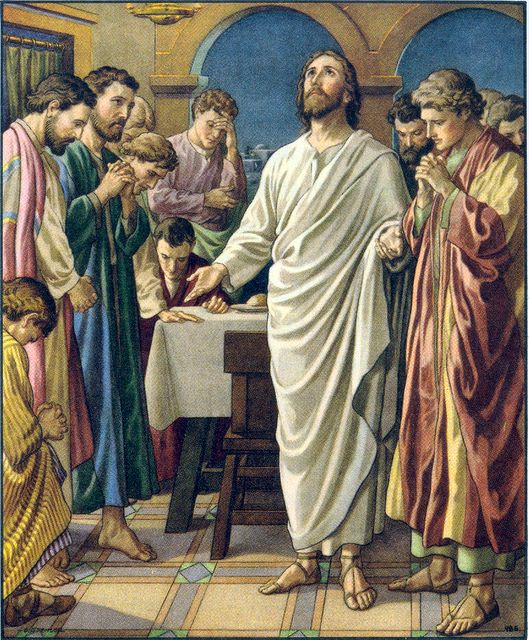
Yeah, some of it’s funny. Some of it’s sad. None of it surprises me. But, this is just the right thing to do. It’s right and it’s good; it’s very good. Because we know for a fact that the unity of all God’s children as a testimony to his power is the will of our Lord Jesus. Good gravy, it’s the last thing he prayed for on his way to the cross.

“…that all of them may be one, Father, just as you are in me and I am in you. May they also be in us so that the world may believe… May they be brought to complete unity to let the world know that you sent me.” ~John 17:20-23

We know that last night’s prayer meeting and our long-term plans to join forces in worship and service for the sake of our city is pleasing to our Father. We can be certain of that. How many biblical passages about the Body of Christ, how many Scriptures about Christian unity, how many references to fellowship and brotherly love do you want me to cite?

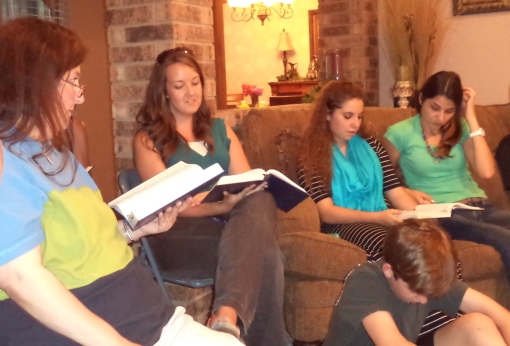
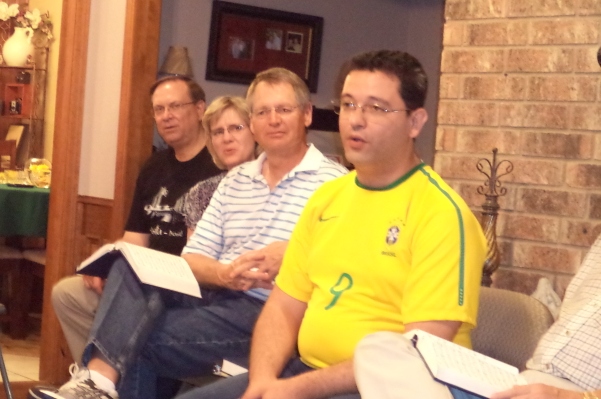
There were twelve tables in that room last night with six to eight ministers and elders from the four churches at each one. Well, that’s not entirely true. The table that was positioned at the very front center of the room was empty, drawing attention to yet another thing we all have in common: nobody sits down front. I sat at a table with Jim and Mickye from First Baptist, Callie and Kim from Polk Street, and our own Matthew Blake. We read Scripture together and we prayed. We discussed together what each of our churches are already doing in Amarillo (a ton, as it turns out; praise God!) and dreamed out loud about what God might do through us in the future. As we prayed around our table, I couldn’t help but hear Leon praying for unity two tables over. I heard Steve Rogers behind me at his table, talking to God about his Holy Spirit. During our discussions I could hear Greg laughing a couple of tables to my right. I watched Steve and Larry introduce themselves to about forty different people. I was so proud of our guys last night, so proud of their eager participation and leadership in this great cause.

Burt led us in a time of meditation and prayer from Ephesians 4:3-6, reminding us that there is just one body, one Spirit, one Lord, one faith, and, while we use different amounts of water, just one baptism, We recognized together in prayer that we are called to be a unified people of God. We acknowledged that God is the Father of us all. And we pledged to commit to one another as brothers and sisters in Christ.

Howard led us in a time of brain-storming together about ways we could partner with one another for the benefit of others. If somebody comes to Polk Street looking for food, Polk Street’s not going to start a big food pantry, they’re going to send them to Central. If somebody comes to Central looking for an ESL class, we’re not going to start one, we’re going to send them to First Baptist. If First Baptist needs two more guys to accompany their trailer of supplies to tornado victims in Moore, they’ll call us or First Presbyterian to see if anybody wants to go. People at First Baptist who want to do prison ministry should partner with the programs already in place at Polk Street. People at Polk Street who want to work at Martha’s Home should partner with what Central is already doing instead of trying to reinvent another program. Why not?

I outlined our plans for the next twelve months to serve our city together in the name of Jesus: serving our downtown-area elementary schools, serving and worshiping together during Thanksgiving and Easter, building the Habitat for Humanity houses next summer. In the context of Ephesians 4:11-13, we thanked our God for the works he’s about to put in front of us. We recognized that, according to Scripture, these works of service lead to unity and to increased Christ-likeness. And we begged God to give us those works, to raise up the leaders within our four churches, and to prepare our city to be turned upside down for our risen Savior.

Howie brought it home with an inspiring story about a young girl he presented a Bible to more than a decade ago at one of their summer Bible schools. This young child, who was being starved and abused in her home at the time, has grown into a wonderful Christian young lady who’s written and published a book about her experiences. Howie reminded us that you never know at the time how our God is using our efforts to serve others. And he encouraged us to embrace these new efforts in our downtown neighborhoods with trust that our Father is going to blow us away with his grace and power. We read from Jesus’ prayer for Christian unity for the sake of the world in John 17, and then pledged to God to follow his lead. We asked God to take us to places we’ve never been before in sacrifice and service for others. And we gave our partnership and our plans, our projects and programs, to him in prayer.

I believe that Satan, the Accuser, has already noticed. I believe that when Burt stood up last night to kick off our meeting, Satan also stood up at the same time and said, “They’re doing what?!?” I believe that, after last night, hell is trembling. And I believe heaven is rejoicing. I believe that last night our Father said, “Finally!” And then he elbowed a couple of his angels and said, “Now, watch this!”

We are acknowledging that Jesus has the power to change everything, to fix everything, to make everything right. And we’re showing Amarillo what it looks like by our sacrifice and service, by our re-organized priorities, by our Christian unity, and by our lives.

Peace,

Allan

4 Amarillo

Four guys walk into a bar: a Baptist, a Methodist, a Church of Christ, and a Presbyterian… that’s a joke.

Four sets of ministers and elders walk into a church building to pray: Baptist, Methodist, Church of Christ, and Presbyterian… that’s not a joke. It’s the holy will of our God and a magnificent witness to our city of the power of Jesus! And it’s happening this evening!

“I pray also for those who will believe in me through [the apostles’] message, that all of them may be one, Father, just as you are in me and I am in you. May they also be in us so that the world may believe that you have sent me. I have given them the glory that you gave me, that they may be one as we are one. I in them and you in me. May they be brought to complete unity to let the world know that you sent me and have loved them even as you have loved me.” ~John 17:20-23

We believe that it is God’s will that all his children, all disciples of his Son, be reconciled. We think God’s great desire is for all Christians to be brought together as a powerful witness to the world of his love and peace. You know, this is in our Church of Christ DNA. It was established in the opening lines of Thomas Campbell’s Declaration and Address, the charter document for our Restoration Movement, written in August 1809:

“That it is the grand design and native tendency of our holy religion to reconcile and unite men to God and to each other in truth and love to the glory of God and their own present and eternal good will not, we presume, be denied by any of the genuine subjects of Christianity.”

The whole document is about reconciliation, the kind of reconciliation that drives God’s eternal plans. The very ministry of reconciliation he’s given those of us who profess our faith in him. The words in the document are bold and aggressive. And they ring with undeniable beauty and truth. They call for a swift end to all divisions among those who follow Jesus:

“Has the Captain of Salvation sounded a desist from pursuing this deadly enemy that is sheathing its sword in the very bowels of Christ’s Church, rending and mangling his mystical body to pieces? Has he said to his servants, ‘Let it alone?’ If not, where is the warrant for a  cessation of endeavors to have it removed?”

Campbell claims that tearing down the walls and uniting with all our brothers and sisters in Christ is a matter of universal right, a duty belonging to every citizen of Zion. And while the work will be difficult and the opposition will come mainly from within the church establishment, Campbell says it is God’s will. It is the Church’s will. It is the will of those who’ve gone before us:

“Both the mighty and the many are with us. The Lord himself, and all that are truly his people, are declaredly on our side. The prayers of all the churches, nay, the prayers of Christ himself, and of all that have ascended to his heavenly Kingdom, are with us.”

I thank God for the Campbells and the Stones and the other giants of the faith who latched on to God’s holy will as revealed to us in Scripture and would. not. let. go. I thank God for the ecumenical spirit of the Central Church of Christ toward our brothers and sisters in other Christian churches in our city. I’m grateful for the willingness here — the eagerness! — to unite with other Christ-followers.

This evening, the Central elders and ministers are meeting at Polk Street Methodist Church with their elders and ministers and with the elders and ministers from First Baptist and First Presbyterian to spend one-and-a-half hours together in prayer. We are forming an alliance, a partnership. We’re calling it “4 Amarillo.” It’s a hopefully obvious play on words. Four churches breaking down our walls, putting aside our differences to unite for the sake of our city.

We’re not 100% sure what this looks like yet. This August, we want to join together to serve our downtown area elementary schools. We’d like to serve and worship together during the Thanksgiving and Easter holidays. We’re going to swap pulpits with one another. We’re thinking we’d like to build some Habitat for Humanity houses together.

We do believe that this partnership between denominations will be a powerful witness to our city that Jesus really is the Prince of Peace, that he really does possess the power to reconcile and unite. Jesus says in the middle of Matthew 18 that if two or three people will come together and agree on anything, he’ll show up just to see that! And we believe he will.

Whatever good comes from this alliance, we know it must begin in prayer. So that’s what we’re doing tonight at Polk Street Methodist. We’re going to pray. We’re going to commit to one another — all four churches — as brothers and sisters in Christ. We’re going to pledge in prayer that we will not be competitive, that we will not be territorial, that we will see our downtown area as the part of the Kingdom of God we’ve been given to serve together. And we’re going to submit the whole thing to our God. In prayer, we’re going to give our partnership, our efforts, our projects, all of it to our merciful Father for his purposes and to his eternal glory and praise.

It starts tonight. I have only hopes and dreams of where it might be going. But it starts tonight.

Peace,

Allan

Living the Righteousness of God

“God made him who had no sin to be sin for us, so that in him we might become the righteousness of God.” ~2 Corinthians 5:21

If 2 Corinthians 5 is about Christian ministry and if the focus of Christian ministry is on the atoning death and resurrection of Jesus, then our message and our ministry are both aimed at reconciliation. Paul claims that God initiates this reconciliation. He is the author of reconciliation. He has made us righteous and brought us into holy relationship with him through his risen Son. And — here’s the really exciting part — he has given us both the message and the ministry of reconciliation. We are his ambassadors, Paul says. We are commissioned by this God of reconciliation to represent him and his Kingdom in reconciling the world back to himself.

It’s not just a message that we’re supposed to preach and teach; it’s not just a truth we’re supposed to believe and affirm; it’s not just an inspiring email we forward to all our church friends; it’s not just a fish or a cross on the back of our truck. “That in him we might become the righteousness of God” means we must embody this reconciliation. We’ve experienced it. By God’s grace we’re experiencing it every hour. And our Savior is calling us to live it, to actually become the “righteousness of God.”

That’s a whole lot different from merely accepting the righteousness as a gift.

My main problem here is that for so long I assumed that head knowledge, mere doctrinal assent, was what was required. Understanding the reason and logic behind the atonement is not the same as actually receiving the gospel and having your life radically transformed by it.

Robert W. Yarbrough calls for Christians to have a clear and active sense of what it means to be a “new creation,” living under and in the power of the righteousness of God:

“They have contented themselves with a weak doctrine of faith, a pale facsimile of Paul’s robust ‘righteousness of God’ unleashed in believers’ lives. If the word that proclaims righteousness is believed, that which arises is love and action. Where that action is lacking, there is good reason to suppose the heart still languishes in unbelief. There may be assent, there may be emotional affirmation, there may be selective obedience to gospel imperatives. There may even be impressive displays of religious activity. But when Jesus called for taking up the cross and following him, he probably had something more radical in mind than motoring to an air-conditioned sanctuary, amen-ing the show, and returning to the real life of Sunday TV and family fun after sumptuous repast at the crowded new restaurant that everyone is dying to try.”

The righteousness of God is comprehensive, all-embracing, and life-transforming. We are called to embody it. Yes, as his ambassadors, we are commissioned by God to proclaim his peace to his enemies through the death and resurrection of the Christ. But, as his ambassadors, we are called to represent our risen King and his everlasting Kingdom in our very lives. We make the first moves in reconciling with others. We take the initiative in bringing about reconciliation in our churches, in our families, and in our neighborhoods. We announce the peace, the righteousness, and then we partner with God in the difficult work of living it for the sake of others.

Peace,

Allan

Seated With Princes

“He raises the poor from the dust and lifts the needy from the ash heap; he seats them with princes.” ~Psalm 113:7-8

Holy Scripture gives us a pretty clear picture of what our God is doing in this world. From Genesis to Revelation, we the motif of changing places. Switching roles. The rich and powerful being brought down and the poor and weak being raised up. God is turning things upside down.

The way the world is right now — all the power structures, all the people in charge; all the people in the streets, all the oppressed; the people without a care in the world, the people trapped in hopeless cycles of despair — our God is working to totally flip it around. He’s working even now toward a great big ultimate opposite day.

What a joy to partner with our God yesterday and personally participate in his great program of everlasting reversal! When yesterday began, there were 77 orphaned children at our Alara school in Kenya who were not sponsored. Following a call for pledges, which included a threat from me to keep preaching until we had all 77 commitments and a well-timed video from our own Jake Reeves with an emotional “Happy Mother’s Day” at the end, our church family responded in gratitude and with godly grace and love to commit to those 77 children and more.

All four of the sign-up booths were jam packed with people clamoring to register for one of these orphaned students. More than ninety pledges were received! We actually have a waiting list now!

Praise God; to him belongs all the glory. Every single student at our Alara school will now receive adequate food and clothing, supplies and an education, protection and provision because of this mighty demonstration of generosity. Those children now have hope. Because of these monthly gifts, those kids believe they, too, will be lifted from the ashes to sit in places of honor.

Thank you, Central. I really do belong to a pretty great church. You are faithful. You always come through. Always.

Peace,

Allan

We Belong To The Lord

I want to continue our important discussion here regarding the silence of Scripture and its place in our American Restoration Movement history and current beliefs and practices. As it relates to the maddening question of whether biblical silence on a particular issue is prohibitive or permissive, please check out this video clip from a Rick Atchley sermon illustration. I quoted one of my favorite Rick Atchley lines in Monday’s post, and a friend reminded me this morning of Rick’s “chair illustration.” I’ve seen Rick do this at least a couple of times. It’s a beautifully simple and strikingly clear demonstration of the absurdity of our traditional approach to the silence in Scripture. And it inarguably proves that this default approach actually prevents any type of Christian unity among our churches; it actually leads to and fosters ugly and sinful divisions.

When you have more time, you might also check out this recent 26-minute presentation by my brilliant brother, Dr. Keith Stanglin, on the fourth and fifth propositions of Thomas Campbell’s Declaration and Address. Keith argues that Campbell’s document, which most consider as the foundational document for the Restoration Movement and Churches of Christ, fundamentally rejects both the Old Testament and church history as formative and informative for our congregations. Keith makes a compelling case for paying careful attention to all of church history as we prayerfully make decisions for our own churches and denominations today. The lecture is in two parts on YouTube: click here for part one and click here for part two. (Thank you, Keith, for pointing out that the use of unleavened bread for communion is a tenth century innovation of the western church.) After watching Keith, you’ll understand why I always say I got the looks and he got the brains.

While I’ve got you here, I’ll direct you to my great friend Jim Martin’s post, written for Dan Bouchelle’s blog, on why he continues to preach.

~~~~~~~~~~

Paul’s thoughts in Romans 14:1-15:7 are summed up in a couple of places in that passage. In 14:17 he claims that “the Kingdom of God is not a matter of eating and drinking, but of righteousness, peace, and joy in the Holy Spirit.” Later, in 14:22, Paul commands “whatever you believe about these things keep between yourself and God.” The conclusion must be that it’s OK to have strong opinions and beliefs about certain things as they relate to Christ Jesus and his Kingdom, but that those opinions and practices must never be bound on other Christians.

But what about “salvation issues?” Oh, I can hear it now. In fact, I hear it quite often. What about matters of doctrine? What about the important things?

Yeah, that’s where it gets touchy. Because if two Christians are arguing about something and the argument and the feelings are such that it’s dividing them and threatening to divide their church, then, of course, one or both of them believe with all their heart that it’s a doctrinal or salvation issue. But, Paul says, that’s OK, too.

“One man considers one day more sacred than another; another man considers every day alike. Each one should be fully convinced in his own mind. He who regards one day as special, does so to the Lord. He who eats meat, does to the Lord, for he gives thanks to God; and he who abstains does so to the Lord and gives thanks to God. For none of us lives to himself alone and none of us dies to himself alone. If we live, we live to the Lord; and if we die, we die to the Lord. So, whether we live or die, we belong to the Lord.” ~Romans 14:5-8

Each of us should be fully convinced in our minds that what we’re doing is the right thing to do in the eyes of God. Yes. But don’t bind that on another brother who doesn’t feel the same way. If he practices something different, Paul assumes you’re both doing it to the Lord, before the Lord, in the presence of the Lord, to the glory of the Lord, and with a clear conscience. We assume that my sister with a different belief or a different practice is not believing or practicing arbitrarily. She’s doing it with careful study and reflection and prayer. And she’s fully convinced in her mind that she’s doing the right thing. So, everything’s fine.

But, somebody will still say, “What if we’re talking about a salvation issue?”

What in the world is a ‘salvation issue?’ Will somebody please tell me what a ‘salvation issue’ is? We get into discussions about ‘salvation issues’ and we start ranking things in order of importance to God, in terms of what’s going to save us or condemn us. And we’ll talk about baptism and church and the authority of Scripture and worship styles, but we’ll never talk about helping the poor or being kind to your enemy. Scripture says those are actually the heavier issues. They’re all salvation issues! Everything we do is a salvation issue! That’s why the heart is the most important thing. The attitude is the most important matter. For the Kingdom of God is not a matter of eating and drinking…

Paul is calling for unity in spirit, not unity in opinion, not unity in practice, not even unity in belief. And he’s dealing with what at that time in that church were huge issues. Unity comes with where your heart is, what’s your motivation, what drives you, who you are thinking about.

Paul clearly identifies himself as one of the “strong” Christians. But, again, it’s interesting to me that he doesn’t say the “weak” need to change their minds or their opinions or practices. His prayer is not that all the Christians in Rome come to the same opinions on these disputable matters. No. He’s praying that they may possess a unity of spirit that transcends their differences.

Peace,

Allan

The Silence of Scripture

When our Restoration Movement divided between Disciples of Christ and Churches of Christ at the turn of the 20th century, it was largely a result of two different interpretations of silence in Scripture. As we’ve already seen, those opposed to the use of instrumental music during congregational worship reasoned that, since the Bible didn’t specifically authorize it, it was not allowed. There were no New Testament examples, so it couldn’t be practiced. On the other hand, proponents of pianos and organs declared that silence in the Bible permitted the use of instruments — Scripture didn’t specifically prohibit or condemn it. Since there was no biblical command against it, it was OK to practice it.

The same arguments regarding the interpretation of biblical silence were used for and against the Missionary Society, for and against located preachers, for and against open and closed communion. Is scriptural silence on a particular issue prohibitive or permissive? Does silence allow or condemn? I’m afraid we still run into forms of this debate almost every day. And we ought not.

When Alexander Campbell said, “Speak where the Bible speaks and be silent where the Bible is silent,” he didn’t mean that the lack of a clear biblical directive should embolden us to scream and yell and assert our own opinions about that silence and loudly and aggressively and divisively bind those opinions on others. He meant that we could all form our own thoughts and opinions — and they could be very strong opinions and passionately held — and then keep them to ourselves. Being “silent where the Bible is silent” means, in the words of the apostle Paul, “whatever you believe about these things keep between yourself and God” (Romans 14:22).

In my view, a reading of Romans 14:1-15:7 would convict any Christian of binding his opinions on anybody.

Paul says very plainly that we have “strong” Christians and “weak” Christians. His words, not mine. The weak Christians are vegetarians; the strong believers enjoy a good steak. The weak brothers keep all the Jewish holy days; the strong brothers don’t. The weak Christians are developing all kinds of elaborate worship and lifestyle theologies and drawing lines in the sand over what’s right and what’s wrong; the strong Christians don’t have very many lines and they’re not as concerned about which worship and lifestyle practices are right or wrong. The weak are criticizing the strong for being spiritually insensitive; the strong are looking down on the weak for being spiritually immature and inferior. The strong proclaim freedom in Christ; the weak say that doesn’t mean anything goes. The weak tell the strong, “You’re wrong!” The strong tell the weak, “Grow up!”

Paul commands both of these groups of disciples not to look down on anybody. Nobody is to condemn anybody. For God has accepted him. Accepted whom? This brother or sister or this group of brothers and sisters who disagree with you on your church tradition. This other Christian or group of Christians who don’t see eye to eye with you on your disputable matter. You’re not his master, Paul says. Christ Jesus as Lord is his master. Not you. Whether this other guy stands or falls is up to the Lord. Whether he’s right or wrong is up to God, not you.

And then Paul goes ahead and makes the judgment, he makes the call. “He will stand!” Whether he agrees with you or not or whether you’re both on the same page or not, Paul says this guy will stand because he’s in Christ. So, you accept him because Jesus accepts him. Christ died for him, Paul reminds.

Why do we have such a hard time with this? Is it because there might not actually be a “right way” or a “wrong way” to do a lot of the things we do in the name of Jesus, and we can’t stand it? Could it be that if we disagree with someone over a church matter or a biblical interpretation, one of us just has to be right and one of us just has to be wrong? How else would you explain our two thousand year history of dividing and dividing and then dividing even our divisions over trivial matters such as worship practices and leadership structures, days of the week and food and drink, baptism methods and signs on the front of the church? How else would you explain Paul’s clear command to be silent about such disagreements and never to label or divide over them? And our clear disregard and disobedience to that command?

You know, in this same Romans 14 passage, Paul doesn’t tell the weak Christians to change their minds about their immature beliefs. He does not tell them to change their practices which, again, he considers “weak.” In fact, he tells them not to change a thing. Why is that? Is it because, again, there might not actually be a “right way” or a “wrong way” to do a lot of the things we do in the name of Jesus?

“Whatever you believe about these things keep between yourself and God.” ~Romans 14:22

“Speak where the Bible speaks and be silent where the Bible is silent.” ~Alexander Campbell

Peace,

Allan

« Older posts Newer posts »