Author: Allan (Page 348 of 492)

For You Died…

“Since then you have been raised with Christ, set your hearts on things above, where Christ is seated at the right hand of God. For you died, and your life is now hidden with Christ in God. When Christ, who is your life, appears, then you also will appear with him in glory.” ~Colossians 3:1-4

I had the tremendous honor of baptizing into Christ yesterday my good friend Junior Doerue. Junior moved here from his native Liberia with his family about seven years ago when he was twelve. Jackie and Carolyn Nall moved next door to the Doerues about five months ago. And God has been working wonderfully and quickly through the Nalls and through our church family at Central to bring Junior into his eternal Kingdom.

What a blessing! What a great joy! Of course, because of my great friend Quincy, I feel a special fondness for Junior. The day I met Junior — a couple of weeks before I even preached my first sermon here — I called up Quincy to get some insights on Liberian culture and, particularly, the African tribe to which Junior belongs. Quincy’s been praying faithfully for Junior every day. And when I phoned Quincy Saturday night to tell him that his little brother — whom he’s never met — was going to put on Christ in baptism Sunday, he just about broke my phone with his loud laughter and praises and thanksgiving to God. What a blessing!

And, I suppose, now’s the time to explain to my Central church family why I baptize people the way I do. Over time, the giggling and question marks were replaced at Legacy by nods of understanding and affirmation. But I’ve not had the time to explain it yet here.

I’ve received the same comments after baptisms here that I did at Legacy. “Why did you hold him under the water so long, was he extra bad?” “I thought you were trying to just send her straight to heaven.” “What do you do, wait until you see a couple of bubbles before you bring them up?”

No, I hold them under the water so long to symbolize as much as we can the death and burial that’s taking place sacramentally in baptism.

A person who is giving himself entirely to Christ is said to participate in Jesus’ death, burial, and resurrection at baptism. At baptism, we put to death our old man of sin; we bury that guy. And when we come up out of the watery grave, we are brand new resurrected men and women. God has created in us a brand new person, full of his Holy Spirit, to experience everything in a brand new holy and eternal way. We are dead to sin, dead to ourselves, dead to everything that separates us from God. And he now lives inside us. The old is gone; the new has come.

So, when I baptize someone, I want it to be real. I want it to have impact. I want it to really symbolize what we preach and teach that it symbolizes. When they go into that water, I want them under in that grave for a long time — long enough for the church to notice, long enough that everybody notices, long enough that we have everybody’s attention, long enough for the church to even begin to wonder “is that guy going to come up?” “Is he going to survive this?” Long enough for there to be some question as to the outcome. Long enough to truly communicate to everybody involved that baptism is death. It’s a burial. Long enough that the person being baptized is anxious to be brought up and take a breath of real air.

And that’s what I really love about the five long seconds the baptizee is under water: the resurrection of the baptizee out of the water. There’s an audible sigh of relief from the congregation when the person is brought up. It’s almost celebratory in sound. Yes! Wow! Even some nervous laughter. I wasn’t sure there for a second! He made it!

For the baptizee, that first breath is a big one. A huge intake of air into the lungs, oxygen flooding the arteries and veins, rushing into the heart and brain. It’s invigorating. It’s a relief. That first breath is a memorable one. It matters. It’s different from the breaths that were taken before going into the water. It’s a life-giving breath.

The greek word for breath in the New Testament is pneuma. It’s the same word for air. And wind. And Spirit. The Holy Spirit. That first breath somebody takes when they come up out of the water is a Holy Spirit breath. It’s God by the mystery of his Spirit entering into that person as a fulfillment of the covenant to make his dwelling among us, inside us. It’s huge. It’s monumental. That first breath is everything. And if I can get the baptizee and the church to experience it together in a memorable way, the better.

The watery grave should resemble and feel like death. The resurrection should resemble and feel like deliverance from death, a brand new life, a gracious gift from a faithful Father.

Now, if we can just get the Lord’s Supper to resemble and feel more like a great celebratory banquet…

Peace,

Allan

The Gospel is for All!

It’s sunny and 22-degrees in Amarillo as I’m penning this post. That’s a full twenty degrees warmer than it was this time yesterday. Oh, yeah. We haven’t been above the freezing mark in nearly four full days. And it has been an adventure. I got stuck in the snow and ice on the way to work Monday morning going around that uphill curve at Hillside and Criss to I-27. The fire department had to push me out. I wasn’t the only one; there were five or six other cars stuck on that hill and they were in the beginning stages of shutting the street down. But it was still a little embarrassing. Then yesterday morning, the van wouldn’t start. The battery was shot. Thankfully, by the time I had the new battery in hand and was ready to install it, the temperature had warmed up to six degrees. You know what it’s like to be turning a bolt and bang your knuckles against a sharp metal plate in six degrees?

I need some weight in the back of my Ranger. I need a better pair of gloves. And maybe one of those George Costanza gortex coats like Kevin Schaffer wears. I’ll never understand how Greg Dowell walks around in this mess in those topsiders without socks. Or how Mark Love is good with just a T-shirt. It’s supposed to warm into the upper 30s later today. But I feel like this snow and ice is going to be with us through March.

~~~~~~~~~~~~

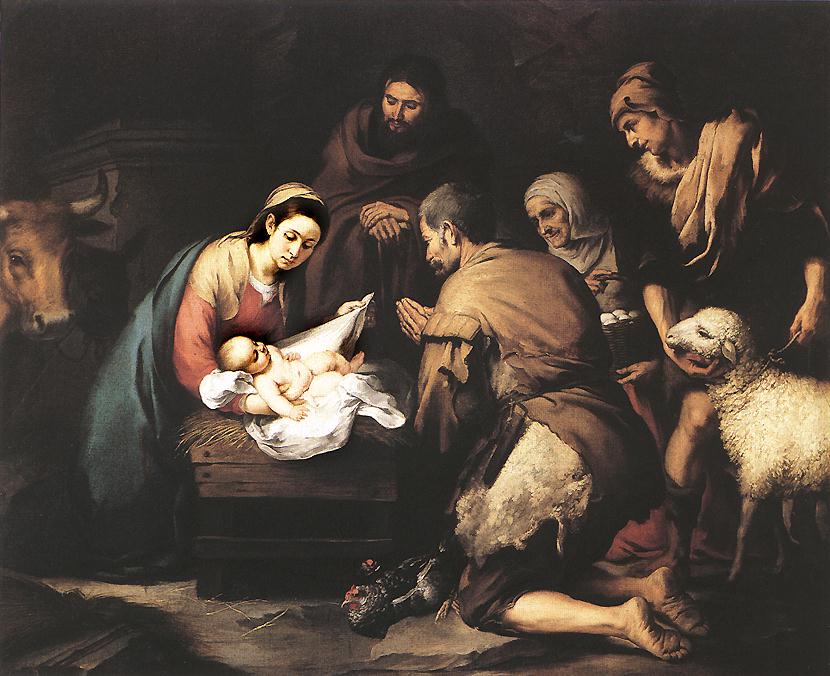
Holy Scripture gives us a beautiful picture of the birth of Jesus. It’s a glorious masterpiece. Breath-taking in detail. Fascinating in theological imagery. One of the many, many things we’re clearly shown in that little stable in Bethlehem is that the good news of salvation from God in Christ is for everybody. Christ Jesus came for everybody. Everybody’s in on this good news.

Look at the manger scene in Scripture. Look at the people in the story. Young and old, rich and poor, male and female, blue collar shepherds and professional scholars, righteous and sinners, Jew and Gentile. God with us means God with all of us!

No exceptions. No fine print. No disclaimers or escape clauses or special qualifications. The angels proclaim that the good news of great joy is for all the people. And the portrait of the stable illustrates it beautifully.

I’ve heard all my life that the ground is level at the cross. Well, the ground is just as level at the manger. In the glory of the nativity, God shows us that we all belong to the same family. We’re all equally lacking and equally blessed. By becoming a human, God draws the entire human family to himself without any distinctions. The good news is that all who are baptized into Jesus are the same. There’s neither Jew nor Greek, male nor female, slave nor free.

God is the God of the universe. But he’s no elitist.

And when we give in to our impulse to avoid uncomfortable people or awkward situations, that’s not Christ-like. The most awkward and uncomfortable birth for the most exalted figure of Jesus Christ shows us and reminds us that the value and importance of life is found in life itself, not in all the things that come with life.

The Gospel is for all. Including the uncomfortable and the awkward. Like you. And me.

Peace,

Allan

Blowout at Armageddon

We know there’s a battle going on between good and evil. We understand the conflict. We get it. Forget the TV and newspaper and the internet. There’s horrifying evidence of the evil on every channel, on every page, on every website. Forget that. Let’s acknowledge that we’re all personally caught up in it. We understand it personally because we’re dealing with it right now. Broken families. Bad news from the doctor. Pink slips at work. Addiction. Rebellious kids. Divorced parents. Intimidation. Depression. Hopelessness. Things are not the way our Father intended. We know that.

The earth God created and called good and the people he created and called very good are being tortured. Tortured by war, disease, violence, death, poverty, greed, lust, injustice, slavery, idolatry. We’re paralyzed by Satan, imprisoned by sin, terrified by death.

We’re in the middle of a cosmic war.

Our merciful Father knows that, too. He understands it. That’s why he gives us a beautiful vision of the already-determined outcome of the battle. He shows us the ending.

God gives it to us in Revelation 20: the battle of Armageddon. Satan calls together all the wicked of the world, all the evil in the universe. They come from all four corners of the earth. They’re gathering for battle against God’s children:

“In number they are like the sand on the seashore. They marched across the breadth of the earth and surrounded the camp of God’s people, the city he loves.”

Looks bad for God’s children. They’re surrounded. No escape. Out flanked. Outnumbered. Outmanned. Out of luck. It’s over.

“But fire came down from heaven and devoured them!”

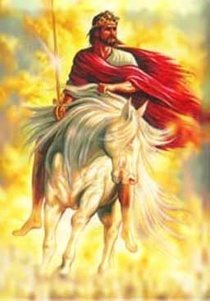
There is no battle of Armageddon. Look it up. Revelation 20. There’s no battle. Satan never even touches the saints. None of God’s children are harmed. Not even a scratch. It’s like Jesus rides up on his white horse and says, “Make my day.” Boom! It’s over. We don’t fight anything. We don’t have to. That’s the Lord’s job.

Of course, it’s against our nature to sit back and let God do the fighting for us. The picture in Scripture of what it looks like for us to oppose the evil in our world is not typically the way we handle things. Instead, our first inclination is to politic. Picket. Petition. Boycott. Lobby. Threaten. We think if we show enough force, if we gather enough power, we can defeat evil by voting correctly or by supporting the right platforms together or by pushing the proper laws through worldly systems.

No.

The ones who are called “conquerors” in Revelation, the “over-comers,” are the ones who have submitted faithfully to suffering and death, totally trusting in God to deliver. God’s children are the ones who live in patience and mercy and grace and trust God completely to take care of the battle.

It’s important for us to know that the victory of Jesus Christ has already been won. In a blowout. A rout. Not even close. And it’s important for us to live with that expectation. Or into that expectation as though it’s already here. We live every moment today in light of what we know is ultimately going to happen.

We don’t wait to acknowledge the complete and sovereign rule of God. We acknowledge it and we submit to it right now. And we witness, we testify. We change the world. Not by power or force or influence. But by patience and gentleness and mercy and love. By faith and loyalty in our God and his victorious Christ. And, yes, even by some suffering. For a little while.

Ephesians 2 says we are already, right now, seated with Christ in the heavenly realms. We are. So we live like it.

Peace,

Allan

Walking the Blood Path for Me

We spent our assembly time together here at Central yesterday considering the weird passage in Genesis 15 about the blood path ceremony between God and Abram. All the pieces of animal, all the blood, the thick and dreadful darkness, the two symbols representing God passing between the pieces.

Clearly, God was promising Abram that God’s promises about giving Abram many descendents and lots of land and, eventually, blessing all the nations of the earth by his seed were trustworthy. God was going to be true to his word. And he staked his life on it by walking between the bloody pieces of the sacrificial animals. God used a very common practice, this ceremony with which everybody was familiar, to demonstrate his commitment to his word.

If what is explicit in Genesis 17:1, that Abram had to be blameless and live in perfection before the Lord, was understood at this time to be Abram’s part of the covenant — and I believe it was — then it’s remarkable that God walked the path between the pieces twice. The smoke and the fire, two theophanies representing YHWH Lord, both pass through the blood. God stands in for Abram. He walks in Abram’s place. The promise from the Lord, in addition to the kids and the land and the Messiah is that God is going to pay for his people’s sins. God pays the price whether he or Abram violates the covenant. Either way, the penalty is on God. Whenever and however the covenant gets broken, when it’s broken, God dies.

The significance of this powerful picture of God walking the blood path in Genesis 15 cannot be overstated. Yes, what God has promised he will certainly do. In the scheme of Genesis and the rest of the Torah, this story goes a long way in reminding us that God overcomes seemingly insurmountable obstacles — barren wombs, enemies in the promised land, the sin of his people — to keep his word. Yes. But it’s so much more than that, too.

God’s perfect promises are free gifts to his people. God is the One who initiates the relationship with us and provides for us what is needed to maintain it. We bring nothing to the table. The Father desires to bond eternally with people who consistently reject him. And he’s willing to prove his devotion to the relationship by offering his own life. Not only that, but the Lord is willing to pay the price himself for the covenant failures of man.

And God’s promise is unconditional. It was not dependent on Abram at all. The covenant stands no matter what the people believe or what they practice. The fulfillment does not depend on man’s faith or faithfulness. God’s “I AM” is perfectly adequate for man’s “I am not.” We can’t perfectly keep the terms of our covenant with God. It’s impossible. We are entirely unable to walk before the Lord and be blameless. But, praise God, that’s not the end of the matter. Our Father made the provision for us long ago. His walking through the blood symbolizes his willingness to stand in for us, to do what is necessary to cover for us, when we violate the terms of the covenant.

At the end of the day, Abram was assured that his own future and the futures of his children and descendents were firmly in the hands of the covenant God. “On that day,” Genesis 15:18 says, “the Lord made (lit: cut) a covenant with Abram.” The point remains the same for you and me under the renewed covenant: God’s word is dependable. It’s perfect. The Lord keeps his promises. Our Father is faithful; and very, very good.

~~~~~~~~~~~~~~~~~~~~~~~~~~~~~~~~~~~

The seeds of yesterday’s sermon were planted in me by a teaching I heard from Ray Vander Laan about seven years ago. A year later, Dr. Mark Shipp assigned the Genesis 15 text to me for an exegetical research project at Austin Grad. Vander Laan inspired me. Shipp challenged me. And now this picture in Genesis 15 is a part of me. You can read Vander Laan’s work on the subject here. You can read my exegetical paper on the passage by clicking here: Genesis 15 Exegesis

~~~~~~~~~~~~~~~~~~~~~~~~~~~~~~

It turned out to be a full weekend project. In and around Thanksgiving food, football, and family; in between Christmas decorating and shopping; before and after church and study and movies and games; Valerie had to write a poem for school. This poem had to be based on an earlier project in which she had described herself by using dualities found in images and ideas from nature. Among other things, Valerie had written about fire, which produces energy and warmth, yet also displays a tendency to ignore boundaries and be destructive. She had mentioned Spring, contrasting songs and flowers against the inevitable wind and storms. There were also the complexities of a diamond: multi-faceted, hard, yet submitting to the gem-cutter’s blade. She also sees herself in the Azaleas: striking in their brilliance, yet so stinking high-maintenance. But could she express all of this in a poem?

Oh, yes she can.

It’s beautiful. I suggested she title it “A Song Unfinished.” She went with “The Stonecutter’s Project.” It describes my little Valerie perfectly. A bundle of energy and talent and unlimited potential. Enjoy.

She crackles, she sizzles, inspires as she dances;
she daringly spreads as she leaps at new chances.
Fiery, bold, contagious.
Careless, impulsive, outrageous.
A tendency to both warm and consume as she advances.

A skip in her Vans and a spritz of perfume;
like Spring, she has sprung, entirely in bloom.
Songbirds, shamed by her voice.
But beware of her other noise:
the lightening and thunder of an alternate mood.

Like the Azalea in season, so striking, so pink;
it takes the right mix of rich soil and zinc.
P, B, and Js.
Grilled cheese and Lays.
For Valerie, nothing more, nothing less, and a D. P. to drink.

Like the diamond that dazzles through each of its facets,
the word “brilliance” defines and sums up her assets.
Unique, strong, true to her pledges.
Stubborn, steadfast, still rough around the edges.
Continually refined by the Stonecutter’s tools, a polished gem with no regrets.

Peace,

Allan

Thanksgiving Wish

“I am a poor wretch whom God took charge of, and for whom he has done so indescribably much more than I ever expected… that I only long for the peace of eternity in order to do nothing but thank him.”

~Soren Kierkegaard

Joy at the Table: Part Two

A comment from Rob’s Dad regarding yesterday’s post: How do you reintroduce the joy? I love your point and wonder what steps and actions you would put in place?

This is proving to be a difficult thing at best. Shifting our focus at the Lord’s Supper from individual introspection and silent meditation on Jesus’ death to a corporate celebration of joy and thanksgiving for Jesus’ resurrection and eternal life is going to take a long, long time. Normally when we’re talking about changing something in our corporate assemblies — instead, I should say making something we do better, more theologically correct, more transformational, more in tune with the Gospel of Christ — we have to deal with a few decades of bad teaching and shallow understanding. But with this communion thing, we’re tackling a distortion of the original intent and practice that has been more than 12 or 13 centuries in the making.

Understanding that most church leaders and congregations first need a thorough study of the Scriptures and Church history when it comes to the Lord’s Supper, I will offer a few suggestions and changes that should be prayerfully considered by all worship ministers and congregational elders to restore Gospel joy to the table and put the community back in communion.

1) Sing songs of praise and thanksgiving before table time. Please notice that in your song book index, Lord’s Supper songs are categorically about the suffering and death of Jesus. Almost all of them. Singing only those kinds of songs in and around the Lord’s Supper will focus us exclusively on just one aspect of God’s salvation work through Christ. It narrows our understanding of what’s happening at communion. It actually counters what the Bible says about the great joy of the disciples as they ate with their Lord on that first Resurrection Sunday. Singing songs about death causes us to act like we’re at a funeral. There’s not much joy around the casket at a funeral. We eat and drink like it’s Friday instead of Sunday. Jesus is not dead; he is alive and reigning at the right hand of our Father in heaven! I would suggest singing songs of praise and thanksgiving. Any song that has the words “Thank you” in them would be great. Eucharist means thanksgiving, right?

2) Explore other Lord’s Supper themes. In an effort to broaden the experience and deepen our understanding of communion, we ought to focus on a different theme each week. It’s not just about Jesus’ death. The table also expresses the unity of Christ’s Church, it points to the great eschatalogical wedding feast of the Lamb, it remembers Jesus’ meals and teachings during his ministry, it proclaims the Gospel, it reminds us to serve the needy, it prompts praise and thankgiving, it celebrates the Resurrection, it moves us to renew vows of loyal discipleship to our Lord, and, yes, it also rejoices in the sacrificial death of the Son of God. The apostle Paul ties the Lord’s Supper directly to our unity. Luke conects it to Jesus’ feeding of the multitudes. All the Gospels say the Lord’s Supper is a resurrection meal. Acts uses communion as an act of Christian fellowship and community. Jesus says the feast represents the Kingdom. Revelation shows us how it’s a participation in eternity. Why would we limit our table experiences on Sundays to just one of these many facets? Why not explore Exodus 24 and Isaiah 25 and Luke 24 and John 20 and Romans 6 and Revelation 5 in our Lord’s Supper meditations? Why not use songs from the “Invitation” index? There’s never been a better communion song written than “All Things Are Ready, Come To The Feast.” Why don’t we try that?

3) Smile. Don’t allow your guy presiding at the table to be grumpy. Don’t let him look so solemn like he’s carrying a coffin down the center aisle. Most of the time, these men don’t realize they look so sad or even angry. They just grew up thinking it was wrong to smile during communion. So, while they’re standing up in front of the entire congregation, waiting on the last of the bread trays to be collected and the men to get back in position for the distribution of the cup, they stare. They stare either blankly out into space or they stare holes through the walls where the men are scurrying into place for the next act. Again, I don’t think they’re doing it on purpose. One of the happiest, most cheerful, funniest guys I know at Legacy — a great friend — acts like a completely different man when he is presiding over the Lord’s Table on Sunday mornings. He looks mad. Tell your guys it’s OK to smile. If you’re up there, remember to relax. Breathe. Smile. Chill out. Christ is risen and he’s promised you eternal life. It’s OK to smile. In fact, it’s preferred.

4) Direct the congregation to share during the supper. Most of us were taught to look down at our shoes or stare into the pages of our Bibles or close our eyes during communion. How about teaching your church to interact with one another instead? It’s communion, right? Community! Instead of keeping that special passage of Scripture to yourself, why not share it with the person next to you? “Hey, check this out; this verse always means a lot to me during communion.” Or maybe, “Hey, this is always what I think about during the Lord’s Supper.” Or perhaps grab a hymnal (if you’re blessed enough to even know what that is) and point out a favorite to a neighbor on your pew, “This song was always one of my favorite communion songs.” Instruct your church to pass the trays with a simple, “Christ’s Body broken for you” or “Christ’s blood poured out for you.” Something to get people talking and sharing. You could also announce a new rule in your congregation: nobody does communion by themselves! If somebody’s sitting alone, invite them to sit with you. Or you just go sit by them. Take your whole family and go join them for the meal. Instead of greeting visitors in your church at the beginning of the assembly, do it as you prepare for communion. Have everybody stand and greet one another and invite one another to the table. An atmosphere of joyful community around the table isn’t very natural anymore. It hasn’t been for a long time. We’re going to have to teach it and show it, model it and encourage it.

5) Enjoy communion after the sermon, not before. It’s much easier to tie the Table into the Word if it’s after the sermon. With just a little time and practice, you’ll find that it’s really very simple to continue the theme of the sermon and the songs and the prayers of the rest of the assembly right into this most important aspect of the day. Instead of the Lord’s Supper itself being “separate and apart,” it becomes the climax, the high point, what the whole rest of the assembly was leading us to. Pretty soon, the table becomes a very natural way to express and experience what’s been talked about and taught and preached through the sermon and the songs and the prayers that have come before.

6) Bigger pieces of bread and bigger cups of wine. Encourage bigger bites and drinks. It’s hard to latch on to the symbolism of a heavenly feast when it’s just a sip and a crumb. It’s like sprinkling water on somebody’s head for baptism instead of immersing all of him in a tub of water. It’s just not the same. Not even close. Unleavened bread was first introduced to the Church’s Lord’s Supper in the 900s in order to set the communion experience as so completely different from anybody’s every day meal experience that it would cause congregants to act differently, with more reverence and awe, more silence and solemnity. It was successful. Obviously. Chunks of bread and gulps of juice would help fix that a little.

These are just a few suggestions off the top of my head. What has your church done to restore the joy and community to our Lord’s Table? What would you try if you were allowed to? I’m always open to faithful suggestions.

Peace,

Allan

« Older posts Newer posts »