Author: Allan (Page 335 of 492)

Tzadeqah and Mishpat

Righteousness and Justice. The Hebrew words are translated “righteousness” and “justice” in English. These words that are mentioned over and over in the Old Testament; these words that our God uses to describe himself; these words the prophets used to discuss the powerful and merciful actions of our God; these words the Bible uses and uses and re-uses to paint a picture of God’s holy will and his children’s responsibilities as God’s holy people. Giving people what is right. Treating people fairly. Equally. With generosity. Showing mercy and grace. Lifting up the fallen. Being kind to the orphan, the widow, and the stranger in the gate.

“He upholds the cause of the oppressed and gives food to the hungry.
The Lord sets prisoners free,
the Lord gives sight to the blind,
the Lord lifts up those who are bowed down,
the Lord loves the righteous.
The Lord watches over the alien and sustains the fatherless and the widow.”
~Psalm 146

For many years now the Central Church of Christ has committed to showing that kind of tzadeqah and mishpat to the entire Amarillo community. This church family understands that to reflect the glory of God we must reflect God’s eternal attributes and faithful characteristics. So, in Jesus’ name, we feed the hungry and clothe the naked, comfort the grieving and mend the broken, minister to the least of these.

For many years now the Central Church has also committed to seeing the world with Kingdom of God eyes instead of Church of Christ eyes. This congregation understands that the eternal reign and love and salvation of God is much bigger than any one group, much bigger than any one faith tradition or set of rules and practices. So, in Jesus’ name, we worship and work, minister and pray, serve the Kingdom with and beside all who call him Lord.

And when both of those ideals toward which we’re striving come together in an unprecedented partnership, well… we can only praise God and marvel at his matchless goodness and grace.

The Central Church of Christ is now partnering with the Southlawn Assembly of God to duplicate food pantry and outreach efforts throughout the poorer neighborhoods of Amarillo.

Yeah, you’d better read that sentence again just to make sure you read it right. Church of Christ. Assembly of God. Partnering.

Southlawn pastor Jared Middaugh and others at their church have been convicted by God’s Spirit to stop looking in and start looking out. They want to see the city with God’s eyes. They want to serve. They want to put the needs of others ahead of their own. They want to be more Christ-like. They’re no longer content to just do church; they want to be church. They want to feed the hungry in Jesus’ name. They want to clothe the naked and free the prisoner and comfort the afflicted. But this is a new move for them. They need some direction. Some advice. So they called Mark.

(Let me just say right here what a blessing — what a joy! — to belong to a church that has this kind of reputation in our city. Another church wants to start an outreach ministry to the poor and they call us! Praise God!)

And Mark jumped right in. Immediately. We’ll help. We’ll partner with you. We’ll serve together and learn from each other. And we’ll do it in the name of Jesus to the glory of God. Mark brought the idea to our staff and we jumped in immediately. Yes, we’ll partner with them. We’ll work with them. We can teach them and they can teach us. Our God will use this cooperative effort to multiply exponentially what neither of our two churches could do alone. Mark then brought it to our elders and they all jumped in immediately. Of course, we’ll do this with them. Yes, we’ll give that church some money to get it all started. We’ll send our Prayer Breakfast and Loaves & Fishes volunteers to Southlawn every week to work side-by-side with these fellow Christians. We’ll share resources and share manpower and share our lives in sacrificial service to others!

(Did I mention this is an Assembly of God?)

The ministers and staff here at Central were joined in our daily prayer time this morning by Jared and their worship minister. We shook hands and introduced ourselves, we laughed some and smiled a lot. I was blessed to share the holy words of Psalm 146 that describe our righteous and merciful God who takes care of those in need. And then we prayed. Mark and I prayed on behalf of our staff. Steve prayed on behalf of our elders. Jared prayed on behalf of Southlawn. We thanked God. We blessed one another. A couple of us shed a tear or two, tears of joy, tears of amazement, tears of wonder. It’s overwhelming, really. Hard to believe. Overwhelming.

I have prayed that my kids and grandkids would someday be a part of a cooperative, non-denominational Kingdom of God on this earth. I have prayed that denominational barriers would be obliterated, that Christ’s disciples would be united by his blood and in his name, that we could someday really unite to show this unbelieving world that our God in Jesus really is changing everything. That we would all be one in Christ; that, as our Lord prayed, we “would be one.”

“I in them and you in me. May they be brought to complete unity to let the world know that you sent me.”

I’m blown completely away that I’m actually experiencing some of that here at Central in Amarillo. I’m amazed we’re able to do this. I’m encouraged. I’m uplifted. I’m thrilled. And I have no idea how this is going to all turn out. I just know that God’s will is being done here on earth just as it is in heaven.

Oh, yeah, we have plenty of differences with those folks over there at Southlawn. There are dozens of ways we differ in belief and practice. Almost as many differences as you and the person who sits right behind you or right in front of you or six pews over from you every Sunday morning. But we have Jesus. He died for us, he calls us, and he commands us to live radically sacrificial lives to blow away the powers of this age. And we’re all interested in that.

Please join me in praying for this cooperative effort. Join me in thanking Jared and the children of God at Southlawn for this holy opportunity. May our merciful Father use us to his eternal glory and praise.

Peace,

Allan

Particularly Poised

Allow me to be very clear about what I wrote at the end of the last post. Allow me this time today to elaborate on the idea that Churches of Christ are uniquely positioned to be at the front of a spiritual revival in the United States. Despite our obvious sins, despite our many shortcomings and almost comedic failures to hold to the most basic of biblical principles, I do believe the Churches of Christ are particularly poised to actually lead a fiery Kingdom renewal in this country.

Here’s why:

We’ve always aimed for the ideal. By no means have we ever attained it. In fact, our historic insistence on shooting for the ideal, coupled with our consistent and extreme failures to reach it, are what make our story as a movement so ironic and interesting. But, truly, we and our Church of Christ forefathers have spent a great deal of time and energy preaching and teaching that we are to restore things to the way they once were or, much better, to the way things ought to be. I don’t mean restore the first century church; that’s impossible. Besides, the first century church had many problems and issues that make some of ours seem silly by comparison. I mean restore the Christian ideals of Jesus as Lord. I mean restoring our belief that the life, death, and resurrection of our Lord has signaled the breaking into this world of the eternal Kingdom of God. I mean restoring our lives as subjects of our Holy King to be in complete submission to him, to reject the ways of the world and embrace the ways of Jesus. I mean restoring the understanding that the church is to go into the world, but that the world is not to ever come into the church.

And we’re particularly poised in this most perfect of times to be the leaders of this Kingdom revolution.

It’s in our DNA to resist the hundreds of forms of compromise and erosion and domestication that corrupt the Christian faith in new ways in every generation. It’s in our DNA to be cynical about partnering with the new and the modern just for the sake of being contemporary and hip.

See how this fits?

Today in America — finally! — people are beginning to rebel against the culture. The most popular leaders of churches and civic organizations and service clubs are begging their followers to say ‘no’ to the culture, to actually become havens of counter-cultural resistance. People are growing weary of the culture. It’s in vogue now to do something different, to become a part of something else, to belong to and participate in something much bigger and more important than ourselves. People are wanting to give. People are wanting to change. People are wanting to matter.

At our very best and most clear, the Stone-Campbell Movement and the Churches of Christ are all about this kind of thinking and living. For most of the past two hundred years, we in the Churches of Christ have proclaimed forcefully that America is certainly not the Kingdom of God or even its messenger or example. We have preached against the idolatry of formalized church hierarchies and binding man-made creeds. We’ve taught that wealth and worldly fashion  generally pervert the demanding religion of Jesus. We’ve maintained that Christians do not fight Caesar’s wars, that division along denominational lines or over church practices is sin, and that the Church is the people — it’s not the building or the meetings or the rules.

In Things Unseen — I highly recommend this book for those of you who really want to understand why we think and act the way we do — Leonard Allen is very optimistic about our place at the front of the next great religious awakening in America:

The restorationist vision is fundamentally a means of critique and dissent. For this reason it will never fit comfortably with mainline or establishment forms of Christianity. Its sins tend to be those of severity rather than laxity, blind obstinancy rather than easy compromise, too-quick exclusion rather than too-ready inclusion, irrelevance rather than trendiness. Restorationists are constantly putting burrs under the seats of the sleepy and comfortable. They work from the conviction that accomodation and compromise are far easier and subtler than most suppose and that the call of Christ is higher, more serious, and more demanding than most care to entertain. That restorationists often fail to embody their own ideals should not obscure to our eyes the truth and power of the ideals themselves.

We are particularly poised. It’s in our DNA, it’s in our blood, to call people to something bigger, something higher, something more important, something eternal, something beyond us, something else, something that will outlive us, something that will matter for ever and ever. And Americans today — your neighbors! — are ready now to listen, to pay attention. If we will ever decide as a “movement” to return to our roots, to embrace again those clear ideals, to live them and practice them without compromise and share it with our neighbors, Christ will be honored and God will be praised. And I believe we’ll be, as a people, at the very front of his righteous and eternal will for this world.

Peace,

Allan

Follow the Examples

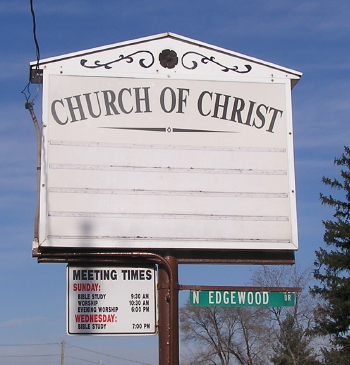
Today we conclude our long look at Leroy Garrett’s “What Must the Church of Christ Do to Be Saved?” In his final essay, Garrett encourages Church of Christ congregations to look for and follow other congregations who are making the right changes in the right ways for the right reasons. The author specifically mentions the Preston Road and Skillman Avenue Churches of Christ in Dallas for their leadership in hosting restoration forums and church change seminars. He points to the Central Church of Christ in Irving which proudly proclaims on their sign out front that they are “An Ecumenical Fellowship.” The Central church there brings in preachers from other denominations to speak in their pulpit and cooperates with other churches in DFW in outreach and mercy ministries. The Richardson East congregation worships with other denominations in their buildings and fellowships Christians from all tradition streams. The Lake Highlands Church of Christ in Dallas encourages women to participate and lead in their worship assemblies and are not afraid to employ the use of musical instruments in videos and other special recordings. The Downtown Church of Christ in El Paso uses instrumental music and women teaching from the pulpit. The Quaker Avenue congregation in Lubbock reached out to the Broadway Church of Christ there to repent from and apologize for their own sectarian and exclusivistic ways and asked for Broadway’s fellowship and Christian cooperation for the benefit of God’s Kingdom.

You know, when I was a kid, 30-35 years ago, our family could be on a summer vacation and visit a Church of Christ in Colorado Springs or Austin or Memphis and experience worship and observe congregational structures identical to what we were used to at our home congregation in Dallas. We would hear the same words in prayers, sing the exact same songs, and read similar articles in the bulletins at these other congregations that we would hear and sing and read at home. Well, it’s not like that anymore. For a variety of reasons — I think all of them are related to technology — things are different. Your Church of Christ congregation is very different from the one down the street and from the ones in Houston and Nashville. Very different.

And it’s not a bad thing. It’s not bad at all. I believe our diversity is God-ordained. We don’t all have the same gifts; we don’t all come from the same places; we don’t all see things the exact same way. And that’s OK. We’re still all perfectly united by the blood of the Lamb that courses through our spiritual veins. And unity in diversity is a beautiful portrait of the Gospel.

The Churches of Christ are a beautiful people with lots of creative diversity. We should recognize our diversity and accept the liberating truth that oneness does not mean sameness.

(My good friend Paul Dennis is always saying, “You don’t have to be my twin to be my brother.” I think he’s quoting Al Maxey. But, to me, it’s Paul Dennis.)

We can have churches that have Sunday School and those that do not; those that support Herald of Truth and those that do not; those that have instrumental music and those that do not; those that use plurality of cups and those that do not; churches that are premillennial and those that are not; etc., etc., and yet be united in the essentials of the faith, and doing some things together. And no one has to compromise any truth or violate his or her conscience!

If we are to be saved as a people and recapture our heritage as a unity movement, we have no choice but to get on with it.

While interviewing for the preaching minister position here at Central in Amarillo, I was told on separate occasions by a couple of ministers and a couple of elders that Central is extremely proud of its Church of Christ heritage but is not bound by it. We hang on to our Church of Christ roots, we uphold our Church of Christ traditions, but we are not going to be held back by them. When it comes to our C of C traditions and heritage versus a more faithful proclamation of the Gospel or a more accurate portrait of God’s Kingdom, we’ll set the traditions and heritage aside every time.

The interesting thing, though, is that these changes suggested in Garrett’s book actually all go straight back to our original Church of Christ and Restoration Movement ideals. Breaking down denominational barriers and fellowshiping with all who call Jesus Lord is not some new liberal idea; it’s the very thing that compelled Stone and Campbell, the very thing that produced our movement. We are actually honoring our Church of Christ heritage when we pledge to not let issues of worship practice or congregational structure divide us.

Allow me to conclude this lengthy series with this: I believe with everything I’ve got that as the United States moves more rapidly into a post-denominational, post-Christian culture, the Churches of Christ are perfectly poised to be the leaders of a fiery Gospel revolution. Precisely because of our roots and our heritage, because of our commitment to Holy Scripture, because of the prominence we place on baptism and communion, because of the seriousness with which we have studied and practiced the Christian faith, we’re in the right place at the right time. God can use us to his eternal glory and praise. I believe God has moved us forward to this point, as a Movement, to be in front of a spiritual renewal in this country. Again, we are uniquely positioned, I believe, to do that here.

But not if we keep doing the same old things in the same old ways. There are some changes that have to be made.

May our God empower us by the strength of his Holy Spirit to make those changes. May we be faithful to our call as we partner with him in redeeming the world. And may he be given glory and honor in his Church today and forever more.

Peace,

Allan

Change Without Chaos

Leroy Garrett’s “What Must the Church of Christ Do to Be Saved?”  wraps up with two chapters that more or less summarize his thoughts. He spent most of the first 18 essays discussing specific changes in attitude, changes in practice, changes even in belief that we must make as a faith community if we’re to have any impact for Christ in our rapidly changing world. His 19th chapter, which we are considering together today, exhorts church leaders to make these changes carefully:

Effect purposeful and meaningful change, free of undue disruption and chaos.

[The Church of Christ] must become a changing church. I am not calling for change simply for the sake of change. The change must be positive and creative, displacing attitudes and methods that are no longer effective. The change must be in keeping with the mind of Christ, free of gimmickry, pride, and competitiveness. And it must be change without chaos, not unduly disruptive and threatening. It must be a balanced change that shows respect for the traditions of the past, the demands of the present, and the possibilities of the future.

God’s Church is always changing, right? Isn’t it? If your congregation is not changing, it’s not growing. Growth requires change. By definition growth means change. You can’t grow without change; it’s physically and spiritually impossible. Spiritual growth, numerical growth, physical growth — it all demands change.

Scripture commands us to be constantly changing.

“Not that I have already obtained all this, or have already been made perfect, but I press on…” ~Philippians 3:12

“Forgetting what is behind and straining toward what is ahead, I press on…” ~Philippians 3:15

“…attaining to the whole measure of the fullness of Christ.” ~Ephesians 4:13

“Make every effort to add to your faith…” ~2 Peter 1:5

I  believe our Lord is calling us to always attain to the ideal, to always strain toward bringing the Holy Kingdom of God in its fullness into our world, to practice the righteous will of God here on earth just as it is in heaven. Knowing it won’t be accomplished fully until our Christ returns, knowing we will suffer many setbacks and disappointments, knowing his Church will never be perfect until that day of glory, we strive, we press on, we attain, we add. We change. We evolve. We grow. We push. We move.

Just holding our own is a sin. Just maintaining your church community is wrong. Our Lord did not come to earth to live and suffer and die so we could maintain. Jesus isn’t calling anybody to be middle of the road. He’s calling us to grow. To mature in Christ-likeness. To change.

Here at Central, I’m proud to say we have bought into this biblical concept of change. I’m honored to serve with a group of shepherds and ministers who obsess over passionate and corporate desires to become more like Jesus. It’s thrilling. And it honors our God who calls us to be a sign of change, a sign of salvation to the world.

Our vision and mission statements present discipleship as an active, verb-driven way of life. In fact, everything we do at Central stems from our commitment to discipleship. That’s the main number one thing. We take the call to be more like Jesus seriously. And we understand it requires constant change. If Christ is to be formed in us, we’ll have to change. If we’re to have the same attitude as that of Christ Jesus, we’re going to have to change. So we do.

It means partnering with the local non-denominational church and the Assembly of God congregation in a food pantry network for the needy in our downtown community. It means our elders praying with the Disciples of Christ elders. It means working with, not against, multi-denominational evangelism efforts like the Franklin Graham crusades and city prayer breakfasts. It means hosting nurse pinnings and GED graduations and hospice rose ceremonies and marriage enrichment seminars in our building. And, yes, while we’re committed to partnering with God in reconciling all of creation back to him, we still struggle with the nuts and bolts. We still wrestle with it. Growth is difficult.

We play the piano as we worship with our Loaves and Fishes outreach crowd, we run videos in our Sunday assemblies that contain guitars and drums, and we host Christian concerts without compromising our commitment to a cappella one bit. But it’s difficult. We equip and empower our sisters at Central to make announcements and to read Scripture in our Sunday assemblies, to actively participate in the leadership of our church life. But it’s not without its occasional heartburn. We’re wrestling with it. We’re trying.

To be disciples of Jesus means that we put the needs of our community ahead of our own. We must place the needs of the lost ahead of our own traditions and comfort zones. We have to consider the needs of the needy to be more important than our own preferences. And it’s hard. We’re committed to it. But it’s hard.

To do all this without chaos we must lay the proper groundwork for change. We must not surprise people with changes, especially in worship, leading them to respond with, “What’s next!?” We must “talk out” new ideas and methods, involving the entire congregation, before they are tried. And it must not be done at all until the right climate is created and there is general agreement. This can never be realized until the leadership takes the initiative and works for change. Those with objections are to be treated with forebearance. It is to be pointed out to them that they do not have to have their way, and that it becomes a Christian to be yielding. When such ones cannot adjust to changes that are deemed necessary for the good of the church as a whole, the congregation will have to allow such ones to go elsewhere, always of course with a love that is slow to let loose.

My advice would be to always ask the right questions when grappling with difficult decisions. “Will this decision make this congregation look more like what it’ll look like in heaven?” “Will this choice make us more like Jesus or less?” “Is this a selfless move or a selfish move?” “Does this change expand the borders of the Kingdom or restrict them?” “Are more people going to be welcomed to the table with this move or fewer?” “Is this a sacrificial thing to do or not?” “Are we following the difficult path of Christ or the broader way of the world?” “Will this communicate to the world an accurate portrait of the Gospel?”

And know that growth — spiritual growth, numerical growth, physical growth, God-commanded growth — requires change.

Peace,

Allan

Concerning the Women: Part Two

Acknowledging together that we in the Churches of Christ must do something different if we’re going to remain a viable witness to the Christian faith in our rapidly changing world, we’re spending our time here reviewing and reflecting on Leroy Garrett’s “What Must the Church of Christ Do to Be Saved?”

To paraphrase Garrett, what must we do to escape extinction in the decades ahead, to avoid being regarded as an insignificant Texas-Tennessee sect? What must we do to be loyal to the Scriptures and true to our Stone-Campbell heritage of unity? What’s it going to take for us to, as a movement, advance toward being “truly ecumenical, truly catholic, truly holy, and truly apostolic?”

In the 18th chapter, Garrett returns to the subject of women he addressed in chapter nine:

Bring women into the church.

Although Garrett gets much more into the “women’s role” passages in Corinthians and Timothy here than he did in the previous chapter, his focus in this essay is on Paul’s universal statement (creed?) in Galatians 3:28: “There is neither Jew nor Greek, slave nor free, male nor female, for you are all one in Christ Jesus.”

If that passage means anything it means that gender is not to be made a test of fellowship or ministry, such as, “She can’t do that because she is a woman.” Paul himself may have sometimes fallen short of that ideal of perfect equality, due to the pressures of custom, as in the case of slavery, which he tolerated, and which is forbidden in that same passage, “There is neither slave nor free.” If socio-economic conditions had been different, Paul might not have said what he did about women and slaves, tolerating their unequal treatment.

To put it another way, Paul almost certainly would not say to the 21st century church what he said to the first century church about women and slaves. But still he laid down the principle that applies to all generations because it so reflects the mind of Christ: In the Church of Christ there is to be no distinction between slaves and freedmen, Jews and Gentiles, men and women! We have to recognize that this was the ideal that even he was not always able to effect due to the conditions beyond his control.

Despite Paul’s clear directive here and his similar admonition in Colossians 3:11, the Christian church in America used the Bible for decades to justify slavery. Wherever slavery is mentioned in Scripture as the current conditions in society at the time of the writing, those passages were used by Christians to say, “Well, God didn’t condemn it in that Scripture; it must be OK. Or at least, it’s just the way things are.”

Today the practice of slavery is officially, socially, morally, and publicly condemned in every corner of the United States. Our churches now preach against slavery, loudly abhor the idea of slavery, and lament the behavior of our forefathers who justified it. What changed? Scripture certainly has not changed. Our God has not changed. The evil of slavery has not changed. What’s changed is our society. That’s what’s different now. For an American church today to actually uphold the idea of slavery and teach and practice in favor of slavery is unthinkable. That church would not do very well at evangelizing. That church wouldn’t grow. That church today wouldn’t have much credibility when it came to proclaiming the good news of salvation in Christ Jesus. Who would listen to a church like that?

Regardless of the ways you might interpret 1 Corinthians 11 and 14 or 1 Timothy 2, we all agree that the social conditions that existed then in first century Corinth and Ephesus do not exist today in 21st century America. It’s vastly different. It is certainly not a shame for a woman to speak in public. It’s not a disgrace for a woman to teach in a room full of men. It happens all the time. Women are just as educated as men, just as capable as men, just as qualified as men. Nobody blinks when a woman is named president of a major university or CEO of a global corporation. Your professor or your police officer or your accountant or your doctor is just as likely to be a woman as a man. The cultural conditions to which Paul wrote in Corinth and Ephesus do not exist in America today. It’s different. It’s changed. For an American church today to actually uphold the idea of man’s superiority and teach and practice in favor of denying women leadership and teaching roles is unthinkable. That church would not do very well at evangelizing. That church wouldn’t grow. That church today wouldn’t have much credibility when it came to proclaiming the good news of salvation in Christ Jesus. Who would listen to a church like that?

OK, is that a little strong? Maybe. I hesitated to write it that way, but I think I need to in an effort to at least present the possibility that the two issues are the same in Paul’s eyes. Afterall, in speaking to the Galatians he uses both examples in the same breath.

Garret points out that we are very good at drawing lines according to our own preferences and comforts. Foot washing is both a command and an example in Scripture, but we decline to practice it because it only applied to that biblical culture during that biblical time. Same with the holy kiss. In Acts 15, the church council claims the Holy Spirit himself gave them four commands that had to be followed by all Gentile Christians. We completely ignore the first three! And I’m not so sure we even take the fourth one very seriously.

1 Timothy 2:8 tells men everywhere to lift up holy hands in prayer, without anger or disputing. It’s a command. Is it then, that all men who do not lift their hands while they pray are sinning against God and his Church? No! Of course not. The command is to pray; lifting hands was the customary and cultural prayer posture of the day. Does that mean that it’s OK for the women to be angry and to dispute? No! It’s that the men were apparently the problem in this particular Ephesian church, not the women.

1 Timothy 2:9 tells women to dress modestly, with decency and propriety, not with braided hair or gold or pearls or expensive clothes. Does that mean that all women who braid their hair are sinning against God? No! Of course not. It’s cultural. The command is to dress appropriately for the culture in order to preserve your Christian witness to a lost and dying world.

1 Timothy 2:11 says women should learn in quietness and submission; women are told not to teach or to seize authority from a man; women must be quiet. Does this mean then that a woman who speaks in church is sinning against God?

For way too long we’ve not hesitated to answer “Yes! Of course!” For way too long we’ve interpreted verses 8-10 as cultural and no longer applicable and verses 11-12 as universal and for all time.

A husband’s rule over his wife is part of the curse of sin and death in Genesis 3, not part of the original creation plan of God as found in Genesis 1-2. A husband’s superiority over his wife is a result of sin and death, not a divine facet of God’s eternal will. As children of God and partners of reconciliation with his son Jesus, we are commissioned to reverse the curse, to join our God in overturning the effects of sin and death. We never ever actually labor to impose the curse.

Our task in the 21st century is not to do precisely as they did, but to do for our generation what they did for theirs, bring in the Kingdom of God. And our men and women should be at it today just as their men and women were at it back then, but not necessarily in exactly the same way.

What I want for the Church of Christ down the road is that there will be no social, racial, or sexual lines drawn. None whatever. Liberties and ministries will be shared equally and indiscriminately, according to gifts and talents. We must overcome the mentality that half (or more) of the church is to be subservient to the other half. All because of gender! Christ has made us one and we are all equal — and half of us are not more equal than the other half!

Peace,

Allan

Concerning Mom

“God could not be everywhere, so he created mothers.”
~Old Jewish Proverb

On a literal level we certainly disagree with the proverb. God is most definitely everywhere. But in a symbolic sense I dearly love what the proverb proclaims. For we do see our God in our mothers.

When our mothers cook for us our favorite meals, sew the patch in the knee of our blue jeans, slip us the cash for the movie, they are reflecting the provision of our God who always meets the needs of his children.

When our mothers hold us closely through the thunderstorm, watch us as we cross the street, and insist on meeting all our friends, they are mimicking the protection we’re promised by our Father.

When they wipe away the tears and apply the Band-Aids and force the cough medicine down our throats, they are shadowing our God, the Comforter and the Healer.

Our mothers love us unconditionally, despite the messes we make and the trouble we cause. Even when we don’t listen and we don’t behave, mom’s love never wanes. She disciplines us when we stray from the path. She forgives us when we wreck her carpet or her drapes. And she encourages us to be everything our God has created us to be.

Our mothers teach us right from wrong. They listen inexhaustibly. They rejoice in our success. And our setbacks cause their hearts to break. They know what we’re going to say before we say it. Our mothers brag about us to their friends and defend us to our peers. They believe in us even when we don’t believe in ourselves. They lead us from in front and push us from behind.

And there’s nothing that could ever separate us from their love. Nothing. Ever.

Yes, our God is everywhere. But so too, it seems, are our mothers.

Happy Mother’s Day!

Allan

« Older posts Newer posts »