Author: Allan (Page 211 of 492)

Formed by Our Phones

(This is part three of a four part rant / lament / explanation / provocative essay on why I don’t own a smartphone. I’m using Dr. Keith Stanglin’s recent Austin Grad blog post on the same topic as a conversation partner.)

The main reason I don’t own a smartphone is that I don’t want to become like the kind of people who own smartphones. Now, before you get all tuned up, hear me out. Don’t get offended by that; there’s much more offensive stuff coming later. The purpose of today’s post is to consider whether these phones are making us better people or worse people, whether smartphones make us more like Christ or less like Christ.

First, our brains are being formed by our phones and the evidence is mounting. Smartphones change the way we process information. Those who study these kinds of things are concluding that smartphones are making us slower and less capable of knowing the difference between important pieces of information and information that is insignificant. One such study, recently conducted by the National Academy of Sciences, shows that heavy media multitaskers, when faced with making a decision, are less able to distinguish irrelevant information from relevant. The study also concludes that smartphone users show diminished abilities to remember or memorize. They pay more attention to irrelevant stimuli — they’re more easily distracted — than non smartphone users. Overall, media multitaskers are “associated with a distinct approach to fundamental information processing.” And it’s not good. This form of technology shuts down memorization, hinders concentration and learning, and hampers comprehension and retention.

I don’t need that. The natural ravages that come with being fifty years old, enhanced by a steady flow of Diet Dr Pepper, are causing me enough troubles already.

Second, our relationships are being formed by our phones. We are more and more connected to fewer and fewer “real” friends and, thus, becoming lonelier and lonelier. Our text and Facebook and Instagram conversations are not real conversations. Experts tell us it takes a full seven minutes to just start a serious conversation. This article in The Atlantic reviews several studies that show smartphones and social media have turned us into the loneliest people in the history of the world. The studies reveal a link between online interactions and loneliness. And it’s getting worse.

Third, well… the list is too long. This post shouldn’t just be a long litany of the bad behaviors and personality shifts influenced by smartphones. Hofstra University’s Kara Alaimo has started a pretty good list in this article, “Seven Ways the iPhone has Made Life Worse.” It seems to me the research is telling us what we have already known for a while.
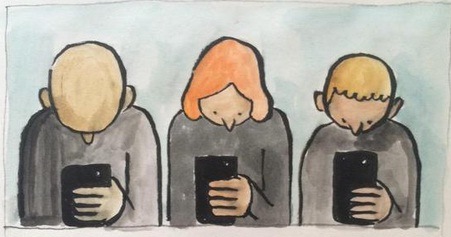
The main question of today’s post is whether our smartphones make us more like Christ or less like Christ. For this, I turn to the main part of Keith’s article:

“My problems with cellphones, and smartphones in particular, can be boiled down to the fact that, given the way most people use them, there is virtually nothing virtuous about them…

Think of the four cardinal virtues — justice, temperance, courage, prudence. Someone more creative than I can perhaps articulate how smartphones enhance those classic virtues; I don’t see it.

Take the theological virtues of faith, hope, and love. I can say with even more confidence that smartphones do nothing to increase those. Conduct the same exercise with the fruit of the Spirit (joy, peace, patience, kindness, self-control, and so on), or the two greatest love commands. Smartphones do not help, but almost always hinder us from cultivating these virtues and disciplines.

And most observant people recognize this. There is a growing consensus that smartphones have altered human behavior. Christians usually acknowledge that the alteration has been for the worse. On at least three separate occasions in the last couple of years, I’ve had the opportunity to ask large groups of Christians an open-ended question about what our idols are and what things distract us from what should be the chief goals in life. Invariably, they hold up their phones (yes, they have them in Sunday school).

No one seriously hazards that these phones are helping us be better people. No one thinks that a smartphone in every hand has increased true human flourishing or the imitation of Christ. If becoming like God is the goal of moral life, then — and this really is my main point — the use of smartphones is an ethical issue, but one that is seldom discussed or even considered in this light.”

I don’t want to trade real, personal, face-to-face conversations for brief texts and Facebook posts. I don’t want to interrupt or shut down a stimulating conversation by fact-checking with Google. I don’t want to break eye contact with someone I love in order to check my phone for the 40th time to see if the Rangers have scored or if someone’s commented on my blog. I don’t want to be talking to my wife on the phone and notice in my peripheral vision that I’ve received an email from a church elder. I don’t want to be the kind of person who has his phone with him, in his pocket, on the table, in his hand, on the pew, at the restaurant, in the meeting — during every waking and most sleeping moments.

Much more than that, I know I can be a better person and a better disciple of Jesus and a better minister to you if I don’t have a smartphone.

One of the reasons I got out of the sports radio industry is that the culture of that business was turning me into a negative person. I was becoming more critical, more negative, more “right,” more obnoxious, more cynical. It’s the nature of the industry and it was changing me into something I didn’t like.

Smartphones are not neutral. They are intentionally built and programmed for distraction. By their very nature, smartphones are meant to keep our eyes glued to them, designed to keep our brains preoccupied with unimportant matters that continually scroll through or pop up, keeping us from the people and things in life that mean the most.

It’s a legitimate question, but nobody in the Christian community seems to want to tackle it. Do our smartphones make us better or worse people? Do they make us more like Christ or less like Christ?

Peace,

Allan

Ripping My Phone

Is there a response to the question, “Why don’t you have a smartphone?” that would satisfy the one asking? Is there an answer that would result in anything other than insult and ridicule? I’m stunned by the ways people react when they find out I don’t have a smart phone. Good friends, family, casual acquaintances — they over react with an odd mix of horror and disbelief and then move straight into overt judgment and shaming. People I barely know are moved to recruit other people to gang up on me: “Have you seen Allan’s phone?!? Allan, show them your phone! Can you believe Allan’s phone!?!” What could I honestly say to avoid the confrontation?

My brother, Dr. Keith Stanglin at Austin Graduate School of Theology, has posted an article on the Austin Grad blog about his own experiences related to his long refusal to own and operate a smartphone. I’m using his observations as a conversation partner to articulate my own feelings in this space. If you haven’t yet, I would encourage you to read his post by clicking here.

Why does my old-style “slider” invite so much ridicule? Why is it such a big deal to people? Is there any other consumer product that opens one so quickly and certainly to public derision? We don’t do this with the brand of TV somebody has in their house. We don’t judge our friends or sisters in Christ according to the kind of car they’ve decided to drive or the size of refrigerator in their kitchen. We applaud fellow Christians when they buy a smaller home or Why is the type of cell phone someone has or doesn’t have such a point of identity and value?

If I say I’m resisting temptation, or I’m fighting my tendency to be distracted, or I’m wanting to avoid the negative impact on my brain and my memory, or I’m trying to save money, or I can be a better disciple of Jesus and a better Christian minister to you with a “slider” than I can with a smartphone — none of those reasons are sufficient. Those statements of conviction either lead to more wonder and insult or to something a little more disturbing: a disbelieving under-the-breath retort about being “holier than thou” and a total shutdown of the conversation. As Keith says:

“Being so ‘behind’ on the latest gadgets, I have found people to be more judgmental about someone’s mobile phone choices than about any other manufactured good. Such reactions are even harder to fathom coming from Christians. If I say that shunning a smartphone is, for me, to shun distraction, temptation, and the world, would it then be an acceptable choice? But why should I have to justify having a simpler phone? I wouldn’t be surprised if there are some churches out there that ridicule people who bring a print Bible to the assembly. Christians, of all people, should respect another’s choice of a simpler automobile, house, clothing, life, and, yes, even phone.” 

Yes, I’m afraid there are ministers who preach and teach a simpler lifestyle, avoiding distractions, re-prioritizing, and downsizing in order to better serve Christ and his Church who, in the same breath, ridicule or shame church members who don’t have a smartphone to access that congregation’s app. Maybe it’s OK to own and operate a smartphone. Shouldn’t it be just as OK to not?

Like Keith, I’m not a technophobe or a Luddite, not by any stretch. I use technology every day. I love technology. I’m not sure I could live without air conditioning and indoor plumbing. That 30-second forward button on the DVR is in the top three of the greatest technological innovations in my lifetime and, yeah, I use it unashamedly. I text. I email. I’m into my eleventh year on this blog which you are probably reading on a laptop or a phone. I’m not afraid of technology or change.

But I am careful to discern my personal use of that technology. I don’t just do what everybody else is doing. I don’t think just because we — personally or as a society — can do something that we necessarily should. I’m fifty years old. I have a fairly good idea about what’s good for me and what’s bad for me — spiritually, personally, mentally, relationally. When it comes to my phone, why is that so hard to understand? Or accept?

Peace,

Allan

Concerning My Phone

I have a new phone. Actually, it might not be classified as new by today’s standards — I bought it in April. I’ve had it for a little over three months now and I’m still getting used to its nuanced quirks. There are some subtle differences between this phone and the one I had for four-and-a-half years that quit working on me. Overall, though, I like this new phone. Why does everybody else seem to have such a problem with it?

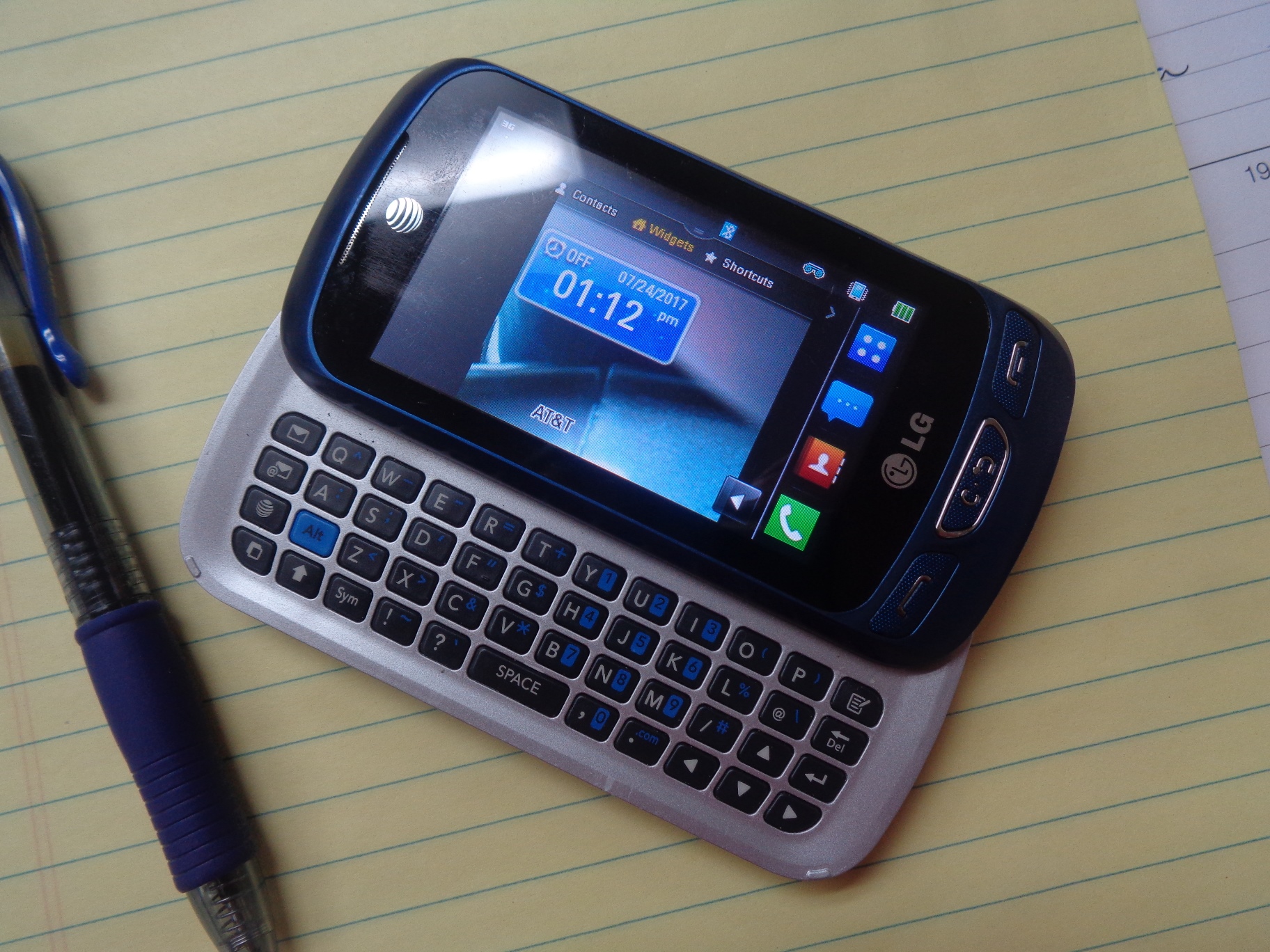
Yes, my new phone is a “slider.” Yes, they still make the “sliders” and, yes, you can still get one if you’re committed to it — you have to be persistent, you have to be able to withstand a lot of criticism and ridicule, you have to answer a lot of questions, and you have to wait three to five business days for delivery.

As long as it is humanly possible, I refuse to own and operate a smartphone.

For a couple of years now I’ve wanted to use this space to discuss the many reasons I choose to avoid the smartphone. I’ve hesitated until now because most people who question me about my choice don’t really seem interested in a conversation. They seem only concerned with gawking at me and my phone as if they’re staring at a creature from another planet or with brushing off my choice as utterly ridiculous and beyond human understanding and, therefore, not worth their time or energy to engage.

Two things have happened that have energized me to now write about my aversions to the smartphone. One, my experience at the ATT&T store when I ordered my new “slider” and the subsequent disbelief and derision from my friends and family seem like something that should be acknowledged and questioned. It’s constant; it gets worse instead of better; it’s really quite remarkable. Second, my brother, Dr. Keith Stanglin at Austin Graduate School of Theology, after years of avoiding the smartphone due to convictions we share, just recently broke down and bought one — he claims to have been forced into the switch, I call it a lack of integrity. Keith has published a provocative post on the Austin Grad blog regarding his personal concerns about smartphones — again, concerns he and I share. He raises interesting questions about their impact on society and on the Christians living in this society that need to be engaged seriously, if not answered.

I encourage you to please click here to read his article. He argues convincingly for the debate about smartphones to, first, be a debate, not a foregone conclusion; and, second, that the debate be one centered on the use of smartphones as an ethical issue. Check it out— you won’t read a more thoughtful critique on the smartphone from a Christian perspective.

Then, using parts of Keith’s post as a conversation partner, I’ll spend the next three days here outlining my own concerns and questions. Tomorrow, I want to ask why people feel so compelled to judge and/or make fun of those who don’t use smartphones — why all the hate? Wednesday, I want to consider if smartphones make us better people or worse people, if they cause us to be more like Christ or less like Christ. They’re not neutral. Nothing’s neutral. Finally, Thursday, I’ll address the issue of enslavement to our phones. It’s futile to suggest these phones do not own us. They do. So, what do we do about it?

To borrow Keith’s words, I’d like to use this space this week to infuse into our less than ideal phone realities a measure of perspective and good sense. Read his post, maybe even on your phone, and come back here tomorrow.

Peace,

Allan

Worlds Are Colliding, Jerry!

What a joy to welcome some of our very best friends from Legacy and their massive youth group into our student space here at Central for a quick sleep over on their way to a mission experience with an Indian reservation in Arizona. This was a busy weekend at the weigh station that is Central during the summer. Dozens of church youth groups crash at our place on their way to somewhere pretty. But it’s always special to welcome Legacy.

We stayed up there until midnight last night, getting caught up with everybody’s kids who, surprisingly, are growing up at the same rate as our kids. These tiny children who were in elementary and middle school when we left Legacy six years ago are now in high school and a few of them have graduated and are heading to places like Abilene and Santa Monica for college.

Carley came straight from a late shift at The Big Texan to meet us so she could hug Kate and verify that, yes, Dawson seems to be growing four inches taller every six months. I enjoyed so much showing off our 88-year-old chapel to Stephanie and David, getting the low-down on the basketball gang from Chris, marveling at how much these kids look like their parents, and wondering why we adults haven’t changed at all in the past six years but our children have.

After I made sure they knew how to get to the Donut Stop on Georgia Street and which exit to take to spray paint Cadillac Ranch on the way out of town, we left them blowing up their air mattresses and brushing their teeth. All fifty of them are coming back through Amarillo next Saturday to eat a late lunch at Blue Sky — Ron, that cheeseburger will change your life — and I’ll be there to meet them.

Yes, I’ll use any excuse to eat at Blue Sky. But, much more than that, I love hanging out with these great people. Being with Chris and Lori, Ron and Stephanie, Larry and Deanna, and David and Shanna reminds me of just how blessed I am by our God. They remind me that Legacy believed in me and took a chance on me before I believed in myself. They were so patient with me and kind; they encouraged me and worked with me while I learned and made mistakes. But these couples in particular never ceased to protect me. They had my back. They prayed for me. We worshiped and served together in small groups, we sorted T-shirts together, we set up and tore down Give Away Day together, we brainstormed and prayed together. And spent some really good times together at Texhoma.

God bless the Legacy Church of Christ and these wonderful families we love so much. God be with us til we meet again at that glorious place. Blue Sky next Saturday.

Peace,

Allan

Joy in the Lord

You don’t necessarily have to turn on the evening news. In fact, do people even turn on the evening news anymore? All you have to do is not have your head buried in the sand to know that there is a great deal of anxiety and worry in our society. The state of things right now can very easily drag you down and steal your joy. How is it that the Bible commands children of God and disciples of Christ Jesus to always rejoice?

Well, where are your eyes? What are you looking at? What or who are you listening to?

As followers of Jesus, we are very well aware of all the things God is doing in us and through us. We can always rejoice in the knowledge and experience of God working among us. And that’s always constant. That never changes. God is always at work. We see the evidence of his great work, we sense the working out of his redemption and reconciliation plans, we feel his hand at work in us and through us, saving and changing lives all around us. The Lord is always at work among us and that is always reason to rejoice.

I see it in the Central teenagers who stop by my office on the way to Chick-Fil-A for a free promotional sandwich. Ellie and Justin are pouring into those kids the same grace that God has shown them and the kids are eating it up. I see it in the 30 men from Canadian Church of Christ with whom I had the great honor of hanging out with in Angel Fire this weekend. God is on the move with these men — moving in them and through them — and they are on fire for God’s mission in this world. I hear it when Valerie, our middle daughter, calls me from Arlington to tell me she’s changing her major from childhood education to youth ministry. God’s Spirit is changing Valerie forcefully and beautifully into a dedicated servant of the Gospel. I sense it when Carley, our youngest daughter, shows up in all the pictures from the Sao Paulo mission trip — painting, laughing, serving children, worshiping, leading. She’s finding her gifts and settling into her place in the Kingdom.


I see it when my brothers and sisters at Central join forces to do good deeds for people in downtown Amarillo. We’re making gift bags for the staff and clients at CareNet and Gratitude House. We’re cleaning the carpets and painting the doors at PARC. We’re painting the storage shed and spreading new wood chips on the playground at Elwood Park. We’re giving away 200 books and reading the children at Bivins Elementary. We’re treating the ladies at Martha’s Home to a dinner out at a nice restaurant.


Our God is working in and through everything that’s going on around us. That knowledge and that experience gives us a stable and deep-rooted joy — an inner joy — that enables us to not only cope with disappointments, but to see things as they really are. In any and all circumstances God is always at work among his people. And that is always reason to rejoice.

Peace,

Allan

In All Circumstances

“Give thanks in all circumstances, for this is God’s will for you in Christ Jesus.” ~1 Thessalonians 5:18

There’s a difference between giving thanks FOR all circumstances and giving thanks IN all circumstances. You don’t give thanks for all the dirty dishes in the sink at the end of the day — unless you’re some kind of sicko; you do thank God for the food he gives you to dirty all those dishes. You don’t give thanks for the car accident; you do thank God that nobody was seriously injured. You don’t give thanks that Molly White is in the hospital; you do thank God for the opportunity to minister to Molly and her husband Pete and for deeming you somehow worthy to minister in the name of Jesus. You don’t give thanks that Vernon died; you do thank God that death is not the bottom line, death is not the last chapter. Thank you, Lord, that God in Christ is the ultimate power with the ultimate authority and he always writes the final word! Thank the Lord that resurrection and life belong to us in Jesus!

I always get a kick out of listening to little kids pray — I’m talking about little kids: three, four, five years old. They give thanks to God for everybody and every thing. If we’re at the table, they thank God for everybody around the table and every food item, the plates, the napkins, the silverware, the Kool-Aid, and what they hope is for dessert.

If we’re praying in the living room, they thank God for the couch and the fireplace and the TV and the remote. If we’re in the bedroom, they thank God for the bed, their pillow, their blanket, their clothes, their shoes, and they name every single stuffed animal and every doll and lift them each to God in praise. It’s everything.

Everything they see is a gift from God. Everything in the world, everything going on around them right now, at this moment, all of it is a blessing from God and he is to be thanked profusely.

Why do we lose that?

Joyful souls and prayerful spirits and grateful hearts — that is God’s will for us in Christ Jesus.

Peace,

Allan

« Older posts Newer posts »