Author: Allan (Page 210 of 492)

Burritos, Bounce Houses, and a Band

When you’re moving your church’s traditional back-to-school picnic from your building on a Sunday morning to the campus of the nearest elementary school, when you’re inviting that school’s 550-students and their families, and when you’re doing this to communicate to your city that God’s Church is a community partner with them for the sake of good things, how do you guarantee that you’re going to get a crowd? Free burritos, bounce houses, and a live band.

Putting the school’s principal and the church’s preacher in a dunking booth didn’t hurt.


Central’s first “The End of Summer’s No Bummer” bash at Bivins Elementary last Wednesday evening was a roaring success by anybody’s measure. We gave away 450 burritos, ate and jumped and dunked and danced with a ton of people from our nearby community, and shared a whole lot of good will together in the name of our Lord. Principal Benny Barazza has given us almost unlimited access to his school, his students, and their families, and we’re doing our best to use these opportunities to share the generous love of Christ.

Today’s Amarillo Globe-News features a front-page, above-the-fold story about the Bivins event and all the local ministry projects sparked by Central’s “Ignite Initiative” (click here to read the AGN story). Our church has given away $125,000 over the past five months to five different non-profit organizations, we’ve supplied those same organizations with volunteers and summer interns, and we’re beside ourselves with anticipation over what God’s going to keep doing with these new mission partnerships. Lauren Koski’s story in today’s paper captured all of that with great pictures and interviews with Mary McNeill, our children’s minister, Benny Barazza at Bivins, Valerie Gooch, the executive director at Panhandle Adult Rebuilding Center, and Tyler Lovett, our summer intern at The PARC.

More and more, “missions” at Central is starting to mean both foreign and local ministry, it’s about both what God is doing overseas and what he’s doing across the street. And our community is taking notice. Christ’s Church is here to make an eternal difference in the lives of men, women, and children in our city. We’re here to serve others in the name and manner of Jesus.

Peace,

Allan

#ValerieArePR

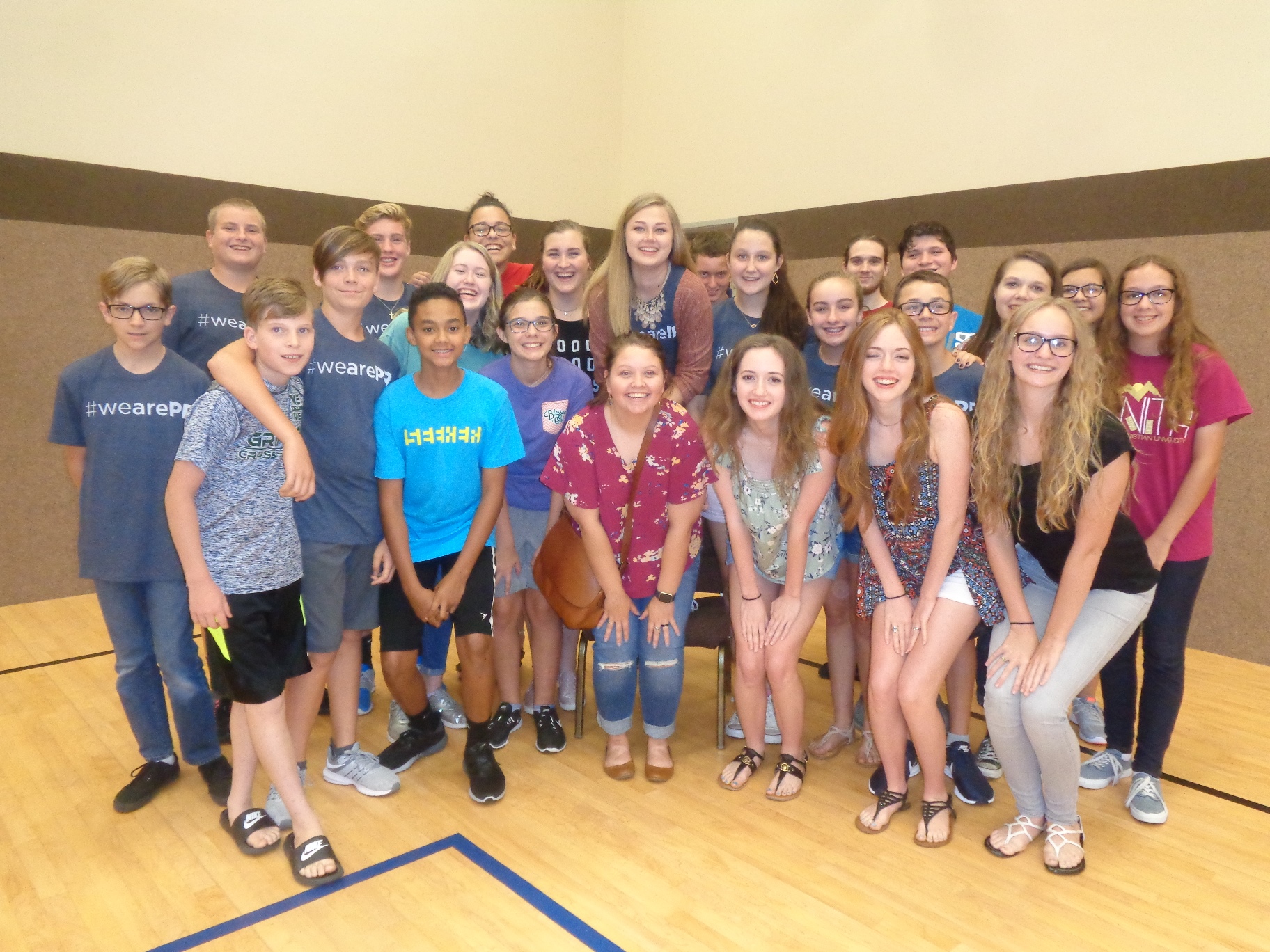
Valerie concluded her twelve-weeks internship with the Pleasant Ridge Church of Christ in Arlington this past weekend and now she’s home for a full ten days before she heads back to Edmond for her junior year at Oklahoma Christian University. Carrie-Anne and I made it down to Arlington Sunday evening just in time for the going-away party the church hosted for Val. We listened for almost an hour while a great mix of students and parents, ministers and deacons, showered our daughter with love and praise for the wonderful impact she had on the youth ministry there. The experience was so good for Valerie — living with the Thatchers, VBS, devos, Bible studies, late-night conversations, church camp, even elders meetings and vampire-ants — that she has officially now changed her major to youth ministry!

Thank you so much to Lance, Ryan, Luann, Jamie, Terry, and everybody else in the student ministry who supported and loved Valerie through the summer. Thank you to Mike and Traci and Bella for doing Valerie’s laundry, keeping her in plenty of Diet Dr Pepper, repairing her car, and being family for her while she was away. Thank you to the Pleasant Ridge church for helping her negotiate the curveballs, for nurturing such a supportive atmosphere for our daughter, and for showing her in a thousand ways the eternal blessings of congregational ministry. Valerie’s love for our Lord and his people grew rich and deep while she was with you. You recognized her gifts for ministry and brought out the very best in her. You loved her like she belonged to you. The words you said to her Sunday night were powerfully encouraging to her and motivated by God’s Spirit. Her mom and I are eternally grateful.

Valerie, I’m so glad I answered the phone that afternoon when you called to tell me you were changing your major to youth ministry. I’ll never forget that conversation. And I’ll never forget how proud I felt and how grateful to God I am right now for the transformational work he’s doing in your life. What Ryan said to you Sunday night is true: if you don’t feel called by God for congregational ministry, don’t do it; if you do feel called by God for congregational ministry, don’t do anything else.

It’s evident to all who know you that God is at work in your life. Powerfully. Obviously. He’s got you right where he wants you. The fact that you are listening to him, following him, and leading people closer to him brings a joy to my heart I cannot adequately describe.

I love you, sweetie.

Dad

The Day the Fire Came

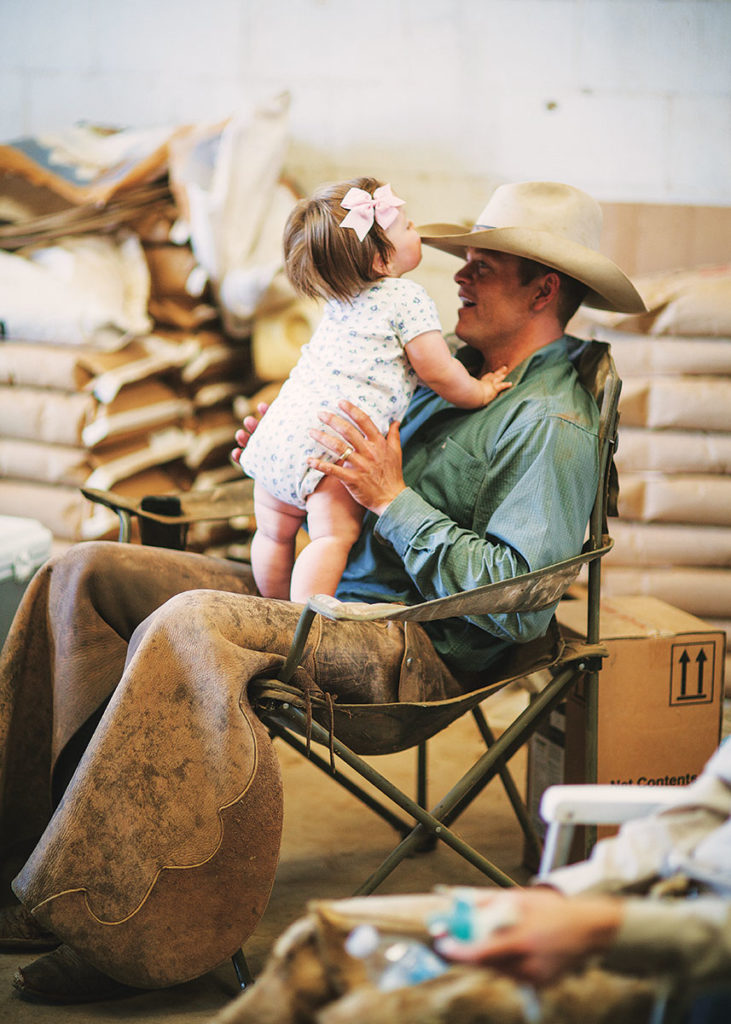
I want to draw your attention to a fantastic piece of writing in the current issue of Texas Monthly. Skip Hollandsworth has outdone himself in the way he tells the story of the wildfires that ravaged the Panhandle this past March. The piece is titled, “The Day the Fire Came: A Tale of Love and Loss on the Panhandle Plains.” You can read the whole story, view the outstanding photographs, and see the beautiful videos by clicking here.

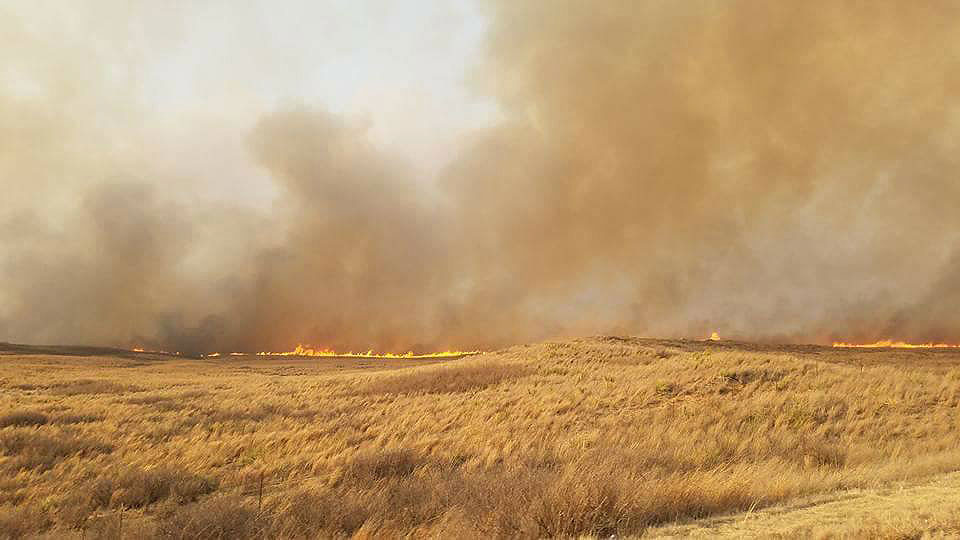
Thirty-two different wildfires raged across the Panhandle on March 6, scorching 1.2-million acres, burning to death more than two-thousand cows, and doing tens of millions of dollars in damages. The fires also claimed the lives of four young Texans: 20-year-old Cody Crockett, a cowboy on the historic Franklin Ranch near Lefors; Cody’s girlfriend, 23-year-old Sydney Wallace, a nurse at Amarillo’s BSA Hospital; 35-year-old Sloan Everett, Cody’s boss; and 25-year-old Cade Koch who got caught in the smoke and the fires while driving from Canadian to Lipscomb to check on his pregnant wife.

It was a tragic day. The three main fires that did the most damage each measured up to three miles wide, with flames more than 20-feet high, moving across the plains at upwards of seven-miles-per-hour. It was devastating.

Hollandsworth tells the story through the eyes of those at Franklin Ranch who knew and loved Cody, Sydney, and Sloan — their parents, best friends, church friends, co-workers, classmates. The families gave Skip unlimited access to every facet of the stories. And he writes it with compassion and heart, capturing the grit and the glory, conveying the pride and the pain.

You’ve got to read this story.

We didn’t see any flames that day here in Amarillo, but we saw and felt the smoke. For a couple of days we experienced the smoke and felt the anguish of what had happened just a few miles away. And for the next several weeks, all of us were inspired by the outpouring of love and support from seemingly every rancher in all 26 Panhandle counties. The Canyon E-Way and I-40 were jammed with massive trucks bringing bales of hay and even, in a few cases, some head of cattle to the affected ranchers. It just kept coming. We shared Bell Avenue and Coulter Street red lights and intersections with these ranchers who drove two or three hours to donate their own goods and supplies to help those who had been harmed by the fires. And I was moved.

I was also moved by Hollandsworth’s story.

You know, I’m not a cowboy. I’m a city Texan. I’m as urban as they come. The last time I rode a horse was when I was nine or ten-years-old, on my granddad’s farm in Canton. He would walk along as my sister and I rode his old nags, Dollie and Sookah, around in a slow circle. I’ve only owned one pair of cowboy boots in my life — a pair I received for free as part of a promotion from a Dallas tire dealer when I bought a set of tires for my 1974 Monte Carlo. The boots were uncomfortable. I only wore them once or twice a year as part of a costume or special dress-up day at school. I threw them out when I went to college and can’t imagine any circumstance where I’d ever own another pair. I’ve never roped a calf, I have no appetite for country music, and I think I would absolutely freak if I ever saw a rattlesnake in the wild.

I feel like an outsider in the Texas Panhandle. I have for the past six years.

But let me tell you this. There is something romantic, something transcendent, something unique and extraordinary about the rugged beauty of this place and these people. I appreciate it, and them, more and more every day. Hollandsworth’s story about those fires and the men and women who survived and the four who didn’t brought out of me some strong and surprising emotions.

I first read the story online — I check Texas Monthly’s website at least once a week. Then I read it again last week when my issue arrived in the mail. And I was blessed by a bonus that only subscriber’s to the magazine get. Jeff Salamon gives us five paragraphs, in Hollandsworth’s own words about Hollandsworth’s experience while interviewing real Panhandle cowboys for the story. Here are his last lines:

“It’s easy to buy into the myth that the cowboy life is gone. But in fact, it’s thriving in the Panhandle. There are so many kids whose lives are devoted to becoming a cowboy. Texas has become such an urban and suburban state. But no matter how interesting people are in our cities, there’s nothing like a Panhandle cowboy. They are real and unyielding, and as the story points out, they are honorable. The question I had going into this piece was, ‘Why would these three young people run toward the fire to save those cattle?’ And the answer to that question is what this story is about: the love of, and devotion to, the cowboy way.”

It’s a good story. You should read it.

Peace,

Allan


The Window is Closed

I hate it. It makes my stomach hurt to realize it. My heart weighs four tons in my chest as I type these words. We could see this coming for the past two years but, now, today, the reality is sinking in. And I hate it.

We missed our window.

This eight or nine year opportunity for the Texas Rangers to win a World Series is over. The dramatic playoff wins were thrilling, the gut-wrenching postseason losses were devastating, the overall success for the Rangers in this current decade has been phenomenally unprecedented and a lot of fun. But it’s over now. The window is closed. We missed our window.

Yesterday’s trade deadline deals signaled the official end for this current group of Rangers and, just as certainly, for this current Rangers era. Yu Darvish, the spectacular but fragile ace, was dealt to the Dodgers; Jonathan Lucroy, who never came close to producing what we hoped, was sent to Colorado; and Jeremy Jeffress — who? yeah, I know — was shipped back to Milwaukee.

Give General Manager Jon Daniels credit: he goes for it all-the-way.

After the incredible Game Six loss to the Cards in the 2011 World Series, Daniels put the pedal down to get back to the championship level and finally take the franchise’s first trophy. He spent millions of dollars to sign Adrian Beltre and Yu Darvish and Cole Hamels. He brought in Prince Fielder, Shin Soo Choo, and Carlos Beltran. But since Nelson Cruz misplayed that ball in right field, the Rangers have won two division titles and zero postseason series.

And now it’s over.

Darvish was the team’s ace. It just didn’t work out. He worked 200 innings only once in his Rangers career. He made only two postseason starts, both losses, failing to get to the seventh inning both times. He spent four stints on the disabled list. And this year his record is 6-9 and his ERA is over four.

So, we’ll get ’em next year, right?

No. The window is closed.

The Rangers go into next spring with no outfield, no bullpen, and only one starting pitcher. The infield is this team’s only strength and it’s got a guy at first base in Gallo who might lead the league in both homeruns and strikeouts, a major question mark at second base with the inconsistency of Odor, and two aging superstars at short and third with Elvis and Beltre.

We missed the window.

I’m not sure why Daniels didn’t do more yesterday. Those three trades netted a total of just five prospects when this team needs about a dozen. I would have done anything to get Shin Soo Choo off the roster — pay another team part of his salary, whatever it takes. Could Elvis not help a playoff team in the National League? In my mind, anybody over the age of 25 not named Adrian should have been on the trading block. Maybe they were. The Rangers aren’t exactly in a position of strength right now.

My hope is that Daniels isn’t trapped in a place of thinking they’re just one or two players away, they’re just one lucky break removed, from being a contender. They’re not. And I think he knows that. This team is in for at least four or five years of some bad, bad baseball. We’re going to have to watch two or three 90-loss seasons. It’s going to be brutal. But it’s exactly what is needed.

Remember how fun they were to watch in 2010 and 2011? Remember the Royals from three or four years ago? Look at the Astros today. Young, homegrown, locally developed talent with a healthy mix of three or four free agent contributors. You don’t do that overnight. After chasing the pennant hard for the past eight or nine years, the Rangers farm system is depleted. There are no front line starters down there. No pitchers at all. It’s going to take some time.

The window is closed. We missed our window.

Peace,

Allan

Enslaved by Our Phones

Quick story before we jump into the final installment of this four part look at our phones: There were more than a hundred people downstairs in Sneed Hall last night listening to Aleisha and our Central youth group give a report on their recent mission trip to Sao Paulo, Brazil. About halfway through the report, right in the middle of Aleisha explaining in great detail the marvelous things our God is doing in South America, she was interrupted by the sound of at least 90 smartphones going off at the same time with a flash flood warning for Randall County. It was a loud and obnoxious alarm — you know the sound — that took a full 90-seconds or more to shut off. Some people in the room didn’t know how to turn it off and it took a while. Others received the warning a minute or two later. The alert was still sounding on various phones throughout the room for a full six or seven minutes. Of course, nobody just turned off their phones. Some people went outside to look at the clouds. Others texted their friends, others checked the radar, others sent and received pictures from family members who were not at church. For at least the next ten minutes, most everybody in the room was on their phones, heads down, engaging something or somebody else who was not in the room. These phones are not neutral. They are designed to distract. Mission accomplished.

Wait. One more quick story. After the mission report, I went to my office where our management cluster was meeting. I pulled out my phone — my slider — to text a deacon to make sure he was coming. And all three of the other men in the room — all elders of our Lord’s Holy Church! — made fun of my phone. They expressed disbelief and reacted with laughter at the ridiculousness of anyone owning such a phone. Fascinating, right? Who cares? It’s a phone. Again, this goes back to my question on Tuesday: Why are people so compelled to judge and/or make fun of those who don’t use smartphones? Why all the hate? It’s a phone!

Actually, that leads us pretty well into today’s final topic.

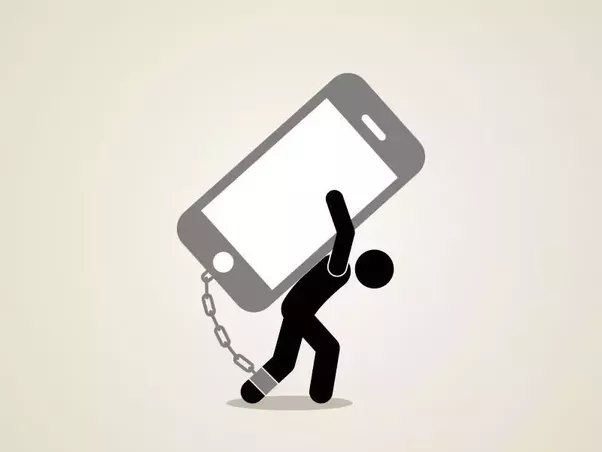
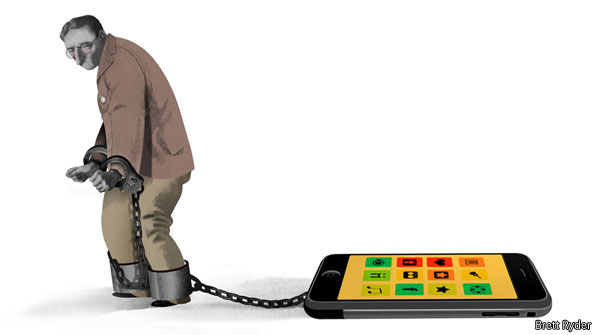
It seems to me we are working on the premise that all people are slaves to their phones. We not only live in a world where everybody is expected to have a smartphone, we also live in a world where it is impossible to even imagine anybody not having one all the time and using it for everything.

I’ll use a line or two from Dr. Keith Stanglin’s essay and a recent experience with Dr. John Weaver, the director of technology for Abilene Christian University, as talking points here. First, Keith:

“Our modern world is in bondage, in a way that no other era has been, to a consumerism that touches rich and poor alike… Keeping up with the Joneses has never been as important as it is now, where your status is determined by the kind of phone you carry and vehicle you drive. This is not the pursuit of the good life, but of the “goods” life. As a society, we are not freer, but more enslaved. Nowhere is this self-imposed slavery more evident than with smartphones.

If this seems like an exaggeration, then call to mind the lines that stretch for city blocks when each new iPhone is released, an event that has taken place every year since 2007. The thing that people couldn’t wait to have eleven months ago is now obsolete. Why, they wouldn’t be caught dead with an iPhone 6! Making us discontent with our present possessions is the fuel that drives this part of the economy. And such lack of contentment is directly opposed to the teaching of Jesus and the apostles.

We have to hand it to the marketing and advertising departments. If the goal is to make people desire today something they had no idea they even wanted yesterday, and, by tomorrow, turn that want into a perceived necessity that they cannot live without, then the marketers have been wildly successful. If you resist this consumerist cycle and don’t drink the Kool-Aid, you will be mocked by the cultured despisers. Trust me.”

John Weaver was one of the speakers at last May’s annual Sermon Seminar at Austin Graduate School of Theology. While sitting in on his sessions — Christian Ministry in a Digital Culture — I was struck by how much he assumes this slavery or addiction to phones. He claims that our phones are doing our work for us, thus making us lazy. He asserts that our phones are doing our thinking for us, thus making us dumb. He affirms that our phones are disabling us spiritually, driving us away from our God and from one another. But then he spent the better part of two days telling us how we should use our phones to be more like Christ.

The guiding question for his sessions was “How do we grow / mature / be faithful in the digital world?” His answer was to not reject the technology and the phones, don’t throw the baby out with the bathwater. Use the technology in a way that’s helpful. His main directive on this point was that we should turn off our devices but, because that’s impossible, try to use them in a responsible way.

The whole thing was very enlightening for me. He cited study after study, all the research, that says reading your Bible on a screen is not the best way to read your Bible. It’s impossible to engage the text on your iPhone — all the sidebars and pop-ups and other apps that are native to the design of the device. He acknowledges that it’s hard to concentrate on a passage of Scripture when he sees out of the corner of his eye that he just received an email from his wife. He knows and preaches that reading the Bible on a phone relegates God’s Word to just another story or tweet or video that is quickly consumed and then discarded and makes it much harder to remember. Yet his great advice is to use a Bible app that will schedule your reading for you and will disable the pop-ups and emails while you read. On your phone.

He never once suggested putting the phone down, picking up a print Bible, walking out of the room, and spending 30-minutes in reading and meditation. It appeared as if the thought never occurs to him.

Weaver talks about the ways our technology and phones distract us from important things, how they keep us from doing what we know we should be doing. We should turn our devices off, he says. We should plan time to be alone with God without the distractions from our phones. The phones are a barrier between us and our relationships with Christ and one another. So, what’s his life-changing suggestion? Program your phone to alert you to turn it off.

If the phones have to tell us when to turn them off, who’s in charge here?

This well-meaning man never once let on that he understood the irony of his presentations. Since we’re on our phones and laptops so much it’s harming our relationships and forming our brains and habits in undesirable ways, you should use a screensaver with a Bible verse. You should use a background to remind you about God’s presence.

It’s outside the realm of possibility and even imagination to suggest not using a smartphone for every single waking and some sleeping moments of the day and night — even as we know the harm we’re doing to ourselves.

That’s the very definition of addiction, right? That’s slavery, yes?
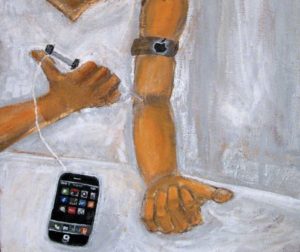
Can you leave your phone in the car to go into a restaurant for an hour-and-a-half and eat dinner with a friend? Are you able to leave your phone in the office while you go down the hall to talk to a co-worker? Can you go 30-minutes without checking your phone to see if you’ve received a text or a Facebook alert? Would you be able to go to Bible class or a worship assembly without your phone? If any of those scenarios cause your heart to beat faster or your forehead to sweat, if the very thought gives you anxiety, is that a problem? That seems like a problem.

When you’re talking to somebody in person, do you take your eyes off of them to check your phone? Do you interrupt a face-to-face conversation to read a text or to answer a call or to fact-check your friend? Do you spend more time on your phone, swiping and clicking and scrolling, than you do in real talking and listening to your family and friends? Or to God? Is that a problem? Seems like a problem.

From Keith:

“The reality is that we are in a new situation that will not soon be reversed. It is a situation analogous to that of Moses, who tried to regulate divorce for the hard-hearted. It is like the challenge facing the apostle Paul, who tried to regulate the conduct of slave-masters in a society that assumed the practice. We must start with and accommodate the premise that almost everyone is already enslaved to their electronic devices.

The question we must ask, then, reflects the challenge faced also by Moses and Paul: how can we infuse into this less than ideal situation a measure of perspective and good sense?

We cannot deceive ourselves into thinking that our justifications or solutions — for instance, ‘I can read my Bible on my phone!’ — are ideal. They are terrible accommodations, and we should rather be clear-eyed about the extent of the enslavement. How can we pull ourselves up a level or two on the continuum of human flourishing that smartphones threaten to drag us down?”

Again, my concern is not that you agree with me. My concern is that we “think” and not just “do.” My concern is that God’s Word and the teachings of Jesus have a prominent place at the table during any conversations about technology and phones. Our beliefs and our behaviors about our phones should be informed by Scripture and by the life and death of our Lord.

Leave it in the car.

Peace,

Allan

« Older posts Newer posts »