Page 375 of 497

A Virtual Shame

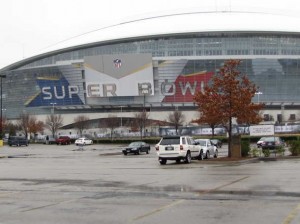
So the NFL has given in to Jerry Wayne’s crazy plan to set a Super Bowl attendance record at his ostentatious behemoth of a stadium on February 6. You’ve heard about this, right?

With the temporary seats added in the upper decks of the end zones, Jerry’s Stadium will hold right at 93,500. The Super Bowl attendance record was set in 1980 at the Rose Bowl: 103,985 to watch the Steelers beat the Rams in XIV. So the Cowboys owner has concocted a strange little ruse to push the numbers in Arlington just past the mark.

They’re selling at least 10,000 tickets to a “party plaza” located on the east side of the stadium where suckers who want to be a part of the “Super Bowl experience” can pay $200 each to stand around and watch the game on big screens in the parking lot. This plan was part of the North Texas Super Bowl bid submitted to and approved by the NFL way back before the stadium was even built. That’s always been part of the deal. And I don’t begrudge Jerry or the league any of it. Please, go sell as much stuff as you can. These tickets don’t allow the holder to enter any part of the stadium itself. They’ll be able to take nice pictures of the stadium’s exterior before and during the game, but they won’t have a sight-line to any live football action. However, I’m sure there are plenty of people who will pay the $200 to stand in the parking lot and watch it on a screen.

That’s fine. I don’t understand it. But I have no problem with it. Free market economics. Capitalism. It’s what makes America great, I’m told.

But the NFL has announced that they’re going to count these parking lot partiers in the overall game attendance figures. They’re all going to count as being at the Super Bowl. And Jerry’s Stadium is going to break the record.

You may as well count the guys watching it on the TV in the bar at Chili’s down on Cooper Street. Whoo-Hoo, we’re at the Super Bowl! What’s the difference?

In this world where Facebook friends count as meaningful relationships, forwarding emails to your representative counts as serious political discourse, googling counts as thoughtful research, and texting your kid counts as being connected, I suppose I shouldn’t be surprised. But I’m actually shocked. This cheapens the whole thing. It discounts all of it. No, I’m sorry. You were not at the Super Bowl. You stood in the parking lot and watched it on a big TV.

Here’s Jerry’s quote: “This Super Bowl, very likely, will be one of the largest events ever witnessed on this planet.”

Sigh.

~~~~~~~~~~~~~~~~~~

One more thing about the Super Bowl: the Steelers cannot play in it. It absolutely cannot happen. I can’t imagine anything much worse than having thousands and thousands of obnoxious Steelers fans all over our part of DFW, screaming “DEE-FENSE! DEE-FENSE!” and hollering “Here we go, Steelers, here we go!” and waving those ugly, ugly Terrible Towels. The only thing worse than that would be the Steelers actually winning the game and hoisting the Lombardi Trophy on the Cowboys home field. Can you imagine that scene? Steelers fans cheering a Pittsburgh championship inside the Cowboys stadium?
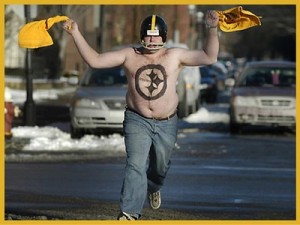
It would be a great hour of darkness.

A lot has gone wrong in this 51st season of Cowboys football. But that would be the worst. Utter shame. Complete disgrace. The franchise made famous by Bradshaw, Lambert, Stallworth and Swann and currently captained by Ben-R can’t play in a Super Bowl here.

I don’t like Rex Ryan. Not even a little bit. But I’m loving his team on Sunday.

J-E-T-S! Jets! Jets! Jets!

Allan

A Table in the Desert

“Can God spread a table in the desert?” ~Psalm 78:19

The psalmist asks if God can really provide a feast for his people out in the middle of the remote wilderness. Is it possible? Can provide nourishment and life where there is none?

The answer gushes from a rock. Streams flow abundantly. Water in the desert. Thirst-quenching life in the midst of certain death.

The psalmist sees the water. And he follows up with, “But can he also give us food? Can he supply meat for his people?” (Psalm 78:20)

And the Almighty Creator of Heaven and Earth opens up the skies to rain down manna and quail. The grain from heaven, the “bread of angels.” He “rained meat down on them.” They ate “till they had more than enough.”

“He sent them all the food they could eat” (Psalm 78:25).

Yes, our God can spread a table in the desert. He can open up a 24-hour-all-you-can-eat smorgasbord right in the middle of your desert. Right in the middle of your driest condition. Right in the darkest part of your worst night. Down in the depths of your deepest valley. He can shine light into your scariest situation. He can bring life from your dead-as-a-doornail, going-through-the-motions rut. Absolutely. Yes, he can.

My God prepares a table before me in the presence of my enemies. And I eat with God in complete communion and perfect peace. Protected. Provided for. Saved.

My God is sufficient. He is able. And he covers me with his tent and promises I will hunger and thirst no more.

Peace,

Allan

Whereby Earth Imitates Heaven

“The psalm blended all voices together, and caused one single fully harmonious chant to arise; young and old, rich and poor, women and men, slaves and free, all sang one single melody… All the inequalities of social life are here banished. Together we make up a single choir in perfect equality of rights and of expression whereby earth imitates heaven.” ~Ignatius, 110 AD

I had the most wonderful weekend singing with God’s children. You can’t believe all the singing.

Friday night and all day Saturday I was blessed to be able to sing praises to our Father with more than two thousand teenagers at WinterFest at the Arlington Convention Center. Over two thousand kids! Singing. Praising. Clapping. Stomping. Dancing. Twirling. Hand motions. Loud. Energetic. Enthusiastic. Singing of the very best kind. True offerings from the soul. Genuine praise and thanksgiving from the heart. The kind of singing that fosters Christian unity. The kind of singing that strengthens Christian bonds. The kind of singing that ushers one directly to the throne room of God.

I’ll bet we sang over a hundred different songs together at WinterFest Friday and Saturday. And not one of them — I promise — was written before 1980.

Sunday night, I was blessed to be able to sing praises to our Father with about two dozen of my Legacy brothers and sisters and another two dozen or so residents of the Sterling House Nursing Home in Richland Hills. As part of the NEXT challenge, our Small Group has teamed up with another to spend an hour with those sweet people at least once a month. About forty of us total Sunday evening. Singing. Praising. Toe tapping. Smiling. Head nodding. Amen-ing. Four part harmonies. Not too fast, not too slow. Just right. Singing of the very best kind. True offerings from the soul. Genuine praise and thanksgiving from the heart. The kind of singing that fosters Christian unity. The kind of singing that strengthens Christian bonds. The kind of singing that ushers one directly to the throne room of God.

I’ll bet we sang 25 different songs together at Sterling House Sunday night. And not one of them — I promise — was written after the Depression.

I want my children to take very seriously the words of Paul in Romans 12: In Christ, we who are many form one body, and each member belongs to all the others. That’s why our girls were right there with Carrie-Anne and me all weekend, with the crazy teenagers at WinterFest and with the sweet old people at Sterling House. I want my kids to see what I see, I want them to feel what I feel, to truly know what I know: that The Old Rugged Cross means as much to that older woman in the wheelchair as You Have Turned (my mourning into dancing, whoop! whoop!) means to that 12-year-old-girl clapping in the aisle. That it is critically important for the younger people to join in the congregational singing of Blessed Assurance and Anywhere with Jesus. And that it is just as important for the older people to join in the congregational singing of Days of Elijah and Lord, I Lift Your Name on High.

Why do the teens at WinterFest smile? Why do they sing? Because they’re expressing themselves to God — they’re declaring his praises and experiencing his grace — in their own style, in their own language, in their native tongue. They are free.

Why do the older people at Sterling House smile? Why do they sing? Same reason.

Now, does it give you joy to encourage a teenager in the faith? Does it bring you godly pleasure to tell a child he is important to you or that she is vital to your church family? Then why don’t you unfold your arms and wipe off that scowl and join them with gusto the next time your worship leader starts Blessed Be Your Name! Or is it only about you?

Teenaged brother or sister in Christ, does it make you feel good to encourage an older person? Does it lift your spirits to tell a senior citizen that she is vital to your church family? That he matters to you? Then why don’t you put down the iPhone and wipe the frown off your face and join them with gusto the next time your worship leader starts How Great Thou Art! Or is it only about you?

A gathering of God’s people all truly giving themselves to God in song really is incredible. But it only imitates heaven when the congregants are giving themselves to each other as well. The greatest joy I received and the greatest blessing I encountered over this wonderful weekend was in watching a couple of people almost twice my age shout out Couldn’t Keep It To Myself Friday night and watching the teens in our Small Groups sing A Wonderful Saviour Sunday night.

Earth really imitating heaven.

Peace,

Allan

The Choice

The Word of God confronts us with two ways. The Law and the Prophets, the Psalms and Proverbs, the Gospels and Letters all present us with the choice of two ways.

It’s not about where you’re going to live, what career you’re going to pursue, who you’re going to marry, or what you’ll have for lunch.

It’s the way of life or death. The way of blessings or curses. The way of God or the way of the world.

Yes, this one choice certainly impacts all those others. It encompasses and involves all those other decisions you make about where you work and where you live and who you marry. But there’s only one choice in Scripture: the way of life or the way of death.

God says, “Choose life!” ~Deuteronomy 30:15-20

Jesus says, “I am the Way.” ~John 14:5-7

When we choose Jesus, we choose the way of life and the way of blessing and the way of God. We sign up for a life of following Jesus along the way. We commit to walking behind him in his way. Doing things the way he does them. Speaking like he speaks. Thinking the way he thinks. Acting and loving and forgiving and submitting and obeying and serving and suffering and praying the way Jesus does.

It’s a choice we make every day. Every hour. A conscious and constant decision to allow the Holy Spirit of God to empower us and guide us in the Way of Jesus. It’s that first and continual step in asking God to show you what’s NEXT. In submitting to whatever NEXT he has in store for you. In jumping out of your comfort zone and whole heartedly embracing that NEXT that will further transform you into his holy image.

“I am the way and the truth and the life. No one comes to the Father except through me.” ~John 14:6

~~~~~~~~~

Speaking of choices: My annual Tulsa angst has begun. I just received an advance copy of the schedule for this year’s Tulsa Workshop from my friend Terry Rush and I find myself in the same spot I get into every year. How in the world do I choose?

Wednesday’s kick-off evening is easy. No choice. Praise and worship with Kip Long and a keynote address from Randy Harris. Awesome. But the anxiety kicks in early Thursday morning. At 9:00, do I go with the no-brainer, Don McLaughlin, on “Possibility Thinking: Nothing Less Than Winning the World” or Bill Campbell’s “For Church Leaders Only: How to Build a Healthy Congregation?” I could also go hear my friend Josh Ross on “Baptism: Transformed to Join in Jesus’ Mission.” And those are just three of the six possibilities for that hour!

More choices, of course, at 10:00. I’ll probably go with Randy Harris on “Jesus and the Quest for Cool.” But that means saying ‘no’ to Victor Knowles and my friend Dan Bouchelle and three other really interesting speakers and topics.

The 11:00 keynote is easy. No choice. Dusty Rush. No problem. Lunch is easy. I know we’re going to eat at that Mexican restaurant where we always run into Garth Brooks.

But it starts all over again at 2:00. How am I supposed to choose between Al Maxey’s “Breaking the Chains of Rigidity: Frail Hermeneutics” and Terry Rush’s “Adjusting Our Minds to Build Winning Congregations?” Are you kidding?

Same thing at 3:00. Again at 4:00. How does one choose between Marvin Phillips, Edward Fudge, Bobby Valentine, and Randy Harris? How do you choose between “Let the Chains of Spiritual Blinders Fall Away” and “The Unchained Holy Spirit” and “How to Break Free from the Chains of Those Who Won’t Change?”

And that’s just Thursday!

The Tulsa Workshop is one of the spiritual highlights of my every year. Have you never been? You have no idea what you’re missing. I encourage you to make the trip this year. March 23-26. Here’s the website with tons of info. There are special tracks this year for preachers and elders and worship leaders. Programs for the teens. Special stuff for the kids. You’ll be blessed by the worship, the study, the speakers, the fellowship, and the Holy Spirit of God. I really, really, really hope to see you there.

Peace,

Allan

The Presence of God and the Joy of His People

I don’t believe you can find a single communal meal in the Hebrew Scriptures that is eaten in sadness. When God’s people eat together, two things are true, without exception: 1) they eat in the presence of God and 2) they eat with great joy.

Sacrificial meals and covenant meals were a regular part of daily life for God’s people. At the ratification of the Mosaic covenant, to inaugurate the priesthood, at the conclusion of vows, at the renewal of commitments, at the inauguration of kings, when the Ark of the Covenant was brought back to Jerusalem, to celebrate the end of plagues, to give thanks to God, at the dedication of the temple. The list could go on for pages.

Eat and rejoice in the presence of the Lord your God (Deut. 12:4-7), eat in the presence of the Lord…rejoice before the Lord (Deut. 17-18), eat the offerings in the presence of the Lord (Deut. 14:23), eat in the presence of the Lord your God and rejoice (Deut. 14:26), eat in the presence of the Lord (Deut. 15:20).

At the table, God’s people were “joyful and glad in heart for the good things the Lord had done” (2 Chron. 7:10). They celebrated “with joy…because the Lord had filled them with joy” (Ezra 6:22). Nehemiah told them “Do not mourn or weep…enjoy choice food and sweet drinks…celebrate with great joy” (Neh. 8:10-12).

Sacrifices cleansed the people. The blood spilled on the altar was sprinkled on the stones, on the ground, on the people themselves, to clean them, to sanctify them, to take away their sins. Sacrifices were intended to make a place or a people holy so God could dwell there. God’s eternal covenant with his people is that he will live with them and they will be his people and he will be their God. Sacrifice made that dwelling possible. Without sacrifice, there could be no righteous relationship with God. Following the sacrifice, intimacy with God is not only possible, it’s realized and experienced.

And it’s always celebrated at the meal. At the table.

Peace. Fellowship. Communion. Koinonia with God and with one another because of the sacrifice. Now, that’s something worth celebrating with great joy. Right?

So….

Why do our Lord’s Supper observances on Sunday mornings tend to be quiet, solemn ceremonies marked by individual introspection and feelings of sadness and guilt? Why aren’t our communal meals with our God and one another characterized by interactive expressions of uncontained celebration and overflowing joy?

Have you tried singing upbeat, uptempo songs of praise and thanksgiving as you gather around the table? Instead of burying your nose in your Bible, have you ever tried sharing that special passage with the person seated next to you? A neighborly “clink” of your cups with the people on your pew and a shared “Thank you, Lord!” can express that much-needed communal joy in a simple, yet powerful, way. Try something. Try anything. I just urge you to stop “doing” the Lord’s Supper by yourself in that room full of Christian brothers and sisters and stop being so sad about it.

The Lord’s meal is shared on Sunday, not Friday! He’s not on the cross anymore, praise God! The tomb is empty, hallelujah! The Lord Jesus Christ has paid for your sins and mine! We stand today — right now and forever more! — in a righteous relationship with the Almighty Creator of Heaven and Earth! He has removed our sins. He doesn’t remember them or hold them against us! It’s as if we’ve been perfect from day one! Because of what Christ already did at the cross and what the Holy Spirit already did at the garden tomb, we belong to God! It is finished! We are his people and he is our God!

Seriously. How in the world are we able to eat the bread and drink the cup without breaking out into huge grins?

~~~~~~~~~~~~~~~~~~~~~~~~~

I’ve updated the “Around the Table” page with tonight’s lesson outline and handouts. As you’ve already gathered, the focus tonight is on the presence of God and the joy of his people at the meal. Click on the green “Around the Table” tab in the upper right hand corner of this page to access these class materials and to find the assignment for next week’s session.

Peace,

Allan

A Tidbit After Bread

Regular readers of this blog will know of my deep respect and admiration for German theologian and Christian martyr, Dietrich Bonhoeffer. No books have had more of an impact on my walk with Christ, my calling as a congregational preacher, and my faith in God than Bonhoeffer’s Cost of Discipleship and Life Together. Costly grace. True discipleship. Christian community. These are all concepts that Bonhoeffer not only wrote about brilliantly, but also lived out genuinely.

So you can imagine my delight at receiving over the Christmas holidays the first Bonhoeffer biography in almost 50 years. Bonhoeffer: Pastor, Martyr, Prophet, Spy by New York author Eric Metaxas. I took a big bite out of this massive 542-page volume last night. And I intend to have it completed by the end of the week. It is excellent.

In the several books on Bonhoeffer I’ve read, I’ve seen his “tidbit” quote about complete commitment to Christ.

“The religion of Christ is not a tidbit after one’s bread; on the contrary, it is the bread or nothing. People should at least understand and concede this if they call themselves Christian.”

I knew the quote was taken from a lecture on the essence of Christianity that Bonhoeffer delivered early on his career. But this new book tells me it was part of a three-lecture series to a group of teenage boys he was mentoring in Barcelona in the winter of 1928. Bonhoeffer was 22-years-old. But he already had a firm grip on what Jesus meant when he said, “Follow me.”

The title of the lecture is “Jesus Christ and the Essence of Christianity.” It was number two in his series, preached to the teens on December 11, 1928. And this new book has published a pretty big chunk of it.

Bonhoeffer begins by talking about the fact that most Christians have actually exiled Christ from their lives. He says, “Of course we build him a temple, but we live in our own houses.” Bonhoeffer points out that we only take Jesus seriously on Sunday mornings. Our religion only has meaning on the first day of the week where one “gladly withdraws for a couple of hours, but only to get back to one’s place of work immediately afterward.”

OK, now here’s the really good stuff about taking Christ and his call seriously:

“One admires Christ according to aesthetic categories as an aesthetic genius, calls him the greatest ethicist; one admires his going to his death as a heroic sacrifice for his ideas. Only one thing one doesn’t do: one doesn’t take him seriously. That is, one doesn’t bring the center of his or her own life into contact with the claim of Christ to speak the revelation of God and to be that revelation. One maintains a distance between himself or herself and the word of Christ, and allows no serious encounter to take place. I can doubtless live with or without Jesus as a religious genius, as an ethicist, as a gentleman — just as, after all, I can also live without Plato and Kant. Should, however, there be something in Christ that claims my life entirely with the full seriousness that here God himself speaks and if the word of God once become present only in Christ, then Christ has not only relative but absolute, urgent significance for me. Understanding Christ means taking Christ seriously. Understanding this claim means taking seriously his absolute claim on our commitment. And it is now of importance for us to clarify the seriousness of this matter and to extricate Christ from the secularization process in which he has been incorporated since the Enlightenment.”

Yes, Christ Jesus is an all-or-nothing proposition. Yes, we have a long way to go in our understanding and our practice.

Peace,

Allan

« Older posts Newer posts »