
Page 303 of 497
 We’ve established that the term “breaking bread” (“klasas artos” or “arton klao“) was never used in the Greek language before the writings of the New Testament and that it always and only refers to Christ eating and drinking at the table with his disciples. The phrase was never used to describe an ordinary meal. It is a strictly Christian term used exclusively in a Lord’s Supper or communion context. Every time. At the very least, “breaking bread” echoes earlier meals with Jesus and / or reminds the Church of what’s happening on Sundays at the Lord’s Meal. But the context is always a joyful community meal shared in the presence of Jesus. Therefore, we are compelled, I believe, to read familiar portions of the New Testament a bit differently. I’d like to examine three of those passages from Acts in this space today.
Acts 2:42-47 – We in the Churches of Christ have all but memorized these verses. We proudly point to this passage as the origin of God’s Church, the first days of Christ’s global community of faith. “This is how the Church started,” we say. “This is the pattern, this is how we should act today.” And I agree. Along with Ephesians 4, this is where I begin talking about the Church in our orientation classes with visitors and new Christians here at Central. Luke ties “breaking bread” here to the fellowship of the Church. This passages is about community. Communion. Koinonia. Christianity is a shared experience, lived in community with other disciples where men and women share their meals and their possessions. Church is expressed here in concrete and visible terms, not just spiritual or mental or invisible. These new Christians are sharing their lives with one another. But are the two uses of “breaking bread” in verses 42 and 46 about the Lord’s Dinner?
Typically, we pronounce the use of the phrase in verse 42 to be about the Lord’s Supper (“They devoted themselves to the apostles’ teaching and to the fellowship, to the breaking of bread and to prayer”) and the same wording in verse 46 (“They broke bread in their homes and ate together with glad and sincere hearts”) to be about common ordinary meals. The logic generally used in this analysis is that verse 42 is about teaching and prayer, therefore, it’s in a worship context, so it must be the Lord’s Supper. Verse 46, however, describes an every day action taking place in homes, so it must be a common meal. We ignore the line about praising God in that same context.
I would say the burden of proof is on those who claim verse 46 is not the Lord’s Supper.
The easiest criticism of our traditional view is to ask whether Luke really would use the same words to describe two completely different activities in a span of five verses. Most certainly not! But, I think that misses the point. In the first place, to even ask if one is the Lord’s Supper and one is a common meal is to assume that it’s not both. And we know it is! In the New Testament and for the first 200+ years of Christianity, the Lord’s Supper IS a common meal. In Scripture, you can have a meal without the Lord’s Supper, but you cannot have the Lord’s Supper without a meal.
But verse 46 says “every day.” It can’t be the Lord’s Supper because we only do that on Sundays.
Let’s not read our traditions and our practices today back into the Holy Scriptures. Remember that during New Testament times all Christian worship assemblies were held in homes. Remember that the Lord’s Supper was a full meal, never just bread and wine. Remember that these full fellowship meals were celebrated joyfully in the name of Jesus, with thanksgiving to God, as an expression of their blessings and unity in Christ. I would argue that for these early Christians, there were no common meals. Every meal they ate together is the Lord’s Supper. Remember, too, that sharing their food with the needy is an important part of the communion or Lord’s Supper instructions we find in late 1st century and early 2nd century writings in the Didache and by Justin Martyr. If part of the Lord’s Supper is about feeding the poor, you would have to do that more than once a week, right? Also, remember that the day of the week and the time of day for Christian worship assemblies is not uniform in the early Church until the late 2nd or early 3rd centuries. There are plenty of writings, Ignatius’ letters among them, that call for more frequent celebrations of the Eucharist. A Sunday-only Lord’s Supper and Sunday-only worship assemblies is only established later, generally linked to the separation of the Lord’s Supper from the common meal during the 4th century.
Acts 20:7-12 – This passage is about resurrection. The Church has gathered around the table to celebrate the resurrection, they are anticipating a resurrection, and then they actually experience a resurrection. As in the 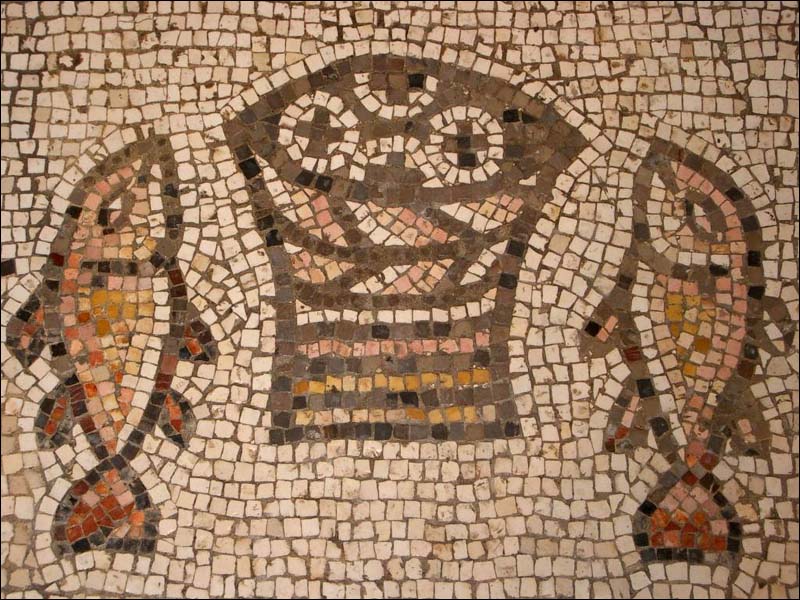 Gospels, this passage presents the communion dinner in a resurrection/life context, not a crucifixion/death context. However, like the previously discussed verses in Acts 2, we have traditionally interpreted the same phrase used in the same setting, separated by only four verses in this passage, as two different activities. We’ve said verse 7 is the Lord’s Supper (“On the first day of the week we came together to break bread”) because it’s Sunday and it’s the primary reason the Church gathers. But we claim verse 11 to be merely a common meal or even a snack (“Then he went upstairs again and broke bread and ate”) because it’s after midnight — Monday! — and there don’t seem to be any formalities mentioned.
Again, for many of the same reasons outlined above, the burden of proof is on the one claiming that verse 11 is not the Lord’s Supper.
In this story, the breaking of bread seems intentional. This is the explicitly stated reason for this Christian gathering. Paul’s sermon seems to be an add-on or a special circumstance. There is, of course, theological significance to “first day of the week.” That’s the day of Resurrection and the birthday of the Church. The Eutychus episode serves as the table talk. It’s the sermon illustration. Jesus and Eutychus were dead, now they are alive. Christ eats with us at the table, just like Eutychus is doing right now. This community of faith ate their meal with this visible example of their hope in the resurrection. I wonder what the mood was like at that Lord’s Supper? What a powerful reminder that it’s around our Lord’s table where his followers celebrate new life, where we rejoice in our liberation, where we experience his perfect peace.
Acts 27:33-36 – This one’s a little tricky. Most scholars are divided here on whether Paul breaking bread during the storm at sea is the Lord’s Supper. I believe it is. But only because my definition of Lord’s Supper is communing with God and one another while sharing a salvation meal in the presence of Christ. Luke uses the same words for breaking (klao) and bread (artos) in verse 35. And, remarkably, he uses the same liturgical formula employed by Jesus in the Gospel accounts of the Last Supper, the post-resurrection meals, and the feeding of the multitudes: “He took some bread and gave thanks to God in front of them all. Then he broke it and began to eat.”
But these aren’t Christians; they are pagan sailors. This isn’t a worship service. They’re in a boat. It might not be a Sunday. These are not church people. How can it be the Lord’s Supper?
Again, the burden of proof is on those who deny this as a Lord’s Supper account. Let’s not read our current practices back in to Scripture. Notice the salvation context of the story and the meal. Notice how this story acts as a rehearsal of the Gospel: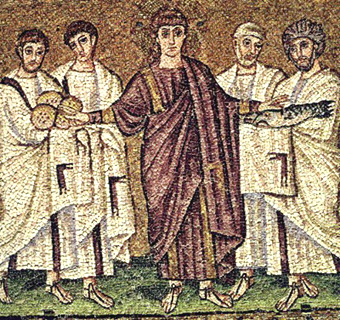
v.22 – “not one of you will be lost”
v.23 – God’s angel promises salvation
v.24 – salvation is a gracious gift from God
v.25 – “I have faith in God that it will happen just as he told me”
v.30 – sailors attempt to save themselves
v.31 – “unless these men stay with the ship, you cannot be saved”
v.34 – salvation is tied to the meal
v.35 – breaking bread with thanksgiving to God
At the very least, allow me to assert that this meal at sea points to the Lord’s Supper as a reminder that the presence of the risen and reigning Christ can be experienced everywhere, anywhere. And that any meal eaten with thanksgiving to God and in recognition of our salvation through Christ is, in a broad sense, a Lord’s Meal.
While reflecting on the Acts 2 passage, you might consider how the community/communion aspect of the Lord’s Supper function in our understanding and practices of the sacred meal. Are those meanings properly emphasized in the Sunday morning practices at your church? What about the resurrection aspect of the meal emphasized in Acts 20? Is this facet of the Lord’s Supper properly expressed in your Sunday morning assemblies?
Peace,
Allan
Sports Illustrated’s Andy Staples has written an excellent article on Baylor football coach Art Briles that centers on Briles’ time as a high school football coach in west Texas and in the Texas panhandle. Briles developed his spread offense in response to a quarter-finals playoff loss to Panhandle’s Panthers back in 1984. Staples’ account of that game includes a vivid description of what high school football was like before the days of overtime. Back when tie games were decided by penetrations and first downs, it wasn’t uncommon for teams to play for the penetration instead of the touchdown. It’s a very entertaining read that references lots of our regional towns and teams, including Canadian’s outstanding coach who was a star running back for Panhandle in that 1984 win. You can get to the article by clicking here.
~~~~~~~~~~~~~~~~~~
In addition, David Moore has written a nice column in the Dallas Morning News regarding the Cowboys’ chances at a playoff spot. You figure the Cowboys have to win three in a row to make the postseason. And this team hasn’t had a three game winning streak since 2010. I don’t know how the worst defense in the NFL and the statistically worst defense in franchise history is going to stop the Packers this week, regardless of whether Aaron Rodgers suits up for Green Bay. Josh McCown, Chicago’s back-up QB, looked like Jim McMahon Monday night. David’s article is here.
~~~~~~~~~~~~~~~~~~~
 I would like to make the case in this space today that every single time the term “break bread” is used in the New Testament Scriptures, it’s referring to what we call today the Lord’s Supper. The phrase is never used to describe a common meal; it always represents or points to the Lord’s Meal. To illustrate this, we have to use a little Greek. Not a lot; just a little.
Klasas is the Greek word for “break” we find in our New Testaments. It’s the common word for “break.” There isn’t another word for it. It means “to break” like you would break your leg, break a toy, or break your mom’s favorite picture frame. Artos is the Greek word for “bread.” In both the common language and in our New Testaments, this word can have two meanings. The main meaning is simply a piece of common bread or a loaf of common bread. The secondary meaning is “food” or “a meal.” To “eat bread” in many places in Scripture is to eat food generally. The prodigal son in Luke 15:17 says his father’s hired men have “food” (artos) to spare. Jesus’ disciples are criticized in Matthew 15:2 for not washing their hands before they eat. Period. The NIV leaves out “bread” (artos). The Greek text says “…before they eat bread.” The same thing happens in Mark 3:20 when the disciples are so crowded in the house they are “not even able to eat.” Most English translations leave it at that: “eat.” The Greek says “…not even able to eat bread.” But the scholars understand that a full meal is meant by the context. There are a few other places in the New Testament in which “bread” means a meal. The last one I’ll mention is in 1 Thessalonians 3:8 where Paul claims not to have eaten “anyone’s food without paying for it.” The word translated “food” is artos. Bread.
You might think that the term “breaking bread” would be a fairly common term in ancient times, that it would refer, as it does in today’s English, to eating a common meal. When I say we’re going to the Bentleys’ house to break bread, you and I both know we’re having some kind of barbecue and fresh vegetables, peach tea, and a fancy dessert. Hasn’t it always been that way?
No.
According to the Thesaurus Linguae Graecae (TLG) database, a record of every single written word in the Greek language from the very earliest writings dating to about 1400 BC through the year 1453 AD, no one in history ever used the term “breaking bread” before the New Testament. For fourteen centuries — every novel, every song, every poem, every play, every government document, every worship order, every instruction manual, every word of every thing ever penned in that language — nobody ever combined “klasas artos” or “arton klao” (breaking bread) until Paul and the apostles. They were the very, very first. After the New Testament time, the phrase is only found in the writings of the early church fathers, always in reference to the Lord’s Supper.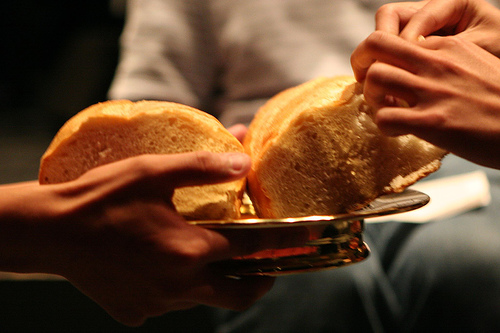
“Breaking bread” is not a common Greek phrase. It’s not an every day term. It doesn’t mean “have a meal.” It means “share a meal with Jesus.”
The term is used for the first time ever in the Greek language in the New Testament. We find it there eighteen times:
At the feeding of the 5,000 in Matthew 14:19, Mark 6:41, and Luke 9:16
At the feeding of the 4,000 in Matthew 15:36, Mark 8:6, and Mark 8:19
At the last supper in Matthew 26:26, Mark 14:22, and Luke 22:19
At the Emmaus Supper in Luke 24: 30 and 24:35
In Luke’s account of the first days of the Church in Acts 2:42 and 2:46
In Troas on the first day of the week in Acts 20:7 and 20:11
On a ship at sea in the middle of a storm in Acts 27:35
In Paul’s Lord’s Supper discussions in 1 Corinthians 10:16 and 11:24
In every case, this is Jesus eating and drinking at table with his disciples. The term is always used to describe the Messiah sharing a meal with his followers. This is the worship language of the early Church. Just like “born of water and the spirit” means “baptism” and just like “separate and apart” means it’s time to pass the collection trays, “breaking bread” means “Lord’s Meal.” It didn’t need any further explanation. Just like the sports page today doesn’t take the time or the space to explain what “touchdown” means in a story about the football game, the writers of the New Testament used “breaking bread” and all the hearers and readers knew what was meant.
Luke makes it easy to follow the thread:
When he feeds the multitudes, Jesus takes bread, blesses it, breaks the bread, and then gives it to his disciples (Luke 9:16).
At the Passover meal on that last night, Jesus takes bread, gives thanks, breaks the bread, and then gives it to his followers (Luke 22:19)
At the resurrection dinner in Emmaus, Jesus takes bread, blesses it, breaks the bread, and then gives it to the disciples (Luke 24:30)
“Jesus was made known to them,” Luke writes, “in the breaking of the bread” (Luke 24:35)
We shouldn’t be surprised to find the first church continuing the faithful practice of their Lord:
The disciples continued in the breaking of the bread (Acts 2:42)
The disciples broke bread daily in their homes (Acts 2:46)
The disciples gathered to break bread (Acts 20:7)
Knowing that the term “breaking bread” is an exclusively Christian term and refers only and always to Christ’s presence at the table where he eats and drinks with his disciples has some interesting ramifications. But I’m out of time and space today. Let’s continue the discussion tomorrow.
Peace,
Allan
“Precious in the sight of the Lord is the death of his saints.” ~Psalm 116:15
I know he didn’t tell me every week. It wasn’t even every month. Couldn’t have been. But it was frequent. It was many times over the course of my childhood and into my high school years. Jim Martin, the head elder (I know there’s no such thing) at my church in southeast Dallas, was emphatic when he told me. I remember him telling me while we were standing on the brown speckled industrial tile in the hallway down the classroom wing of the Pleasant Grove Church of Christ. He told me out in the church parking lot. He told me near the front of the auditorium right after worship services. I feel like he told me all the time. And he meant it.
“Allan, if you’ll go to preaching school, I’ll pay for your tuition.”
Of course, he was talking about the Sunset or Preston Road schools of preaching. At the time, I didn’t have much of an idea about money or how much that kind of an education might cost. I knew Sunset was in Lubbock, somewhere out in West Texas, a million miles from Big D. I had been to several graduations at Preston Road as our church financially supported students there every year. Those things, though, didn’t really matter. I didn’t want to be a preacher. I couldn’t imagine being a preacher. I wanted Brad Sham’s job doing radio play-by-play for the Cowboys.
Jim — sorry; he was always “Brother Martin” — was a giant in my home church. In my mind, he stood taller even than his six-foot-four frame. He was a Bible class teacher, a song leader, and an elder in our congregation. He was always standing in front of the church. Teaching. Leading us in worship. Leading us in prayer. Baptizing. Announcing important decisions. He was our home and auto insurance guy, a successful businessman with his own office on Buckner Boulevard. I never saw him without a coat and tie. In every setting, he carried himself in a deliberate and professional manner. For these and many other reasons I always looked up to Jim.
My sister, Rhonda, and I found some of his mannerisms… umm… humorous. He wore his pants almost a little too high; not quite “above the navel” as Matthew McConaughey’s character says in “Bernie,” but still a little too high. When he sat down on that little short pew on the stage in-between songs on Sunday mornings, his pants legs would rise up incredibly high. His cuffs would be almost at his knees. And, to our constant amazement, so did his socks! We always privately assumed his socks were somehow connected to his underwear. We could perfectly imitate the way he led singing, his right arm extended with barely any crook at all in the elbow and his middle finger on that right hand dipped slightly below the others. The way he paused a little too long between the first and second words of a lot of songs. “When….. …. …. I survey the wondrous cross.” For some reason, Jim pronounced “dollars” as “dah-lahs,” like he was from London or something. We imagined he mowed the lawn and changed the oil in his cars wearing his slacks and wing tips.
He and my dad were best friends. They sang together, taught Bible class together, and served together as shepherds at P-Grove. Jim and Polly Martin were at our house a lot when we were kids and we spent a lot of time at their place on Alhambra Street. On those rare occasions when we got to eat lunch at Wyatt’s Cafeteria after church, it seems the Martins were always there with us. Jim and my dad were equals in almost every sense of the term — including most of their quirkiest mannerisms — but Jim was older. My dad asked for and highly valued Jim’s opinions and insights. He talked about Jim a lot. He looked up to Jim. And that was huge for me. Jim always seemed very important to me. And, looking back, a big part of that is probably because I sensed my dad looking up to Jim, too.
When Brother Martin told me I could preach and that he would pay for my training, he was telling me two things: One, that preaching the Word of God was really, really important — maybe even more important than selling insurance; and, two, that he believed in me, he really believed in me.
Jim and Polly’s daughter, Becky, and her husband Glen were our youth ministers at the Pleasant Grove church when we didn’t have youth ministers. Glen hired me to work at his roofing company the summer before my sophomore year in high school. He taught me how to drive a stick shift. He taught me how not to cut ridge with a Skil saw. He taught me a lot of things. For a period of four or five years I spent more time at Glen and Becky’s house than I did my own. I bought my first car when I was sixteen: a long, white 1974 Monte Carlo with a burgundy Landau top. I paid for it with roofing money. Bought the insurance policy from Jim Martin with roofing money. When I was re-baptized over Thanksgiving break of my senior year in college, it was Jim Martin who buried me with Christ. And when I finally decided to leave sports radio to enter a full time congregational preaching ministry, I called my parents. And then I called Jim Martin. He expressed to me his great delight upon hearing that news. And he told me God was going to use me to expand his Kingdom.
Jim died Sunday evening at 85 years of age. He was surrounded by his family, forgiven by his Savior, and wrapped in the loving arms of his God.
My dad and I talked on the phone together about Jim late Sunday night. A number of us preachers in Texas and around the Southwest who have been personally blessed by Jim’s son, Jimmy Martin, have been exchanging emails and texts. Rhonda and I shared some really funny stories and a few tears together on the phone yesterday. Throughout our childhood, Jim and Polly Martin were always there helping and encouraging. During our most formative years, Glen and Becky were always there helping and encouraging. For the entire seven years of my preaching ministry, Jimmy Martin has been right by my side helping and encouraging. There has never been a time in my life — all 47 years — when Jim Martin and his children were not involved in supporting me and encouraging me.
I’ve written all this —- and I could very easily keep going — to say this: encourage the young people in your church. Tell them you believe in them. Tell them how talented they are, how blessed by God they are. Tell them all the dreams you have for them, all the great things you see for them. Help the kids in your church and encourage them. You have been ordained by God to play an important role in molding and shaping young preachers and ministers, future missionaries and teachers of the Gospel. One word of encouragement to a child can carry her or him for years. One sentence of blessing to a teenager can last maybe for a lifetime.
It’s been sixteen or seventeen years since I’ve been inside the Pleasant Grove church building. My siblings and I all left P-Grove as soon as we could. And so did most everybody else. Our parents retired and moved to East Texas in 2000. There’s not forty people left in that congregation today. But Jim and Polly stayed. Jim was still at that old church building three or four days a week, paying bills, putting the bulletin together, leading singing, and teaching class up until he fell and injured his back over Thanksgiving weekend. I thank God today for Jim Martin. And when we walk into that church building for Jim’s funeral later this week, it’ll be good. It’ll be precious.
Peace,
Allan
“I have learned to be content in whatever state I am in.” ~Philippians 4:11
 Beyond merely proving that the apostle Paul was not a Texan, the familiar passage above communicates in clear ways his joy and peace in our Lord. Paul’s joy doesn’t depend on the alleviation of his physical discomfort. That’s why, even though he’s in prison, he tells his Philippian brothers and sisters he doesn’t need a thing.
Paul’s learned, he says, to be content regardless of his circumstances.
So he doesn’t consider physical troubles to be a personal disaster. By the same token, he doesn’t view physical blessings as a sign of success. Paul uncompromisingly finds his joy and peace in God’s continuing work of salvation. He is being saved. The Church is being saved. The world is being saved. And Paul’s content that his God will meet all his / their needs according to his glorious riches in Christ Jesus.
May we all find that contentment in the wise provision of our loving Father. And may our lives reflect the belief we have that through our crucified and resurrected Savior we can endure all things.
Peace,
Allan
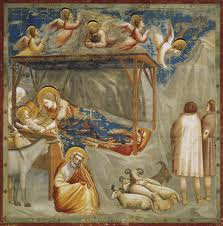 As children of God, we believe we are called to imitate God and to join him in doing the same kind of work he’s doing. So, at Christmas time we ask: What was God doing at that stable in Bethlehem? What does the birth of Jesus tell us about God’s great work? And how do we partner with him in doing that work?
In sending his Son to this sick and dying world, our Father is reaching out to people in need. He’s seeking people who are wounded. He’s treating them as equals. He’s coming alongside them, getting his hands dirty with them.
Christmas is revolutionary!
Through Jesus, God acts to lift the lowly, to feed the hungry, to heal the sick, to forgive the sinner. God, through his Son, turns chaos into peace, shines light into darkness, turns the lost into the saved, and changes the dead and hopeless into the eternally alive. God in Christ, having put on our earthly flesh, tears down barriers, destroys distinctions, and fixes what’s wrong. As children of God and disciples of his Christ, we’re called to the same purpose.
We’re called to join our God as partners in this incarnation work. We’re committed to seeking out people in need. We’re resolved to open our doors and our hearts to the lonely and distressed people in our communities who are dying for a word of grace from our King.
What happened among the animals and the shepherds that night is revolutionary. It turned the world upside down. And we’re called to no less today.
May God through Christ bless you richly during this special season with his everlasting joy and peace.
Allan
Recent Comments