Mr. Trump,
I watched with an odd mixture of amusement and dread as you took the stage in New York City Saturday to introduce Mike Pence as your running mate for the 2016 election. That mix of feelings has become standard for me every time you step in front of a microphone — I’m at once entertained as if I’m viewing an old Saturday Night Live skit which becomes more outrageous as the bit goes along and horrified that conditions in the United States and, indeed, in this world that would make your candidacy for president even a remote possibility actually do exist.
I could expound for several pages on the particular things that nauseate me about your run for national office. But the point of this letter is to set the record straight between you and me and every Gospel preacher I know.
The reason we do not endorse candidates for political office is not because we’re afraid of losing our tax exempt status in our congregations. The pastors, preachers, and Christian leaders who are telling you this do not represent me or any pastors, preachers, or Christian leaders I know.
Since right after Christmas, you’ve made it a point in several speeches and interviews to say, if you’re elected president, you will abolish the “Johnson Amendment” that binds tax exempt status for non-profit organizations to silence when it comes to those organizations endorsing candidates for public office.
This past weekend you told the American people you’ve had several meetings with “top evangelical leaders, top Christian leaders,” who are afraid to speak. You particularly quoted “a great, great gentlemen who everybody knows” — refusing to give us his name — as telling you “We live in fear in our churches that we’re going to lose our tax exempt status if we say anything that’s even slightly political.”
Mr. Trump, the reason Christian preachers and pastors don’t endorse political candidates has nothing to do with the threat of losing our tax exempt status. It has, instead, everything to do with our conviction that worldly politics and national political structures and candidates are opposed to both the means and the ends of our Lord Jesus Christ and his Kingdom. We are thoroughly convinced that God through Christ and, amazingly, even through his Church is changing this world and fixing what’s wrong with this planet with love and grace, mercy and forgiveness, reconciliation and peace. We believe Jesus willingly went to the cross to abolish all violence, to tear down all the barriers between people, and to show us the eternal power of selfless sacrifice and service. Why would any Christian preacher of that Good News or any church he’s a part of officially endorse any political candidate running for office within the political structures of this country? None of you stand for any of the things our Lord says are important.
Your vice-presidential partner, Mr. Pence, on Saturday stated emphatically to thunderous applause that he was “a Christian, a conservative, and a Republican; in that order!” And then just a few minutes later, in the same speech, he vowed to “hunt down and destroy our enemies,” in complete violation of every other paragraph in the New Testament. If our Lord taught us anything, if the Scriptures say anything at all about Kingdom life, it’s that we are to bless our enemies and do good to those who harm us. To be fair, when you’re working for the national government, you don’t have much choice except to use violence and force to get things accomplished. We understand that. It’s the way the world works. We don’t hold that against you or any other politician. It’s just not the way the Kingdom of God works. It’s not how our Lord has commanded us to live.
We’re not afraid of losing our tax exempt status. It’s just that endorsing one of you would be like a regional manager at Target doing his shopping at WalMart. Endorsing one of you would be a betrayal of all we know to be true about the ways our God is saving his creation. It would undercut our message. Building walls? Killing enemies? Insulting our opponents? Self-promotion? Divisiveness? Name-calling? Seriously, you wouldn’t expect a preacher of God’s Word to endorse any of that, would you? Surely, you know better.
Yes, I know many, many Christians and many churches have bought into the idea that the salvation of this country somehow depends on electing the right politicians. I am saddened by that. They campaign and picket, scream and yell, insult and fight right alongside everybody else for their particular party or platform, all of which is decidedly unchristian behavior. And you’re tapping into that for your own personal and political gain. Of course. I don’t blame you.
As for myself and all Christian preachers and church leaders I know, we don’t buy into your ideas of the power of power to do any real lasting good. Frankly, sir, with all due respect, you’re wrong about power. You say “Christianity is under siege in this country and it’s getting weaker and weaker and weaker.” You say you’re “going to work like hell to get rid of the [Johnson] prohibition and we are going to have the strongest Christian lobby.” You say, “Politically if we (Trump and the Church) use that power, we’re going to start going up, up, up because right now we’re being decimated.” You told us Saturday that regular people walking on the streets have more power than the pastors and “we’ve got to do something about that.”
You say the government has “taken a lot of the power away from the church. I want to give power back to the church because the church has to have more power. Christianity is being chopped; little by little it’s being taken away.”
Really? In response, I’d like to go on the record as stating that no person or organization or force of this world has the capability to remove any power from God’s Church. Give me a break. Again, you misunderstand the way power works. Secondly, I dare say the church does not need you, of all people, to restore power to God’s Church. Thanks, but neither you nor any politician can act as the savior of the Church. We don’t need the state’s power to practice love, to selflessly serve others, to suffer for righteousness’ sake, to pray, to sing, to comfort and heal.
Lastly, allow me to add that for several years now I and a lot of preachers I know have wondered aloud if losing our tax exempt status might actually be the very best thing that could happen to the church in America. If some of the church leaders you’re talking to are genuinely afraid of losing the tax free designation then, God help us, we really are tied to the wrong things. Maybe being forced by the government to pay taxes like everybody else will wake all of us up to the realities that the United States and God’s Church are not only two separate entities, they actually oppose one another and are working in completely different ways for totally different purposes. We would clearly see, finally, that the Church has very little, if anything, in common with the State. Maybe then we would be bold in understanding and practicing the subversive love and sacrifice that changes lives. Maybe then we would be courageous enough to renounce violence and bless our enemies, tear down walls and build bridges, sacrifice and suffer in the name and the manner of Jesus. Maybe then we would once and for all — good grief! — stop displaying the Christian flag in a subservient position to the U.S. flag in our church parking lots and inside God’s sanctuaries.
Removing the prohibition and allowing the churches to have an equal voice in this country’s politics might actually do great harm to the Gospel in America. We would receive power from the wrong sources and be tempted to use power in the wrong ways. Removing the “Johnson Amendment” would actually be a work of the devil, I think. He would love it. Thanks, again, Mr. Trump. Please don’t do the Church any favors.
Again, just to set the record straight, Mr. Trump, the Christian leaders with whom you’re in conversation do not represent me. I’m not afraid and I don’t feel like God’s Church is, or could ever become, powerless because of some worldly government’s policies. I don’t endorse candidates, not because I’m afraid of being forced by the government to pay taxes; I feel like that might actually do God’s Church more good than harm. Christian pastors, preachers, and leaders don’t endorse candidates because, as ordained proclaimers of the Good News, it would be a personal, professional, and spiritual betrayal of the highest order.
Sincerely,
Allan
 Please keep my darling wife Carrie-Anne in your thoughts and prayers for the next few days. She’s having surgery this afternoon to repair a fairly significant hole in a sinus passage. The surgery is only supposed to take about an hour and a half, but everybody’s telling us the eight days after are going to be horrible. As you’re probably aware, Carrie-Anne has the best looking nose in our family, and we don’t want anything to happen to it.
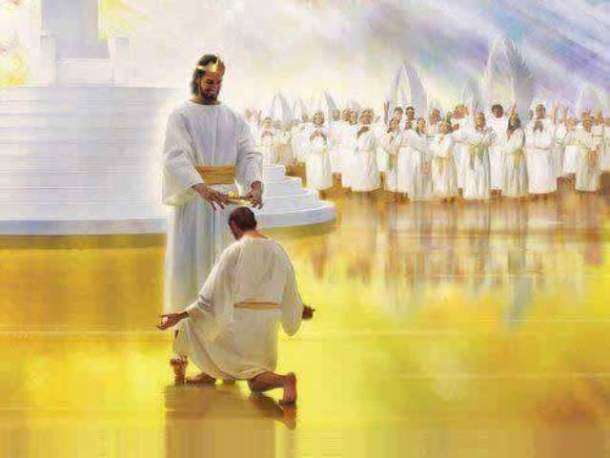 We like the idea of Jesus being with us everywhere, even inside us. Jesus is present with us because of his Holy Spirit. He dwells in and with his Church. But the One who is present with us and living inside us by his Spirit is also the King of Kings and Lord of Lords who rules with all power and authority from a position over us, directing us, rebuking us, encouraging us, teaching us. So, yes, in a very real sense we do reign with Christ today in the heavenly realms, but only in the ways he directs — with Jesus, in the name and manner of Jesus.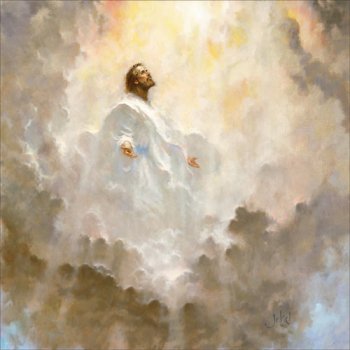


Recent Comments