
Remember watching the Cowboys together the last time they were in the Super Bowl?
AllanStanglin.com
Remember watching the Cowboys together the last time they were in the Super Bowl?
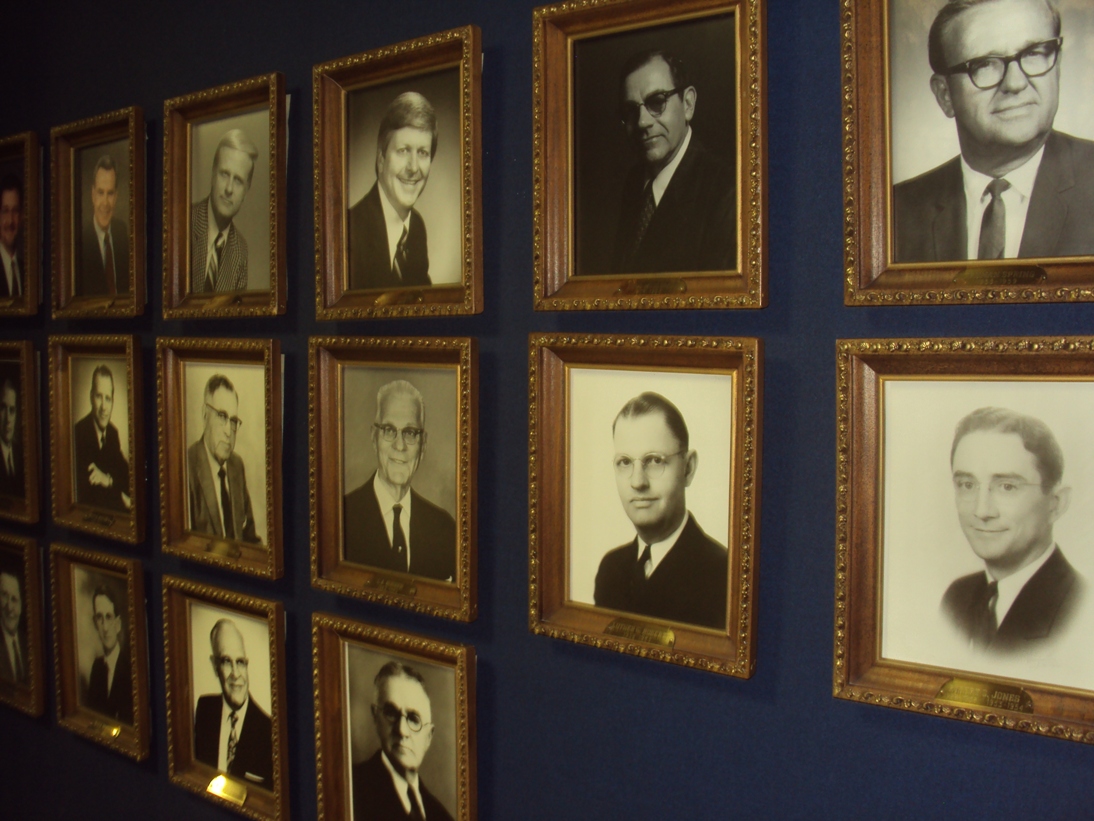 I don’t know all my sins and shortcomings. I don’t know all the many ways I’m sure I fail as a proclaimer of God’s Word. I’m not aware of every single way I most surely disappoint the people in our church. I don’t know all the variety of things I do and say that are just not enough, things that could be done and said much better by a better person, a guy with more talent, a person better equipped.
But I do know a lot of those things. I am well aware that I fail often, that I disappoint plenty, and that my efforts are usually not enough.
When I’m alone with God in this beautiful 90-year-old chapel at Central, I become acutely aware of my own unworthiness to be in a leadership role with this great and faithful church. Who am I? What am I doing here? I feel incredibly blessed just to be in the middle of these wonderful saints. I feel so privileged that God would let me be a member of this church family. But he’s made me the preacher! What a joke!
Who am I to pray in the presence of this godly group of shepherds? Who am I to lead this incredibly talented and dedicated company of ministers? How can I further inspire this gathering of Christ-minded disciples who for years have been serving and ministering with power and grace throughout this city and around the world?
I have no business being the preacher with these people at this place.
It’s hilarious!
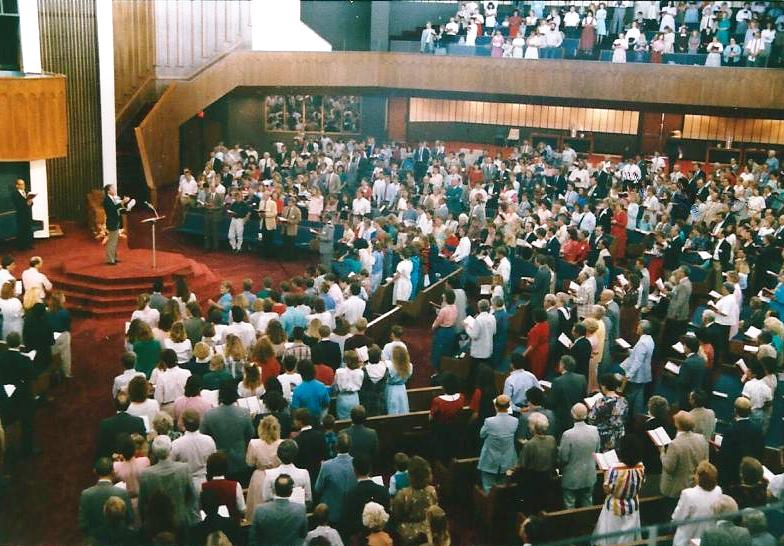 Our Lord proves to me over and over every day that his grace is sufficient. He reminds me every week that his strength is made perfect in our weakness. He continually shows me that he arranges the parts of the body exactly the way he wants them. And he makes it work here at Central.
Thank you, Father, for moving me to Amarillo to be blessed by this faithful body of your children. Thank you, God, for the difficult challenges and the easy lay-ups, for the incredibly high mountains and the devastating valleys, for both the really good times to keep me encouraged and the really tough times to keep me humble. I need all of that. And I need to experience it with a generous, gracious, patient, forgiving, loving community of Christians.
I ask myself often how in the world I ever wound up at Central. And then I fall to my knees in humble gratitude and praise.
Peace,
Allan
“You are the light of the world. A city on a hill cannot be hidden. Neither do people light a lamp and put it under a bowl. Instead they put it on its stand, and it gives light to everyone in the house. In the same way, let your light shine before all people, that they may see your good deeds and praise your Father in heaven.” ~Matthew 5:14-16

This short passage has become a theme of ours at Central as we get into the beginning stages of our new Ignite Initiative. We’re calling this the Church’s beautiful vision and glorious mission.
The light of the world. The city on a hill. The lamp that gives light to everyone. Let your light shine. Jesus is quoting from the prophets here. The beautiful vision Isaiah gives us: You will be a light to the nations, to open eyes that are blind, to free captives from prison, to release those who sit in darkness. Isaiah’s glorious mission: I will make you a light to all nations that you may bring my salvation to the ends of the earth.
Jesus teaches us our role as his people to shine this light of life into the dark corners of the world. And he also shows us what it looks like. His life and ministry are singularly about shining that light.
He lays his hands on the crippled woman and heals her. He eats dinner with the Pharisees and the prostitutes. He interacts with and serves those Samaritan lepers. He stays with Zacchaeus and calls him a son. Jesus looks at the sinful woman in Simon’s house and says, “Your sins are forgiven.” He says, Let the little children come to me with their sticky hands and their runny noses and they crawl all over him and he holds them and hugs them and blesses them.
When the world acts to condemn, our Lord moves to forgive. When the culture says you don’t matter, Jesus says you’re my child. When society says I don’t care about you, Christ says what can I do for you? Where the world seeks to injure, Jesus seeks to heal. When the culture says I hate you, Jesus declares I love you.
Everywhere our Lord goes, everywhere he is, he shines the light of love and forgiveness, he brings the Kingdom of grace and hope. In a culture of hate and violence and lies, Jesus is love and mercy and truth. He brings it. He lives it. And people are blessed and the world is changed.
What a beautiful vision! What a glorious mission!
 Central Church of Christ is announcing a renewed commitment to this beautiful vision and a bold invitation to join together in the next stage for us on the glorious mission. The Bible tells us that without a vision the people will perish and without a mission the people will lose their way. Our clear vision has shown us new directions and new opportunities for the mission. We have new ideas in our determination to be that bright city on the hill for Amarillo and the world. And the vision is giving us the courage to speak and to ask when it would be a whole lot easier to just stay where we are.
Click here for more information on Ignite. Click here for directions on how best to pray for what we’re doing. Click here if you want to give. And may our Lord bless us to boldly shine his light into the dark places of our city and, by his grace, throughout his world.
Peace,
Allan
 This past Sunday at Central we unveiled our two-year plan for enhancing our Christian ministry in our immediate neighborhood, throughout our city, and into the world. “Ignite” represents an exciting new season of vision and mission at Central and our desire is for every person in our church to participate in this together.
Our goal is to contribute $.96-million over the next two years to upgrade our facilities and make needed repairs and improvements to our home base; to significantly deepen our partnerships with local groups who do great Gospel ministry in our city with more money, volunteers, and resources; and to bring our foreign missions efforts under the umbrella of the overall vision of Central.
Vision and mission. That’s the focus of “Ignite.” And we need to do this right now. We don’t need to put it off. We don’t need to wait. This opportunity for more ministry inside and through our buildings, for more mission into and throughout our city and world — by God’s grace, we need to make this happen!
Matthew Kelly gave the commencement address at Xavier University three years ago, speaking to the graduating students about generosity, patience, and living life by looking at the big picture view of things. And he concluded his remarks with this:
“In a land where there are no musicians; in a land where there are no storytellers, teachers, or poets; in a land where there are no men and women of vision and leadership; in a land where there are no legends, saints, or champions; in a land where there are no dreamers — the people of that land will most certainly perish.
But you and I, we are the music makers; we are the storytellers, teachers, and poets. We are the men and women of vision and leadership; we are the legends, saints, and champions. And we are the dreamers of the dreams.”
If we don’t do it, who will? If we don’t do it now, when will we? This is us. And this is today. This “Ignite” just feels like Central.
We can’t out-dream our God. We can’t out-give our Lord or out-vision or out-mission God. But we can strive with every fiber of our being to give ourselves fully to his beautiful vision and his glorious mission to shine light into darkness and bring his salvation to Amarillo and to the ends of the earth.
Peace,
Allan
 Yesterday she was collecting Beanie Babies and putting her dolls in timeout; today she’s a sophomore at Oklahoma Christian University, studying childhood development and planning to go into school administration.
Yesterday she was writing her name on the side of our mini-van with a nail; today she’s designing and painting the Spring Sing Poster for Theta Theta Theta.
Yesterday she was inquiring about the whereabouts of her sippy cup and declaring her desire for “mo’ milk” in a deep, throaty, heavily accented bass; today her beautiful alto voice leads our church in worship and jams to Red Dirt Country in her car.
 Yesterday she was sitting on the passenger side, in a car seat, riding to pre-school, staring out the window, and asking me why, if the world was round, the horizon was a straight line; today she’s even smarter and more curious, engaging her ministers and professors in significant conversations about God’s Church and systematic theology and politics and poverty.
Yesterday I drove her to her first babysitting job; today she’s getting ready to intern in the youth ministry at the Pleasant Ridge Church in Arlington.
Yesterday she would only eat cheese pizza and grilled cheese sandwiches; today… she still only eats cheese pizza and grilled cheese sandwiches.
Valerie Nicole, our “little middle,” is 20 years old today.
 Happy Birthday, sweetie. I’m so incredibly proud of the hard work you’re doing at OC, the great community you’re a part of there, the tremendous responsibility you’re demonstrating in every area of your life, and your robust commitment to our Lord and to his exciting plans for you in his Kingdom. It cracks me up to hear you talk about Spring Sing practice and Delta guys. It thrills my heart to know of your place in the community of faith at the Edmond church. And your grades are looking pretty good, too.
You are an indescribable blessing to me, Val, and to everyone who knows you. Your compassion for others, your energy for the job at hand, your creativity, and your commitment to Christ all work beautifully together so that your potential is unlimited. I’m beside myself with anticipation over what you’re going to be doing next year and the year after and the year after that. I can’t wait.
Have a great day today. We’re all looking forward to seeing you this weekend.
I love you,
Dad

We believe God is pushing us to make a more significant Gospel impact here locally in Amarillo. What God has blessed us to do so successfully with foreign missions, we believe he wants us to do here in this city, right here where he’s brought us all together. For the next two years, beginning February 19, we want to put some teeth in our vision and put some more meat on the bones of our mission.
First, we want to enhance the Christian ministry we’re already doing in and through our own facilities. Our church building is a mission outpost in our NEIGHBORHOOD. Our campus gets used every day by those doing Gospel work in our city and by those who do not yet know Christ. We need to upgrade our facilities, make needed repairs and improvements, and building a Neighborhood Center so those works can impact more people in our immediate area.
Second, we want to partner with local organizations who are laser-focused and highly effective at meeting the physical and spiritual needs of people in our CITY. Our goal is to intensify our ministry relationships with Martha’s Home, Bivins Elementary, Gratitude House, CareNet, and The PARC (Panhandle Adult Rebuilding Center) — more resources, more volunteers, more time and energy with the right groups who are making a big difference in Amarillo.
Third, we want to bring our foreign missions efforts under the umbrella of the overall vision of Central. Not a separate priority, not a different value, but an equal part of God’s plan to work in and through our church for the sake of the WORLD.
We believe God will work in us and through us to make this next bold step in our church vision a Gospel reality. And we’re convinced that the best way to accomplish the financial element is with what we’re calling One Fund.
For two years our current giving and all additional giving will go into a single fund from which all church expenses will be paid. This enables us to simplify our giving and reminds us that we are one church, serving one God, living out his one vision for us and the whole world.
We’re asking our church family to pledge to give $9.6-million dollars over the next two years to fund the Ignite Initiative.

For more information about Ignite, I would ask you to click here. The daily prayer guide is here and on the Central church app. To see the video we showed our whole church yesterday click here. It’s also on Facebook and YouTube.
We can’t out-dream our God. We can’t out-give our Lord or out-vision or out-mission God. But we can strive with every fiber of our being to give ourselves fully to his beautiful vision and his glorious mission to shine light into darkness and bring his salvation to Amarillo and to the ends of the earth!
Peace,
Allan
© 2026 The Kingdom, The Kids, & The Cowboys
Theme by Anders Noren — Up ↑
Recent Comments