Category: Romans (Page 20 of 28)

Resurrect the Spirit of McGarvey

See?!? Pudge did throw out the first pitch from behind home plate!

~~~~~~~~~~~

Today, we jump back into the middle of our chapter-by-chapter review of Leroy Garrett’s “What Must the Church of Christ Do to Be Saved?” I appreciate so much the encouragement you’re giving me via phone, email, text, and quick hits in the church foyer. I really do appreciate it. Again, the ideas and ideals presented in this book are important. The conversations they provoke are critical and must be had if we are to remain a viable voice in the greater Christian community.

Garrett’s seventh suggestion takes us back to the beliefs and practices of one of our early Church of Christ pioneers:

Resurrect the spirit of J. W. McGarvey.

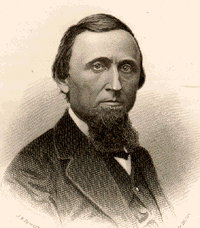
McGarvey (1829-1911) studied at the feet of Alexander Campbell at Bethany College and became one of the best known and most highly regarded preachers in the Stone-Campbell movement. Throughout Kentucky and Tennessee, and beyond, McGarvey’s scholarly credentials were unmatched and unquestioned. He wrote a popular and highly influential commentary on Acts that still impacts a lot of our heritage today. And he vigorously, adamantly, unflinchingly opposed instrumental music in worship.

He fought against organs in our churches for decades. He fought hard. He was the first to argue that instruments in the church was a sin. McGarvey is the one credited with forming our arguments against instruments, including the “argument from silence” (which I once used passionately, even though I knew it didn’t make sense). Yet, while he argued and debated against the instruments in corporate worship, he absolutely refused to divide over the issue. That mindset — we can disagree without dividing; disagreeing is fine, dividing is a sin — is what Garrett says must be resurrected among our people.

[McGarvey] lived in the eye of the storm of the controversy that led to the separation of Churches of Christ, formerly recognized in 1906. It is noteworthy that in spite of his opposition to the organ, he refused to make it a test of fellowship, and when the Churches of Christ finally separated over the organ question, he refused to go along. He believed that the Movement did not have to divide over such differences, that there could be “organ” churches and “non-organ” churches and still maintain fellowship.

Even though he left his old home church when it brought in the organ, he did not break fellowship with that church. He still visited and occasionally preach for them, and that is where his funeral was conducted. In short, McGarvey was not a sectarian or an exclusivist. If the Churches of Christ are to be saved, they must resurrect the spirit of McGarvey. Like him, they can be strong in their convictions, including being non-instrumental, without consigning to hell all those who believe and practice differently. Like McGarvey, the Churches of Christ must not make a cappella singing a test of fellowship. Again, like McGarvey, we can even say that for us instrumental music would be a sin in that it would violate our conscience to use it in worship, but we must not make it a sin for others. We must allow for honest differences on such issues.

Garrett also points out in this chapter that David Lipscomb couldn’t understand that McGarvey was opposed to instruments in worship but also supported missionary societies. He didn’t see how McGarvey could be opposed to multiple cups for communion and, at the same time, teach and preach in favor of cooperative efforts among different denominations.

McGarvey couldn’t be labeled. He couldn’t be pegged. That’s the beauty of his outlook, his theology, his practices. He sounds so “Church of Christ,” but he was actually of the “Disciples of Christ” stream. How he believed and behaved, how he lived his faith, didn’t make sense to those who were looking to accuse and judge. And we should be the same way.

We ought to be able to study and reflect on the Scriptures and church history and our own faith and reach our own conclusions, as individuals and as congregations, without binding them on anybody else. When we believe and practice based on our own understandings of truth and grace (both!), we will inevitably reach conclusions that don’t fit comfortably on anybody’s A-B Line of reasoning. You can at once be for trashing all the computers and PowerPoints and yanking the screens down from the worship center in order to use song books and, at the same time, push for women to be involved in the serving of communion. You can wear a suit and tie and refer to your church family as “brethren” and, at the same time, sing on the praise team and read from The Message. You can sing When I Survey the Wondrous Cross with the band and still schedule Sunday night church and insist on an invitation at the end of every sermon. It won’t make sense to those who want to label and divide. But it’s what’s best for all of us. It’s a proactive way of doing things, not reactive. It’s not a compromised position, it’s the responsible position. Disagree without dividing.

It disturbed Lipscomb that McGarvey would fellowship “brothers in error,” a bromide we have hung on ourselves all these years. McGarvey realized that those were the only ones he had to fellowship, for we are all in error about some things. That is precisely the point of Christian fellowship — that we accept each other as Christ has accepted us (Romans 15:7), and that includes all hang-ups, warts, and errors of all sorts. As Christ accepted us! Were we all free of error and right about everything when Christ in his love and mercy accepted us? How compelling!

[McGarvey] preached for “organ” churches during most of his long ministry, and he insisted that they not defer to his scruples during his visit. This he did because he understood what the fellowship of the Spirit is about. It transcends differences over secondary matters.

Peace,

Allan

Recover Our Unity Movement Heritage

Let me give you a couple of quick links here before we jump into today’s conversation.

Whitney’s old youth minister, Lance Parrish, sent me this link to a recent study that shows one-fifth of all third graders own cell phones. According to this report, 83-percent of all middle schoolers have mobile phones. And more than 90-percent of them have internet access. Most adults I know can’t handle unlimited mobile access to the internet. What makes us think a ten-year-old is ready? You can access Lance’s reactions to the report, especially as to how cell phones might negatively impact a teen’s dating habits and sexual development, by clicking here.

Greg Dowell has found an interesting study that claims couples who live together before marriage are much more likely to get a divorce than couples who don’t cohabit first. Seven-and-a-half-million unmarried couples are living together now in the United States, a massive 1,500-percent increase in just the past fifty years. And the National Marriage Project says, once these couples get married, these prior living arrangements are the major contributing factor in their divorces. Get the full story from the New York Times by clicking here.

~~~~~~~~~~~~~~

Chapter Four of Leroy Garrett’s “What Must the Church of Christ Do to Be Saved?” broadens his call for unity to include now all Christians of every stripe. In order to preserve our voice in the larger Christian world, in order to remain relevant, Garrett proposes that we openly acknowledge that we are one with all those who confess and have submitted to Jesus as Lord and are faithfully living their lives according to the Spirit of God. It’s who we are as Churches of Christ, as part of the rich Restoration Movement history. We are all about the unity of all Christians, breaking down the barriers that separate denominations, being united in our common Savior. It’s in our DNA. And if we’re going to have any kind of a serious impact in God’s Kingdom in the future, we’ve got to get back to those roots.

Recover our heritage as a unity movement.

Garrett uses some of the powerful mottos (not creeds! never creeds!) of the Stone-Campbell Movement to illustrate the urgency of his call for Christian unity. I especially appreciate his use of one of Thomas Campbell’s most beautiful lines in his 1809 Declaration and Address: “The Church of Christ upon earth is essentially, intentionally, and constitutionally one.”

[The Declaration and Address] is a call for unity of all God’s people. Campbell wrote those words in 1809, two years before he started his first congregation known as a “Church of Christ.” And yet he wrote of “the Church of Christ upon earth” as if it had already existed. This shows that he had no such mentality that Christ’s Church did not even exist and that he was about to “restore” it according to some recognizable New Testament pattern.

Campbell believed that the Church of Jesus Christ not only then existed but that “the gates of Hades” had not prevailed against it since the day of Pentecost when the Holy Spirit breathed it into existence. It was nonetheless in need of renewal or reformation, and that was his mission, especially in terms of restoring love, unity, and fellowship to the Church now tragically torn asunder by partyism.

In this insightful statement, capsuled in a single line, Thomas Campbell bequeaths to us the one important truth about the Church that we must recapture in our time if we are to find our roots: the Body of Christ upon earth has existed all through the centuries and it has always by its very nature been one.

Being raised in and by the Church of Christ, I myself was taught that these Restoration Movement fathers who began the Churches of Christ were restoring the first Church, the Church of Christ that was established in Jerusalem at Pentecost in AD 33. To avoid the “gates of hell prevailing” problem, I was taught that at all times throughout history, from the first century, through the middle ages, right up to the revival at Cane Ridge, there were pockets of Christians hiding out in the hills or living in small villages who were worshiping God and expressing the faith in exactly the same ways all Churches of Christ do today. I was told many, many times that the way we were worshiping, the church leadership structures we recognized, the form of baptism we employed, the communion service we observed — all of it had always been done by tiny faithful remnants exactly like we were doing it in Dallas, Texas in the 1970s and 1980s. Ludicrous! It didn’t make sense to me then. It is certainly ridiculous to me today.

Again, we’ve bought into this patternistic way of thinking that communicates to our people and to the rest of the world that we believe we’re doing it right and everybody else is doing it wrong. Therefore, we can’t fellowship the denominations. We definitely can’t acknowledge them as brothers and sisters in Christ. If they’re not doing things in exactly the same ways we’re doing things, they must not care. They must have other agendas. They must be arrogant and full of pride, more interested in themselves and their traditions than in being the true Church of Christ.

In their writings and sermons, Campbell and Stone both pointed over and over again to Romans 15:7. “Receive one another, even as Christ has received you, to the glory of God.” I didn’t have everything perfectly right when Christ received me. Neither did you. In fact, Scripture makes it clear that we were actually enemies of God when Christ received us. Shouldn’t we attempt the same acts of grace and forgiveness and mercy in receiving others who are sincerely trying to live for and with Jesus?

Garrett also points in this chapter to a well known slogan coined by Barton Stone: “Let the unity of Christians be our polar star!”

[This slogan] is a remarkable take of the Lord’s prayer in John 17. Stone understood Jesus to say that only a united church could win a lost world, so unity is essential to the church’s mission. The polar star (unity) guides the old ship (the church) on its mission (evangelization of the world). When we keep our eye on the polar star by being a loving and united people we will really be God’s redeeming community in the world.

Campbell wrote in his Millennial Harbinger that “this movement was born with a passion for unity, and unity has been its engrossing theme!”

If we were to make a top ten list of our current Church of Christ passions, the unity of all believers wouldn’t fit into the top twenty. Or thirty. What happened?

Peace,

Allan

Each Member Belongs

You know, a person can preach and teach over and over again for many years about what church is supposed to be like, how we’re supposed to act, how we’re supposed to think and behave with one another. One of my absolute favorite descriptions of “church” is in Romans 12: “In Christ, we who are many form one body, and each member belongs to all the others.”

I brought that verse out during our orientation class Sunday morning. I spent a good amount of time telling our brand new members and several visitors how we expect to act as a church family: that we should belong. I belong to other people here, and they belong to me. I don’t live to myself or for myself; I’m part of something much bigger than that here. We live to and for and with one another here.

And I preach that and teach that all the time. We bear one another’s burdens. We rejoice and we mourn with one another. When one member hurts, we all hurt. Nobody in need. Defending one another. Loving each other. Considering the needs of one another more important than our own. Caring for one another as we care for ourselves. We work hard to attain to that ideal. It’s a lofty expectation. It’s difficult. But we try, right?

Now, what do you do when it actually happens?

It happened here yesterday. All day long. From the opening moments of the morning memorial service for 95-year-old Gerald Noyes to the last hugs and expressions of love shared in Sneed Hall following the afternoon service for 16-year-old Madison Knebusch.

I’m so grateful to be a part of this church family.

I’m so blessed to be working in the Kingdom with a shepherd like John Noyes who comes from such a long line of faithful men and who strives so hard to be true to our Lord. An open book of a man who wears his compassion for others on his sleeve and acts on it. Constantly.

I’m so glad to be working with Adam Gray who hit an absolute grand slam at Madison’s service. I’m so happy that my girls are in his youth group; that my daughters are being taught by this deep, reflective, deadly serious disciple of our Christ; that my girls are being shaped by his huge laugh and his even bigger heart.

I don’t have a big stake in her — not yet, there hasn’t been time; but I’m so proud of Morgan Donaway. So proud of her. The way she used her God-given voice, her divinely-ordained abilities, to bless others. The way she gave all of that to our Father yesterday and the way he used it to bless so many people. The great friend that she is. Wow.

I can’t believe the food and the gift cards, the phone calls and texts, the baby sitting and errands run, the flowers and hugs, the money and love that’s been showered by this church family on its own hurting members. I can’t believe the numbers of people who were here in the middle of a week day to sacrifice and serve others. I’ve been to Levi and Shannon’s house at least seven or eight times over the past week; and each time I’ve had to park farther away because of all the other cars. It’s indescribable.

I could have saved myself a lot of breath and the people in our orientation class a lot of time if I hadn’t tried to explain and describe what it means to belong to each other. I should have just encouraged these people to hang out in our building all day yesterday to see it in action. It really happens here. We really do belong to one another.

Yesterday was beautiful in so many ways. Inspirational. Moving. Wonderful. Gospel. It was perfect.

Now, I don’t want to do it again anytime soon. Maybe never. But it was perfect.

I’m so glad to be at Central.

Peace,

Allan

I Am Not A Dog!

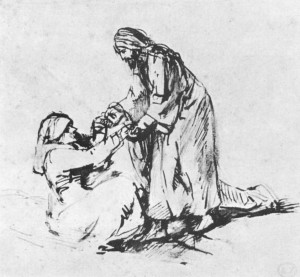
“First let the children eat all they want,” he told her, “for it is not right to take the children’s bread and toss it to their dogs.” ~Mark 7:27

The way Jesus talks to this woman always messes us up. It’s fine for Jesus to be rude to Pharisees and Saducees. They deserve it. We even cheer at Jesus’ harsh words to the religious establishment… until we realize he’s talking to us. But it’s just not like him — it’s not Christ-like — for him to be rude to this woman who’s genuinely coming to him for help. It doesn’t make sense. It offends us.

Now, I do think Jesus is doing something deliberate here. And I think Mark is bending over backwards to show it to us. I believe Jesus is re-stating the salvation plan: first for the Jew and then for the Greek. And as he’s saying it, he’s demonstrating that the “then” is right now! He heals this Gentile woman in this Gentile land. And then our Lord immediately takes off for the Decapolis, ten pagan Gentile cities on the east coast of Galilee. And he heals. And then he feeds four thousand Gentiles in a Gentile desert. What Mark is saying in this section of his Gospel is that now it’s for everybody. The power of the Kingdom of God is for all people. You do not set any limits on the universal reach of the Savior of the World.

But sometimes that wonderful news overshadows the great humility of this desperate woman. And I believe Mark wants us to pay attention to that, too.

Jesus calls her and her people “dogs.” There’s no getting around it. And this woman doesn’t argue. She accepts the Jewish priority as explained by Jesus. She concedes the difference between the children and the dogs. And she humbles herself as a dog in order to accept healing from the Lord.

Her attitude is key. It’s necessary if one is going to be a true disciple of Jesus.

She comes to Jesus empty handed. She makes no claim. She has no merit. No priority. No standing. No privilege. She has nothing to commend herself to Jesus. She is in no way deserving of his mercy and healing. She does not argue that her case is some kind of special exception. She doesn’t lobby for special treatment. She completely accepts his judgment and bows down before Jesus as a beggar.

She’s not saying, “Lord, give me what I deserve on the basis of my goodness.” She says, “Lord, give me what I don’t deserve on the basis of your goodness.”

This willingness to humble oneself is a key requirement for discipleship. And it’s a lesson that Jesus’ own hand-picked apostles had a difficult time learning. Her attitude is the opposite of the apostles’ who are always arguing about who’s going to be the greatest. This woman is not bitter about the privileges of others. She doesn’t resent others’ shares of God’s blessings. She accepts her place and she comes to Jesus, just like we all must, as a sinner, poor and needy. She accepts that she’s unacceptable. Just like me. Just like us.

Martin Luther saw the entire Gospel in this one story. We are truly more wicked than we could ever believe; and we are more loved and accepted by God than we could ever dare to hope.

Pride, though, is our huge problem. Augustine said pride is what changed angels into devils. Pride is what causes us to thumb our noses at the God who insists we are unworthy. “I’m not a dog! I’m not weak! I’m not incapable! I’m not undeserving!” We’re offended. And we walk away from the Savior.

But not this woman. No, sir. This woman understood very well what Romans tells us, what all of Holy Scripture tells us: we are rebels and enemies of God, sinful and diseased, dead and powerless. In all humility she accepted that status, and received from Christ the healing and salvation she and her family so desperately needed. She is the perfect model of what it means to be last of all, to bow low and submit to the gracious King.

Don’t believe for a second you’re not a dog. You are. Don’t change the words in the song from “…such a worm as I” to “…such a one as I.” Don’t. You are an unrighteous, unholy, sinful, dirty human being in desperate need of a Savior. And he has come. And he loves you more than you can possibly begin to imagine.

Peace,

Allan

Faithful Among the Stumps

Of all the really cool stuff in Isaiah — the servant songs, the allusions to Christ, the prophesies about the Messiah, the comfort passages — the words at the end of chapter six about preaching to people who refuse to listen are the most quoted in the New Testament.

Jesus uses Isaiah’s words in Matthew 13 after telling the parable of the four soils. Same thing in Mark 4 and Luke 8. Jesus says, man, this is how Isaiah must have felt.

In John 12, right after Jesus predicts his death, God’s voice thunders down from heaven for the benefit of the people in the crowds. But they’re not listening. They don’t understand. They refuse to change. And, again, Jesus uses the Isaiah 6 passage to account for the blind eyes and stubborn hearts.

Paul’s near the end of his life in Acts 28, under house arrest in Rome. And he’s failed to make a dent in the sight or the hearing or the hearts of the religious leaders who’ve come to hear him preach. Nothing. And he quotes the Isaiah 6 passage. Same thing in Romans 11. “It’s still happening!” Paul says, “To this very day!” Paul’s a failed preacher in pretty good company.

The point of the last half of Isaiah 6, and the reason the passage is repeated so many times in the early history of God’s Church, is that we are called to be faithful to our Father and to his mission, regardless of where it takes us. No matter how bad it gets, no matter how many people reject the truth, we are called to keep preaching the truth.

The point of Isaiah 6:8-13 is that if we trust God, if we’ll remain faithful to him, he’ll do something with those closed eyes and plugged up ears. Those stumps (Isaiah 6:13). Isaiah and Jesus and the apostles are reminding us that God does his best work in the middle of a desolate field of worthless stumps.

God created the universe out of nothing. He raised a mighty nation out of a 90-year-old barren womb. He pulled a young boy from the bottom of a well and made him a powerful ruler of the most important nation in the world. He uses the death of a preacher and the persecution of his Church to spread the Good News of salvation from Jerusalem to Judea and Samaria and to the ends of the earth. He delivered forgiveness and righteousness to all mankind through a cruel wooden cross.

There’s more happening in horrible situations than we ever realize. These awful circumstances are holy. God does holy things with faithful people in a field full of stumps.

“The holy seed is its stump.” ~Isaiah 6:13

Peace,

Allan

Holy Worship

Our God shows his glory to Moses in a burning bush in the middle of the desert. God reveals his holiness to Isaiah in a throneroom vision in the middle of a desecrated temple. God shows his glory to John in a similar vision in the middle of a prison island. In the midst of national trial and personal hardship, God reveals himself to be the One in charge. He is holy and righteous and sovereign. He is surrounded by eternal beings. The air is filled with holy songs. The Creator of Heaven and Earth is revealed to be almighty and everlasting, faithful and good. Very good.

And these scenes show us very clearly that the only appropriate response to these visions of God’s glory and holiness is worship. The creatures who see the glory of God, the heavenly beings who witness the greatness of God, they give him never-ending praise and worship. And we are invited by Holy Scripture to join in.

We cast our crowns daily before our God. No reservations. No holding back. We give our God everything we have and we submit fully to his holy authority. We recognize our own unworthiness in his gracious presence. And we fall to our knees in gratitude and thanksgiving. We remember who he is, what he has done, what he promises to do, and how truly worthy he is of our praise.

Holy worship. Today. Every day. Not just on Sunday.

“I urge you, brothers, in view of God’s mercy, to offer your bodies as living sacrifices, holy and pleasing to God — this is your spiritual act of worship.” ~Romans 12:1

Peace,

Allan

« Older posts Newer posts »